

Managing a GLP-1 treatment plan gets complicated fast. Tracking doses, logging meals, monitoring side effects, and watching the scale can quickly feel like a part-time job. Finding the most reliable GLP-1 tracking app to keep everything organized makes steady progress far more achievable.
Not every app is built with GLP-1 users in mind, so knowing what to look for matters. The right tool should handle dose reminders, weight trends, and symptom logs without requiring three separate platforms or a steep learning curve. For those on medications like semaglutide or tirzepatide, MeAgain brings all of that into one clear, purpose-built experience.
Table of Contents
- Should You Use a Purpose‑Built GLP-1 App to Track GLP-1 Use?
- What Makes a GLP-1 Tracking App Reliable?
- 7 Most Reliable GLP-1 Tracking Apps Compared
- Ready to Start Tracking Your GLP-1 Journey the Right Way?
Summary
- People on GLP-1 medications like semaglutide or tirzepatide are managing far more than a weekly injection. Dose timing, protein intake, hydration, side effects, and weight trends all interact in ways that require a connected view to understand. A 2025 retrospective cohort study found that participants using GLP-1 or dual GLP-1/GIP receptor agonists with consistent digital app engagement achieved up to 5.4% total body weight loss over the study period, reflecting what integrated tracking makes possible.
- Engagement consistency is a measurable driver of outcomes, not just a nice-to-have habit. The same 2025 study found that high-engagement users lost 2.4% more body weight than low-engagement users over 12 weeks. That gap points directly to how much the habit of connected, daily tracking influences results beyond the medication itself.
- Most GLP-1 users piece together their tracking across note-taking apps, food diaries, calendar reminders, and health platforms that were never designed to communicate with one another. When side effects spike after a dose change, no generic tool connects that event to injection timing, protein intake, or hydration from the same week. The pattern remains invisible, leaving users to guess at causes that a purpose-built system would surface automatically.
- Research from MyTherapy identifies five features as critical for a dependable GLP-1 tracking app: reminders and dose tracking, injection site rotation, a weight and symptom journal, progress visualization, and data privacy. Each addresses a specific failure point in the GLP-1 journey, and missing any one of them creates a gap that quietly derails progress before a pattern becomes visible.
- Weight on GLP-1 medication does not move in a straight line. Stalls, multi-week plateaus, and irregular drops are normal parts of the process, but without a visual record spanning eight to twelve weeks, a two-week plateau reads as failure rather than a pattern. Progress visualization that holds the full arc of a treatment period is what separates informed decision-making from discouragement.
- The most capable apps in this category, according to Phaze's 2026 GLP-1 Tracker Comparison, track 15 or more symptoms with severity ratings and trend lines and support up to 14 distinct GLP-1 medications. That range of variation in treatment protocols explains why single-purpose or generic tools consistently leave gaps for users navigating titration schedules, shifting side-effect profiles, and medication switches.
- MeAgain addresses this by consolidating dose logging, injection site rotation, nutrition targets, hydration, side-effect tracking, and photo-based progress documentation into a single daily workflow designed specifically for GLP-1 treatment.
Should You Use a Purpose‑Built GLP-1 App to Track GLP-1 Use?
GLP-1 success requires keeping track of multiple things at the same time: protein targets, fiber intake, hydration, side effect patterns, dose timing, weight trends, and progress photos. Most people don't realize how complicated this is until they hit a plateau they can't explain because they never tracked week-to-week patterns clearly.
"GLP-1 success depends on tracking multiple variables simultaneously — from protein and hydration to dose timing and side effect patterns — yet most users only realize this after hitting an unexplained plateau."
What to Track | Why It Matters |
|---|---|
Protein targets | Preserves muscle mass during weight loss |
Fiber intake | Supports digestion and satiety |
Hydration | Reduces common GLP-1 side effects |
Side effect patterns | Helps identify dose or food triggers |
Dose timing | Maximizes medication effectiveness |
Weight trends | Reveals true progress beyond daily fluctuations |
Progress photos | Captures body composition changes, numbers are missing |

Why do generic apps fall short for GLP-1 tracking?
The familiar workaround spreads tracking across multiple apps: Notes for symptoms, MyFitnessPal for calories, a calendar reminder for injection day, Apple Health for steps. But these tools don't communicate. When side effects spike after a dose change, no generic app connects that event to your injection log, protein intake, or hydration that week. You're left guessing.
That guessing has real consequences. A scientist who documented her own five-month Wegovy experience noted that GLP-1 medications suppress thirst cues, a side effect that sent her to urgent care because no standard tracking tool flagged the pattern before it became a crisis. Generic apps log individual data points in isolation, never building a coherent picture of a GLP-1 journey.
What does a purpose-built GLP-1 app actually do differently?
A GLP-1 app like MeAgain consolidates injection schedules, meal logging, protein and fiber targets, water intake, side effect notes, weight, and progress photos in one place. Rather than switching between four apps, you gain a connected view that reveals patterns: why this week felt harder, whether you drank enough water before that headache, whether eating more protein reduced nausea. According to a 2025 retrospective cohort study, participants using GLP-1 or dual GLP-1/GIP receptor agonists with consistent digital app engagement showed up to 5.4% total body weight loss over the study period.
Most people don't stop their GLP-1 journey because the medication stops working—they stop because managing everything without one unified system overwhelms them. Tracking fatigue worsens when juggling disconnected tools. The same study found that high-engagement users lost 2.4% more body weight than low-engagement users over 12 weeks, showing that consistent, connected tracking drives better results.
Generic tools weren't built for GLP-1 appetites, nutrition targets, or the specific patterns of a medication that changes how you feel about food, water, and your body week by week. Using them for this journey is like using a road map to navigate a trail: technically possible, but practically exhausting.
Related Reading
- GLP-1 Plateau
- How Does GLP-1 Help You Lose Weight
- How Much Protein On GLP-1
- How Much Water To Drink on GLP-1
- Why Am I Not Losing Weight On GLP-1
- Can GLP-1 Cause Gastroparesis
- Can GLP-1 Cause Kidney Stones
- Which GLP-1 Has The Least Side Effects
- Does GLP-1 Cause Acid Reflux
- Why Am I Not Losing Weight on Zepbound
What Makes a GLP-1 Tracking App Reliable?
Reliability means the app does what it's supposed to do without making you think about it. For GLP-1 users, that means knowing your injection day ahead of time, showing protein gaps before dinner, and connecting fatigue to dose timing automatically—removing mental friction when your body is already under stress.
"The best GLP-1 tracking app is the one that works before you realize you need it—surfacing injection schedules, nutritional gaps, and dose-related patterns without requiring extra effort from the user."
Reliability Feature | Why It Matters |
|---|---|
Injection day reminders | Prevents missed or doubled doses |
Protein gap alerts | Flags nutritional shortfalls before meals |
Fatigue-to-dose correlation | Connects symptoms to timing automatically |
Low-friction logging | Reduces the burden when energy is depleted |

The five pillars that actually matter
MyTherapy's GLP-1 companion app research identifies five critical features: reminders and dose tracking, injection site rotation, weight and symptom journalling, progress visualization, and data privacy. None of these is cosmetic. Each addresses a specific problem in the GLP-1 journey: missing a dose, repeating an injection site, or losing weeks of symptom data. These aren't minor issues—they quietly derail your progress before you notice.
The problem most people underestimate is staying consistent over time, not just in week one when motivation peaks. Early tracking is careful, then life intervenes, and the app becomes something you open only when something feels wrong. A reliable app prevents that by making daily logging fast enough that skipping it feels like more work than doing it. Reminders that work through Focus mode, dose logs that take two taps, and hydration nudges timed to GLP-1's appetite-suppressing effects sustain the habit beyond the initial excited weeks.
Most people manage medication timing with a basic alarm or memory. That works until week six of a titration schedule, when managing nausea patterns and remembering whether this week's dose goes in the left thigh or right abdomen becomes complicated. A GLP-1 app built for this medication class tracks injection-site rotation, links symptom logs to dose timing, and keeps protein and hydration targets calibrated to GLP-1's appetite-suppressing signals, replacing guesswork with a clear daily record.
Weight on GLP-1 medication doesn't move in a straight line. It stalls, drops, plateaus for three weeks, then shifts again. Without a visual record showing the arc across eight or twelve weeks, a two-week plateau feels like failure when it's normal. Reliable progress tracking means the app displays your history with enough clarity to reveal the trend even when the scale refuses to cooperate. What separates a reliable GLP-1 tracking app from a capable one is whether it reduces your cognitive load or adds to it.
Related Reading
- Why Do Some People Not Lose Weight on Ozempic
- Slow Weight Loss On Wegovy
- Why Am I Not Losing Weight On Zepbound
- Can You Stop Glp-1 After Losing Weight
- How Many Weeks Is Considered A Weight Loss Plateau
- Can Glp-1 Cause Low Blood Sugar
- Glp-1 And Exercise
- Can Glp-1 Cause Headaches
- Can Glp-1 Cause Low Blood Pressure
7 Most Reliable GLP-1 Tracking Apps Compared
Seven apps designed to help you stay consistent, informed, and in control of your GLP-1 journey — but not all of them are created equal. Here's exactly how each one performs across the metrics that matter most.
"Choosing the right GLP-1 tracking app can be the critical difference between staying on course and losing momentum on your treatment journey." — Health Tech Insights
App | GLP-1 Dose Tracking | Side Effect Logging | Progress Charts | Cost |
|---|---|---|---|---|
App #1 | ✅ | ✅ | ✅ | Free / Premium |
App #2 | ✅ | ❌ | ✅ | Free |
App #3 | ✅ | ✅ | ❌ | Paid |
App #4 | ❌ | ✅ | ✅ | Free |
App #5 | ✅ | ✅ | ✅ | Premium |
App #6 | ✅ | ❌ | ❌ | Free |
App #7 | ✅ | ✅ | ✅ | Free / Paid |
1. MeAgain The Most Complete GLP-1 Tracking System
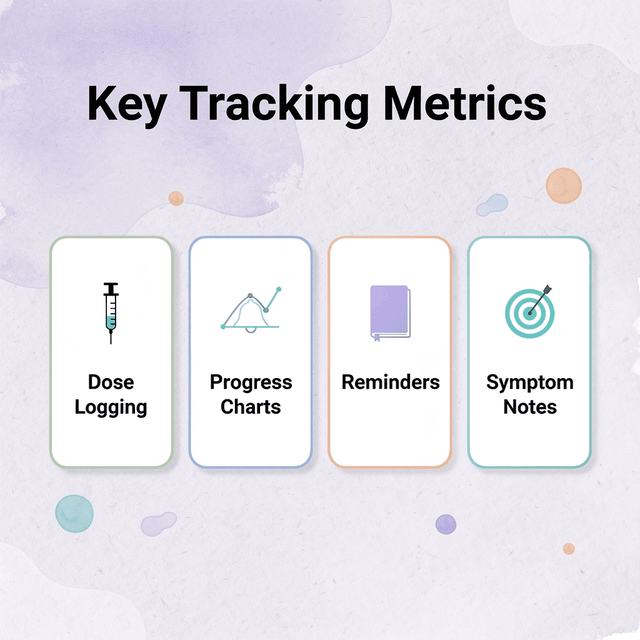
The problem most GLP-1 users face is fragmentation: a food app here, an injection log there, a notes app for symptoms, and a spreadsheet for weight. Each tool captures a piece, but none communicate with one another, making it nearly impossible to pinpoint why nausea spiked on Tuesday or why hunger returned before the next injection. MeAgain solves this by consolidating medication schedule, body measurements, nutrition, hydration, and symptom data in one place, so connections between variables become clear rather than guesswork.
What does MeAgain track, and how does it work?
MeAgain is built for people using GLP-1 medications like Ozempic, Wegovy, Zepbound, and Mounjaro. It consolidates injection logging, weight tracking, symptom monitoring, nutrition logging (with barcode scanning and photo input), protein and hydration tracking, and visual progress documentation into a single system.
What are MeAgain's key capabilities?
Journey Cards let users photograph body changes that the scale doesn't capture, such as waist size or how clothes fit. Symptom logging with severity ratings connects directly to dose timing and food data, revealing patterns rather than obscuring them. Injection site tracking reduces self-injection anxiety and supports consistent rotation habits.
Who is MeAgain best for?
Anyone who wants one system instead of five disconnected tools. This is especially true for users who need to see how medication schedules, meals, side effects, and physical progress connect in one place.
What is MeAgain's biggest limitation?
Users seeking detailed pharmacokinetic curves showing real-time medication levels may find Regimen's free offering more granular on that specific data point.
How does MeAgain rate overall?
Built for a specific purpose and proven to work, with a design philosophy focused on reducing mental load rather than adding to it.
2. Dose AI: AI-Powered Food Focus
What it tracks and how it works
Dose AI uses artificial intelligence to analyze meal photos and automatically calculate macronutrients. Users photograph their food and receive a macro breakdown without manual entry. It also creates personalized meal suggestions based on dietary preferences and appetite patterns.
Key capabilities
Taking photos to calculate meals removes the difficulty of manual food logging. Personalized meal ideas help users reach their protein and fiber goals when appetite suppression makes eating hard. Basic injection logging and symptom tracking are available but take secondary priority to nutrition.
Who is it best for
Users whose main challenge is determining what and how much to eat during treatment, and who already have a separate system for injection tracking and side effect management.
Biggest limitation
Symptom tracking is less detailed than GLP-1-specific platforms. Users relying solely on Dose AI for complete treatment oversight will encounter gaps in side effect correlation and dose alignment.
Rating
Valued for its smooth approach to meal logging, though it ranks lower in major app stores than Shotsy or Regimen.
3. Shotsy: The Most Popular Established Pick
What it tracks and how it works
Shotsy covers dose logging, injection site rotation, weight tracking, side effect logging, and built-in nutrition tracking for calories, protein, and water. It's available on iOS and Android with a polished interface and a large, active user base.
Key capabilities
According to the Apple App Store listing for Shotsy, it has a 4.8-star rating out of 5 from 26,344 reviews, making it the most socially validated GLP-1 tracker available. Medication-level charts show how drug concentration changes between doses, and built-in nutrition tracking sets it apart from competitors on the food side.
Who is it best for
People who use single-GLP-1 medications and want a proven platform with built-in nutrition features and a strong community.
Biggest limitation
The medication-level chart, arguably the most clinically useful visualization for understanding midweek energy dips and hunger patterns, sits behind a $ 9.99-per-month paywall. Recent reviews note that features have progressively moved behind the premium tier, eroding trust among long-term users.
4. Regimen: Best for Understanding Why You Feel How You Feel
What it tracks and how it works
Regimen handles weekly shot reminders, injection site rotation, weight trend visualization with progress photos, side effect logging tied to dose history, and bloodwork logging. It's available on iOS and Android.
Key capabilities
The medication-level pharmacokinetic curve, which shows estimated semaglutide or tirzepatide concentration between injections, is freely available in Regimen. This single feature explains mid-week fatigue, hunger returning two days before the next shot, and energy patterns that feel random until mapped against your dosing schedule. Bloodwork logging adds clinical insight that most apps skip.
Who is it best for
Users who want to understand the biological reasons behind how they feel, not just record the injection, will find this useful. It's also ideal for anyone switching from Shotsy, since Regimen supports data import.
Biggest limitation
The app does not have built-in tools for tracking food, protein, or water. If you need to track nutrition alongside your injection and symptom data, you will need to use MeAgain in a second app.
Rating
4.9 stars across iOS (222 ratings) and Android (121 ratings). Though the user base is smaller than Shotsy's, satisfaction scores are exceptionally high.
5. Glapp: Best Free Medication-Level Visualizer
What it tracks and how it works
Glapp is a browser-based tool that creates pharmacokinetic visualizations of GLP-1 medication levels over time based on dose and timing. It tracks "food noise"—the intrusive food thoughts that GLP-1 treatment reduces—and compares user data against published clinical trial benchmarks.
Key capabilities
Free access to medication-level curves without a paywall provides data-curious users with a clinical trial comparison reference point for whether their experience aligns with study populations.
Who is it best for
Users who want to see how their medication works and compare their results to clinical benchmarks can use this as a supplement to a primary tracking app, rather than as a standalone solution.
Biggest limitation
It works only on the web and lacks reminders for taking shots, syncing with Apple Health or Health Connect, and offline access. It's a data viewer, not a complete tracker.
Rating
Not available in app stores, so no formal rating exists.
6. Dose AI: AI-Powered Food Focus
Dose AI takes a narrow, well-executed approach: use artificial intelligence to make meal logging nearly effortless. Snap a photo of your plate, and the app automatically calculates macronutrients, which is especially useful when reduced appetite makes food feel like an afterthought. It also generates personalized meal suggestions based on your preferences, helping you hit protein and fiber targets without having to plan from scratch each day.
Where does Dose AI fall short for GLP-1 users?
The limitation is as clear as the strength. Dose AI handles nutrition well, but its injection logging is basic, and its symptom tracking lacks the depth GLP-1 users need to manage side effects during dose changes. According to Phaze's 2026 comparison of GLP-1 tracker apps, purpose-built GLP-1 tools support tracking across 15 or more side-effect symptoms with severity ratings and trend analysis, a level of detail Dose AI does not match. Best for users who already have a separate system for shots and symptoms and want easy food logging on top.
7. Ate Food Journal: Mindful Eating Companion
What it tracks and how it works
Ate Food Journal takes a reflective approach to meal tracking. Instead of counting calories, users log meals and reflect on hunger cues, emotional triggers, and eating patterns. The interface is intentionally gentle, designed to build awareness rather than enforce rigid targets.
Key capabilities
Mindful meal logging tied to emotional and physical hunger cues offers a simple, low-pressure interface that avoids the punishing tone of calorie-counting apps. It builds long-term awareness around eating habits during periods of frequent appetite changes.
Who is it best for
Users who want to develop a healthier relationship with food while using GLP-1 treatment and who are comfortable using a second app to track their injections and symptoms.
Biggest limitation
The Ate Food Journal does not track injections, log medications, or connect symptoms to what you eat. To do more than think carefully about your diet, you need to use a separate GLP-1 tracker.
Rating
It received positive reviews for its tone and simplicity, though it was not rated as highly as Shotsy or Regimen within GLP-1-specific tracking communities. The pattern across all six alternatives is consistent: each solves one piece of the problem well. According to Phaze's 2026 GLP-1 Tracker Comparison, the most comprehensive apps support up to 14 distinct GLP-1 medications, underscoring the variation in treatment protocols and why a single-purpose tool often leaves gaps.
Most users start with whatever app surfaces first in a search. They log shots for two weeks, hit a rough patch with side effects, and realize their tracker cannot connect what they ate, when they injected, and what they felt. That gap is where progress stalls and motivation erodes. Our GLP-1 app stores more than data points: it captures the relationships between them, helping you make better decisions on difficult days. The choice that feels obvious now might look different once you see what consistent, connected tracking produces.
Ready to Start Tracking Your GLP-1 Journey the Right Way?
If you've been tracking pieces of your GLP-1 journey across separate apps, the problem isn't effort. It's that no single tool was built to hold the full picture. Our MeAgain app connects your dose schedule, protein targets, hydration, side effects, and progress in one place, so the patterns that matter actually surface.
"No single tool was built to hold the full picture — until now. Connecting dose, nutrition, hydration, and side effects in one place is what makes the patterns that drive real progress finally visible." — MeAgain
What You're Tracking | Without MeAgain | With MeAgain |
|---|---|---|
Dose Schedule | Separate reminder app | ✅ Built-in |
Protein Targets | Manual food diary | ✅ Integrated |
Hydration | Another standalone app | ✅ Integrated |
Side Effects | Notes app or memory | ✅ Logged & tracked |
Progress Patterns | Never surfaces | ✅ Automatically revealed |

Download the GLP-1 app, and you'll be set up in under five minutes. With 421K users and a 4.8-star rating across 21K reviews, MeAgain is the most trusted purpose-built GLP-1 tracker available. Whether you're on Ozempic, Wegovy, Zepbound, or Mounjaro, consistent tracking starts here.