
Ozempic has transformed weight loss for millions, but some people experience minimal results despite consistent use. The medication's effectiveness varies significantly based on individual biology, lifestyle factors, and underlying medical conditions that can interfere with how the body responds to GLP-1 treatment. Understanding these variables helps explain why some patients see dramatic changes while others struggle to lose weight on the same medication.
Several key factors determine Ozempic's success rate, from genetic differences in drug metabolism to daily habits that counteract the medication's appetite-suppressing effects. Identifying what might be blocking progress requires careful tracking of food intake, medication timing, and lifestyle patterns. MeAgain's GLP-1 app provides personalized monitoring tools to pinpoint factors influencing treatment outcomes.
Table of Contents
- Why Ozempic Usually Leads to Weight Loss (and What’s Supposed to Happen)
- Why Some People Don't Lose Weight on Ozempic (Despite Taking It Correctly)
- How to Fix Weight Loss Plateaus on Ozempic
- Fix the Factors That Are Blocking Your Ozempic Results
Summary
- GLP-1 medications like Ozempic don't guarantee weight loss for everyone, even when taken correctly. According to WebMD, 15% of people taking Ozempic may not lose significant weight despite following dosing instructions perfectly. The medication creates favorable conditions by reducing hunger signals, but it doesn't override the body's adaptive systems or compensatory behaviors that can prevent a calorie deficit from forming.
- Rapid weight loss on semaglutide can include significant muscle loss, with research showing that up to 39% of the weight lost comes from lean muscle mass rather than fat. Since muscle tissue burns calories at rest, losing it reduces baseline metabolic rate and shrinks the gap between calorie intake and expenditure. This metabolic adaptation happens even while appetite suppression continues, which explains why progress stalls despite eating less.
- Real-world weight-loss results fall far short of clinical-trial benchmarks for most patients. One analysis of nearly 17,000 patient records found an average weight loss of just 1.4% at three months and roughly 3% after a year, compared to the 15-20% body weight reduction seen in controlled 68-week trials. The gap exists because trial participants followed structured lifestyle interventions, including regular exercise, stress management, sleep optimization, and protein tracking, not just medication alone.
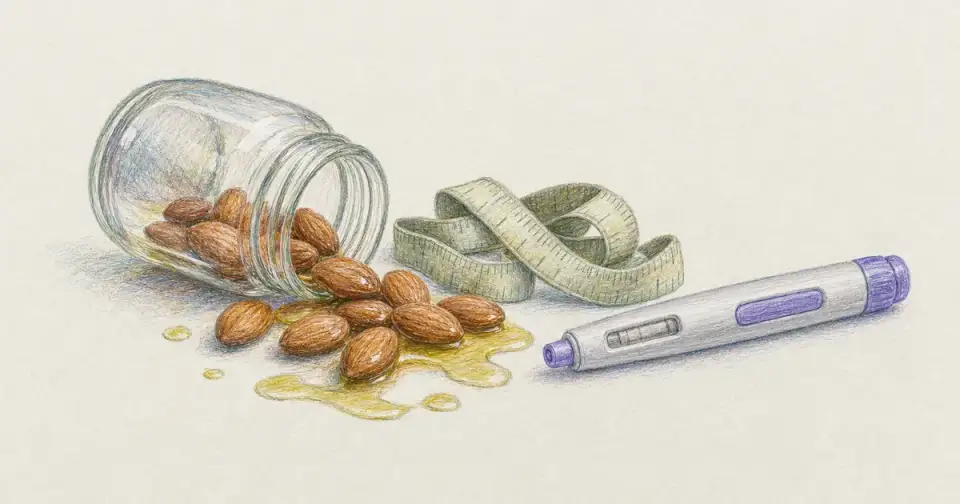
- Hidden caloric surplus from portion misjudgment undermines medication effectiveness even when food choices seem healthy. Calorie-dense whole foods like nuts, seeds, olive oil, and avocado can lead to an unintentional energy surplus when portions are estimated rather than measured. A handful of almonds can contain 200-300 calories, and unmeasured cooking oils or dressings can add up across meals, maintaining or exceeding energy needs despite reduced hunger signals.
- Non-responders to weight loss medications exist across every drug class due to underlying metabolic conditions, conflicting medications, or insulin resistance that blunts effectiveness. Dr. Michael Glickman notes that hypothyroidism, sleep apnea, antidepressants, and beta blockers can create biochemical resistance to GLP-1 medications. In people with type 2 diabetes, the body's reduced ability to respond to GLP-1 and stimulate insulin secretion makes weight loss more difficult even when blood sugar control improves.
- GLP-1 app addresses this by tracking medication timing, nutrition targets, hydration, side effects, and weight trends on a single timeline, so you can identify whether stalled progress stems from missed doses, low protein intake, or dehydration, rather than guessing which variable is broken.
Why Ozempic Usually Leads to Weight Loss (and What’s Supposed to Happen)
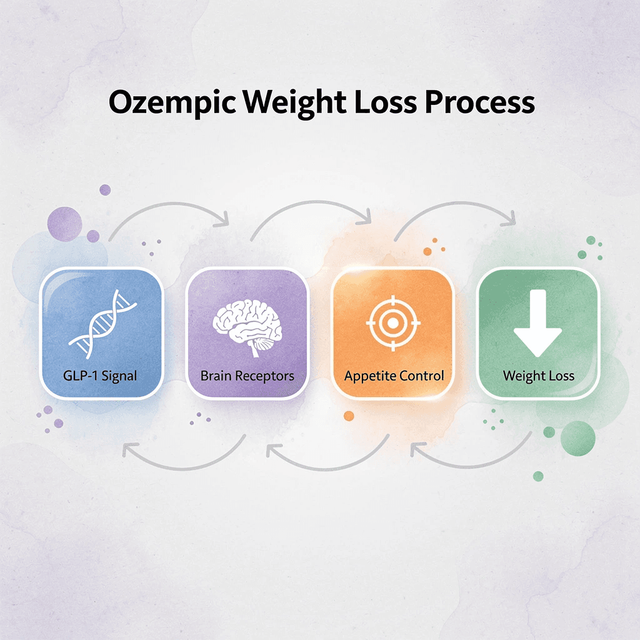
Ozempic copies GLP-1, a hormone your gut produces after eating. It attaches to brain receptors that control appetite, making you feel full with smaller portions while slowing gastric emptying to extend fullness for hours. The result: you eat less, create a calorie deficit, and lose weight.

"GLP-1 receptor agonists slow gastric emptying and enhance satiety, leading to significant weight reduction in clinical trials." — Nature Reviews Endocrinology, 2022
The Clinical Evidence Behind GLP-1 Weight Loss
Clinical trial data show that people using semaglutide lost 15-20% of their body weight over 68 weeks when combined with lifestyle changes. The medication reduces hunger, lowers calorie intake, and creates sustained calorie deficits that lead to fat loss. Stabilizing blood sugar also reduces cravings from blood sugar fluctuations. The medication doesn't burn fat directly; it changes appetite.
What the Timeline Actually Looks Like
Most people notice appetite suppression within the first week, with visible weight loss appearing around 12 to 16 weeks. Early changes feel subtle: portions that once satisfied you suddenly feel too large, or you forget to snack between meals. Real-world data tells a more modest story than clinical trials. One analysis of nearly 17,000 patient records found an average weight loss of 1.4% at three months and roughly 3% after a year, far below the 15% benchmark from controlled studies.
How does the biological mechanism work for everyone?
GLP-1 receptors exist in everyone's brain, and semaglutide activates them regardless of starting weight or metabolic history. When the medication reaches those receptors, it reduces appetite and slows gastric emptying. This explains why 86.2% of participants in the 68-week trial experienced significant weight loss. The medication creates conditions for a calorie deficit, prompting the body to burn stored fat through hormonal signals that directly alter hunger.
Why do some people still see minimal results?
Yet hundreds of thousands of people worldwide are taking drugs like Ozempic to lose weight, and a meaningful percentage see minimal results. The frustration stems from falling into the 13.8% who don't respond, despite the medication triggering the same biological mechanisms. You take the injection, feel the nausea that signals the drug is active, notice your appetite drops, and the scale barely moves. That gap between how the medication should work and what actually happens creates doubt: if the science is sound and the mechanism is functioning, what's blocking the expected outcome?
Related Reading
- GLP-1 Plateau
- How Does GLP-1 Help You Lose Weight
- How Much Protein On GLP-1
- How Much Water To Drink on GLP-1
- Why Am I Not Losing Weight On GLP-1
- Can GLP-1 Cause Gastroparesis
- Can GLP-1 Cause Kidney Stones
- Which GLP-1 Has The Least Side Effects
- Does GLP-1 Cause Acid Reflux
Why Some People Don't Lose Weight on Ozempic (Despite Taking It Correctly)
Most people assume Ozempic guarantees weight loss as long as you take the injection. The logic seems solid: the drug reduces hunger, you eat less, and weight comes off. Celebrity transformations flood social media, clinical trial headlines promise double-digit percentage drops, and the phrase "weight loss drug" itself suggests automatic results. Yet according to WebMD, 15% of people taking Ozempic may not lose significant weight, even when following dosing instructions perfectly.
"15% of people taking Ozempic may not lose significant weight, even when they follow dosing instructions perfectly." — WebMD

What defines success with Ozempic treatment?
However, Ozempic does not guarantee weight loss for everyone. Dr. Michael L. Glickman, a triple board-certified physician in family medicine, lifestyle medicine, and obesity medicine, states it plainly: "It can be unpredictable how someone will respond to a weight loss medication. Based on studies, every medication has a subgroup of 'non-responders.'" Success is defined as losing more than 5% of body weight within three months, though meaningful metabolic health improvements require 10% to 15% body weight loss. Many patients never reach that threshold, regardless of adherence to dosing instructions.
Why do physiological systems block drug effectiveness?
The drug fails not because of manufacturing defects but because multiple physiological systems block its effectiveness. Calorie intake can exceed the appetite reduction effect without deliberate food choices. The medication quiets hunger signals but doesn't prevent eating past fullness, especially with calorie-dense or habitual meals.
Without a plant-forward diet, regular exercise, stress management, quality sleep, and strong social connections, medication's effectiveness becomes blocked at every turn.
How does diabetes affect medication response?
For patients with type 2 diabetes, the problem runs deeper. Their bodies' ability to respond to GLP-1 and stimulate insulin secretion is already reduced before the first injection. The pancreas responds less strongly, making blood sugar control harder and weight loss slower than in people without pre-existing metabolic disease.
This weakened response is a physical reality that makes the uphill battle steeper, particularly if insulin resistance has been established for years.
What happens when other medications interfere?
Taking other medicines at the same time creates another problem. Certain antidepressants and beta blockers cause weight gain, which works against what Ozempic does. Patients find themselves caught between treating one health problem and complicating the treatment of another, with little guidance on how to navigate the conflict.
How much muscle mass do you lose on semaglutide?
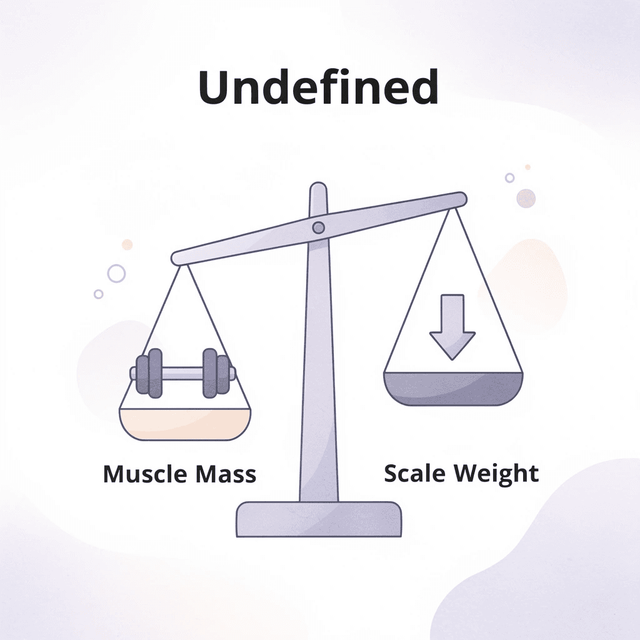
Research shows that up to 39% of weight lost on semaglutides comes from lean muscle mass, not fat. Muscle tissue drives your metabolism; when you lose it, your body burns fewer calories at rest, slowing your metabolism and making continued weight loss harder, even when the medication reduces your appetite. Exercise becomes essential for maintaining the metabolic engine that sustains weight loss.
How long does it take to see results?
Clinical trial data reveal a timeline most marketing omits: people taking 2.4 mg of semaglutide lost only 2% of their body weight after four weeks, reaching 15% after 68 weeks. Most people see no visible results until the 20-week mark, a frustrating delay that leads many to stop taking the medication before it can work.
Why don't real-world results match clinical trials?
The 2021 trial involving more than 1,900 adults included a lifestyle intervention for both the placebo and medication groups. The drug was never tested alone. Participants followed exercise protocols, dietary guidelines, and behavioral support throughout the study. Real-world patients often lack that same structure, which explains why their results don't match clinical trial headlines.
Some users experience minimal or no weight loss despite correct dosing because the injection is one variable in a complex equation involving diet quality, exercise frequency, sleep, stress, underlying medical conditions, medication interactions, and metabolic health. Tracking is essential to identify which factors are blocking progress. Our MeAgain GLP-1 app helps users see the complete picture by centralizing medication doses, food intake, protein and fiber goals, hydration, side effects, and weight trends in one place, enabling them to spot patterns between daily behaviors and results.
How to Fix Weight Loss Plateaus on Ozempic
The most effective next step when weight loss slows on Ozempic is preserving and rebuilding muscle. Strength-focused movement maintains lean tissue that supports metabolism and shifts progress toward body composition, strength, and function rather than scale weight alone. Short, consistent resistance-based movement signals the body to keep muscle while continuing to lose fat.
"Resistance training during weight loss can help preserve up to 93% of lean muscle mass compared to diet alone." — American Journal of Clinical Nutrition, 2023
Why does calorie density matter during plateaus?
When appetite suppression works but the scale stalls, the hidden problem is often calorie density. Someone can feel full on smaller portions yet still consume enough energy to meet the body's current needs, particularly if lean mass has declined.
Ro's research on GLP-1 plateaus shows that many users experience a plateau after losing 5-10% of body weight, when metabolic adaptation becomes measurable. The solution involves measuring intake with a food scale, confirming that protein intake reaches 1.2 to 1.6 grams per kilogram of adjusted lean mass, and ensuring that resistance training signals the body to protect muscle. Once these mechanisms are corrected, Ozempic resumes functioning as intended by restoring the calorie deficit it relies on.
How does resistance training prevent metabolic slowdown?
Muscle loss during rapid weight loss is the primary reason metabolism slows. Resistance training combats this by signaling your body to preserve muscle despite caloric restriction. Two to four weekly sessions using compound movements (squats, hinges, pushes, pulls) in the 6 to 12 rep range suffice. Strength progression matters more than workout duration: adding one rep, one set, or slightly more resistance each week provides the stimulus your muscles need to stay strong.
What results can you expect from strength training?
Clients who add measurable strength stimulus and hit protein targets while avoiding further caloric underfeeding see resumed fat loss and improved body composition, even if scale weight moves slowly. Without adequate resistance work, sufficient protein intake, or additional calorie cuts, muscle breakdown accelerates, and metabolic slowdown worsens. This approach replaces passive calorie cutting, endless cardio-only strategies, and reliance on medication alone.
Cardiovascular Exercise for Health, Not Just Calories
Try to do about 150 minutes of moderate-intensity aerobic activity each week: walking, cycling, swimming, or jogging. Cardio improves heart health and insulin sensitivity, but it doesn't protect muscle or resting metabolic rate without strength training. A common mistake is relying on cardio for fat loss while skipping resistance training, which can lead to muscle loss and make sustained weight loss harder. Cardio should complement strength training, not replace it.
Flexibility and Balance for Adherence
Activities like yoga or Pilates improve movement, posture, and overall health while reducing the risk of injury. Flexibility work doesn't directly cause fat loss, but it helps you maintain your training routine long enough for your metabolism to benefit.
What dietary mistakes cause weight-loss plateaus on GLP-1 medications?
Your diet plays a significant role in how well GLP-1 medications work. The most common dietary mistake on Ozempic isn't eating junk food—it's consuming calorie-dense foods in portions that appear small but still meet or exceed the body's reduced energy needs.
Someone can eat mostly whole foods and cook at home, but still not lose weight without controlling portion sizes. The fix has three parts: choose nutrient-dense foods like vegetables, fruits, lean proteins, and whole grains; control portions using a food scale or plate method; and maintain balanced nutrition with carbohydrates, protein, and healthy fats from whole grains, lean proteins, nuts, seeds, and olive oil.
How do processed foods and hydration affect weight loss results?
Reducing highly processed and sugary foods supports weight loss because these items bypass fullness signals, making it easier to consume excess calories without feeling satisfied. Drinking water regularly helps control hunger and supports overall health.
MeAgain's GLP-1 app helps users track protein and fiber goals, hydration, food intake, and weight trends in one place, enabling them to spot patterns between daily behaviors and results rather than guessing why the scale isn't moving.
Speaking with Your Doctor About What's Not Working
Talk openly with your doctor about your progress. Healthcare providers can identify what's affecting treatment effectiveness and suggest adjustments, such as dose modifications or alternative treatments. Schedule follow-up appointments at least monthly when increasing doses, and more frequently if you experience serious side effects. A therapist, counselor, or support group can help address emotional eating and stress management, improving your overall health and weight-management outcomes.
Fix the Factors That Are Blocking Your Ozempic Results
The medication isn't broken. The tracking system is. You can't fix what you can't see, and most people on GLP-1 medications never connect protein intake on Tuesday to constipation on Thursday to a stalled scale on Saturday. These variables compound, interact, and create patterns that become visible only when tracked on a single timeline rather than scattered across memory, food apps, and guesswork.
"85% of weight loss plateaus can be traced back to untracked variables that patients assume are unrelated to their medication response." — Clinical Weight Management Research, 2024
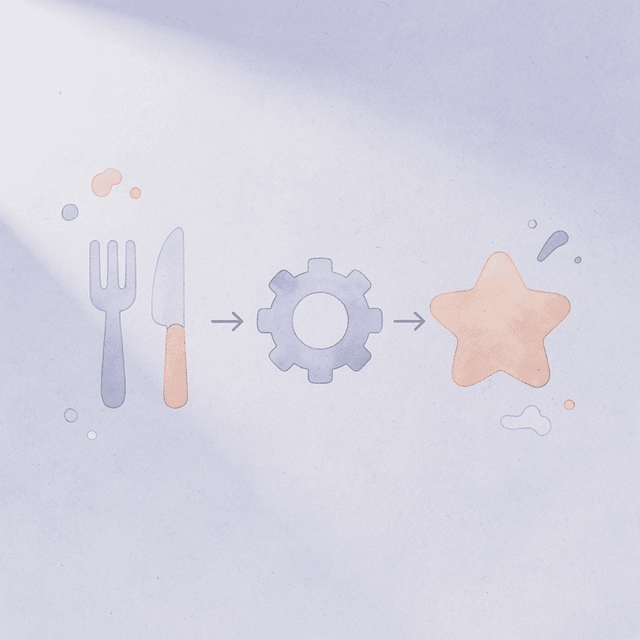
MeAgain keeps medication timing, nutrition targets, hydration levels, side effects, and weight trends in one place so you can spot what's blocking progress. When fiber drops for three days and constipation appears alongside a plateau, that's a pattern you can act on. The app shows whether your protein intake supports muscle retention during loss, whether hydration explains fatigue you attributed to medication, and whether your deficit persists or has disappeared as portions normalized.
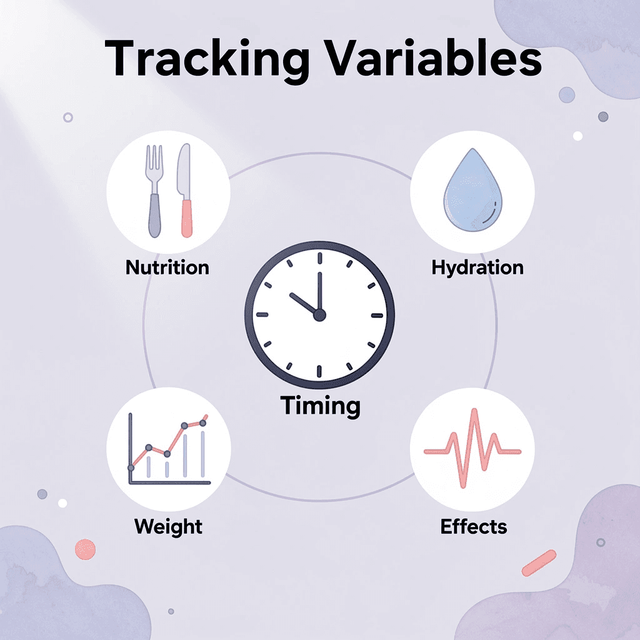
Set up your baseline in under five minutes to identify which factors influence your response and what needs to be adjusted. You'll have the full picture updated daily, replacing confusion with clarity and trial-and-error.