
GLP-1 medications like semaglutide and tirzepatide have helped many people manage their weight and blood sugar, but shifts in libido, arousal, and sexual well-being are real experiences that often go unaddressed. These changes can be linked to hormonal fluctuations, rapid weight loss, or the psychological adjustments that come with a transforming body. Understanding what drives these effects is the first step toward managing them effectively.
Tracking how the body responds to GLP-1 therapy goes beyond the scale. Changes in energy, mood, and sexual health provide important signals about how treatment affects overall well-being, and paying attention to them helps support more informed conversations with a care team. For a structured way to monitor these shifts, the GLP-1 app from MeAgain helps users stay on top of every dimension of their health journey.
Table of Contents
- Are GLP-1 Drugs Quietly Changing Our Sex Lives?
- 8 Possible GLP-1 Sexual Side Effects (and Why They Happen)
- What Can You Do if GLP-1s Are Negatively Affecting Your Sex Drive?
- Protect Your Sexual Health While Losing Weight with MeAgain
Summary
- Sexual changes during GLP-1 therapy are more common than clinical conversations suggest, and they run in both directions. A Kinsey Institute study found that 18% of GLP-1 users reported increased sexual desire, while 16% reported a decrease, nearly even numbers that challenge the assumption that these medications simply suppress libido. A separate 2025 clinical review published in Obesity Pillars found a 34% decrease in sexual desire compared to baseline among GLP-1 agonist users, underscoring how significant these shifts can be even when they rarely come up in the exam room.
- The medication itself is only one piece of the picture. Rapid weight loss independently alters testosterone and estrogen levels; caloric restriction can push the body into a state where reproductive hormones are deprioritized, and GLP-1 receptors in the brain's reward centers can blunt appetitive drives beyond hunger. Attributing all sexual changes to the drug's direct mechanism misreads the cause and often leads to the wrong response.
- Physical changes like difficulty reaching orgasm or vaginal dryness have specific, addressable mechanisms. Vasoconstriction can reduce blood flow to genital tissue, pelvic floor muscle loss from rapid weight reduction can disrupt arousal and orgasm, and lower estrogen from weight-related hormonal shifts directly affects lubrication and tissue elasticity. These are tissue-level changes, not psychological ones, and they respond to targeted interventions including pelvic floor physical therapy, adequate protein intake, and resistance training.
- Sexual dysfunction was already present in a meaningful portion of people before they started GLP-1 treatment. Research indicates that approximately 40 to 45% of women and 30% of men with obesity experience sexual dysfunction prior to beginning therapy, which means some users arrive with pre-existing hormonal vulnerabilities that the medication's rapid physiological changes can amplify rather than create.
- Relationship and dating dynamics shift alongside the physical changes. According to a Kinsey Institute survey from Indiana University, 50 to 60% of GLP-1 users reported changes in sex and dating, ranging from increased confidence and new social activity to decreased desire and relationship friction. Rapid body change can also create a sense of unfamiliarity with one's own physical self, which disrupts the embodiment that sexual desire depends on, a factor that is distinct from libido and often overlooked.
- Tracking symptoms with sufficient specificity to identify patterns turns vague concerns into productive clinical conversations. Knowing whether a dip in libido aligns with a dose increase, a stretch of undereating, or a shift in sleep quality gives a prescriber something concrete to evaluate rather than an impression to guess at.
- MeAgain's GLP-1 app addresses this by connecting dose timing, meal logs, and side-effect severity ratings on a single timeline, so users can present a documented pattern to their care team rather than an approximation.
Are GLP-1 Drugs Quietly Changing Our Sex Lives?
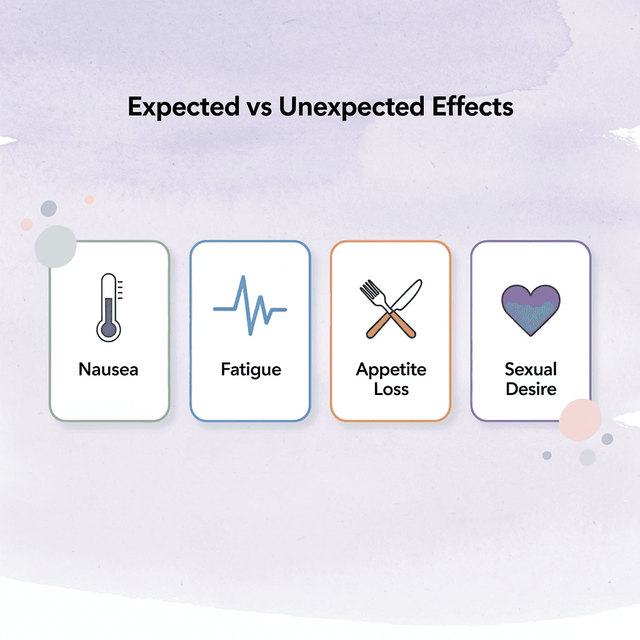
People starting GLP-1 medications expect nausea, fatigue, and appetite changes, but not shifts in sexual desire. Yet that's exactly what happens for a meaningful portion of users, and the silence around it makes the experience far more confusing than it needs to be.
"People starting GLP-1 medications expect the well-known side effects — but shifts in sexual desire are catching users completely off guard."
What does the research actually show about libido on GLP-1s?
Sexual changes on GLP-1 medications like Ozempic, Wegovy, and Mounjaro are documented. A Kinsey Institute study led by Dr. Justin Lehmiller found that 18% of participants reported increased sexual desire while on GLP-1s, compared to 16% who reported a decrease. This nearly even split shows that these drugs do not simply reduce sexual desire; the effects are more complex and vary by individual.
Why the medication alone does not explain everything
It's easy to blame the drug directly, but that's not the whole story. Dr. Lehmiller is clear: libido effects come from "a large number of factors," including the direct effects of the medication itself, the downstream consequences of weight loss, hormonal shifts, nutritional changes, and psychological responses to body changes. Rapid weight loss alters hormone levels, including testosterone and estrogen, which affect sexual drive in both men and women. Conflating these hormonal changes with the drug's direct effect obscures the cause and prevents finding solutions.
How do GLP-1 receptors in the brain affect desire beyond appetite?
GLP-1 receptors are active in brain areas that govern reward and drive, not appetite alone. As Dr. Evan Goldstein explains, "Many people lose interest in food, alcohol, social interactions, and their overall libido." This dulling extends beyond hunger. For some users, the quieting of food noise accompanies a quieting of other desires. A 2025 clinical review published in Obesity Pillars found that GLP-1 agonist users reported a 34% decrease in sexual desire compared to baseline—a finding that demonstrates the significance of these changes, despite their rarity in clinical discussion.
Could reduced caloric intake be the real cause for some users?
Nutrition plays an overlooked role in sexual function. When you consume too few calories, your body reprioritizes: sexual function isn't needed for survival, so it drops down the list. Dr. Lehmiller explains: "If your body is in starvation mode, you're not going to be in the mood for much of anything." For some users, reduced libido is not a pharmacological side effect at all—it's a nutrition problem with a practical fix. Most patients are never told this before starting treatment.
How can tracking patterns help patients start the conversation?
Patients often hesitate to bring up sexual concerns with clinicians, uncertain whether their experience is valid or whether their provider will take it seriously. This hesitation creates a gap between what is happening and what gets addressed in care. Tracking changes consistently—including when they appear relative to dose increases or dietary shifts—gives patients something concrete to bring to that conversation. Our MeAgain GLP-1 app logs side effects with severity ratings on the same timeline as dose days and food entries, making patterns visible and discussable rather than vague and embarrassing.
Related Reading
- GLP-1 Plateau
- How Does GLP-1 Help You Lose Weight
- How Much Protein On GLP-1
- How Much Water To Drink on GLP-1
- Why Am I Not Losing Weight On GLP-1
- Can GLP-1 Cause Gastroparesis
- Can GLP-1 Cause Kidney Stones
- Which GLP-1 Has The Least Side Effects
- Does GLP-1 Cause Acid Reflux
- Why Am I Not Losing Weight on Zepbound
8 Possible GLP-1 Sexual Side Effects (and Why They Happen)
Each sexual side effect works in a different way. Here are eight commonly reported effects, examined through what changes, why they happen, who tends to notice them, and whether they go away over time.
"Understanding why a side effect happens — not just that it happens — is the critical first step toward managing it effectively." — Clinical Insight
What We Cover | Why It Matters |
|---|---|
What changes | Identifies the specific physical or hormonal shift |
Why it happens | Links the effect to GLP-1 mechanisms |
Who notices it | Highlights risk factors and vulnerable groups |
Does it go away | Sets realistic expectations for recovery |
1. Changes in Sex Drive
Sexual desire can change in either direction. Some users report increased sexual desire within weeks of starting a GLP-1, while others describe decreased interest in initiating or participating.
How do GLP-1 medications affect the brain's reward system and libido?
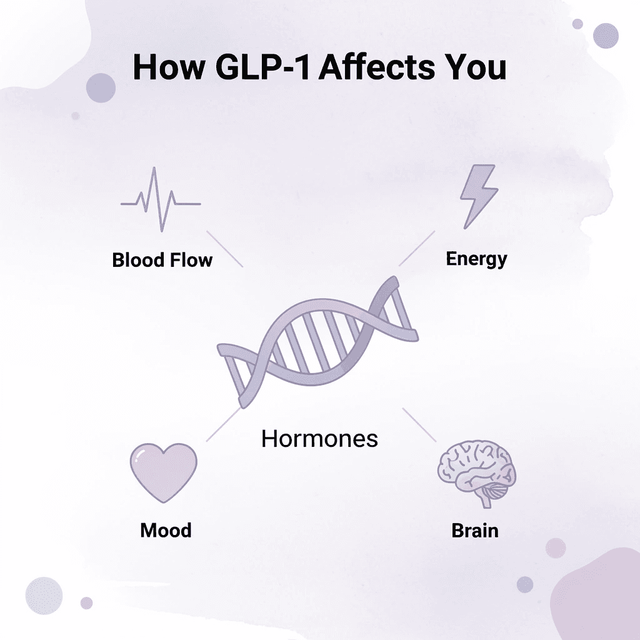
GLP-1 medications affect dopamine and norepinephrine, brain chemicals that control the brain's reward system. As Chris Szoke, NP, CDCES, a nurse practitioner in Tucson, Arizona, explains: "It's not surprising that GLP-1 medications might also affect other forms of pleasure, including sex," because these drugs work directly on appetite, digestion, and reward signaling. The same brain pathway that reduces food cravings can reduce other appetitive drives.
Is the libido change from the drug itself or from weight loss?
Szoke separates the drug's direct effects from those caused by weight loss. Reduced abdominal fat can increase testosterone in men, which may boost libido independently of any pharmacological effect. In women, weight loss can shift hormonal balance in the opposite direction, sometimes reducing testosterone and dampening desire. Behavioral changes accompanying GLP-1 use, including drinking less alcohol or reducing cannabis use, can also alter libido in ways difficult to attribute to the medication alone.
When does a libido shift from GLP-1 use stabilize on its own?
If the shift is tied to the adjustment period after a dose increase, it often stabilizes. If it's driven by rapid hormonal changes from weight loss, it may shift again as the body reaches a new balance. Tracking when the change first appeared relative to dose timing gives a clinician concrete information to evaluate rather than a vague report of "things feeling different."
2. Difficulty Reaching Orgasm
Some men and women on GLP-1 medications report anorgasmia, the inability to reach orgasm despite adequate stimulation. A case series published in Sexual Medicine (PMC) documented new cases of anorgasmia in patients after starting GLP-1 agonist therapy, establishing it as a clinically recognized finding.
Why might GLP-1 medications make it harder to reach orgasm?
GLP-1 medications may cause vasoconstriction, which tightens smooth muscle around blood vessels and reduces blood flow to genital tissue, interfering with arousal. Reduced dopamine and norepinephrine activity dampens the neurological arc leading to climax. Additionally, pelvic floor muscles increase blood flow to the genitals during arousal and contract rhythmically during orgasm. If those muscles lose tone, the entire sequence is disrupted.
Who is most likely to notice this side effect?
People who lose weight quickly without adequate protein intake or strength training risk losing lean muscle mass, including in the pelvic floor. GLP-1s can accelerate this process when used without dietary or exercise changes. A 2024 study in the Archives of Gynecology and Obstetrics found that women carrying more fat, particularly in the pelvic area, had weaker pelvic floor muscles, suggesting pre-existing vulnerability.
Can difficulty reaching orgasm improve while on GLP-1 medications?
Targeted pelvic floor physical therapy can help rebuild muscle function that supports orgasm. Adequate protein intake and resistance training during GLP-1 treatment can address underlying muscle loss. These steps merit discussion with a care team.
3. Increased Fertility
Women taking GLP-1 medications, particularly those with polycystic ovarian syndrome (PCOS), have reported unexpected pregnancies and restored menstrual cycles, signaling a significant shift in their reproductive health.
Why does weight loss on GLP-1 medications restore fertility?
Losing weight reduces swelling and corrects hormone imbalances associated with obesity. Even a 5 percent reduction in body weight can restore ovulation and balance estrogen and testosterone levels. Obesity causes abnormal testosterone levels and disrupts menstrual cycles; addressing the underlying metabolic dysfunction restores previously blocked fertility. In men, weight loss improves sperm count and reproductive health. Women with PCOS or obesity-related anovulation are most likely to experience this shift, sometimes unexpectedly. Women not trying to conceive should know that GLP-1-related weight loss can restore fertility after years of irregular or absent cycles.
What should women know before starting GLP-1 medications?
This change requires thinking ahead and planning rather than making quick decisions. Women who are pregnant or trying to become pregnant should not use GLP-1 medications, and any shift in menstrual regularity warrants discussion with a healthcare provider.
4. Erectile Dysfunction
Some men taking GLP-1 medications report new or worsening erectile dysfunction, while others report improvement.
What does the research say about GLP-1s and erectile dysfunction?
One study found that 1.4 percent of men taking semaglutide reported erectile dysfunction, compared to 0.14 percent of men not taking it. Researchers pointed to changes in smooth muscle function and how GLP-1 receptors affect testosterone regulation. However, other research found a 50 percent decrease in erectile dysfunction risk among GLP-1 users, attributed to improved outcomes in obesity, type 2 diabetes, and cardiovascular disease: the most common causes of erectile dysfunction. Weight loss that improves blood pressure often improves erections, though some people are more susceptible to smooth muscle effects. New erectile dysfunction that starts suddenly warrants clinical evaluation to rule out unrelated health issues.
Who is most likely to see improvement or worsening?
Men with existing heart and blood vessel risk factors may see improvement, while those experiencing rapid blood vessel narrowing may see worsening. Improvement often occurs when the underlying cause is better metabolic health. If smooth muscle effects are the main driver, outcomes are less predictable. Tracking symptom onset relative to dose days helps distinguish medication-timing patterns from broader health signals.
5. Premature Ejaculation
An analysis of insurance claims from more than 500,000 men on GLP-1 medications found increased odds of premature ejaculation, anorgasmia, and erectile dysfunction. This pattern held for men with and without diabetes and obesity, suggesting the medication itself may play a role independent of the conditions it treats.
Why might GLP-1 medications contribute to premature ejaculation?
Premature ejaculation has physical and psychological causes. Physically, an overactive thyroid, high blood pressure, and hormonal imbalance are recognized risk factors, and GLP-1 medications interact with several of these systems. Psychologically, rapid body changes, shifts in self-perception, and performance anxiety can accelerate the ejaculatory reflex. These pathways often reinforce each other.
Who is most likely to notice this side effect?
Men with heart or metabolic risk factors may be more susceptible to this. Insurance claims data show it occurs more frequently than commonly assumed, but doctors rarely hear about it because patients struggle to discuss it.
Can this symptom improve over time?
Knowing whether the pattern worsens with higher doses or remains stable over time gives doctors more useful information than a single complaint. Tracking this information transforms an awkward symptom into a solvable problem.
6. Changes to Dating and Relationship Dynamics
Losing weight changes how people see themselves and how they navigate romantic and sexual spaces.
How do GLP-1 drugs affect sex and dating?
A 2025 survey from the Kinsey Institute at Indiana University found that 50 to 60 percent of GLP-1 users report changes in sex and dating after starting treatment. Some changes are positive: increased confidence, willingness to initiate conversations, and comfort trying new things. Others are challenging: 16 percent reported decreased sexual desire. Skin changes, including looseness in the stomach, arms, and buttocks, can undermine expected gains in confidence. Joy Berkheimer, PhD, LMFT, a sex and relationship therapist, notes that for people whose bodies have been judged against narrow beauty standards, the speed of physical change can create unfamiliarity with their own skin, directly affecting intimacy.
How does body confidence shape intimacy and relationships?
Single people may find themselves returning to dating situations they previously avoided. People in long-term relationships may notice changes in who initiates intimacy or how often they have sex. Both directions are possible. Justin Lehmiller, PhD, a social psychologist and research fellow at the Kinsey Institute, explains that confidence has outsized effects on sexual satisfaction. Feeling secure in your body makes it easier to communicate desires, stay present during intimacy, and pursue what brings pleasure. That confidence can grow over time, but it often requires active support, including therapy, not weight loss alone.
7. "Ozempic Penis" and "Ozempic Vulva"
Social media has generated claims that GLP-1 users experience increased penis size or vaginal looseness.
What actually causes these changes in the genital region?
GLP-1 medications do not change the actual size of sexual organs. What changes is how your body stores fat. Men store fat around the base of the penis and in the groin area; women accumulate fat in the labia and surrounding tissue. When you lose fat quickly in those areas, combined with skin that hasn't yet tightened, it can alter how the genital region looks and feels without any structural change to the organs themselves.
Who is most likely to notice these effects?
People who lose significant weight quickly are most likely to notice these changes. Sagging skin in the genital area is part of a broader pattern affecting the abdomen, arms, and buttocks. Skin elasticity has limits, especially when weight loss happens quickly. Szoke recommends working with a therapist alongside any physical treatments, noting that weight connects to identity in ways that extend far beyond the physical.
8. Social, Cultural, and Relationship Factors
What changes: Sex drive and sexual satisfaction are shaped by how you see yourself, your relationship dynamics, cultural messages, and feeling emotionally safe, not biology alone. Why it happens: Cultural messages equating thinness with desirability can make people who don't fit narrow beauty standards feel undeserving of pleasure. As body composition shifts toward a culturally reinforced ideal, some users experience increased confidence and willingness to pursue intimacy.
Related Reading
- Why Do Some People Not Lose Weight on Ozempic
- Slow Weight Loss On Wegovy
- Why Am I Not Losing Weight On Zepbound
- Can You Stop Glp-1 After Losing Weight
- How Many Weeks Is Considered A Weight Loss Plateau
- Can Glp-1 Cause Low Blood Sugar
- Glp-1 And Exercise
- Can Glp-1 Cause Headaches
- Can Glp-1 Cause Low Blood Pressure
What Can You Do if GLP-1s Are Negatively Affecting Your Sex Drive?
Reward pathways can be brought back online when you give them the right inputs.
"Sexual health responds to systems, not single fixes: identifying the specific driver behind reduced desire is the first step toward real relief." — Key Clinical Insight
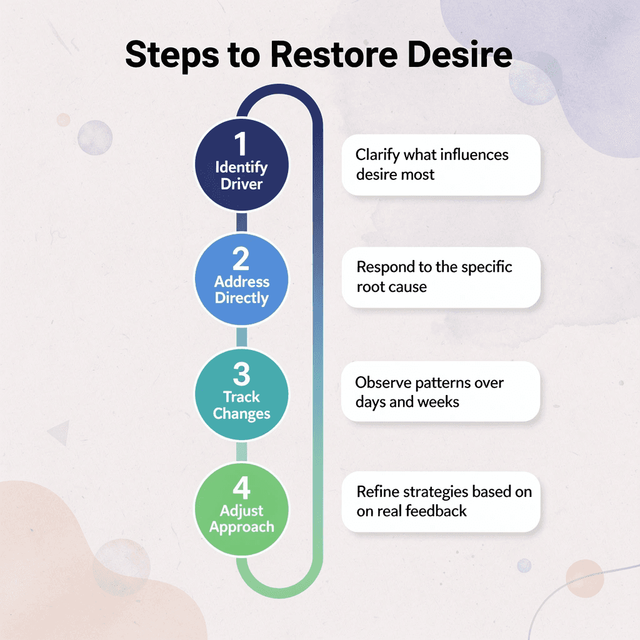
Sexual health responds to systems, not single fixes. When libido drops during GLP-1 therapy, the most effective response is a step-by-step approach: identify the likely driver, address it directly, and track whether anything shifts. The same symptom — reduced desire — can stem from multiple distinct causes, and treating them all the same way wastes time and delays relief.
Root Cause | Mechanism | Primary Fix |
|---|---|---|
Caloric restriction | Suppresses hormone production | Optimize protein & calorie intake |
Dose-related dopamine blunting | Reduces reward signaling | Discuss dose adjustment with provider |
Vaginal dryness | Creates anticipatory avoidance | Topical moisturizers or lubricants |
Chronic stress | Keeps the nervous system in a defensive state | Stress regulation & nervous system support |
What problem does low caloric intake create for hormones?
Problem: GLP-1 medications significantly reduce hunger, causing many users to consume fewer calories than their bodies require. Estrogen, testosterone, and progesterone all depend on adequate dietary fat and calories for production.
Possible mechanism: When caloric intake drops below the level needed for optimal function, the body halts reproductive hormone production to conserve energy. The body deprioritizes libido when energy is scarce.
Recommended action: Eat adequate protein at every meal, include healthy fats such as avocado, olive oil, and fatty fish, and avoid skipping meals even when not hungry. A registered dietitian experienced in GLP-1 therapy can determine appropriate portion sizes to sustain weight loss without disrupting your hormone levels.
Expected outcome: Adequate nutrition often improves energy and desire within four to eight weeks, particularly for women whose estrogen levels are affected by calorie restriction.
Check your labs before assuming the worst
Problem: Low sex drive, tiredness, and mood changes may appear medication-related but are often treatable underlying issues.
Possible mechanism: GLP-1 therapy accelerates weight loss, altering how your body handles hormones. Testosterone, thyroid hormones, iron, vitamin B12, and vitamin D can shift outside their optimal ranges during rapid changes in body composition. Each can independently reduce sexual desire and function.
Recommended action: Ask your prescriber to order a comprehensive panel that includes sex hormones, thyroid function, and key micronutrients. According to a 2025 clinical review published in Obesity Pillars, sexual dysfunction affects approximately 40 to 45 percent of women and 30 percent of men with obesity before GLP-1 therapy begins, meaning some users arrive with pre-existing hormonal vulnerabilities that the medication's rapid physiological changes can amplify.
Expected outcome: Fixing a deficiency—whether low testosterone in men or suboptimal thyroid function in women—often produces faster and more lasting improvements than behavioral intervention alone.
Track side effects with specific severity ratings logged alongside dose days and food intake. "I haven't felt like myself lately" gives a clinician nothing to work with; a pattern gives them actionable data. A GLP-1 app like MeAgain brings dose timing, meal logs, and symptom severity together in one place, so you arrive at appointments with data rather than approximations.
Address physical comfort directly
Problem: Vaginal dryness and discomfort during sex create a feedback loop where anticipated pain reduces desire before intimacy begins.
Possible mechanism: Rapid weight loss alters estrogen levels, which directly affect vaginal tissue elasticity and lubrication. This tissue-level change requires focused treatment to improve.
Recommended action: Use vaginal moisturizers regularly, not only before sex, and consider pelvic floor physical therapy if discomfort persists. For significant atrophy, a clinician may discuss prescription options. Comfort is necessary for desire.
Expected outcome: Most women who address vaginal health directly report meaningful improvements in both comfort and spontaneous desire within six to twelve weeks of consistent treatment.
Manage stress as a biological input, not a lifestyle preference
Problem: Chronic stress keeps your autonomic nervous system in a sympathetic state, trapping your body in "fight or flight" mode. This physically prevents sexual arousal, and willpower cannot override it.
Possible mechanism: Cortisol competes with sex hormones at the receptor level. During prolonged stress, the body redirects resources from reproductive functions toward survival. Gentle exercise, breathwork, and body-awareness practices shift the nervous system toward parasympathetic dominance, where desire can resurface.
Recommended action: Focus on resistance training to prevent muscle loss from GLP-1 therapy, which also improves mood and hormonal balance. Add a consistent mindfulness or breathing practice (even 5 minutes daily) to lower baseline cortisol levels. This creates the physical conditions where desire can return naturally.
Expected outcome: Users who combine structured exercise with stress reduction typically report mood improvements within three to four weeks, with libido following as a downstream benefit.
How do you talk to your partner about medication-related low libido?
Low libido is not a personal failure. Treat it as a health issue rather than a relationship problem to reduce the pressure that worsens the situation. A direct conversation with your partner—"my medication is affecting my desire right now, and it's not about you"—maintains intimacy during this time. Non-sexual physical closeness like massage, extended skin contact, and sensory exploration without performance pressure keeps connection active while the body adjusts.
How do you bring this up with your prescriber?
Be direct with your doctor. As Dr. Dovec says, you can say "something feels different" or "I don't feel like myself sexually." Dosage adjustments, hormone monitoring, and referrals to urologists or endocrinologists are legitimate clinical responses. According to the Kinsey Institute at Indiana University, 50 to 60 percent of GLP-1 users report changes in sex and dating. Your provider has almost certainly heard this before.
When to seek medical attention promptly
Low libido exists on a spectrum, and most symptoms can be managed. Seek medical help immediately for: sudden or severe loss of desire without clear cause, pain during sex, vaginal burning, irregular periods or hot flashes, extreme tiredness, or mood changes that interfere with daily life. Also consult a doctor about unexplained bleeding, chest pain, fainting, or severe depression. Sexual side effects are often manageable once the underlying cause is identified. The work begins with attention to the right details at the right time.
Related Reading
Protect Your Sexual Health While Losing Weight with MeAgain
Most people track their weight and call it done. But when sexual side effects show up, they rarely come with an obvious cause. Our GLP-1 app logs side effects with severity ratings alongside dose timing, nutrition, and activity data, so patterns become visible. What felt random becomes something you can bring to your clinician with context and confidence.
"What felt random becomes something you can bring to your clinician with context and confidence." — MeAgain
What MeAgain Tracks | Why It Matters |
|---|---|
Side effects + severity ratings | Reveals patterns tied to dose timing |
Nutrition data | Connects diet to energy and symptoms |
Activity data | Links movement to overall well-being |
Dose timing | Identifies windows of peak side effects |
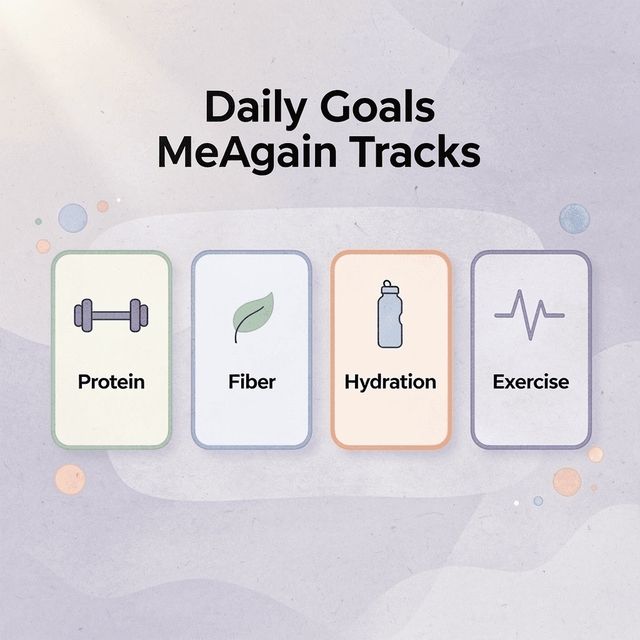
Download MeAgain and in less than five minutes, you'll have a personalized GLP-1 companion that gamifies your daily protein, fiber, water, and exercise goals. Your capybara coach tracks these habits while your Journey Card captures every milestone as your body transforms.
Your medication is doing its job. MeAgain helps you build the habits that support your energy, confidence, and sexual well-being alongside weight loss, so you'll know exactly what to focus on each day instead of wondering if you're doing enough.