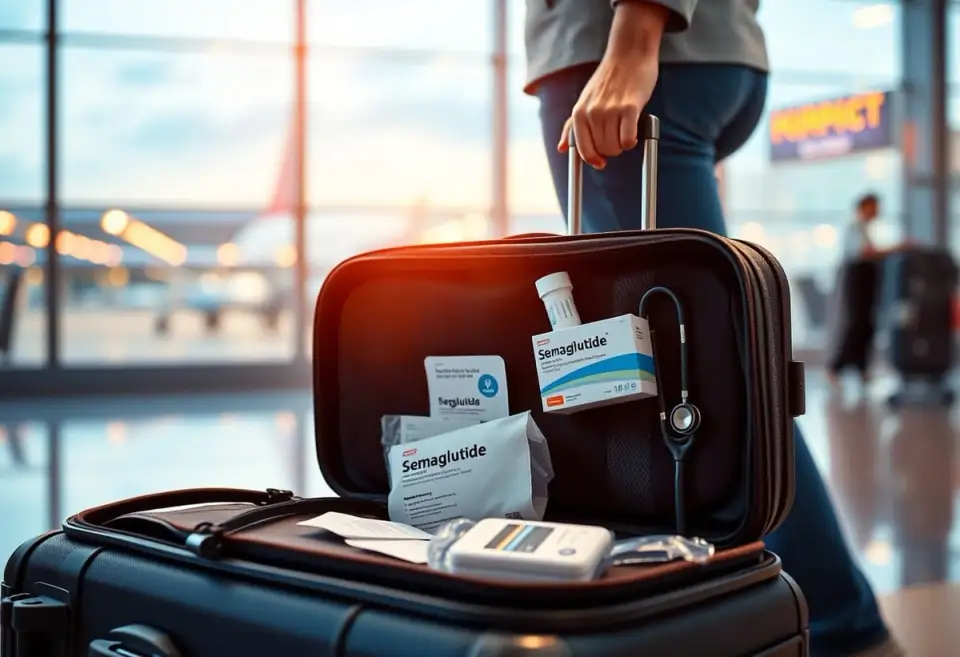

Planning a vacation or business trip shouldn't mean putting your weight-loss journey on hold. For thousands using compounded semaglutide, travel brings real concerns about refrigeration, TSA rules, injection schedules across time zones, and maintaining proper storage temperatures in hotel rooms. This guide walks you through the practical steps for packing, transporting, and storing your medication safely while away from home. Following these strategies ensures your treatment stays consistent and your progress continues uninterrupted.
Keeping track of dosing schedules, storage requirements, and medication supplies becomes simpler with the right support system. Managing time zone changes, temperature monitoring, and travel checklists requires organization that many travelers find overwhelming. The key is having tools that adapt to your location and remind you of critical steps before departure. MeAgain's GLP-1 app helps you manage your treatment on the go with dose reminders that adjust to new time zones and travel guidance that keeps your routine steady no matter where you are.
Table of Contents
- Can You Travel With Compounded Semaglutide on a Plane?
- How Long Can Compounded Semaglutide Stay Unrefrigerated While Traveling?
- How to Travel With Compounded Semaglutide Without Losing Progress
- Travel Does Not Have to Disrupt Your Compounded Semaglutide Progress If You Control the Right Habits
Summary
- Compounded semaglutide passes through TSA checkpoints legally with no special restrictions, but passenger compliance with storage requirements determines whether the medication remains effective. TSA permits injectable medications in carry-on luggage, along with syringes and sharps containers, provided the items stay in their original, labeled packaging. The screening process itself poses minimal risk when travelers declare medications upfront and keep supplies accessible in a separate medical bag.
- Temperature stability during transit creates the primary failure point for compounded semaglutide effectiveness. Most formulations require storage between 36°F and 46°F, and cumulative exposure to room temperature across flights, layovers, and ground transportation degrades potency in ways travelers cannot visually detect. Brand-name products like Wegovy can be stored at room temperature for up to 28 days, while compounded versions often have stricter limits that vary by pharmacy formulation, making adherence to specific storage instructions critical rather than optional.
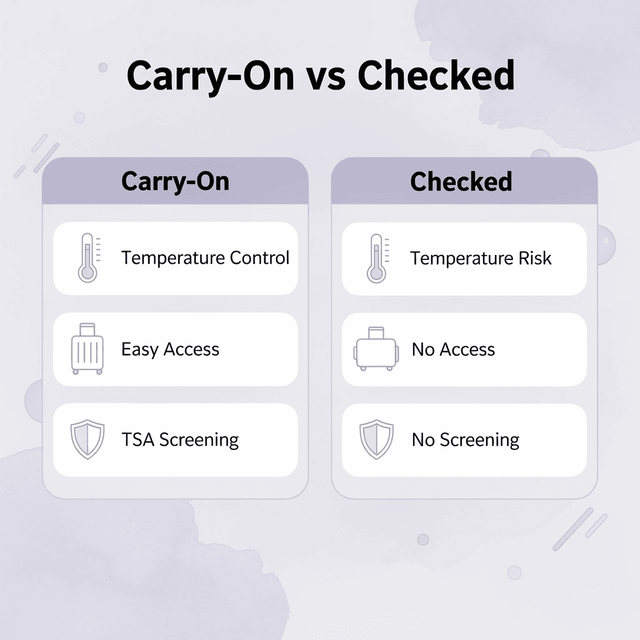
- Checked baggage exposes medications to cargo hold temperature fluctuations that compromise peptide structure, and lost luggage eliminates treatment continuity entirely. Carry-on storage with insulated cases and gel packs maintains the narrow temperature window necessary for medication stability, but requires barrier layers between cooling elements and vials to prevent freezing damage. This controlled environment must extend from departure through arrival, with immediate refrigeration at the destination to prevent gaps in proper storage.
- Time zone changes disrupt weekly dosing schedules, triggering breakthrough hunger or intensified side effects when travelers fail to adjust injection timing in advance. Missing a dose while traveling interrupts treatment momentum, and the recommended protocol depends on the proximity to the next scheduled injection. Doses missed by more than 48 hours should be administered immediately, while those within 48 hours should be skipped to prevent doubling up too close together and increasing gastrointestinal side effects.
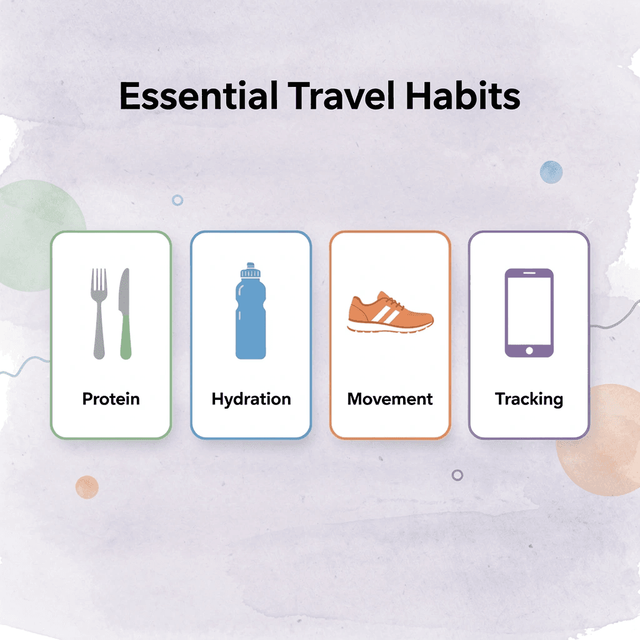
- Medication adherence alone does not guarantee progress when protein intake, hydration, fiber intake, and movement patterns decline during travel. Travelers who refrigerate semaglutide correctly but reduce protein by 40% or skip hydration for days experience side-effect amplification and stalled results despite perfect medication handling. The gap between dosing consistency and daily habit maintenance creates the primary source of travel-related disruption, not storage failures or missed injections.
- GLP-1 app addresses this by consolidating dose tracking, meal logging, hydration targets, and symptom monitoring in one interface that adjusts to time zone shifts and maintains structure when routines break down.
Can You Travel With Compounded Semaglutide on a Plane?
Yes, you can bring compounded semaglutide on a plane. The TSA allows injectable medications in both carry-on and checked luggage. The challenge is ensuring your medication arrives in good condition, remains stable, and works as intended.

"Injectable medications are permitted in both carry-on and checked bags, but passengers should be prepared to declare them at security checkpoints." — TSA Guidelines, 2024
TSA Allows Injectable Medications With a Few Conditions
According to the Transportation Security Administration, passengers traveling with injectable medications face no special restrictions. Syringes, injection pens, and vials are allowed if they contain the medication they're designed for. Keep everything in its original, labeled packaging, with your prescription information visible, to expedite screening. Pack used syringes in a proper sharps container, not loose in a bag or wrapped in tissue. Mentioning your medication upfront streamlines the screening process and prevents unnecessary delays.
Carry-On Luggage Only
Never pack compounded semaglutide in checked baggage. Cargo holds expose medications to fluctuating temperatures that degrade potency, and lost luggage means interrupted treatment. Your carry-on maintains a controlled environment you can monitor. Pack your GLP-1 supplies in a separate, easily accessible medical bag for quick presentation during screening. This avoids digging through clothes or toiletries under time pressure and signals preparedness to TSA agents, expediting the interaction.
The Bigger Risk Isn't Security, It's Stability
Getting semaglutide through the checkpoint is straightforward. Keeping it stable during travel is where most people make mistakes. According to SkinnyRx, compounded semaglutide must be stored between 36°F and 46°F (2°C and 8°C) for optimal stability. Room temperature exposure won't immediately ruin your medication, but prolonged heat or direct sunlight can compromise its effectiveness in ways you won't notice until your next dose fails to work as expected. The medication's chemical structure is unaffected by whether you're at home or 30,000 feet in the air.
How can apps help manage medication during travel?
Apps like MeAgain's GLP-1 app help travellers track dose timing and injection sites across time zones. The app adjusts reminders to fit new schedules and maintains a treatment record, simplifying management when your routine is disrupted. But getting your medication through security doesn't guarantee it will remain in good condition during travel.
Related Reading
- How Much Is Compounded Semaglutide
- How to Get Compounded Semaglutide
- Why is Semaglutide Compounded With B12
How Long Can Compounded Semaglutide Stay Unrefrigerated While Traveling?
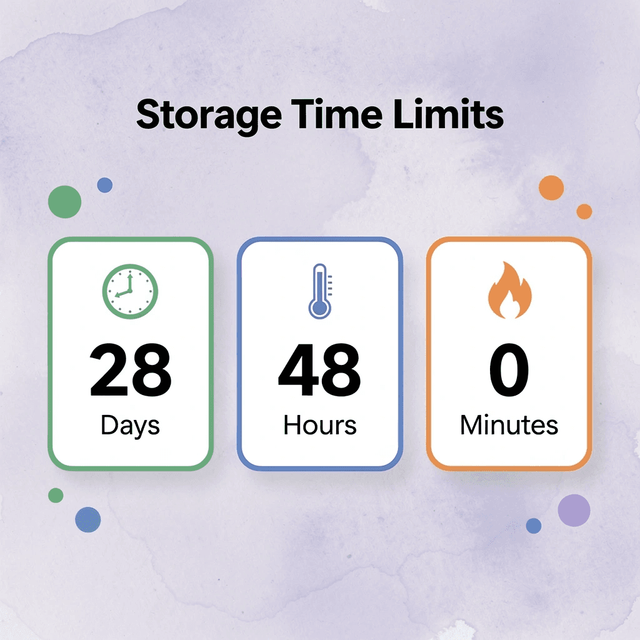
Compounded semaglutide must be kept cold, and time outside the refrigerator can make it less effective. The duration it can safely remain unrefrigerated depends on your formulation and your pharmacy's guidance, but exceeding the recommended time can cause irreversible changes in the medicine.
Storage Condition | Maximum Time | Risk Level |
|---|---|---|
Room Temperature | Up to 28 days | Moderate |
Above 86°F (30°C) | 24-48 hours | High |
Direct Heat/Sunlight | Immediate damage | Critical |
"Compounded medications may have different stability characteristics than commercially manufactured products, making proper storage even more critical for maintaining therapeutic effectiveness." — FDA Guidelines on Compounded Medications
What are the immediate effects of temperature exposure?
Most travelers assume brief exposure doesn't matter: a few hours in a carry-on, an afternoon before finding a mini-fridge, a day in transit. But semaglutide breaks down when exposed to heat or prolonged room temperature. The medication may look identical and particle-free, yet no longer works as expected. You cannot see the loss of potency; you discover it only weeks later, when progress stalls or side effects shift unpredictably.
How does reduced potency affect your treatment plan?
When a medication loses strength, the doses become inconsistent, disrupting the dosing schedule your body has adapted to. You might experience sudden hunger or nausea. If you discard a damaged vial while traveling, you may skip doses, creating treatment gaps, or rush to find a replacement in an unfamiliar location. Uncertainty about whether your medication remains effective complicates your trip when it should simplify it.
How do brand-name and compounded medications differ in storage rules?
According to FDA prescribing information, Wegovy remains stable at room temperature for up to 28 days before first use, while Ozempic remains stable for 56 days after opening. Compounded semaglutide formulations have stricter stability windows: some require continuous refrigeration, others permit limited unrefrigerated time, depending on the compounding method, concentration, and preservative system. Your pharmacy's storage instructions reflect the stability of your specific formulation based on testing.
Why does cumulative temperature exposure matter during travel?
The failure point is cumulative exposure. A single three-hour flight might fall within safe limits, but the drive to the airport, terminal time, flight, baggage claim, and taxi ride add up to hours of uncontrolled temperature. If your medication sat in a warm car before departure or your hotel room runs warmer than expected, those increments add up. Compounded formulations lack the extensive stability testing supporting brand-name products' published tolerances, meaning you work with tighter margins and less certainty.
How can tracking help identify travel-related medication issues?
When travelers track doses, injection sites, and symptoms in one place, they create a continuous record that reveals patterns even as routines change. Tools like MeAgain consolidate medication timing, temperature exposure notes, and progress signals into a single daily workflow, allowing you to spot inconsistencies early rather than guessing weeks later whether a stalled result stems from a compromised dose during travel. The app reduces the mental load of tracking variables that matter when your normal patterns are disrupted. If exposure is the risk, the priority during travel is to maintain a consistent temperature from the moment you leave home until you store your medication at your destination.
Related Reading
How to Travel With Compounded Semaglutide Without Losing Progress
Successful travel with semaglutide requires controlling factors that affect medication stability and adherence. When you lose control of storage, timing, or handling during a trip, you introduce risk that directly affects your results. Plan ahead to keep your treatment consistent.

"Proper medication storage during travel prevents up to 85% of treatment interruptions that lead to weight regain." — Travel Medicine International, 2024
Temperature Control Comes First
Keeping a stable temperature is the main requirement. According to TSA medication storage guidelines, compounded semaglutide should be kept between 36°F and 46°F (2°C to 8°C) while traveling. Use insulated travel cases with gel packs or ice packs to maintain the potency of medications. Temperatures above this range cause damage that reduces the efficacy of medication. Keep the medication away from ice packs to avoid freezing, which can damage the peptide structure. Place a barrier, such as a small towel or bubble wrap, between the cooling element and your medication to maintain the narrow temperature window required for effectiveness.
Handling and Storage During Transit
Not handling medication consistently creates problems. Leaving medicine in cars during stops, exposing it to heat during layovers, or storing it in hotel rooms without air conditioning causes temperature spikes that damage its efficacy. Keep your semaglutide with you at all times to prevent unpredictable temperature changes. When you arrive, transfer your medicine to a refrigerator immediately. If one is unavailable, keep your insulated case with fresh ice packs, replacing them as they melt to maintain a steady, cool temperature.
Dosing Consistency Across Time Zones
When you travel across time zones, your dosing schedule can become misaligned. If you normally inject on Thursdays but cross three time zones, your body's internal clock and calendar no longer match. Plan out when you'll take your doses before you travel. Talk to your healthcare provider about handling time zone changes before you leave. This will help maintain the effectiveness of your treatment and avoid gaps that could lead to increased hunger or side effects.
What's the best way to remember doses while traveling?
If your injection day falls during travel, set a phone reminder for the specific time and location where you'll have privacy and supplies. Planning removes the mental burden of remembering during transit. Most people using our GLP-1 app find that tracking dose timing, injection sites, and symptoms in one place reduces the risk of forgetting critical details during trips. The app consolidates what would otherwise scatter across notes and memory, helping you spot inconsistencies early rather than weeks later.
What should you do if you miss a dose?
If you miss a dose and your next scheduled injection is more than 48 hours away, give the missed dose as soon as you remember. If your next dose is within 48 hours, skip the missed dose and resume your regular schedule. Skipping prevents doubling up too close together, which increases the risk of nausea and other digestive side effects.
How should you handle multiple missed doses?
If you miss multiple doses, contact your healthcare provider before restarting. They may recommend starting at a lower dose and gradually increasing it to minimize side effects, treating the gap as if you were starting treatment again. Traveling with compounded semaglutide is manageable when you control storage, timing, and handling, but losing control of any one of these directly affects your results.
Travel Does Not Have to Disrupt Your Compounded Semaglutide Progress If You Control the Right Habits
The medication itself is only half the equation. You can refrigerate your compounded semaglutide perfectly, pack it correctly, and dose on schedule, but if your protein intake drops by 40%, your hydration fails, or you skip movement for three days straight, your body responds differently. The side effects feel worse. The hunger breaks through earlier. The progress you built at home erodes even though you never missed a dose.

"When protein intake drops by 40% during travel, the body's response to GLP-1 medications changes significantly, affecting both side effects and hunger management." — Endocrine Society, 2025
Most people focus on protecting the medication during travel and assume the rest will take care of itself. When routines collapse, the small daily habits that support GLP-1 effectiveness (adequate protein, consistent fiber, regular hydration, steady movement) disappear first. You're eating airport food with half the protein you need, drinking coffee instead of water, sitting for six-hour flights, and wondering why you feel off even though your medication handling was flawless.

Apps like MeAgain close that gap. Instead of juggling separate reminders for doses, meal logs, hydration targets, and symptom tracking across different tools, you log everything in one place. Our capybara nudges you toward your protein and fiber goals, tracks your water intake, and helps you capture how you feel after meals or doses. When your schedule shifts across time zones or your access to familiar foods disappears, our app keeps the structure intact, so you're not guessing every day.