

Starting a GLP-1 medication like semaglutide or tirzepatide can feel like a turning point for women pursuing meaningful weight loss and better metabolic health. Nausea, fatigue, digestive discomfort, and other GLP-1 side effects that women commonly experience can make staying consistent harder than expected. Understanding why these reactions happen and how to manage them helps women stay on track without feeling miserable through the process.
Having the right support alongside treatment makes a genuine difference. Tracking symptoms, monitoring how the body responds to each dose, and knowing what is normal versus what needs attention remove much of the guesswork that can make side effects feel overwhelming. Women navigating GLP-1 therapy can find structure and guidance through the GLP-1 app.
Table of Contents
- Are GLP-1 Side Effects Different for Women?
- 5 Most Common GLP-1 Side Effects Women Experience
- How Women Can Reduce GLP-1 Side Effects Without Slowing Weight Loss
- Check Your Personal GLP-1 Side Effect Risk and Take Action Now
Summary
- Women experience nausea and vomiting at 2.5 times the rate of men on GLP-1 medications like semaglutide and tirzepatide, according to Olio Labs research using Truveta Data. This gap is not explained by dosing differences alone. Higher GLP-1 receptor expression in brain regions that regulate nausea, combined with estrogen's role in amplifying drug response, creates a physiologically distinct experience that clinical trial summaries rarely surface in ways that reach the average patient.
- The five most common side effects women report, nausea, constipation, fatigue, dizziness, and menstrual changes, rarely appear in isolation. Nausea suppresses appetite; reduced intake accelerates fatigue; constipation creates pelvic floor stress; and dizziness discourages hydration. Each effect feeds the next, and the cumulative experience is significantly harder to manage than any single symptom in isolation would suggest.
- Muscle loss is one of the most consequential and least-discussed trade-offs of GLP-1 treatment. According to Harvard Health Publishing, muscle mass can decrease by up to 40% of total weight lost during treatment without resistance exercise. Because women have lower baseline lean mass than men, this depletion has an outsized effect on metabolism, bone density, and long-term weight maintenance.
- Gastrointestinal symptoms are the primary driver of early discontinuation. Approximately 20 to 30% of patients stop GLP-1 therapy altogether because of nausea and digestive discomfort, according to 2025 primary care guidance published in PMC. That discontinuation rate is significant because stopping the medication does not resolve the underlying health condition that prompted treatment in the first place.
- Menstrual changes on GLP-1 medications are biologically grounded, not coincidental. These drugs influence the hypothalamic-pituitary-ovarian axis, the hormonal pathway governing ovulation and cycle timing. Rapid fat loss also reduces estrogen synthesis, since adipose tissue is an active site of production. Whether a woman experiences more regular cycles or increased disruption depends on her individual hormonal profile, particularly whether she has a condition like PCOS.
- Prescriptions for GLP-1 agonists have more than tripled since 2020, according to Rand Health Quarterly, meaning millions of women are starting these medications with information that was never designed to reflect female-specific biology. Clinical trial summaries report averages across sexes, marketing focuses on outcomes, and the nuance around hormonal interactions, bone density tradeoffs, and neuropsychiatric signals rarely reaches patients at the point of care.
- MeAgain's GLP-1 app addresses this gap by connecting symptom logs to dose timing, food intake, and hydration in one place, enabling identification of patterns that isolated tracking methods consistently miss.
Are GLP-1 Side Effects Different for Women?
Most women starting Ozempic, Wegovy, or Mounjaro expect reduced appetite and steady weight loss, not the wave of symptoms that often arrives first without clear explanation.

The side effect profile for GLP-1 medications is well-documented. The STEP trials for semaglutide (Wegovy) reported nausea in roughly 44% of participants, constipation in 24%, and vomiting in 24%. The SURMOUNT trials for tirzepatide (Zepbound) showed similar patterns, with nausea affecting up to 31% of users and constipation reaching 17%. These are expected reactions, included in FDA prescribing information. However, clinical averages obscure important differences: the numbers don't separate what men experience from what women do.
Why women aren't just experiencing "more" side effects
The critical difference lies in biology. According to Olio Labs research using Truveta Data, women experience nausea and vomiting at 2.5 times the rate of men. Researchers attribute this gap to higher GLP-1 receptor expression in brain regions controlling nausea and to estrogen's role in amplifying drug response. Women also have less lean muscle mass on average, absorb medications differently due to body composition, and experience hormonal fluctuations across their cycles that alter how the drug affects them week to week.
What happens when the body doesn't get enough nutritional support?
Most women manage early side effects by eating less food. When nausea reduces appetite on top of an already low-calorie intake, the body uses muscle for energy rather than fat. Hair shedding becomes noticeable around months two and three. Menstrual cycle changes occur and are sometimes dismissed as stress.
These symptoms often connect to the same root cause: the body responding to a significant metabolic shift without sufficient nutritional support. Tracking symptoms in relation to dose timing, food intake, and hydration reveals actionable patterns. This is the core logic behind the MeAgain GLP-1 app, which connects side effect logs to what you ate, how much you drank, and where you are in your dosing cycle.
Why does the conversation stay surface-level
Clinical trials report averages. Marketing highlights outcomes. Social media compresses everything into a single word: nausea. None of these channels explains that a woman in the luteal phase of her cycle may respond to her injection dose differently than she did two weeks prior. The STEP trials enrolled approximately 75% female participants, yet published summaries rarely break down adverse event rates by sex in ways that reach patients. According to Rand Health Quarterly, prescriptions for GLP-1 agonists have more than tripled since 2020, meaning millions of women are starting these medications with information never designed to reflect their specific biology.
What does incomplete information actually cost women?
Incomplete information leads women to make two costly mistakes: stopping the medication because they believe something is wrong, or continuing it without changes because they view suffering as the price of progress. Knowing which side effects are expected is only the beginning of what women need to understand.
Related Reading
- GLP-1 Plateau
- How Does GLP-1 Help You Lose Weight
- How Much Protein On GLP-1
- How Much Water To Drink on GLP-1
- Why Am I Not Losing Weight On GLP-1
- Can GLP-1 Cause Gastroparesis
- Can GLP-1 Cause Kidney Stones
- Which GLP-1 Has The Least Side Effects
- Does GLP-1 Cause Acid Reflux
- Why Am I Not Losing Weight on Zepbound
5 Most Common GLP-1 Side Effects Women Experience
GLP-1 side effects in women don't follow a single script. They're shaped by hormones, body composition, reproductive status, and metabolic history—meaning two women on the same semaglutide dose can feel completely different by day three. Standard clinical summaries reflect male-weighted trial data, leaving women to interpret symptoms that were never fully studied in people like them.
"Standard clinical summaries often reflect male-weighted trial data, leaving women to interpret symptoms that were never fully studied in people like them."

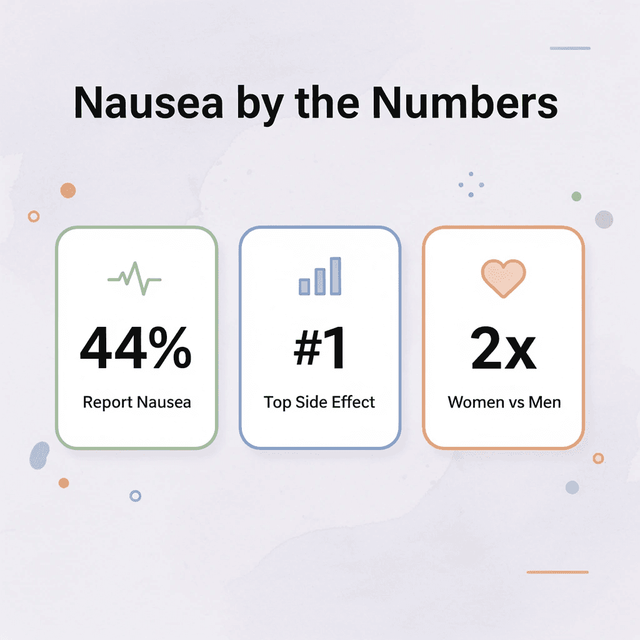
According to Harvard Health Publishing, nausea affects up to 44% of people taking semaglutide, making it the most common side effect. But research from Olio Labs using Truveta Data shows women experience GLP-1 side effects 2.5 times more often than men—a gap pointing to biology, not chance.
Side Effect Factor | General Population | Women Specifically |
|---|---|---|
Nausea prevalence | Up to 44% | Disproportionately higher |
Overall side effect rate | Baseline | 2.5x more frequent |
Data representation in trials | Standard | Historically underrepresented |
The five categories below connect to specific mechanisms, explain why they manifest differently in women, and ground observations in evidence rather than anecdote.
1. Metabolic and Hormonal Effects
GLP-1 receptor agonists improve insulin function, as measured by lower HOMA-IR scores. This reduces chronic hyperinsulinemia, which drives excess androgen production in PCOS, lowering total testosterone and DHEAS while raising sex hormone-binding globulin levels. These changes alleviate symptoms including excess hair growth, acne, and irregular cycles.
What happens to ovulation when insulin levels fall?
Insulin resistance and ovulatory function are directly connected. When insulin levels drop, the hypothalamic-pituitary-ovarian axis responds. For some women, regular cycles return after years of absence. Track this change carefully, as it affects contraceptive planning.
2. Reproductive Health
The fertility picture with GLP-1 medications is complicated. Better ovulation and lower androgen levels offer promise for women with obesity-related infertility. However, current guidelines recommend stopping GLP-1 receptor agonists before trying to get pregnant, as the effects on endometrial receptivity, placental function, and fetal development remain inadequately understood.
When should women on GLP-1 medications plan their exit before conception?
Animal studies show improved ovarian morphology in PCOS models treated with GLP-1 receptor agonists, though human data on implantation outcomes remain limited. These medications may help women achieve pregnancy, but require a carefully timed exit from the drug before conception. Any woman of reproductive age on a GLP-1 medication needs a clear conversation with her prescribing clinician about this window.
3. Bone and Cardiovascular Health
When you lose weight quickly, your bones receive fewer signals to rebuild themselves, leading to a loss of bone mineral density. GLP-1 receptor agonists can promote bone growth, but scientists remain uncertain whether this benefit offsets the bone density loss associated with rapid weight loss. This concern is particularly acute for postmenopausal women, who face elevated fracture risk.
What cardiovascular benefits do GLP-1 medications offer women?
Heart and blood vessel benefits are well documented. Clinical trials show reductions in major cardiovascular events, improved endothelial function, and lower blood pressure. For women who present with atypical cardiovascular symptoms and higher lifetime heart failure risk, these outcomes are particularly important. Bone health monitoring should be included in any long-term GLP-1 plan for women.
4. Neuropsychiatric Considerations
Some women on GLP-1 medications describe a quieting of mental noise around food: cravings reduce, the compulsive pull toward certain foods softens, and in some cases, the urge to drink alcohol or smoke decreases. This pattern suggests GLP-1 receptors in the brain affect dopamine pathways and reward circuitry beyond appetite regulation. Early evidence points to anti-inflammatory and neurotransmitter-modulating effects that may support clearer thinking and improved focus.
What are the neuropsychiatric risks worth monitoring closely?
The other side matters equally. The European Medicines Agency has begun formally monitoring reports of increased depression, anxiety, and suicidal thoughts in GLP-1 users. Some women report feeling emotionally flat, experiencing brain fog, or developing low-grade anxiety that did not exist before starting the medication. Tracking mood alongside physical symptoms gives patients and clinicians a clearer picture of what is happening week to week.
How does tracking mood patterns help women have better clinical conversations?
Most women manage their GLP-1 journey through scattered notes and memory, so mood changes go unnoticed until they become impossible to ignore. Our MeAgain GLP-1 app connects side effect severity ratings (0-10 scale) to dose timing, food, hydration, and weight on a single shared timeline. When anxiety spikes consistently 48 hours after a dose increase, a woman can bring that specific pattern to her doctor rather than a vague sense that something feels off.
5. Anatomical and Pelvic Effects
Pelvic symptoms are among the least discussed GLP-1 side effects in women. Slowed gastric motility, a core mechanism of these medications, increases the risk of constipation. Chronic straining stresses the pelvic floor repeatedly, causing pressure, incomplete bladder emptying, urinary leakage, or persistent heaviness.
Why are vaginal dryness and pelvic discomfort being reported?
Vaginal dryness and changes in genital comfort are being reported, though the mechanism is not fully understood. Rapid fat loss alters local tissue composition. Hormonal shifts affect mucosal hydration. Constipation-related pelvic tension changes how surrounding structures feel. For women going through or past menopause, these effects can overlap with existing symptoms, making it difficult to identify the cause. The experience is real, the physiology is sound, and dismissing it as a coincidence does not serve the patient.
What practical levers help the body adapt to these pelvic changes?
Drinking enough water, eating protein, getting fiber, and being aware of your pelvic floor directly affect how your body adjusts to a medication that slows digestion, changes hormones, and reshapes your appearance. Managing these side effects does not require choosing between relief and results.
Related Reading
- Why Do Some People Not Lose Weight on Ozempic
- Slow Weight Loss On Wegovy
- Why Am I Not Losing Weight On Zepbound
- Can You Stop Glp-1 After Losing Weight
- How Many Weeks Is Considered A Weight Loss Plateau
- Can Glp-1 Cause Low Blood Sugar
- Glp-1 And Exercise
- Can Glp-1 Cause Headaches
- Can Glp-1 Cause Low Blood Pressure
How Women Can Reduce GLP-1 Side Effects Without Slowing Weight Loss
Protecting your results starts with protecting your body's foundations, and the two are not in conflict. Your long-term weight loss outcomes depend on how well you support your body through the process, not on the medication alone.
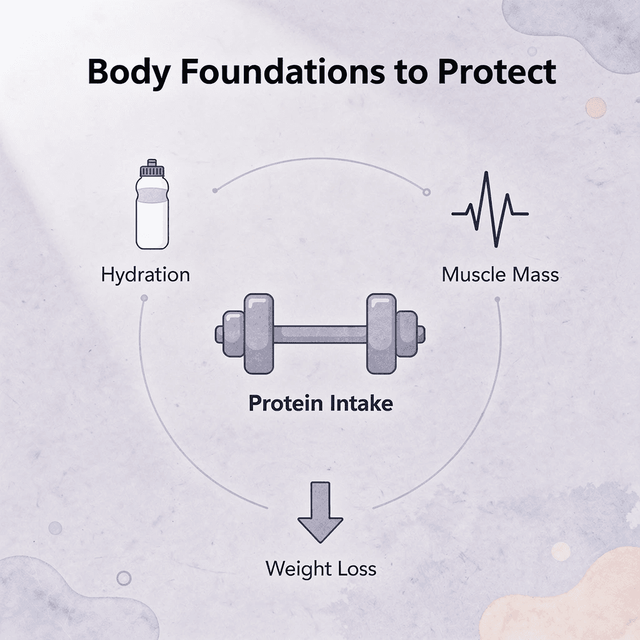
The most effective approach is structural: address each side effect at its mechanism, not its surface. A woman tired on week three may be under-eating protein, under-hydrated, or losing muscle faster than fat. Those are three different problems with three different fixes — and treating them as one is where most women go wrong.
"A woman tired on week three may be under-eating protein, under-hydrated, or losing muscle faster than fat — three distinct problems that each demand a targeted solution."
Symptom | Likely Root Cause | Targeted Fix |
|---|---|---|
Fatigue | Under-eating protein | Increase daily protein intake |
Dizziness / Brain Fog | Under-hydration | Prioritize electrolyte-rich fluids |
Weakness / Plateau | Muscle loss outpacing fat loss | Add resistance training |
Here is the structured breakdown, problem by problem, so you can match your exact symptom to its root cause and act with precision.

Constipation: When digestion slows, the whole system feels it
GLP-1 receptor agonists slow the movement through the gut, increasing stool transit time and discomfort. The fix: increase soluble fiber to 25–38 grams per day (per Academy of Nutrition and Dietetics guidelines) and drink 2–2.5 liters of water daily. A 2021 review in Nutrients confirmed that insufficient fiber combined with low fluid intake is the most consistent predictor of constipation severity in patients on gut-slowing medications. Most women see meaningful improvement in bowel regularity within 7–14 days of consistent application, without any reduction in medication efficacy.
Muscle Loss: The Silent Trade-Off
The failure point is usually here: women reduce calories aggressively, the scale moves fast, and everyone celebrates. But the scale cannot tell you how much of that loss is fat versus lean muscle tissue. According to Harvard Health Publishing, muscle mass can decrease by up to 40% of total weight lost during GLP-1 treatment without resistance exercise. Losing that much lean mass affects your metabolism, strength, bone density, and long-term weight maintenance. The fix is non-negotiable: resistance training two to three times per week combined with a protein target of 1.2 to 1.6 grams per kilogram of body weight daily—the range supported by sports nutrition and obesity medicine guidelines for active weight loss. This is structural protection.
Nausea and GI distress working with the mechanism
The same delayed gastric emptying that makes GLP-1 medications effective at reducing appetite also causes persistent nausea. According to PMC's 2025 primary care guidance on GLP-1 receptor agonists, up to 44% of patients experience nausea, and 20 to 30% discontinue therapy due to gastrointestinal symptoms.
What practical changes reduce nausea on GLP-1 medications?
The practical fix is portion architecture: smaller, lower-fat meals eaten slowly and spaced throughout the day, with fiber introduced gradually. Target 25 grams of fiber daily over two to three weeks, combined with 2 to 2.5 liters of water daily, to support bowel regularity without overwhelming a slow-moving gut. Nausea often peaks 12 to 24 hours after injection day; eating lighter then and more robustly on days two and three is a pattern worth testing.
How does tracking turn a side effect into a readable pattern?
Most women track nausea in isolation, revealing no pattern. When nausea, dose day, meal composition, and hydration are logged together, the signal emerges. Our GLP-1 tracker app connects these data points in one place, showing that nausea reliably spikes on injection day with high-fat breakfasts, not randomly. That shift from managing a side effect to understanding a pattern is where real control begins.
Fatigue and Dizziness: The Hydration and Electrolyte Gap
Fatigue and dizziness on GLP-1 medications are often unreported and poorly addressed. When caloric intake drops sharply, losses of sodium, potassium, and magnesium accelerate, especially in the early treatment weeks. Dizziness when standing, afternoon energy crashes, and difficulty concentrating signal an electrolyte gap, not medication failure. The fix: 2 to 2.5 liters of water daily as a baseline, plus electrolyte-containing fluids or foods (broth, leafy greens, dairy or fortified alternatives) when symptoms appear. If dizziness persists beyond the first few weeks or accompanies heart palpitations, seek clinical review. Blood pressure can drop meaningfully with rapid weight loss, and medication adjustments may be needed.
What happens when you stop
Harvard Health Publishing notes that people regain about two-thirds of the weight they lost within one year of stopping a GLP-1 medication. This underscores the importance of building muscle mass, establishing good eating habits, and strengthening metabolism while taking the medication. These changes help your body maintain its health if the medication is stopped. Every gram of protein you consume, every strength training session you complete, and every time you drink enough water during treatment is an investment in a body that won't reverse the moment you stop taking the prescription. Knowing your personal risk profile before a side effect becomes a crisis changes how you approach that investment.
Check Your Personal GLP-1 Side Effect Risk and Take Action Now
Knowing your personal risk means nothing without action. Most women on GLP-1s track symptoms themselves through a phone note, a mental log, or occasional doctor conversations, missing the critical patterns connecting dose timing, protein intake, hydration, and symptom onset.
"Most patients track GLP-1 symptoms in isolation — missing the interconnected patterns between nutrition timing, hydration, and dose response that drive preventable side effects." — MeAgain Health Insight
Our GLP-1 app was built by an RDN on a GLP-1 herself, so guidance reflects real experience with appetite shifts, fatigue, and body changes — rather than generic nutrition logic. The two-minute GLP-1 Side Effect Risk Check identifies which daily habits may be driving preventable side effects and exactly where to focus first. Download MeAgain today to see precisely where your journey stands.
Tracking Method | What It Misses | What MeAgain Provides |
|---|---|---|
Phone notes / mental log | Pattern connections | Habit-to-symptom mapping |
Occasional doctor visits | Day-to-day shifts | Real-time daily guidance |
Generic nutrition apps | GLP-1 specific needs | RDN-built GLP-1 expertise |