01
Pancreatitis
Acute pancreatitis is listed as a Section 5 warning on every FDA-approved GLP-1. Incidence in randomized trials is low — generally under 1% of participants across SURPASS, SURMOUNT, STEP, and SUSTAIN programs — and published meta-analyses have not consistently found a higher rate than placebo across the class. The UK MHRA strengthened this class warning in January 2026 to explicitly include necrotizing and fatal cases reported postmarketing, citing cumulative Yellow Card adverse event reports. Gallstones are a related risk because rapid weight loss itself increases gallstone formation, and gallstone pancreatitis is the most common non-alcohol cause in the general population. Symptoms can appear at any point in therapy but cluster within the first three months of starting or stepping up the dose. GLP-1 medications should not be restarted in people with a prior history of pancreatitis without an explicit go-ahead from the prescribing doctor.
Same-day call if
Severe, persistent stomach pain radiating through to your back, often with unstoppable nausea or vomiting — stop the medication and go to the ER or call your doctor the same day.
Drug-specific detail: Oral Wegovy pancreatitis detail
02
Thyroid C-cell tumors (FDA boxed language)
Every semaglutide, tirzepatide, liraglutide, and orforglipron label carries the FDA’s strongest warning about thyroid C-cell tumors, based on rodent studies where sustained GLP-1 receptor activation increased C-cell tumor incidence. Whether the risk translates to humans is not established — the human thyroid has far fewer GLP-1 receptors than the rodent thyroid, and long-term human cohort data (including the 17,604-patient SELECT trial and the 104-week SUSTAIN-6 cardiovascular outcomes trial) have not detected an elevated rate — but the FDA requires the warning because the theoretical risk cannot be ruled out. Of note, orforglipron (Foundayo) did not produce tumors in rodents at pharmacologically active doses — the boxed warning is carried as a class precaution only. The class is contraindicated if you or a first-degree family member have a personal or family history of medullary thyroid carcinoma (MTC) or Multiple Endocrine Neoplasia type 2 (MEN2), a rare inherited hormone condition. Routine neck palpation or ultrasound screening of symptom-free individuals is not recommended in current guidelines — the vast majority of people starting a GLP-1 are low-risk for C-cell malignancy.
Same-day call if
A new or rapidly growing lump in your neck, hoarseness, or trouble swallowing — call your doctor the same day, regardless of whether you are on this class.
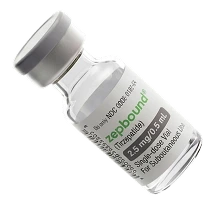
Drug-specific detail: Zepbound thyroid detail
03
Acute kidney injury from dehydration
Acute kidney injury from volume depletion is listed in Section 5 of every GLP-1 label. The mechanism is indirect: severe nausea, vomiting, or diarrhea causes fluid loss, which reduces blood flow to the kidneys. People with pre-existing kidney disease (eGFR under 60 mL/min/1.73 m²) are at higher baseline risk, and the FLOW trial (Perkovic et al., NEJM 2024) showed semaglutide was actually protective in moderate chronic kidney disease when hydration was maintained. The FDA, MHRA, and Health Canada all recommend routine kidney-function monitoring in anyone with existing renal impairment who starts a GLP-1. Practical prevention: stay well hydrated — at least 64 oz of water daily, more on days with significant diarrhea or vomiting — especially in the first weeks at each new dose step. Most reported cases resolve with intravenous fluid replacement and a temporary pause of the medication, then cautious restart at the prior dose.
Same-day call if
Significantly reduced urine output, new leg swelling, or extreme fatigue during a rough stretch of vomiting or diarrhea — call your doctor the same day.
Drug-specific detail: Ozempic kidney detail
04
Vision changes and NAION (semaglutide signal, 2025)
In June 2025, the European Medicines Agency’s safety review committee concluded that nonarteritic anterior ischemic optic neuropathy (NAION) — a rare condition that can cause sudden, painless loss of part of your vision in one eye — is a very rare side effect of semaglutide medicines. The WHO issued a coordinated product alert the same month. Absolute risk appears very low, but the signal prompted label language updates on semaglutide products (Ozempic, Wegovy, Rybelsus) across multiple jurisdictions. The NAION signal has not been linked to tirzepatide, liraglutide, or dulaglutide to date. Separately, diabetic retinopathy worsening is a concern for T2D-product users (Ozempic, Rybelsus, Mounjaro, Trulicity) who see rapid blood-sugar improvement after starting.
Same-day call if
Any sudden vision change on any GLP-1 — blurry vision, loss of part of your visual field, or one-eye vision loss — stop the medication and seek same-day medical evaluation.
Drug-specific detail: Semaglutide vision detail
05
Hypoglycemia with insulin or sulfonylureas
GLP-1 medications alone rarely cause low blood sugar. The drug releases insulin only when glucose is already elevated, so blood sugar does not usually drop dangerously when used on its own. The risk changes substantially when a GLP-1 is combined with insulin or a sulfonylurea (a class of diabetes pills — glipizide, glimepiride, glyburide — that lower blood sugar independently). Your doctor will typically lower those concomitant doses when you start a GLP-1, often by 20–50% at initiation. This concern applies mainly to the Type 2 diabetes products (Ozempic, Rybelsus, Mounjaro, Trulicity) — the obesity-indicated products rarely involve insulin or sulfonylurea stacking. Carry a fast-acting carbohydrate source (glucose tablets or 4 oz juice) for the first two weeks after each dose change, and check your blood sugar before meals if you notice shakiness, sweating, or unusual hunger.
Same-day call if
Shakiness, sweating, confusion, rapid heartbeat, or dizziness — check your blood sugar and treat with fast-acting carbohydrates immediately; follow up with your doctor the same day.
Drug-specific detail: Mounjaro hypoglycemia detail
06
Surgery, anesthesia, and pulmonary aspiration
GLP-1 medications significantly slow gastric emptying, which means food and liquid can remain in your stomach even after the standard overnight surgical fast. During general anesthesia or deep sedation, this raises the risk of pulmonary aspiration — stomach contents entering the lungs — a potentially serious or life-threatening complication. The FDA updated semaglutide labels in November 2024 to add perioperative aspiration as a safety consideration, and tirzepatide labels followed within weeks. The American Society of Anesthesiologists published multi-society guidance recommending that weekly GLP-1 injections be held the week before a scheduled procedure, daily GLP-1 pills held the day of, and point-of-care gastric ultrasound used to confirm an empty stomach when a hold was not possible. Tell your surgical team you are on a GLP-1 at the time of scheduling — not the day of surgery. Even an unplanned procedure or emergency intubation warrants the same flag to the anesthesia team.
Same-day call if
A scheduled procedure requiring anesthesia in the next two weeks — tell your surgical team immediately, ideally at the time of scheduling.
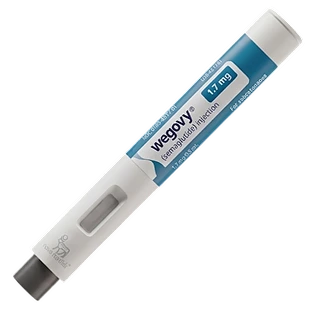
Drug-specific detail: Wegovy surgery detail