
Choosing between GLP-1 pills and injections is a meaningful decision, one that touches on daily convenience, tolerance for needles, and how well each format delivers results for weight loss and blood sugar control. Both forms work by mimicking the glucagon-like peptide-1 hormone, but they differ in bioavailability, dosing schedules, and side effect profiles.
Understanding those differences helps determine which option aligns with a person's lifestyle, health goals, and expectations regarding metabolic outcomes. For those ready to take the next step, the GLP-1 app from MeAgain offers personalized support to help make that choice with confidence.
Table of Contents
- Is GLP-1 Effective for Weight Loss if Taken Orally?
- GLP-1 Pills vs Injections Comparison for Weight Loss
- How to Choose the Right GLP-1 for Your Weight-Loss Goals
- No Matter Which GLP-1 You Choose, Your Daily Habits Still Matter
Summary
- Oral GLP-1 medications produce meaningful weight loss, though injectable forms hold a modest edge in clinical outcomes. In trials of oral Wegovy at 25 mg, participants lost an average of 13.6% of body weight over 71 weeks. Injectable semaglutide produces approximately 15% to 17% weight loss at comparable timeframes, a gap that is real but unlikely to be the deciding factor for patients who would not otherwise use a needle.
- Bioavailability is the central pharmacological difference between the two delivery methods. Oral GLP-1 medications have a bioavailability of roughly 1% without an absorption enhancer, while injectable semaglutide achieves approximately 90% bioavailability by bypassing the digestive system entirely. This difference explains why oral doses are dramatically higher on paper, yet still deliver less active compound into the bloodstream.
- The efficacy gap between pill and injection is narrower than most patients expect. In the OASIS 1 trial, oral semaglutide at 50 mg daily led to approximately 15.1% body weight reduction over 68 weeks, while injectable semaglutide produced about 14.9% weight loss over the same period in the STEP 1 trial. Consistency of use often matters more than which format is theoretically superior.
- Side effect profiles overlap between the two formats but do not feel identical in practice. With the oral pill, medication sits in the stomach longer and must be taken fasted, which can produce more persistent upper-GI symptoms including reflux and nausea compared to the more predictable arc seen with injections. Side effect tolerance is one of the top reasons patients discontinue treatment early, making tolerability a clinically relevant factor in format selection.
- Oral GLP-1 medications offer a structural advantage in distribution and storage. Small-molecule drugs like orforglipron do not require cold storage and are significantly easier to scale globally, which researchers and clinicians have noted as an important factor in expanding access to patients who have been priced out of injectable therapies. Injectable forms currently hold a broader set of FDA-approved indications, including use in adolescents aged 12 and older and in specific liver-related conditions.
- The format a patient will actually take consistently over months and years outperforms the format with higher bioavailability or a longer approval list. Weekly injections remove the daily decision burden, while the oral pill demands a structured morning routine that can break down under travel, busy schedules, or crowded medication regimens. Long-term adherence, not peak pharmacological performance, is what determines real-world outcomes.
- MeAgain GLP-1 app addresses the adherence gap by giving patients on either oral or injectable GLP-1 therapy a trackable daily routine for protein intake, hydration, and movement that supports the behavioral habits medication alone does not build.
Is GLP-1 Effective for Weight Loss if Taken Orally?
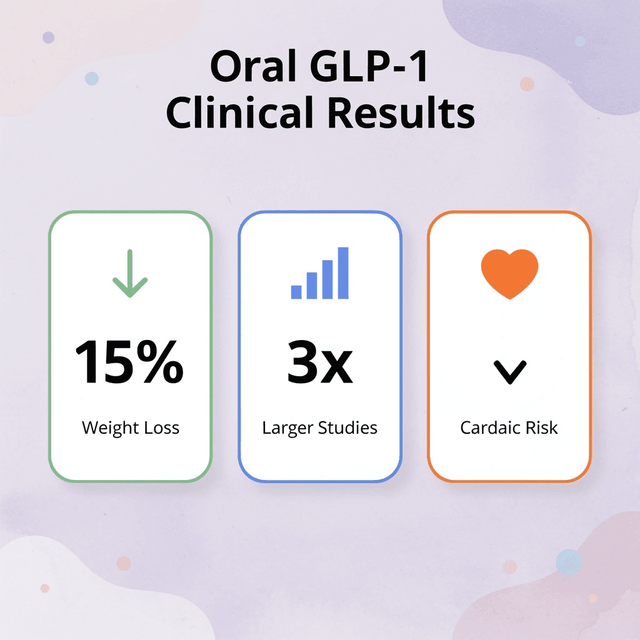
Oral GLP-1 medications work. Clinical trial data from large-scale studies confirm meaningful weight loss, improved metabolic markers, and reductions in cardiovascular risk factors. The follow-up question is not whether they work, but how closely they match what injectable versions deliver.
"Large-scale clinical trials confirm that oral GLP-1 medications produce meaningful weight loss and measurable improvements in metabolic and cardiovascular markers." — Clinical Research Evidence
Why did injections dominate for so long?
GLP-1 medications were developed as injections because digestive enzymes destroy peptide-based compounds before they reach the bloodstream. Recent advances in oral drug delivery have changed this. New protective absorption technologies allow the active compound to pass through the digestive system intact. However, oral versions require strict adherence to timing, fasting, and dosing protocols that injectable versions do not.
How do oral and injectable GLP-1s compare in clinical trials?
The pill and injection produce similar results, with the injection holding a modest edge. Oral Wegovy at 25 mg produced 13.6% average body weight loss over 71 weeks versus 2% for placebo. According to Medscape's analysis of pill versus pen GLP-1 therapies, injectable semaglutide produces 15-17% weight loss compared to roughly 15% for the oral formulation at the highest doses: a modest difference unlikely to be the deciding factor for someone who would not otherwise use a needle.
What does the evidence show for orforglipron?
Foundayo (or forglipron), Eli Lilly's newly FDA-approved daily pill, offers another data point. The ATTAIN-1 trial, published in the New England Journal of Medicine, enrolled 3,127 non-diabetic patients with obesity or overweight with obesity-related complications. Over 72 weeks, participants taking 36 mg of forglipron lost an average of 12.4% of body weight, compared with 2.1% for placebo. Beyond weight loss, patients saw reductions in waist circumference, systolic blood pressure, non-HDL cholesterol, triglycerides, and glycated hemoglobin: outcomes that matter far beyond what any single number on a scale can capture.
Why is the delivery method not just a convenience question
Many people assume a GLP-1 pill works exactly like an injection because the active ingredient targets the same biological pathway. This assumption is incorrect. The route of administration changes how the drug works, affecting bioavailability—how much of the drug enters your bloodstream and remains there consistently—and how your body responds over time. According to HealthCentral's breakdown of oral GLP-1 medications, oral GLP-1s have a bioavailability of less than 1% without an absorption enhancer, which is why formulation matters and why dosing differs significantly from injectable versions. Injectable medications bypass the digestive system entirely, entering your bloodstream more predictably and consistently.
Does the format of a GLP-1 drug affect who can actually access it?
Dr. Louis Aronne, director of the Comprehensive Weight Control Center at Weill Cornell Medicine and lead investigator of the ATTAIN-1 trial, noted that oral formulations like orforglipron are small-molecule drugs, not peptides. This means they do not require cold storage and are significantly easier to distribute and scale globally. "The distribution and storage of a small molecule is less expensive, and scalability is simpler," Aronne noted. "Given the worldwide demand, these are important factors in making treatment available to those in need." Avlin Imaeda, MD, PhD, a Yale Medicine gastroenterologist board-certified in obesity medicine, added that more options increase access and could lower costs for patients priced out of injectable therapies. But knowing that oral GLP-1s work differently at a pharmacological level raises a harder question: one that the numbers alone cannot settle.
Related Reading
- GLP-1 Plateau
- How Does GLP-1 Help You Lose Weight
- How Much Protein On GLP-1
- How Much Water To Drink on GLP-1
- Why Am I Not Losing Weight On GLP-1
- Can GLP-1 Cause Gastroparesis
- Can GLP-1 Cause Kidney Stones
- Which GLP-1 Has The Least Side Effects
- Does GLP-1 Cause Acid Reflux
- Why Am I Not Losing Weight on Zepbound
GLP-1 Pills vs Injections Comparison for Weight Loss
Both oral and injectable semaglutide work through the same biological pathway, but they differ significantly in how they affect daily life, clinical results, and long-term adherence.
"The same GLP-1 mechanism, two very different patient experiences — delivery method can make or break long-term success." — Clinical Pharmacology Insight
Factor | Oral Semaglutide (Pills) | Injectable Semaglutide |
|---|---|---|
Delivery Method | ✅ Swallowed daily | ⚠️ Weekly injection |
Clinical Efficacy | ✅ Effective for weight loss | ✅ Slightly higher absorption |
Daily Life Impact | ✅ No needles, discreet | ❌ Requires injection supplies |
Long-Term Adherence | ✅ Easier for needle-averse patients | ⚠️ May deter some users |
Biological Pathway | ✅ Same GLP-1 mechanism | ✅ Same GLP-1 mechanism |

How the delivery method changes everything
The critical difference is bioavailability. According to Virta Health, oral GLP-1 medications deliver only about 1% of their dose into your bloodstream compared to injectable forms. Peptide-based drugs lose efficacy when passing through the digestive system. Oral doses appear higher on paper, which can mislead patients into thinking they receive more medication when less reaches their bloodstream. Injections bypass digestion entirely, delivering semaglutide under the skin with roughly 90% bioavailability and predictable absorption unaffected by food, timing, or other medications.
Does the pill actually work as well?
The efficacy gap is narrower than most people think. According to Everyday Health, oral semaglutide at 50mg daily led to a 15.1% reduction in body weight over 68 weeks in the OASIS 1 trial, while injectable semaglutide produced a 14.9% reduction in body weight over 68 weeks in the STEP 1 trial.
Blood sugar regulation follows a similar pattern: both forms meaningfully reduce HbA1c, though injectable semaglutide tends to produce more consistent results because its absorption remains stable day-to-day. A medication that works 90% as well but gets taken daily outperforms a theoretically superior one that gets skipped or abandoned.
Here are some differences to consider:
GLP-1 INJECTIONS | GLP-1 PILLS |
|---|---|
Taken once a week | Taken daily |
Must be kept in the fridge | No refrigeration needed; easier for frequent travel |
Can be taken at any time of the day, with or without food | Wegovy must be taken on an empty stomach every morning Foundayo can be taken any time of day, with or without food |
Can eat right away after injection | Must wait 30 minutes after taking Rybelsus or Wegovy before eating |
May cost more than pill form | May cost less than the injectable form |
More flexibility if you miss a dose (can take within two days to stay on weekly schedule) | Less flexibility if you miss a dose (if Wegovy is missed in the morning, you must wait until the next day) |
Quickly absorbs into the bloodstream | Must dissolve in the stomach before being absorbed into the blood |
Some people find it difficult to inject themselves | An option for people who don't like needles or who have skin reactions to injections |
Side effects of the same drug, different experience
The side effect profiles overlap significantly, but they do not feel the same in practice. With injectable semaglutide, nausea clusters around dose increases and eases as the body adjusts. With the oral pill, the medication sits in the stomach longer and must be taken fasted, creating more persistent upper-GI symptoms, including reflux, stomach discomfort, and nausea that does not always follow the same predictable arc. Patients who switched from injection to pill often report less intensity overall, even if the side effects are technically similar in category. This lived difference is clinically relevant because side-effect tolerance is one of the leading reasons patients stop treatment early, and stopping means losing most of their progress within a year.
Convenience is not just about needles
The injectable form wins on scheduling flexibility. It can be given at any time of day, with or without food, on any day of the week as long as the interval stays consistent. The oral pill requires a structured morning: on an empty stomach, no more than 4 ounces of plain water, and a 30-minute wait before eating, drinking anything else, or taking other medications. For busy schedules, travel, or unpredictable mornings, this routine is often the first to break. Storage also differs: injections require refrigeration, while pills can be stored at room temperature but must remain in their original bottle to protect against moisture. Neither format is objectively simpler—they are differently demanding.
Cost, coverage, and who can actually access each form
Insurance coverage for GLP-1 medications remains inconsistent across both formats, and cost forces many patients to discontinue medications that are working. Though the oral pill has lower manufacturing and distribution costs in theory, both forms face similar coverage barriers in practice. The injectable form has broader FDA-approved uses: it is approved for teenagers ages 12 and older and for treatment of metabolic-associated steatohepatitis with liver scarring, while the pill is approved only for adults managing obesity or overweight with a related health condition. This distinction matters for doctors treating younger patients or those with specific health conditions where the use of injectable medications is clinically necessary. The better option is the one a specific patient will take consistently for the long term, not the one with higher bioavailability or more approvals.
Related Reading
- Why Do Some People Not Lose Weight on Ozempic
- Slow Weight Loss On Wegovy
- Why Am I Not Losing Weight On Zepbound
- Can You Stop Glp-1 After Losing Weight
- How Many Weeks Is Considered A Weight Loss Plateau
- Can Glp-1 Cause Low Blood Sugar
- Glp-1 And Exercise
- Can Glp-1 Cause Headaches
- Can Glp-1 Cause Low Blood Pressure
How to Choose the Right GLP-1 for Your Weight-Loss Goals
Choosing between a GLP-1 pill and injection depends on your treatment goals, lifestyle, and tolerance. A structured approach yields better results than an unfocused conversation.

If maximizing weight loss is your primary goal
Injectable GLP-1 therapy delivers peak weight reduction. According to a 2025 review published in PMC, tirzepatide achieves up to 22.5% mean body weight reduction at the highest dose over 72 weeks, the strongest clinical outcome in this drug class. The tradeoff: some users report appetite suppression so strong that daily caloric intake drops to 600–800 calories, creating health risks. If maximum loss is your goal, injectable therapy is the stronger choice, but it requires active monitoring of actual food intake, not weight loss alone.
If avoiding injections is non-negotiable
Avoiding needles is a medical priority. Oral semaglutide produces meaningful weight loss, and for patients afraid of injections who might skip treatment otherwise, the pill offers a usable option. The tradeoff is the strict morning protocol: the pill must be taken on an empty stomach with no more than four ounces of plain water, at least 30 minutes before any food, drink, or other medication. If your mornings involve a crowded medication schedule or an unpredictable routine, this constraint warrants serious consideration in your decision.
If long-term consistency matters most
Most people stop using GLP-1 therapy around month six, when they either stick with it or discontinue. Weekly injections offer an advantage if your schedule fluctuates or you struggle with daily habits, since you don't need to remember a daily dose. Pills require daily adherence without lapses. Injections must stay refrigerated, which complicates travel; pills are easier to carry since they remain stable at room temperature. If you plan to use the medicine long-term, the format that integrates naturally into your lifestyle is most likely to succeed.
If managing side effects is your biggest concern
The pill and injection have different side effects. Nausea, constipation, and headaches occur more frequently with injectables. The pill's lower peak blood levels may provide a gentler onset for some patients. Doctors adjust doses based on patient response and modify injection frequency if weekly weight loss is excessive. If managing side effects is your primary concern, start with the form most likely to work well for you. Check in weekly and consider switching between forms as a planned medical choice rather than a last resort.
What switching actually involves
Switching between the Wegovy injection and pill is an option most people don't know exists. Moving from injection to pill requires starting one week after your last injection and following strict morning timing rules. Moving from pill to injection means starting the day after stopping the pill, though if the 25 mg pill didn't work well for you, your prescriber may start you at the 1.7 mg injection rather than the full 2.4 mg dose. Early weight loss stems as much from water retention and reduced inflammation as from fat loss, so week-two results aren't reliable indicators of long-term outcomes. Once you've chosen your format and settled into a routine, one factor determines whether any of this works.
No Matter Which GLP-1 You Choose, Your Daily Habits Still Matter
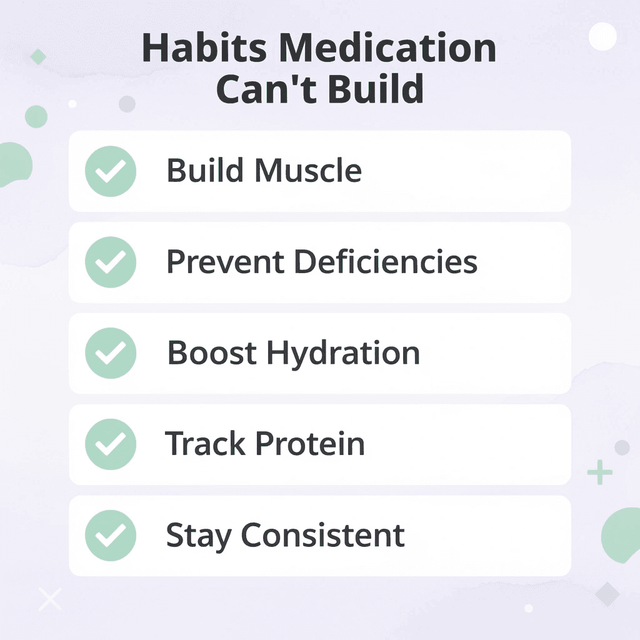
The form you choose — pill or injection — determines how the medication enters your body. What happens after that depends almost entirely on you. GLP-1 medications reduce appetite and slow digestion, but they do not build muscle, prevent nutrient deficiencies, or create the behavioral patterns that make weight loss last beyond the prescription.
"GLP-1 medications reduce appetite and slow digestion — but they do not build muscle, prevent nutrient deficiencies, or create the behavioral patterns that make weight loss last beyond the prescription."
What GLP-1 Medications Do | What They Don't Do |
|---|---|
Reduce appetite | Build muscle mass |
Slow digestion | Prevent nutrient deficiencies |
Support weight loss | Create lasting behavioral habits |
Lower blood sugar | Replace protein & hydration goals |
Download MeAgain, and in less than five minutes, you'll have an all-in-one GLP-1 companion designed to help you build daily habits. Our capybara coach turns healthy choices into a game, keeping you motivated to reach your protein, fiber, hydration, and activity goals without relying on willpower alone.
Your personalized Journey Card captures your transformation, letting you review every milestone and see how far you've come. Whether you're taking Ozempic®, Wegovy®, Mounjaro®, or another GLP-1 medication, MeAgain helps you stay consistent with the habits that matter most.