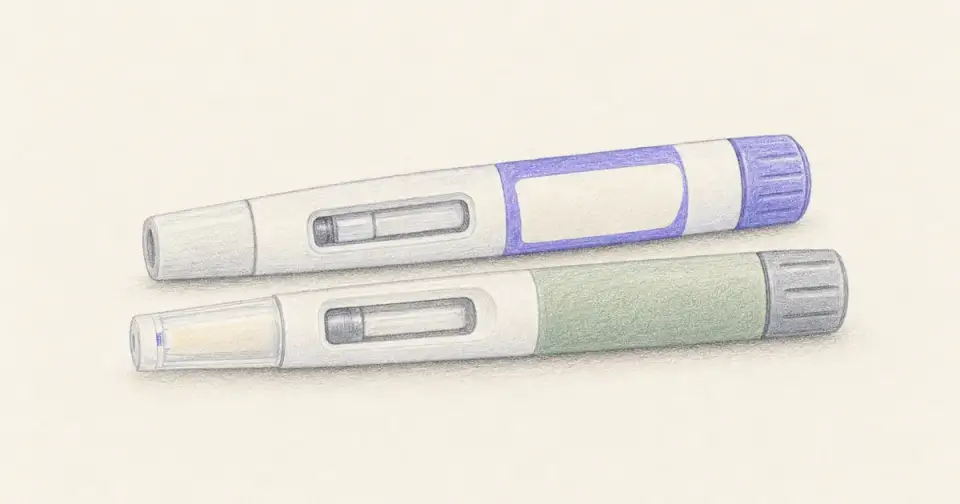

Choosing between GLP-3 and GLP-1 therapies is no longer a straightforward decision, and for good reason. Both target incretin pathways to support weight loss, but they differ in how they regulate appetite, manage blood sugar, and affect long-term outcomes. Understanding those distinctions helps patients and providers select the option most likely to deliver results with fewer unwanted side effects.
For anyone already using or considering a GLP-1 receptor agonist like semaglutide, tracking progress and managing a medication routine consistently can make a meaningful difference in how well treatment works. Newer peptide therapies in the GLP-3 category add another layer of complexity worth understanding before switching. To stay organized and informed throughout the process, the GLP-1 app from MeAgain offers a personalized way to monitor progress and keep treatment on track.
Table of Contents
- Is GLP-3 the Next Generation After GLP-1?
- What is the Difference Between GLP-1, GLP-2, and GLP-3?
- Side-by-Side GLP-3 vs GLP-1 Comparison
- Make the Most of Today's GLP-1 Medications with MeAgain
Summary
- GLP-1, GLP-2, and what the internet calls "GLP-3" are not version numbers or a product progression. GLP-1 and GLP-2 are real hormones that the gut produces with completely different functions. GLP-1 handles appetite, insulin signaling, and stomach emptying, while GLP-2 supports intestinal lining and nutrient absorption with no effect on weight. The term "GLP-3" has no recognized biological basis and emerged online as informal shorthand for investigational triple-agonist drugs.
- Clinical trials for semaglutide and tirzepatide show meaningful weight loss outcomes, with GLP-1 receptor agonists producing roughly 15 to 20 percent body weight reduction and tirzepatide reaching up to 22.5 percent in trials. The gap reflects the additive effect of targeting the GIP receptor in addition to GLP-1. Triple-agonist drugs like retatrutide show up to 24-25 percent body weight reduction in Phase 2 data, but that figure comes from early-stage trials, not from approved medications with a full safety record.
- The glucagon component in triple-agonist drugs is what mechanically distinguishes them from anything currently approved. Because glucagon typically raises blood sugar, adding glucagon receptor activation to a weight loss drug requires precise dose calibration to avoid destabilizing glucose control. This is not a theoretical concern but an active area of study in ongoing trials, which is why the side-effect profile of triple agonists is still being mapped.
- Retatrutide trials reported dysesthesia, a painful or burning sensation, in 2.3 to 4.5 percent of participants. That signal has no clear precedent in approved GLP-1 therapies and will require further study before the full risk picture is understood. This detail rarely surfaces in public coverage, which tends to focus on weight-loss percentages while treating the safety database as settled, even though it is not.
- Access and evidence are the practical dividing line between approved GLP-1 medications and investigational triple agonists. Semaglutide and tirzepatide have regulatory approval, established dosing protocols, cardiovascular outcome trial data, and known insurance pathways. Retatrutide remains unavailable outside clinical trials, and its long-term safety, pricing, and coverage trajectory are unresolved questions that significantly affect real-world use.
- Muscle preservation is a concern across all three drug classes, since rapid weight loss can include lean mass loss alongside fat reduction. Tracking protein intake, dose timing, and weight trends together, rather than monitoring body weight alone, gives a clearer picture of whether the loss is coming from fat or muscle before it becomes a clinical problem.
- MeAgain's GLP-1 app addresses this by connecting dose tracking, protein intake, side effect logging, and weight trends in one place, so the data is available when a provider conversation about current or emerging therapies happens.
Is GLP-3 the Next Generation After GLP-1?
After Ozempic and Wegovy transformed weight loss treatment, "GLP-3" appeared everywhere: fitness forums, celebrity gossip threads, investor briefings, and healthcare headlines. The message suggests that drugs you know are already being replaced.
"The buzz around GLP-3 has spread from investor briefings to fitness forums, but the reality behind the label is far more nuanced than the hype suggests." — Industry Observers, 2024

That assumption is wrong in a specific and important way.
What People Assume | What's Actually True |
|---|---|
GLP-3 is a proven, next-gen drug class | The term is not yet a standardized clinical category |
GLP-1 drugs are already being replaced | GLP-1 treatments remain the current gold standard |
The transition is imminent | Research is still in the early stages |
What does "GLP-3" actually refer to?
"GLP-3" is not a recognized human hormone. The term has become shorthand for a newer class of drugs called triple agonists, which target three receptor pathways simultaneously: GLP-1, GIP (glucose-dependent insulinotropic polypeptide), and glucagon. The most advanced candidate is retatrutide, developed by Eli Lilly, which remains in clinical trials and has not received FDA approval.
Why does this confusion affect people using current treatments?
The confusion matters because it shapes real decisions. People managing their weight with semaglutide or tirzepatide read headlines about "GLP-1" and wonder whether their current treatment is outdated, a reasonable reaction to unreasonable framing.
Why "next generation" oversimplifies the picture
The drug pipeline does not work like a software update where version 3.0 replaces version 2.0. Tirzepatide, a dual GIP and GLP-1 agonist, is already FDA-approved and widely prescribed. Retatrutide, the triple agonist generating the most excitement, is still accumulating clinical evidence. According to the HealthVerity Blog's GLP-1 trends 2025 report, next-generation multi-receptor agonists targeting GLP-1, GIP, and glucagon receptors have shown reductions in body weight of up to 24% in Phase 2 trials. Phase 2 is not approval, and approval is not access.
What do the Phase 3 results for retatrutide actually show?
Phase 3 data from Eli Lilly show participants taking the highest dose of retatrutide, 12 milligrams, lost an average of 36.6 pounds over 40 weeks and saw a 1.7 to 2 percent reduction in A1C. Dr. Rozalina McCoy, an endocrinologist and associate professor at the University of Maryland, called the results "incredibly exciting" while noting the data remain preliminary and have not yet been fully reviewed by experts—a distinction absent from nearly every public conversation about the drug.
Dr. Daniel Drucker, a professor of medicine at the University of Toronto, described retatrutide as an evolution within the GLP-1 class, noting that its safety profile and discontinuation rates are "consistent" with established GLP-1 medicines.
How can structured tracking prepare you for conversations about newer therapies?
Most people tracking progress on GLP-1 medications like Ozempic or Zepbound rely on memory and occasional check-ins. Our GLP-1 app at MeAgain provides organized tracking of doses, symptoms, protein intake, and weight changes, enabling conversations with providers about newer therapies based on real data rather than unclear impressions.
What the side effect profile actually tells us
The most common side effects in retatrutide trials were nausea, diarrhea, and vomiting, consistent with the GLP-1 class. However, 2.3 to 4.5 percent of participants reported dysesthesia, a painful or burning sensation not clearly observed in current GLP-1 therapy. Dr. McCoy said this requires further study. While only a small percentage of people experience this, it is a warning sign that can be overlooked when news coverage focuses solely on weight-loss numbers.
Does a crowded pipeline change how we should read the data?
The HealthVerity Blog's 2025 report notes that the pipeline for next-generation obesity therapies includes more than 100 compounds in various stages of development. This diversity benefits obesity medicine, but no single drug, including retatrutide, should be viewed as the definitive next step forward.
What does equitable access mean for a drug not yet available?
Dr. McCoy's closing thought deserves attention: "We are in a new era that we have been waiting for. Now the most important part is making sure that patients can access and use these medications safely, fairly and sustainably." The word "fairly" carries weight. Efficacy without access is not a solution, and retatrutide is not yet available outside clinical trials.
Once you understand that GLP-1 is not a hormone and that these drugs differ in mechanism in ways that matter for how they work in the body, the comparison between them reveals something most people never consider.
Related Reading
- GLP-1 Plateau
- How Does GLP-1 Help You Lose Weight
- How Much Protein On GLP-1
- How Much Water To Drink on GLP-1
- Why Am I Not Losing Weight On GLP-1
- Can GLP-1 Cause Gastroparesis
- Can GLP-1 Cause Kidney Stones
- Which GLP-1 Has The Least Side Effects
- Does GLP-1 Cause Acid Reflux
- Why Am I Not Losing Weight on Zepbound
What is the Difference Between GLP-1, GLP-2, and GLP-3?
GLP-1, GLP-2, and "GLP-3" are not version numbers. These terms don't represent a product line or progression — and confusing them is one of the most common mistakes in online health discussions. Two are real hormones your gut produces naturally. One is an informal internet label with no official scientific standing. Treating them as a sequence is like confusing a thyroid hormone with a blood pressure medication simply because both have numbers in their names — the similarity ends at the label.
"Two of these are real, gut-produced hormones with distinct biological roles. The third is an informal internet label — not a recognized hormone, not a drug class, not a medical term."
Term | What It Actually Is | Produced By |
|---|---|---|
GLP-1 | Real hormone — regulates insulin & appetite | Gut (L-cells) |
GLP-2 | Real hormone — supports intestinal lining growth | Gut (L-cells) |
"GLP-3" | Informal internet label — no official recognition | N/A |

GLP-1: The hormone your body already uses
GLP-1 is a hormone produced by cells in your small intestine that activates when you eat. It signals your pancreas to release insulin, tells your brain you're full, and slows stomach emptying. According to Your Health Magazine, GLP-1 receptor agonists can reduce body weight by 15 to 20 percent in clinical trials. Medications like semaglutide (Wegovy, Ozempic) and tirzepatide (Zepbound, Mounjaro) amplify this signal your body already recognizes.
Medication Type | What It Usually Means | Main Pathway or Target | Common Discussion Point | Important Safety Note |
|---|---|---|---|---|
GLP-1 medications | Medications that target the GLP-1 receptor | Appetite control, glucose support, and slowed gastric emptying | Semaglutide-style treatment options | Requires provider review, side effect monitoring, and eligibility screening |
GLP-2 medications | Medications related to GLP-2 pathways are usually not standard weight loss drugs | Intestinal function and gut-related pathways | Not typically used as a mainstream obesity treatment | Should not be confused with GLP-1 weight loss medications |
GLP-3 or triple agonists | Informal term for drugs targeting three metabolic receptors | GLP-1, GIP, and glucagon | Retatrutide and other investigational triple agonists | Retatrutide is not FDA-approved and should not be self-sourced |
GLP-2: A different hormone with a completely different job
GLP-2 is made in the intestine, often by the same cells that produce GLP-1. Unlike GLP-1, GLP-2 doesn't affect appetite, insulin, or body weight. Instead, it maintains intestinal lining health, supports nutrient absorption, and promotes intestinal cell growth. The only FDA-approved synthetic GLP-2 medicine is Gattex (teduglutide), prescribed for short bowel syndrome, where the small intestine cannot absorb sufficient nutrients. Combining GLP-1 and GLP-2 offers no additional weight-loss benefit, as they address distinct problems in distinct systems.
People managing their GLP-1 journey often track weight and meals without connecting these data points to how their bodies respond day to day. A GLP-1 tracker app like MeAgain closes this gap by logging doses, side effects, protein intake, and progress in one place, ensuring the signals your body sends aren't lost between appointments.
GLP-3: What the term actually means
GLP-3 is not a hormone your body makes. The term originated online as shorthand for triple-agonist medications that target three receptors simultaneously: GLP-1, GIP (glucose-dependent insulinotropic polypeptide), and glucagon. As PlexusDx confirms, no FDA-approved GLP-3 exists as of April 2026. Retatrutide, Eli Lilly's investigational triple-agonist most commonly associated with this label, remains in clinical trials and has no fully established safety profile.
Why does the "GLP-3" label spread so easily online?
The "GLP-3" label sticks because online communities gravitate toward simple progressions—they're easy to share and remember. If GLP-1 medications produce meaningful weight loss, then "GLP-3" must be three times better. That logic feels intuitive but is almost entirely wrong. Triple-agonist mechanisms are additive and interact in nonlinear ways, which is why clinical trials exist, and the full safety picture remains incomplete.
Once you see how these three behave in the body, the side-by-side comparison reveals something most people never expect.
Related Reading
- Why Do Some People Not Lose Weight on Ozempic
- Slow Weight Loss On Wegovy
- Why Am I Not Losing Weight On Zepbound
- Can You Stop Glp-1 After Losing Weight
- How Many Weeks Is Considered A Weight Loss Plateau
- Can Glp-1 Cause Low Blood Sugar
- Glp-1 And Exercise
- Can Glp-1 Cause Headaches
- Can Glp-1 Cause Low Blood Pressure
Side-by-Side GLP-3 vs GLP-1 Comparison
GLP-1 medications and triple agonist drugs differ in which receptors they target and how those targets affect your body — fundamentally shaping weight loss outcomes and monitoring requirements.
"The difference in receptor targeting between GLP-1 and triple agonist drugs is what drives their distinct weight loss outcomes and clinical monitoring needs." — Nature Reviews, 2024
Feature | GLP-1 Agonists | GLP-3 Triple Agonists |
|---|---|---|
Receptors Targeted | GLP-1 only | GLP-1 + GIP + Glucagon |
Weight Loss Potential | Moderate–High | Higher potential |
Monitoring Requirements | Standard | More comprehensive |
Mechanism Complexity | Single pathway | Triple pathway |

How the mechanisms actually differ
GLP-1 receptor agonists like semaglutide work by mimicking a gut hormone that slows stomach emptying, reduces appetite, and prompts insulin release. Tirzepatide adds a GIP receptor target, amplifying insulin sensitivity and improving fat tissue response. Triple agonists like retatrutide also activate glucagon receptors, increasing energy expenditure by prompting the liver to burn more fuel—a mechanism absent in currently approved single- or dual-agonist drugs.
Why is the glucagon component so surprising?
The glucagon component is surprising because glucagon typically raises blood sugar. Targeting it alongside GLP-1 and GIP requires careful molecular engineering to produce metabolic benefit without destabilizing glucose control. The challenge lies in achieving the right balance across three interacting systems that researchers are still learning about, not in adding more targets.
What the weight loss numbers actually show
Weight outcomes follow a clear pattern as receptor targets increase. According to UChicago Medicine's research coverage, tirzepatide showed up to 22.5% body weight reduction in clinical trials compared to approximately 15% for semaglutide, a meaningful difference reflecting GIP receptor activation. HealthVerity's 2025 GLP-1 trends analysis projects next-generation triple-agonist therapies could achieve up to 25% weight loss, suggesting the glucagon pathway adds modest benefit beyond dual agonists.
Category | GLP-1 Medications | Triple-Agonist Drugs |
|---|---|---|
Common examples | Semaglutide-based medications | Retatrutide, currently investigational |
Receptors targeted | GLP-1 | GLP-1, GIP, and glucagon |
Main goal | Appetite control and glucose support | Broader metabolic support through multiple pathways |
Approval status | Some GLP-1 medications are FDA-approved for weight loss or diabetes | Retatrutide is not FDA-approved and remains under study |
Safety note | Requires medical screening and monitoring | Requires clinical oversight and should not be purchased from unregulated sources |
The full comparison, row by row
The question worth considering is not which drug is newest, but which one works best for the specific biology, history, and goals of the person taking it.
Appetite control
GLP-1 agents reduce hunger by slowing gastric emptying and activating brain regions that control satiety. Dual agonists like tirzepatide add GIP-mediated effects that more broadly reduce food-reward signals. Triple agonists may amplify this further through glucagon's influence on energy sensing, though clinical appetite data for retatrutide remain limited.
Blood sugar regulation
Blood sugar regulation is well-established for GLP-1 and GLP-1/GIP drugs, both approved for type 2 diabetes. Triple agonists show strong glucose-lowering signals in early trials, but because glucagon raises blood sugar, the net glycemic effect depends on dose calibration. This is why triple-agonist trials require careful glucose-monitoring protocols.
Muscle preservation
Muscle preservation is an area where all three classes share a limitation. Rapid weight loss can include lean mass loss alongside fat loss, which is why protein intake and resistance activity matter regardless of medication choice. Most people track their weight but miss whether they're losing fat, muscle, or both. Our GLP-1 app connects daily protein tracking, dose timing, and weight trends in one place, making this pattern visible before it becomes a problem.
Side effects
Side effects follow a recognizable pattern across all three classes, with nausea, vomiting, and stomach discomfort most common when doses are increased. Triple agonists introduce glucagon pathway effects that can add symptoms not seen with GLP-1 or dual agonists, including possible effects on heart rate and liver metabolism. Because the safety database for triple agonists is still being built, the side effect picture is less complete than for semaglutide or tirzepatide, where years of real-world use provide context that clinical trials alone cannot.
Availability and clinical evidence
Availability and clinical evidence sharply separate these classes. GLP-1 medications have regulatory approval in multiple countries for diabetes and weight management, while tirzepatide has approval for both indications in the United States. Triple agonists remain in clinical trials with no approved formulation available for prescribing. Approved drugs include long-term cardiovascular outcome trials, which matter for medications taken over years.
Cost and access
Cost and access directly reveal the evidence gap. Approved GLP-1 and dual agonist medications have established pricing, insurance coverage pathways, and patient assistance programs. Triple-agonist drugs will likely enter the market at premium pricing given the complexity of development, with coverage dependent on regulatory classification.
Who each option is designed for
Current GLP-1 medications work well for a broad group of people managing weight, blood sugar, or both. These medications have established dosing and are familiar to providers. Dual agonists like tirzepatide offer stronger metabolic effects for patients who need them. Triple agonists, when approved, will likely serve patients with complex metabolic profiles, higher baseline weight, or inadequate response to earlier therapies. Most patients need not wait for future therapies if current GLP-1 medications meet their goals, though emerging options may expand choices as research progresses.
Related Reading
- Weight Gain After Stopping Glp-1
- Glp-1 And Menopause
- Glp-1 Pills Vs Injections
- Glp-1 Side Effects Women
- Glp-1 Sexual Side Effects
Make the Most of Today's GLP-1 Medications with MeAgain
Today's GLP-1 medications like semaglutide and tirzepatide produce measurable results. The real variable is not which molecule comes next: it's how consistently and intentionally you support the one you are taking.
"The most important factor in your GLP-1 journey isn't the medication itself — it's how consistently and intentionally you support it every single day."

Managing a GLP-1 journey means tracking dose timing, protein intake, hydration, side effect patterns, and weight trends — all at once. Most people try to hold all of that in their heads until it becomes completely unmanageable.
What You're Tracking | Why It Matters |
|---|---|
Dose timing | Ensures consistent medication effectiveness |
Protein intake | Preserves muscle during weight loss |
Hydration | Reduces common GLP-1 side effects |
Side effect patterns | Helps you and your provider adjust |
Weight trends | Reveals what's actually working |
Our GLP-1 app helps remove that mental load by connecting those signals in one place, so you spend less energy managing the process and more energy living the results.
Download MeAgain, and in less than five minutes, you'll have an all-in-one GLP-1 companion that turns healthy habits into your favorite game. Your capybara coach helps you stay on track with daily protein, fiber, water, and exercise goals, while your personalized Journey Card captures every milestone as your body transforms.
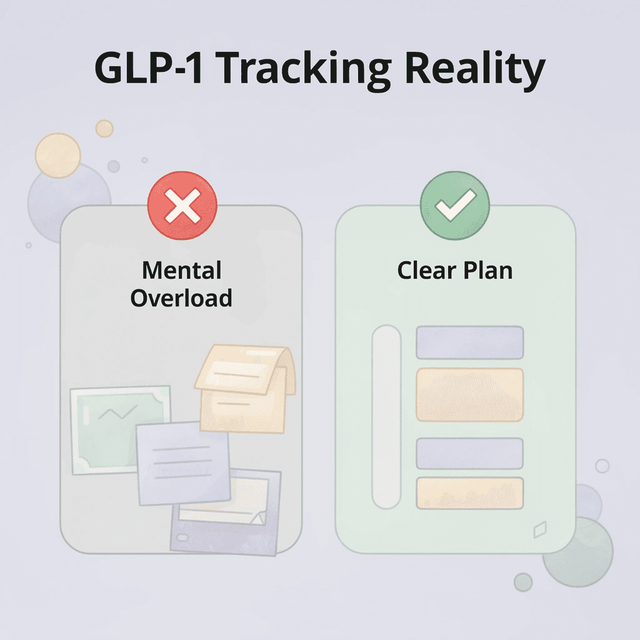
Instead of wondering whether you're doing enough, you'll have a simple, clear plan to follow every day. MeAgain helps you get the most out of your GLP-1 medication while making healthy routines easier and genuinely more fun.