

Menopause triggers real physiological changes that make weight gain almost inevitable for many women. Hormonal shifts, a slower metabolism, and growing insulin resistance combine to add pounds around the midsection, often despite careful eating and regular exercise. Finding the best GLP-1 for menopause weight gain means understanding which treatments address these overlapping factors, not just calorie balance.
Not all GLP-1 options are created equal, and the right choice depends on a woman's full hormonal picture, not just her weight. MeAgain was built with that in mind, connecting women to GLP-1 treatments that target both weight and menopause symptoms together through a single, easy-to-use GLP-1 app.
Table of Contents
- Why Menopause Weight Gain Is Different (and Harder to Lose)
- Are Weight Loss Meds the Answer for Hormonal Fat?
- Which Is the Best GLP-1 for Menopause Weight Gain?
- How to Get the Best Results From a GLP-1 During Menopause
- Make the Most of Your GLP-1 During Menopause with MeAgain
Summary
- Estrogen decline during menopause does more than slow metabolism. It actively redirects fat storage toward the abdomen, increasing visceral fat by up to 49%, according to Ohio State Health and Discovery. Visceral fat sits deep around the organs and disrupts insulin sensitivity, raises inflammatory markers, and increases cardiovascular risk in ways that surface-level fat does not.
- Appetite regulation becomes genuinely harder during menopause, not because of willpower deficits but because of hormonal disruption. The North American Menopause Society has documented that declining estrogen levels directly affect leptin and ghrelin levels, the two hormones most responsible for hunger and satiety signaling. When those signals break down, eating less feels less like discipline and more like fighting your own biology.
- GLP-1 medications produce meaningful weight loss in menopausal women, and the data is more consistent than most people expect. A post hoc analysis of the SURMOUNT clinical trials found that tirzepatide produced approximately 23% body weight reduction in perimenopausal and postmenopausal women, compared to 26% in premenopausal women, a difference that is not clinically significant. The fear that GLP-1s simply work less well during menopause is not supported by the evidence.
- Not all GLP-1 medications are interchangeable, and the right choice depends on more than just weight-loss potential. Tirzepatide activates both GLP-1 and GIP receptors and has produced greater average weight reduction in trials, while semaglutide has broader FDA approvals for cardiovascular risk reduction and kidney disease. For a postmenopausal woman with established heart disease, that approval history can matter as much as the weight-loss number when it comes to clinical appropriateness and insurance coverage.
- Muscle loss is one of the most under-addressed risks of GLP-1 use during menopause. According to Competitive Edge Physical Therapy, up to 40% of weight loss on GLP-1 medications may be due to lean muscle mass loss without adequate resistance training and protein intake. For women already experiencing age-related sarcopenia, losing muscle alongside fat slows resting metabolism and makes weight regain more likely once medication stops or doses change.
- Side effect management on GLP-1s is more predictable than it feels in the moment. Because these medications slow gastric emptying, inadequate fiber and hydration consistently worsen constipation and nausea, but that connection is easy to miss when dose timing, food intake, and symptom logs live in separate places.
- MeAgain's GLP-1 app addresses this by consolidating dose tracking, protein and fiber intake, hydration, side-effect logs, and weight trends into a single daily view, making the patterns that actually drive progress visible rather than scattered across multiple tools.
Why Menopause Weight Gain Is Different (and Harder to Lose)
Many women find that the diet and exercise habits that worked for decades suddenly stop working during menopause: same discipline, same effort, completely different body.

This gap between effort and result is a physiological problem, not a motivational one. According to Ohio State Health and Discovery, estrogen decline during menopause can shift fat storage to the abdomen, increasing visceral fat by up to 49%. Visceral fat sits deep around your organs and actively disrupts insulin sensitivity, raises inflammatory markers, and increases cardiovascular risk in ways that subcutaneous fat does not.
"Estrogen decline during menopause can shift fat storage to the abdomen, increasing visceral fat by up to 49% — fat that actively disrupts insulin sensitivity and raises cardiovascular risk." — Ohio State Health and Discovery
Fat Type | Location | Health Impact |
|---|---|---|
Visceral Fat | Deep around organs | Disrupts insulin sensitivity, raises inflammation, and increases cardiovascular risk |
Subcutaneous Fat | Under the skin | Lower metabolic risk does not directly affect organ function |
Why “more willpower” is the wrong diagnosis
The belief that most women carry into this stage of life is powerful and quietly harmful: "If I'm not losing weight, I just need more willpower." But menopause does not slow your metabolism; it rewires the system that controls where fat is stored, how hunger signals work, and how efficiently your muscles burn fuel. The North American Menopause Society has documented that declining estrogen levels directly affect leptin and ghrelin levels, the two hormones most responsible for appetite regulation. When those signals are disrupted, eating less does not feel like discipline. It feels like fighting your own biology with your hands tied.
Muscle loss compounds the problem in ways that rarely get discussed. Sarcopenia, the gradual decline of lean muscle mass, accelerates during the menopause transition and reduces your resting metabolic rate. Less muscle means fewer calories burned at rest, making the caloric deficit required to lose weight harder to sustain without sacrificing the muscle needed to maintain metabolism. Sleep disruption from night sweats and hormonal fluctuation worsens insulin resistance. The body stores more fuel in the wrong places for the wrong reasons.
Most women managing this on their own default to tracking calories in a notes app, logging symptoms in a journal, and piecing together patterns from memory. Add a weekly injection with specific timing requirements, protein targets critical for preserving muscle, and side effect patterns that shift week to week, and scattered tools produce scattered results. Our GLP-1 app consolidates dose tracking, protein and fiber intake, side-effect logs, and weight trends into a single daily view, making the signals that drive progress visible rather than buried across multiple apps and notebooks.
According to research published in Menopause (New York, N.Y.), postmenopausal women have higher rates of severe obesity than men, reflecting how differently the female metabolic system responds to hormonal change. This population needs treatment matched to its biology, not increased motivation. Because menopause alters how your body regulates weight, choosing the right treatment matters more than trying harder.
But knowing that treatment matters is only half the equation.
Related Reading
- GLP-1 Plateau
- How Does GLP-1 Help You Lose Weight
- How Much Protein On GLP-1
- How Much Water To Drink on GLP-1
- Why Am I Not Losing Weight On GLP-1
- Can GLP-1 Cause Gastroparesis
- Can GLP-1 Cause Kidney Stones
- Which GLP-1 Has The Least Side Effects
- Does GLP-1 Cause Acid Reflux
- Why Am I Not Losing Weight on Zepbound
Are Weight Loss Meds the Answer for Hormonal Fat?
GLP-1 medications can help women manage weight gain related to menopause by addressing the underlying biological conditions that make it harder to lose weight, not by reversing menopause itself.
"GLP-1 medications work by targeting the biological conditions behind menopausal weight gain, offering a science-backed tool where willpower and dieting alone often fall short."

What the Clinical Evidence Actually Shows
A study of 2,542 women from three clinical trials—SURMOUNT-1, SURMOUNT-3, and SURMOUNT-4—examined whether tirzepatide's effectiveness varies by reproductive stage. Led by researchers at NewYork-Presbyterian and Weill Cornell Medicine, the study found that tirzepatide produced approximately a 20% reduction in body weight and significant reductions in waist circumference across all reproductive stages. Premenopausal women lost 26% of their weight compared to 2% for placebo recipients. Perimenopausal and postmenopausal women lost 23% compared to 3% for placebo. Dr. Beverly Tchang, who led the study, noted that clinicians can confidently recommend tirzepatide to patients who have gained weight due to menopause, as the evidence demonstrates that menopause does not diminish the medication's effectiveness.
When Hormone Therapy Enters the Picture
A Mayo Clinic observational study published in The Lancet Obstetrics, Gynecology, and Women's Health found that postmenopausal women receiving menopausal hormone therapy alongside tirzepatide lost approximately 35% more weight than women taking tirzepatide alone. Because this was not a randomized trial, researchers cannot confirm hormone therapy caused the additional weight loss: women using hormone therapy may have engaged in healthier behaviors, or symptom relief may have improved sleep quality and adherence to lifestyle changes. Early research suggests a possible biological mechanism: estrogen may enhance the appetite-suppressing effects of GLP-1. This finding warrants a randomized clinical trial, which Mayo Clinic is now planning.
What GLP-1s actually address in a menopausal body
GLP-1 receptor agonists do not target estrogen or correct hormonal imbalances. They address downstream problems menopause creates: reducing appetite and food noise, improving insulin sensitivity, and supporting predictable calorie intake when hunger signaling becomes unreliable.
How much weight loss can menopausal women realistically expect?
According to the Cleveland Clinic, GLP-1 receptor agonists such as semaglutide can lead to up to a 15% reduction in body weight over 68 weeks. The Cleveland Clinic also notes that weight loss medications are typically prescribed for people with a BMI of 30 or higher, or 27 or higher with at least one weight-related condition: a threshold that matters for many menopausal women who carry increased visceral abdominal fat and have elevated cardiometabolic risk. The medication creates conditions in which the body can respond to effort again, rather than a shortcut around it.
How does tracking GLP-1 patterns make progress visible?
Most women track GLP-1 dosing timing, nutrition, symptoms, and weight separately, making it difficult to identify patterns. When appetite is suppressed by both medication and menopause, hitting protein, fiber, and hydration targets becomes challenging with smaller portions. Our GLP-1 app consolidates these signals into a single daily view, clarifying the connection between dose timing, nutrient intake, and weight progress.
What will GLP-1s not do?
GLP-1 medications do not fix hot flashes, mood changes, or sleep problems. They do not stop muscle loss unless you do resistance training: eating fewer calories without adequate protein and strength work accelerates muscle loss. Some women regain weight after stopping if they don't build healthy habits first, since the medication controls appetite, not the daily choices that maintain weight stability over time.
Women with a personal or family history of medullary thyroid carcinoma, multiple endocrine neoplasia syndrome type 2, or certain other conditions are not suitable candidates. Your medical history, tolerance for side effects, and insurance coverage determine whether a specific medication is right for you. GLP-1s work best as part of a comprehensive plan that includes proper nutrition, adequate protein, resistance training, sleep, and regular check-ins with your doctor.
Knowing a medication can help is one thing. Knowing how to use it effectively to build results over time is where the real work begins.
Which Is the Best GLP-1 for Menopause Weight Gain?
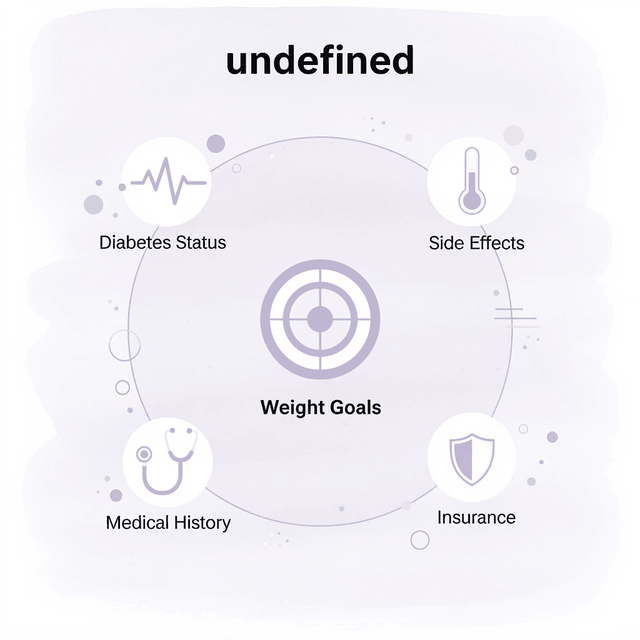
There isn't one universally "best" GLP-1 for menopause weight gain. The right medication depends on a combination of highly personal factors — including your weight-loss goals, diabetes status, side-effect tolerance, cost, insurance coverage, and complete medical history.
"The best GLP-1 is the one that aligns with your biology, budget, and health profile — not a one-size-fits-all answer." — Clinical Prescribing Principle
Factor | Why It Matters |
|---|---|
Weight-loss goals | Some GLP-1s deliver a greater average loss than others |
Diabetes status | Certain medications are FDA-approved only for T2D |
Side effect tolerance | Nausea, GI symptoms vary by drug and dose |
Cost & insurance coverage | Out-of-pocket costs can range from affordable to prohibitive |
Medical history | Prior conditions may rule out specific options entirely |
Why does tirzepatide produce more weight loss than semaglutide?
Tirzepatide activates both GLP-1 and GIP receptors simultaneously, increasing fullness and altering fat storage in ways single-receptor drugs cannot. A 2025 head-to-head trial comparing tirzepatide 10mg or 15mg against semaglutide 1.7mg or 2.4mg over 72 weeks showed tirzepatide produced significantly greater reductions in body weight and waist circumference. According to the SURMOUNT postmenopause analysis via Gift From Within, postmenopausal women using tirzepatide achieved an average of 23% body weight reduction, approaching surgical outcomes from a weekly injection.
Why isn't greater weight loss the whole story?
Semaglutide activates only the GLP-1 receptor, producing meaningful but lower-ceiling weight loss. Its advantage lies in broader FDA approvals: cardiovascular risk reduction, chronic kidney disease, and metabolic-associated steatohepatitis (MASH). For a postmenopausal woman with heart disease or kidney complications, these indications affect clinical appropriateness and insurance coverage. Choosing tirzepatide for that profile may create a coverage dead end.
When liraglutide or oral options make sense
Liraglutide (Saxenda) requires daily injection and produces less weight loss than semaglutide or tirzepatide. Most patients prefer weekly dosing because it improves adherence. Daily injections may suit highly motivated patients seeking faster dose escalation or unable to access weekly formulations, but for most menopausal women, weekly options are more practical and effective. Oral GLP-1 formulations, including oral semaglutide, are well-suited for patients afraid of needles, though bioavailability differences may affect their efficacy relative to injectable formulations.
Why does real-world weight loss fall short of trial results?
Real-world weight loss on any GLP-1 falls well below clinical trial headlines. A 2024 systematic review of 53 studies covering 21,349 patients found tirzepatide produced the greatest average weight loss, followed by semaglutide, liraglutide, dulaglutide, and exenatide. In routine care, the average weight reduction typically ranges from 2 to 8% after one year, largely due to medication discontinuation and difficulty maintaining adherence outside controlled trials.
Many women expect 20% weight loss, hit a plateau at 5%, and assume the drug isn't working when the medication is actually effective, but surrounding habits, dose timing, and nutrition aren't supporting it.
How does consolidating your tracking make patterns visible?
Most people track their GLP-1 journey across scattered tools: a phone note for dose timing, a separate app for food, a mental log for side effects. This fragmented approach obscures patterns—nausea spiking when protein intake drops, or weight stalls correlating with inconsistent injection timing. Our GLP-1 app consolidates dose tracking, protein and fiber intake, hydration, side-effect logging, and weight trends into a single daily view, making the signals that explain your progress visible rather than buried.
Picking the right medication deserves careful consideration with your clinician. But the choice of which GLP-1 to start is only the beginning: what happens in the days and weeks after that first dose matters more than most people realize.
Related Reading
- Why Do Some People Not Lose Weight on Ozempic
- Slow Weight Loss On Wegovy
- Why Am I Not Losing Weight On Zepbound
- Can You Stop Glp-1 After Losing Weight
- How Many Weeks Is Considered A Weight Loss Plateau
- Can Glp-1 Cause Low Blood Sugar
- Glp-1 And Exercise
- Can Glp-1 Cause Headaches
- Can Glp-1 Cause Low Blood Pressure
How to Get the Best Results From a GLP-1 During Menopause
Choosing the right GLP-1 is one decision. What you do every day after that first dose determines your outcome. The medication creates a window of opportunity — how you use it determines what you build inside that window.
"The medication creates a window. How you use it determines what you build inside that window."
Factor | Why It Matters During Menopause |
|---|---|
Protein intake | Preserves muscle mass as estrogen declines |
Strength training | Counteracts metabolic slowdown |
Sleep quality | Regulates hunger hormones like ghrelin and leptin |
Stress management | Reduces cortisol-driven fat storage |

What muscle loss actually happens on GLP-1 medications?
The problem is what you lose along with the fat. According to Competitive Edge Physical Therapy, up to 40% of weight loss on GLP-1 medications may be due to muscle loss without proper resistance training. For a menopausal woman already experiencing age-related muscle loss, this concerns how your body functions, not merely appearance. Less muscle slows resting metabolism, causing weight to return faster when you stop taking the medication or lower your doses.
How do you protect muscle mass while losing weight?
When you cut calories too quickly without eating enough protein and doing resistance training, your body breaks down muscle for energy. You need 1.2 to 1.6 grams of protein per kilogram of body weight daily, spread across your meals. Add progressive resistance training at least twice a week: weight-bearing exercises that give your muscles a reason to stay. This approach preserves lean muscle, protects your metabolism, and ensures lasting results.
Why bone density deserves equal attention
Resistance training protects bone health, a parallel risk often overlooked in GLP-1 conversations. UCHealth Today reports that women can lose up to 20% of their bone density in the 5 to 7 years after menopause. Rapid weight loss accelerates this process by reducing the mechanical load bones need to maintain density. Strength training is not optional for menopausal women on GLP-1s: it's a structural requirement for protecting skeletal health.
The GI side effect cycle and how to break it
When nausea, constipation, or bloating occurs, the instinct is to eat and drink less, which worsens symptoms. GLP-1 medications slow gastric emptying, so food sits in the stomach longer. Without adequate fiber (25 to 30 grams daily) and consistent hydration (2 to 2.5 liters of water daily), constipation worsens.
What sequencing approach actually fixes GI side effects?
The fix is the right order of things: soluble fiber with meals, water spread throughout the day rather than in large volumes at once, and smaller portions that work with slowed gastric motility. Tracking these inputs daily reveals otherwise invisible patterns.
Why does fragmented tracking cause side-effect patterns to go unrecognized?
Most women manage this across a notes app, a food diary, and memory, leaving side-effect patterns unrecognized for weeks. Our GLP-1 app consolidates dose timing, protein and fiber intake, hydration, and side-effect logs into a single daily view, making the connection between what you ate on Tuesday and how you felt on Wednesday clear.
Sleep, hormones, and the signals you are probably ignoring
Sleep is a hormonal lever, not a wellness bonus. Poor sleep raises cortisol and disrupts insulin sensitivity, which directly counteracts the effects of GLP-1 medications. For menopausal women, night sweats and sleep fragmentation create a feedback loop: poor sleep raises hunger hormones the next day, making appetite suppression less effective. Track when poor sleep correlates with higher hunger or slower weight response—this data helps your clinician optimize your dose at follow-up appointments. Dose optimization requires understanding the full picture of what affects your response, building one daily signal at a time.
Knowing what to track is only part of the challenge. The harder question is what to do with that information once patterns emerge.
Related Reading
- Weight Gain After Stopping Glp-1
- Glp-1 And Menopause
- Glp-1 Pills Vs Injections
- Glp-1 Side Effects Women
- Glp-3 Vs Glp-1
- Glp-1 Sexual Side Effects
Make the Most of Your GLP-1 During Menopause with MeAgain
Choosing the right GLP-1 is only the first step. During menopause, daily habits—protein, fiber, water, and movement—preserve muscle, manage side effects, and support sustainable weight loss.
"The habits you build around your GLP-1 are as critical as the medication itself—protein, fiber, hydration, and movement form the foundation of lasting results during menopause."
[IMAGE:

Download MeAgain and get a personalized GLP-1 companion in under five minutes. Our beloved capybara coach gamifies healthy habits, guiding you toward protein, fiber, hydration, and exercise goals with daily challenges designed for consistency.
Habit Pillar | Why It Matters for GLP-1 |
|---|---|
Protein | Preserves muscle mass during weight loss |
Fiber | Supports digestion and reduces GI side effects |
Hydration | Prevents dehydration, a common GLP-1 challenge |
Movement | Maintains metabolic rate and muscle strength |
You'll also unlock your personal Journey Card, which tracks how your body changes and celebrates milestones along the way.

If you're taking Ozempic®, Wegovy®, Mounjaro®, or another GLP-1, MeAgain provides a simple, motivating system to support the habits that matter most—building lasting results, not just weight loss.