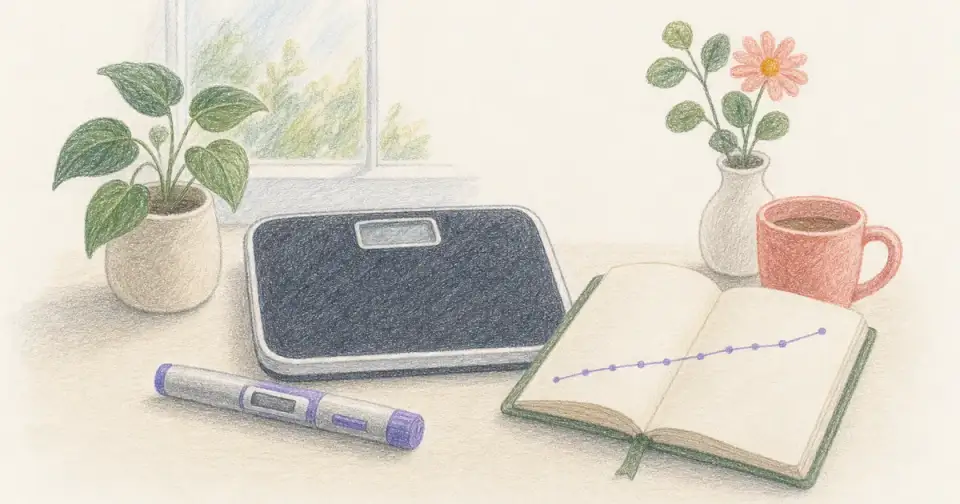

Starting Zepbound with high expectations only to find the scale barely moving is more common than most people realize. Several factors can blunt the medication's effectiveness, from dosing timing and titration pace to overlooked habits around food and activity. Understanding why progress has stalled is the first step toward fixing it.
Zepbound works best when the weekly injection is paired with consistent lifestyle choices and close attention to patterns over time. Tracking what you eat, how you move, and how your body responds across each dose cycle reveals the adjustments that actually move the needle. For a structured way to do that, the GLP-1 app from MeAgain brings all of those insights into one place.
Table of Contents
- What Does “Not Losing Weight” on Zepbound® Actually Mean?
- Why Am I Not Losing Weight on Zepbound
- Should I Increase My Zepbound Dose if Weight Loss Has Stopped?
- Make Every Day on Zepbound Count with MeAgain
Summary
- Zepbound weight loss happens gradually, with clinical trial participants losing an average of 20% of their body weight over 72 weeks, not 72 days. The starting doses (2.5 mg and 5 mg) are designed to build tolerance and minimize side effects, not maximize fat loss. Appetite suppression typically appears before the scale reflects changes, meaning the medication may be working at the receptor level even when your weight temporarily holds steady.
- A true plateau means your weight has remained essentially unchanged for several consecutive weeks (not just a few days) while you're consistently taking Zepbound at a therapeutic dose. Daily weight fluctuations based on sodium intake, digestion timing, hormonal changes, and stress levels are normal biological variation, not evidence of medication failure. Understanding the difference prevents unnecessary dose adjustments and months of misguided troubleshooting.
- Protein intake and strength training become more important during GLP-1 treatment because rapid weight loss can affect muscle mass and metabolic rate. Studies show protein helps preserve lean muscle during weight loss and keeps you satisfied longer, even with smaller portions. Strength or weight-bearing exercise at least three times per week supports muscle and bone health, both of which can be compromised during significant weight loss.
- Dose escalation only works when inadequate receptor activation is the actual limiting factor. If you've plateaued because protein intake dropped below 60 grams daily, injection sites developed absorption issues, or hormonal imbalances are interfering with metabolism, a higher dose won't fix those problems. One patient reached maximum dose without results despite meticulous tracking, only to discover untreated low testosterone and Hashimoto's thyroiditis were the real barriers.
- In clinical trials for Zepbound, 82% of people with type 2 diabetes lost at least 5% of their body weight after 72 weeks on the 10 mg dose, compared with 96% of people without diabetes who achieved the same goal. Underlying conditions like thyroid issues, PCOS, and menopause can affect weight loss progress, as can chronic stress and poor sleep. These factors don't prevent weight loss, but they may require additional support beyond medication alone.
- Injection technique affects medication absorption more than most people realize. Rotating injection sites with each dose prevents lipohypertrophy (fatty lumps under the skin) that can impair absorption, and injecting into areas with significant scar tissue may result in unpredictable medication levels. GLP-1 app addresses this by consolidating shot tracking, nutrition data, side-effect patterns, and weight trends in one place, revealing whether a plateau stems from inconsistent dosing, insufficient protein intake, or absorption issues that resolve with better injection-site rotation.
What Does “Not Losing Weight” on Zepbound® Actually Mean?
You step on the scale and see the same number. This makes you doubt yourself. You're taking your weekly injection and following the dose schedule, but the scale won't move. Before you decide the medication isn't working, understand that "not losing weight" means something different than you think.
"'Not losing weight' on Zepbound® covers three distinct situations — each requiring a completely different response." — Me Again
The phrase covers three different situations that need different responses. If you started Zepbound® recently, your body is getting used to how tirzepatide affects GIP and GLP-1 receptors, slowing gastric emptying and controlling insulin response. You might notice that you feel less hungry or feel full with smaller portions while your weight stays the same for a while. That's not failure — it's your body adjusting.
Situation | What's Happening | What It Means |
|---|---|---|
Scale was unchanged early on | Body adjusting to tirzepatide | Normal adaptation phase |
Reduced hunger signals | GIP & GLP-1 receptors responding | Medication is working |
Full on smaller portions | Gastric emptying slowing | Positive early sign |
Early response timing vs. normal fluctuations
According to Medical News Today, people in clinical trials lost an average of 20% of their body weight over 72 weeks. The first four weeks on the 2.5 mg starter dose allow your body to adjust to the medicine with minimal weight change, as the low dose prioritizes reducing side effects over maximizing fat loss.
Why does the scale stay the same even when you're losing fat?
Your weight changes daily based on factors unrelated to fat: salt intake causes water retention, the timing of digestion affects how much food is physically in your system, and hormones, stress, and sleep all influence the scale. Seeing the same number for several days is normal biological variation, not a plateau.
What signals matter more than the number on the scale?
Many people track weight obsessively while ignoring signals that matter more. Appetite suppression typically appears first: feeling full after half your usual portion, skipping snacks without effort, or losing interest in previously craved foods indicate Zepbound is working at the receptor level even when the scale hasn't moved.
One person described eating as little as 500 calories daily without realizing it because the medication so effectively suppressed hunger signals. The danger isn't that the medication failed; it's that it worked so well they stopped tracking intake entirely.
When a plateau becomes real
A true plateau means your weight has remained unchanged for several weeks or longer while you consistently take Zepbound at the correct dose, with no weight loss despite taking your medication as prescribed. This pattern suggests you need to change your calorie intake, activity level, dose, or address factors like inadequate protein or ongoing stress that impede fat loss.
How can tracking tools reveal the real cause of a plateau?
Most people manage their GLP-1 journey by keeping separate notes on injection dates, scattered food logs, and mental estimates of protein intake. Our GLP-1 app consolidates shot tracking, nutrition data, side-effect patterns, and weight trends in one place, revealing whether your plateau stems from inconsistent dosing, insufficient protein, or normal fluctuations that resolve on their own.
Why does understanding "not losing weight" prevent unnecessary frustration?
Understanding what "not losing weight" means—and when it signals a need for change—prevents months of unnecessary frustration. What looks like medication failure often proves far more fixable.
Related Reading
- GLP-1 Plateau
- How Does GLP-1 Help You Lose Weight
- How Much Protein On GLP-1
- How Much Water To Drink on GLP-1
- Why Am I Not Losing Weight On GLP-1
- Can GLP-1 Cause Gastroparesis
- Can GLP-1 Cause Kidney Stones
- Which GLP-1 Has The Least Side Effects
- Does GLP-1 Cause Acid Reflux
Most people assume that if Zepbound is working, weight loss should continue automatically. When the scale stops moving, the natural assumption is that something broke—either the medication or your body. But Zepbound reduces hunger and changes how your body processes food; it doesn't get rid of the biological and behavioral factors that influence long-term results.
What Zepbound Does | What Zepbound Doesn't Do |
|---|---|
Reduces hunger signals | Eliminate behavioral eating habits |
Changes food processing | Override metabolic adaptation |
Supports calorie reduction | Guarantee continuous weight loss |
Targets GLP-1 receptors | Remove all biological plateaus |

What factors still influence your results on Zepbound?
Your body still adjusts to changes in calorie intake. Your routine still determines whether you're creating the conditions for fat loss. The medication's effectiveness depends partly on factors you control: what you eat, how you move, and how you inject it.
Progress slows when behavior offsets appetite suppression, when your metabolism adjusts to sustained weight loss, or when technical factors like injection technique interfere with absorption. Understanding which force is driving your experience separates a temporary stall from a genuine problem.
1. You're still working through the starting doses
Zepbound uses titration, a step-by-step dose increase, to help your body adjust while minimizing side effects. Clinical trials showed participants lost an average of 15-21% of their body weight over 72 weeks, with the most significant changes at higher doses. The starting doses (2.5 mg and 5 mg) build tolerance rather than maximize fat loss. Changes in appetite often precede weight loss.
How does dose escalation affect your weight loss progress?
Staying consistent with your weekly dose gives your body steady signals as you progress toward higher doses. Dose escalation typically occurs every 4 weeks until you reach the dose that produces steady weight loss with manageable side effects.
Dose | What it means |
|---|---|
2.5 mg | Starter dose to help your body adjust |
5 mg | Many people begin seeing steady weight loss |
7.5 mg | Optional increase if more support is needed |
10 mg | Higher dose, associated with significant weight loss in studies |
12.5 mg | Optional increase if weight loss slows |
15 mg | Highest dose; slightly greater average weight loss |
2. Side effects are changing how you eat
Many GLP-1 side effects are connected to digestion. If your stomach feels full, unsettled, or sensitive, you might change when or how much you eat without meaning to. That shift can affect how weight loss shows up week to week. Some people skip meals when nausea hits, while others eat smaller portions of less nutritious foods because those feel easier to tolerate.
3. Diet and exercise changes aren't consistent
While medication is powerful, the SURMOUNT clinical trials, where participants achieved 20% weight loss, included guidance around nutrition and physical activity. If progress feels slower than expected, examine those everyday habits as well.
Eating habits and choices
Zepbound reduces hunger, but your food choices remain important. When eating smaller portions, what you choose becomes critical. Meals lacking sufficient protein or fiber can slow your progress.
Why does protein matter most with smaller portions?
Eat protein first at every meal: eggs, low-fat Greek yogurt, chicken, salmon, or tofu. Studies show protein preserves lean muscle during weight loss and increases satiety with smaller portions. Use this formula: protein, produce, and fiber-rich carbs. For example, grilled chicken with broccoli and brown rice.
How do fiber and portion choices affect digestion on Zepbound?
Add fiber slowly through whole grains, legumes, berries, and vegetables. Research shows fiber supports digestion and may prevent constipation, a common GLP-1 side effect.
Keep portions moderate and consider smaller, frequent meals. Since Zepbound slows digestion, large meals cause discomfort and reduce consistency. Limit heavy, fried, or greasy foods: high-fat meals worsen nausea or bloating, especially during dose increases.
How does tracking eating patterns help you spot what stalls progress?
Tracking dose timing, protein intake, hydration, side effects, and weight separately obscures patterns. Our MeAgain app consolidates these signals into a single daily view, helping you see whether weight stalls are linked to missed protein targets, inconsistent injection timing, or side effects that disrupt your eating pattern. Consistent tracking drives long-term success.
Physical activity and daily movement
Like food choices, movement matters on Zepbound. The medication helps you eat less, but your body still needs physical activity to maintain muscle mass and strength during weight loss. Do strength or weight-bearing exercises at least 3 times a week using dumbbells, resistance bands, machines, or bodyweight moves such as squats, lunges, push-ups, and rows. These protect muscle and support bone health, both of which are vulnerable during rapid weight loss.
Get at least 150 minutes of moderate cardio weekly: brisk walking, cycling, swimming, or dancing, where you breathe harder but can still talk. This supports heart health alongside strength training. Match workouts to your current fitness level and build gradually. If new to exercise, start with 10-15 minute walks and a couple of short strength sessions weekly, increasing as it gets easier.
4. Your body needs time to catch up
When you lose weight, your body shifts into energy-saving mode through adaptive thermogenesis, using fewer calories to protect itself. This can slow your progress even though Zepbound continues working. Gentle, regular physical activity can help counteract this temporary slowdown and support steadier weight loss.
5. Muscle changes can affect the pace of weight loss
As your weight shifts on Zepbound, you may lose some muscle mass. Since muscle affects how your body uses energy, this can slow weight loss. Prioritize protein at meals and include light strength-based movement to help preserve muscle mass.
6. Hormonal imbalances and underlying conditions
Hormonal imbalances can affect weight-loss results with Zepbound. People with type 2 diabetes still lose weight on Zepbound, but less than those without diabetes. In one trial, 82% of people with type 2 diabetes lost at least 5% of their body weight after 72 weeks on Zepbound (10 mg weekly), compared to 96% of people without diabetes.
Can other health conditions slow your progress on Zepbound?
Thyroid issues, PCOS (polycystic ovary syndrome), menopause, chronic stress, and poor sleep can all affect weight loss progress. These conditions don't prevent weight loss; they may require extra support. If your weight loss has plateaued, consult a weight loss dietitian for a personal evaluation and a custom nutrition plan.
7. Natural weight loss plateaus
A weight loss plateau occurs when your body adapts to changes in diet and exercise, slowing metabolism and settling into a new equilibrium. To break through a plateau, continue taking your medication as prescribed and make small adjustments: add a few minutes to your daily walk, choose more nutritious foods, or reduce alcohol consumption.
8. Injection technique and site rotation matter for optimal absorption
Zepbound should be injected under the skin in the belly, thigh, or upper arm. Rotating injection sites with each dose prevents lipohypertrophy (fatty lumps under the skin) that can impair medication absorption. Injecting into areas with lipohypertrophy or scar tissue may cause unpredictable absorption.
Related Reading
- Why Do Some People Not Lose Weight on Ozempic
- Slow Weight Loss On Wegovy
- Why Am I Not Losing Weight On Zepbound
Should I Increase My Zepbound Dose if Weight Loss Has Stopped?
Most people assume that when weight loss stops, they need a higher dose. But increasing the dose often treats the symptoms rather than addressing the underlying reason why progress stopped.
"A higher dose won't solve the underlying problem: it will just put you at risk for unnecessary side effects while the actual issue remains unfixed."

Dose increases only work when the problem is that receptors aren't being activated enough. If you've stopped losing weight because your protein intake dropped below 60 grams daily, your stomach emptying got back to normal, but you didn't adjust your meal sizes, or your injection sites developed lipohypertrophy that gets in the way of absorption, a higher dose won't solve those problems. It will just put you at risk for unnecessary side effects while the real issue stays unfixed.
Potential Cause | What's Happening | Fix |
|---|---|---|
Low protein intake | Dropped 60 g daily below | Increase high-protein foods per meal |
Normalized stomach emptying | Body adapted, meal sizes unchanged | Reduce portion sizes to match the new baseline |
Lipohypertrophy at the injection site | Scar tissue blocking absorption | Rotate injection sites consistently |
When does dose escalation make sense?
You should increase your dose only with a doctor's help, following the FDA-approved titration schedule and waiting at least 4 weeks between increases. If you've maintained the same dose without side effects and your appetite suppression has weakened while behavioral factors aren't offsetting medication effects, discuss a dose increase with your healthcare provider.
What do clinical trial results actually tell you about your response?
According to clinical trials for Zepbound (tirzepatide), participants lost 15-20% of their body weight over 72 weeks at maintenance doses. This average includes participants who tolerated higher doses, maintained consistent eating and activity habits, and experienced no absorption problems or metabolic adaptation. How well the medication works for you depends on whether activating GIP and GLP-1 receptors is what's limiting your progress.
When dose escalation misses the point
What the doctor finds matters more than how much medicine you take. Extreme tiredness that prevents activity signals bodily stress rather than insufficient medication. Loss of appetite without weight loss indicates that appetite suppression isn't the limiting factor. Injecting into the same belly area weekly can cause absorption changes that may better explain stalled progress than inadequate dosing.
What happens when underlying conditions block medication response?
One person reached the maximum dose of retatrutide without any results, despite carefully tracking calories with a calibrated food scale. Multiple endocrinologists advised continuing the same approach. The underlying problem was untreated low testosterone and Hashimoto's thyroiditis: hormonal issues that no GLP-1 receptor activation could address. Increasing the dose would have caused more side effects without resolving why their metabolism wasn't responding.
The goal isn't the maximum dose
The goal is to figure out what is stopping your progress and to fix it correctly. Ubie Doctor's Note states that weight-loss plateaus lasting 4 to 8 weeks warrant investigation. Are you losing muscle faster than fat? Is your body getting enough water? Has stress raised your cortisol levels enough to cause fat retention despite eating fewer calories? Did you change your injection technique?
When does a dose increase actually help?
Some people are super-responders who lose much more than the trial average at moderate doses. Others break down tirzepatide more quickly, process hormones differently, or have genetic factors that limit the response regardless of dose. Dose increases work when receptor activation is the bottleneck; they create unnecessary risk when something else is.
The challenge is knowing which pattern in your daily routine drives progress week to week.
Make Every Day on Zepbound Count with MeAgain
Progress on Zepbound depends less on dose and more on daily habits: meeting your protein target, staying hydrated, getting enough fiber, and moving your body. When those habits slip for even a few days, it becomes harder to tell whether your medication or routine is holding you back.
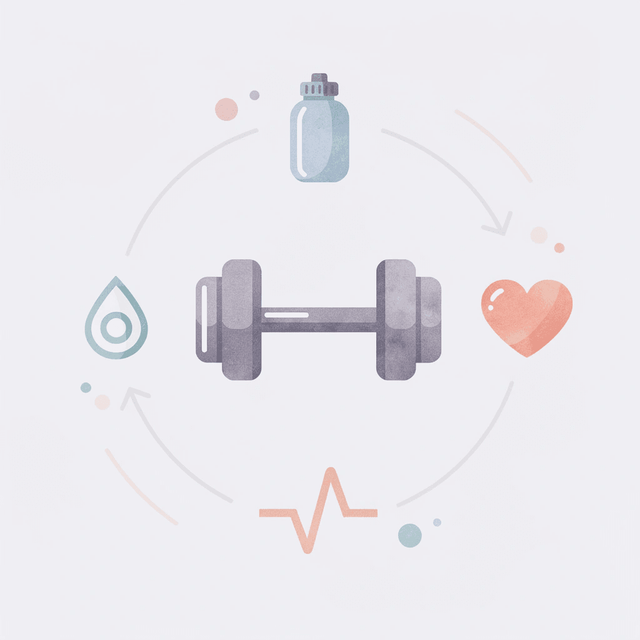
The challenge isn't knowing what to do; it's doing it consistently when life gets busy. Missing your protein goal three days in a row, forgetting to drink enough water, or skipping strength training creates gaps that slow progress without obvious warning signs.
Habit | What Gets Missed | Impact on Progress |
|---|---|---|
Protein intake | Daily target not met | Slower muscle retention and satiety |
Hydration | Insufficient water | Side effects worsen, energy drops |
Fiber intake | Gaps in daily tracking | Digestive issues, reduced fullness |
Strength training | Skipped sessions | Muscle loss alongside fat loss |
Weight logging | Inconsistent weigh-ins | Patterns get lost, progress unclear |
Most people track these habits across multiple apps or notebooks, switching between a food diary, medication reminder, weight log, and fitness tracker. That scattered system becomes harder to maintain, important patterns get lost, and the mental load feels like a second job.
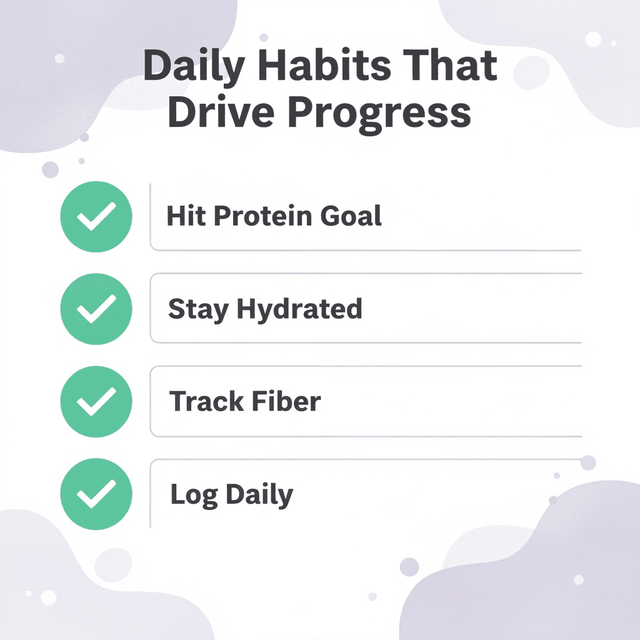
"Your daily habits — protein, hydration, fiber, movement — are the real drivers of progress on GLP-1 medications like Zepbound. The medication works best when your routine works with it." — MeAgain
Apps like MeAgain bring all those pieces together in one place, built specifically for GLP-1 medications like Zepbound, Wegovy, and Ozempic. The app lets you track your shots, protein, fiber, water, movement, side effects, and weight together. Your capybara companion turns the most important daily habits into small, achievable goals, while Journey Cards capture milestones the scale doesn't show.