
Compounded semaglutide should appear as a clear, colorless solution when properly prepared and stored. Changes in color can signal contamination, degradation, or other quality issues that make the medication unsafe to use. Recognizing what's normal versus concerning helps patients protect their health and ensure their treatment remains effective.
Proper storage and regular visual checks are essential to using compounded medications safely. Tools like MeAgain's GLP-1 app provide clear guidance on medication appearance, storage requirements, and safety checks to help patients identify potential problems before they pose health risks.
Table of Contents
- What Color Is Compounded Semaglutide, and What You Should Expect
- Why Compounded Semaglutide Can Look Different (And Why That Matters)
- When Color Is Normal and When It Is a Warning Sign
- Knowing What to Watch For Is Step One. Staying Consistent Is What Protects Your Results
Summary
- Compounded semaglutide should appear as a clear, colorless solution when properly prepared. Any deviation from this baseline clarity, including cloudiness, particulates, or color shifts toward yellow, brown, or pink (without labeled vitamin B12), signals potential contamination or chemical degradation, making the medication unsafe to inject. The five-second visual inspection before each dose protects against risks that aren't theoretical, especially since FDA safety communications from 2023 found compounded semaglutide products with potency variations exceeding 30% and contamination issues that wouldn't pass sterility standards required for approved medications.
- Compounded medications lack the standardization of FDA-approved products because each pharmacy sources active ingredients from different suppliers, uses different stabilizers, and follows storage protocols that vary by location. One pharmacy might use mannitol as a stabilizer while another prefers trehalose, and these formulation differences affect not just shelf life but also how the solution looks in the vial. According to FDA guidance on compounded semaglutide, these preparations follow 503(a) compounding standards that govern sterile technique but don't mandate the same ingredient consistency or batch testing that FDA-approved drugs require.
- Color changes within a single vial always signal danger, even when color differences between pharmacies may be normal. A solution that starts clear and turns cloudy or develops a yellow tint during storage has likely degraded due to improper handling, temperature fluctuations, or contamination. Cloudiness suggests peptide aggregation, where molecules clump together and lose biological activity, while yellow or brown tints indicate oxidation that transforms semaglutide into something your body can't use and might react to.
- Vitamin B12 (cyanocobalamin) is the most common reason compounded semaglutide appears reddish or pinkish, and it is added by pharmacies to reduce nausea or provide a visual cue for medication identification. According to 2024 Pharmacy Compounding Accreditation Board (PCAB) guidelines, B12 is considered a safe adjunct when properly dosed and documented. The reddish tint doesn't affect semaglutide's efficacy, but any color must match what's listed on your prescription label, and an unexpected color without documented additives requires immediate contact with your pharmacy before injection.
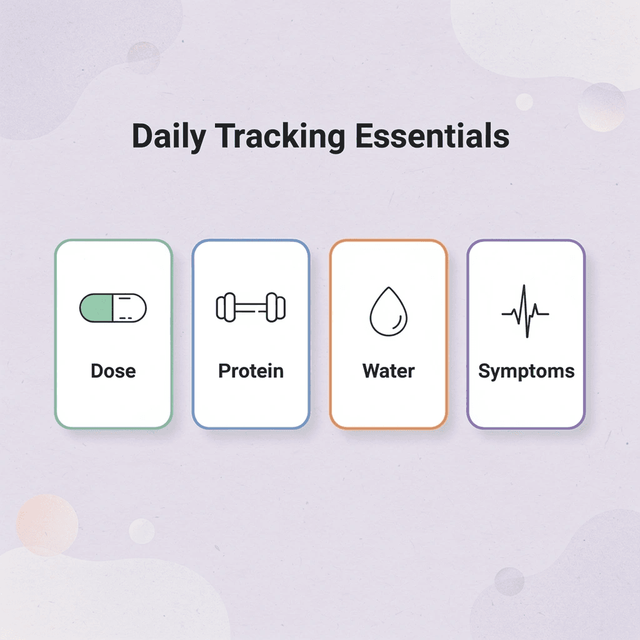
- Most medication safety failures happen not from dramatic contamination but from inconsistent inspection habits that let problems slip through after the first few careful checks. Low protein intake while on GLP-1 medications accelerates muscle loss, dehydration worsens nausea, and skipping meals because appetite is suppressed can cause energy crashes and stacked side effects. These quiet failures compound over weeks, and by the time patients notice, they've lost treatment momentum that could have been preserved with daily tracking of doses, nutrition, hydration, and symptoms.
- GLP-1 app addresses this by consolidating medication appearance checks, dose logging, protein targets, and symptom patterns into one interface that helps users spot when something shifts from normal variation to a safety flag requiring pharmacy contact.
What Color Is Compounded Semaglutide, and What You Should Expect
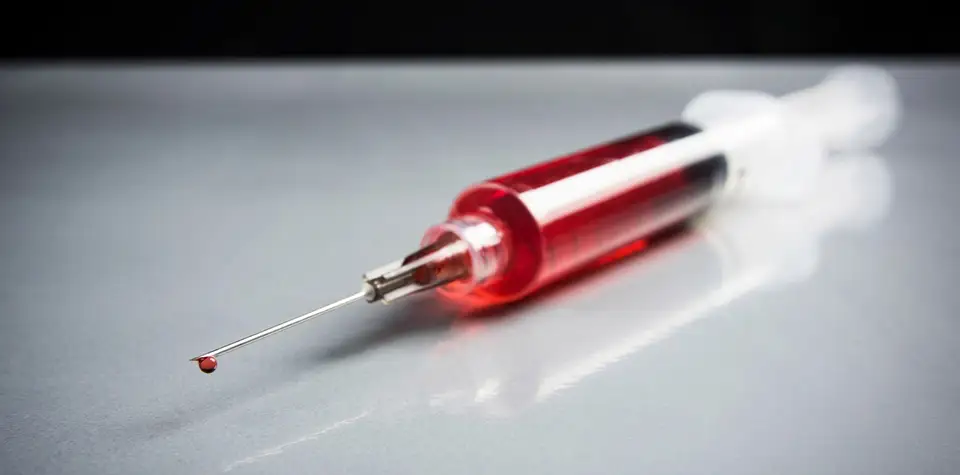
Compounded semaglutide should be a clear, colorless solution. Any cloudiness, particles, or yellow or brown tint signals a problem to address before injection.

Compounded medications aren't standardized like FDA-approved products. Your pharmacy's formulation may differ from another provider's based on ingredients, concentration, and compounding technique. This creates a challenge: when does "slightly different" become "unsafe"?
"Compounded medications aren't subject to the same standardization requirements as FDA-approved drugs, creating potential variability in appearance and quality." — FDA Guidance, 2023
What does normal semaglutide look like?
When you inspect your vial against a well-lit background, you should see through the solution as clearly as you can see through water. There should be no floating specks, haziness, or color shift. The liquid should look identical whether you tilt the vial or hold it still. Some compounded formulations may appear slightly cloudy depending on the specific salt form used: semaglutide sodium or semaglutide acetate instead of the base peptide. Any cloudiness should be minimal and consistent throughout the vial.
What warning signs should you watch for?
The moment you notice discoloration—yellow, brown, pink, or any unexpected tint—stop. Color changes indicate that chemicals are breaking down or bacterial contamination is occurring, both of which render the medication unsafe. Particles floating in the solution, whether tiny fibers or small crystals, signal the same problem. These visual clues are your first line of defense against injecting degraded or contaminated medication.
Why do most people skip proper medication inspection?
Most people check their medication quickly, if at all, before taking a dose. According to FDA safety messages published in 2023, compounded semaglutide products have been found to exhibit strength changes exceeding 30% and contamination issues that fail the cleanliness standards required for approved medications. Your eyes can catch problems that lab testing would find, but you're not sending every vial for testing.
How does visual inspection help you feel more in control?
When tracking doses, meals, protein intake, and your body's response to treatment, knowing what your medication looks like physically helps you feel more in control. Our MeAgain GLP-1 app helps you notice patterns between medication timing, nutrition, and symptoms by consolidating everything in one place. The app includes guidance on what your medication should look like and how to store it, so you can recognise when something's wrong instead of worrying over every dose.
What visual changes indicate you should contact your pharmacy immediately?
If your solution shows discoloration, visible particles, or cloudiness when it was previously clear, don't use it. Contact your pharmacy before your next dose. The same applies if you notice changes after proper storage: visible changes suggest contamination or a break in the cold chain.
How do compounded preparations differ between pharmacies?
Compounded preparations vary by pharmacy. Some use multi-dose vials that you'll draw from over weeks; others provide single-dose preparations. The preservatives, buffers, and stabilizers they add affect how the solution should look, and its stability once opened. If your pharmacy told you to expect a perfectly clear solution and you're seeing anything else, contact them before injecting. Formulation differences explain why two vials of "the same" medication can look and behave differently.
Related Reading
- How Much Is Compounded Semaglutide
- How to Get Compounded Semaglutide
- Why is Semaglutide Compounded With B12
Why Compounded Semaglutide Can Look Different (And Why That Matters)
Compounded semaglutide comes from individual pharmacy preparations, not factory lines with set formulas. Each pharmacy sources its active ingredient from different suppliers, mixes it with different stabilizers, and stores it under different conditions. Two vials of "the same" medication can look slightly different, even when both are technically correct.


"Each compounding pharmacy operates as an individual manufacturing unit, creating natural variation in medication appearance even when following identical formulations." — FDA Compounding Guidelines, 2023
How do manufacturing standards differ between brand-name and compounded versions?
Brand-name semaglutide undergoes FDA-controlled manufacturing, with every batch using identical ingredients and passing the same quality checks. Compounded versions skip this standardization. According to FDA guidance on compounded semaglutide, these preparations follow 503(a) compounding standards, which govern sterile technique and facility requirements but lack the ingredient consistency and batch testing that FDA-approved drugs require. One pharmacy might use mannitol as a stabilizer while another prefers trehalose. One might add benzyl alcohol as a preservative for multi-dose vials; another might prepare preservative-free single-dose versions. These choices affect shelf life, storage instructions, and the solution's appearance.
What factors affect the quality of compounded semaglutide powder?
The semaglutide powder itself presents additional concerns. Compounding pharmacies source active pharmaceutical ingredients from suppliers that meet USP standards, but these standards allow acceptable ranges in purity, moisture content, and particle size. A batch exposed to high humidity or light during shipping may degrade before reaching the compounding bench. The pH of the reconstitution solution matters. Semaglutide is an environment-sensitive peptide. If the buffering agent shifts pH outside the optimal range, the peptide can clump together or break down, sometimes creating a faint haze.
Comparison of Semaglutide Solutions
Feature | FDA-Approved Semaglutide (Ozempic/Wegovy) | Compounded Semaglutide with B12 | Compounded Semaglutide (Potential Issue) |
|---|---|---|---|
Standard Color | Clear and colorless | Pink or red | Any unexpected color, cloudiness, or particles |
Active Ingredient | Pure Semaglutide base | Semaglutide base | Potentially semaglutide salts |
Other Ingredients | Specific, inert carriers | Vitamin B12 and potentially other additives | Unknown or unlisted substances |
Manufacturing Oversight | Under strict FDA review and approval | Made by licensed pharmacies, but not FDA-reviewed | Unregulated or improperly produced |
Key Benefit | Proven safety and efficacy | May help with fatigue and other side effects | None poses a safety risk |
Expected Appearance | Consistent and clear | Consistent pink/red if B12 is listed | Inconsistent signs of degradation |
How does appearance signal chemistry changes?
Most people assume that if the active ingredient is identical, nothing else matters. This reasoning breaks down when you consider that appearance reveals chemistry. A clear solution indicates peptide chains are properly folded and stable in liquid. Cloudiness signals aggregation, where peptide molecules clump together and lose efficacy. Yellow or brown colors indicate oxidation, a chemical breakdown that renders semaglutide unusable and potentially harmful. Pink discoloration often signals bacterial contamination, particularly in multi-dose vials that have been repeatedly punctured. These are safety warnings that the medication has degraded at a molecular level.
When do pharmacy differences become concerning?
Differences between pharmacies become important when you switch where you get your medicine or refill from a different location. You might receive a bottle that looks different from your last one because the new pharmacy uses different stabilizers or sources its active ingredient from a different company. This is normal. But if your current pharmacy's product suddenly looks different from what they gave you before, that's not normal and indicates their process changed, storage conditions deteriorated, or the active ingredient batch was damaged.
How can you track variations effectively?
Tools like MeAgain help you track these details by logging each dose, including notes on appearance, lot numbers, and any changes you notice over time. A record makes it simple to spot when something shifts, whether a normal supplier change or a red flag requiring immediate pharmacy contact. You're building a pattern that makes the invisible visible. But knowing when variation is acceptable and when it signals danger requires understanding what specific colors and changes mean.
Related Reading
When Color Is Normal and When It Is a Warning Sign
What does normal compounded semaglutide look like?
Compounded semaglutide should appear clear, colorless, and free of visible particles. If your pharmacy added vitamin B12 (cyanocobalamin), expect a reddish or pinkish tint: B12 is naturally cobalt red and is often included to address fatigue or distinguish the vial from other medications. Some formulations include L-carnitine or other vitamins, which may slightly alter its appearance. Any additive should be listed on your label. If the color matches your documentation, you're observing normal variation, not a safety issue.
When should you stop using your medication?
Stop if what you see doesn't match your label. Pink solution when your label lists "semaglutide base" with no B12? Stop. A previously clear vial turning yellow or cloudy after a week in your refrigerator? Stop. These changes signal chemical breakdown or contamination. Compounded medications lack uniform FDA manufacturing standards, so visual differences between pharmacies are normal, but unexpected changes within a single vial are always a safety signal.
What causes the red or pink color in compounded semaglutide?
Vitamin B12 is the most common reason for color. Compounding pharmacies add it to reduce nausea, boost energy during the initial adjustment phase, or provide a visual cue for identification. According to the Pharmacy Compounding Accreditation Board (PCAB) formulation guidelines published in 2024, B12 is considered safe when properly dosed and documented. The reddish tint doesn't affect semaglutide's effectiveness, but verify it by checking your prescription label and asking your pharmacist to confirm the expected appearance.
Why do different pharmacies produce varying colors?
Some pharmacies include L-carnitine to support fat metabolism, or stabilizers like mannitol, which may interact with other ingredients under certain storage conditions. Manufacturing differences between compounding facilities mean two patients receiving the same semaglutide formulation may see slightly different colors depending on the stabilizers used (trehalose vs. benzyl alcohol). You can't rely on appearance alone to validate safety: check the label, confirm with your pharmacy, and observe the vial over time.
What does an unexpected color change indicate?
Unexpected color is the clearest warning. If your prescription lists only semaglutide base with no additives, but the solution is pink, yellow, or brown, do not inject it. Contact your pharmacy and verify with your prescribing provider immediately. A solution that starts clear and turns cloudy or develops a yellow tint during storage has likely broken down due to improper handling, temperature changes, or contamination. The FDA issued warnings in 2024 about unregulated sources distributing fake or improperly formulated compounded semaglutide, particularly products using salt forms like semaglutide sodium or acetate that have not been proven safe or effective. Cloudiness, floating particles (fibers, crystals, or sediment), or any visible solids indicate the solution's sterility is compromised.
How can you detect texture changes in your medication?
Most people notice color but miss texture. Hold the vial up to the light and tilt it slowly. If the liquid swirls with faint wisps or settles into layers, something has separated or precipitated out of solution. Document what you see (a photo helps) and contact your pharmacy before the next dose.
How can tracking apps help monitor medication quality?
Platforms like the GLP-1 app help you track how your vial looks over time, making it easier to spot small changes. Recording each dose with notes on color or clarity creates a visual record that transforms observations into recognizable patterns.
How can you verify your pharmacy's credentials and licensing?
Make sure the pharmacy is licensed by your state board of pharmacy, ideally accredited by PCAB, or registered with the FDA as a 503B outsourcing facility. Verify licensure through the National Association of Boards of Pharmacy (NABP) or your state board's website. When you receive your medication, check the label for "semaglutide base," any additives such as B12 or L-carnitine, a beyond-use date (compounded medications expire faster than FDA-approved products), and storage instructions. Ask for clarification if the label is unclear or lacks important details.
What should you check before each injection?
Before each injection, perform a visual check: clear and colorless (or expected tint if B12 is included), no particles, no cracks in the vial, and no leaks around the stopper. Store at 36°F to 46°F, away from direct light or heat. Compounded semaglutide has a shorter shelf life than brand-name products due to limited stability testing. If you notice unusual injection site reactions beyond mild redness or swelling, or experience fever, severe pain, or spreading redness, seek medical attention immediately. Contaminated compounded products have been linked to serious infections, and early intervention is critical. Stay consistent with these checks. One careful inspection means nothing if you don't examine subsequent doses.
Knowing What to Watch For Is Step One. Staying Consistent Is What Protects Your Results
Knowing what compounded semaglutide should look like helps only if you check every single time. Most people start carefully, then stop paying attention after a few doses. That's when problems slip through. Consistency takes 15 seconds and protects you from using something that's gone bad.

"The medication only works if the rest of your routine does too. Five minutes of daily tracking means you stay consistent, safe, and in control." — MeAgain Health Protocol

MeAgain turns scattered responsibilities into one simple routine. You track your dose, protein intake, water intake, and symptoms in one place. The app nudges you when something's off, and your Journey Card shows what's working before the scale does. It keeps the fundamentals from falling through the cracks while your body adjusts to something new.