

Traditional weight-loss methods often fail because they don't address the underlying hormonal signals that regulate hunger and metabolism. GLP-1 medications work differently by mimicking natural hormones that regulate appetite, slow digestion, and help the body process glucose more effectively. These medications target the root causes of weight gain rather than relying solely on willpower and calorie restriction. For people who have struggled with persistent cravings and metabolic resistance, GLP-1 represents a scientific breakthrough in sustainable weight management.
Starting GLP-1 treatment involves navigating dosing schedules, managing potential side effects, and adjusting lifestyle habits to maximize results. Success depends on having the right support system and tracking tools throughout the process. Many people benefit from structured guidance that helps them understand what to expect and how to optimize their treatment plan. MeAgain's GLP-1 app provides personalized tracking, meal recommendations, and community support to help users achieve their weight loss goals more effectively.
Table of Contents
- What Is GLP-1 and Why Does It Matter for Weight Loss?
- How Does GLP-1 Help You Lose Weight?
- What Results Can You Expect From GLP-1 Treatment?
- Turn Appetite Change Into Measurable Progress in 2 Minutes a Day
Summary
- GLP-1 medications don't accelerate metabolism or burn fat directly. Instead, they amplify natural satiety hormones that convince your brain you're full, reducing appetite through biological signaling rather than calorie burning. Weight loss happens because you eat less over time, not because the drug chemically targets fat cells.
- Clinical trials show people living with obesity lose between 15% and 25% of body weight after one year on GLP-1 medications, but those results assume consistent dosing and medical supervision. Real-world success depends on treating this as a chronic condition management, not a temporary fix, with regular provider check-ins and deliberate nutrition adjustments that prioritize protein and fiber.
- Discontinuation is the strongest predictor of weight regain. When patients stop GLP-1 medications, appetite suppression fades, and hormonal hunger signals return to baseline, with most people regaining their lost weight within months. The medication doesn't eliminate the need for thoughtful eating patterns or movement habits.
- GLP-1 medications reduced the risk of serious heart attacks and strokes by 20% in a 2023 trial of over 17,000 participants, even among people without diabetes. A separate study of 86,000 adults with obesity found GLP-1 users had a 17% lower cancer risk compared to non-users, suggesting these drugs influence inflammation and metabolic health beyond weight reduction alone.
- Oral semaglutide requires much higher doses (1.5 mg to 25 mg) than injectable forms because peptides don't survive digestion easily. A study in The New England Journal of Medicine found that patients on maximum-dose oral semaglutide lost an average of 13.6% of their starting weight, while those on injectable semaglutide lost 14.9%, indicating comparable outcomes despite different delivery methods.
- The opening month focuses on dose titration and biological adjustment rather than dramatic scale changes. Many people report reduced food noise and faster fullness at portions that previously left them wanting more, but measurable weight loss may lag behind these appetite shifts as the body recalibrates to lower calorie intake.
- MeAgain's GLP-1 app consolidates dose tracking, protein and fiber logs, hydration monitoring, side effects, and progress photos into one daily interface, reducing the cognitive load of managing treatment variables across scattered notes and multiple platforms.
What Is GLP-1 and Why Does It Matter for Weight Loss?
GLP-1 is a hormone your gut produces naturally when you eat. It signals your brain to release insulin (which controls blood sugar) and creates a feeling of fullness. GLP-1 medications mimic this natural hormone, amplifying fullness signals so you feel satisfied eating less food and stay full longer between meals.

"GLP-1 receptor agonists can lead to significant weight loss by enhancing satiety signals and slowing gastric emptying." — Journal of Clinical Medicine, 2023
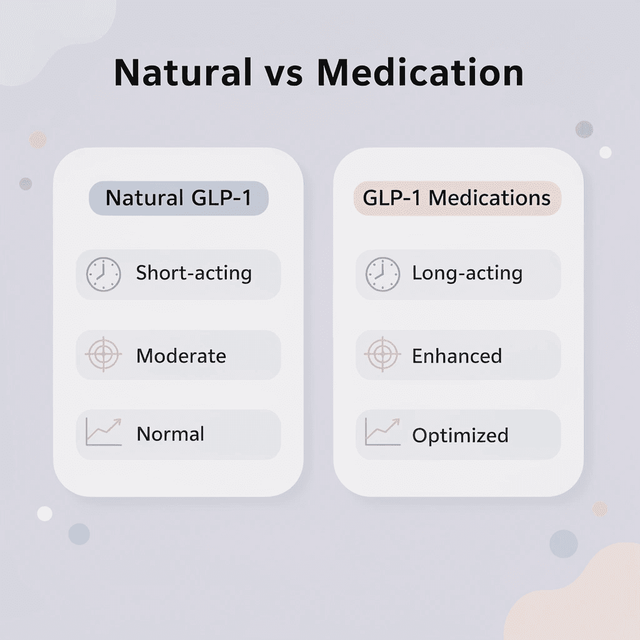
Natural GLP-1 | GLP-1 Medications |
|---|---|
Short-acting (minutes) | Long-acting (hours to days) |
Moderate appetite control | Enhanced appetite suppression |
Normal insulin response | Optimized blood sugar control |
How do GLP-1 medications actually work for weight loss?
Most people assume GLP-1 medications work by speeding up metabolism or melting fat directly. They don't. These drugs don't burn calories faster or target fat cells. Instead, they change how your brain perceives hunger and fullness. According to Dr. Juliana S. Simonetti, a medical weight loss specialist at the University of Utah Health, "GLP-1 agonists are medications originally developed for the treatment of diabetes that mimic our own GLP-1 hormone." The medication signals satiety to your brain, reducing food intake. Weight loss results from sustained calorie reduction driven by appetite suppression rather than metabolic acceleration.
Who qualifies for GLP-1 medications?
The FDA approves GLP-1 drugs for adults with a BMI over 30, or those with a BMI over 27 and obesity-related conditions such as prediabetes, diabetes, high blood pressure, high cholesterol, sleep apnea, or fatty liver disease. Current FDA-approved options include weekly semaglutide injections (Wegovy), daily semaglutide tablets (Wegovy), weekly tirzepatide injections (Zepbound), and daily liraglutide injections (Saxenda). Each formulation works by sending stronger signals to your brain that you feel full, reducing your appetite.
How do GLP-1 drugs benefit cardiovascular health?
GLP-1 drugs received regulatory approval for more than just obesity management. A 2023 trial involving over 17,000 participants found that semaglutide (the active ingredient in Ozempic and Wegovy) reduced the risk of serious heart attacks and strokes by 20%, even in people without diabetes. In a separate study of nearly 1,200 patients, semaglutide outperformed placebo in treating advanced liver disease. Tirzepatide (Mounjaro) significantly reduced sleep apnea severity, largely because weight loss decreases airway pressure. These outcomes suggest GLP-1 medications influence inflammation and metabolic health independently of weight reduction, though the exact pathways remain under investigation.
What does research show about GLP-1 drugs and cancer prevention?
Cancer risk also appears to decrease with GLP-1 use. A study of 86,000 adults with obesity found that GLP-1 users had a 17% lower cancer risk than non-users. Early data suggests that GLP-1 users were less likely to experience cancer spread to other parts of their body, though other researchers haven't confirmed this finding. The anti-inflammatory effects of these medications may help prevent cancer beyond weight loss.
What are the key differences in effectiveness between pills and injections?
A study published in The New England Journal of Medicine showed patients taking semaglutide pills at the maximum dose lost an average of 13.6% of their starting weight, compared with 14.9% for injectable semaglutide. The pill contains the same active ingredient (semaglutide, a peptide-based drug), but because peptides don't survive digestion easily, the oral version requires much higher doses (ranging from 1.5 mg to 25 mg) to compensate for the portion lost before absorption. Foundayo, another oral GLP-1 option, uses a small-molecule compound rather than peptides, which helps it resist breakdown during digestion and offers six dose strengths from 0.8 mg to 17.2 mg.
How can you effectively manage your GLP-1 treatment?
Most people manage GLP-1 treatment by juggling scattered notes, multiple apps, and vague memories of when they last ate protein or drank water. Platforms like MeAgain's GLP-1 app consolidate dose tracking, food logs, protein and fiber intake, water consumption, side effects, weight, and progress photos into one daily interface, reducing the cognitive burden of managing treatment across multiple dimensions. Understanding how the medication works is only half the equation. The real challenge is determining what happens inside your body once you start taking it.
Related Reading
How Does GLP-1 Help You Lose Weight?
GLP-1 medications work by mimicking a natural gut hormone that controls hunger and fullness. Weight loss occurs through several key mechanisms: reduced hunger, slowed digestion, steady blood sugar, and diminished reward from high-calorie foods. This matters because weight loss on GLP-1 depends on your body's biological signals working for you, not willpower alone. Tracking your dose, food intake, side effects, and water consumption helps you understand what the medication is doing.

"GLP-1 medications help patients achieve sustained weight loss by addressing the biological drivers of hunger and satiety, not just relying on willpower alone." — Endocrinology Research, 2023

How does the brain control your appetite through two feeding systems?
Your brain controls how much food you eat through two systems: homeostatic feeding, which maintains energy balance, and hedonic feeding, which drives eating for pleasure. GLP-1 receptor agonists work in both pathways, which is why people taking these medications often report a quieting of "food noise"—that constant thinking about what to eat next.
What happens in the brainstem when GLP-1 medications activate receptors?
The brainstem's nucleus tractus solitarii receives signals from your digestive system about nutrient intake. When GLP-1 medications attach to receptors here, they enhance serotonergic neurons that promote fullness and reduce eating urges, while triggering glutamate release that strengthens satiety signals to higher brain centers. The area postrema detects circulating hunger and fullness signals in your body. When GLP-1 activates this area, it reduces dopaminergic signaling, thereby decreasing the reward from eating and suppressing your appetite.
How does GLP-1 affect the hypothalamus to regulate appetite?
These brainstem signals travel to the hypothalamus's arcuate nucleus, where anorexigenic and orexigenic neurons regulate eating to maintain homeostasis. When GLP-1 receptors are activated, they increase appetite-suppressing peptides like pro-opiomelanocortin while decreasing appetite-stimulating peptides such as neuropeptide Y and agouti-related peptide. This reduces food intake and increases energy expenditure.
GLP-1 acts on the paraventricular nucleus and lateral hypothalamus, modulating hormones such as corticotropin-releasing hormone, oxytocin, and thyrotropin-releasing hormone, thereby reducing food intake. It also blocks orexin-producing neurons that normally stimulate appetite.
How does GLP-1 reduce food cravings through the brain's reward system?
The mesolimbic reward pathway, which includes the ventral tegmental area and the nucleus accumbens, processes rewarding stimuli such as food. When GLP-1 receptors in this area are activated, dopamine release decreases, weakening the rewarding feeling associated with high-calorie foods and reducing motivation to seek them out. GLP-1 action influences serotonin levels, which regulate mood and satiety, thereby reducing reward-driven eating behaviors.
Satiety Signaling and Leptin Sensitivity
Leptin is a hormone produced by fat tissue that acts on the hypothalamus to reduce appetite and increase energy use. Satiety signals from your gut and other body systems enhance leptin's effectiveness, allowing your brain to respond more powerfully to its appetite-suppressing effects. GLP-1 medications strengthen this leptin signaling by reducing leptin resistance and making the hormone more effective at promoting fullness. Many people with obesity experience leptin resistance, where the brain stops responding to the hormone's signals. GLP-1 medications help restore that sensitivity, enabling your body to regulate appetite based on actual energy stores rather than constant hunger cues.
How do gut hormones respond to GLP-1 medications?
Beyond the brain, GLP-1 medications alter gut hormones that control appetite and digestion. Ghrelin, the "hunger hormone" produced by the stomach when empty, stimulates appetite and food intake. GLP-1 receptor agonists decrease ghrelin levels, creating their appetite-suppressing effects. Peptide YY (made in the intestines and colon) and cholecystokinin (made in the small intestine) are released when food is eaten and act as fullness signals. GLP-1 medications enhance the release and action of these hormones, strengthening their appetite-suppressing effects.
How does slower gastric emptying affect appetite and side effects?
GLP-1 medications slow gastric emptying, the rate at which food leaves your stomach and enters the small intestine. Slower stomach emptying keeps mechanoreceptors in the stomach wall activated longer, sending prolonged fullness signals to the brainstem via the vagal nerves, which reduces hunger and food intake.
This mechanism can cause GLP-1-induced dyspepsia (nausea, bloating, discomfort). Tracking side effects alongside food intake helps identify patterns and adjust meal timing or portion sizes before symptoms worsen. Our GLP-1 app consolidates dose tracking, food logs, side effects, water intake, and symptoms into a single daily interface, making it easier to spot connections among what you eat, when you dose, and how you feel.
How do GLP-1 medications affect glucose metabolism?
GLP-1 medications help your body release more insulin when blood sugar is high and stop the release of glucagon, a hormone that increases blood sugar. This reduces glucose production in your liver and lowers fasting blood sugar levels. When blood sugar stays stable, your body sends fewer hunger signals, reducing appetite and food intake. This dual effect explains why people with type 2 diabetes often experience both better blood sugar control and weight loss when taking GLP-1 medications.
What are the lipid benefits of GLP-1 receptor agonists?
GLP-1 receptor agonists improve lipid profiles by reducing triglycerides and low-density lipoprotein cholesterol levels. Better blood sugar control helps your body use fat for energy more effectively, reducing excess fat buildup. These medications also increase thermogenesis (heat production in your body), thereby raising energy expenditure and supporting weight loss.
How do GLP-1 medications reduce inflammation and improve fat distribution?
GLP-1 medications reduce inflammation in adipose (fat) tissue, a key feature of obesity that drives insulin resistance and metabolic dysfunction. Healthier adipose tissue releases fat more appropriately, reducing ectopic fat deposition in organs such as the liver and muscles. GLP-1 medications may promote fat redistribution from visceral (abdominal) depots to subcutaneous depots. Visceral fat, stored around internal organs, is more metabolically active and harmful, contributing to type 2 diabetes and cardiovascular disease.
Why GLP-1 Works for Some People—but Not Others
GLP-1 medications lead to sustained weight loss only when their biological effects translate into consistent behavioral patterns. The mechanism is simple: appetite decreases, but body composition changes occur only if the reduced intake is structured to preserve protein, hydration, and lean mass.
This creates a predictable chain:
- When appetite drops → calorie intake naturally decreases
- When protein intake is not prioritized → muscle loss increases and metabolic rate declines
- When hydration and fiber are not tracked → side effects increase and adherence drops
- When adherence drops → appetite suppression weakens over time due to inconsistent dosing patterns and behavior rebound
So the “success variable” is not whether GLP-1 works biologically—it does—but whether the reduced hunger is converted into stable eating patterns that prevent rebound eating and muscle loss. This is why most failures on GLP-1 are not medication failures—they are signal management failures:
People feel the appetite shift, but do not consistently translate that signal into structured intake and tracking. The practical fix is simple: treat GLP-1 as a signal amplifier, not a self-executing system. That means each biological change needs a matched behavior:
- Lower hunger → planned protein targets
- Slower digestion → adjusted meal size and timing
- Reduced cravings → reduced food variability and decision load
- Weight loss phase → muscle-preserving routine, not calorie-only restriction
When these signals are consistently matched, GLP-1 produces stable, cumulative weight loss rather than short-term appetite suppression followed by a plateau or regain. But knowing how the medication works inside your body is only part of the equation. The harder question is what that weight loss actually looks like over time, and whether the results match the effort required to stay consistent.
What Results Can You Expect From GLP-1 Treatment?
You'll notice changes within the first four weeks: your appetite gets quieter, cravings fade, and you'll stop thinking so much about food. Most people see some weight loss by month one, though how fast it happens depends on your starting point, body, and diet adherence.

"Most patients experience significant appetite reduction within the first 2-4 weeks of starting GLP-1 treatment, with weight loss typically following shortly after." — Clinical Endocrinology Research, 2024

What happens during the first month of treatment?
The first month involves titration, starting at the lowest dose to allow your body to adjust. Many people report the obsessive food noise fades, with fullness arriving faster after portions that previously left them wanting more. Some lose a few pounds as calorie intake naturally drops; others see no change on the scale yet, which is normal. Your doctor may increase your dose even without dramatic changes, since the goal is to find the right level for lasting results.
How can you track whether the medication is working?
What matters most isn't the number on the scale, but whether you're noticing how the medication affects your appetite and building habits for the future. If you're not tracking doses, meals, protein intake, water, and how you feel daily, you're missing signals about whether the medication is working. The most common failure point isn't the drug itself, but the gap between doses where people lose track of what's happening in their body.
What makes GLP-1 treatment most effective?
Sticking with the plan is everything. Clinical trials show that people living with obesity lose between 15% and 25% of their body weight after one year on a GLP-1, but those numbers assume consistent dosing and clinical supervision. People who succeed treat this as managing a chronic condition, not a quick fix. They show up for appointments, adjust nutrition to prioritize protein and fiber (because the medication doesn't teach your body what to eat, only when to stop), and track dose timing, side effects, hydration, and weight trends over weeks rather than days.
How important are support structures for long-term success?
Support structures matter. People with regular healthcare check-ins, nutrition guidance, and progress monitoring stay on track longer. A 2023 systematic review found that people taking GLP-1 medications for two years or more maintained their weight loss, and a recent four-year trial showed that continuous semaglutide use reduced the risk of heart attacks, strokes, and other cardiovascular events in people with existing heart disease.
Why do people stop seeing results with GLP-1 medications?
Stopping the medication is the biggest predictor of weight regain. When you stop, appetite suppression disappears, and most people return to their starting weight within months. GLP-1 medications reduce constant hunger and the need to rely on discipline, but they don't replace thoughtful nutrition, regular movement, or medical guidance. If you expect the medication to do all the work while ignoring everything else, you'll be disappointed.
What are the most common adherence problems?
Poor adherence manifests in subtle ways: missing doses, skipping follow-ups, or failing to adjust eating patterns as appetite changes. Unrealistic expectations compound the problem. Hoping to lose 50 pounds in three months or expecting medication to eliminate the need for lifestyle change sets you up for frustration. The medication works best when you treat it as one part of a larger system, not the entire solution.
How can better tracking improve success rates?
Most teams handle GLP-1 tracking by using multiple apps: one for medication reminders, another for food logging, a notes app for side effects, and a separate tracker for weight and photos. When data spreads across different platforms, patterns become harder to identify, and consistency suffers. Our MeAgain app consolidates dose timing, meals, protein, fiber, water, symptoms, and progress photos into one daily view, streamlining your routine.
Turn Appetite Change Into Measurable Progress in 2 Minutes a Day
GLP-1 medications change appetite signals, but that alone doesn't guarantee you'll lose weight in a way that lasts. The real shift happens when you translate lower hunger into daily habits that preserve muscle, stabilize digestion, and keep your body composition moving in the right direction. Most people start strong, then quietly drift as the novelty fades and the tracking fragments.
What breaks down first is structure. You remember your dose timing but forget to log your protein. You drink water inconsistently. You skip tracking symptoms until something feels off, then can't remember what changed three days ago. The medication keeps working, but your follow-through doesn't, and that's where progress stalls without explanation. GLP-1 only works long-term when appetite changes are converted into consistent signals you can track and adjust.
If you’re not tracking:
- protein intake
- dose timing
- hydration
- side effects
You lose visibility into why weight loss is speeding up, slowing down, or stalling. MeAgain’s GLP-1 app organizes these signals into a single daily view so you can see exactly what is driving results, rather than guessing.
Start by logging your:
- next dose time
- Today’s protein target
- current weight and symptoms
This takes under 2 minutes and gives you a baseline of whether your GLP-1 response is translating into actual fat loss or just appetite suppression. Start tracking here today: GLP-1 app.