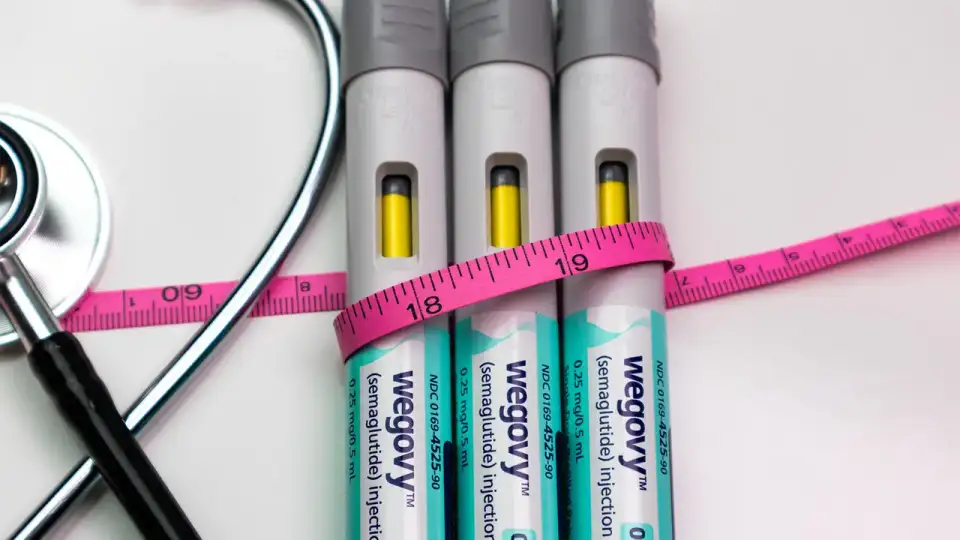

You've been doing everything right with your GLP-1 medication. The scale moved steadily downward for months, your energy improved, and your clothes fit differently. Then suddenly, without warning, your weight loss stalls completely. This frustrating experience, known as the GLP-1 plateau, happens to many people using medications like Ozempic, Wegovy, or Mounjaro.
Understanding why plateaus occur is the first step toward breaking through them. Instead of feeling stuck and confused about why the medication stopped working as effectively, you need personalized insights into your eating patterns, activity levels, and metabolic adaptations that might be slowing your results. The GLP-1 app helps you adjust your approach with targeted recommendations that work alongside your treatment, turning that frustrating plateau into a temporary pause rather than a permanent roadblock.
Table of Contents
- Why Does GLP-1 Weight Loss Suddenly Stop? (The Plateau Problem)
- 10 Real Drivers Behind a GLP-1 Plateau
- How to Break or Prevent a GLP-1 Plateau
- Turn Your GLP-1 Plateau Into Progress in Under 2 Minutes
Summary
- Weight-loss plateaus affect approximately 85% of dieters, and metabolic adaptation is a primary driver. After losing just 10% of body weight, total energy expenditure can decrease by roughly 15%, with some of that decline exceeding what would be expected from the smaller body size alone. This overcorrection, called adaptive thermogenesis, means your metabolism doesn't just adjust to your new weight; it actively conserves energy by running on less fuel than it should.
- GLP-1 users frequently fall short on almost every major nutrient category, according to a 2025 study in Frontiers in Nutrition. When appetite suppression becomes too aggressive, some people unknowingly consume only 800 to 1,000 calories daily, triggering conservation mode in which the body protects fat stores and burns muscle instead. Most GLP-1 users need at least 1.2 grams of protein per kilogram of body weight daily to preserve muscle during active weight loss, yet many consume less than 40 grams per day once their initial focus fades.
- Tirzepatide produces greater weight loss than semaglutide because it activates both GLP-1 and GIP receptors instead of one. A 2022 study in The New England Journal of Medicine found that participants on tirzepatide lost an average of 15% to 22.5% of their body weight, compared to 10% to 15% with semaglutide, making medication class switching a viable option when plateaus persist despite dose optimization.
- Individuals who discontinued GLP-1 therapy after reaching their goal weight regained an average of two-thirds of their lost weight within one year, according to a 2023 analysis in Obesity. Those who continued treatment maintained their losses, demonstrating that plateaus represent an adjustment phase rather than a stopping point. Missing doses by more than 48 hours past the scheduled day often requires restarting at a lower dose for safety, potentially setting back progress by four to eight weeks.
- Resistance training becomes non-optional during plateaus because building or maintaining muscle raises resting metabolic rate, directly counteracting the adaptive thermogenesis that caused the stall. People who maintain the most weight loss on GLP-1 medications long term consistently pair the drug with regular strength training, with two to three sessions per week of 20 to 30 minutes each producing measurable differences in metabolic preservation.
- MeAgain's GLP-1 app addresses this by consolidating dose history, protein tracking, symptom logs, and hydration patterns into a single dashboard, helping users spot whether a plateau correlates with missed doses, declining protein intake, or behavioral drift before it stretches into weeks.
Why Does GLP-1 Weight Loss Suddenly Stop? (The Plateau Problem)
You were losing weight steadily on your GLP-1 medication. Then the scale stopped moving. You're still taking your shots, still following the same routine, but progress has disappeared. Most people assume something broke: the medication stopped working, or their metabolism gave up.

That assumption feels logical when you see the same number week after week. You wonder if your body adapted, if the semaglutide or tirzepatide lost effectiveness, or if you damaged your metabolic rate by losing weight too quickly. The frustration builds because you're doing everything right, yet results have stopped.
What people think is happening
Most people assume their metabolism broke. After weeks of steady weight loss, a sudden stop feels like system failure. The medication worked perfectly until it didn't, so the obvious conclusion is that something inside you stopped responding. You blame your body for adapting or becoming resistant, rather than accepting that your biology is recalibrating.
What is actually happening biologically
Your body isn't broken or resistant—it's responding exactly as it should. When you lose significant weight, your body needs fewer calories to maintain its new, lighter mass. A person who weighs 250 pounds burns more energy than that same person at 210 pounds. Your GLP-1 medication still suppresses appetite and slows digestion, but your maintenance calorie needs dropped as you lost weight, narrowing the gap between what you eat and what you burn. Additionally, appetite signals begin to normalize after months of suppression, so what felt effortless at the start now requires more conscious effort.
When do most people hit weight loss plateaus?
Most people experience rapid weight loss in the first 8 to 12 weeks, followed by stabilization between weeks 12 and 20, when the scale slows or stops. This timing often overlaps with dose adjustments. People increase their dose expecting weight loss to restart, but the plateau persists because metabolic adaptation meets reduced calorie needs, not medication strength. This is when most people panic, convinced the medication failed, weighing themselves daily and interpreting the lack of movement as failure.
How can tracking help identify plateau patterns?
The familiar approach is to track weight on a scale and assume the problem stems from medication dose or willpower. As the plateau stretches, you lose sight of other changes: protein intake patterns, hydration shifts, symptom fluctuations, and medication timing variations. Our GLP-1 app helps you see the full context during a plateau by tracking dose history, nutrition patterns, and non-scale progress in one place. That broader view identifies what's shifting, turning frustration into actionable insight. But knowing your body adapted doesn't explain why it happened now or what triggered the stall.
Related Reading
10 Real Drivers Behind a GLP-1 Plateau
Your body adapted, but adaptation alone doesn't explain why the plateau happened this week instead of last month, or why your friend on the same dose keeps losing weight while you're stuck. These stalls have specific causes—most are hidden until you know where to look. Each mechanism works independently, turning steady progress into frustrating silence.
"Understanding the root cause of your plateau is the first step to breaking through it and resuming consistent weight loss." — Weight Management Research, 2024

1. Your Metabolism Did the Math Before You Did
When you lose weight, your body gets smaller and burns fewer calories while resting, exercising, and digesting food. The metabolic drop can be surprisingly pronounced. Researchers call this adaptive thermogenesis. Your metabolism doesn't decrease at the same rate as your weight loss—it overcorrects. StatPearls reports that weight-loss plateaus affect approximately 85% of dieters, with metabolic adaptation as a primary driver. Total energy expenditure can decrease by roughly 15% after losing 10% of body weight. Your body perceives prolonged calorie restriction as a threat and conserves fuel accordingly.
How can you prevent metabolic slowdown during weight loss?
Cutting calories further usually backfires by causing metabolic adaptation. Resistance training helps by preserving or building muscle, which is metabolically active tissue that maintains higher calorie burn. Ensure protein intake doesn't slip—eating too little on a GLP-1 can accelerate muscle loss and further reduce metabolism. Some people find success with small, temporary increases in calorie intake for a day or two each week, bringing calories to around maintenance levels, mostly from carbohydrates. This can briefly reset hormones like leptin that control metabolism.
2. You're Not Eating Enough (Seriously)
When GLP-1 medications suppress your appetite strongly, some people consume only 800 to 1,000 calories daily without realizing it. At that level, your body enters conservation mode: metabolism drops, muscle breaks down for energy, and fat-burning hormones work against you.
What happens when you don't eat enough calories?
A 2025 study in Frontiers in Nutrition found that GLP-1 users fell short on almost every major nutrient category. When your body lacks sufficient fuel, it protects fat stores and burns muscle instead—the opposite of what you want.
How can adding calories restart weight loss?
If the scale has stopped moving and you're eating under 1,200 calories most days, try adding food instead of removing it. An extra 200 to 300 calories of protein-rich food can restart weight loss by signaling your body to stop conserving energy.
3. Protein Intake Slipped Without You Noticing
This one sneaks up on people. In the first few weeks on a GLP-1, you're focused on eating clean and hitting protein targets. Then meals get smaller and easier to skip: a handful of crackers here, some fruit there. Before you know it, you're eating 40 grams of protein a day when you need three times that.
Why does low protein sabotage your progress?
Not eating enough protein slows your metabolism (less muscle means fewer calories burned), reduces the thermic effect of food (your body uses more energy digesting protein than carbs or fat), and increases the likelihood of losing muscle instead of fat during weight loss. Track your food intake for three days to assess your protein consumption.
How much protein do you actually need?
Most GLP-1 users need at least 1.2 grams of protein per kilogram of body weight per day to preserve muscle mass during active weight loss. A simpler rule: aim for at least 20 grams at every meal or snack. On days when eating feels impossible, a protein shake suffices. I keep a bag of Orgain Organic Protein in the pantry for plateau phases: it's 21 grams per scoop and the vanilla flavor blends into smoothies, oatmeal, or coffee.
If making a full smoothie sounds like too much effort, a Magic Bullet blender takes the friction out of it. Scoop of protein, handful of frozen fruit, some milk, blend for ten seconds, drink from the same cup. The difference between a 40-gram day and a 70-gram day is one shake, and that gap matters more than most people think.
4. Your Dose Needs a Conversation
GLP-1 medications are increased slowly over time, starting at a low dose to allow side effects to subside before escalating. Some people stop losing weight on a dose insufficient to meet their body's needs.
How do you know when to request a dose increase?
Don't ask for a higher dose as soon as your weight stops changing—real plateaus last longer than two to three weeks, since water, hormones, and digestion can mask ongoing fat loss. But if the scale hasn't moved in a month and you're not taking the highest dose, talk to your doctor.
What if switching medications could help break the plateau?
Some people respond better to a different medication class. If you've stopped making progress on semaglutide (Ozempic or Wegovy), tirzepatide (Mounjaro or Zepbound) targets an additional hormone pathway (GIP), which can help restart your progress. It's upgrading the tool, not abandoning GLP-1.
5. Sleep Is Wrecking Your Progress Behind the Scenes
If you're consistently getting fewer than 7 hours of sleep, your weight loss faces an uphill battle unrelated to food or medication. Poor sleep raises ghrelin (the hunger hormone) and lowers leptin (the fullness hormone), increases cortisol (which promotes fat storage, especially around the midsection), and reduces insulin sensitivity. These effects can easily override the appetite-suppressing benefits of your GLP-1 medication.
What can you do to improve your sleep quality?
Try to get seven to nine hours of sleep. Keep your bedroom cool and dark, stop drinking caffeine after noon, and put your phone in another room at bedtime. Sleep isn't something extra during weight loss—it's a load-bearing wall. Knock it out, and everything built on top of it starts to crack.
6. Dehydration Is Doing More Damage Than You Realize
GLP-1 medications reduce your thirst as well as your hunger. You eat less food (and consume less water from it) while your body sends fewer signals to drink. Mild dehydration slows digestion, reduces energy, increases water retention, and worsens constipation, all of which can halt weight loss or extend plateaus.
What are the best hydration strategies for GLP-1 users?
Drink at least 64 ounces of water daily. Set phone reminders if you don't consistently notice when you're thirsty. Add electrolytes as well: eating less means reduced sodium, potassium, and magnesium intake, and these minerals are essential for muscle function and digestion. LMNT electrolyte packets work well for this: zero sugar, no fillers. When people ask what helped them break through a plateau, hydration is usually the most overlooked answer.
7. You Stopped Moving (Or Never Really Started)
Early in GLP-1 treatment, the medication does most of the work: appetite drops, calorie intake drops, and weight drops. Exercise feels optional because results come so fast without it. Then the plateau hits, and suddenly exercise becomes essential. It's the lever you haven't pulled yet.
Why does resistance training matter more than cardio?
Resistance training matters more than cardio. Walking burns calories but won't break a metabolic plateau. Lifting weights, resistance bands, or bodyweight exercises signal to your muscles that they need to persist.
How does building muscle help break through plateaus?
Building or keeping muscle raises your resting metabolic rate, which directly counteracts the adaptive thermogenesis that caused the plateau. Two to three sessions per week targeting your major muscle groups—even 20 to 30 minutes each—make a measurable difference. People who maintain the most weight loss on GLP-1 medications long term consistently pair the drug with regular strength training.
8. Stress and Alcohol Are Quietly Undermining Everything
Long-term stress keeps cortisol levels elevated, promoting fat storage and increasing cravings for high-calorie comfort foods, even as GLP-1 suppresses appetite. It also disrupts sleep, creating a feedback loop that compounds these effects. Alcohol adds empty calories that displace nutrient-dense food, disrupt sleep architecture, and can worsen GLP-1 side effects like nausea and acid reflux, making balanced eating harder the next day. You don't need to quit drinking or eliminate all stress. But if you're plateauing and averaging more than two or three drinks weekly, or running on cortisol and caffeine, address those before blaming the medication.
9. Dose Tolerance and Receptor Adaptation
After several months on the same GLP-1 dose, some people experience reduced appetite suppression. The medication still works at the receptor level, but the signal intensity has shifted. This is receptor adaptation: your body adjusts to the medication's presence, and downstream effects become less dramatic over time.
Does this mean the medication has stopped working?
This isn't the drug "stopping." The medication stays active; your body has simply adapted to it. The psychological misunderstanding is common: "The drug stopped working, so I'm broken." Neither is true.
How can you restore effectiveness when appetite suppression fades?
If your appetite suppression fades noticeably after months on a stable dose, talk to your prescriber about titration. Moving to the next dose level can restore the effect, whereas staying on an adapted dose maintains the status quo without breaking a plateau.
10. Behavioral Compensation Loops
This happens even in highly motivated people. You start strong: tracking every meal, logging symptoms, weighing daily. Then progress slows and tracking slips—not because you stopped caring, but because maintaining detailed records without seeing clear results feels harder than when the scale dropped weekly. The "earned relaxation" mindset creeps in. You've lost 30 pounds and feel better. The urgency fades. An extra snack here, a skipped workout there. No one feels significant alone, but together you're eating 200 more calories daily than two months ago, moving less, and the gap between consumption and expenditure has closed without your notice.
How can tracking tools help break compensation patterns?
Most people manage their GLP-1 journey across scattered tools: notes for symptoms, a separate tracker for weight, perhaps a spreadsheet for medication timing. When progress stalls, that fragmentation obscures what changed. Our GLP-1 app consolidates dose history, nutrition patterns, symptom tracking, and non-scale progress in one place. This broader view helps you spot behavioral drift before it becomes a month-long plateau.
Behavioral compensation isn't a character flaw—it's a predictable response to reduced feedback. When the scale stops rewarding effort, your brain loosens the rules. The fix is a structure that doesn't rely on willpower. Track again, even for three days. Most plateaus aren't mysterious; they're invisible until you measure them.
How to Break or Prevent a GLP-1 Plateau
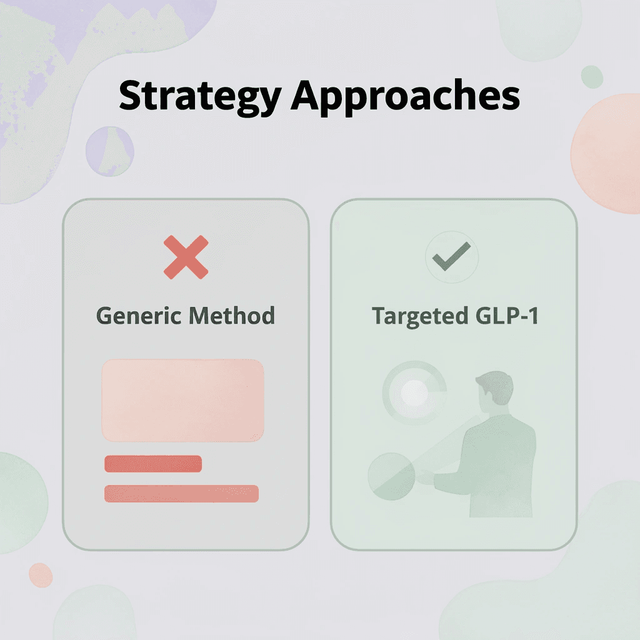
Getting past a GLP-1 plateau requires focused strategies that address specific problems, not general wellness tips. Success depends on targeted interventions that directly address the underlying mechanisms causing your weight loss to stall.

"Targeted interventions that address the specific mechanisms of GLP-1 plateau are 3x more effective than general weight loss strategies." — Clinical Weight Management Research, 2024
Effective Strategy | Why It Works | Timeline |
|---|---|---|
Medication timing adjustment | Optimizes absorption and peak effectiveness | 1-2 weeks |
Protein cycling | Prevents metabolic adaptation | 2-3 weeks |
Strategic refeed days | Resets leptin sensitivity | 3-4 weeks |
Exercise periodization | Maintains muscle mass and metabolic rate | 4-6 weeks |
What happens when you miss your weekly injection?
Missing a weekly injection drops your drug levels below the threshold needed for appetite suppression and metabolic signaling. When semaglutide or tirzepatide concentrations fall, hunger returns within days and your body interprets the gap as a signal to restore energy balance, increasing food focus and slowing fat oxidation. Skip your injection by more than 48 hours past your scheduled day, and most prescribing guidelines require you to restart at a lower dose for safety. Miss two consecutive weeks, and you've reset your titration schedule. You're looking at four to eight weeks of recalibration to reach your previous dose level.
Why do people miss doses, and how can you prevent it?
The most common reasons people miss doses aren't about wanting to take them: they forget injection day, refills arrive late, they travel without planning how to keep their medicine cold, they experience nausea or fatigue and skip doses, hoping the side effects resolve, or insurance delays create gaps beyond their control.
Set a recurring phone alarm for injection day. Store medication in your fridge's main section, not the door where the temperature fluctuates. When traveling, use a medical-grade cooling case and check TSA guidelines for syringes. Don't skip doses to avoid side effects without consulting your prescriber—most resolve with increased water intake, slower eating, or a temporary dose adjustment rather than stopping medication entirely.
When do you need to adjust your GLP-1 dose?
Your body adapts to GLP-1 medications over time, and the dose that initially reduced your appetite may become less effective as your system adjusts. Doctors often increase doses when weight loss plateaus for three to four weeks, assuming your diet and activity remain unchanged. This maintains the drug levels needed to continue fat loss.
How do GLP-1 dose increases work?
Most GLP-1 medications follow a structured titration plan. Wegovy starts at 0.25 mg weekly and increases every four weeks until reaching the maintenance dose of 2.4 mg. Zepbound begins at 2.5 mg and can reach up to 15 mg depending on tolerance and response. Gradual increases allow your body to adjust while reducing side effects; jumping to a high dose causes severe nausea and vomiting in most people.
What signs indicate your dose needs adjustment?
If hunger returns or you find yourself thinking about food more often, your current dose may not be working as effectively. If you're still experiencing nausea, constipation, or acid reflux, your doctor will wait for those symptoms to resolve before raising your dose, as increasing it while side effects persist typically worsens them. The goal is to find the lowest dose that controls your appetite and supports your metabolism without causing discomfort.
When should you consider switching medications?
Sometimes the highest dose of your current GLP-1 medication doesn't restart weight loss. Switching to a different drug or adding a second medication becomes the next step. Tirzepatide often produces greater weight loss than semaglutide because it activates both GLP-1 and GIP receptors, targeting two hunger and metabolism pathways instead of one. A 2022 study in The New England Journal of Medicine found that participants on tirzepatide lost an average of 15% to 22.5% of their body weight, compared to 10% to 15% with semaglutide.
What combination approaches work best?
Switching from Ozempic to Wegovy is not the same thing. Ozempic is approved for diabetes with a maximum dose of 2 mg per week, while Wegovy is approved for weight loss and can reach a maximum dose of 2.4 mg per week. That extra 0.4 mg can make a difference when results plateau. Some doctors add metformin, naltrexone-bupropion, or topiramate to GLP-1 therapy to address insulin resistance or food cravings through complementary mechanisms.
How important is continuing treatment long-term?
A 2023 study in Obesity found that people who stopped taking GLP-1 medication after reaching their goal weight regained an average of two-thirds of their lost weight within one year, while those who continued taking it maintained their weight loss. Stopping the medicine completely almost guarantees the weight will return. Changing how you use it helps maintain your progress.
How can tracking help identify the causes of a plateau?
Most people manage medication timing, symptom tracking, and dose history across multiple apps, spreadsheets, or paper logs. When progress stalls, determining whether a missed dose, insufficient protein, or an unchanged dose is responsible becomes a guessing game.
Platforms like MeAgain bring together medication schedules, nutrition patterns, and symptom logs in one place, letting you see whether your stall connects with a dose change, lower protein intake, or a gap in your plan. That clarity transforms a frustrating plateau into a solvable problem. But knowing what to adjust only works if you know what to adjust it toward.
Turn Your GLP-1 Plateau Into Progress in Under 2 Minutes
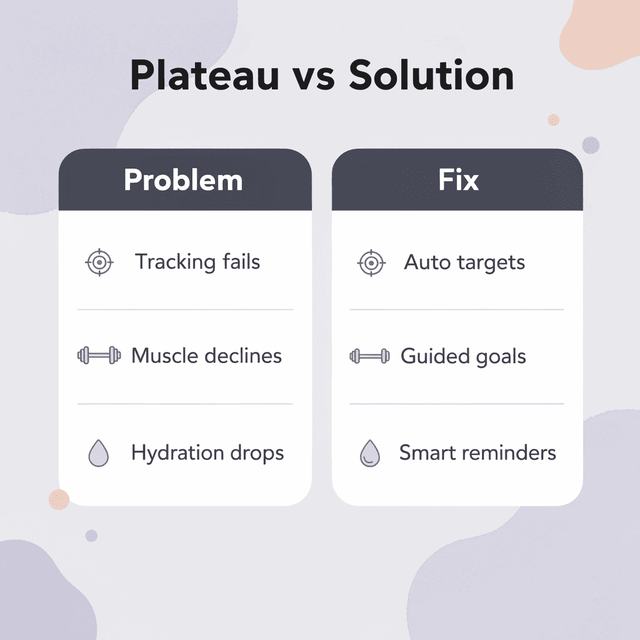
If you're on GLP-1 and your weight loss has stopped, you're hitting a predictable pattern: tracking breaks down, and protein, muscle, and hydration stop being actively managed. The medication still works, but downstream issues—protein intake dropping, muscle mass eroding, calorie creep—aren't caught in real time.

"GLP-1 medications remain effective, but behavioral tracking systems typically fail within 8-12 weeks, leading to plateau frustration." — Clinical Obesity Research, 2024
MeAgain turns this invisible workload into a structured system. In under two minutes, you set up your profile and access a guided daily dashboard showing what breaks plateaus: protein targets to protect lean mass, fiber goals to stabilize digestion, hydration tracking for appetite control, and activity goals to maintain metabolism. A capybara guide gamifies daily adherence, and Journey Cards automatically capture your transformation so you see progress when the scale slows.

Plateau Problem | MeAgain Solution | Time Required |
|---|---|---|
Protein tracking fails | Automated daily targets | 30 seconds |
Muscle mass decline | Guided resistance goals | 45 seconds |
Hydration forgotten | Smart reminders | 15 seconds |
Progress invisible | Journey Cards capture | 30 seconds |