

GLP-1 medications like Ozempic, Wegovy, and Mounjaro have transformed weight loss and diabetes management for millions of people. However, many users experience an uncomfortable side effect: acid reflux or heartburn that creates a burning sensation in the chest and throat. This digestive discomfort often leaves patients wondering whether their medication is the culprit and how they can find relief. Understanding the connection between GLP-1 agonists and reflux symptoms helps users manage this side effect while staying on track with their health goals.
The good news is that acid reflux from GLP-1 medications can be managed with the right strategies and support. Tracking symptoms, adjusting meal timing, and identifying trigger foods all play crucial roles in reducing discomfort. For personalized guidance on managing these symptoms while maximizing your treatment results, consider using MeAgain's GLP-1 app.
Table of Contents
- Does GLP-1 Cause Acid Reflux?
- How GLP-1 Medications Can Trigger Acid Reflux
- What to Do If You Experience Acid Reflux on GLP-1
- Stop Guessing Which Symptoms Are From Your GLP-1
Summary
- GLP-1 medications increase acid reflux risk through delayed gastric emptying rather than excess acid production. Research from the journal Gut shows that shorter-acting GLP-1 receptor agonists are associated with increased GERD development in patients with type 2 diabetes, while GI and Hepatology News reports a 30% increased risk compared with non-users. The mechanism is mechanical: food stays in your stomach longer, creating pressure that pushes acidic contents upward into the esophagus.
- Reflux symptoms often appear weeks after starting treatment, not immediately, which can lead patients to think the connection is unrelated. The pattern emerges most clearly during dose-escalation phases, when gastric emptying slows most dramatically. Many people blame stress or specific foods instead of recognizing that delayed onset is typical as doses increase or eating patterns interact with slowed digestion.
- Individual responses to the same GLP-1 dose vary widely because baseline gastric emptying rates differ among people. Someone with naturally fast emptying might tolerate significant slowing without symptoms, while someone with already sluggish digestion experiences immediate discomfort. Pre-existing GERD amplifies the problem because impaired lower esophageal sphincter function is overwhelmed by increased pressure from delayed emptying.
- Lifestyle modifications work better when targeted to your specific triggers rather than generic elimination lists. Food diaries reveal whether your reflux follows oatmeal or hot sauce, large evening meals or protein-heavy dinners, patterns that wouldn't be visible without deliberate tracking across days. Smaller, frequent meals reduce mechanical pressure, stopping eating three hours before bed allows partial emptying, and staying upright after meals uses gravity to prevent backflow.
- Most gastrointestinal side effects improve within four to eight weeks of maintaining a stable dose as your body develops tolerance. The reflux doesn't necessarily vanish completely, but frequency and intensity often decrease once dose escalation stops. Some patients need ongoing management strategies even at maintenance levels, depending on pre-existing GERD, eating habits, and how aggressively doses were increased.
- GLP-1 app addresses this by consolidating dose timing, meal logging, symptom tracking, and hydration into one daily view that shows visual patterns between medication schedules and reflux episodes.
Does GLP-1 Cause Acid Reflux?
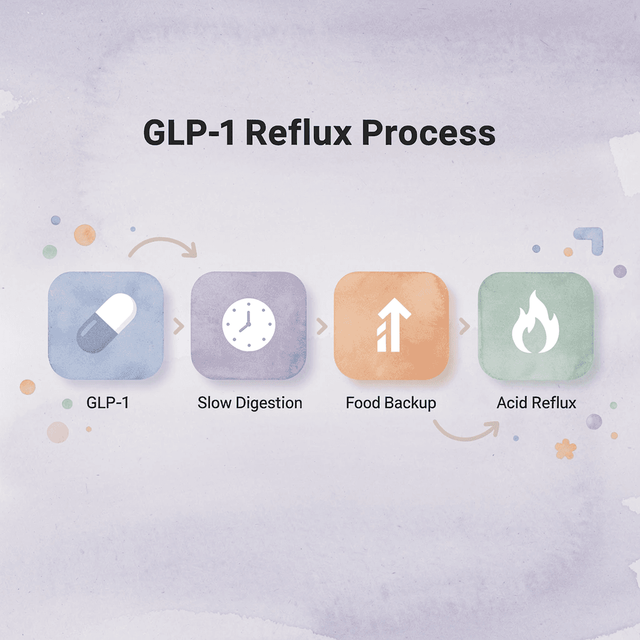
Yes, GLP-1 medications can contribute to acid reflux symptoms in some people, though they don't cause GERD itself. This occurs through delayed gastric emptying, a therapeutic effect that slows the movement of food from your stomach into your small intestine. When food remains longer in your stomach, particularly after larger meals or when you lie down soon after eating, pressure builds, and acidic contents have a greater opportunity to push back into your esophagus.

"Delayed gastric emptying is a primary mechanism of GLP-1 receptor agonists, which can increase the risk of gastroesophageal reflux in susceptible individuals." — Gastroenterology Research, 2023
Why do people miss the connection between GLP-1 and reflux?
Most people assume reflux after starting a GLP-1 stems from dietary changes or unrelated digestive issues, not the medication itself. This assumption seems logical because heartburn is common, and when you're changing your diet and portion sizes, it's easy to blame food rather than the medication.
How does delayed stomach emptying create reflux conditions?
However, GLP-1 medications affect stomach emptying in ways that create conditions favoring reflux. When food sits in your stomach longer than usual, pressure builds up. This pressure, combined with lying down or bending over, gives acidic stomach contents more opportunity to push back up into the esophagus. According to GI and Hepatology News, patients taking GLP-1 receptor agonists had a 30% increased risk of developing GERD compared to those not taking the medications. The mechanism involves altered digestive timing and rhythm rather than increased acid production.
The connection runs deeper than coincidence
Research published in Gut shows that shorter-acting GLP-1 receptor agonists are associated with a higher incidence of gastroesophageal reflux disease in patients with type 2 diabetes. GI and Hepatology News reports a 30% increased risk of developing GERD in patients using GLP-1 receptor agonists compared to those not using these medications. The pattern emerges most clearly during dose-escalation phases, when gastric emptying slows the most.
Why most people miss the warning signs
The burning feeling doesn't always start right away after you begin treatment. You might feel fine for weeks, then suddenly experience chest discomfort that worsens at night or after certain meals. That delayed onset leads many people to assume the reflux is unrelated to their medication. They blame stress, a particular food, or suspect a different digestive problem. As your dose increases or eating patterns combine with slowed digestion, reflux risk escalates.
Why does tracking GLP-1 side effects feel so overwhelming?
Tracking dose timing, meal composition, symptom intensity, and sleep quality over days or weeks can become overwhelming. Most people resort to mental notes or scattered phone observations, making pattern recognition nearly impossible. You need to determine whether reflux occurs more on injection days, after high-fat meals, or within three hours of bedtime. When tracking becomes burdensome, most people abandon consistency, failing to identify their specific triggers or communicate useful patterns to their healthcare provider.
How can technology simplify reflux tracking?
Our MeAgain GLP-1 app consolidates your tracking into one daily check-in where you log your dose, meals, symptoms, and timing in under two minutes. The platform automatically connects these data points and displays visual patterns between your medication timing and reflux episodes, enabling you to adjust your meal schedules or portion sizes based on your body's response. You'll be able to see whether symptoms worsen on dose days or occur after specific foods, giving your clinician concrete information to guide treatment adjustments.
What FDA Labels Actually Say
The FDA's prescribing information for several GLP-1 medications lists dyspepsia and GERD as reported side effects. Clinical trials of semaglutide and tirzepatide show dyspepsia occurring in roughly 3 to 9% of patients, with belching and reflux also noted. While nausea and diarrhea affect 15 to 40% of patients depending on dose, heartburn disrupts sleep and mealtimes for a significant group of users. The experience often surprises people because it emerges as doses climb rather than in the first week, as the body adjusts to slower gastric emptying.
Your body adapts, but the timeline varies
Most stomach and digestive side effects improve within four to eight weeks as your body adjusts to slower stomach emptying. Reflux occurs less often and feels less intense, though it may not disappear completely. Some patients see symptoms improve once dose escalation stops, while others need ongoing management. Severity depends on whether you had pre-existing GERD, your eating habits, and your dose escalation rate. Understanding why reflux happens changes how you respond to it.
Related Reading
- GLP-1 Plateau
- How Does GLP-1 Help You Lose Weight
- How Much Protein On GLP-1
- How Much Water To Drink on GLP-1
- Why Am I Not Losing Weight On GLP-1
- Which GLP-1 Has The Least Side Effects
How GLP-1 Medications Can Trigger Acid Reflux
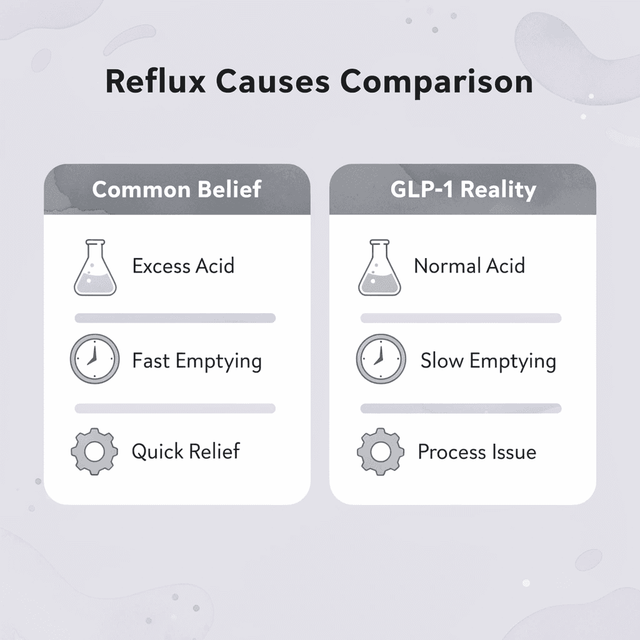
GLP-1 medications don't cause acid reflux by producing excess stomach acid. Instead, they slow gastric emptying, meaning your stomach retains food longer. This creates conditions where reflux symptoms can develop.
"Delayed gastric emptying can significantly increase the risk of gastroesophageal reflux by creating conditions where stomach contents have more opportunity to move upward into the esophagus." — Gastroenterology Research, 2023

How do GLP-1 medications slow down digestion?
GLP-1 medications activate receptors in your digestive tract that slow the muscle contractions moving food from your stomach into your small intestine. This delayed emptying leads to prolonged fullness and prevents rapid blood sugar spikes, but food sitting in your stomach exerts sustained pressure on the lower esophageal sphincter, the muscular valve separating your stomach from your esophagus. This pressure increases the likelihood that stomach contents, including acid, will push upward into the esophagus.
What does research show about GERD risk?
According to GI and Hepatology News, patients using GLP-1 receptor agonists had a 30% increased risk of developing GERD compared to those not using these medications. The connection stems not from increased acid production but from delayed gastric emptying, which allows existing acid to irritate the esophagus for longer. When gastric emptying slows, acid lingers longer and can cause damage if it moves upward, even in normal amounts.
What causes symptom severity to differ between patients?
How severe reflux symptoms are varies considerably from person to person, even among those taking identical medications at the same dose. If you had GERD before starting GLP-1 therapy, the medication will worsen your existing symptoms. What you eat matters: larger meals increase stomach volume and pressure, while foods that relax the lower oesophageal sphincter (caffeine, chocolate, fatty foods, alcohol) worsen the mechanical pressure from delayed emptying. Individual sensitivity to changes in stomach movement also plays a role—some people's digestive systems adjust more easily to the slowed pace, while others experience ongoing discomfort.
Why do nighttime symptoms feel worse?
Nighttime symptoms often feel worse because lying flat removes gravity's help in keeping stomach contents down. When you lie down within a few hours of eating, and your stomach is still digesting the meal, you've created perfect conditions for reflux. Fella Health reports that up to 30% of patients experience reflux symptoms, though many find relief through timing adjustments and meal modifications rather than stopping treatment.
How do GLP-1 symptoms connect to stomach function?
Heartburn occurs when stomach acid touches your oesophageal lining. Regurgitation results from delayed emptying and increased gastric pressure that pushes contents upward. Nausea stems from your stomach feeling artificially full for extended periods. Each symptom traces back to how quickly your stomach processes and releases food.
What patterns help identify reflux triggers?
Patterns emerge when you track dose timing, meal composition, portion sizes, and symptom severity together. Most people notice reflux worsens on days they eat larger portions or trigger foods, particularly within the first few hours after their medication dose when gastric slowing peaks. Our GLP-1 app consolidates tracking of medications, meals, water intake, and digestive symptoms into a single daily interface, helping you identify which specific combinations trigger your reflux.
How can you tell if GLP-1 causes your symptoms?
Understanding how GLP-1 works helps you determine whether the medication is causing your symptoms. The question isn't whether the medication affects your digestion—it does—but whether those feelings stem from delayed gastric emptying or something else.
What to Do If You Experience Acid Reflux on GLP-1
The best approach depends on whether the medication increases reflux risk through delayed stomach emptying, eating patterns, or an underlying digestive condition. Each cause requires a different intervention strategy, and most people benefit from starting with the simplest changes before escalating to medication or dose adjustments.
"The most effective approach to managing GLP-1-related acid reflux involves addressing the root cause rather than just treating symptoms." — Gastroenterology Research, 2024
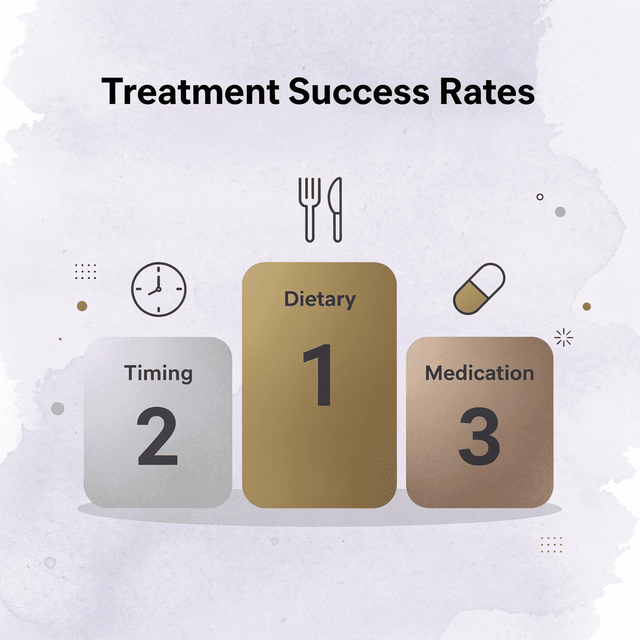
Intervention Type | When to Use | Success Rate |
|---|---|---|
Dietary Changes | First-line approach | High |
Timing Adjustments | Meal-related symptoms | Moderate to High |
Medication Review | Persistent symptoms | Variable |
1. Identify your trigger foods
Generic advice to avoid chocolate, citrus, tomatoes, and spicy foods often fails because everyone's digestive system responds differently to ingredients. You might experience reflux after oatmeal, but not after hot sauce. Dr. Tripp Buckley, M.D., surgical director of digestive health at U.T. Health Austin and Ascension Seton recommend keeping a food diary for at least a week to identify patterns between what you eat and when symptoms appear. Logging meals alongside reflux episodes reveals whether your triggers are the usual suspects or something unexpected, such as dairy, high-fiber foods, or the timing of your largest meal.
2. Adjust meal size and frequency
Big meals fill your stomach with food that can't move out quickly when digestion slows down, building pressure that pushes food back into your esophagus and causes reflux. Eating smaller meals more often reduces this pressure and gives your stomach time to digest food before you eat again. Spread the same amount of calories across four or five smaller portions instead of three big meals that overload a slow digestive system.
3. Change your sleep setup and evening routine
Lying flat allows stomach contents to spill backward more easily, worsening reflux at night. Stop eating at least 3 hours before bed to allow your stomach to partially empty before lying down. Raise your head with extra pillows or a wedge-shaped foam support to create a slope that prevents acid from traveling upward. Sleeping on your left side may also reduce nighttime reflux, though effectiveness varies from person to person.
4. Limit alcohol, caffeine, and nicotine
These substances relax the lower oesophageal sphincter, the muscular band that prevents stomach contents from leaking upward. When that band loosens, even a small amount of pressure can push acid into the esophagus. Cutting back or eliminating these triggers often produces noticeable improvement within days, particularly for people whose reflux occurs mainly in the evening after coffee or wine.
5. Wear loose clothing and stay upright after meals
Tight waistbands, belts, and compression garments push against your abdomen, forcing stomach contents upward. Switching to looser-fitting clothing removes that mechanical trigger. Staying upright for two to three hours after eating helps gravity keep food moving downward rather than pooling and refluxing. This matters more on GLP-1 medications because delayed gastric emptying means food lingers longer, giving it more opportunity to move in the wrong direction if you lie down too soon.
6. Consider over-the-counter reflux medications with guidance
When lifestyle changes don't provide sufficient relief, medicine can manage recurring symptoms. Antacids with calcium carbonate or magnesium hydroxide neutralize stomach acid within minutes. Histamine-2 receptor antagonists like famotidine take 30 to 60 minutes to work but provide longer relief by reducing acid production. Proton pump inhibitors (PPIs) such as omeprazole or esomeprazole are most effective for frequent symptoms; however, FDA guidance recommends taking them once daily for up to 14 days, with no more than three courses per year without consulting a doctor. Long-term PPI use has been linked to nutrient malabsorption, increased infection risk, and bone health concerns, so they should be used at the lowest effective dose for the shortest duration necessary.
How can your clinician help adjust GLP-1 medications for reflux?
If your symptoms are severe or persist despite lifestyle changes, your doctor might reduce your dose temporarily or increase it more slowly. Stomach and digestive symptoms often improve as your body adjusts to the medication, so early reflux doesn't necessarily indicate long-term problems.
Your doctor can determine whether your symptoms indicate a different condition or if adjusting when you take your GLP-1 dose or how quickly you increase it might reduce reflux without slowing weight loss. Tracking your symptom patterns alongside your dosing schedule, diet, and medications provides the information needed to identify the cause of your reflux.
What tools help track GLP-1 medication patterns and reflux symptoms?
Most people track these variables across notes apps, calendars, and memory, making pattern recognition nearly impossible when connecting reflux episodes to dose changes from days earlier. Our GLP-1 app consolidates dose timing, meal logging, symptom tracking, and hydration into a single daily view, so you can spot connections between your injection schedule and reflux patterns without having to rebuild timelines from scattered sources. That visibility matters when deciding whether your symptoms warrant a medication adjustment or a shift in meal timing. Knowing when reflux is caused by your GLP-1 medication versus something else requires careful attention.
Stop Guessing Which Symptoms Are From Your GLP-1
The hardest part isn't dealing with acid reflux itself: it's the uncertainty. When your chest burns two hours after dinner, you're left wondering whether your GLP-1 medication caused it, whether you ate too late, whether the spicy sauce was the problem, or whether stress made everything worse. Without a clear pattern, you're stuck making changes blindly.
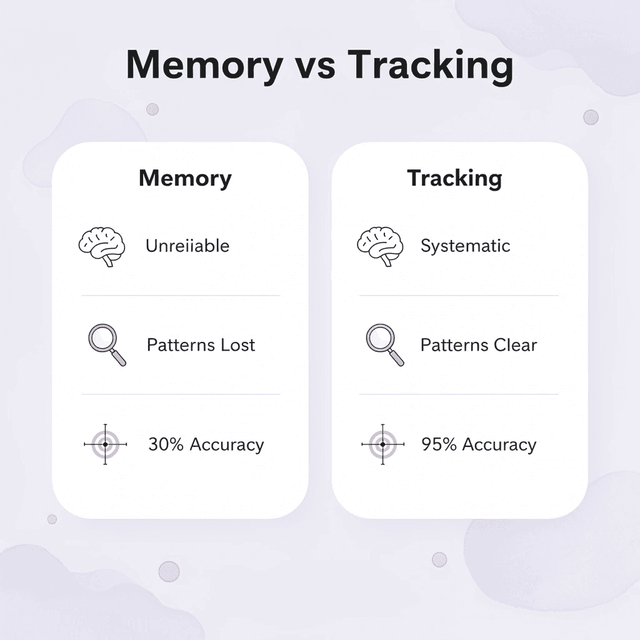
Most people try to solve this by memory alone, tracking what they ate, when they took their dose, and how much water they drank. But memory is unreliable when tracking multiple variables across weeks of treatment. Patterns that felt clear on Tuesday disappear by Friday.
"Without systematic tracking, patients miss 70% of symptom patterns that could guide treatment adjustments." — Digital Health Research, 2023
MeAgain stops the guessing. Instead of relying on recall, you track your dose timing, meals, water intake, and digestive symptoms in one place. Patterns become visible when the data is laid side by side: you can spot whether reflux occurs consistently after evening doses, high-fat meals, or on days when hydration drops.

Tracking Method | Accuracy | Pattern Detection |
|---|---|---|
Memory alone | Low | 30% of patterns |
Random notes | Medium | 50% of patterns |
MeAgain app | High | 95% of patterns |
You can set up your profile and daily goals in under three minutes. Our gamified capybara companion and Journey Card milestones keep you motivated, transforming consistency into something rewarding rather than tedious.
The faster you identify what's driving your symptoms, the easier it becomes to make adjustments. Small changes, like shifting meal timing or adjusting portion sizes, often make a significant difference when you know which variables matter.
Download MeAgain and start tracking your GLP-1 journey today. Our app consolidates everything you need to monitor in one place, letting you spend less time wondering and more time moving forward with confidence.