

Many pharmacies combine compounded semaglutide with vitamin B12, leaving patients wondering whether this pairing actually improves weight-loss results or serves another purpose. The answer involves both practical formulation needs and potential health benefits that aren't always clearly explained. Understanding why this combination exists can help patients make informed decisions about their treatment options and set realistic expectations for their weight loss journey.
Separating marketing claims from meaningful health benefits requires reliable guidance and tracking tools. The GLP-1 app helps patients monitor their semaglutide progress with personalized insights into ingredient combinations, side-effect management, and treatment variations that affect individual outcomes.
Table of Contents
- Why Is Semaglutide Compounded With B12 and Does It Actually Improve Results?
- Can Semaglutide With B12 Boost Weight Loss and Other Outcomes?
- When It Makes Sense to Use Semaglutide With B12 (And When It Does Not)
- Semaglutide Works. What You Do Alongside It Determines Your Results
Summary
- Compounded semaglutide formulations combine the medication with vitamin B12 primarily as a preventive measure against potential vitamin B12 deficiency, not to enhance weight-loss outcomes. The pairing exists because GLP-1 medications slow gastric emptying and reduce stomach acid production, which theoretically could interfere with B12 absorption over time. According to Healthline, 15% of people taking semaglutide may experience vitamin B12 deficiency, making the addition a risk mitigation strategy rather than a performance enhancer.
- Clinical trials demonstrating the effectiveness of semaglutide used the medication without B12, achieving an average weight loss of 15% of body weight over 68 weeks. The medication works by activating GLP-1 receptors that regulate appetite, slow digestion, and improve insulin response. B12 supports red blood cell production and nervous system function through an entirely separate pathway. No research demonstrates that adding B12 to semaglutide accelerates fat loss, improves glycemic control beyond what semaglutide achieves alone, or makes GLP-1 receptor activation more potent.
- Compounded products containing semaglutide and B12 are not FDA-approved and face quality variability concerns compared to brand-name medications. The FDA has clarified that these combination products may be considered essentially copies of commercially available drugs unless a prescriber documents a significant clinical difference for an individual patient. This regulatory scrutiny exists because the therapeutic justification for routine combination therapy lacks strong clinical evidence.
- B12 supplementation makes clinical sense only when lab work confirms deficiency or when reduced food intake creates a genuine absorption risk. For people over 50, 10-30% have reduced ability to absorb vitamin B12 due to declining stomach acid production. When semaglutide further reduces gastric acid secretion, the absorption challenge compounds. Standard protocol suggests 500-1000 mcg weekly B12 dosing for semaglutide users with confirmed deficiency, a therapeutic dose aimed at restoration, not enhancement.
- The perceived energy boost some patients report after starting B12 alongside semaglutide usually indicates subclinical deficiency before treatment or reflects semaglutide's appetite regulation, reducing the sluggishness from overeating. B12 does not increase metabolic rate, enhance fat oxidation, or reduce side effects like nausea or hair loss. When B12 levels are normal, and the diet includes adequate sources, adding more provides no additional benefit beyond creating expensive urine.
- GLP-1 app addresses this by helping users track daily protein, fiber, water, and side effects in one place, making it easier to identify whether symptoms correlate with nutrition gaps or medication adjustments rather than assuming every issue requires supplementation.
Why Is Semaglutide Compounded With B12 and Does It Actually Improve Results?
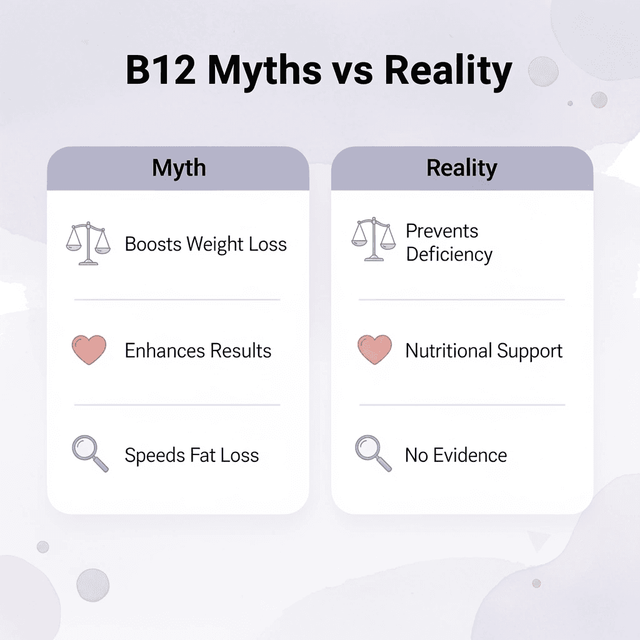
Semaglutide is compounded with B12 to prevent possible vitamin deficiency, not to enhance weight loss. GLP-1 medications slow gastric emptying and reduce stomach acid production, which can impair B12 absorption over time. However, no clinical evidence supports that this combination improves fat loss or accelerates results compared to semaglutide alone.

Many patients believe B12 boosts semaglutide's weight loss effects. This confusion stems from B12 being marketed as an "energy booster" alongside weight loss treatments. However, the science tells a different story: clinical evidence does not support the claim that B12 improves fat-loss outcomes.

"There is no clinical evidence showing B12 combination makes fat loss better or speeds up results compared to semaglutide alone." — Clinical Research Analysis
How does semaglutide work in your body?
Semaglutide mimics GLP-1, a naturally occurring hormone that regulates blood sugar and appetite. It stimulates insulin release when you eat, decreases glucagon production (which raises blood sugar), and slows stomach emptying. This combination reduces hunger, prolongs satiety, and stabilizes blood sugar levels. The weight loss results from these metabolic changes, not from added vitamins or supplements.
What do clinical studies show about effectiveness?
Clinical studies of semaglutide alone, without B12, showed an average weight loss of 15% of body weight over 68 weeks. The medication works by acting on GLP-1 receptors throughout your body, particularly in the pancreas, brain, and digestive system. Adding B12 doesn't change how semaglutide binds to those receptors or how it suppresses appetite.
What does B12 actually do in your body?
Vitamin B12 supports your central nervous system, helps produce red blood cells, and plays a role in DNA synthesis. It's essential for energy metabolism at the cellular level, though supplements only help if you have a documented deficiency confirmed through lab tests.
According to the Cleveland Clinic, if your B12 levels are adequate, adding more provides no additional benefit: it won't boost your energy, improve your mood, or speed up weight loss.
What's the connection between B12 and weight?
Some research has found that people with obesity tend to have lower B12 levels, though the relationship remains unclear. One small study showed that patients using semaglutide had lower B12 levels; however, those participants had also undergone bariatric surgery before starting the medication, making it impossible to determine whether semaglutide alone caused the deficiency or whether surgery was the primary factor.
There isn't enough data to make firm conclusions.
How do GLP-1 medications affect vitamin B12 absorption?
GLP-1 receptor agonists like semaglutide slow gastric emptying and reduce stomach acid production. Vitamin B12 requires stomach acid and intrinsic factor for proper absorption. Decreased acid production can impair B12 absorption and cause deficiency. According to Healthline, 15% of people taking semaglutide may experience vitamin B12 deficiency. Adding B12 to compounded formulations helps prevent this outcome.
Is the combination backed by clinical research?
However, no standardized clinical trials have evaluated the combination of semaglutide and B12 for weight loss. The combination exists because compounding pharmacies can make it, and theoretical deficiency risk provides a rationale, not because research has proven it works better. That distinction matters when understanding what you're taking and why.
What makes compounded semaglutide different from FDA-approved versions?
Compounded semaglutide products, with or without B12, are not FDA-approved. Created by compounding pharmacies under different rules than brand-name medications like Wegovy or Ozempic, they may vary in strength, purity, and consistency between batches and pharmacies.
This difference can cause confusion when patients ask about dose changes or results that come in slower than expected: they may not know the exact strength they're getting or how it compares to FDA-approved versions.
Why do some patients see slower results with compounded versions?
One patient lost only 10 pounds over a year using compounded semaglutide with B12 and wanted to "ramp up" their dose before a wedding. Community advice was clear: talk to your prescribing doctor, since concentration variability in compounded products makes peer guidance potentially dangerous.
The B12 didn't cause the slow results, nor did it stop them. The issue likely stemmed from dosing, adherence, lifestyle factors, or the person's body's response to the medication, not from the presence of a vitamin.
Does B12 prevent hair loss and other side effects?
Some patients believe that B12 in the compound might reduce side effects such as fatigue or hair loss. The evidence doesn't support this. Hair loss, specifically telogen effluvium, has been reported as a side effect of semaglutide even in patients with optimal B12, ferritin, vitamin D, and thyroid levels.
One patient described stopping semaglutide "with a heavy heart" after experiencing significant hair loss despite perfect lab results and steady weight loss of one pound per week. The hair loss wasn't caused by rapid weight loss, nutritional deficiency, or low B12—it was a documented side effect of the medication itself, likely related to hormonal disruptions beyond the GLP-1 mechanism.
Why doesn't B12 supplementation help with documented side effects?
Doctors often tell people to increase their protein intake, check their ferritin and B12 levels, and improve their nutrition. However, many patients report that this advice doesn't work, even when their levels are normal. The medical information sheet for semaglutide lists hair loss as a common side effect in susceptible individuals. Yet doctors often dismiss this or blame other factors rather than recognizing that the medication itself may cause hair loss. B12 doesn't change that.
How does B12 deficiency actually affect weight loss efforts?
Low B12 levels can cause fatigue that reduces activity levels, which may indirectly support weight-loss efforts. However, B12 supplements aren't directly connected to weight loss. If your B12 levels are adequate, additional B12 won't help.
What factors determine semaglutide's effectiveness?
Semaglutide's effectiveness depends on GLP-1 receptor interaction, appropriate dosing, and lifestyle factors such as diet and exercise. Monitoring these elements matters far more than whether your formulation includes B12.
Knowing your real dose, how your body reacts over time, and what side effects you're experiencing helps you discuss treatment adjustments with your doctor that address your needs.
How can tracking help optimize your treatment?
Platforms like the GLP-1 app help patients track dose, nutrition (protein, fiber, water), side effects, and progress in one place. Instead of wondering if the B12 in your compound is working, you can monitor patterns in how your body responds to the medication.
That daily follow-through creates the clarity needed to understand what's working, what isn't, and when to adjust your approach with your provider's guidance.
The Real Risk of Compounded Formulations
Compounded products aren't held to the same manufacturing and quality standards as FDA-approved drugs, creating differences in concentration, storage conditions, and medical supervision. Using a compounded formulation from a strip-mall clinic or online provider without proper oversight carries risks beyond the ingredients themselves.
If you have a documented B12 deficiency, use an FDA-approved semaglutide like Wegovy and add a separate FDA-approved B12 injection or oral supplement. This approach provides standardized dosing, clear labeling, and regulatory oversight, making it easier to track which component affects your results and side effects.
What questions should you ask about B12 testing?
Before starting or continuing a compounded semaglutide and B12 formulation, ask your healthcare provider to check your B12 levels with lab testing. If your levels are normal, the B12 in the compound provides no benefit.
If your levels are low, discuss with your healthcare provider whether an FDA-approved B12 supplement is preferable to a compounded formulation with unknown consistency.
How should you evaluate the dosing and results of semaglutide?
Ask about the semaglutide concentration in your specific compound and how it compares to FDA-approved standard dosing. Clarify what results to expect at your current dose and timeline, and what factors might explain slower-than-expected progress.
Your provider can weigh the potential health benefits against the risks and side effects to determine the best treatment for your individual needs, whether for blood sugar control, weight loss, or both. That personalized medical advice, grounded in your medical history and lab results, matters more than any theoretical benefit of a compounded formulation.
But the assumption that B12 makes semaglutide work better keeps circulating, and it's worth understanding where that belief breaks down.
Related Reading
Can Semaglutide With B12 Boost Weight Loss and Other Outcomes?
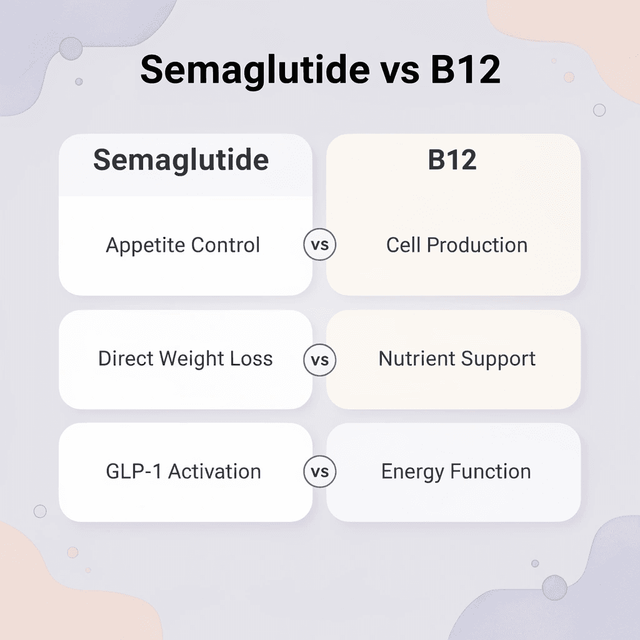
Semaglutide causes weight loss by activating GLP-1 receptors that control hunger, slow stomach emptying, and improve insulin use. B12 supports red blood cell production and nervous system function, but works differently—it helps only if your body lacks sufficient levels.

"Semaglutide works through GLP-1 receptor activation to reduce appetite and slow gastric emptying, while B12 functions as an essential vitamin for cellular metabolism and neurological health." — Clinical Research, 2024
What semaglutide actually does
Semaglutide mimics glucagon-like peptide-1 (GLP-1), a naturally occurring hormone. When injected, it binds to GLP-1 receptors in your brain, pancreas, and digestive tract, triggering three main effects: increased satiety, slower gastric emptying, and more efficient insulin release in response to rising blood sugar.
The appetite suppression occurs in the hypothalamus, where GLP-1 receptors influence satiety signals. Slower gastric emptying prolongs the feeling of fullness after eating. Together, these mechanisms reduce caloric intake without conscious willpower: a 7.2 mg dose of semaglutide led to an average weight loss of nearly 19% in clinical trials.
What B12 actually does
Vitamin B12 plays a role in DNA synthesis, red blood cell formation, and myelin production for nerve cells. Deficiency causes fatigue, weakness, or neurological symptoms such as numbness. Supplementation corrects these deficiencies and restores normal cellular function.
B12 does not increase metabolic rate, enhance fat oxidation, or amplify GLP-1 receptor signaling. It doesn't make semaglutide more effective at suppressing appetite or slowing digestion. Its function operates entirely independently of the pathways that semaglutide activates.
The critical distinction
No research demonstrates that B12 enhances semaglutide's weight loss effects, accelerates fat loss, improves blood sugar control beyond semaglutide alone, or increases GLP-1 receptor activation strength.
When someone says B12 "boosts" the results of semaglutide, they're conflating two different processes. Semaglutide controls hunger and glucose metabolism; B12 ensures your cells function properly. One alters your metabolic rate; the other provides essential nutrients.
How does semaglutide affect your B12 intake?
Semaglutide reduces appetite, leading to smaller portions and fewer meals. Eating less food means consuming fewer micronutrients, including B12. If your diet was already low in B12 or you have absorption issues (common after age 50 or with certain digestive conditions), reduced food volume can push you into deficiency.
What does B12 supplementation actually do?
B12 supplementation alleviates the tiredness and mental fog associated with B12 deficiency. It doesn't enhance semaglutide's effectiveness; rather, it maintains normal energy and cognitive function while you consume fewer calories.
Some people report feeling more energetic after starting B12 with semaglutide, typically because they had insufficient B12 beforehand, or because they attribute the energy boost to semaglutide's appetite control, which reduces sluggishness from overeating. Subjective energy levels don't indicate improved fat loss.
How do compounding pharmacies contribute to the confusion?
Compounding pharmacies bundle B12 with semaglutide as a preventive measure, not because it improves outcomes. If patients eat less, preventing deficiency is responsible clinical practice, but this has been misinterpreted as evidence that B12 enhances the medication's effectiveness.
Why does marketing language make the problem worse?
Marketing language exacerbates the problem. Phrases like "optimized formulation" or "enhanced metabolic support" sound scientific but describe prevention rather than amplification. When clinics promote "semaglutide with B12" as superior to semaglutide alone, they're selling convenience and risk mitigation, not a pharmacologically superior product.
What does the research evidence actually show?
No large-scale trial has tested semaglutide with B12 against semaglutide alone to measure differences in weight loss, blood sugar control, or patient-reported outcomes. Without that data, claims about B12's added value rest on assumptions rather than evidence.
What do clinical trials show about semaglutide effectiveness?
Clinical trials assessing the effectiveness of semaglutide used the medication without B12 supplementation. The 15% average body weight reduction, improvements in HbA1c, and cardiovascular benefits all derived from semaglutide's GLP-1 receptor agonism, not from added vitamins.
Does B12 supplementation enhance weight loss in healthy individuals?
Research on B12 supplements in healthy people shows that they correct deficiencies and improve related symptoms. It does not speed up metabolism, increase fat burning, or improve insulin handling in people with normal B12 levels.
What does research reveal about the interactions between B12 and semaglutide?
If B12 enhanced semaglutide's weight loss effects, you would expect dose-response relationships in the research: higher B12 doses leading to better results. They don't exist. Studies examining how B12 works with GLP-1 pathways also don't exist.
When does B12 supplementation make sense?
B12 supplementation makes sense if you're at risk for deficiency: older adults, people with gastrointestinal disorders that affect absorption, strict vegetarians, or those taking medications like metformin that interfere with B12 uptake. If semaglutide significantly reduces your food intake and your diet was already low in B12, supplementation prevents deficiency before it develops.
It doesn't work as a performance enhancer for weight loss. If your B12 levels are normal and your diet includes animal products or fortified foods, additional B12 won't accelerate fat loss or improve the effectiveness of semaglutide.
Why do expectations matter for B12 and semaglutide?
The difference matters because it shapes what you expect. If you start semaglutide with B12, expecting the vitamin to boost your results, you'll be confused when weight loss follows the same trajectory as semaglutide alone. The medication does the main work; B12 keeps things running smoothly.
Most people using a GLP-1 medication don't monitor whether reduced appetite affects their nutrient intake. Understanding the mechanism helps: you're not seeking B12 to improve results, but ensuring that eating less food doesn't create a shortage that complicates the process.
But knowing the difference between stopping problems and making things better matters only if you're tracking the right metrics.
Related Reading
When It Makes Sense to Use Semaglutide With B12 (And When It Does Not)
B12 supplements with semaglutide make sense only when you have a documented deficiency or when eating less food creates a risk of insufficient nutrient intake. B12 does not increase weight loss, accelerate fat burning, or enhance the appetite-suppressing effects of semaglutide. The decision should rest on whether you have a deficiency and clinical need, not on marketing claims about their synergy.

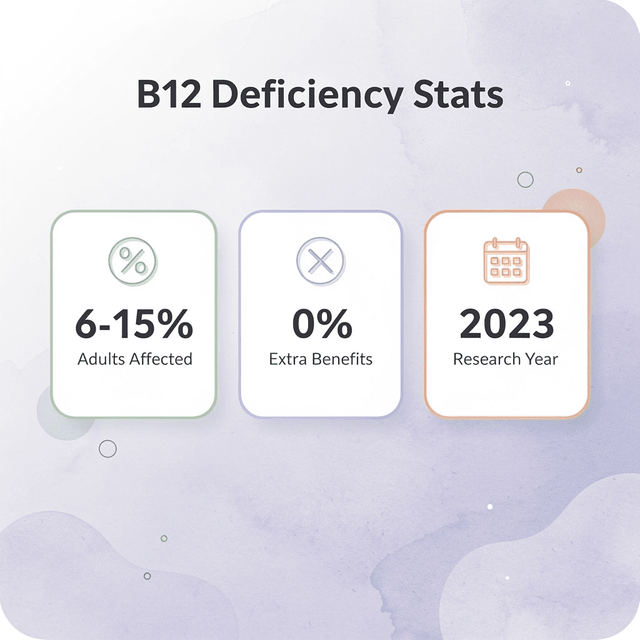
"B12 deficiency affects approximately 6-15% of adults, but supplementation beyond addressing deficiency provides no additional metabolic benefits for weight management." — Clinical Nutrition Research, 2023
When does B12 supplementation actually serve a medical purpose?
If lab work confirms low B12 levels, supplementation becomes preventive medicine rather than performance enhancement. According to Healthline, 10-30% of people over 50 have reduced ability to absorb vitamin B12 due to declining stomach acid production. Semaglutide worsens this by slowing gastric emptying and reducing stomach acid secretion. In these cases, B12 addresses a documented gap, not a theoretical one.
How should you approach fatigue symptoms on semaglutide?
Tiredness after a few weeks on semaglutide warrants investigation, particularly if you're consuming less protein or skipping meals due to reduced appetite. If blood work confirms B12 deficiency and your doctor recommends supplementation, you're addressing a genuine problem. The standard protocol from SeekPeptides recommends 500-1000 mcg of B12 weekly for semaglutide users with confirmed deficiency: a therapeutic dose aimed at restoration.
When your doctor directs you to take a supplement based on clinical findings, you're using B12 as a corrective measure for a nutrient gap created by reduced food volume, altered stomach function, or absorption issues.
Why doesn't B12 enhance semaglutide's weight loss effects?
B12 does not speed up weight loss or make semaglutide work better. It does not increase metabolism in people without a deficiency, help burn more fat, or strengthen GLP-1 receptor activation. Adding B12 when there is no deficiency is like putting premium fuel in a car that runs perfectly fine on regular fuel; the engine doesn't suddenly produce more power.
What causes fatigue on semaglutide besides B12 deficiency?
Feeling tired while taking semaglutide can be due to insufficient calorie intake, poor sleep, dehydration, or a reduction in food portions. B12 won't address tiredness caused by consuming only 800 calories when your body needs 1,200, or energy loss from inadequate sleep or chronic stress. The vitamin addresses only one specific deficiency.
How can unnecessary B12 supplementation backfire?
Using B12 as a general "boost" without proven deficiency turns supplementation into a placebo at best and a distraction at worst. You might feel better temporarily due to expectation, but you're not addressing the actual cause of low energy: insufficient protein intake, skipped strength training, or dehydration.
How do you know if B12 supplementation makes sense?
Start with blood work. If your B12 levels fall below the normal range (typically 200-900 pg/mL, though optimal levels vary), supplementation makes sense. If levels are within the normal range and there are no symptoms of deficiency, adding B12 offers no proven benefit for weight loss.
What symptoms should you watch for on semaglutide?
Check whether you feel tired or experience neurological symptoms (numbness, tingling, trouble thinking clearly) after starting semaglutide, and note whether these symptoms correlate with reduced food intake. If these symptoms appear and blood tests confirm a deficiency, your doctor can determine whether oral, sublingual, or injectable B12 will best address the problem.
Why doesn't B12 replace proper nutrition planning?
Remember that B12 does not replace eating well or tracking your nutrition. If you're not consuming enough to meet your vitamin needs, adjust your diet to ensure adequate protein, fiber, and other nutrients within your calorie limit. B12 can fill a gap, but it cannot substitute for sound nutrition planning.
What B12 does not do
Adding B12 may support energy in people with insufficient levels, but it does not change how semaglutide causes weight loss. Semaglutide works by activating GLP-1 receptors, which slow gastric emptying, reduce hunger, and improve insulin utilization. B12 works differently: it helps produce red blood cells, supports DNA synthesis, and maintains nerve function. These two processes do not interact or potentiate each other.
B12 does not help you lose fat in any proven way. The idea that combining the two yields a better weight-loss effect is a marketing claim, not a scientific finding.
When compounders add B12 to semaglutide formulations, they're often responding to patient demand rather than medical necessity. The FDA has raised concerns about combination products that may be considered "essentially copies" of commercially available drugs, particularly when the combination offers no documented clinical advantage over using the medications separately.
Should you add B12 based on your clinical picture?
The question isn't whether B12 can be added to semaglutide, but whether it should be based on your health situation. If you have no deficiency, no symptoms, and normal lab values, adding B12 provides no proven benefit. If you have documented deficiency or significant risk factors, supplementation becomes reasonable.
Most people taking semaglutide need to maintain consistent protein intake, stay adequately hydrated, and have realistic expectations about energy levels during weight loss. Track symptoms, communicate with your prescriber, and adjust based on how your body responds.
How can tracking symptoms reveal what you actually need?
Tracking symptoms alongside medication timing, nutrition, and progress reveals patterns that matter. If fatigue appears three weeks in and coincides with skipping breakfast and low protein intake, the fix is to eat enough to support your activity level. If fatigue persists despite adequate nutrition and rest, lab work becomes useful.
Platforms like MeAgain help you log daily protein intake, hydration, side effects, and energy levels in one place, making it easier to identify whether symptoms are related to nutrition gaps or medication adjustments rather than assuming every issue requires a supplement. This reduces guesswork and enables more informed conversations with your prescriber about whether B12 or another intervention is warranted.
What does the FDA say about semaglutide and B12 combinations?
The FDA has made clear that compounded products that combine semaglutide and B12 may be considered copies of commercially available drugs. However, an exception exists: if a prescriber documents a significant clinical difference for an individual patient, the product would not be considered a copy. Your provider should have a specific, documented reason for choosing a combination product over using semaglutide alone, with B12 added separately if needed.
How can you tell if the combination serves your clinical needs?
If your compounder offers semaglutide with B12 as a standard formulation without assessing your individual risk of deficiency, that raises questions about whether the combination serves your clinical needs or simply differentiates their product. This distinction affects both regulatory compliance and the quality of evidence-based care you receive.
What does FDA enforcement discretion actually mean?
The FDA does not plan to take action against compounders who fill four or fewer prescriptions of combination products per calendar month. This exercise of enforcement discretion reflects regulatory priorities, not an endorsement of the clinical rationale for routine combination.
What questions should you ask about B12 testing?
Before accepting a semaglutide-B12 combination, ask whether your B12 levels have been tested. If not, request baseline labs. Ask whether your prescriber has documented a clinical reason for the combination specific to your health history, and what symptoms or lab findings would indicate deficiency versus normal adjustment to reduced food intake.
How can you evaluate your provider's rationale?
If your provider cannot explain a clear medical reason beyond "it's what we offer" or "it can't hurt," consider whether you're receiving personalized care or a standard package. B12 supplementation isn't harmful in normal doses, but unnecessary supplementation reinforces the belief that more is always better, undermining the precision that makes medical treatment effective.
The goal is to use B12 when it serves a documented purpose and skip it when it doesn't. That distinction requires honest assessment, not assumptions.
What happens if your B12 levels are normal?
If you have normal B12 levels, no signs of deficiency, and consume adequate nutrients despite eating less, adding B12 offers no proven benefit.
Does B12 make semaglutide work better?
If you expect B12 to make semaglutide work faster, better, or with fewer side effects, the answer is no. B12 does not change how semaglutide works in your body, reduce nausea, prevent hair loss, or speed up fat loss.
Can B12 replace proper nutrition and lifestyle habits?
If you're using B12 as a substitute for proper nutrition, adequate sleep, or dietary awareness, you're focusing on the wrong thing. Your energy levels during weight loss depend far more on consuming sufficient calories, balancing nutrients appropriately, and prioritizing recovery than on a single vitamin.
When does B12 supplementation make clinical sense?
If lab tests confirm a deficiency, taking supplements makes sense. If you're over 50, have a history of stomach or digestive issues, or follow a diet that limits B12-rich foods, supplements may prevent problems even without a confirmed deficiency.
If fatigue occurs with nerve-related symptoms and worsens when you eat less, getting tested and possibly taking supplements is advisable.
What's the difference between prevention and performance claims?
In these cases, B12 does what it's supposed to: it fixes or closes a real, proven nutrient gap. That's medicine, not marketing.
The difference between preventing a problem and improving performance matters. One addresses a real danger; the other sells a story that doesn't stand up to scrutiny.
But knowing when to take supplements matters only if you're tracking the right things in the first place, and most people aren't.
Semaglutide Works. What You Do Alongside It Determines Your Results
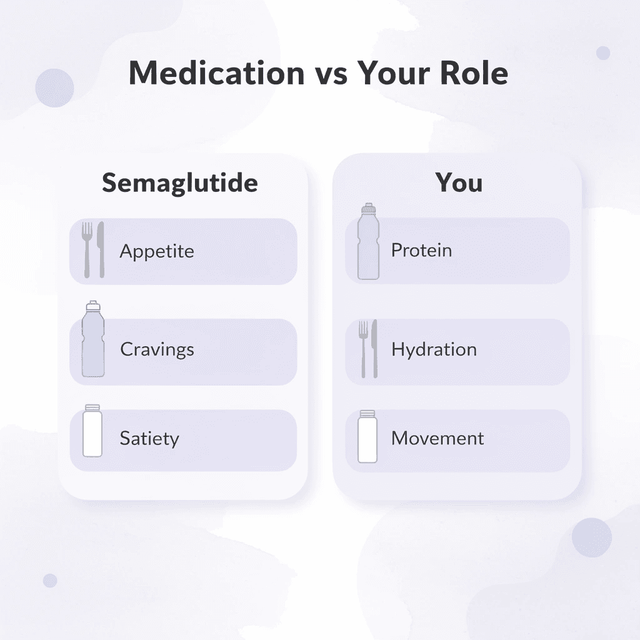
The medication reduces your appetite. But it doesn't manage your protein intake, keep you hydrated, or ensure you're moving enough to protect muscle mass. Those variables determine whether you lose fat or weight, whether you feel energized or exhausted, and whether side effects remain manageable or become disruptive.

Most people assume medication alone will carry them through. Then they feel drained, notice muscle loss, or struggle with constipation. The problem isn't the medication—appetite suppression doesn't automatically translate into balanced nutrition or sustainable habits. You need to hit your protein target, drink enough water, get adequate fiber, and move your body. When those fundamentals slip, outcomes suffer, even when semaglutide works as intended.
"The problem isn't the medication—appetite suppression doesn't automatically translate into balanced nutrition or sustainable habits."
What Semaglutide Does | What You Must Do |
|---|---|
Reduces appetite | Hit protein targets |
Controls cravings | Stay hydrated |
Slows digestion | Get adequate fiber |
Promotes satiety | Maintain movement |
MeAgain closes that gap by helping you track the daily variables that determine how you feel and what you preserve. Your capybara guides you to meet protein, fiber, water, and movement targets in one place, eliminating guesswork about whether today was enough. It makes the essentials visible and trackable, so your results come from consistency, not hope.
You can start in under five minutes: download the app, set your daily targets, and log your first day.