
People using GLP-1 medications like semaglutide or tirzepatide for weight loss sometimes notice dizziness or lightheadedness when standing up, and many wonder whether their medication is affecting their blood pressure. That connection is more common than most expect, and knowing what drives it helps distinguish a routine adjustment from a symptom worth addressing. GLP-1 medications can influence blood pressure through several mechanisms, and understanding them makes it easier to respond appropriately.
Consistently tracking these changes is one of the most practical steps a person can take while on GLP-1 medication. Logging blood pressure readings and noting symptoms like fatigue or dizziness over time reveals patterns that a single snapshot never would. For a straightforward way to stay on top of it all, the GLP-1 app from MeAgain keeps everything organized in one place.
Table of Contents
- Can GLP-1 Cause Low Blood Pressure?
- Who Is Most Likely to Develop Low Blood Pressure While Taking GLP-1 Medications?
- What Should You Do If GLP-1 Is Causing Low Blood Pressure?
- Don't Wait Until It's Too Late. Run Your GLP-1 Blood Pressure Risk Check Today
Summary
- GLP-1 medications like semaglutide and tirzepatide do not directly lower blood pressure in most cases. Instead, they trigger a cascade of physiological changes, including weight loss, reduced calorie intake, and improved insulin resistance, that collectively reduce vascular resistance. The blood pressure drop patients experience is often an indirect result of these metabolic improvements, not a single pharmacological effect.
- Clinical trials confirm that the blood pressure reductions are real but modest on their own. The SUSTAIN-6 trial found semaglutide reduced systolic blood pressure by approximately 1.3 to 2.6 mmHg compared to placebo, and a 2021 meta-analysis in the Journal of the American Heart Association confirmed average systolic reductions of 2 to 4 mmHg across multiple GLP-1 trials. Those numbers become clinically significant when a patient is already taking two or three antihypertensive medications, potentially pushing systolic pressure below the 90 mmHg threshold where fainting and falls become serious risks.
- Patients already on multiple blood pressure medications face the most predictable collision. A Northwestern Medicine study tracking over 42,000 adults on at least two blood pressure medications found that GLP-1 users in that group experienced higher rates of dizziness, fainting, and hypotension-related events. The American Diabetes Association now explicitly recommends reviewing blood pressure medications when patients experience significant weight loss on GLP-1 therapy.
- Older adults and those with diabetic autonomic neuropathy face compounded risk that goes beyond medication interactions. Aging reduces baroreceptor sensitivity, slowing the body's ability to correct blood pressure drops when standing. Neuroscience News reports that adults aged 65 and older face the highest risk of low blood pressure episodes after starting a GLP-1 drug, and in patients who also have longstanding type 2 diabetes, the autonomic nervous system damage removes the compensatory mechanism that would otherwise prevent a symptomatic fall.
- Gastrointestinal side effects introduce a separate and often underestimated risk pathway. Nausea, vomiting, and diarrhea reduce circulating blood volume, which directly contributes to orthostatic hypotension, the brief but disorienting head rush when moving from sitting to standing. Inadequate caloric intake further compounds this, as the body has less fuel to maintain stable vascular tone, particularly during postural changes.
- Identifying which mechanism is driving symptoms matters because the appropriate response differs significantly. Dehydration typically resolves with consistent fluid intake; excessive medication requires a proactive dose review with a provider, and persistent GI symptoms may warrant temporarily holding certain medications. Treating the wrong mechanism produces outcomes that are, at best, ineffective and, at worst, dangerous.
- MeAgain's GLP-1 app addresses this by giving users a way to log blood pressure readings, symptoms, hydration, meal size, and dose timing in real time, so patterns become visible before they become dangerous and clinical appointments start with data rather than memory.
Can GLP-1 Cause Low Blood Pressure?
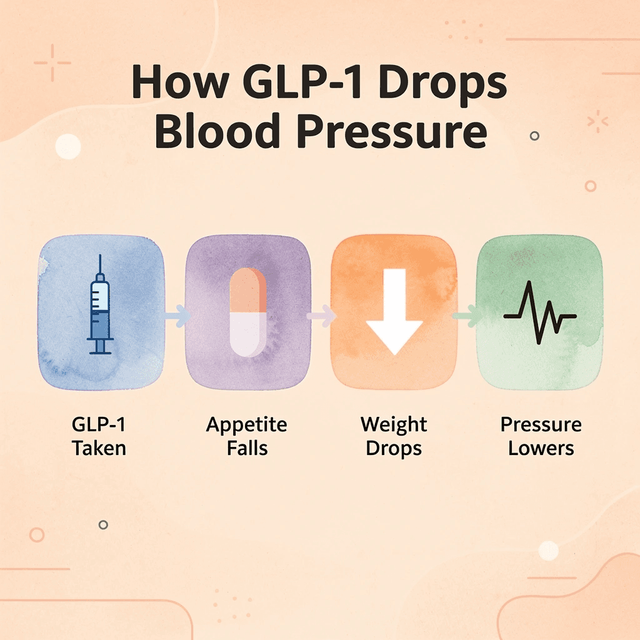
Most people think GLP-1 medications directly lower blood pressure, but the drop results from several changes: rapid weight loss, reduced calorie intake, dehydration from appetite suppression, and improved insulin resistance, not a single direct blood-pressure-lowering effect.
"The blood pressure changes seen with GLP-1 medications are rarely the result of one cause. They emerge from a cascade of physiological shifts including weight loss, fluid changes, and metabolic improvements."
Why do so many people believe GLP-1 directly causes blood pressure drops?
This belief persists because people mistake timing for cause and effect. You start the medication, your blood pressure falls, and the connection seems clear. FDA prescribing information for semaglutide and tirzepatide lists low blood pressure as a potential adverse event, which reinforces this idea. Social media amplifies the narrative with thousands of posts describing dizziness and fainting after starting Ozempic or Wegovy, though these posts rarely explain the indirect mechanism. What people often miss: the blood pressure medications you already take may now be working too hard against a body that no longer needs as much medicine to control blood pressure.
What the clinical evidence actually shows
The SUSTAIN-6 randomized controlled trial (2016) found that semaglutide reduced systolic blood pressure by approximately 1.3-2.6 mmHg compared with placebo. A 2021 systematic review and meta-analysis published in the Journal of the American Heart Association confirmed average systolic reductions of 2 to 4 mmHg across multiple GLP-1 receptor agonist trials. These reductions become significant when a patient is already taking two or three blood pressure medications. The combined effect can push systolic pressure below 90 mmHg, the clinical threshold where fainting, falls, and serious injury become risks. The American Diabetes Association (ADA) now explicitly flags the need for blood pressure medication review when patients experience significant weight loss on GLP-1 therapy.
Why does the GLP-1 drug cause your old prescriptions to overshoot?
Here is the key difference: the GLP-1 drug does not always lower blood pressure directly. It improves how your body handles metabolism so effectively that your old prescriptions end up overworking it. Doctors who understand this will actively reduce or stop one or two blood pressure medications when a patient starts a GLP-1. Patients without a doctor actively monitoring their care, especially those using online prescribers who are not checking their blood pressure readings, may never receive that adjustment.
How does real-time symptom tracking change what your clinician can act on?
Most people wait until symptoms worsen before seeking help, then struggle to recall when dizziness started or whether it occurred after standing too quickly or skipping a meal. Memory is unreliable. A GLP-1 app like MeAgain changes this by letting users record dizziness, lightheadedness, or tiredness as it happens, along with dose timing, water intake, and meals. Arriving at a doctor's appointment with a time-stamped symptom record and context is far more useful than saying "I've been feeling off lately."
Which patients face the highest risk of hypotension episodes on GLP-1 therapy?
According to Northwestern Now, a study of more than 42,000 adults taking at least two types of blood pressure medications found that GLP-1 users experienced higher rates of dizziness, fainting, and other low blood pressure-related events. The Endocrine Society framed this not as a reason to avoid GLP-1s, but as a call for careful monitoring in patients taking multiple blood pressure medications. According to Neuroscience News, adults aged 65 and older face the highest risk of low blood pressure episodes after starting a GLP-1 drug, identifying which patients require the most careful clinical attention. Knowing that certain patients face a higher risk is useful only if you can identify which specific factors predict who will be affected.
Related Reading
- GLP-1 Plateau
- How Does GLP-1 Help You Lose Weight
- How Much Protein On GLP-1
- How Much Water To Drink on GLP-1
- Why Am I Not Losing Weight On GLP-1
- Can GLP-1 Cause Gastroparesis
- Can GLP-1 Cause Kidney Stones
- Which GLP-1 Has The Least Side Effects
- Does GLP-1 Cause Acid Reflux
- Why Am I Not Losing Weight on Zepbound
Who Is Most Likely to Develop Low Blood Pressure While Taking GLP-1 Medications?
Some patients have a noticeably higher chance of developing low blood pressure when taking GLP-1 therapy. The risk is higher for people with specific biological and clinical conditions that affect how these medications change their bodies.
"The risk of hypotension on GLP-1 therapy is not equal across all patients — certain biological and clinical profiles make some individuals significantly more vulnerable." — National Institutes of Health
Risk Factor Category | Why It Increases Risk |
|---|---|
Pre-existing cardiovascular conditions | Compromised ability to regulate blood pressure |
Dehydration or low fluid intake | Amplifies GLP-1's blood pressure-lowering effects |
Concurrent antihypertensive medications | An additive effect can cause dangerous pressure drops |
The antihypertensive medication overlap
The most predictable collision happens when someone starts a GLP-1 while already taking blood pressure medications. According to Northwestern Now's coverage of the GLP-1 hypotension research, patients on at least two blood pressure medications experienced higher rates of dizziness, fainting, and hypotension-related events after starting GLP-1s. GLP-1 therapy causes weight loss, which reduces vascular resistance, so the cardiovascular system requires less force to move blood throughout the body. The blood pressure medication dose set for a heavier body becomes too strong as weight drops. You might notice dizziness or lightheadedness when standing, and medication adjustments should happen proactively, not after a fall.
When dehydration compounds the pressure drop
Stomach and intestinal side effects create a second pathway for syncope. Nausea, vomiting, and diarrhea are common early in GLP-1 therapy, particularly during dose increases, and each reduces blood volume. With less blood to pump when you stand, your heart cannot maintain blood pressure quickly enough, causing orthostatic hypotension: that brief, disorienting dizzy feeling when moving from sitting to standing. Insufficient fluid and calorie intake worsens this by impairing your body's ability to maintain blood vessel function. Dehydration while taking GLP-1 therapy directly increases syncope risk.
Why do older patients and diabetic neuropathy change the equation
Aging reduces baroreceptor sensitivity, the nervous system's ability to detect and respond to changes in blood pressure. When a younger person stands up and blood pressure dips, the body corrects within seconds. In older adults, that correction is slower and less precise.
How does diabetic autonomic neuropathy remove the body's safety net?
Neuroscience News reports that type 2 diabetes patients face extreme risk because diabetic autonomic neuropathy damages the nervous system's ability to control blood pressure, eliminating the backup system that prevents blood pressure drops and associated symptoms. In patients over 65 with long-term diabetes taking blood pressure medicines, risk factors multiply rather than simply add up. Dehydration, water pills, weight loss, and low sodium become more dangerous when the autonomic nervous system cannot respond fast enough to prevent a fall.
Why does the information gap make it hard for clinicians to act?
Most people remember symptoms hazily at their next doctor visit—a "dizzy spell" from weeks ago without details about what they ate, how much water they drank, or when they took their medicine. That missing information hampers diagnosis. A GLP-1 tracking app like MeAgain lets you record dizziness as it occurs, along with your water intake, meals, and medication timing, so you can show your doctor a pattern instead of relying on memory.
Kidney disease and the fluid regulation problem
Stage 3 or higher chronic kidney disease complicates GLP-1 therapy: damaged kidneys cannot reliably control fluid and electrolyte balance, so even small fluid losses from GLP-1 side effects can cause dangerous volume depletion. Reduced kidney clearance also means other medications, including blood pressure medications, accumulate to higher-than-prescribed effective concentrations. This creates unpredictable blood pressure behavior—sometimes low, sometimes elevated—depending on fluid status and concurrent diuretic use. GLP-1 therapy in CKD patients requires close monitoring of kidney function and medication levels, not blood pressure readings alone. Knowing which risk factors apply to you is useful. But knowing what to do when dizziness hits and how to tell whether it's your blood pressure or blood sugar is where real decisions get made.
Related Reading
- Why Do Some People Not Lose Weight on Ozempic
- Slow Weight Loss On Wegovy
- Why Am I Not Losing Weight On Zepbound
- Can You Stop Glp-1 After Losing Weight
- How Many Weeks Is Considered A Weight Loss Plateau
- Can Glp-1 Cause Low Blood Sugar
When the Cause Is Dehydration
Nausea and reduced appetite can reduce fluid intake, lowering blood volume and blood pressure. Drink small amounts of water or fluids with electrolytes throughout the day. When dehydration is the primary cause, blood pressure typically improves within one to two days of adequate fluid intake. Dehydration doesn't always show up obviously. If you still feel dizzy despite drinking enough fluids, dehydration probably isn't the problem. In that case, review your medication list with your doctor instead.
When blood pressure medications are the real driver
When someone loses weight, their blood vessels need less pressure to move blood through the body. Blood pressure medicines sized for a heavier body can become too strong. According to a Northwestern Medicine study tracking over 42,000 adults on at least two blood pressure medications, people using GLP-1 drugs experienced more cases of dizziness, fainting, and low blood pressure episodes due to this combined effect.
What steps help resolve medication-driven hypotension?
A timely medication review usually resolves low blood pressure by reducing or adjusting the dose. If symptoms persist after adjustment, a broader clinical evaluation is needed to rule out autonomic dysfunction or other contributing conditions. Home blood pressure logs taken at consistent times, including readings both sitting and standing, provide the trajectory data your provider needs. A single in-office reading taken under stress is unreliable.
When inadequate calorie intake is the mechanism
GLP-1 medications reduce hunger effectively, sometimes excessively. When someone consumes fewer calories than their body needs, there is less fuel to maintain stable blood pressure, particularly when changing positions, such as standing up. Protein shakes and high-protein bars can help when nausea or stomach problems make regular meals difficult. Once someone has eaten enough calories and feels better, whole-food meals should replace supplements.
How does tracking in real time change the clinical conversation?
Most people try to remember what they ate, how much they drank, and when symptoms appeared during a doctor's visit. That memory is unreliable, especially when nausea and fatigue cloud recall. A GLP-1 tracker app like MeAgain lets you log dizziness, hydration, meal size, and dose timing as it happens, so you arrive with patterns rather than guesses, transforming the conversation.
How do persistent GI symptoms drive dangerous blood pressure drops?
Vomiting and diarrhea lasting longer than 24 hours cause your body to lose excessive fluid, which drops blood pressure further when combined with diuretics, ACE inhibitors, and ARBs. Consult your doctor about temporarily stopping medications that cause fluid loss until your stomach and digestive problems resolve. Neuroscience News reports that adults aged 65 and older face the highest risk of low blood pressure episodes after starting a GLP-1 drug, and ongoing stomach and digestive problems in this group significantly increase that risk.
Why does rapid weight loss require a proactive medication review?
Fast weight loss creates a similar problem: vascular resistance drops faster than your medication plan accounts for. Review your dose when you hit weight goals rather than waiting for symptoms to emerge. Managing this requires identifying the underlying cause, since treating dehydration when medication is excessive, or adjusting medications when calorie intake is insufficient, produces unhelpful or dangerous results. Knowing the right framework is only half the challenge. The harder question is whether you can recognize your own risk before symptoms force the issue.
Don't Wait Until It's Too Late. Run Your GLP-1 Blood Pressure Risk Check Today
Knowing which cause is creating your symptoms matters, but knowing alone does not protect you. The real problem is the gap between understanding the framework and having the data when your doctor asks for it. Most people remember symptoms from memory during a doctor visit, which is like describing a car accident three weeks after it happened: imprecise, incomplete, and ultimately unhelpful.
"The gap between understanding your symptoms and having the data to act on them is where patient outcomes are won or lost." — MeAgain Health Framework
If you are experiencing dizziness, lightheadedness, fatigue, or unusually low blood pressure readings after starting Ozempic, Wegovy, or Mounjaro, our GLP-1 app MeAgain lets you log your blood pressure readings, symptoms, hydration, food intake, and medication use all in one place. In under 2 minutes, you'll log:
- your recent blood pressure readings (if available)
- any symptoms like dizziness, fainting, or fatigue
- your current hydration, food intake, and medication use
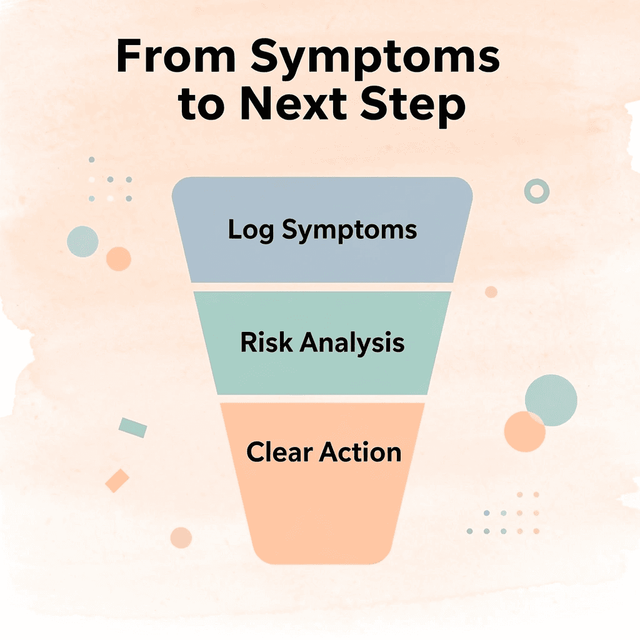
MeAgain generates a personalized risk breakdown showing whether your low blood pressure symptoms are most consistent with one of four key causes:
- Dehydration-related volume loss
- Medication interaction (especially antihypertensives)
- Rapid weight-loss adaptation
- Gastrointestinal-related fluid depletion
Cause | Key Indicator | Typical Next Step |
|---|---|---|
Dehydration-related volume loss | Symptoms worsen in heat or after low fluid intake | Increase hydration |
Medication interaction | Symptoms began after adding/adjusting antihypertensives | Medication review with the doctor |
Rapid weight-loss adaptation | Symptoms tied to a recent significant weight drop | Monitor and reassess dosage |
GI-related fluid depletion | Nausea, vomiting, or diarrhea accompanying symptoms | Hydration + urgent care if severe |
Start the check now — it takes about two minutes and gives you a clear, personalized explanation of what's causing your symptoms so you know whether hydration changes, medication review, or a doctor visit is needed. Don't wait until a manageable symptom becomes a serious health event.