Muscle Loss on a GLP-1: The Real Numbers, and How to Track Against Them
Rapid weight loss takes some muscle with it - that part is real. So is the playbook: protein, strength work, and a log that keeps both honest.

Quick answer
Muscle loss on a GLP-1 is a real, measured effect of losing weight fast - across recent trials, roughly a quarter to 40% of the weight lost is lean tissue, not fat. In the STEP 1 body-composition substudy, people on semaglutide lost 15.0% of body weight over 68 weeks, and lean mass fell 9.7% while fat mass fell 19.3% - so most of the loss was fat, but the muscle share was not zero. The playbook clinicians point to is unglamorous and effective: enough protein every day, resistance training most weeks, and a record that shows whether both actually happened. MeAgain is the tracking half of that playbook - protein logged in taps against a daily target, meals five ways, weight trend in context. 500K people track their GLP-1 with MeAgain, rated 4.8 stars across 25K App Store ratings.
Bottom line: This page is education, not medical advice. Protein targets and exercise plans should be set with your doctor, licensed clinician, or a registered dietitian. MeAgain works with any GLP-1, branded or compounded, wherever it is prescribed.
The Muscle-Protection Checklist
The version clinicians and trial data support - trackable, unglamorous, effective. Set the targets with your clinician; keep them honest with the log.
| Do this | Why it matters |
|---|---|
| Set a protein target with your clinician | Published ranges during weight loss run well above the 0.8 g/kg baseline - and higher for adults 65+ |
| Log protein daily against the target | Small appetites hit targets on purpose, never by accident |
| Resistance training, most weeks | 10+ weeks of structured training added back ~3 kg lean mass in a clinical review |
| Spread protein across the day | Shrunken meals mean one big dinner cannot carry the total alone |
| Watch the trend, not the daily scale | Pace matters: very fast loss is where lean tissue goes with it |
| Ask about body composition at checkups | Muscle is measured in a clinic, not an app - bring the protein log to the conversation |
What MeAgain does not do: No medical advice, no diagnosis, no treatment, no insurance billing. MeAgain is a tracking and education app, not a clinical service — clinical decisions stay with your licensed clinician.
Key takeaways
The concern is grounded in trial data, not internet panic: recent GLP-1 trials show lean tissue making up roughly 26-40% of total weight lost, and obesity-medicine physicians have compared an unprotected 68-to-72-week course to years of age-related muscle loss compressed into one.
Most of what is lost is still fat. In the STEP 1 substudy, fat mass fell about twice as fast as lean mass - the goal is not fear, it is tilting that ratio further with protein and strength work.
Published protein guidance during weight loss runs well above the standard 0.8 g/kg baseline - clinical reviews cite ranges like 1.2-1.5 g/kg for older adults and similar targets during rapid loss. Your number belongs with your clinician; hitting it every day belongs with your log.
Resistance training is the other half: a clinical review found structured training over 10+ weeks added back around 3 kg of lean mass and meaningfully improved strength - and case reports show people preserving or even gaining lean tissue during large GLP-1 weight loss when training and protein are in place.
MeAgain makes the daily half trackable: a protein ring with quick-add taps, five ways to log meals, water and fiber beside it, and a weight trend for the long view. It works with any GLP-1, branded or compounded, wherever it is prescribed.
The Tracking Half of Muscle Protection
01A Protein Target You Can Actually Hit

Every muscle-protection plan on earth starts with 'eat enough protein' and dies on the logistics of a shrunken appetite. MeAgain's protein tracker is built for exactly that gap: a daily target ring that fills as you log, and quick-add buttons for the staples - an egg, a yogurt, a shake, a chicken thigh - so small wins land in one tap. On a GLP-1, protein has to arrive in smaller, more frequent packages, and the difference between 55 grams and 95 grams by dinner is invisible without a counter. The ring makes it visible at a glance, all day, every day.
02Honest About What the App Measures
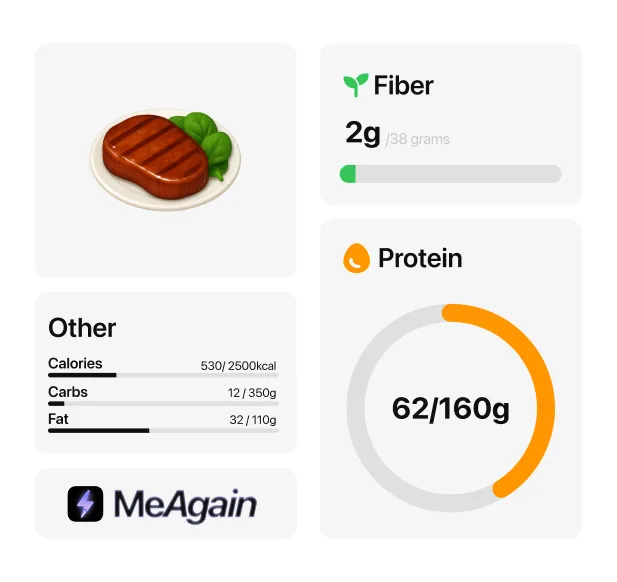
MeAgain does not measure muscle mass - no app does. Body composition takes a DXA scan or similar tools, and pretending otherwise would be exactly the kind of overclaim this page exists to correct. What the app does measure is the two inputs you control daily: protein intake against your target, and activity alongside it, with the weight trend for context. If the scale is dropping fast while the protein log shows repeated misses, that is a signal worth taking to your clinician - and it is a signal you can only see if both numbers are being logged.
03Five Ways to Log, Because Quiet Appetite Days Are Real

The days appetite disappears are the days protein slips - not from ignorance, from friction. MeAgain keeps logging faster than forgetting: barcode scan on the yogurt, search for the chicken salad, quick-add for the shake you drink every morning, photo or voice when hands are full. Fiber and water track beside protein, because constipation and dehydration are the other quiet saboteurs of feeling strong during weight loss. The log is not homework; it is the thirty seconds that make the protein target real.
04The Long View: Trend Over Verdicts

Fast early loss can feel like winning and hide a cost; a slower stretch can feel like failing while body composition quietly improves. The weight trend view keeps single weigh-ins from writing headlines, and the timeline puts weight next to what actually happened - protein streaks, activity, dose changes, rough side-effect weeks. When you ask your clinician whether the pace is right or a body-composition check makes sense, you arrive with months of evidence instead of a feeling. That conversation is where the medical decisions belong; the log is what makes it a good one.
GLP-1 Muscle Loss: What the Trials Actually Show
The Numbers, Without Spin
In the STEP 1 trial's body-composition substudy, adults on weekly semaglutide lost an average of 15.0% of body weight over 68 weeks; lean mass fell 9.7% and fat mass fell 19.3%. Across recent GLP-1 trials more broadly, analyses put lean tissue at roughly 26-40% of the total weight lost. A 2025 review by a group of obesity-medicine physicians framed the stakes memorably: an unprotected course of rapid loss can compress something like two decades of age-related muscle decline into a year and a half.
Two honest counterweights. First, most of what is lost is still fat - in STEP 1, fat fell about twice as fast as lean mass, and losing weight this way still improves health markers broadly. Second, some lean-mass loss accompanies any major weight loss, by any method; the GLP-1 question is about pace and protection, not a unique defect of the medications. The point of the numbers is not alarm - it is that protein and strength work are not optional garnish.
Protein: What Published Guidance Actually Says
The standard adult baseline is 0.8 g of protein per kilogram of body weight per day - and clinical guidance during intentional weight loss runs meaningfully higher. Peer-reviewed reviews cite 1.2-1.5 g/kg for adults over 65, similar elevated ranges during rapid loss, and some clinical programs use adjusted or ideal body weight for the calculation. The spread is exactly why this page will not hand you a number: the right target depends on your body, kidneys, age, and plan, and it belongs in a conversation with your clinician or a registered dietitian.
What is universal is the execution problem: whatever the target, a GLP-1-quieted appetite makes it easy to miss by 30 grams and never notice. That is the entire case for logging - the target is medical advice; hitting it is bookkeeping, and bookkeeping is what an app is for.
Strength Work, and the Hair Question
Resistance training is the most evidence-backed protection: a clinical review found that 10 or more weeks of structured training during weight loss added back approximately 3 kg of lean mass and improved strength by roughly a quarter - and case reports describe people on GLP-1s who preserved or even gained lean tissue during double-digit weight loss with training and adequate protein in place. Two or three sessions a week of basic, progressive strength work is the common clinical suggestion; the specifics belong with your clinician or a qualified trainer.
The adjacent worry - hair shedding - deserves the same honesty: recent reviews link it primarily to rapid weight loss itself rather than anything GLP-1-specific, describe it as typically temporary, and note the evidence is genuinely mixed. The practical response overlaps with muscle protection almost entirely: adequate protein, steady pace, and a clinician conversation if shedding is heavy or lasts beyond a few months.
This content is for informational purposes only and does not constitute medical advice. Protein targets, exercise programs, and any concerns about muscle, strength, or hair changes belong with your doctor, licensed clinician, or a registered dietitian.
Sources
- Wilding JPH et al. - Once-Weekly Semaglutide in Adults with Overweight or Obesity (STEP 1, NEJM 2021; DXA substudy body-composition figures)
- Lean-mass share of GLP-1 weight loss across recent trials (case series and review, 2025)
- Mechanick JI et al. - Strategies for minimizing muscle loss during anti-obesity medication use (clinical review, 2025)
- Resistance training during weight loss - lean mass and strength outcomes (Diabetes Care review)
- GLP-1 medications and hair loss - systematic review (2025-2026)
What Users Say About Protein on a GLP-1
Strength Is a Daily Number Before It Is a Gym Result
The protein habit is the one users mention unprompted. One App Store reviewer (oakleygyrl11, April 23, 2026) put the whole loop in a sentence:
I love this app because it helps me track my protein, calories, water, shots and everything!
And that everything is the point. Protein against a target, water beside it, shots and weight on the same timeline: muscle protection is not one heroic gym month, it is a boring daily record kept for a year, and the app's job is making the boring part take thirty seconds.
You cannot log your way to muscle - the training and the target-setting happen outside the app. What the log does is catch the quiet misses that undo both: the 60-gram days that felt fine, the water that did not happen, the fast weeks worth flagging. MeAgain keeps those numbers visible, and it works with any GLP-1, branded or compounded, wherever it is prescribed.

What Our Users Say
“I've been using the app for about 7 months now and I love how I'm able to track my meals and my daily medication. The little capybara widget is a great visual to help me know what my body needs.”
“This app does exactly what I needed with tracking shots… location, time, amount, current medication level, and reminders for the next one. That plus weight progress is all I needed, and after trying at least 5 others this was the only one that did it in a clean, logical way- and didn't cost a fortune!”
“I really love this app and how easy it is to use for my food, water, Mounjaro weekly shot and everything else. The app is totally worth the cost and it's been perfect for me.”
“I've been on my MJ journey since September 2025. Seeing my food intake has made a huge difference. Also, reviewing my shot locations has helped me remember to rotate. I have recommended this app to my friends who have also started their own journeys!”
“I love tracking water, protein and fiber on the app. It's really cool it's able to pull my weight and steps too. Add the widget to you phone screen if you do get it, I love that.”
Keep Reading About Protein and Strength on a GLP-1
How Much Protein Do You Need on GLP-1 for Fat Loss?
How Much Protein on GLP-1 for Fat Loss? Learn protein targets, benefits, and tips to support muscle retention and weight loss.

GLP-1 Muscle Loss - FAQs
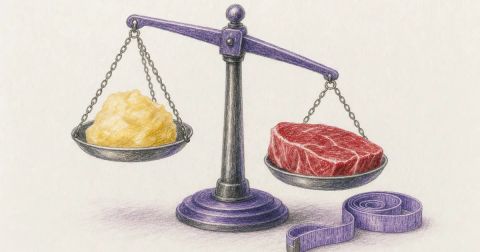
Losing weight quickly costs some muscle, whatever the method - and GLP-1s make weight loss fast. In the STEP 1 body-composition substudy, lean mass fell 9.7% while total weight fell 15.0% over 68 weeks; across recent trials, lean tissue makes up roughly 26-40% of the weight lost. Most of the loss is still fat, and health markers broadly improve - but the muscle share is real enough that clinicians treat protein and resistance training as core parts of a GLP-1 plan, not extras.

Your Journey Back to You,
One Day at a Time
Track the plan, dose, meals, and milestones in one place that actually keeps up with your day.