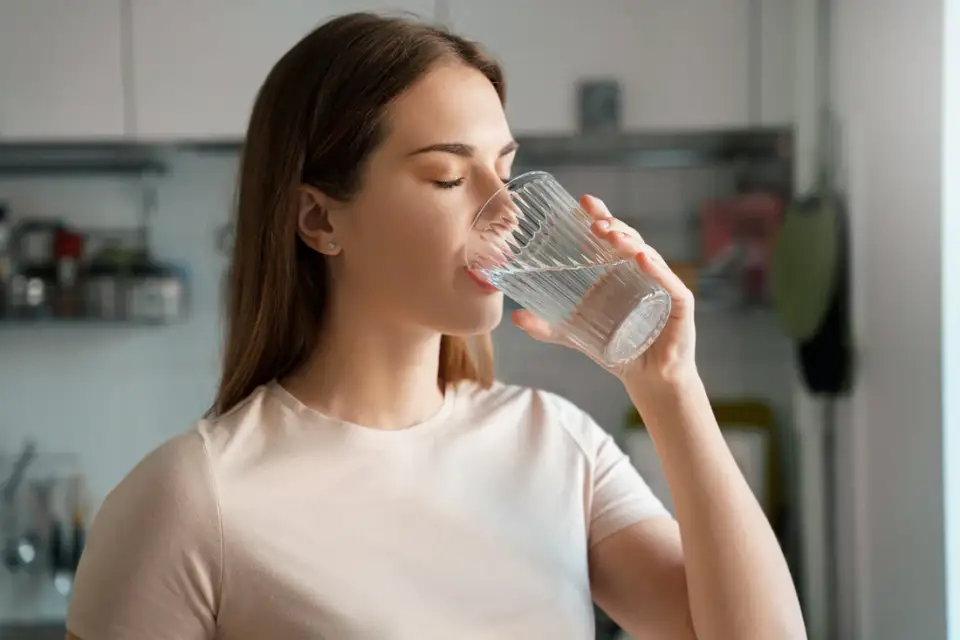

GLP-1 medications like Ozempic, Wegovy, and Mounjaro change how the body processes fluids and can quiet natural thirst signals. These effects make it harder to rely on feeling thirsty as a guide for when to drink water. Proper hydration is essential to avoid common side effects such as constipation, fatigue, and dizziness during treatment.
Determining the right amount of water requires more than following generic daily recommendations. Personal factors such as medication type, dosage, and individual body needs influence hydration requirements. MeAgain's GLP-1 app provides personalized daily water goals and tracks intake patterns to help users maintain optimal hydration throughout their treatment journey.
Table of Contents
- Why GLP-1 Medications Can Increase Your Risk of Dehydration
- How Much Water Should You Drink on GLP-1?
- Signs You Need More Water on GLP-1 (And How to Adjust)
- Stop Guessing Whether You're Drinking Enough Water on GLP-1
Summary
- GLP-1 medications suppress appetite and thirst signals simultaneously, creating a hidden dehydration risk that most patients don't anticipate. The same satiety mechanism that reduces food cravings also dampens the automatic drinking cues that normally trigger dozens of small sips throughout the day. Clinical trial data show 43.9% of semaglutide users experience nausea, 29.7% have diarrhea, and 24.5% report vomiting, all of which actively remove fluid from the body at the exact moment when patients are drinking less.
- The FDA explicitly warns about acute kidney injury risk from dehydration caused by GLP-1 gastrointestinal side effects, particularly during dose initiation and escalation periods. Wegovy and Zepbound prescribing information both recommend monitoring renal function when patients experience severe nausea, vomiting, or diarrhea. These aren't theoretical warnings buried in fine print; they're documented outcomes that occur when fluid loss outpaces intake for too long.
- Most adults need roughly 64 ounces of water daily as a baseline on GLP-1 therapy, but this floor adjusts upward based on body size, activity level, climate, and side effect severity. Women generally require about 90 ounces of total fluids daily from all sources under normal conditions, while men need around 125 ounces. The practical approach is to treat these targets as minimums rather than fixed prescriptions, and then adjust based on symptom patterns and daily demands.
- Dark urine signals dehydration faster and more reliably than thirst, which shows up late after your body is already behind on fluid balance. When urine concentration increases while nausea or reduced appetite persists, that's the moment to tighten hydration strategy rather than waiting for headaches, fatigue, or dizziness to develop. The first 8 to 12 weeks of GLP-1 therapy pose the highest risk of dehydration because side effects peak while patients are still learning to compensate for suppressed thirst cues.
- Caffeine acts as a mild diuretic, and sugar-sweetened beverages add glycemic load without meaningful hydration benefit, making plain water the most effective fluid source during GLP-1 treatment. The FDA considers up to 400mg of caffeine daily generally safe for most adults, so moderate coffee or tea intake won't derail hydration efforts, but these beverages shouldn't replace water as the primary fluid source throughout the day.
- GLP-1 app addresses this by consolidating water tracking with medication timing, side effects, and meals into a single interface, making it easier to identify patterns between dehydration and symptom severity without having to manage multiple tracking systems.
Why GLP-1 Medications Can Increase Your Risk of Dehydration
GLP-1 medications reduce hunger so effectively that you drink less water during the day. Simultaneously, they can cause side effects that increase fluid loss. This creates an unexpected risk of dehydration.
"GLP-1 receptor agonists can significantly reduce both food and fluid intake, creating a perfect storm for dehydration risk in patients who aren't actively monitoring their hydration status." — Clinical Endocrinology Research, 2023
Why do GLP-1 medications reduce your natural thirst signals?
When you start a GLP-1 medication, your brain's hunger and thirst signals diminish together. You eat less and reach for your water bottle less often because the same satiety mechanism that reduces your appetite also weakens automatic drinking cues.
Most people assume they'll remember to drink water intentionally, but intention doesn't replace the dozens of small sips you once took without thinking. According to DripDrop's hydration research, 70% of people on GLP-1 medications experience nausea, making large amounts of water feel impossible when you need it most.
How do side effects make dehydration worse?
The math worsens when side effects enter the picture. Nausea, vomiting, and diarrhea remove fluid from your body precisely when you're drinking less. According to the STEP clinical trials, nausea occurred in 43.9% of semaglutide users, diarrhea in 29.7%, and vomiting in 24.5%, with most events clustering during dose escalation.
You're losing fluid through multiple exits while the entrance stays mostly closed. When nausea makes even small sips feel wrong, or diarrhea pulls water from your system faster than you're replacing it, you face a critical math problem: less fluid coming in, more going out.
The Wegovy prescribing information explicitly warns about acute kidney injury linked to dehydration from severe gastrointestinal reactions. The Zepbound label states that kidney injury can result from dehydration caused by nausea, vomiting, and diarrhea.
What do FDA warnings tell us about dehydration risks?
The Wegovy prescribing information warns about acute kidney injury and recommends checking kidney function when patients experience severe gastrointestinal reactions, particularly when starting the medication or increasing the dose. The Zepbound label notes that acute kidney injury can result from dehydration caused by nausea, vomiting, and diarrhea—outcomes that occur when the body loses excessive fluid.
How does delayed gastric emptying affect hydration?
GLP-1 medications slow gastric emptying, meaning food and liquid remain in your stomach longer than normal. This creates a problem: you feel full from water consumed an hour ago and don't drink more, but your body hasn't absorbed it yet because digestion has slowed. You feel hydrated because your stomach feels full, yet your cells are still waiting for water stuck in transit.
Why is tracking hydration patterns so important?
Most people on GLP-1 medications track water intake through scattered notes, ignored reminders, and rough bottle counts. As side effects intensify and doses increase, this approach obscures patterns between hydration, symptom severity, and medication timing. Our MeAgain GLP-1 app consolidates water tracking with your dosing schedule, meals, and side effects into a single daily view, helping you identify dehydration risks before they lead to headaches, fatigue, or complications.
What causes increased urination on these medications?
Some people notice they're urinating more frequently and assume the medication acts as a diuretic. The evidence doesn't support that. If you're peeing more, it's usually because you've started drinking with more intention, increased caffeine intake, or changed other medications. The real dehydration mechanism is reduced intake plus gastrointestinal fluid loss, not an effect that overworks your kidneys.
Knowing you need more water is only half the answer. The harder question is how much more and when.
Related Reading
How Much Water Should You Drink on GLP-1?
What's a practical daily water target to start with?
Most people want a single target to aim for. But hydration on a GLP-1 isn't a fixed prescription—it's a moving baseline shaped by your body, your day, and how the medication affects you. According to Fella Health's GLP-1 hydration guidelines, 64 ounces per day is a practical starting point for most adults on these medications. That's roughly eight cups, accounting for fluid losses from nausea, reduced intake, and early side effects.
How should you adjust your water intake based on circumstances?
Think of that number as a starting point, not a limit. Your actual needs change based on your body and surroundings. When you feel sick, taking smaller, more frequent sips matters more than reaching a daily total. Hard exercise, hot weather, or diarrhea increases your water needs. Larger people generally need more fluid to maintain the same level of hydration. The goal is to drink water regularly and adjust based on your circumstances.
What are the standard daily fluid recommendations?
For most adults, research supports about 3.7 liters per day for men and 2.7 liters per day for women from all sources: plain water, other drinks, and water-rich foods like yogurt, soup, fruit, and vegetables. This recommendation provides a reasonable starting point before accounting for GLP-1-specific variables.
How should you adjust fluid intake during GLP-1 treatment?
As a practical reference, women typically aim for around 90 ounces of total fluids and fluid-rich foods combined; men around 125 ounces. Use this as your starting point, then adjust based on how you feel, side effects, and daily demands. During rough GI days, focus on steady sips every 10 to 15 minutes rather than catching up with large amounts. What your body can handle matters more than hitting the target on paper.
What factors change your hydration needs?
How much water you need depends on your activity level, weather, medication side effects, and dosage. Exercise, heat, and long trips increase your fluid needs. Vomiting or diarrhea causes you to lose sodium and electrolytes along with water, making replacement of these minerals as important as replacing the water itself.
High blood sugar or medications like SGLT2 inhibitors increase urination, causing fluid loss even without sweating or thirst. Larger people generally need more fluid, but consult your healthcare provider to determine the right amount for you.
How can you track hydration patterns effectively?
The biggest mistake is treating hydration as a fixed daily routine rather than adjusting water intake to your body's needs. Tracking apps like MeAgain combine water intake with medication timing, side effects, and meals, making it easier to identify patterns between dehydration and symptom flare-ups.
Do coffee and soda count?
Coffee, tea, and soda don't hydrate your body as plain water does. Caffeine acts as a mild diuretic, increasing fluid loss. Sugar-sweetened beverages add sugar without providing hydration benefits. For optimal hydration while taking a GLP-1 medication, stick with plain water. You can also add natural flavor enhancers like lemon, cucumber, or electrolyte supplements. The FDA says that up to 400mg of caffeine daily is generally safe for most adults, so moderate amounts of coffee or tea won't compromise hydration. However, these drinks shouldn't be your primary source of fluids.
How do you know when you're falling short on hydration?
But knowing what counts and what doesn't still leaves the harder question unanswered: how do you know when you're falling short?
Signs You Need More Water on GLP-1 (And How to Adjust)
Your body sends signals that you're dehydrated long before you feel thirsty. On GLP-1 therapy, these signals are even more important because the medication reduces your natural thirst cues while side effects quietly remove fluid from your body. Learning to recognize the signs early prevents them from worsening and causing problems that could disrupt your entire week.
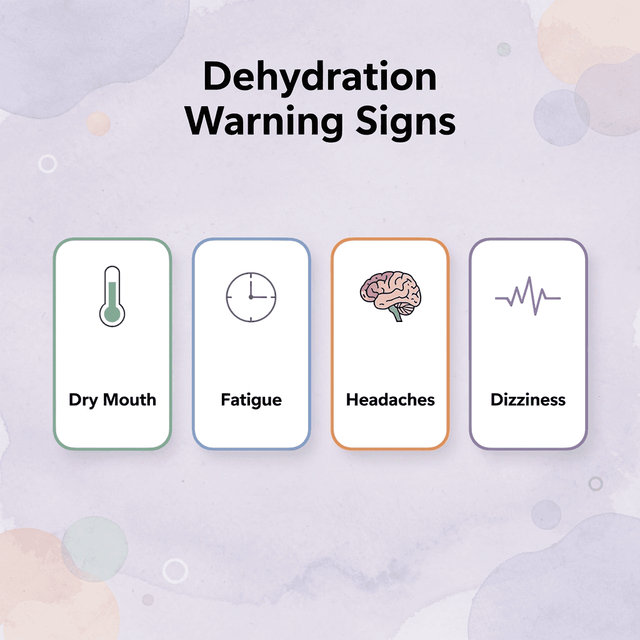
Early warning signs include dry mouth, fatigue, headaches, and dizziness—symptoms often mistaken for normal GLP-1 side effects. Your urine color becomes a critical indicator: anything darker than pale yellow signals dehydration. Muscle cramps, brain fog, and fatigue after minimal activity warrant immediate action.
When you notice these warning signs, the solution is strategic fluid replacement rather than chugging water. Start with 8-12 ounces of electrolyte solution, then sip steadily over the next 2-3 hours. Track your intake and aim for clear to pale yellow urine as your primary success metric—this indicates your hydration strategy is working.
How does your body signal dehydration before you feel thirsty?
Thirst shows up late. By the time your mouth feels dry, you're already behind. Dark urine is faster and more reliable. Healthline notes that 60% of your body weight is water; when that balance tips, your kidneys concentrate urine to conserve what remains. If your urine is in the darker half of a color chart and you're experiencing nausea or reduced appetite, improve your hydration plan immediately.
What other early warning signs should you watch for?
Tiredness disproportionate to sleep is another early warning sign. When fluid volume drops, your blood thickens, your heart works harder to move oxygen, and you experience low energy or brain fog. Headaches often accompany this, especially if they started or worsened after beginning GLP-1 therapy. If they occur with low urine output or dizziness upon standing, the pattern becomes clearer.
What happens when dehydration symptoms escalate?
Dizziness when standing, racing heart, confusion, or muscle cramps signal moderate dehydration: your body is already compensating for fluid loss. Don't wait for these symptoms to resolve. If you're on diabetes medication, dehydration skews blood glucose readings and raises the risk of serious complications like hyperglycemic hyperosmolar state in type 2 diabetes.
Why do GLP-1 medications narrow the safety window?
GLP-1 side effects combined with certain medications narrow this safety window. Diuretics, ACE inhibitors, and SGLT2 inhibitors all affect fluid balance, while appetite suppression reduces baseline intake. The first 8 to 12 weeks of therapy, or any period following a dose increase, is when most people encounter problems: not from misunderstanding hydration, but from underestimating how quickly conditions shift.
How can you build a sustainable hydration routine?
The easiest hydration plan is one you can follow when your stomach feels off. Use a water bottle with volume markers so "drink more" becomes "finish this bottle by lunch." Pair fluids with routine moments: 10 to 16 ounces within the first hour after waking, a few ounces before each meal, one bottle by midday, another by early evening. Fella Health recommends 64 ounces of water daily as a baseline, though you'll need more if you're experiencing vomiting, diarrhea, heat, or exercise.
What alternatives work when plain water feels impossible?
When plain water feels impossible, fluid-rich foods can help. Soup, Greek yogurt, cottage cheese, watermelon, cucumber, and broth all count toward your fluid intake. Cold or lightly flavored fluids are often easier to drink when nauseous.
Why does tracking in multiple places make hydration harder?
Most people who struggle with hydration on GLP-1 aren't tracking poorly due to a lack of motivation. They're tracking across too many places: a notebook for meals, their phone's notes app for water, a separate reminder for medication, perhaps a fitness tracker for steps. When everything lives in different places, patterns stay invisible, and follow-through becomes a second job.
Our GLP-1 app consolidates dose timing, water intake, side effects, and meal logs into a single daily check-in, letting you identify connections between low hydration and spikes in nausea or missed doses without consulting multiple sources.
But the best tracking plan only works if you understand what the numbers mean when they shift.
Stop Guessing Whether You're Drinking Enough Water on GLP-1
Tracking water on GLP-1 isn't about hitting a random number. It's about understanding whether your hydration level connects to how you feel, how your medication works, and whether you're preventing the side effects that stop progress. By the time you notice constipation, headaches, or fatigue, you're already behind.
"When hydration exists as a separate task, the context that makes it meaningful disappears."
Most people try to solve this by downloading a dedicated water app or setting phone reminders. That works for a week, maybe two. Then the reminders become background noise, and you're back to guessing whether you drank enough. The problem isn't willpower; isolated tracking creates friction rather than reducing it.
Isolated Tracking | Integrated Tracking |
|---|---|
Separate water app | All data in one place |
Background noise reminders | Context-aware logging |
Guessing connections | Clear pattern visibility |
High friction | Seamless routine |
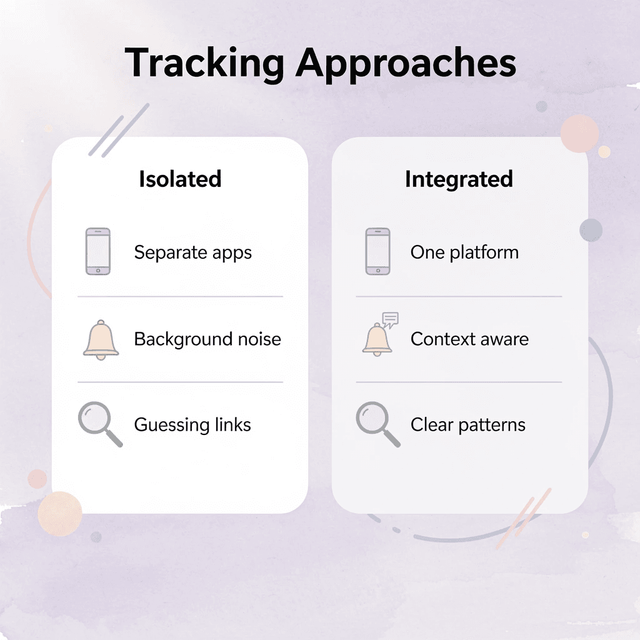
When your water intake lives next to your GLP-1 dose history and symptom timeline, you stop guessing and start noticing. You see that the days you feel best are the days you stayed hydrated. You catch dehydration before it becomes a problem that costs you a week of progress.