
Regaining weight after stopping GLP-1 medications is a well-documented pattern, not a personal failure. These drugs work by regulating appetite hormones, slowing digestion, and reducing food cravings, so when they stop, the body often reverts to its previous signals, sometimes quickly. Understanding the biology behind this shift is the first step toward staying ahead of it.
The good news is that targeted habits and consistent tracking can make a meaningful difference in maintaining progress after GLP-1 treatment ends. For those navigating this transition, the GLP-1 app from MeAgain offers practical tools to monitor habits, catch early signs of regain, and stay on track without having to figure it all out alone.
Table of Contents
- Does Everyone Gain Weight After Stopping GLP-1?
- Why Weight Gain Happens After Stopping GLP-1
- How to Reduce Weight Gain After Stopping GLP-1 Treatment
- Prevent Weight Gain After Stopping GLP-1 With a Personalized Maintenance Plan
Summary
- Weight regain after stopping GLP-1 medications is common but not universal or total. A systematic review published in eClinicalMedicine in 2026 found that participants regained approximately two-thirds of their prior weight loss within one year of stopping GLP-1 receptor agonists. A separate 2022 study (n=1,961) found that participants still showed a net weight loss of 5.7% relative to their starting weight after stopping semaglutide, with those who had lost more than 20% of body weight remaining 12% lighter than their starting point after discontinuation.
- The speed and scale of regain are largely driven by biology, not willpower. When GLP-1 medications are discontinued, ghrelin (the hunger hormone) rebounds while leptin sensitivity remains blunted, creating a state in which hunger signals are louder and fullness signals are quieter. The brain interprets weight loss as a deficit and works to correct it through deeply wired survival mechanisms, which is why appetite returns so quickly and forcefully after stopping.
- Food reward pathways also shift after discontinuation. GLP-1 medications reduce the motivational pull of highly palatable foods through dopamine-related reward circuits, and when the drug stops, those pathways become more reactive again. Foods that felt manageable during treatment can start feeling compelling in ways that are difficult to explain, a measurable neurochemical change rather than a behavioral failure.
- Metabolic adaptation compounds the hormonal rebound. Weight loss itself lowers resting metabolic rate beyond what body composition alone would predict, and if lean muscle mass is lost during the treatment phase, daily calorie expenditure is already reduced before appetite increases. This combination accelerates caloric surplus quickly, which is why the first weeks after stopping are often the most vulnerable period for meaningful regain.
- Behavioral structure during and after treatment is one of the strongest predictors of long-term outcomes. Epic Research data found that 56% of semaglutide patients maintained weight loss or lost additional weight at 24 months post-cessation, suggesting that roughly half of patients maintain meaningful progress when the right habits are in place. Protein intake, resistance training, consistent meal timing, sleep quality, and hydration are the variables with the clearest evidence behind them for minimizing regain after discontinuation.
- The goal after stopping GLP-1 treatment is not to maintain every pound lost but to build consistent habits that minimize drift over time. As dietitian Meghan Salamon notes, it is unrealistic to expect no weight will return, but with the right nutritional strategies and structure, meaningful progress can be made. Reframing success around sustainable consistency rather than perfect retention sets a more achievable and clinically realistic target.
- MeAgain's GLP-1 app addresses the gap that opens when the prescription ends by consolidating protein intake, hydration, weight trends, and daily habits into one place, so the behavioral patterns built during treatment remain visible and actionable after the medication stops.
Does Everyone Gain Weight After Stopping GLP-1?
Most people believe stopping a GLP-1 medication means gaining back every pound they lost. That belief is wrong, though not without reason.
"Weight regain after stopping GLP-1 therapy is common, but the outcome is far from inevitable — and rarely the full story." — Cleveland Clinic
Weight gain after stopping semaglutide, tirzepatide, or liraglutide is common, but it doesn't always happen — and it never has to happen completely. How much weight you gain back, how fast it happens, and where you end up in the long run depend on two critical factors: how your body has changed during treatment, and what healthy habits you keep after you stop.
Factor | Why It Matters |
|---|---|
Body changes during treatment | Affects metabolism, appetite signals, and baseline weight |
Habits are maintained after stopping | Determines whether results last or reverse over time |
These two things create a huge range of outcomes for real patients.
Why does the "you'll gain it all back" story spread so fast?
The fear of total rebound is strengthened by how weight loss stories get told. Headlines reward dramatic reversals, and social media surfaces the most extreme before-and-after arcs. Because loss aversion is deeply wired, stories of regain register as more emotionally significant than stories of maintained progress. People who quietly kept most of their weight off don't post about it; people who regained quickly do. The result is a public narrative that systematically overstates worst-case outcomes while the more nuanced clinical reality remains buried in research papers.
How does framing GLP-1 therapy as short-term shape expectations?
There's also a framing problem. When someone attributes all weight loss success to medication and none to dietary changes, increased protein intake, or movement habits built during treatment, stopping the drug feels like losing everything. The World Health Organization classifies obesity as a chronic complex disease, not a temporary condition. Framing GLP-1 therapy as a short-term intervention rather than as ongoing disease management is like stopping blood pressure medication after blood pressure numbers improve and expecting them to remain low.
What does the evidence actually show about weight regain?
A landmark extension study published in Diabetes, Obesity and Metabolism (2022) followed 327 participants for one year after they stopped semaglutide. During treatment, average weight loss reached 17.3%. After stopping the medication, participants regained an average of 11.6%, leaving a net loss of 5.7% compared to baseline. The range within that average is revealing: participants who lost more than 20% during treatment remained 12% lighter than their starting point after a full year off medication, while those who lost less than 5% ended up heavier than when they began.
How much of the weight loss is reversed after stopping GLP-1 medications?
According to a systematic review and nonlinear meta-regression published in eClinicalMedicine (2026), participants regained about two-thirds of their earlier weight loss within one year after stopping GLP-1 receptor agonists. This represents a meaningful rebound but not a complete reversal, shifting the question from "will I regain weight?" to "how much, and what can I influence?"
Why the Body Pushes Back
When you stop a GLP-1 medication, the signal suppressing your appetite disappears. Your brain reverts to its pre-treatment state: fullness signals weaken and hunger returns, sometimes intensely. Your body also responds to weight loss by conserving energy through adaptive thermogenesis. A lighter body burns fewer calories at rest than a heavier one, particularly after rapid weight loss. This is not a failure of willpower but a survival mechanism that has operated in humans for thousands of years.
How much weight do people regain after stopping?
A 2025 JAMA Internal Medicine study of 308 tirzepatide users found that 82% of those who stopped the medication regained 25% or more of their initial weight loss within one year. Greater weight regain correlated with loss of health improvements, including better cholesterol and blood sugar levels. Weight regain after stopping GLP-1 medications reverses these health gains.
What happens to behavioral structure when the prescription ends?
Most people track their GLP-1 journey using scattered notes and rough estimates. When the medication stops, that informal system collapses, and you lose visibility into appetite patterns, food intake, and weight trends. Our MeAgain GLP-1 app consolidates dose tracking, meals, protein intake, weight, and side effects in one place, preserving the behavioral structure established during treatment even after the prescription ends.
But knowing that regain is partial and variable for many people leaves an important question unanswered.
Related Reading
- GLP-1 Plateau
- How Does GLP-1 Help You Lose Weight
- How Much Protein On GLP-1
- How Much Water To Drink on GLP-1
- Why Am I Not Losing Weight On GLP-1
- Can GLP-1 Cause Gastroparesis
- Can GLP-1 Cause Kidney Stones
- Which GLP-1 Has The Least Side Effects
- Does GLP-1 Cause Acid Reflux
- Why Am I Not Losing Weight on Zepbound
Why Weight Gain Happens After Stopping GLP-1
The question isn't how much weight comes back. It's why it comes back so fast, and with such physiological certainty.
"The underlying hormonal environment driving appetite and cravings was never permanently changed by the drug — only managed." — Core Mechanism of GLP-1 Therapy
When you stop a GLP-1 receptor agonist, you lose a biological override managing several interconnected systems. Reduced GLP-1 activity means satiety signals fade within days. Appetite, food noise, and cravings return relatively rapidly because the underlying hormonal environment driving those behaviors was never permanently changed by the drug — only managed.
What GLP-1 Controls | What Happens After Stopping |
|---|---|
Satiety signals | Fade within days |
Appetite suppression | Reverses rapidly |
Food noise reduction | Returns to baseline |
Hormonal environment | Reverts — were never permanently altered |
What happens to hunger hormones
The failure point is usually invisible until it isn't. Ghrelin, the hormone that signals hunger, rebounds after GLP-1 discontinuation. Simultaneously, leptin sensitivity, which helps the brain register fullness, remains blunted in people who have lost significant weight. This combination creates a physiological state in which hunger signals are louder and fullness signals are quieter, often simultaneously. The body interprets weight loss as a state of deficit and works to correct it through deeply wired survival biology. According to Epic Research, 56% of semaglutide patients kept the weight off or lost additional weight at 24 months after stopping, confirming that roughly half face a meaningful hormonal battle without continued support.
How do food reward pathways shift after stopping medication?
GLP-1 medications work on dopamine-related reward circuits, weakening the pull of tasty foods. When you stop taking the drug, those pathways become more active again, and food that felt easy to control can start feeling hard to resist. This is a real change in how your brain's chemicals work, not a personal failing. The same mechanism that made it easier to eat one serving while taking the medicine works in reverse when you stop taking it, and most people don't realize what's happening until the pattern is already established.
Why does behavioral structure disappear when the prescription ends?
Most people track food intake and weight while on medication because the structure is built into the clinical routine. When the prescription ends, that structure disappears. A GLP-1 app like MeAgain addresses this gap: without the medication anchoring daily attention to appetite, protein, and weight trends, the behavioral signals that matter most become invisible. The app keeps those patterns visible after discontinuation, preserving the awareness that enables early course-correction.
Metabolic adaptation and energy expenditure
Weight loss triggers metabolic adaptation: resting metabolic rate drops as body mass decreases, often lasting longer than body composition alone would predict. A 2025 meta-analysis published by Rebound or Retention found that patients regained approximately two-thirds of their prior weight loss within one year after stopping semaglutide, demonstrating how metabolic suppression and hormonal rebound accelerate caloric surplus.
Daily energy expenditure falls further when lean mass is lost during rapid weight reduction. Without resistance training during treatment, the body burns fewer calories at rest while experiencing stronger hunger signals, a combination that promotes rapid weight regain.
But knowing why regain happens biologically leaves the harder question: what do you do about it?
Related Reading
- Why Do Some People Not Lose Weight on Ozempic
- Slow Weight Loss On Wegovy
- Why Am I Not Losing Weight On Zepbound
- Can You Stop Glp-1 After Losing Weight
- How Many Weeks Is Considered A Weight Loss Plateau
- Can Glp-1 Cause Low Blood Sugar
- Glp-1 And Exercise
- Can Glp-1 Cause Headaches
- Can Glp-1 Cause Low Blood Pressure
How to Reduce Weight Gain After Stopping GLP-1 Treatment
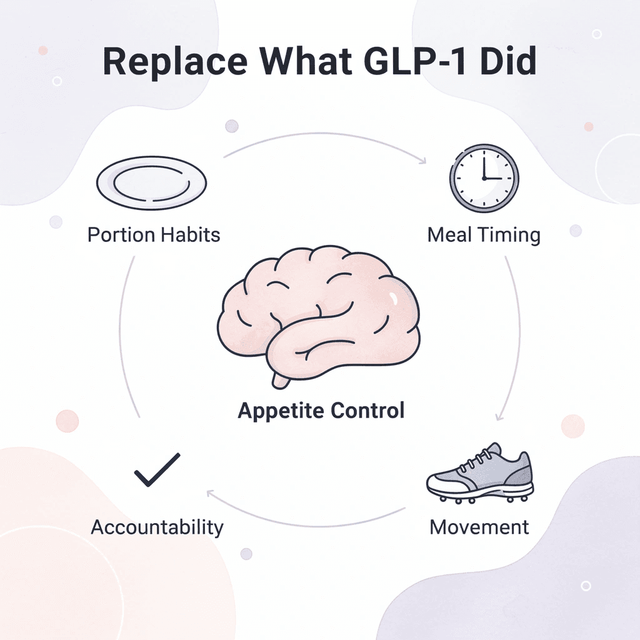
Stopping the medication doesn't mean losing your progress. What happens next depends on the structure you build to replace what the drug was doing for you.
Eat to stay full, not just to stay on track
Without GLP-1 to suppress ghrelin and slow gastric emptying, hunger returns faster than most people expect. Three nutrients do the most important work: protein, fiber, and healthy fats.
Which nutrients do the most to keep hunger at bay?
Protein is the anchor. According to Meghan Salamon, a dietitian at the Weight Center at Harvard-affiliated Massachusetts General Hospital, the body burns significantly more calories digesting protein than it does carbohydrates or fats, making protein crucial for maintaining lean muscle mass. Lean meats, poultry, fish, soy, and dairy are the most practical sources.
Soluble fiber, found in fruit and vegetable skins, mimics what GLP-1 medications do: it slows digestion, creates a gel-like consistency in the stomach, and triggers natural fullness signals. Salamon's shortcut: put a fruit, vegetable, or both on every plate. Healthy fats from avocados, olive oil, fatty fish, and nuts extend fullness between meals.
Does when you eat matter as much as what you eat?
When you eat matters as much as what you eat. Eating every three to five hours prevents extreme hunger that leads to poor choices. If meals are further apart, a protein- or fiber-rich snack can bridge the gap. Keeping easy-to-store options like nuts, edamame, or protein bars on hand helps you avoid poor choices when hungry.
Why does lean mass matter so much for your metabolism?
When GLP-1 treatment ends, resting metabolic rate is affected by any lean mass lost during weight loss. Muscle tissue burns more calories at rest than fat tissue, so each pound of lean mass lost lowers daily calorie expenditure. Prioritize resistance training alongside aerobic activity to preserve or increase lean mass, maintain a higher resting metabolic rate, and improve long-term weight stability. Salamon identifies lean body mass as "one of the major drivers of our metabolism."
How does tracking your habits help prevent weight regain?
Most people track meals loosely after GLP-1 treatment, relying on memory to catch patterns. This fails when hunger spikes, sleep suffers, or hydration slips: without a visible record, you can't see which variable shifted first. Our GLP-1 app brings together protein intake, hydration, weight trends, and daily habits in one place, surfacing warning signs like consistently low protein or missed meals before they compound into meaningful regain.
Why should sleep and hydration be core maintenance strategies?
Sleep and hydration rarely receive adequate attention when planning post-medication care. Insufficient sleep raises ghrelin, the hunger hormone, which directly increases unplanned calorie intake the following day. Dehydration compounds this effect: your brain often mistakes thirst for hunger, prompting you to eat when you need water instead. Prioritize sleep and consistent hydration as essential self-care practices.
What success actually looks like after stopping
According to a 2025 meta-analysis published in PMC, patients regained about two-thirds of their weight loss within one year after stopping semaglutide. Results vary significantly depending on the behavioral support provided during and after treatment. Salamon says it simply: "It's unrealistic to expect no weight will return. However, with the right structure and nutritional strategies, you can continue to protect your progress as much as possible." Shifting the goal from "maintain every pound lost" to "minimise regain through consistent habits" is achievable and worth pursuing.
The specific plan that makes this possible is more personalized than most people realize.
Prevent Weight Gain After Stopping GLP-1 With a Personalized Maintenance Plan
A personalized plan needs structure. Most people leaving GLP-1 treatment rely on memory and motivation, but both fail when appetite rebounds and routines shift. Without tracking, small changes in protein, hydration, or movement go unnoticed until weeks of drift accumulate.
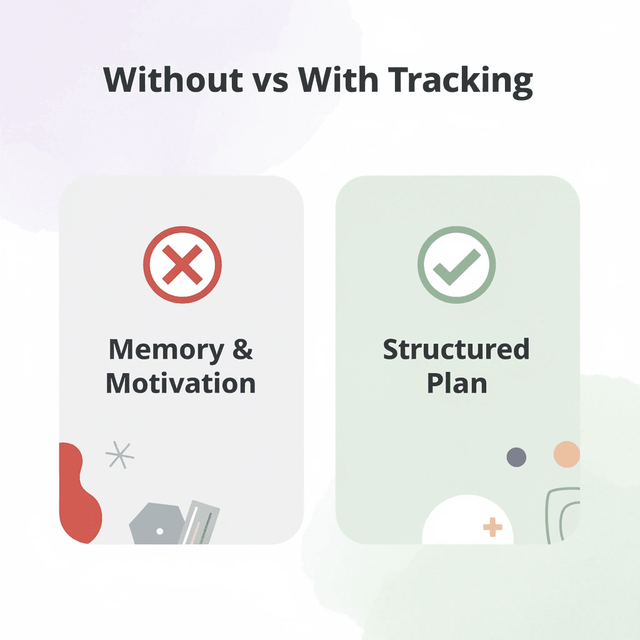
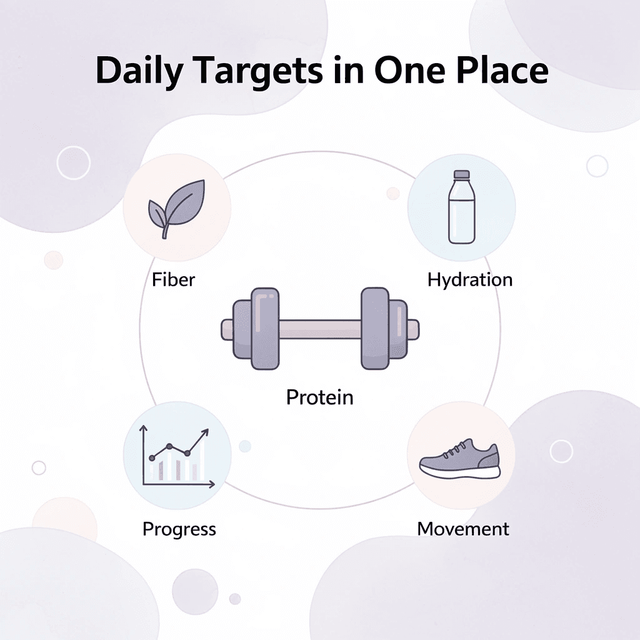
A tool like MeAgain closes this gap by consolidating your daily targets in one place, so you can track whether your protein, fiber, water, and movement goals are being met. Create your personalized GLP-1 Weight Maintenance Plan inside MeAgain in about 2 minutes.
"Without a structured tracking system, most people regain weight after stopping GLP-1 treatment because small daily habits—protein intake, hydration, movement—slip unnoticed until the damage is done." — MeAgain Health Insights
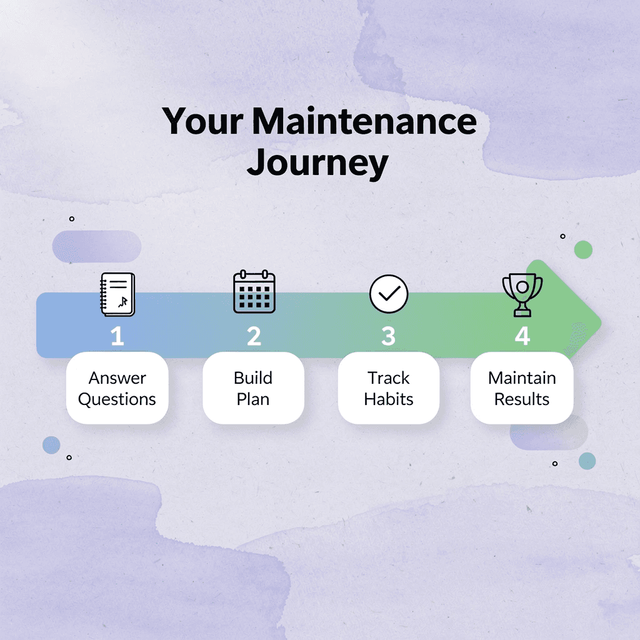
Answer a few quick questions about your current weight, protein intake, hydration, activity level, and where you are in your GLP-1 journey. MeAgain builds a personalized daily habit plan to maintain the behaviors that matter most after treatment — including hitting your protein, fiber, water, and movement goals.
Habit Category | Why It Matters After GLP-1 |
|---|---|
Protein Intake | Preserves muscle mass as appetite rebounds |
Fiber Goals | Supports satiety and digestive health |
Daily Hydration | Regulates hunger signals and metabolism |
Movement Targets | Maintains caloric balance without medication |
You'll also unlock your capybara coach, which turns healthy habits into a game, and your Journey Card, which tracks progress and milestones so you can see how your routines evolve.
Weight maintenance depends on consistently doing the small things that support muscle preservation, appetite management, and long-term healthy behaviors. Start your personalized plan today and make maintaining your results as rewarding as achieving them.