

Reaching a target weight on semaglutide or tirzepatide is a milestone, but it quickly raises a harder question: what happens when you stop? Research shows that weight regain after discontinuing GLP-1 therapy is common, and for many people it begins within weeks of the final dose. Understanding why that happens, and what can be done about it, makes the difference between keeping the results and losing them.
The biology behind GLP-1 medications does not simply reset once the drug clears the system. Appetite signals return, metabolic adaptations persist, and without a structured plan, old patterns tend to resurface. Building sustainable habits around nutrition, movement, and monitoring before and after tapering off is essential, and the GLP-1 app from MeAgain gives users the tools to do exactly that.
Table of Contents
- Can You Stop GLP-1 After Losing Weight?
- What Happens When You Stop Taking a GLP-1 Medication?
- How to Stop GLP-1 Without Regaining Weight
- Make the Habits That Maintain Your Weight as Rewarding as Losing It
Summary
- Obesity is increasingly recognized by medical researchers as a chronic condition rather than a short-term problem that resolves after treatment ends. When GLP-1 medications are discontinued, the biological mechanisms they were managing, including appetite signaling, satiety response, and metabolic rate, return to their pre-treatment state. According to AARP, two-thirds of lost weight is typically regained within one year of stopping GLP-1 medication.
- Weight regain after stopping GLP-1 therapy is not primarily a willpower issue. It reflects two biological forces acting simultaneously: stronger hunger signals from rising ghrelin levels and a lower resting metabolic rate due to muscle loss during caloric restriction. This combination means a person who has stopped their medication is burning fewer calories at rest while receiving more frequent and intense hunger signals.
- The return of food noise, the constant mental negotiation around eating, is a distinct biological event that many patients underestimate. GLP-1 medications act on brain neurochemistry in ways that make eating fewer calories feel genuinely easier, and when that effect wears off, the psychological adjustment is real and measurable. The contrast between medicated and unmedicated states can feel disproportionately sharp for people who experienced significant appetite suppression during treatment.
- Not all patients experience full weight regain after stopping. Epic Research found that 56 percent of semaglutide patients maintained weight loss or lost additional weight at 24 months post-cessation. The factors that most reliably separate those who maintain results from those who do not include sustained protein intake, resistance training habits built during the medication period, and consistent clinical monitoring before and after discontinuation.
- A structured tapering process produces better outcomes than abrupt discontinuation. Gradual dose reduction, using the same increments used during titration, or spacing doses to every other week, gives the body time to adjust and allows clinicians to monitor hunger, weight, and metabolic markers before each subsequent reduction. Harvard Health Publishing recommends pairing this transition with at least 150 minutes of moderate-intensity exercise per week to help maintain weight loss after stopping GLP-1 medications.
- Patients who make well-informed decisions about stopping GLP-1 therapy are typically those who bring documented patterns to the conversation rather than relying on memory. Tracking dose history, nutrition habits, hunger patterns, and weight trends together makes it possible to distinguish normal physiological fluctuations from meaningful fat change and provides clinicians with the context needed to assess whether discontinuation is clinically appropriate.
- MeAgain's GLP-1 app addresses this gap by logging dose history, meals, symptoms, and weight trends in one place, giving users and their clinicians a clearer picture of what the medication has been doing before and after the decision to stop is made.
Can You Stop GLP-1 After Losing Weight?
Yes, stopping a GLP-1 medication after reaching your goal weight is possible, but for many people, it is not the clean finish line they imagined. Whether it makes sense depends on your underlying health conditions, how deeply your habits have changed, and whether your body can regulate hunger and fullness without pharmaceutical support.
"Whether stopping a GLP-1 makes sense depends on your underlying health conditions, the depth of your habit changes, and your body's ability to self-regulate — not the number on the scale." — Key Clinical Consideration
The common assumption is that GLP-1 medications work like a diet: you use them, lose weight, and stop. Traditional diets are temporary by design, and marketing around drugs like Wegovy and Zepbound has focused on the weight-loss milestone, not what happens after.
Why does stopping GLP-1 often lead to weight regain?
Obesity is increasingly recognized by medical researchers as a chronic condition, not a short-term problem you solve and move past. When you stop a GLP-1, the biological mechanisms the drug was managing—appetite signaling, satiety response, and metabolic rate—return to their pre-treatment state. According to AARP, two-thirds of lost weight is regained within one year of stopping GLP-1 medication. This is not a failure of willpower; it is biology functioning as designed.
Research published in the BMJ in January 2026, reviewing 37 prior studies, found that people who stop GLP-1 medications typically regain nearly a pound per month, recovering all lost weight within two years. The drug manages hunger signals, and without it, those signals return full force. Most people attempt to maintain weight loss through lifestyle changes alone: eating well, exercising, and tracking portions. While this approach matters, hunger is not a mindset problem—it is hormonal. Managing it without pharmaceutical support requires daily vigilance that most people underestimate.
What information do most people miss before stopping GLP-1?
When people decide to stop taking their medication, they often do so without sufficient information: they've reached a goal weight, they're tired of managing a side effect, or they can no longer afford it. What they rarely bring to that conversation is a clear record of how their appetite patterns changed, what their protein intake looked like at their best, or which side effects actually resolved. Our MeAgain GLP-1 app was built to fill this gap. It tracks dose history, meals, symptoms, weight trends, and progress milestones in one place, giving users and their doctors a fuller picture of what the medication has been doing before anyone decides to stop it.
How many people actually keep weight off after stopping GLP-1?
Epic Research reports that 56% of semaglutide patients maintained or lost additional weight at 24 months after stopping the medicine. Nearly half did not sustain their results, with the difference between groups determined by the presence or absence of habits, monitoring, and clinical support when the prescription ended.
What happens inside your body in the days and weeks after your last dose is where the real story begins.
Related Reading
- GLP-1 Plateau
- How Does GLP-1 Help You Lose Weight
- How Much Protein On GLP-1
- How Much Water To Drink on GLP-1
- Why Am I Not Losing Weight On GLP-1
- Can GLP-1 Cause Gastroparesis
- Can GLP-1 Cause Kidney Stones
- Which GLP-1 Has The Least Side Effects
- Does GLP-1 Cause Acid Reflux
- Why Am I Not Losing Weight on Zepbound
What Happens When You Stop Taking a GLP-1 Medication?
Your body starts sending biological signals that GLP-1 is being suppressed again, and it does so quickly. Understanding this cause-and-effect pattern matters because you can prepare for it, even though timing varies from person to person.

What happens to hunger signals when GLP-1s leave your system?
When GLP-1 receptor agonists leave your system, appetite-regulating hormones like ghrelin climb back toward baseline within days. The brain's reward circuitry around food, which GLP-1s suppress, starts firing with original intensity. The result is a double signal: more hunger arriving more often and less satisfaction from portions that previously felt adequate. According to AARP's reporting on GLP-1 cessation, people regain about two-thirds of the weight they lost within one year of stopping a GLP-1 medication.
Why does metabolism work against you at the same time?
Weight loss reduces resting metabolic rate because lean muscle tissue is lost alongside fat during caloric restriction. A person who has stopped their GLP-1 is simultaneously burning fewer calories at rest and receiving stronger hunger signals. This is not a willpower deficit but two biological forces pushing in the same direction, present before the medication started. The drug suppressed them; stopping it releases them.
What "food noise" returning actually feels like
The return of food noise is a distinct biological event, not a side effect of increased hunger. Patients who experienced the quieting effect of GLP-1s often describe it as the first time in years that food wasn't a constant mental negotiation. When the medication stops, that negotiation resumes, and it can feel disproportionately loud because the contrast is sharp. Patrick O'Neil, Ph.D., director of the MUSC Weight Management Center, has noted that GLP-1s act on brain neurochemistry in ways that make eating fewer calories feel easier, and when that effect wears off, the psychological adjustment is real and measurable.
Why does tracking more than weight matter when stopping GLP-1s?
Most patients track only weight on a scale while on GLP-1s, which feels sufficient during treatment. But as the medication is stopped, that single number reveals almost nothing about what's causing the changes. Our MeAgain GLP-1 tracker app captures dose history, hunger patterns, protein intake, and symptom trends over time, allowing doctors to reference documented patterns rather than rely on memory when discussing what changed.
Which effects are universal and which are not?
A systematic review published in eClinicalMedicine, covering 90 studies, found that heart and blood vessel risk markers returned toward baseline within months of stopping GLP-1 therapy. Blood sugar control, blood pressure, and inflammation markers all showed similar reversal patterns. Patients with Type 2 diabetes or existing cardiovascular risk face more clinically significant rebound than those using GLP-1s for weight management alone.
What factors affect the speed and degree of weight regain?
What changes is how quickly and how much weight returns. Factors that help prevent weight regain include adequate protein intake, strength training initiated during medication, regular medical check-ups, and a metabolism that wasn't severely compromised to begin with. Joshua Neal, M.D., of MUSC Health, has been clear: obesity is mostly about biology, and most people will regain weight without ongoing management. Understanding this prepares you for the challenge ahead.
The difference between patients who maintain their results and those who don't depends on whether the right systems were in place before the final dose.
Related Reading
- Why Do Some People Not Lose Weight on Ozempic
- Slow Weight Loss On Wegovy
- Why Am I Not Losing Weight On Zepbound
- Can You Stop Glp-1 After Losing Weight
- How Many Weeks Is Considered A Weight Loss Plateau
How to Stop GLP-1 Without Regaining Weight
Stopping a GLP-1 medication without regaining weight requires treating it as a managed physiological transition — not a simple decision you make overnight. Success depends on building the right systems before stopping, not after.
"The window before discontinuation is the most critical period — patients who build sustainable habits ahead of stopping are significantly more likely to maintain their results long-term." — Obesity Medicine Research
Phase | Key Focus | Why It Matters |
|---|---|---|
Before Stopping | Build habits, adjust diet | Prevents rebound hunger |
During Transition | Monitor intake, stay consistent | Stabilizes metabolism |
After Stopping | Maintain systems, track weight | Locks in long-term results |

What happens to appetite when the medication stops
When GLP-1 medications are stopped, ghrelin rises, satiety hormones fall, and the brain's appetite circuits reactivate. The medication addressed an endocrine problem. Without it, that problem returns. The steps that follow are direct biological countermeasures, not matters of discipline.
How does protein directly counter the hormonal shift?
Protein is the most effective approach. Target 1.2 to 1.6 grams per kilogram of goal body weight daily, spread across three meals of 25 to 35 grams each. This reduces ghrelin, raises peptide YY, and stimulates the body's own GLP-1 hormone, reducing food noise, stabilizing blood sugar, and decreasing impulsive eating.
Soluble fiber strengthens this effect. Increase it gradually from 15 to 20 grams per day, then to 25 to 40 grams, while increasing water intake simultaneously. This creates a gel-like consistency in the stomach that slows digestion and mechanically replicates what the medication achieves through hormones. Fruits, vegetables, nuts, and whole grains provide soluble fiber; aim for at least one at every meal.
Why does meal timing matter after discontinuation?
Meal timing is critical. Eating every three to five hours prevents hunger from becoming so intense that you lose control and make poor choices. When meals are far apart, a high-protein or high-fiber snack bridges the gap. Keeping shelf-stable options like nuts, edamame, or protein bars readily available helps combat the hunger your body reliably produces after stopping medication.
How does tapering change the outcome?
Stopping the medication suddenly removes its hormonal support all at once, the highest-risk approach. Gradual dose reduction, using the same increments applied during titration or spacing doses to every other week, allows the body to adjust and clinicians to monitor hunger, weight, and metabolic markers before the next reduction. According to Harvard Health Publishing, at least 150 minutes per week of moderate-intensity exercise is recommended during this transition to help maintain weight loss after stopping GLP-1 medications.
Aerobic activity burns calories while resistance training preserves lean body mass, the primary driver of resting metabolic rate. Two to four resistance sessions per week are the most effective way to counteract metabolic slowdown by rebuilding or maintaining muscle.
Why does tracking data matter more than daily weigh-ins?
Most people track weight daily and react to every change, making unhelpful calorie adjustments based on small variations rather than actual changes in body fat. Normal body changes from salt intake, carbohydrate intake, sleep quality, or bowel changes cause daily weight swings of 1 to 3% that are unrelated to fat gain. A GLP-1 tracking app like MeAgain clarifies this difference by logging dose history, nutrition habits, and weight trends together.
When a doctor observes that a patient's seven-day average weight has remained stable for four weeks, with consistent protein intake and no significant increases in side effects, the decision to lower the dose further rests on real data rather than a single scale reading.
Who should not discontinue
Stopping a GLP-1 medication requires more than reaching a target weight: it depends on whether the biological and behavioral systems needed to maintain that weight function independently.
Which biological factors make discontinuation a poor fit?
Not everyone is a candidate for stopping. People with ongoing leptin resistance, unresolved insulin resistance, or weight-related health conditions that have not improved may lack the biological ability to maintain weight loss without continued medication support. According to Epic Research, 56 percent of semaglutide patients maintained weight loss or lost more weight at 24 months after stopping treatment. However, nearly half did not sustain their results, and for many, ongoing treatment was the appropriate medical choice. The decision belongs to a healthcare provider with complete information, not to a single scale reading or cost calculation.
Will behavioral habits hold once active progress fades?
The harder question is whether those habits will stick once the motivation of active progress fades.
Make the Habits That Maintain Your Weight as Rewarding as Losing It
The habits that keep your weight stable after stopping a GLP-1 medication rarely fail because people stop caring. They fail because tracking progress feels less rewarding once the scale stops moving quickly. Our MeAgain appturns the daily habits that support long-term weight maintenance—protein, fiber, water, and movement—into a structured, trackable system with a Journey Card that captures your full pattern of progress, not just the number on the scale. That complete picture also gives your healthcare provider the context needed to make informed decisions about continuing or stopping your medication.
"The habits that protect your results deserve to be tracked with the same intention you brought to losing the weight in the first place."
Habit | What It Supports |
|---|---|
Protein intake | Muscle retention & satiety |
Fiber consumption | Digestive health & fullness |
Daily hydration | Metabolism & appetite control |
Consistent movement | Calorie balance & energy |
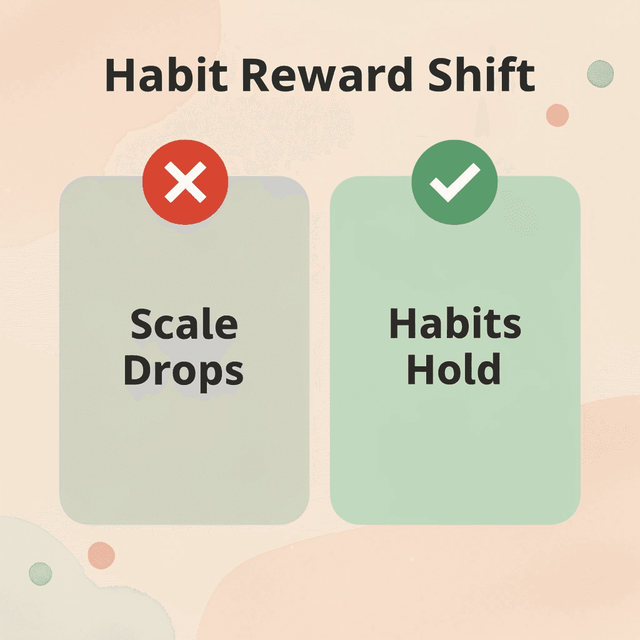
Download MeAgain today and set up your personalized GLP-1 habit tracker in under five minutes. The habits that protect your results deserve to be tracked with the same intention you brought to losing the weight in the first place.