

Understanding potential side effects before starting compounded tirzepatide helps patients make informed decisions and recognize what to expect during treatment. Most reactions range from mild digestive discomfort to more serious concerns that require medical attention. Knowing which symptoms are normal and when to contact a healthcare provider ensures safer medication use.
Tracking symptoms becomes much easier with proper support tools. Patients can monitor their experiences, identify patterns, and access community insights about common reactions through MeAgain's GLP-1 app.
Table of Contents
- What Is Compounded Tirzepatide and Is It Safe?
- Why Compounded Tirzepatide May Have Different Side Effects
- 8 Compounded Tirzepatide Side Effects Patients Report Most Often
- Turn GLP-1 Side Effects Into a Controlled Routine Instead of a Guessing Game
Summary
- Compounded tirzepatide is subject to different regulatory oversight than FDA-approved versions, which creates structural variability in formulation, concentration, and quality control. While brand-name tirzepatide is subject to mandatory batch-level FDA testing for potency, purity, and stability, compounded versions are not subject to the same requirements. As of July 2025, the FDA has received 545 adverse event reports associated with compounded tirzepatide, including cases serious enough to require medical intervention. This regulatory gap means the medication in your vial may differ from one pharmacy to another, even when the active ingredient remains chemically identical.
- Formulation inconsistency directly influences the severity and predictability of side effects. When excipients, pH buffers, or preservatives vary between batches, absorption rates change, which can amplify gastrointestinal symptoms or create unpredictable responses your body cannot adjust to. According to a 2023 FDA report on compounding quality, approximately 30% of tested compounded drug samples failed to meet basic potency or sterility standards. A vial containing 2.7 mg instead of the intended 2.5 mg hits harder than expected, intensifying nausea or vomiting beyond what you experienced with previous doses, making it impossible to distinguish between normal adjustment and a formulation problem.
- The most commonly reported side effects (nausea, digestive changes, appetite suppression, headaches, fatigue, and injection site reactions) occur with both compounded and FDA-approved tirzepatide, but compounded versions introduce unpredictable intensity patterns. Nausea is the most commonly reported side effect among tirzepatide users because the medication slows gastric emptying, but when formulation inconsistencies alter absorption rates, you might experience a sharper spike in blood concentration one week and milder symptoms the next. This variability prevents your body from establishing the stable adjustment pattern that makes side effects manageable over time.
- Severe reactions require immediate medical attention, regardless of the formulation's source. Allergic responses (difficulty breathing, throat or facial swelling, widespread hives) and pancreatitis symptoms (severe abdominal pain radiating from the stomach to the back, persistent vomiting, fever) signal that your body is experiencing a dangerous response. Compounded versions carry elevated risk for allergic reactions because inactive ingredients vary between pharmacies, meaning you might tolerate one pharmacy's preservative system while reacting to another's without knowing which specific ingredient caused the problem.
- The legal landscape for compounded tirzepatide shifted sharply after the FDA resolved the drug shortage in October 2024 and set a March 19, 2025, deadline for outsourcing facilities to stop production. Compounding pharmacy groups filed lawsuits challenging this timeline, arguing that access and affordability concerns justify continued compounding even after the shortage is resolved. The regulatory intent remains clear: the FDA does not consider compounded tirzepatide equivalent to the approved product, and the outcome of ongoing legal battles will determine whether compounded versions remain available in the long term.
- MeAgain's GLP-1 app addresses this by helping you log symptoms alongside dose timing, batch information, meals, and hydration in a unified view, so patterns become visible rather than scattered across memory and guesswork.
What Is Compounded Tirzepatide and Is It Safe?
You're standing in a pharmacy holding a prescription for tirzepatide, and the pharmacist tells you they can compound it for a fraction of the brand-name cost. Most people assume compounded tirzepatide is the same as FDA-approved tirzepatide, just cheaper: the same active ingredient, prescribed with confidence, injected the same way as Mounjaro or Zepbound.

"Compounded medications bypass the FDA's stringent approval process, which means patients may receive varying concentrations and unknown quality standards." — American Medical Association, 2024
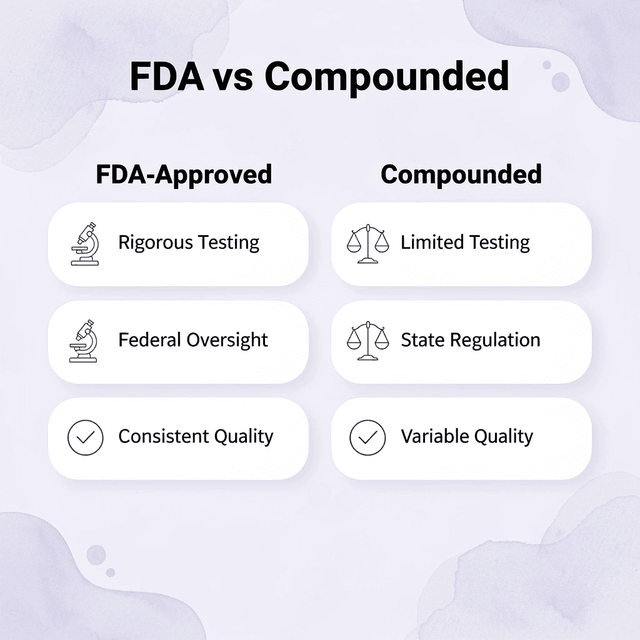
How does compounded tirzepatide differ from brand-name versions?
This assumption is not reliably true. Compounded tirzepatide is prepared by a licensed pharmacy rather than manufactured by Eli Lilly under FDA oversight. While the core peptide is the same 39-amino-acid molecule that activates both GIP and GLP-1 receptors, formulation, concentration, sterility protocols, and quality control vary significantly between compounding pharmacies.
Brand-name tirzepatide undergoes batch-level FDA approval, with every vial tested for potency, purity, and stability. Compounded versions do not. Some compounding pharmacies pursue voluntary accreditation through the National Association of Boards of Pharmacy, which evaluates USP standards for sterile compounding, but this is not FDA approval, and not all pharmacies have it.
Why do people believe compounded and brand-name tirzepatide are interchangeable?
The confusion makes sense. Marketing from telehealth platforms and compounding pharmacies emphasizes "same active ingredient" without explaining what else matters. Visual similarity reinforces this: you reconstitute the powder, draw it up in a syringe, and inject it subcutaneously once a week. The ritual feels identical. The broader GLP-1 category creates a halo effect, where people assume all tirzepatide is tirzepatide, as with all ibuprofen. When Mounjaro and Zepbound were on the FDA's drug shortage list from 2023 through October 2024, compounding became the only route to access for many people, further normalizing compounded versions as practical substitutes.
Why does that belief break down in practice?
Compounding introduces variability absent in FDA-approved drugs. Concentration in each vial may differ between pharmacies: a 5mg dose could be 0.25mL at one pharmacy and 0.5mL at another. Some pharmacies add ingredients not found in brand-name products, such as vitamin B12, NAD+, or preservatives that could trigger allergic reactions or injection-site irritation. Dosing errors with compounded injectable peptides have led to hospitalizations, a concern the FDA raised explicitly in its guidance on compounded GLP-1 drugs.
As of July 2025, the FDA received 545 adverse event reports associated with compounded tirzepatide, including nausea, vomiting, abdominal pain, and cases requiring medical intervention. Peptide drugs break down when exposed to heat, and some compounded products arrived without proper refrigeration or cold chain documentation, compromising effectiveness before the first injection.
Why Compounded Tirzepatide Exists
Federal law allows pharmacies to make drugs in two ways: Section 503A permits state-licensed pharmacies to manufacture drugs based on individual patient prescriptions, while Section 503B allows outsourcing facilities to produce drugs without individual prescriptions but under stricter manufacturing rules. Both generally prohibit copying commercially available drugs except during shortages. When tirzepatide appeared on the FDA's official shortage list, compounding pharmacies could legally produce it.
The FDA resolved that shortage in October 2024, confirmed the status again in December 2024, and set a March 19, 2025, deadline for 503B outsourcing facilities to cease production. Legal challenges from compounding pharmacy groups continue to contest that timeline, leaving the regulatory landscape uncertain.
What adverse events have been reported with compounded tirzepatide?
As of July 2025, the FDA received 545 adverse event reports for compounded tirzepatide and 605 for compounded semaglutide. Reported problems include nausea, vomiting, diarrhea, stomach pain, and constipation, with some cases requiring hospitalization. Specific concerns include products arriving without proper refrigeration, which affects peptide stability, and at least one case in which a product labeled as compounded tirzepatide came from a pharmacy that hadn't compounded it, resulting in redness, swelling, pain, and a lump at the injection site.
Why is consistency a major concern with compounded versions?
The main problem is ensuring consistency. You cannot assume every vial contains what the label states or that sterility procedures meet pharmaceutical-grade standards. Dosing errors with compounded injectable peptides have sent people to the emergency room. If you're using compounded tirzepatide, it's important to track doses, side effects, and unusual reactions. Our MeAgain GLP-1 app helps you log each injection, monitor symptoms, and spot patterns that might signal a problem with your batch or formulation, providing documentation to share with your provider.
How has the legal status changed recently?
The legal landscape changed significantly in late 2024. The FDA resolved the tirzepatide shortage in October 2024 and confirmed that status again in December 2024, removing the legal basis for most compounding under the drug shortage exemption. Outsourcing facilities were given until March 19, 2025, to stop producing compounded tirzepatide. Though compounding pharmacy groups filed lawsuits challenging the FDA's timeline, the regulatory intent is clear: the FDA does not consider compounded tirzepatide equivalent to the approved product.
How can tracking help identify batch variability issues?
When tracking your experience with compounded tirzepatide, changes matter. Feeling sick three days after an injection could indicate a normal side effect, a higher potency in that batch, or an altered dose concentration. MeAgain's GLP-1 app helps you log symptoms alongside dose timing, meals, water intake, and other daily factors in one unified view, making patterns visible and easier to discuss with your provider.
Related Reading
- How Much Does Compounded Tirzepatide Cost
- How To Get Compounded Tirzepatide
- Does Compounded Tirzepatide Work
- Compounded Tirzepatide Dosage
Why Compounded Tirzepatide May Have Different Side Effects
Compounded tirzepatide differs from FDA-approved Mounjaro or Zepbound in its manufacturing process. While the active ingredient may be identical at the molecular level, inactive ingredients (excipients, salts, preservatives, buffers) and dosing precision vary between batches, pharmacies, and vials. This variability affects absorption rates, dosing accuracy, and immune response, thereby influencing the severity and predictability of side effects.

"Manufacturing variability in compounded medications can lead to unpredictable therapeutic outcomes and altered side effect profiles compared to FDA-approved formulations." — Pharmaceutical Research Studies
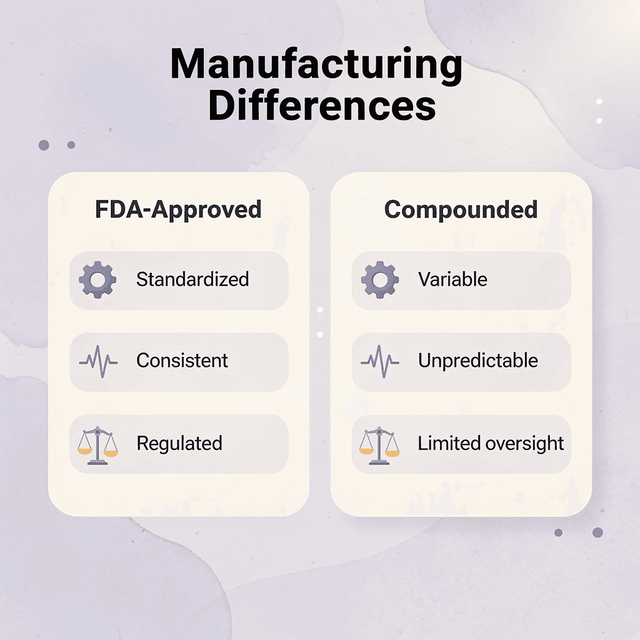
The causal chain formulation inconsistency to unpredictable symptoms
Changes in how a medicine is made can lead to different absorption or dosing responses and unpredictable side effects. When supporting ingredients differ (pH buffers, stabilizers, preservatives), your body absorbs the drug differently. A lower pH may cause injection-site pain; a new preservative may trigger swelling or allergic reactions not present in brand-name versions.
Dosing inconsistency compounds this: if one vial contains 2.3 mg instead of 2.5 mg, your body adapts to a lower amount, then a later vial at 2.7 mg produces a stronger effect than expected, worsening nausea, vomiting, or stomach problems. Compounded formulations lack the batch-level testing that catches these problems before they reach patients.
Regulatory contrast standardized versus variable manufacturing
FDA-approved tirzepatide undergoes required batch testing, sterility verification, and potency checks before sale. Every vial of Mounjaro meets the same cGMP (current Good Manufacturing Practice) standards that the FDA enforces through surprise inspections. Compounded tirzepatide operates under different rules. Section 503A pharmacies are overseen by state pharmacy boards, not the FDA, and batch testing is optional unless required by state law.
Section 503B outsourcing facilities must register with the FDA and undergo inspection, but less frequently and thoroughly than pharmaceutical manufacturers. According to a 2023 FDA report on compounding quality, approximately 30% of tested compounded drug samples failed to meet basic potency or sterility standards, which helps explain why some patients report stronger-than-expected side effects due to potency variation, while others experience reduced effectiveness due to inconsistent mixing.
What does an inconsistent medication response feel like for patients?
Inconsistent response creates patient uncertainty about the cause. You take your weekly dose, and this time nausea lasts three days instead of one. You wonder if you ate something wrong, drank too little water, or if your body became more sensitive. The real culprit may be a formulation variable you cannot see: a vial mixed with slightly higher potency, a preservative that inflames your injection site more than the last batch, or a pH imbalance that slows absorption and prolongs gastrointestinal effects.
This uncertainty isolates you. You cannot troubleshoot what you cannot trace, and when side effects feel random, they become harder to discuss with your provider because you lack the data to identify patterns. Stronger-than-expected GI effects (severe vomiting, prolonged nausea, or diarrhea lasting beyond typical timelines) frequently stem from unintentional overdosing or rapid absorption due to formulation differences, rather than your body rejecting the medication.
How can tracking tools help identify formulation patterns?
When side effects feel unpredictable, the instinct is to change your behavior (eat less, drink more water, skip doses), but those changes mask the real variable: formulation consistency. Our MeAgain app helps you log symptoms alongside dose timing, batch information (if your pharmacy provides lot numbers), meals, water intake, and other daily factors in one unified view.
Patterns become visible when you compare how different batches or pharmacies correlate with symptom severity. This visibility transforms scattered symptoms into understandable data, making it easier to discuss formulation concerns with your provider or pharmacy. The symptoms themselves tell only half the story.
Related Reading
- Is Compounded Tirzepatide Going Away
- How Long Does Compounded Tirzepatide Last In Fridge
- Is Compounded Tirzepatide Safe
8 Compounded Tirzepatide Side Effects Patients Report Most Often
Compounded tirzepatide produces the same side-effect categories as Mounjaro, but their intensity and predictability differ significantly. Inconsistent formulation can amplify symptoms or create unpredictable waves of discomfort, making it difficult to distinguish between normal adjustment and a formulation problem.

"Inconsistent formulation quality in compounded medications can result in variable bioavailability and unpredictable side effect profiles compared to standardized pharmaceutical products." — Pharmaceutical Research Guidelines

A. Common Expected GLP-1 Effects
1. Nausea and Vomiting
Nausea is the most reported side effect among tirzepatide users, typically appearing in the first few weeks or after dose increases. Tirzepatide slows gastric emptying, so food remains in your stomach longer while your brain receives stronger fullness signals. Your digestive system interprets this delayed movement as fullness, triggering nausea as a protective response.
Compounded versions may worsen this effect when formulation inconsistencies alter absorption rates. If one batch releases the active ingredient faster than another, you may experience a sharper spike in blood concentration, intensifying gastric slowdown beyond what your body can adjust to. The nausea feels less predictable because the pharmacokinetic curve varies across batches rather than following the stable pattern observed with FDA-approved versions.
Most people find relief by starting at the lowest possible dose and increasing slowly, eating smaller meals throughout the day, and avoiding greasy or heavily seasoned foods. If nausea persists beyond the first month or prevents adequate eating, discuss dose adjustment or formulation concerns with your provider rather than pushing through.
2. Digestive Changes (Diarrhea or Constipation)
Tirzepatide's effect on gut motility alters how your digestive tract functions, which helps explain why some people experience constipation while others have diarrhea, and some alternate between the two. Your intestines move food through at a different rhythm, and your body needs time to recalibrate how it processes waste, absorbs water, and responds to meal timing.
Compounded formulations introduce variability due to differences in inactive ingredients, such as buffers and preservatives. A formulation with a different pH level or unfamiliar excipient can irritate the intestinal lining, causing diarrhea even when the active ingredient would normally cause constipation. This unpredictability prevents you from establishing a reliable pattern to manage.
Hydration becomes a critical functional necessity. Your colon absorbs water based on transit time, so when that timing shifts unpredictably, you need more baseline hydration to compensate. Adding fiber gradually and paying attention to meal timing relative to your injection schedule helps your digestive system find a new rhythm. If symptoms persist beyond four weeks, the issue may be formulation-related rather than adjustment-related.
3. Appetite and Taste Changes
Reduced appetite isn't a side effect in the traditional sense: it's the intended mechanism driving weight loss. Tirzepatide activates GLP-1 and GIP receptors in your brain's appetite-regulation centers, directly suppressing hunger signals and promoting early fullness. Some users also report changes in taste perception, where previously appealing foods suddenly seem unappealing.
The challenge with compounded versions surfaces when appetite suppression becomes too strong or varies dramatically between doses. If one batch delivers slightly higher bioavailability than another, you might swing from manageable appetite reduction one week to near-complete food aversion the next. That inconsistency makes it harder to maintain adequate nutrition, particularly protein intake needed to preserve muscle mass during weight loss.
You want appetite reduction that feels sustainable, not punishing. If you're struggling to meet basic nutritional needs or experiencing fatigue and weakness alongside appetite loss, the suppression has crossed from therapeutic to problematic. Tracking when appetite changes feel most intense relative to your injection timing helps identify whether the pattern follows a predictable curve or varies unpredictably, which may indicate formulation consistency issues.
4. Headaches and Fatigue
Headaches and fatigue often appear during the first few weeks as your body adjusts to significant changes in energy processing. Tirzepatide alters how your body handles glucose, shifts fluid balance through kidney effects, and changes eating patterns, all of which can trigger tension headaches or persistent low energy.
Dehydration worsens both symptoms because tirzepatide's effect on kidney function increases fluid loss, and reduced food intake often means reduced fluid intake as well. Your fatigue may stem from a combination of lower calorie consumption, electrolyte shifts, and adjustment to lower blood sugar levels rather than the medication alone. Compounded versions add uncertainty since dose variations can intensify these symptoms week to week, even when other factors remain constant.
Most users find that these symptoms resolve within three to four weeks as their bodies adjust to new metabolic patterns. Staying hydrated, consuming adequate electrolytes (sodium, potassium, magnesium), and eating sufficient protein and complex carbohydrates help stabilize your body faster. If headaches persist or fatigue worsens, this indicates whether your dose is appropriate or if formulation inconsistency is preventing your body from adapting.
5. Injection Site Reactions
Minor skin reactions at injection sites (redness, itching, slight swelling) are common with injectable medications and are part of your body's normal immune response. Most reactions resolve within a few hours to a day.
Compounded tirzepatide carries a higher risk for injection site reactions because formulation differences affect how the medication interacts with your tissue. A preservative or stabilizer from one pharmacy may cause more inflammation than another's formulation, or a different pH level can increase stinging or irritation. Rotating injection sites (abdomen, thighs, upper arms) helps prevent irritation buildup, but worsening or increasingly painful reactions suggest a formulation ingredient is the problem rather than injection technique.
Persistent or worsening injection site reactions deserve attention because they can indicate a developing allergic response. Contact your provider immediately if redness spreads beyond the injection area, swelling increases rather than decreases over 24 hours, or you develop hives or itching at a site away from the injection.
B. Variable Intensity Effects (Key Differentiator)
6. Stronger GI Response and Dose Sensitivity
Stomach and digestive effects (nausea, digestive changes) worsen unpredictably with mixed versions due to their manufacturing process, not because they are stronger. When the body absorbs medication at different rates between batches, you experience stomach slowdown and appetite suppression at varying intensities.
How does dose variability affect symptom consistency?
This variability becomes most obvious during dose escalations. FDA-approved tirzepatide controls the exact amount of active ingredient you receive and how consistently it is released into your bloodstream. With compounded versions, small differences in concentration or formulation mean your "2.5 mg" dose behaves differently from month to month, even with identical labels. Your GI system cannot adapt to a moving target, so symptoms that should stabilize instead fluctuate based on which batch you're using.
How can tracking patterns help identify formulation problems?
Tracking side effects alongside dose timing, meals, and hydration transforms scattered symptoms into visible patterns. When nausea worsens after switching vials or digestive issues align with a specific pharmacy batch, that pattern becomes data to discuss with your provider rather than attributing it to individual sensitivity. The symptoms themselves are standard GLP-1 effects, but the unpredictability suggests a formulation issue.
C. Red Flag and Discontinuation Signals
7. Severe Reactions: Allergic Response and Pancreatitis
Allergic reactions to tirzepatide are rare, but you must recognize them immediately. Symptoms include difficulty breathing, swelling in your throat or face, severe skin reactions (widespread hives or rash), or a rapid heart rate with dizziness.
Compounded versions carry a higher risk for allergic reactions because ingredients vary between pharmacies. You might tolerate one pharmacy's preservative system but react badly to another's. If you had no problems with FDA-approved tirzepatide but developed allergic symptoms after switching to a compounded version, the culprit is likely an inactive ingredient rather than the tirzepatide itself.
Pancreatitis presents differently but is equally urgent. Severe stomach pain (often described as a band wrapping from the stomach to the back), persistent vomiting, rapid heart rate, and fever signal possible pancreatic inflammation. Tirzepatide can trigger pancreatitis in susceptible individuals by altering how digestive enzymes are released and pancreatic function. Inconsistent dosing from compounded versions may increase susceptibility if you receive a higher-than-intended concentration. Pancreatitis requires immediate medical evaluation, as untreated inflammation can cause permanent organ damage.
8. Kidney Problems and Dehydration Risk
Severe kidney problems are rare but most likely to occur in patients with existing kidney conditions or those who become dehydrated from frequent vomiting or diarrhea. Dehydration reduces blood flow to the kidneys, which can cause acute kidney injury, especially if your kidneys are already compromised. Symptoms include reduced urination, swelling in the legs or ankles, confusion, and extreme tiredness. If you have a history of kidney disease, inform your provider before starting tirzepatide, and they should monitor your kidney function through blood tests during treatment.
Persistent Vomiting and Dehydration Risk
Occasional throwing up during the first few weeks is manageable. However, if you vomit multiple times daily beyond the initial adjustment period, your dose may be too high, your formulation inconsistent, or your body intolerant to the medication. Throwing up can lead to dehydration, electrolyte imbalances, kidney strain, and fatigue. If you cannot keep fluids down for more than 24 hours, seek immediate medical attention.
Intolerance Due to Inconsistency
Some patients stop taking compounded tirzepatide not because the medication itself is hard to handle, but because batch differences prevent them from establishing a stable routine. One vial might cause manageable nausea and steady weight loss; the next might trigger severe stomach problems or prove ineffective.
That unpredictability erodes trust in the treatment and makes it difficult to distinguish between normal adjustment and formulation problems. If you're experiencing wildly different responses across refills, your compounded source lacks the consistency needed for safe, effective long-term use.
With FDA-approved tirzepatide, side effects typically stabilize within four to six weeks as your body adapts to each dose level. Regulated manufacturing ensures that every pen delivers the exact concentration labeled, enabling predictable titration and reducing sudden symptom swings. Compounded versions from high-quality 503B pharmacies with rigorous testing protocols can achieve similar outcomes, but the margin for error is wider.
Turn GLP-1 Side Effects Into a Controlled Routine Instead of a Guessing Game
Medicine side effects feel easier to handle when you can predict them. With compounded tirzepatide, inconsistency in formulation turns every dose into a question mark. Most people managing GLP-1s cannot determine whether nausea stems from the medication, dehydration, skipped protein, or an unforeseen combination. That uncertainty amplifies how side effects feel.

The problem isn't the medication doing its job. It's that everything around it (hydration, protein intake, fiber, movement) becomes inconsistent while your body adjusts. Most people try to remember what worked yesterday, but memory fails when appetite shifts daily and digestion changes unpredictably. That's when fatigue compounds, constipation lingers, and muscle loss sneaks in unnoticed.
"When you can't predict side effects, uncertainty makes them feel worse than they actually are—turning manageable symptoms into daily stress."

Common Variables | Impact on Side Effects | Solution |
|---|---|---|
Hydration timing | Amplifies nausea, fatigue | Structured water tracking |
Protein consistency | Affects muscle retention | Daily protein goals |
Dose timing | Influences digestive symptoms | Consistent scheduling |
Movement patterns | Impacts constipation, energy | Guided activity prompts |
MeAgain closes that gap by turning the essentials into a structured daily routine. Instead of mentally tracking protein, water, fiber, and movement across scattered notes or apps, our app consolidates everything into one guided system with your capybara coach keeping you accountable. It connects daily signals (side effects, dose timing, meals, hydration) so patterns become visible. When you see that nausea spiked two hours after dosing on days you skipped breakfast, you're adjusting with evidence instead of guessing.
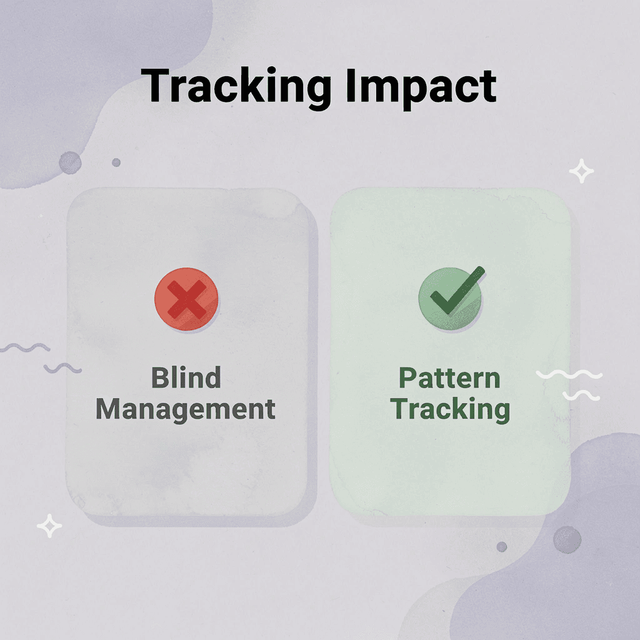
MeAgain creates a Journey Card that captures transformation milestones week by week, letting you see your body changes rather than sit with uncertainty. This removes the inconsistency that amplifies side effects. Download MeAgain to turn GLP-1 side effect management into a system you can stick to.