
Key takeaways
- Mounjaro is not a fat-burner: it works by quieting appetite and slowing digestion, so you eat less and your body draws on its own fat stores for fuel.
- In the SURMOUNT-1 DXA substudy, about 75% of the weight lost on tirzepatide was fat mass and about 25% was lean mass — the same split seen in the placebo group.
- Fat loss on Mounjaro is not spot-targeted: visceral and waist fat drop, but no medication lets you choose where you lose it.
- Protein and resistance training are what make the scale number mean fat rather than muscle.
- Waist size, blood pressure, HbA1c, and lipids tend to improve alongside weight, but the figures are averages and vary from person to person.
Table of contents
- Does Mounjaro burn fat? The honest answer
- How much of Mounjaro weight loss is actually fat?
- What else changes: your waist size and metabolic markers
- How do you lose fat instead of muscle on Mounjaro?
- How can you track fat loss instead of trusting the scale?
Does Mounjaro burn fat? The honest answer
Does Mounjaro burn fat the way a fat-burner does? No — not in the way that word gets used on a supplement label. It doesn't raise your body temperature or torch fat directly. What it does is quieter and more useful: it turns down appetite so eating less feels natural, and the fat loss follows from there.
A 'fat burner' in the supplement aisle usually promises to rev your metabolism and melt fat on its own. Mounjaro doesn't work that way. As Cleveland Clinic puts it, Mounjaro "changes how your body reacts to food" — it makes you fuller faster and shifts your blood sugar. The fat comes off because you're eating less, not because a chemical is burning it for you.
Here's the actual mechanism. Tirzepatide, the drug in Mounjaro, is a GIP and GLP-1 receptor agonist — it mimics two gut hormones your body already makes. Per Cleveland Clinic, it works by reducing appetite and slowing digestion, so food stays in your stomach longer and you feel satisfied sooner. Less food noise, smaller portions, longer gaps between hunger signals.
The part that matters for fat is what that appetite change sets up. Eat less consistently and you create a calorie deficit — your body needs more energy than it's taking in. To cover the gap, it draws on its own fat stores for fuel. Mayo Clinic notes tirzepatide is also used to help lose weight and keep it off, meant to work alongside diet and exercise rather than in place of them.
- Appetite quiets — you feel full faster and think about food less
- You eat less without white-knuckling it through the day
- A steady calorie deficit forms over days and weeks
- Your body pulls the missing energy from its own fat stores
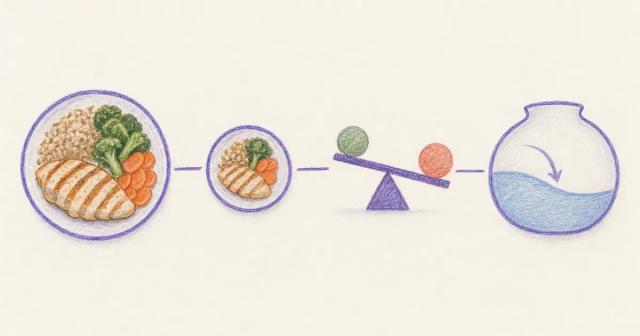
The medication changes how your body reacts to food — it doesn't add a fat-burning chemical to the mix.
So does it burn fat, or not?
In the everyday sense, yes — but it's your body doing the burning, not the drug. Mounjaro sets up the conditions, a real calorie deficit, and then your normal metabolism does what it always does when energy runs short: it taps fat for fuel. The medication isn't a furnace. It's the reason the furnace finally has a reason to run in that direction.
How much are we talking about? In SURMOUNT-1, a trial of more than 2,500 adults with obesity, people taking 5 milligrams of Mounjaro for 72 weeks lost about 15% of their body weight on average, per Cleveland Clinic's summary. Higher doses were linked to more. That's an average across many people, not a number you're promised.
Is Mounjaro a weight-loss drug or a diabetes drug?
Technically, it's a diabetes drug. Mounjaro is a prescription medication used to treat type 2 diabetes, per Cleveland Clinic. The weight loss showed up so consistently that doctors began prescribing it off-label to help people with obesity lose weight, whether or not they have diabetes. Same molecule, tirzepatide, sold for weight management under a different brand name.
That reframes the real question. If most of what you lose comes off as fat, the next thing worth understanding is exactly how much — and how much is muscle. It also helps to know how GLP-1 helps you lose weight when dieting fails, since that appetite mechanism is the whole engine here.
How much of Mounjaro weight loss is actually fat?
Most of it is fat — roughly three-quarters. In the SURMOUNT-1 DXA substudy, about 75% of the weight lost on tirzepatide was fat mass and about 25% was lean mass. So the scale is mostly measuring the change you actually want, though not entirely.
What the body scans actually showed
The clearest look comes from a body-composition substudy. Within SURMOUNT-1, 160 of the 2,539 participants got a DXA scan — dual-energy X-ray absorptiometry, which separates fat from lean tissue — at the start and again at week 72. Those results were published in the journal Diabetes, Obesity & Metabolism. It's a smaller slice, but it's the one that measured fat directly instead of inferring it from the scale.
Here are the numbers, scoped to that substudy. From baseline to week 72, the tirzepatide group saw body weight fall 21.3%, fat mass fall 33.9%, and lean mass fall 10.9%. The placebo group changed far less — 5.3%, 8.2%, and 2.6%. Fat mass dropped by roughly a third, and it came off much faster than lean tissue did.
Measure | Tirzepatide | Placebo |
|---|---|---|
Body weight | −21.3% | −5.3% |
Fat mass | −33.9% | −8.2% |
Lean mass | −10.9% | −2.6% |

That split held up across the board. The roughly 75% fat / 25% lean breakdown stayed consistent across sex, age groups, and how much weight people lost overall. And the underlying loss lasts: in the three-year SURMOUNT-1 analysis of adults with obesity and prediabetes, published in the New England Journal of Medicine, body weight was down 12.3% at 5 mg, 18.7% at 10 mg, and 19.7% at 15 mg at 176 weeks, versus 1.3% on placebo.
Losing weight and losing fat aren't the same thing — the difference is whether that number on the scale is muscle you'll miss or fat you won't.
How tirzepatide's fat loss compares
It also holds up against other GLP-1 options. Across six randomized trials, tirzepatide significantly reduced total fat mass, visceral fat (the deep belly fat around your organs), and waist circumference. It showed a superior decrease in those body-fat compartments compared with dulaglutide and semaglutide taken over the same stretch of time. So the fat loss isn't just real — it's landed on the stronger end of this drug class.

- Fat mass — the tissue Mounjaro helps you lose most of
- Lean mass — muscle and organ tissue you want to protect
- Visceral fat — the deep fat packed around your organs
- Water — early shifts that aren't fat at all
- Bone — structural mass the scale can't separate out
Is losing some muscle a problem?
Some lean loss is normal — the question is how much. In the DXA substudy, the ~25% lean-mass share of weight lost mirrored the placebo group, so it wasn't unique to the drug. Still, the evidence here is genuinely mixed: across the six-trial data, the effect on fat-free mass was called uncertain because the findings remained inconclusive. That's the honest read — worth protecting your muscle, not worth panicking over.
Can Mounjaro target belly fat?
No medication lets you choose where fat comes off. The good news is that visceral fat and waist circumference do fall on tirzepatide, so the midsection does tend to shrink. But that's your whole body losing fat, not the drug aiming at your belly. Spot reduction — burning fat from one specific place — isn't something any medication or exercise can actually do. Where you lose first is mostly down to your own genetics.
Keeping that 25% from creeping up is the real lever you control. The medication decides the deficit; what you eat and whether you train decides how much of the loss is fat versus muscle. That's why keeping muscle on Mounjaro is worth its own attention — it's what makes the scale number actually mean fat.
What else changes: your waist size and metabolic markers
The scale isn't the only thing that moves. Beyond the number you step onto, your waist tends to shrink and several health markers tend to improve while you're losing weight on Mounjaro. Waist size, blood pressure, blood sugar, and cholesterol often shift in the same direction as the pounds. None of it is guaranteed, and the size of the change varies a lot from person to person, but the pattern shows up consistently across the research.
Waist circumference falls in people with and without diabetes. A diabetes-stratified meta-analysis in the International Journal of Obesity pooled tirzepatide trials and found that, compared with placebo, tirzepatide significantly reduced waist circumference in both groups. The same analysis reported greater weight loss in people without diabetes: an average of about 18.11 kg more than the placebo group, versus about 9.06 kg more in people with diabetes. Those are averages against a placebo comparison, not a promise for any one person.
Time on treatment | Body weight | BMI | Waist circumference |
|---|---|---|---|
3 months | Down about 9%, fastest drop | Down significantly | Down significantly |
6 months | Still falling | Down significantly | Down significantly |
12 months | Down but slowing | Down significantly | Down significantly |
The changes go deeper than the waistband. In that same International Journal of Obesity analysis, tirzepatide also improved blood pressure, hemoglobin A1c (a roughly three-month average of your blood sugar), and lipid levels, the cholesterol and triglyceride family. These are the markers a care team watches for heart and metabolic health. Improving them is part of why the medication is used for more than weight alone, though again, these are group averages and your own labs are what matter.
- Waist circumference — a signal of fat around your middle
- Blood pressure — often eases as weight comes down
- HbA1c — your longer-term blood sugar average
- Cholesterol and triglycerides — the lipid panel

How fast do these changes happen?
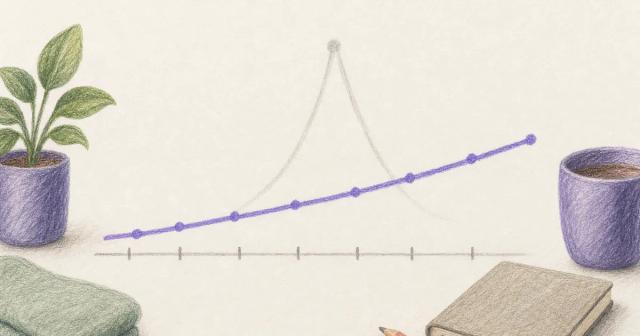
Most of the change comes early. Across GLP-1 medications, a separate International Journal of Obesity meta-analysis found the fastest, largest shifts in the first three months, when average body weight dropped by roughly 9%, with waist circumference falling alongside it. After that, the pace tends to slow. The researchers suggested this attenuation may reflect how hard long-term habits are to hold, along with possible adaptive changes in the body over time. In plain terms, the early weeks often feel dramatic, then things settle.
Does it work differently with or without diabetes?
Weight loss tends to be larger without diabetes. The International Journal of Obesity meta-analysis found the weight benefit was significantly greater in people without diabetes than in people who also had type 2 diabetes. In one 52-week trial of adults in China with obesity and no diabetes, average body-weight change reached about 13.6% on the 10 mg dose and 17.5% on the 15 mg dose, compared with about 2.3% on placebo. Blood-sugar biology differs between the two groups, so the same dose can land differently.
Why waist size can matter more than weight
Your waist can tell you more than the scale. Waist circumference is a signal of how fat is distributed on your body, not just how much of it there is. That's why a looser waistband can matter even in a week when the scale barely moves. The tirzepatide research consistently shows waist circumference dropping right alongside weight, which is part of why care teams often track it as its own measure rather than trusting a single number.

Read these as averages, not personal forecasts. Every figure here is a group result, and individual outcomes vary widely. The early rapid phase also tends to settle into something slower over time, as covered above. If you want to see how a related medication acts on the fat around your organs, our guide to how semaglutide targets visceral fat gets into it. For your own goals, your care team is the place to start, since they can read your labs and measurements together.
Related reading
- How GLP-1 helps you lose weight when dieting fails
- Whether tirzepatide burns fat
- Keeping muscle on Mounjaro
- Structuring your eating on Mounjaro
- How semaglutide targets visceral fat
- How long Mounjaro takes to suppress appetite
How do you lose fat instead of muscle on Mounjaro?
Losing fat instead of muscle comes down to what you add, not just what you cut. Mounjaro handles the appetite side, quieting hunger so a calorie deficit forms almost on its own. What decides whether that deficit burns fat or eats into muscle is mostly up to you: enough protein, some form of strength work, and eating enough overall. The medication sets the stage. Your food and movement direct where the loss comes from.
Why protein matters
Protein is easy to skimp on and worth protecting. When your appetite drops and nothing sounds good, you naturally eat less of everything, protein included. Dietary guidance for people on GLP-1 medications focuses on getting enough nutrition inside an often much lower-calorie diet, leaning on nutrient-dense, minimally processed foods rather than empty calories, with lean proteins near the center of the list. The point isn't only eating less. It's making the smaller amount you eat actually count.
- Lean proteins — the anchor of most meals
- Vegetables and leafy greens — volume and nutrients, few calories
- Whole grains and legumes — fiber and steadier energy
- Nuts and seeds — nutrient-dense in small portions
- Vitamin D, B12, and calcium — nutrients that can run low; ask your care team
- A daily multivitamin — a simple backstop some care teams suggest

Resistance training to keep muscle
Movement is the other half of the equation. An international expert consensus statement, developed through a modified Delphi process, set out supportive-care guidance for people on GLP-1 medications that covers nutrition, physical activity, and body composition together. Physical activity is one of the levers it treats as part of protecting body composition during weight loss. You don't need a gym membership or a complicated plan to start. For most people, staying consistent matters more than going hard.
- Move most days — even short sessions add up
- Include some resistance — bodyweight, bands, or weights
- Build the habit slowly — start where you are
- Pair activity with enough food — fuel the work
- Ask your care team — before adding hard training
The medication opens the calorie gap. What you eat and how you move decide whether that gap comes out of fat or muscle.
Eat enough, not just less
Undereating can backfire. A quiet appetite makes it genuinely easy to eat too little, and some people get caught in a loop where nausea makes them skip meals, which makes the nausea worse, which makes eating even harder. The guidance suggests the opposite move: a small breakfast, then small meals every few hours, with steady fluids through the day. This is exactly where working with a registered dietitian helps, since they can tailor the plan to how you actually feel.
Make sure the medication is actually working
The whole chain starts with the shot landing right. The appetite effect that creates your deficit only happens if the medication is delivered the way it's meant to be. That's why the prescribing information says your care team should show you how to prepare and give your dose before your first one. It sounds basic, but technique is the foundation everything else sits on. If your hunger isn't easing at all after a few weeks at a steady dose, that's worth raising with your care team rather than guessing.
Where the shot goes, and moving it each week. The FDA label keeps the technique simple. Mounjaro is injected under the skin of the abdomen, the thigh, or the back of the upper arm if someone else is giving it. You rotate the injection site with each weekly dose rather than using the same spot every time. It's taken once a week, at any time of day, with or without food. Small habits like rotating sites are the kind of thing the label spells out for a reason, and your care team can walk you through your own routine.
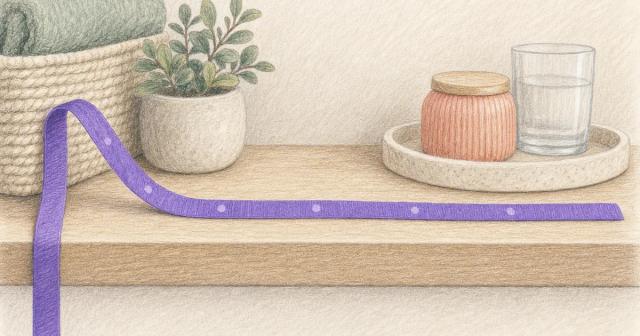
The dose climbs on purpose, slowly. Mounjaro isn't started at a full dose. The label begins everyone at 2.5 mg once weekly for the first four weeks, a starting step meant for getting used to the medication rather than for its full effect. From there it steps up by 2.5 mg at a time, with at least four weeks between increases, up to a maximum of 15 mg once weekly. The slow ramp exists to lower the chance of stomach side effects, which tend to show up most when the dose is climbing.
Loop in your care team on the two things you control. How you feel and what you're able to eat are worth regular check-ins, especially early and after each dose increase, when appetite and side effects shift most. They can adjust the plan, flag nutrients to watch, and help you eat enough to protect muscle while the fat comes off. For the eating side specifically, our guide to structuring your eating on Mounjaro lays out a practical framework. The medication does its part. These check-ins keep the rest on track.
How can you track fat loss instead of trusting the scale?
The scale can't tell fat from muscle. It shows total weight, so a drop of a few pounds could be fat, water, or lean tissue you actually want to keep. To know whether Mounjaro is doing what you want it to, you have to watch more than one number. Measurements, how your clothes fit, your strength, and your energy fill in the story the scale leaves out.
What should you track instead of the scale?
Weigh yourself if you like, but don't let it be the only signal. Take waist and hip measurements every few weeks, notice how a familiar pair of jeans fits, and pay attention to whether you're getting stronger in everyday tasks. Energy matters too. Feeling steady through the afternoon is a sign your eating is keeping up with the deficit. Together these tell you whether you're losing fat while holding on to muscle, which the scale alone can never confirm.
Signal | What it tells you |
|---|---|
Scale weight | Total change only, mixing fat, muscle, and water |
Waist and hips | Shifts in fat distribution over weeks |
How clothes fit | Real-world change the scale can miss |
Strength | Whether you're holding on to muscle |
Energy | Whether you're eating enough, not just less |

This is where tracking in one place earns its keep. In MeAgain, your weight trend sits on the same timeline as your shot days, your protein, and your strength sessions. When the line dips in a week you also logged solid protein and a couple of workouts, that's the pattern that says fat, not muscle. When the scale stalls but your measurements keep shrinking, you can see that too. The point isn't a single number on any given morning. It's watching how the pieces move together, so 'is it fat or muscle?' stops being a worry and becomes something you can actually look at.
Your care team has a simple checkpoint worth knowing. The NIH advises that if you don't lose at least 5% of your starting weight after 12 weeks on the full dose of a weight-management medication, it's worth asking whether you should keep taking it. That isn't a verdict on you. Bodies respond differently, and the conversation might mean adjusting the plan rather than stopping. It's a built-in moment to check that the medication is earning its place.
- Is more of my weight loss coming from fat than muscle?
- Should I add resistance training or more protein?
- Am I on track at my 12-week checkpoint?
- What's a realistic goal for my body, not an average?
- How will we know when I've lost enough?
Does the fat come back if you stop?
Often, yes, which is why this is framed as long-term care. In the SURMOUNT-MAINTAIN trial, adults who kept taking tirzepatide at their maximum tolerated dose held a 21.9% weight reduction at 112 weeks, while those switched to placebo tended to regain: 67% of the placebo group needed rescue therapy after their weight climbed back. The trial's authors concluded that long-term treatment is often necessary to keep both the weight reduction and its health benefits. If stopping is on your mind, that's a conversation for your care team, not a solo decision.
How much can you expect to lose?
Trial averages give a ballpark, not a promise. In SURMOUNT-2, which studied adults living with both obesity and type 2 diabetes, average weight loss over 72 weeks was 12.8% on the 10 mg dose and 14.7% on 15 mg. Your own result can land above or below that. The numbers describe a group, not any one person, and they came from a specific population studied alongside diet and lifestyle support. Read them as a reasonable range, then focus on your own trend rather than someone else's headline figure.
When should you talk to your care team about body-composition goals?
Bring specific goals to the people managing your prescription. That's their call, not an article's. If you want to protect muscle for a sport, shift where you carry weight, or set a target that fits your health history, they can weigh your labs, your dose, and your history in a way no general guide can. Averages and rules of thumb are a starting point. A plan built around you comes from your care team.
The scale is a headline; your body composition is the story. Losing fat while holding muscle is what makes a lower number actually mean something, and that comes down to protein, strength work, and giving it time. If you want the muscle side in depth, keeping muscle on Mounjaro walks through it, and if you're wondering about the timeline, how long tirzepatide takes to work sets realistic expectations. Track more than one signal, check in at the milestones, and let the pattern, not any single morning, tell you how it's going.
Related reading
- How long tirzepatide takes to work
- How semaglutide works
- How long it takes to see results from semaglutide
- Hair loss during rapid weight loss
- Whether tirzepatide affects your period
- Whether Mounjaro shows up in blood work
- Nausea when you start
- Joint pain on Mounjaro
- Whether Mounjaro makes you sleepy
- How semaglutide affects hormones
Frequently Asked Questions
Is Mounjaro approved for weight loss or just for diabetes?
Mounjaro contains tirzepatide and is approved to treat type 2 diabetes, used alongside diet and exercise. That's the label. The same medicine is sold under a different brand name for weight management. Many people are prescribed it through their care team, and any weight change is something to discuss with them. If weight loss is your main goal, ask your care team which option and label fit your situation. So if what you're really asking is does Mounjaro burn fat, the honest answer is that any weight change comes through this same medicine, under whichever label your care team recommends.
How is fat loss on Mounjaro different from losing weight on a crash diet?
The difference is what you lose, not just how fast. Very low-calorie crash diets often strip away muscle along with fat, and the weight tends to come back. On Mounjaro, a steadier drop in appetite lets you hold a gentler deficit, and pairing it with enough protein and some strength work helps keep muscle, so more of what you lose is fat. The body-composition section above has the numbers.
Will Mounjaro make me lose muscle?
Some lean-tissue loss is normal with any major weight loss, including on Mounjaro, but how much is partly in your hands. Protein at each meal and regular resistance training are the levers that keep more of the loss coming from fat. If you're worried about muscle, raise it with your care team, who can look at your protein intake and activity. The muscle section above covers the specifics.
Can I keep the fat off after I stop Mounjaro?
Weight regain after stopping is common, so plan for it with your care team. In the SURMOUNT-MAINTAIN trial, most people who switched to placebo regained the weight they'd lost, and the researchers concluded that obesity often needs long-term treatment, much like other chronic conditions. Stopping isn't a solo decision. Your care team can help you taper, maintain, or adjust in a way that protects the progress you've made.
Do I need to exercise to lose fat on Mounjaro?
You can lose weight without it, but exercise changes what you lose. The NIH is clear that weight-management medication works best as support for healthy eating and physical activity, not as a replacement. Resistance training in particular helps protect muscle, so more of the loss is fat. Even regular walking and a couple of strength sessions a week make a difference. Ask your care team what's realistic for your body.
This article is for informational purposes only and is not medical advice. Always talk to your doctor or care team about your medication, symptoms, or treatment plan.