

Key takeaways
- Skin reactions to Mounjaro fall into three groups — a local injection-site reaction, a rash elsewhere on your body, and a rare serious allergic reaction — and they're handled very differently.
- Serious hypersensitivity reactions were reported in about 3.2% of people on Mounjaro versus 1.7% on placebo, and most skin reactions are mild and settle on their own.
- A typical injection-site reaction peaks around 24-48 hours and fades within 3-5 days, and a cold compress plus an oral antihistamine usually eases it.
- Get emergency help right away if a rash comes with swelling of the face, lips, tongue, or throat, trouble breathing or swallowing, or feeling faint.
- Note the timing, location, spread, and your current dose before you contact your care team, because that's what helps them tell a harmless reaction from one that means stopping.
Table of contents
- Does Mounjaro cause a rash?
- Injection-site reaction, body rash, or allergic reaction — which one is it?
- How long should an injection-site reaction last, and how do you ease it?
- When is a rash on Mounjaro an emergency?
- What to track and tell your care team about a Mounjaro rash
Does Mounjaro cause a rash?
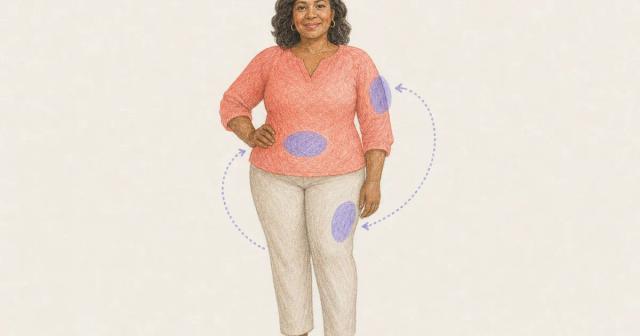
Mounjaro does cause a rash for some people, but it's uncommon, and the reactions worth telling apart fall into two groups. One is a reaction right where you give your shot. The other is a rash or hives showing up elsewhere on your body, which points more toward a sensitivity to the medication itself. Knowing which one you're looking at changes what you do next.
How often does a rash happen?
Hypersensitivity reactions were reported in about 3.2% of people on Mounjaro, compared with 1.7% on placebo in the pooled placebo-controlled trials behind the FDA label. The label names urticaria (hives) and eczema as examples and notes these were sometimes severe. In plain terms: a skin reaction beyond the injection site is uncommon, and it's a little more likely on the medication than off it, but only by a few points.
- Hives, also called urticaria, raised itchy welts
- Eczema, dry inflamed itchy patches
- Redness right at the injection site
- Itching around where you injected
- Mild swelling or a firm spot at the shot site
Most of these reactions are mild. In a pooled analysis of seven SURPASS trials published in The Journal of Clinical Endocrinology & Metabolism, the majority of hypersensitivity and injection-site reactions were nonserious and nonsevere, and most cleared up on their own. So while a rash can be unsettling to see, the odds strongly favor something minor that settles rather than a true emergency.
Do antibodies make it worse?
About half of people on tirzepatide develop anti-drug antibodies, 51.1% in the SURPASS trials analysis. That sounds alarming, but in the same analysis those antibodies didn't change how well the medication worked. More antibody-positive patients did report hypersensitivity or injection-site reactions, yet most of those reactions stayed mild either way.
Skin reactions are also a minority experience next to the side effects most people actually notice. The Mounjaro Medication Guide puts stomach effects like nausea, diarrhea, and vomiting front and center, and those are the common ones. A rash sits well down the list.
Three situations people mix up
It helps to sort a Mounjaro rash into three situations, because people constantly mix them up. There's a local reaction right at the injection site, a rash showing up elsewhere on your body, and the rare serious reaction that can't wait. They can look similar in a mirror but call for very different responses. The next section walks through how to tell them apart.
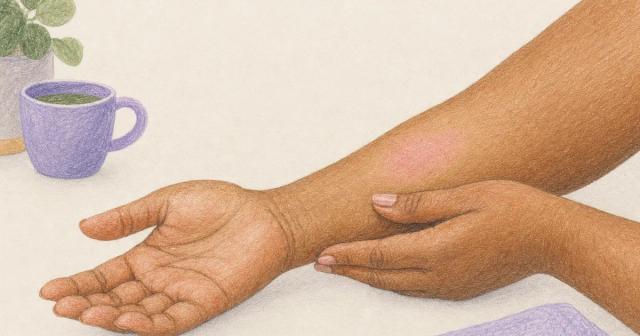
The quickest way to place your rash is location and speed. A spot that stays put where you injected is usually local, while something spreading across your body, especially fast, deserves closer attention. That single distinction drives everything below.
Injection-site reaction, body rash, or allergic reaction — which one is it?
Sorting a Mounjaro rash comes down to three things: where it is, how fast it spreads, and how soon it started. A local injection-site reaction stays put where you gave your shot. A rash elsewhere on your body means the reaction has traveled. And a serious allergic reaction adds swelling or trouble breathing on top of the rash. Those three call for three different responses.
Local injection-site reaction | Rash elsewhere on the body | Serious allergic reaction | |
|---|---|---|---|
Where it shows up | Right where you injected (abdomen, thigh, upper arm) | Beyond the site, anywhere on the body | Skin changes plus swelling or tightness |
When | Usually within hours | Any time after a dose | Often fast, minutes to hours |
What it looks like | Redness, itching, mild swelling | Hives or an itchy, spreading rash | Widespread hives, swelling, trouble breathing, faintness |
What to do | ✅ Usually eases at home | ⚠️ Same-day call to your care team | ❌ Stop Mounjaro and get emergency help |
A local injection-site reaction
A local injection-site reaction is the mildest and most common of the three. You'll see redness, itching, or a little swelling right where the needle went in, often within a few hours of your shot. It tends to settle on its own over a few days without anything special. Because it stays at the site, it isn't a sign that the medication itself is a problem for you.
A rash somewhere else
A rash that shows up away from the injection site is a different signal. This is where hives, those raised itchy welts introduced above, or a broader itchy rash can appear on your arms, chest, or back. It points more toward your body reacting to the medication than to the needle. Mayo Clinic advises telling your doctor if you've ever had an unusual or allergic reaction to this medicine, and a new spreading rash is worth that same call.
A reaction that stays where you injected is a very different thing from one that travels across your body.
How common is the whole-body kind?
The whole-body kind is uncommon. The label's overall hypersensitivity rate, covered above, was only a few points higher than placebo, so a rash spreading beyond the injection site is the exception, not the rule. That's reassuring, but uncommon isn't never, which is exactly why the spread and speed of a rash matter more than the fact that one appeared.
- It spreads beyond where you injected
- Hives or welts appear on other parts of your body
- It keeps growing instead of shrinking day to day
- It's still getting worse a day or two later
- You feel unwell or feverish alongside it
- It comes with any swelling or trouble breathing, treat that as urgent
A local reaction doesn't automatically mean you're allergic. Many people find the site bothers them less as they go, and a spot that shrinks a little each day is usually just your skin settling. The reactions that deserve real attention are the ones that spread, not the ones that stay put and fade.
How tirzepatide compares
Zooming out, tirzepatide's overall safety record is reassuring. In a FAERS real-world analysis, its safety profile looked similar to other GLP-1 medicines and was mainly characterized by stomach side effects rather than skin ones. So while a rash is possible, it isn't a standout risk of this class, and the everyday side effects people report are overwhelmingly digestive.
Most local reactions can be handled at home. If yours is the redness-and-itch kind that stays at the site, the next section covers how long it usually lasts and the simple steps that ease it, from a cold compress to an antihistamine, plus knowing when a lingering reaction is worth a call.
How long should an injection-site reaction last, and how do you ease it?
A reaction right at your injection site is usually mild and settles on its own. Per the Mounjaro label, these were uncommon in trials — injection-site reactions showed up in about 3.2% of people on Mounjaro versus 0.4% on placebo. They tend to appear soon after your shot as redness, mild swelling, or itching in that one spot, then fade over the following days. Because the reaction stays where you injected and doesn't spread, it's the mildest of the skin reactions and rarely a reason to worry.
In the first hours after a shot, a normal site reaction is local and small — a patch of redness, a little puffiness, tenderness, or an itch centered on the spot you used. It often looks slightly worse before it looks better, then quiets down over the days that follow. The features that matter are that it stays put and eases rather than grows. A reaction that spreads outward, or shows up somewhere you didn't inject, is a different situation covered in the emergency section.
- Hold a cool compress on the spot for a few minutes at a time to calm redness and itch.
- Ask your pharmacist about an over-the-counter antihistamine if the itch is bothering you.
- Leave it alone — don't scratch, squeeze, or try to drain the area.
- Keep the skin clean and dry, and skip heavy creams unless your care team suggests one.
- Wear loose clothing over the spot so nothing rubs or traps heat against it.
- Watch it for a day or two to be sure it's easing rather than spreading.
A local reaction that shrinks a little each day is doing exactly what it should.
A mild reaction only at the injection site usually isn't a reason to stop your medication. For most people it's a local, passing response rather than a true allergy, and it often eases with later shots as your skin gets used to the routine. Don't change or skip a dose on your own, though. Check in with your care team before your next shot so they can look at what you're seeing and decide whether anything needs adjusting.
Timeframe | What's usually normal | When to check in |
|---|---|---|
Right after your shot | Redness, mild swelling, or itching at the spot | ✅ Nothing needed |
The next day or two | Looks about the same, or slightly puffier | ✅ Keep an eye on it |
Over the following days | Redness and swelling gradually fade | ✅ Expected — it's resolving |
More than a week out | Still red, growing, painful, or oozing | ⚠️ Call your care team |
Good injection technique keeps irritation to a minimum. The Mounjaro label says to inject under the skin of the abdomen, thigh, or the back of the upper arm, and to rotate injection sites with each dose. Spreading your shots around means no single patch of skin takes every weekly injection, which gives each spot time to recover. If you use insulin too, the label notes it's fine to use the same body region, just not right next to your Mounjaro injection.
- Use only the approved areas — the abdomen, thigh, or the back of the upper arm.
- Rotate to a different site with each weekly dose.
- Use a new needle and syringe for every injection.
- If you inject insulin too, keep it in a separate spot, not right beside your shot.
- Avoid landing on the exact same patch of skin two weeks running.

A local reaction should ease, not escalate. If the redness starts spreading outward, the skin oozes or forms pus, you notice red streaks moving away from the site, or a fever sets in, those point to something more than ordinary irritation and deserve a same-day call to your care team. The same goes for a reaction that's still there, or getting worse, more than a week after your shot. You don't have to pin down the cause yourself — that's what the call is for.

Related reading
When is a rash on Mounjaro an emergency?
A rash on Mounjaro is an emergency when it comes with swelling, trouble breathing, or feeling faint. That combination can signal a severe allergic reaction — the one skin situation you don't wait on. Reactions this serious are rare. But because they can move fast, it's worth knowing the signs before you ever need them, so you can act without second-guessing.
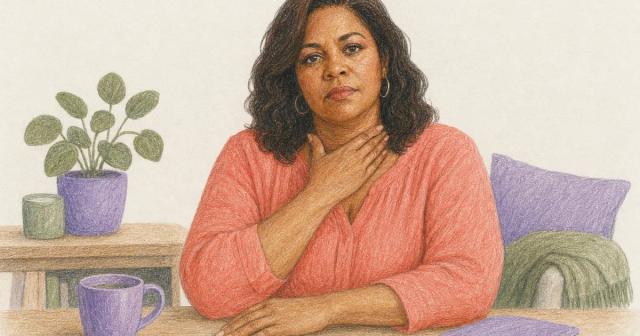
The Mounjaro label warns that serious allergic reactions — anaphylaxis and angioedema — have been reported. Anaphylaxis is a severe, whole-body allergic reaction; angioedema is deep swelling beneath the skin, often around the face, lips, tongue, or throat. The signs to treat as an emergency are swelling of the face, lips, tongue, or throat, trouble breathing or swallowing, a severe or fast-spreading rash or hives, feeling faint or dizzy, or a suddenly racing heart.
- Swelling of the throat or tongue, or a tight feeling in your throat.
- Trouble breathing or trouble swallowing.
- A severe rash or hives spreading quickly across your body.
- Feeling faint, dizzy, or like you might pass out.
- A suddenly pounding or racing heartbeat.
If a rash comes with swelling or trouble breathing, stop and get emergency help — the details can wait.
Sign | How urgent | What to do |
|---|---|---|
Redness or itching only at the injection site | ✅ Usually mild | Home care; mention it at your next visit |
A rash or hives spreading beyond the site, breathing fine | ⚠️ Same-day | Call your care team today |
Swelling of face, lips, tongue, or throat; trouble breathing; faintness | ❌ Emergency | Get emergency care right away |
What does the label itself say to do? If a serious hypersensitivity reaction is suspected, the Mounjaro prescribing information says to stop the medication, get medical care promptly, and stay monitored until the signs and symptoms resolve. It also notes that anyone who has already had a serious allergic reaction to tirzepatide shouldn't use it again. In practice, that means a severe reaction ends your Mounjaro that day and becomes a conversation with your care team about what comes next.

Not every worrying sign is a 911 call — some warrant a same-day one instead. Cleveland Clinic's guidance for tirzepatide is plain: tell your care team if your symptoms don't start to get better, or if they get worse. For a skin reaction, that means an itchy rash or spreading hives without any breathing trouble or facial swelling is worth a same-day message, not a wait-and-see. Anything touching your breathing, throat, or widespread swelling belongs in the emergency category above.
A spreading rash without breathing trouble still deserves attention — just not a 911 call. If hives or an itchy rash are moving beyond the injection site but you're breathing fine, your throat feels normal, and there's no facial swelling, that's a same-day call to your care team. They can decide whether it's worth pausing your medication or changing your approach. If your breathing or throat ever change, the emergency signs above take over.

Serious allergic reactions to Mounjaro are uncommon, and most skin changes people notice are the milder kind that settle down. Still, the rare severe reaction is the reason to know the signs cold. If something does flare, the most useful thing you can do — beyond getting the right level of care — is write down what you saw and when. That record is exactly what helps your care team tell a harmless reaction from one that means stopping, which the next section walks through.
What to track and tell your care team about a Mounjaro rash
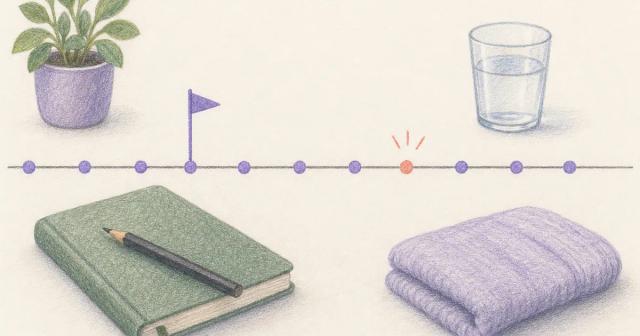
The four things worth writing down about a Mounjaro rash are when it started relative to your shot, where it showed up, whether it spread, and which dose you were on. Those four details turn a worried guess into something your care team can actually read. A skin reaction to a medication follows a timeline, so the clock matters as much as the rash itself.
- Date and time it appeared, and how many days that was after your last shot
- Where on your body it started
- Whether it stayed put or spread beyond that one spot
- Rough size, using a coin or your palm as a scale
- A clear photo in good light, retaken each day
- Any other symptoms, like itching, swelling, or feeling unwell
- Your current dose and how long you have been on it
Why the timing matters
Timing is one of the clearest clues you can hand over. A drug-related skin reaction is judged mainly on how soon it shows up after you start, so the gap between your shot and the rash tells your care team a lot. A reaction right at the injection site usually appears within hours and stays limited to where you injected. A broader hypersensitivity reaction can turn up days to weeks after starting, and may bring generalized itching or an itchy, hive-like rash.
The rash-elsewhere kind is the one to watch the clock on. Because a hypersensitivity reaction can surface anywhere from a day to a few weeks in, an itchy rash that spreads away from your shot site is worth noting the moment it changes. A tirzepatide reaction can also keep enlarging over several days before it settles, so a rash that is still growing deserves a fresh note each day. And a fast-spreading rash, or one with any swelling or trouble breathing, needs attention right away, not a wait-and-see.
Here is where your own log does the work. If you track your shots in MeAgain, a rash note sits right on top of your shot-day timeline and your dose steps. You can see at a glance that the rash showed up three days after a Tuesday shot, or right after a dose increase, without reconstructing it from memory. When you open that timeline for your care team, the pattern they need is already lined up. No screenshots of a calendar, no guessing at dates.
When a reaction settles, and when it doesn't
Most local reactions settle on their own. A sore or itchy spot right where you injected often fades over a few days, and a tirzepatide rash can return to normal within a month once the medication is stopped. A serious hypersensitivity reaction is different. The Mounjaro label is direct about it: if one occurs, stop the medication and get medical care promptly. Whether a reaction means pausing treatment is a call your care team makes, not one to make alone.
Zoom out and the overall picture is reassuring. Cutaneous side effects, mostly injection-site reactions, are common but usually mild and manageable, while hypersensitivity and severe allergic reactions stay rare. Rare does not mean impossible, which is exactly why the warning signs are worth knowing. For most people, a skin reaction to Mounjaro is a minor, short-lived nuisance rather than a reason for alarm.
Bringing it to your care team
Bring the whole story, not just the rash. Your log, your photos, your dose history, and the timing are what let your care team tell a harmless local reaction from one that matters. It helps to know a rash can show up even if you never reacted to another GLP-1 before, so a new reaction is worth mentioning rather than dismissing. Expect questions about when it started, whether it spread, and how you have been feeling otherwise.

The calm next step is simple. Write down the timing, location, spread, and dose, take a photo, and bring it to your care team. If anything about the rash comes with swelling or trouble breathing, that is an emergency, not a note for later. Between now and then, rotating your injection sites with each dose and using the technique your care team showed you keeps site irritation to a minimum.
Related reading
- Feeling more tired than usual
- How long Mounjaro takes to curb your appetite
- How long tirzepatide takes to work
- Whether Mounjaro shows up in blood work
- Changes to your period
- Anxiety
- Acid reflux
- How GLP-1 supports weight loss
- How tirzepatide burns fat
- Whether semaglutide causes hair loss
Frequently Asked Questions
Can I keep taking Mounjaro if I only have a mild rash at the injection site?
A mild reaction only where you injected, redness or itching that eases over a few days, usually is not on its own a reason to stop, and these local reactions tend to be self-limiting. Still, whether to take your next dose is a decision for your care team, not something to settle from an article. Call them before your next shot if it is spreading, worsening, or comes with any swelling or trouble breathing.
Can I take an antihistamine for Mounjaro injection-site itching?
For a mild local reaction, an oral antihistamine is one of the options often used for the itch, alongside a cold compress or a topical corticosteroid. Because antihistamines can interact with other medications, ask your pharmacist or care team which one fits you and how to use it. If the itching comes with swelling of the lips, tongue, or throat, skip the antihistamine question and get emergency help.
What should I do if my injection-site reaction gets worse after 48 hours?
A local reaction that fades a little each day is doing what it should. One that keeps growing, spreads well beyond the injection site, or is still worsening after a couple of days is worth a same-day call to your care team. A tirzepatide reaction can keep enlarging for several days before it settles, so worsening past that window deserves a check-in. A rash paired with swelling or trouble breathing is an emergency, so get help right away rather than waiting it out.
Will the rash come back with every shot, and does that mean I'm allergic?
Mounjaro can cause a rash for some people, and a reaction can even show up in someone who never reacted to another GLP-1 medication before. A local spot that settles between shots is not automatically a true allergy. A rash that returns or worsens with each dose, though, is worth reporting, because your care team may want to separate a simple site reaction from a genuine hypersensitivity. Track whether it repeats, and tell them.
How should I care for the injection site day to day while a reaction settles?
Keep it simple. A cold compress for the itch and swelling, an antihistamine or topical corticosteroid if your care team suggests one, and time. Rotating your injection sites with each weekly dose and using correct technique gives the last spot room to recover and lowers the odds of the next one flaring. Watch it for a day or two, and if it spreads or worsens instead of fading, check in.
This article is for informational purposes only and is not medical advice. Always talk to your doctor or care team about your medication, symptoms, or treatment plan.