

Starting Zepbound raises an immediate and practical question: how much weight can realistically be lost in the first three months? Clinical trials offer a useful baseline, but individual results vary based on dosage progression, lifestyle habits, and how consistently the medication is used. Understanding what drives those differences helps set grounded expectations and makes it easier to stay on track when progress feels slow.
Tracking patterns in appetite, activity, and weekly weight changes gives a clearer picture of whether results are on course and what adjustments might help. For those using Zepbound, the GLP-1 app from MeAgain brings that data together in one place, making it easier to monitor progress and stay consistent through every stage of the journey.
Table of Contents
- How Much Weight Can You Lose on Zepbound in 3 Months?
- Why Your 3-Month Zepbound Weight Loss May Be Higher or Lower Than Average
- How to Tell If Your Zepbound Progress Is on Track After 3 Months
- Your 3-Month Zepbound Results Depend on More Than the Scale
Summary
- Clinical trials provide a range for three-month Zepbound outcomes, not a single benchmark. Based on analysis of tirzepatide data, most participants lost approximately 5 to 10% of body weight during the first three months, which translates to roughly 10 to 20 pounds for someone starting at 200 pounds. The SURMOUNT-1 trial reported up to 20.9% body weight loss over 72 weeks on the highest dose, but those are long-term results from sustained treatment, not a figure that scales down cleanly to week 12.
- Dose escalation significantly shapes early results, and two people who have both been on Zepbound for 12 weeks may have had very different pharmacological exposure. The FDA prescribing schedule starts at 2.5 mg for tolerability, not therapeutic effect, then increases in four-week intervals through 5 mg, 7.5 mg, and beyond. Someone who escalated smoothly is at 7.5 mg by week 12, while someone who needed extra time at each step due to side effects may still be at 5 mg. Same calendar time, meaningfully different outcomes.
- Starting weight determines how much the scale moves even when percentage-based progress is identical. A 10% reduction equals 20 pounds for someone starting at 200 pounds but 30 pounds for someone starting at 300 pounds. Fixating on a pound target rather than a percentage change misrepresents how the medication is actually performing relative to an individual's baseline.
- Tirzepatide reduces appetite and slows gastric emptying, but it does not automatically create a calorie deficit. Dietary patterns, activity levels, and food choices still determine the outcome. Side effects like nausea and fatigue during dose escalations can temporarily reduce intake, but weight lost during those periods may reflect fluid shifts rather than the sustained fat loss that comes from consistent appetite regulation at a stable dose.
- A clinically meaningful benchmark at 12 weeks is 5% of body weight lost, according to Fella Health, but that figure is a reference point for a conversation with a prescriber, not a pass-or-fail threshold. In the SURMOUNT-1 trial, 85.1% of participants on the 15 mg dose achieved at least 5% weight loss, though most had reached higher doses by the three-month mark. Participants who had not yet escalated to therapeutic doses are not directly comparable to those trial outcomes.
- Non-scale markers carry real weight in evaluating three-month progress. Blood pressure changes, how clothing fits, energy levels, and appetite shifts throughout the day all reflect how the body is responding to treatment, even when the scale is temporarily flat. Tracking these alongside dose history, protein intake, and side effects gives a more complete picture of whether the treatment is working.
- MeAgain's GLP-1 app addresses this by consolidating dose history, weight trends, nutrition, side effects, and non-scale markers in one place, so the connections between habits and results become visible rather than scattered across notes apps and memory.
How Much Weight Can You Lose on Zepbound in 3 Months?
If you've been taking Zepbound for three months, you probably want to know how much weight you should have lost. The honest answer is that clinical evidence gives us a range, not a guarantee: understanding why that range exists matters more than chasing a single number.
"Clinical trials show that weight loss results on GLP-1 medications vary significantly from person to person, making individual comparisons misleading at best." — Clinical Research Review

Many people assume Zepbound should produce predictable, month-by-month weight loss comparable to others' results. This assumption leads to discouragement when the scale moves slower than expected, making the medication feel like it's failing — when it isn't.
Factor | Impact on Results |
|---|---|
Starting weight | Higher starting weight often means faster early loss |
Dosage level | Higher doses (5mg → 10mg → 15mg) typically increase results |
Metabolic rate | Varies significantly between individuals |
Lifestyle habits | Diet and exercise can amplify or limit outcomes |
What does clinical trial data actually show at three months?
Clinical trials don't support a single "normal" three-month outcome. The pivotal SURMOUNT-1 trial, which tested tirzepatide at 5 mg, 10 mg, and 15 mg weekly doses against placebo, measured outcomes at 72 weeks. Participants lost between 16% and 22.5% of their body weight depending on dose—these are long-term results, not a three-month benchmark you can divide and apply to week 12.
Why does the starting dose limit early weight loss results?
The first four weeks of Zepbound treatment use the 2.5 mg starting dose, which the FDA prescribing information establishes for tolerability rather than maximum effect. The body is adjusting and has not yet reached full therapeutic capacity. Expecting 72-week results by week 12 is like judging a marathon runner's pace by their first mile.
What does the evidence actually show about early progress?
According to Doctronic's analysis of tirzepatide outcomes, participants lost 5 to 10% of body weight in the first three months on Zepbound: roughly 10 to 20 pounds for someone starting at 200 pounds. This range reflects differences in dose stage, starting weight, and individual response. Doctors prescribing Zepbound regularly observe similar patterns, with many patients losing 5 to 8% of their starting weight by week 12 as the dose increases through the 5 mg and 7.5 mg levels.
Why can't long-term trial results be back-calculated to 12 weeks?
Ro's review of Zepbound clinical data notes that participants in the SURMOUNT-1 trial lost up to 20.9% of their body weight over 72 weeks on the highest dose of tirzepatide. This outcome reflects sustained treatment at the maintenance dose over more than a year, not a projection that can be back-calculated into a 12-week figure without distorting the data.
Why comparing your results to someone else's is a trap
The failure point is the comparison itself. Consider five people who started Zepbound simultaneously. Person A weighs 280 pounds and remains on 2.5 mg. Person B reached 5 mg in week five and is losing steadily. Person C experienced significant nausea in month one, which slowed their calorie deficit. Person D showed a slower early response but accelerated noticeably after hitting 7.5 mg. Person E has strong appetite suppression but hasn't built consistent eating habits around it. All five are "on Zepbound for three months." None of their results will match. Comparing week-12 numbers across people at different dose stages is like comparing test scores from students who took entirely different versions of the exam.
Why does tracking the right data points change what you can see?
Most people track their Zepbound progress like any diet: weight on the scale and a rough sense of what they've eaten. But the factors that shape three-month results—dose timing, side effect patterns, protein intake, and injection consistency—scatter across notes apps, memory, and guesswork. Our GLP-1 app brings those data points into one place, making patterns visible rather than invisible. When you see how a dose change affected your appetite the following week or how nausea matched slower loss, you're no longer guessing.
What is the right question to ask when the scale stalls?
When the scale hasn't moved as quickly as expected, the question isn't automatically "Is Zepbound failing?" The more useful question is: "Am I evaluating the medication on the right timeline, at the right dose stage, with enough context to interpret what I'm seeing?" To interpret your three-month results correctly, you must understand what happens during those first 12 weeks and why the dose you're taking at any given point changes the trajectory entirely.
Related Reading
- Zepbound Long Term Side Effects
- Does Zepbound Make You Sleepy
- Zepbound Not Working
- Do You Have To Take Zepbound Forever
- Why Am I Still Hungry On Zepbound
- How Many Calories Should I Eat On Zepbound
- What to Expect After First Dose of Zepbound
- Does Zepbound Give You Energy
- Does Zepbound Cause Hair Loss
Why Your 3-Month Zepbound Weight Loss May Be Higher or Lower Than Average
Two people taking Zepbound for 12 weeks may have completely different medication experiences because the dose changes how the drug works in your body each week.
"Two people on the same medication for the same 12 weeks can experience vastly different outcomes — because dosage, biology, and lifestyle all shift the results." — Zepbound Clinical Insight
Factor | Impact on Weight Loss |
|---|---|
Starting dose | Lower doses = slower initial results |
Titration schedule | Faster increases = more rapid early loss |
Individual metabolism | Affects how efficiently the drug works |
Lifestyle habits | Diet and exercise amplify or limit outcomes |
Biological response | Some bodies respond more sensitively to GLP-1 |

What dose escalation really means for your results
Zepbound's FDA-approved prescribing information outlines a structured escalation schedule: patients begin at 2.5 mg for four weeks, then increase to 5 mg, 7.5 mg, and higher in four-week intervals toward maintenance doses of 10 mg, 12.5 mg, or 15 mg. The 2.5 mg starting dose exists for tolerability, not therapeutic effect. At week 12, someone who escalated smoothly is at 7.5 mg, while someone who needed extra time at each step due to side effects may still be at 5 mg: same calendar time, meaningfully different pharmacological exposure.
Why is comparing results without knowing dose stage misleading?
This is the design working as intended. Comparing your 12-week result to someone else's without accounting for dose stage is like comparing two runners' mile times when one ran the whole course, and the other spent the first half walking to warm up.
Why your starting weight shapes the number on the scale
Clinical trials report outcomes as a percentage of baseline body weight, not a universal pound target. According to the Noom Blog's analysis of Zepbound results, individual outcomes vary significantly, with some people losing as little as 5% while others lose more than 25% of their body weight. A 10% reduction equals 20 lb for someone starting at 200 lb, but 30 lb for someone starting at 300 lb. Neither person is performing better or worse; they're both tracking the same percentage from different starting points. Percentage-based thinking gives you a more honest picture of how your body is responding to the medication than focusing on a specific pound target.
Appetite suppression is a mechanism, not a guarantee
Tirzepatide works by activating both GLP-1 and GIP receptors, reducing appetite, slowing gastric emptying, and lowering overall food intake. This makes a calorie deficit easier to sustain, but doesn't create one automatically. Your eating habits, physical activity level, and energy intake relative to your body's needs still determine the outcome.
How do side effects interfere with real weight loss progress?
Side effects complicate matters further. Nausea, tiredness, and appetite suppression commonly occur when the dose increases. While these may temporarily reduce food intake, they are not a reliable weight-loss mechanism. Weight lost during periods of severe side effects may reflect fluid shifts or reduced caloric intake rather than genuine fat loss from sustained appetite suppression at a stable dose.
How does tracking multiple variables help you read the data correctly?
Most people track their weekly injection and weight, but rarely connect both to their food intake or how side effects affected their appetite. A GLP-1 app like MeAgain lets users log dose changes, food intake, protein targets, and side effects in one place, making connections between variables visible. When you see that a rough week on the scale coincided with a dose increase and three days of nausea, you stop interpreting that as failure and start reading it as data.
How adherence quietly shapes your trajectory
Missed doses, delayed escalations, and treatment interruptions reduce medication effectiveness in ways that don't show up on a calendar. According to the Noom Blog's review of Zepbound outcomes, clinical trial participants lost approximately 5 to 6% of their body weight on average at the 12-week mark. Those participants, however, were in a controlled setting with consistent dosing. Real-world adherence is messier. Other medications, underlying conditions like thyroid disorders or insulin resistance, and chronic stress can blunt results independent of dosing consistency. The SURMOUNT-1 trial, which enrolled over 2,500 participants across 72 weeks, showed maximum weight loss outcomes of up to 20.9% at the highest dose with therapeutic-level sustained, consistent dosing.
A slower start is not a signal to stop
A slower three-month result doesn't mean Zepbound isn't working. Early weight loss includes fluid shifts and dietary changes that don't reflect sustained fat loss. As your body weight decreases, energy requirements change: the eating patterns that produced results in month one may slow by month three because your body has adapted, not because the medication stopped working. Weight loss on Zepbound is not linear, and trial averages represent populations, not your individual trajectory. The more useful question is whether progress moves in the right direction over time.
Related Reading
- How Long Do Zepbound Side Effects Last
- Where to Inject Zepbound for Best Results
- Does Zepbound Make You Pee More
- How Long Does It Take For Zepbound To Work
- How Long Does It Take For Zepbound To Suppress Appetite
- Zepbound Nausea Relief
- Zepbound Injection Site Reaction
- Zepbound Constipation Relief
- Zepbound Muscle Loss
- How Much Weight Can You Lose On Zepbound In 3 Months
How to Tell If Your Zepbound Progress Is on Track After 3 Months
After three months, focus on whether your treatment is producing a meaningful trend and whether anything is blocking progress — not on comparing yourself to trial averages or others' transformations. The question at this stage is about trajectory, not absolute numbers. Starting dose, metabolic response, and lifestyle habits all shape how your results unfold, making direct comparisons misleading.
"The most important signal at 3 months isn't how much you've lost — it's whether your trend line is moving in the right direction." — Clinical weight management principle

Ask "Is my trajectory moving in the right direction, and do I understand why?" rather than "Did I lose enough?" According to Fella Health, a clinically meaningful benchmark is 5% of body weight lost by 12 weeks — but that's a reference point for talking with your prescriber, not a solo pass-or-fail threshold. Understanding the why behind your numbers is essential to making informed decisions going forward.
Evaluation Factor | What to Assess | Who to Involve |
|---|---|---|
Weight trend | Consistent directional movement over 4+ weeks | Self-monitoring + prescriber |
5% benchmark | 5% body weight lost by week 12 | Prescriber conversation |
Progress blockers | Medication dose, diet, sleep, stress | Care team review |
Trajectory understanding | Why results are or aren't happening | Prescriber + health coach |
If your weight is trending down and you're tolerating treatment
When the trend is moving in the right direction, stay consistent. Follow your prescribed dosing schedule and don't increase the dose independently. Weight fluctuates daily based on water intake, digestion, and hormonal shifts, so a flat week within a downward trend is noise, not a real signal. Keep your nutrition habits steady, prioritize protein to protect lean mass, and let the pattern build over time.
If you've lost little or no weight after 3 months
A limited response after three months warrants reviewing the full picture with your prescriber, not proof that Zepbound has failed. Work through this checklist honestly: Are you still on the starter dose without progressing to a higher one? Have you missed doses or experienced treatment interruptions? Has your appetite changed, or are food choices similar to before? Are other medications or underlying conditions affecting your weight? Are side effects limiting your nutrition or activity levels? Is the scale genuinely flat across several weeks, or are you reacting to a single reading?
Why does your dose history change what three months actually means?
Each variable can meaningfully change your three-month outcome, and most are fixable. The SURMOUNT-1 trial found that 85.1% of participants on the 15 mg dose achieved at least 5% weight loss, though most had reached higher doses by three months. If you haven't, your results aren't comparable yet.
How can tracking your full picture help at the three-month review?
Most people track weight in a notes app or generic fitness tracker. That works until you can't remember when you last changed doses, whether nausea started before or after a stall, or how your protein intake shifted during a rough week. Our GLP-1 app keeps dose history, side effects, nutrition, and weight trends in one place, so when you sit down with your prescriber at three months, you bring a complete picture instead of a rough estimate.
If you've lost weight quickly
Quick early changes warrant attention, not celebration. Big early weight drops often include fluid shifts, not fat loss alone. Rapid weight loss can raise questions about whether you're consuming enough to preserve muscle and support daily bodily functions. If your weight loss feels substantial or unexpected, mention it to your doctor at your next visit. Your prescriber can assess whether your rate of change aligns with your starting point, dose, and overall health.
The 3-month Zepbound progress checklist
Bring this record to your next appointment. It gives your prescriber the information needed to make sound decisions and gives you a clearer view of what's causing your results.
What should you track over three months?
Keep track of your starting weight and current weight with the percentage change. Write down your current dose and every dose change since you began, including any missed doses or times you stopped treatment. Record how your appetite has changed week to week, your average daily protein and fiber intake, and changes in physical activity. Document side effects that affected eating or movement. Measure waist circumference if relevant. Pay attention to how your clothing fits—that feedback is real even when the scale is stubborn.
Why do non-scale measures matter more than expected?
Non-scale measures often matter more than expected. Users who track blood pressure improvements, how old clothes fit, or daily energy levels frequently find their treatment working in ways the scale doesn't capture. Include these markers in your record. The pattern you build over three months tells a story no single weigh-in can reveal.
Related Reading
Your 3-Month Zepbound Results Depend on More Than the Scale
That pattern you've been building—tracking protein alongside dose changes, logging energy shifts when the scale holds flat—shows whether your treatment is working. Most people manage this across sticky notes, phone screenshots, and memory, so the picture stays blurry because the pieces never live in the same place.

"The relationships between your habits and results only become visible when your data lives in one place—not scattered across different apps." — MeAgain
A GLP-1 app built specifically for this journey changes things. Our MeAgain app tracks your weight, protein, fiber, water, and injection history together, so you can see the relationships between your habits and results over time—not just isolated data points scattered across different apps.
What You're Tracking | Why It Matters |
|---|---|
Weight | Monitors progress trends over time |
Protein | Supports muscle retention during fat loss |
Fiber | Aids digestion and satiety on Zepbound |
Water | Critical for managing GLP-1 side effects |
Injection History | Connects dose changes to results |
Download MeAgain and set up your GLP-1 game plan in under 5 minutes. Log your weight and create your Journey Card, then track daily habits that support your Zepbound progress: protein, fiber, water, and exercise. Your capybara converts those behaviors into simple goals you can check off each day, building consistency toward your 3-month target.
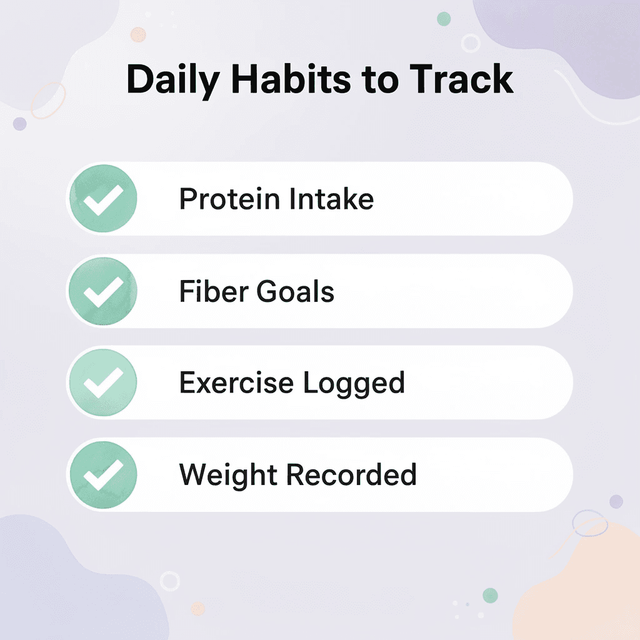
You can't control exactly how much weight you'll lose on Zepbound. But you can control the habits that support your treatment: MeAgain gives you a simple, consistent way to stay on track.