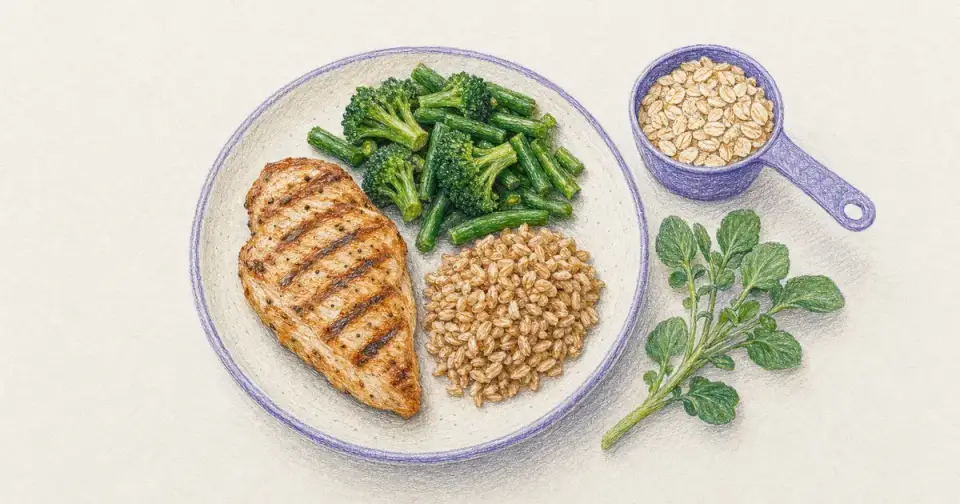

Starting Zepbound raises an immediate and practical question: how many calories should I eat on Zepbound to lose fat without feeling depleted or sacrificing muscle? The answer depends on individual factors such as body weight, activity level, and the medication's effect on appetite. Getting the calorie target wrong can stall progress or make the process unnecessarily difficult, so understanding the right approach from the start matters.
Zepbound typically reduces hunger significantly, which makes it tempting to eat far too little. A well-structured calorie deficit should support steady fat loss while preserving lean mass and maintaining stable energy levels. For personalized guidance on setting the right target based on individual goals and on how the medication affects intake, the GLP-1 app from MeAgain offers a clear, practical starting point.
Table of Contents
- Why Does Your Calorie Intake Matter While Taking Zepbound?
- How Many Calories Should I Eat on Zepbound
- How Can You Eat Well (and Feel Great) on Zepbound?
- Calculate Your Personal Zepbound Calorie Target in Under 2 Minutes
Summary
- Zepbound suppresses appetite but does not reduce the body's biological demand for protein, vitamins, and minerals. Eating too little in response to reduced hunger can trigger muscle breakdown, metabolic slowdown, and deficiencies in nutrients like iron, B12, and vitamin D. Clinical trials paired tirzepatide with a 500-calorie-per-day deficit rather than severe restriction specifically because moderate deficits protect lean tissue while still driving meaningful fat loss.
- Calorie targets on Zepbound are individual calculations, not universal numbers. Most women fall in the range of 1,200 to 1,500 calories per day during active weight loss, while most men start between 1,500 and 1,800 calories, but activity level alone can shift a target by 300 to 500 calories. A 500- to 750-calorie daily deficit below Total Daily Energy Expenditure is the recommended range for steady, sustainable loss consistent with AHA/ACC/TOS obesity management guidelines.
- Protein intake is the variable that most directly determines whether weight loss comes from fat or lean muscle. Preserving muscle during a calorie deficit requires 1.0 to 1.6 grams of protein per kilogram of body weight per day, distributed across meals at roughly 20 to 30 grams per sitting. This target becomes harder to hit on Zepbound because appetite suppression reduces total food volume, making every meal choice more consequential.
- Calorie needs shift throughout treatment in ways that catch many people off guard. For roughly every 10 pounds lost, daily calorie needs may decrease by 50 to 100 calories as the body requires less energy to function at a lower weight. Clinical guidance recommends recalibrating calorie targets every 10 to 15 pounds lost or every 8 to 12 weeks to keep the deficit real rather than theoretical.
- Minimum safe intake floors exist for a reason. Very low-calorie diets below 800 calories per day require close medical supervision due to the risks of nutritional deficiencies and lean tissue loss, and the minimum safe intake for unsupervised weight loss is set at 1,200 calories per day for women and 1,500 calories per day for men. Losing more than two to three pounds per week after the first month is a signal to slightly increase intake, not a result to celebrate, because rapid loss at that rate accelerates muscle breakdown.
- Dietary quality matters as much as calorie quantity when total food volume is reduced. Eating at least 25 to 38 grams of fiber per day supports digestive health during treatment, and building meals around leafy greens, beans, oats, and whole fruits makes that target more achievable than tracking it as an afterthought. Processed, calorie-dense foods not only crowd out nutrients but can also worsen the nausea and bloating that are already common during Zepbound treatment.
- MeAgain's GLP-1 app addresses this by connecting daily calorie intake to protein goals, fiber, hydration, dose timing, and weight trends in one place, so users are tracking the full picture rather than a single number in isolation.
Why Does Your Calorie Intake Matter While Taking Zepbound?
Many people assume that because Zepbound suppresses appetite, they should eat as little as possible to maximize weight loss. But Zepbound controls appetite signals, not your body's biological need for protein, vitamins, minerals, and energy. Those nutritional needs don't diminish with your hunger.
"Zepbound controls appetite signals — not your body's biological need for protein, vitamins, minerals, and energy. Those needs don't get smaller with your hunger."

Most People Think Eating Less Is the Fastest Way to Lose More Weight on Zepbound. It Isn't.
One of the biggest misconceptions about Zepbound is that the medication works better when you eat fewer calories. Many people believe that once hunger disappears, eating as little as possible will accelerate weight loss.
Why does severe calorie restriction backfire on Zepbound?
Low-calorie intake feels productive in the short term but becomes destructive over months. When your body lacks sufficient fuel, it breaks down muscle tissue for energy, slows your resting metabolism, and leaves you tired and struggling to recover from exercise. Nutritional deficiencies compound this problem, particularly in iron, B12, and vitamin D.
Guidelines from the American Heart Association, the American College of Cardiology, and The Obesity Society recommend a moderate caloric deficit rather than severe restriction to support sustainable weight loss and preserve lean mass. In the phase 3 SURMOUNT-1 trial published in the New England Journal of Medicine, participants taking tirzepatide followed a reduced-calorie diet of approximately 500 calories below their daily energy needs with increased physical activity. The study produced an average weight loss of up to 20.9% over 72 weeks, demonstrating that substantial results were achieved with a moderate calorie deficit rather than starvation.
What does eating right on Zepbound actually look like?
The critical difference is between eating less and eating right. Processed, calorie-dense foods crowd out nutrients and can interfere with the effectiveness of Zepbound in supporting weight loss. Since Zepbound slows digestion and decreases appetite, poor food choices increase your vulnerability to nutrient gaps. With a smaller total volume, each meal must deliver protein, fiber, and micronutrients rather than empty calories.
Why do most people on Zepbound fall short on protein without knowing it?
Protein is where most people in Zepbound fall short, often without realizing it. Medical News Today reports that maintaining muscle mass during weight loss requires 1.2 to 1.6 grams of protein per kilogram of body weight per day, a target that becomes difficult to meet when appetite suppression reduces total intake. Most people tracking calories in a generic app see a green checkmark but are under on protein, over on processed carbohydrates, and don't see the gap. Portion control matters as a precision tool when every gram counts.
How do calorie needs change as you lose weight on Zepbound?
Your calorie needs change as you lose weight while taking Zepbound. Your basal metabolic rate drops because a smaller body requires less energy. For every 10 pounds lost, your daily calorie needs may decrease by 50 to 100 calories. This means the calorie deficit that worked in month two may become your maintenance level by month six. Recalculate your targets every 10 to 15 pounds, or every 8 to 12 weeks, to maintain an actual deficit.
Why does tracking calories in context matter more than the number alone?
Most people track calories without connecting them to dosing timing, protein goals, side-effect patterns, or weekly body responses. Our MeAgain GLP-1 app fills this gap, letting you see calories alongside protein intake, fiber, hydration, dose day, and weight trends in one place. On Zepbound, a calorie number lacks context without this data. If weight loss stalls for more than three to four weeks despite hitting your targets, consult your provider before cutting calories further—the plateau may signal a need for a dose adjustment or metabolic adaptation, not undereating. Once you understand why calorie intake matters, the next question becomes the one that changes your results.
Related Reading
- Zepbound Long Term Side Effects
- Does Zepbound Make You Sleepy
- Zepbound Not Working
- Zepbound Long-Term Side Effects
- Do You Have To Take Zepbound Forever
How Many Calories Should I Eat on Zepbound
Your calorie target depends on your body composition, activity level, and daily energy expenditure—not a generic internet formula.
"Your calorie target is uniquely yours—shaped by body composition, activity level, and daily energy expenditure, not a generic formula."
What is your personal calorie target built from?
Your Total Daily Energy Expenditure (TDEE)—the total fuel your body burns in 24 hours—is the foundation. A registered dietitian nutritionist (RDN) can calculate this using the Mifflin-St Jeor formula, which factors in height, weight, age, and biological sex, then multiplies by activity level. From that number, a deficit is created. According to FormBlends, a 500- to 750-calorie daily deficit below TDEE is recommended for steady, sustainable weight loss on tirzepatide, consistent with AHA/ACC/TOS obesity management guidelines targeting one to two pounds of loss per week.
This approach produces practical ranges: 1,200 to 1,500 calories per day for most women and 1,500 to 1,800 calories per day for most men during active weight loss. These are anchors, not ceilings. A woman who strength trains five days a week at 220 pounds has a different TDEE than a sedentary woman at 160 pounds, even at the same height and age. Activity level alone can shift a calorie target by 300 to 500 calories—the difference between losing muscle and preserving it.
Why does eating too little on Zepbound backfire?
A pattern among people on Zepbound: appetite suppression makes under-eating feel like discipline. Eating 900 calories can feel reasonable when hunger is absent. It isn't. Too few calories trigger adaptive metabolic responses, including reduced energy expenditure and hormonal shifts that intensify hunger after treatment ends. FormBlends reports that the minimum safe intake is 1,200 calories per day for women and 1,500 for men, with diets below 800 calories requiring close medical supervision due to risks of nutritional deficiencies and lean tissue loss.
How often should you recalibrate your calorie target as you lose weight?
Most people set a calorie target once and never adjust it. As body weight decreases, basal metabolic rate drops by about 50 to 100 calories for every 10 pounds lost, making your original deficit inaccurate. Clinical guidance recommends recalibrating every 10 to 15 pounds lost or every 8 to 12 weeks, whichever comes first. If you're losing more than two to three pounds per week after the first month, increase intake slightly, as rapid loss at that rate speeds up lean tissue breakdown.
How does protein intake determine whether you lose fat or muscle?
Protein intake is the biggest factor in determining whether weight loss comes from fat or muscle. When you eat fewer calories, your body breaks down lean tissue without adequate protein. Aim for 1.0 to 1.5 grams per kilogram of your ideal body weight daily, distributed across meals of about 20 to 30 grams each. This matters more with Zepbound because smaller portions mean each gram of protein counts. Our GLP-1 app tracks protein, fiber, water, dose timing, and calories in one place, bringing all the information you need together.
When does your calorie target need to change?
Calorie needs change with body weight, activity level, dose increases, and stomach side effects that temporarily lower tolerance. A target that felt hard in month one may feel easy by month four, not because you're improving, but because your metabolism has adapted downward. Regular monitoring keeps your plan aligned with your actual body, not the plan you built six weeks ago. But knowing your calorie number, recalibrating it regularly, and hitting your protein targets still leaves one question unanswered: the one that determines how you feel every day.
How Can You Eat Well (and Feel Great) on Zepbound?
Turning a calorie target into real meals is where most Zepbound users run into trouble. Appetite suppression makes hitting targets feel completely backward — and without a clear plan, it's easy to eat too little protein, skip fiber entirely, and fill the rest of your calories with whatever takes the least effort.
"Without a structured approach, appetite suppression can work against you — leading to under-eating protein, skipping fiber, and relying on low-effort, low-nutrition foods that undermine your results." — Zepbound Nutrition Insight
Common Mistake | What to Do Instead |
|---|---|
Skipping meals due to low appetite | Eat small, scheduled meals every 3–4 hours |
Under-eating protein | Prioritize lean protein at every meal |
Ignoring fiber | Add vegetables or legumes to each plate |
Filling calories with low-effort snacks | Prep nutrient-dense options in advance |
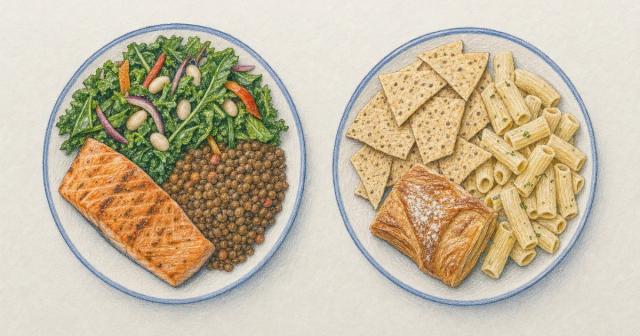
What your plate should prioritize
Eat protein and fiber-rich vegetables first, healthy fats and whole grains second, and discretionary calories last. When your stomach holds less food, every bite must count. Healthline reports that eating at least 25 to 38 grams of fiber per day supports digestive health during Zepbound treatment: a goal you can reach by building meals around leafy greens, beans, oats, and whole fruits. Eat protein at the start of each meal so that if your appetite fades before you finish your plate, you've already consumed the nutrient your body needs most.
What does a well-built Zepbound meal actually look like?
The meal plans below are practical templates built around the nutrient hierarchy above, with dietary swaps to fit real lives, not ideal ones.
Which foods should you prioritize every day?
Food Category | Why It Helps | Food Examples |
|---|---|---|
High-Protein Foods | Helps you feel full longer, supports lean muscle maintenance, and helps control blood sugar | Chicken, turkey, fish, tofu, legumes (beans, lentils, chickpeas), Greek yogurt, eggs, cottage cheese |
Fiber-Rich Foods | Controls blood sugar, relieves constipation, supports gut health, and helps you feel fuller | Leafy greens (spinach, kale, broccoli), whole fruits (apples, bananas), oats, beans, and legumes |
Healthy Fats | Supports brain and heart health, lowers LDL cholesterol, and helps your body absorb vitamins A, D, E, and K | Avocados, almonds, walnuts, cashews, olive oil, chia seeds, flaxseeds, pumpkin seeds |
Whole Grains | Slows digestion to keep blood sugar steady and helps you feel full longer | Brown rice, oats, barley, sprouted grain bread |
Hydrating Foods | Supports digestion, nutrient absorption, and fullness without extra calories | Cucumbers, watermelon, oranges, tomatoes, broths, soups |
Why protein deserves the most attention
Most people taking GLP-1 medications underestimate how much muscle they lose as the scale goes down. Healthline reports that up to 30% of weight loss can come from muscle mass without adequate protein intake. Muscle loss affects your metabolism, strength, and appearance at your goal weight. Aim for 15 to 30 grams of protein per meal using sources such as grilled chicken, canned tuna, Greek yogurt, tofu, or lentils.
How does tracking protein alongside dose timing clarify your results?
People on Zepbound often choose low-protein, low-fiber foods when they don't feel hungry. Tracking protein intake alongside dose timing and side effects—as our GLP-1 app is designed to do—removes guesswork from daily decisions. When you see your protein total next to how you're feeling and weight trends, the connection between food choices and outcomes becomes clear.
What to eat when appetite is nearly gone
When appetite is low, skipping meals can lead to fatigue, muscles weakness, and poor workout recovery. Smaller, more frequent meals work better than forcing three full plates. Protein-rich snacks like roasted chickpeas, cottage cheese, almonds, or Greek yogurt with berries fill nutritional gaps without requiring a full appetite. On low-appetite days, a smoothie with protein powder, frozen fruit, and spinach delivers nutrition in an easy-to-tolerate form. Here is a practical daily checklist to keep your nutrition on track even when hunger signals are quiet:
- [ ] Hit your protein target (1.2 to 1.5g per kg of ideal body weight) across meals and snacks
- [ ] Include at least one fiber-rich vegetable or fruit at every meal
- [ ] Drink 8 to 10 cups of water daily, and supplement with hydrating foods like cucumbers or broth
- [ ] Add a source of healthy fat (avocado, olive oil, nuts, or seeds) to at least two meals
- [ ] Choose whole grains over refined carbs when including a starch
- [ ] Limit fried foods, sugary drinks, carbonated beverages, and highly processed carbs
- [ ] Eat smaller meals more frequently if a full meal feels overwhelming
- [ ] Use liquid nutrition (smoothies, soups, broths) on low-appetite days rather than skipping nutrition entirely
Foods to limit or avoid
Limit This | Why | Smarter Swap |
|---|---|---|
Fried and greasy foods | Slowed gastric emptying on Zepbound makes high-fat meals intensify nausea, bloating, and prolonged discomfort | Lightly baked almond-crusted chicken instead of fried |
Sugary snacks and drinks | Spike blood sugar and undermine Zepbound's glucose-stabilizing mechanism | Frozen grapes, watermelon, or infused fruit water instead of candy or soda |
Carbonated beverages | Worsening gas and bloating are already common during treatment | Still water with citrus, or herbal teas |
Refined carbohydrates | Digest quickly, spike blood sugar, and shorten satiety windows | Sprouted grain bread or sweet potato instead of white bread or crackers |
Sample meal plans to guide your week
Adjust your food intake based on your calorie goals and protein needs. Use the swap column to customize the meal plan to your preferences.
1-Day meal plan
Meal | What to Eat | Dietary Swaps |
|---|---|---|
Breakfast | 3 large eggs scrambled, 1 slice whole wheat bread, 1/4 avocado, 1 cup steamed spinach | GF: Replace bread with 1 medium sweet potato. DF: Cook eggs in olive oil instead of butter |
Snack | 1/2 to 1 cup nonfat Greek yogurt, 2 tablespoons almond butter, 1 cup mixed berries | DF: Use coconut yogurt alternative |
Lunch | 3 to 4 oz grilled chicken breast, 2 cups mixed greens, 1/2 cup cooked quinoa, 1 tablespoon olive oil dressing, 1 cup cucumber and tomatoes | V: Replace chicken with 5 to 6 oz firm tofu. DF: Use olive oil-based dressing |
Snack | 1 medium apple, sliced; 1 oz almonds (raw, unsalted) | |
Dinner | 3 to 4 oz grilled shrimp, 1/2 cup cooked brown rice, 1 tablespoon hemp seeds, 2 cups stir-fried bell peppers, broccoli, and snap peas | V: Replace shrimp with 1 cup cooked lentils |
3-Day Meal Plan
(Day 1)
Meal | What to Eat | Dietary Swaps |
|---|---|---|
Breakfast | 2 large eggs + 2 egg whites omelet, 1 oz low-fat cheese, 1 cup sautéed spinach | DF: Omit cheese, add 1/4 avocado |
Snack | 1/2 cup grapes, 1 oz cheese | DF: Replace cheese with 1 oz nuts |
Lunch | 3 to 4 oz baked chicken breast, 1 medium roasted sweet potato, 1 tablespoon olive oil, 2 cups mixed greens and cucumber | V: Replace chicken with 1 cup cooked chickpeas |
Snack | 1/2 cup roasted chickpeas, 1 medium pear | |
Dinner | 3 to 4 oz baked salmon, 1/2 cup cooked quinoa, 1 tablespoon ground flaxseeds, 2 cups roasted broccoli and cauliflower | V: Replace salmon with 5 to 6 oz firm tofu or seitan |
(Day 2)
Meal | What to Eat | Dietary Swaps |
|---|---|---|
Breakfast | 1 cup nonfat Greek yogurt, 1 cup mixed berries, 1 tablespoon chia seeds, 1 oz sliced almonds | DF: Replace with coconut yogurt |
Snack | 2 oz tuna, 1 cup sliced cucumbers and carrots | V: Baked tofu with steamed carrots |
Lunch | 3 oz canned tuna (in water), 1 to 2 slices whole wheat bread, 1/4 avocado, 2 cups cucumber and tomato salad | V: Substitute white bean or chickpea salad for tuna |
Snack | 1/2 cup cottage cheese, 1/2 cup mixed berries | |
Dinner | 3 to 4 oz lean ground turkey (90% lean), 1/2 cup cooked barley, 1 tablespoon olive oil, 2 cups roasted zucchini and mushrooms | V: Replace turkey with 1 cup cooked lentils |
(Day 3)
Meal | What to Eat | Dietary Swaps |
|---|---|---|
Breakfast | 3 large eggs scrambled, 1 cup low-fat cottage cheese, 1 cup diced tomatoes and peppers | DF: Replace cottage cheese with 1/4 avocado |
Snack | 1 medium apple, 2 tablespoons almond butter | |
Lunch | 3-4 oz turkey breast, 1-2 slices whole wheat bread, 1 oz low-fat cheese, 2 cups mixed greens | V: Replace turkey with 1/4 cup hummus. GF: Use sweet potato slices instead of bread |
Snack | 1/4 cup hummus, 1 oz whole-grain crackers | GF: Use cucumbers and carrots instead of crackers |
Dinner | 3-4 oz baked chicken breast, 1/2 cup cooked brown rice, 1 tablespoon hemp seeds, 2 cups stir-fried snap peas, carrots, and bell peppers | V: Swap chicken for seitan, tempeh, or tofu |
Foods to Limit (and Smarter Swaps)
Four categories consistently cause problems on Zepbound. High-fat fried foods slow digestion further on a medication that already slows gastric emptying, intensifying nausea. Sugary snacks and drinks undermine blood sugar stabilization, which tirzepatide works to improve. Carbonated beverages amplify bloating and gas. Highly processed, refined carbohydrates digest quickly, spike blood sugar, and leave you hungry before your next meal. You don't need to eliminate these permanently: use smarter defaults instead. The text you selected is already formatted as a table. Here is the organized information:
Reduce | Why | Swap |
|---|---|---|
Fried chicken | High fat worsens nausea on Zepbound | Lightly breaded baked chicken, or almond meal breading for extra protein |
Soda | Causes blood sugar spikes and increases bloating | Infused fruit teas or still water with citrus |
White bread | Low fiber, low nutrients | Sprouted grain or whole wheat bread |
Potato chips | High fat, rapidly digested, blood sugar spike | Baked sweet potato fries |
Candy | High sugar, low satiety | Frozen grapes, watermelon, or pineapple |
What does progress on Zepbound actually look like?
Progress on Zepbound is measured by steady afternoon energy, maintained or improved workout performance, preserved muscle tone as weight drops, and sustainable weight loss. Nourish reports that tirzepatide led to an average weight loss of 20.9% of body weight over 72 weeks in clinical trials. This result comes from medication combined with intentional dietary choices, not medication alone.
How do your food choices shape the outcome?
Zepbound makes it easier to eat less. What you choose to eat during that reduced intake determines how healthy, energized, and sustainable the outcome becomes. Your healthcare provider or a registered dietitian who understands GLP-1 medications can help you establish a personalized calorie deficit, set your protein target, and adjust your plan as your goals change. Knowing your targets and consistently hitting them are two different things, especially when your appetite is quieter than usual, and every meal must work harder nutritionally.
Calculate Your Personal Zepbound Calorie Target in Under 2 Minutes
Your ideal calorie intake depends on your age, weight, height, activity level, and where you are in your Zepbound journey. Rather than relying on generic charts, calculate a personalized daily calorie target that also recommends protein, fiber, and hydration needs based on your body and weight-loss objective. MeAgain was built specifically for this.
"A truly personalized calorie target accounts for age, weight, height, activity level, and your current stage of GLP-1 treatment — not just a one-size-fits-all number."
Your Personal Inputs | What It Calculates |
|---|---|
Age & Weight | Daily calorie budget |
Height & Activity Level | Protein target to preserve muscle |
Weight-Loss Objective | Fiber & hydration recommendations |
Zepbound Journey Stage | Full nutrition dashboard |
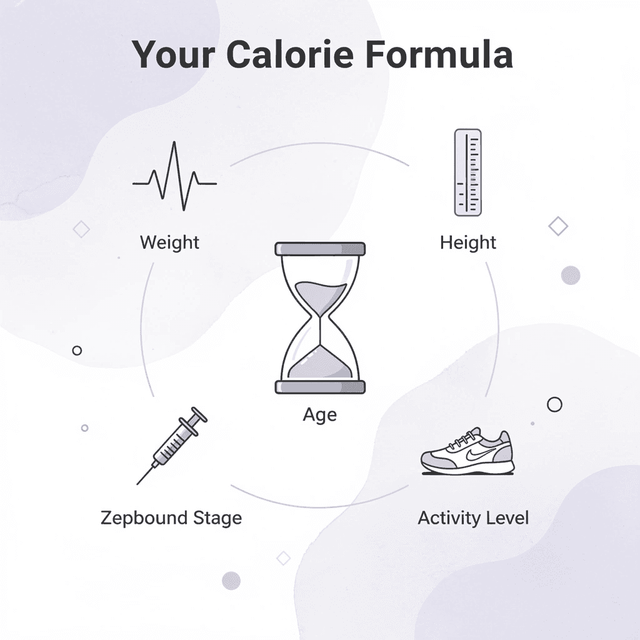
In under two minutes, our MeAgain GLP-1 app generates your recommended calorie budget, a daily protein target to preserve muscle while losing fat, and a nutrition dashboard you can use right away.
Start Your Personalized Zepbound Nutrition Plan Today
Create your own calorie target and nutrition plan in less than two minutes. You'll receive your recommended daily calorie target, personalized protein goal, daily fiber and hydration targets, a nutrition tracker designed for GLP-1 medications, and ongoing adjustments as your weight, appetite, and calorie needs change.
- Your recommended daily calorie target
- Your personalized protein goal
- Daily fiber and hydration targets
- A nutrition tracker designed specifically for GLP-1 medications
- Ongoing adjustments as your weight, appetite, and calorie needs change
Once your targets are set, you can immediately begin tracking the habits that protect muscle, improve energy, and support steady fat loss throughout your Zepbound journey. Download the MeAgain GLP-1 app and build your personalized nutrition plan today.