
Redness, swelling, or irritation at the injection site is one of the most commonly reported experiences among people starting Zepbound. A Zepbound injection site reaction is typically mild and temporary, but understanding why it happens and how to manage it can make treatment far more comfortable. Knowing which symptoms are normal and which warrant a call to a doctor helps users stay informed and in control.
Tracking injection sites and logging reactions does not have to be complicated. Keeping that information organized makes it easier to spot patterns, avoid repeatedly irritating the same spot, and have more productive conversations with a healthcare provider. For a straightforward way to manage all of this in one place, the GLP-1 app from MeAgain keeps injection history, reactions, and progress accessible whenever needed.
Table of Contents
- Is a Zepbound Injection Site Reaction Normal or a Sign of Something Serious?
- What Causes Zepbound Injection Site Reactions and What Makes Them Worse?
- 8 Ways to Treat a Zepbound Injection Site Reaction and Prevent the Next One
- Track Your Zepbound Injection Reactions and Build Better Injection Habits
Summary
- Injection site reactions are one of the most commonly reported experiences among people starting Zepbound, and they are a recognized pharmacological effect of the medication rather than a sign of incorrect technique. Clinical trial data show that roughly 6 to 8 percent of Zepbound participants reported injection site reactions, compared to about 2 percent on placebo, confirming the reactions are tied to the drug itself.
- The immune system plays a direct role in how often and how severely reactions occur. Approximately half of people taking tirzepatide develop anti-drug antibodies in response to the medication. Among those who do, 11.3 percent reported injection site reactions in pooled trial data, compared to just 1 percent of those without antibodies. This means reaction frequency is not random and is not purely a matter of technique.
- Most injection site reactions are mild, localized, and short-lived. According to data cited in dermatology research and clinical guidance, mild redness and slight swelling typically fade within 24 hours, and most reactions resolve within 1 to 3 days without any medical intervention. Less than 1 percent of tirzepatide injection site reactions require medical intervention, which puts the actual clinical risk in perspective for the majority of people experiencing mild symptoms.
- Systematic site rotation is one of the most effective adjustments a person can make to reduce how often reactions occur. Rotating injection sites across at least four different areas, rather than returning to the same location repeatedly, can reduce local reactions by up to 50 percent. The abdomen, thigh, and upper arm are the three approved sites, and injecting at least two inches away from any previous site gives tissue adequate time to recover between doses.
- Distinguishing a localized reaction from a systemic allergic response is critical because the appropriate response differs significantly. A local reaction stays confined to the injection area and fades within a few days. A systemic hypersensitivity response involves symptoms that spread beyond the injection site, such as widespread hives, facial swelling, or difficulty breathing, and requires emergency care rather than a wait-and-see approach.
- Consistent, structured logging of injection sites, reaction severity, and timing creates a record that is far more useful in a clinical conversation than a verbal summary reconstructed from memory. Patterns that would otherwise go unnoticed, such as reactions clustering around a specific site or worsening with each dose, only become visible when tracked across the same timeline as dose day.
- MeAgain's GLP-1 app addresses this directly by letting users log injection sites, side effect severity, and dose timing in one place, making it easier to spot patterns and bring concrete data to clinical appointments.
Is a Zepbound Injection Site Reaction Normal or a Sign of Something Serious?
Redness, itching, swelling, or a small firm lump after your Zepbound injection is not a sign that something went wrong. These are recognized, documented side effects of subcutaneous GLP-1 injections and tell you nothing about whether your dose was absorbed or whether you injected correctly.
"Localized injection site reactions — including redness, itching, swelling, and firm lumps — are among the most commonly documented responses to subcutaneous GLP-1 injections and are not indicators of improper technique or failed absorption." — Clinical GLP-1 Prescribing Guidance
Reaction | Normal or Concerning? | Action Needed? |
|---|---|---|
Redness | ✅ Normal | Monitor only |
Itching | ✅ Normal | Monitor only |
Swelling | ✅ Normal | Monitor only |
Small firm lump | ✅ Normal | Monitor only |
Severe pain or spreading redness | ⚠️ Potentially serious | Contact your provider |
Why does tirzepatide cause local inflammation at the injection site?
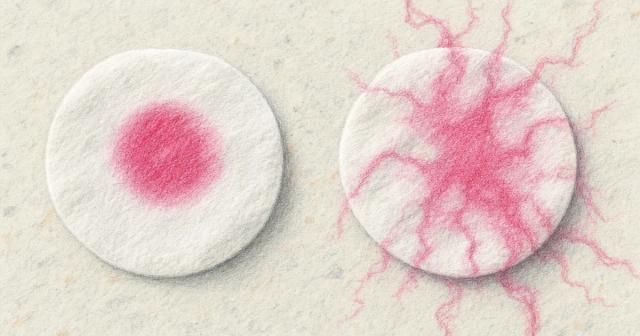
When tirzepatide enters the tissue under your skin, your body's immune cells react to both the needle and the medication. This triggers the release of chemicals like histamine, which create inflammation and can cause redness, puffiness, or itching on the surface. The inflammation remains localized and does not spread throughout your body. It typically resolves within one to three days without treatment.
How common are Zepbound injection site reactions in clinical trials?
According to a comprehensive 2025 review published in PMC, injection site reactions occurred in up to 17.4% of patients receiving tirzepatide across clinical trials. In Zepbound-specific trials, 6 to 8 percent of participants reported reactions compared with approximately 2 percent on placebo. This gap indicates these reactions are a pharmacological effect of the medication rather than a technique error. Most reactions were mild to moderate in severity, and treatment discontinuation due to injection site reactions was uncommon.
The misconception that keeps people up at night
Many people assume that a Zepbound injection site reaction indicates incorrect injection technique or that reaction severity reflects seriousness. Neither assumption is reliable. Injection site reactions are a known effect of tirzepatide itself. What matters is whether the reaction remains localized and improves or develops systemic symptoms.
How do you tell if a reaction is following the expected pattern?
You inject on Monday. By Tuesday, the area is red and swollen. By Wednesday, it persists. The question isn't how large the reaction looks, but whether it follows the expected pattern of a localized response or shows signs requiring medical attention. The pattern that confuses people most is mixing up a localized injection site reaction with a systemic allergic response. According to the Ro Health Guide on tirzepatide injection site reactions, most reactions resolve within one to three days. If the reaction worsens after 48 hours, spreads beyond the site, or comes with a fever, contact your healthcare provider. If you experience trouble breathing, swelling of the face or throat, widespread hives, a fast heartbeat, or dizziness, seek emergency care immediately: these signs indicate a serious hypersensitivity reaction, which differs from a local skin response.
Why do some injections produce a reaction and others do not?
What most people never ask is why some injections produce a reaction while others do not.
Related Reading
- Zepbound Long Term Side Effects
- Does Zepbound Make You Sleepy
- Zepbound Not Working
- Do You Have To Take Zepbound Forever
- Why Am I Still Hungry On Zepbound
- How Many Calories Should I Eat On Zepbound
- What to Expect After First Dose of Zepbound
- Does Zepbound Give You Energy
- Does Zepbound Cause Hair Loss
What Causes Zepbound Injection Site Reactions and What Makes Them Worse?
Injection site reactions happen through several things that occur at the same time: your immune system may respond to tirzepatide itself, the needle creates small physical injury, the formulation's chemical properties can irritate the surrounding tissue, and the injected fluid volume causes temporary swelling. Any one of these can produce redness, swelling, or itching—when multiple occur together, the reaction becomes more noticeable.
"Injection site reactions result from a combination of factors—immune response, mechanical trauma, chemical irritation, and fluid volume—making them one of the most common and manageable side effects of injectable medications."
Cause | Effect at Injection Site |
|---|---|
Immune response to tirzepatide | Redness, itching, inflammation |
Needle-induced physical injury | Localized swelling, bruising |
Chemical irritation from formulation | Burning sensation, tissue irritation |
Injected fluid volume | Temporary swelling, pressure discomfort |

Why do some people react more than others?
Your immune system's job is more specific than most people think. About half of people taking tirzepatide develop anti-drug antibodies (ADAs) when their body reacts to the medication. These antibodies don't reduce tirzepatide's efficacy, but they correlate with higher reaction rates. In pooled Zepbound trials, 11.3% of participants with anti-tirzepatide antibodies reported injection site reactions, compared to 1% of those without them. This difference shows the reaction isn't random—your immune system is recognizing something foreign and responding to it, a process distinct from technique error or poor injection placement.
What makes a reaction more likely to happen again?
The failure point is usually something you can control. Repeatedly injecting into the same location is one of the most common contributors: local tissue becomes sensitive, micro-scarring can develop, and each subsequent injection lands in already-irritated territory. Injecting into bruised, scarred, or damaged skin worsens this problem. Incorrect technique adds another layer: an angle that's too shallow, a needle that moves during injection, or failing to allow the skin to dry after cleaning can all increase local trauma. The Zepbound prescribing information explicitly recommends rotating among three approved sites (abdomen, thigh, and upper arm) and never injecting into skin that is tender, bruised, or damaged. According to a comprehensive review published in Anais Brasileiros de Dermatologia in 2025, injection site reactions occurred in approximately 17 to 45% of patients treated with tirzepatide in clinical trials, reflecting variation in individual sensitivity, dosing, and technique.
A simple decision framework for what to do next
If a reaction stays localized and mild, monitor it and apply basic comfort measures like a cool compress. Research from Ro indicates that reactions typically resolve within 1 to 3 days after injection. If yours isn't improving within that window, rotate to a different approved injection site and review your technique. If reactions become progressively more severe or involve symptoms beyond the injection area, contact your healthcare provider. If you experience signs of a serious allergic reaction—throat tightening, difficulty breathing, rapid heartbeat, or widespread swelling—seek emergency care immediately. Track the pattern of your reactions to identify triggers. Knowing what caused a reaction and preventing the next one are two different problems, and most people get stuck on the second.
Related Reading
- How Long Do Zepbound Side Effects Last
- Where to Inject Zepbound for Best Results
- Does Zepbound Make You Pee More
- How Long Does It Take For Zepbound To Work
- How Long Does It Take For Zepbound To Suppress Appetite
- Zepbound Nausea Relief
- Zepbound Constipation Relief
- Zepbound Muscle Loss
8 Ways to Treat a Zepbound Injection Site Reaction and Prevent the Next One
The right way to respond to a Zepbound injection site reaction depends on what kind of reaction you're dealing with. Mild, localized irritation calls for comfort measures and monitoring. Repeated irritation at the same site calls for better technique and rotation. Anything suggesting a systemic response requires contacting your healthcare provider, or in serious cases, emergency care.
"The type of reaction determines the treatment — not every injection site response is the same, and matching your response to the reaction pattern is the most critical first step." — Clinical Guidance Principle

Here is the causal chain worth keeping in mind: identify the reaction pattern, determine whether it is local irritation or possible hypersensitivity, address the likely cause, adjust technique or site rotation when appropriate, monitor the next injection, and escalate to medical care if symptoms worsen or become systemic.
Step | Action | When to Apply |
|---|---|---|
1. Identify | Classify the reaction as local or systemic | Immediately after noticing symptoms |
2. Determine | Assess for hypersensitivity signs | Within the first 30 minutes post-injection |
3. Address | Apply comfort measures or seek care | Based on reaction severity |
4. Adjust | Improve technique or rotate sites | Before next scheduled dose |
5. Monitor | Watch the next injection closely | At every subsequent dose |
6. Escalate | Contact provider or seek emergency care | If symptoms worsen or spread |
1. Review Proper Injection Technique
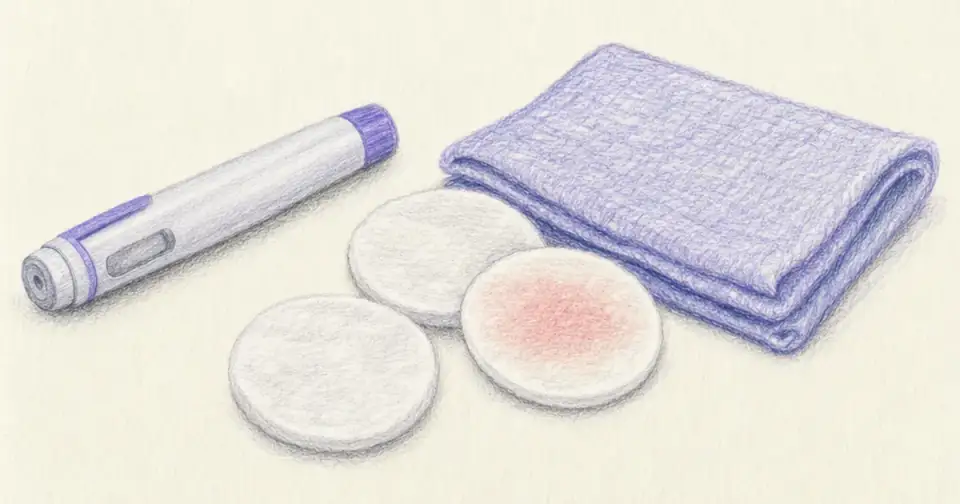
Using the wrong needle angle, failing to let skin dry after cleaning, or injecting into damaged skin can cause reactions unrelated to the medication itself. Wash your hands before every injection. If bleeding occurs, apply light pressure with a cotton ball or gauze; do not rub. Never inject into bruised, irritated, thickened, scarred, or lumpy skin. Change injection sites weekly between the abdomen, thigh, and upper arm to prevent skin thickening and irritation.
2. Take Temperature Into Account
Take tirzepatide out of the refrigerator at least 30 minutes before injecting. Cold medication is not dangerous, but room temperature makes the injection noticeably more comfortable. Do not place it in direct sunlight or use external heat sources, as this can degrade the medication. After injection, apply a cool compress or ice pack wrapped in thin cloth to the injection site for 10 to 15 minutes to reduce redness, swelling, and inflammation. Your healthcare provider may recommend this for the first 24 to 48 hours after a reaction appears.
3. Use Cold Compresses to Calm Inflammation
Cold therapy reduces blood flow through vasoconstriction, slowing inflammation. Apply a clean, cold compress or ice pack wrapped in cloth to the affected area for 10 to 15 minutes at a time, repeating several times during the first 24 to 48 hours. Never place ice directly on your skin, as this can cause cold injury.
4. Try OTC Medications for Symptom Relief
For itching, over-the-counter antihistamines like cetirizine (Zyrtec), loratadine (Claritin), or diphenhydramine (Benadryl) reduce the histamine-driven itch response. Topical hydrocortisone cream calms localized inflammation. Avoid scratching, as it increases irritation and slows healing. For soreness, acetaminophen is a good first choice. If swelling is the main issue, an NSAID like ibuprofen may help, but consult your healthcare provider first, especially if you have kidney disease or conditions where NSAIDs carry extra risk. Always follow label directions and ensure any over-the-counter treatment suits your specific health situation.
5. Choose Loose Clothing and Reduce Tension Before Injecting
Tight waistbands, compression fabrics, or restrictive clothing rubbing against a tender injection site can prolong irritation and increase discomfort. Choose soft, loose clothing that allows the area to breathe. Research on subcutaneous injections shows that anxiety measurably increases pain perception. Slow, deep breaths before injecting and exhaling during the injection reduce muscle tension and discomfort. If self-injection is difficult, having someone else administer it while using a distraction technique—such as squeezing a stress ball—can help.
6. Rotate Injection Sites Systematically
Rotating injection sites reduces repeated irritation and is part of the manufacturer's recommended technique. According to Body Good Studio, rotating across at least four different areas reduces local reactions by up to 50%.
Which areas should you rotate between?
Rotate between the abdomen, thigh, and upper arm with assistance if needed for the arm. Avoid injecting within at least two inches of a previous injection site. This spacing allows each area to heal between doses.
How can tracking injection sites prevent repeated reactions?
Most people track rotation by memory until a missed week or routine change causes them to return to the same spot. A GLP-1 app like MeAgain logs injection sites and side effects with severity ratings alongside dose day, making it easy to see which site you used last and whether a reaction followed. That pattern visibility transforms a vague concern into a clear conversation with your prescriber.
7. Consider Different Injection Supplies
Zepbound and Mounjaro come in single-dose vials, prefilled pens, and multi-dose KwikPens. Many people report less injection site discomfort with prefilled pens than vials and syringes. Pharmacies stock pen needles ranging from 4 mm to 12.7 mm in length. Research suggests shorter, finer needles are better tolerated with fewer local reactions. If injection discomfort persists, ask your pharmacist or prescriber about switching needle length or delivery format.
8. Wait and See if Mild Reactions Resolve on Their Own
Not every injection site reaction needs treatment. For mild redness or soreness that isn't spreading or worsening, waiting and watching is often the best approach. According to TrimBody M.D., injection site reactions typically resolve within 1 to 3 days without intervention. If the reaction is small and not interfering with daily life, give it time before seeking a fix. The body's inflammatory response is functioning as intended.
When to Contact Your Healthcare Provider
Contact your prescriber if you notice any of the following
What signs of infection should you watch for?
Redness spreading beyond the injection site; worsening warmth and swelling after 48 hours; pus or foul odor; red streaking extending outward (lymphangitis); fever above 100.4°F (38°C); chills; or severe pain.
What signs of an allergic reaction require prompt attention?
Hives or rash spreading beyond the injection site, swelling of the lips, tongue, or throat, difficulty breathing, wheezing, chest tightness, dizziness, lightheadedness, or rapid heartbeat.
When do persistent or severe local reactions need evaluation?
Any reaction lasting more than 5 to 7 days, swelling or hardness larger than 5 cm across, pain that disrupts daily activities or sleep, or a hard lump persisting for more than two weeks. If you have reactions with every dose, schedule a non-urgent appointment with your healthcare provider or diabetes care and education specialist (CDCES). Bring records of your reaction patterns, including photographs if possible, and any logged data from a tracking app documenting sites and symptoms.
When should you seek emergency care immediately?
Get emergency care right away if you develop any sign of anaphylaxis: trouble breathing, throat swelling, severe dizziness, widespread hives, or rapidly worsening symptoms. Call 911 or go to the nearest emergency room immediately. Knowing what to do in the moment is one thing. What most people never figure out is how to stop the same reaction from happening again—a gap smaller than you think.
Track Your Zepbound Injection Reactions and Build Better Injection Habits
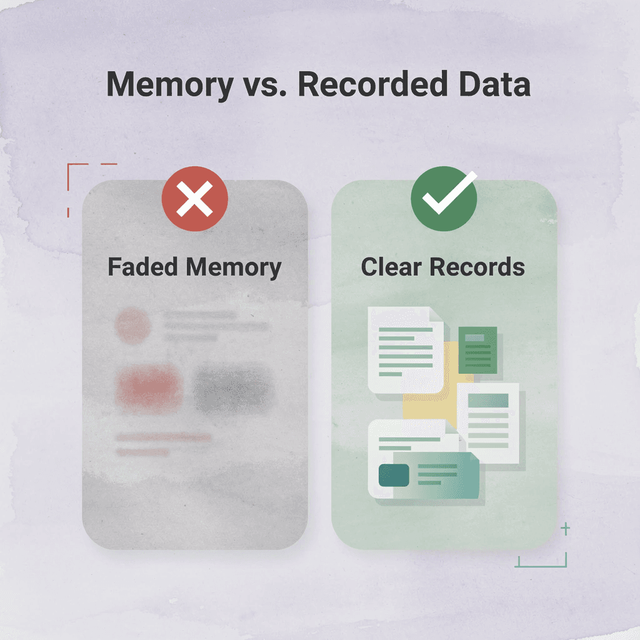
Closing the gap between "something happened at my injection site" and "here's the pattern my doctor can use" comes down to keeping consistent records. Memory compresses symptoms and loses the critical order of events, meaning the details your clinician needs most are often the first things to fade or distort over time.
"The difference between a vague symptom report and actionable clinical data is consistent, timestamped documentation — recorded at the moment it happens, not weeks later from memory."
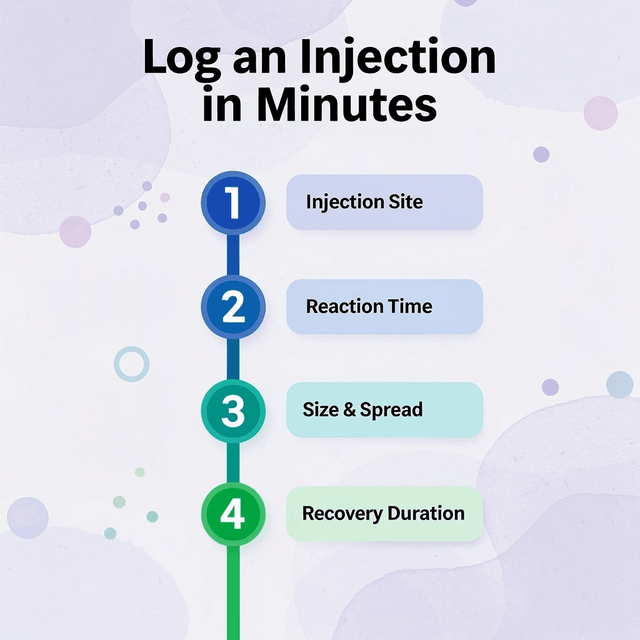
A GLP-1 app like MeAgain was built specifically for this. In about three minutes, you can record your injection site, when the reaction appeared, how large it became, whether it stayed in one area, and how long it took to get better. Keep recording each injection to build a complete timeline of reactions and side effects in one place.
What to Log | Why It Matters |
|---|---|
Injection site location | Identifies if reactions are site-specific |
Time reaction appeared | Reveals onset patterns across doses |
Size and spread | Tracks whether reactions are worsening |
Duration to resolve | Flags slow-healing or escalating responses |
If a pattern develops, you'll have specific, timestamped information to bring to your healthcare provider — rather than trying to remember what happened weeks earlier.
Download MeAgain and create your first injection log today. Track reactions and bring the real data to your clinician to build the daily habits that move you consistently forward.