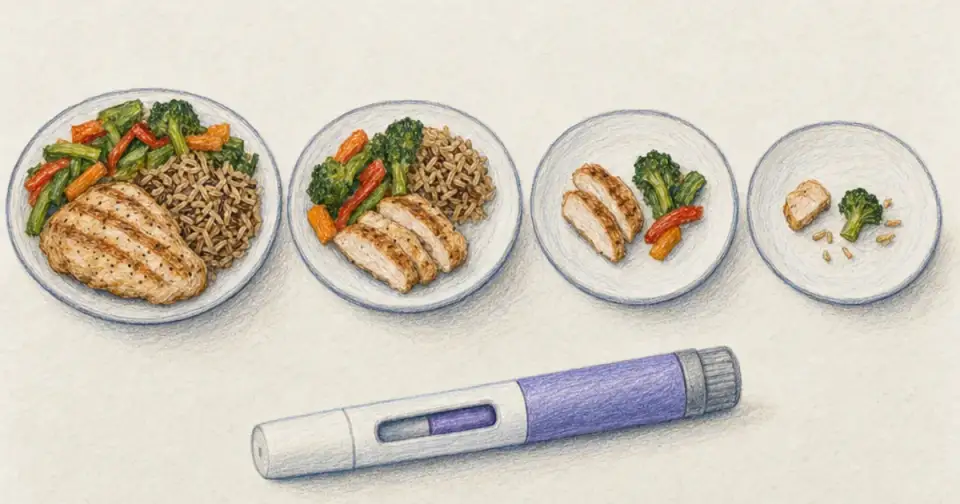

Starting Zepbound and waiting for appetite suppression to kick in can feel uncertain, especially when the motivation to lose weight is high, but the hunger relief has not arrived yet. Knowing how long it takes for Zepbound to suppress appetite helps set realistic expectations and makes it easier to stay consistent during the early weeks when changes may be subtle.
Having the right tools during that adjustment period matters. Tracking hunger levels, monitoring how the body responds to each dose, and identifying patterns over time can clarify whether the medication is working as expected or whether something needs to change. For structured, ongoing support throughout the process, the GLP-1 app from MeAgain is built to help users do exactly that.
Table of Contents
- How Long Does It Take for Zepbound to Suppress Appetite?
- Why Zepbound May Not Be Suppressing Your Appetite Yet
- What to Do If Zepbound Still Isn't Suppressing Your Appetite
- Don’t Judge Zepbound by Whether You’re Suddenly Never Hungry Again. Track the Subtle Signals That Show Whether Your Appetite Is Changing.
Summary
- Appetite suppression on Zepbound does not follow a single predictable timeline. Most people notice some reduction in hunger within 1 to 7 days after their first injection, but that range reflects genuine biological variation rather than a reliable countdown. The effect depends on dose, metabolism, and how long the medication has been taken consistently.
- The starting dose of 2.5 mg is not designed to suppress appetite. It exists to help the body adjust to potential side effects before titration begins, and some patients do not experience significant appetite suppression until reaching doses of 5 mg or higher. The prescribing protocol increases the dose every four weeks, which means early hunger is not a sign of failure. It is a sign that treatment is still in its opening phase.
- Appetite suppression on tirzepatide rarely feels like a sudden absence of hunger. It tends to show up as finishing half a plate instead of a full one, skipping an afternoon snack without noticing, or going three hours without thinking about food. According to Fay Nutrition, it can take 4 to 8 weeks before appetite suppression becomes noticeable for some patients, and the early changes are often behavioral before they feel physical.
- Dosing consistency has a direct impact on how well the medication works. Tirzepatide has a half-life of approximately five days, meaning even one skipped injection can create a gap in therapeutic coverage that takes weeks to stabilize. Patients who miss doses have a harder time tolerating titration and often plateau before reaching the dose where appetite suppression becomes reliable.
- Diet and individual biology shape the response as much as the medication itself. Protein and fiber amplify the satiety signals tirzepatide is already working to strengthen, while diets heavy in ultra-processed foods can blunt that effect. Metabolic factors including baseline BMI, insulin resistance, and inflammatory markers also influence how quickly effects become noticeable. Clinical trial data from the SURMOUNT-1 study found that average weight loss reached approximately 20.9% of body weight at the highest dose over 72 weeks, but individual outcomes within that data varied considerably.
- Evaluating Zepbound only by hunger suppression misses much of what the medication does. Meaningful clinical response also includes improved blood pressure, better blood sugar control, reduced cardiovascular risk markers, and measurable changes in sleep apnea severity. For many patients, the shift from reactive eating to intentional eating is one of the clearest signs the medication is working, even when the scale or hunger levels have not changed dramatically yet.
- MeAgain's GLP-1 app addresses this tracking gap by centralizing hunger levels, dose timing, protein intake, and food data in one place, so users can see whether their appetite is shifting relative to their injection schedule rather than relying on memory or a single weigh-in.
How Long Does It Take for Zepbound to Suppress Appetite?
Changes in appetite happen fairly early after you start taking Zepbound, but there is no set timeline that works for everyone. Most people notice that their appetite goes down within 1 to 7 days after their first injection, according to Doctronic, though how much the effect works depends on the dose, how your body responds, and how long you take the medicine. The appetite suppression is usually less strong than people expect.
"Most people notice their appetite goes down within 1 to 7 days after their first Zepbound injection — though results vary based on dose and individual response." — Doctronic
Factor | Impact on Appetite Suppression |
|---|---|
Dose level | Higher doses produce stronger suppression |
Time on medication | Effect builds over weeks of consistent use |
Individual body response | Results vary — no universal timeline exists |
Injection timing | Most notice changes within 1–7 days of first dose |

The Biggest Mistake Is Using Hunger as a Pass-or-Fail Test
Most people assume Zepbound isn't working if they don't feel hungry after the first injection. This mistake treats appetite suppression as an on/off effect when Zepbound is a dose-dependent, cumulative process.
The FDA-approved prescribing information treats the 2.5 mg dose as a starting dose, not a maintenance dose, with increases after 4 weeks. In your first few weeks, the question isn't "Am I less hungry yet?" but "Am I responding to the medication at my current dose and treatment stage?"
Why does appetite suppression build up over weeks, not days?
Tirzepatide has an elimination half-life of about 5 days, with steady-state concentrations reached after approximately 4 weeks of once-weekly dosing. Exposure accumulates over repeated doses as the titration schedule progresses toward maintenance doses.
Clinical trials confirm this pattern. In the 72-week SURMOUNT-1 trial, average weight loss accumulated over months rather than days or weeks. The FDA-approved dosing schedule increases doses in stages because the starting dose does not provide maximum therapeutic effect immediately.
What is a better way to measure whether Zepbound is working?
The test "I'm still hungry, therefore Zepbound isn't working" fails because it ignores your position in the titration schedule and how your response changes over time.
A better test tracks whether appetite signals are changing as treatment progresses: Are your portions smaller? Are you snacking less? Feeling full sooner? Are cravings becoming less intrusive? These changes reveal your response far better than whether hunger suddenly disappeared.
What happens in your body during the first week on Zepbound?
After your first injection, tirzepatide binds to GLP-1 and GIP receptors within hours, with peak blood concentration arriving around 24 to 48 hours after injection. Some people notice reduced appetite within eight hours. By days three to five, concentrations begin declining slightly, though the medication remains fully active. By days five to seven, levels continue to drop, which is why some people feel slightly hungrier toward the end of their weekly cycle. That five-day half-life is why weekly injections work: the next dose arrives before the previous one fully clears.
Why does steady-state matter for how Zepbound works?
After about four weeks of weekly injections, your body reaches steady-state: the point where the amount entering your system equals the amount being cleared. This is when Zepbound's effects stabilize without the fluctuations of early treatment. It also explains why the prescribing protocol increases the dose every four weeks—your body needs time to balance out before the next dose increase makes physiological sense.
What the clinical data actually shows about weight loss over time
The SURMOUNT-1 trial (72 weeks) showed that weight loss with tirzepatide is not front-loaded. Measurable loss typically begins around week four, with the greatest progress during the first eight to nine months. According to Cleveland Clinic Health Essentials, GLP-1 medications reach their full appetite-suppressing effect after 4 to 8 weeks as the dose gradually increases.
Phase / Timeframe | Dose | Expected Average Weight Loss | Key Patient Experience |
|---|---|---|---|
Weeks 1 to 4 | 2.5 mg once weekly | Approximately 1 to 3% of baseline body weight | Appetite suppression begins; GI side effects most common; minimal scale change |
Weeks 5 to 12 | 2.5 mg to 5 mg once weekly | Approximately 5 to 7% of baseline body weight | Weight loss accelerates; visible body composition changes; motivation often improves |
Weeks 13 to 24 | 7.5 mg to 10 mg once weekly | Approximately 10 to 15% of baseline body weight | Progressive loss continues; most patients reach maintenance dose range |
Weeks 25 to 72 | 10 mg to 15 mg once weekly (maintenance) | Up to approximately 19.5 to 20.9% of baseline body weight (SURMOUNT-1) | Slower rate of loss; weight stabilization typically occurs by weeks 60 to 72 |
Response check (per US guidelines) | Any therapeutic dose | Minimum 5% loss expected by approximately week 12 at therapeutic dose | If less than 5% lost, consider dose adjustment or alternative therapy |
Patients with type 2 diabetes | Per titration schedule | Generally lower percentage loss than non-diabetic patients (SURMOUNT-2) | Additional glycemic benefits expected; monitor for hypoglycemia with insulin or sulfonylureas |
Factors slowing response | Any dose | Variable; individual results differ | GI intolerance limiting escalation, weight-gain medications, hypothyroidism, poor lifestyle adherence |
Why does tracking your data make the appetite shift visible?
Tracking hunger changes by memory alone is unreliable. People on Zepbound who log dose timing, meals, protein intake, and side effects in one place, such as with our GLP-1 app, can see their appetite patterns shift across weeks. When the data is organized, the signal becomes visible.
What is the right benchmark for evaluating whether Zepbound is working?
If you're only a few days into treatment or still on the starting dose, the absence of appetite suppression does not mean Zepbound is failing. The real question is whether your appetite response is changing appropriately for your dose and stage of treatment. US clinical guidelines suggest that patients who haven't lost at least 5% of baseline body weight by around week 12 at a therapeutic dose should consult their provider. That's a meaningful benchmark, not a final decision made in week two.
But knowing whether your appetite is genuinely shifting requires more than intuition.
Related Reading
- Zepbound Long Term Side Effects
- Does Zepbound Make You Sleepy
- Zepbound Not Working
- Do You Have To Take Zepbound Forever
- Why Am I Still Hungry On Zepbound
- How Many Calories Should I Eat On Zepbound
- What to Expect After First Dose of Zepbound
- Does Zepbound Give You Energy
- Does Zepbound Cause Hair Loss
Why Zepbound May Not Be Suppressing Your Appetite Yet
Continued hunger doesn't necessarily mean the medication has failed. Appetite response depends on factors beyond the injection itself, and the reasons it hasn't fully worked yet are often more specific and fixable than expected.
"The reasons appetite suppression hasn't kicked in yet are often more specific and fixable than most patients expect." — Key Clinical Insight
Reason Appetite May Be Delayed | What It Means |
|---|---|
Dose still titrating | Your body may need more time to adjust |
Individual metabolic response | Biological variation affects how quickly it works |
Lifestyle factors | Diet and timing can influence medication effectiveness |
Injection timing | When you inject may impact peak response |

You're Still on the Starting Dose
The 2.5 mg starting dose helps your body adjust to possible side effects before dose increases begin, rather than suppress appetite. According to Fella Health, significant appetite suppression often doesn't occur until doses of 5 mg or higher. The FDA prescribing information supports escalation every four weeks, and clinical trial data from the SURMOUNT program showed greater weight loss at higher maintenance doses. If you haven't reached your target dose, don't evaluate the medication's full effect on a dose it wasn't designed to achieve.
Your Appetite Is Shifting, Just Not the Way You Expected
Appetite suppression on tirzepatide rarely announces itself as a sudden absence of hunger. Instead, it appears as getting full after half a plate, skipping an afternoon snack without noticing, or realizing you haven't thought about food for three hours. According to Fay Nutrition, it can take 4 to 8 weeks on Zepbound for appetite suppression to become noticeable for some patients, and early changes are often behavioral before patients feel physical effects. If "Am I hungry?" is your only checkpoint, you'll miss most of the signal.
Most people track their appetite as a general impression rather than a measurement. Our GLP-1 app helps you log meals, hunger levels, and dose timing together, so you can see whether your appetite is shifting relative to your injection day instead of relying on vague intuition.
Why does missing a dose set back your progress so significantly?
The failure point is usually inconsistency, not the medication itself. Missed doses disrupt the steady-state plasma levels tirzepatide needs to work predictably. With a half-life of approximately five days, even one skipped injection creates a gap in therapeutic coverage that takes weeks to recover. Patients who skip doses struggle with titration and often plateau before reaching the dose where appetite suppression becomes reliable. If you've interrupted treatment, discuss resumption with your prescriber rather than self-adjusting your dose.
How does your diet work with or against the medication?
Diet amplifies this problem. Protein and fiber strengthen satiety signals, which tirzepatide targets. Ultra-processed foods weaken that effect. Patients who eat more protein and fiber consistently report stronger appetite suppression: your plate either supports the medication or undermines it.
Individual Biology Sets the Pace
The SURMOUNT trial data showed varied outcomes. Some participants lost significantly more weight than others at identical doses, and appetite response followed a similar pattern. Metabolic characteristics such as baseline BMI, visceral fat levels, insulin resistance, and inflammatory markers influence how quickly tirzepatide's effects manifest.
Dr. Eberwein points out that patients with higher inflammatory markers (CRP, triglycerides, IL-6) often experience faster appetite suppression, likely because tirzepatide rapidly improves insulin signaling. If you've reached an appropriate maintenance dose, taken it consistently, and notice little change in appetite or weight, discuss this with your healthcare provider rather than increasing the dose independently.
Once you identify whether you're dealing with early titration, gradual appetite changes, inconsistent dosing, or a genuinely limited individual response, the next step becomes clear: track the right signals and know when to reassess treatment.
Related Reading
- How Long Do Zepbound Side Effects Last
- Where to Inject Zepbound for Best Results
- Does Zepbound Make You Pee More
- How Long Does It Take For Zepbound To Work
- How Long Does Zepbound Fatigue Last
What to Do If Zepbound Still Isn't Suppressing Your Appetite
Tracking the right signals matters, but only if you know what action they're pointing toward. Once you've identified where you are in treatment, the path forward becomes specific.
"The most critical step in optimizing any treatment plan is knowing exactly where you stand — because the right action depends entirely on the right diagnosis of the problem." — Clinical Weight Management Principle
Where You Are in Treatment | Key Signal to Track | Recommended Next Action |
|---|---|---|
Early stages (weeks 1–4) | Minimal appetite suppression | Wait — allow dose to stabilize |
Mid-treatment plateau | Hunger returning between doses | Consult provider about dose adjustment |
Established dose, no change | Consistent hunger, no progress | Review diet, timing, and lifestyle factors |

If you're still early in treatment
The prescribed titration schedule exists for pharmacological reasons, not patience. Zepbound starts at 2.5 mg because your body needs time to build tolerance before dose increases, with appetite effects developing alongside exposure. According to Medical News Today, Zepbound helped participants lose up to 22.5% of their body weight over 72 weeks in clinical trials. The medication's full effect unfolds across months, not days.
If appetite changes feel subtle but present
Track specific signals for one to two weeks before drawing conclusions. Note hunger intensity before meals, portion size at each sitting, snacking frequency, food cravings, and fullness after eating. Appetite reduction often appears as eating less without noticing, skipping usual snacks, or feeling satisfied with smaller portions. A GLP-1 app like MeAgain consolidates dose timing, hunger signals, food intake, and weight in one place, letting you see whether appetite is shifting relative to your injection day instead of guessing from disconnected notes.
If you've missed or delayed doses
Follow your prescriber's official instructions if you miss a dose, and contact them directly if unsure. Changing the timing yourself or taking extra doses creates uneven drug levels in your body, making it impossible to tell if the medication is working. Taking your dose at the same time each week builds a steady level of medication in your blood that your body needs to respond.
If you've reached your maintenance dose with little response
Schedule a treatment review with your current dose, duration at that dose, adherence record, weight trend, appetite response, other medications, and relevant health conditions. According to Fella Health, a protein intake of 1.2 to 1.6 grams per kilogram of body weight per day helps manage hunger on GLP-1 medications. Reassessment, not a one-sided dose increase, is the appropriate response to limited results.
What "working" actually means
Looking at Zepbound solely through the lens of hunger reduction misses most of what the medication does. Clinically, a meaningful response includes improved blood pressure, better blood sugar control, reduced cardiovascular risk markers, and measurable changes in sleep apnea severity. Many patients report freedom from the constant mental noise of food preoccupation: a shift from reactive eating to intentional eating that represents the medication working as intended.
The question most people never ask themselves changes everything about how they interpret what they're feeling.
Don’t Judge Zepbound by Whether You’re Suddenly Never Hungry Again. Track the Subtle Signals That Show Whether Your Appetite Is Changing.
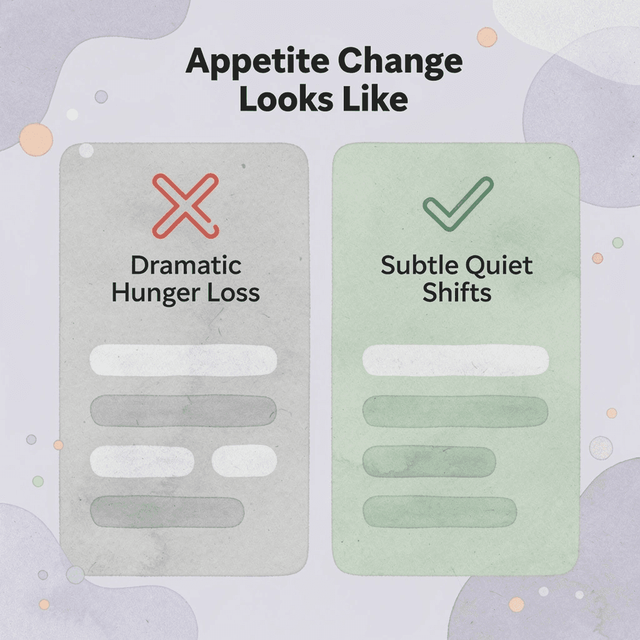
Most people on Zepbound rely on a single, dramatic signal to decide if the medication is working. But appetite suppression on tirzepatide rarely announces itself. It shows up in a smaller portion left on the plate, a snack you forgot to reach for, a meal you finished without thinking about the next one. Those signals are real data that most people miss entirely. Our GLP-1 app MeAgain was built to capture them.
"Appetite suppression on tirzepatide rarely announces itself — it shows up in subtle shifts like smaller portions, forgotten snacks, and feeling full sooner than before."
What to Track | Why It Matters |
|---|---|
Hunger levels | Reveals whether tirzepatide is gradually reducing appetite |
Portion sizes | Captures the subtle shift toward eating less |
Snacking frequency | Shows whether between-meal cravings are decreasing |
Fullness signals | Tracks whether you're feeling satisfied sooner |
Protein & fiber intake | Supports satiety and maximizes medication effectiveness |
Water & movement goals | Reinforces daily habits that compound your results |
Then use the app to log your protein and fiber intake, check off your water and movement goals, and track your progress as your Zepbound dose changes. Over the next 1–2 weeks, you'll have a much clearer record of whether you're eating smaller portions, snacking less, or feeling satisfied sooner than before.