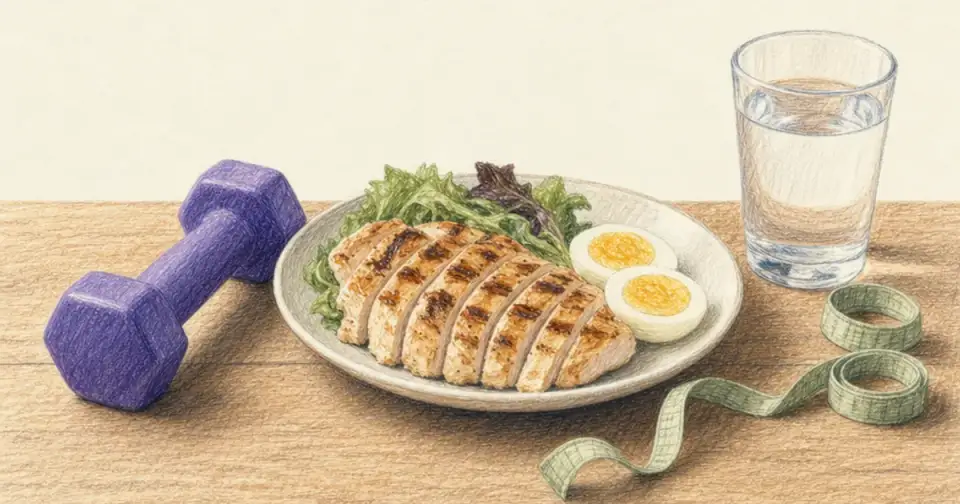

Losing weight on Zepbound can feel like progress until the scale reveals more than just fat loss. Zepbound-related muscle loss is a genuine concern for people using tirzepatide, since reduced calorie intake and appetite suppression can trigger lean muscle breakdown alongside fat loss. Understanding what happens to muscle mass during treatment and how to counter it matters for anyone who wants to protect their strength, body composition, and metabolism in the long term.
Knowing the right strategies is only part of the equation; staying consistent with them is where most people struggle. The GLP-1 app from MeAgain is built for people on medications like Zepbound, helping them track protein intake, build resistance training habits, and make daily choices that preserve lean muscle while losing fat.
Table of Contents
- Does Zepbound Cause Muscle Loss? What the Weight Loss Numbers Don't Tell You
- How Do You Know If You're Losing Muscle on Zepbound?
- 7 Zepbound Muscle Loss Strategies to Protect Lean Muscle Without Slowing Your Weight Loss
- Protect Your Muscle Without Losing Your Zepbound Weight Loss Progress
Summary
- Lean mass loss during tirzepatide treatment is a documented side effect of the caloric deficit the medication creates, not a direct result of the drug targeting muscle tissue. Clinical data from a 2025 systematic review published in PMC found that lean mass accounted for approximately 25 to 39 percent of total weight loss with tirzepatide, and that skeletal muscle declined by an average of 1.0 to 3.5 kg across the studies evaluated. That range is consistent with what researchers observe across other weight-loss methods, including bariatric surgery and aggressive caloric restriction.
- Protein intake is the most controllable variable in preserving lean muscle during active weight loss. A 2024 PMC review on incretin-mimetic drug strategies recommends at least 1.2 grams of protein per kilogram of body weight daily to protect lean mass during GLP-1 therapy. Because Zepbound suppresses appetite so effectively, reaching that target requires deliberate planning rather than passive habit, particularly when overall food volume drops significantly.
- Resistance training offers a substantial protective effect that cardio alone cannot replicate. Research cited by Fella Health found that resistance training can preserve up to 100 percent of lean muscle mass during caloric restriction, and separate data indicates it can reduce muscle loss during a caloric deficit by up to 50 percent compared to no exercise intervention. Two to three sessions per week covering major muscle groups is enough to send a consistent preservation signal to the body.
- The rate of weight loss matters as much as the total amount lost. Aggressive caloric deficits push the body to treat muscle as a fuel source rather than an asset worth maintaining. A moderate deficit of 300 to 500 calories per day consistently yields better body composition outcomes than crash-level restriction, even when total weight loss is similar over time.
- Standard tracking tools miss the variables that actually determine whether weight loss is coming from fat or lean tissue. A bathroom scale measures total mass without distinguishing its sources, and bioimpedance devices vary meaningfully with hydration and meal timing. DEXA scanning provides the most accurate quantification of fat mass, lean mass, and bone density, and consistent strength tracking serves as a practical functional proxy when clinical measurements are unavailable.
- Sleep and hydration are often overlooked but directly affect whether muscle repair occurs after training. Muscle tissue is approximately 75 percent water, and even mild dehydration impairs both muscle function and recovery. Seven to eight hours of sleep per night is when muscle protein synthesis peaks, making these two factors conditions under which all other protective strategies actually work.
- MeAgain's GLP-1 app addresses the tracking gap directly by centralizing protein intake, dose timing, weight trends, and training habits in one place, making it easier to spot patterns like low protein weeks coinciding with accelerated scale loss before they compound into a larger problem.
Does Zepbound Cause Muscle Loss? What the Weight Loss Numbers Don't Tell You
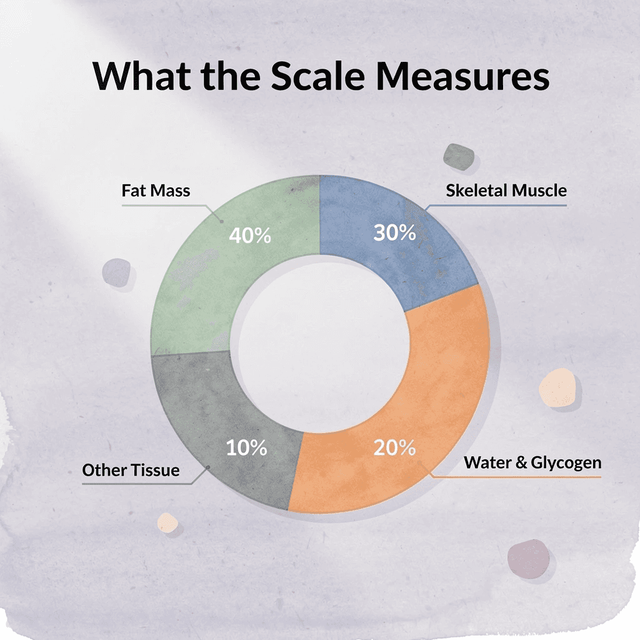
Most people assume a falling scale means Zepbound is working as intended. But the scale tells only part of the story—it measures total body weight and cannot distinguish between fat mass, skeletal muscle, water, glycogen, and other lean tissue. Two people losing 20 pounds could experience vastly different changes in body composition—one preserving muscle, the other losing it.
"The scale measures total body weight—it cannot tell the difference between fat mass, skeletal muscle, water, glycogen, and other lean tissue." — A critical distinction every Zepbound user should understand.
What the Scale Measures | What the Scale Misses |
|---|---|
Total body weight | Fat mass vs. lean mass ratio |
Day-to-day fluctuations | Skeletal muscle retention |
Overall progress trend | Water and glycogen shifts |
Raw pounds lost | Metabolic quality of weight loss |
Why does a calorie deficit put lean tissue at risk?
Zepbound doesn't directly target muscle tissue. Its appetite-suppressing effect creates a calorie deficit that drives weight loss. When that deficit is large or prolonged, especially with low protein intake and no resistance training, the body draws energy from lean tissue alongside stored fat. Successful weight loss on Zepbound does not automatically mean optimal weight loss. You can hit your target while losing more lean mass than you'd want to preserve.
What does the clinical data say about lean mass loss on Zepbound?
The clinical data makes this difference clear. In the SURMOUNT-1 trial, 2,539 adults lost an average of 15% to 21% of their body weight over 72 weeks. A 2025 systematic review of tirzepatide studies found that lean mass made up about 25% to 39% of the total weight lost. The real question isn't "Is Zepbound helping me lose weight?" It's "What am I losing to get there—and am I doing enough to protect the lean tissue I want to keep?"
What "lean mass loss" actually means
Muscle loss and lean mass loss are often confused, though they mean different things. Muscle loss refers specifically to skeletal muscle tissue—the contractile fibers responsible for movement, strength, and metabolic rate. Lean mass loss is broader, including muscle, water, glycogen stores, connective tissue, and organ mass. When clinical trials report lean mass changes, they measure a composite category, not whether your biceps disappeared. Confusing the two leads to either unnecessary panic or dangerous dismissal.
Does Zepbound directly target or damage muscle tissue?
Zepbound has no known direct mechanism that targets or damages muscle tissue. Instead, it suppresses appetite and reduces caloric intake. This caloric deficit drives weight loss by forcing the body to draw on stored energy from multiple sources. The faster and deeper the deficit, the more the body pulls from lean tissue alongside fat. This is not a Zepbound-specific problem: it applies to every effective weight-loss intervention from surgery to diet alone.
What the clinical data actually measured
The SURMOUNT-1 trial enrolled 2,539 adults and documented average weight loss of 15 to 21 percent of body weight over 72 weeks depending on dose. It measured total body weight, not body composition. Comprehensive dual-energy X-ray absorptiometry (DXA) data from large tirzepatide trials have not been fully published in peer-reviewed literature, so the exact lean-to-fat loss ratio for tirzepatide remains unclear. Participants showed reductions in thigh muscle volume alongside significant reductions in intramuscular fat, suggesting that some apparent muscle size reduction may reflect improved muscle quality rather than tissue loss.
When does lean mass loss become a real concern?
The key difference is between normal lean mass changes during weight loss and harmful muscle wasting. Losing some lean mass during a 20 percent reduction in total body weight is normal physiology, not evidence that Zepbound is harming your muscles. Risk becomes problematic when protein intake is chronically low, resistance training is absent, and weight loss occurs rapidly. For a 220-pound person, a lean mass loss of 7 to 13 pounds over several months is expected. The same loss compressed into 8 weeks with minimal protein and no strength training differs significantly.
How can tracking your data make these patterns visible?
Most people tracking their Zepbound journey rely on a single weekly weigh-in, without visibility into protein intake, resistance-training consistency, or how these factors change together. This makes it nearly impossible to distinguish between fat loss and lean tissue loss. Our MeAgain GLP-1 app solves this by letting users log protein intake, track dose timing, and monitor weight trends in one place, so patterns become visible before they become problems. When you can see that your protein intake dropped the same week your weight loss accelerated, you have actionable information.
Why rapid weight loss raises the stakes
How fast you lose weight matters as much as how much weight you lose. Research from Ubie Health's doctor's note on Zepbound muscle loss shows that strength training can cut muscle loss during a caloric deficit by up to 50 percent compared to not exercising. Zepbound's appetite suppression can lower motivation and energy for exercise, especially in the first few weeks when your body adjusts to eating significantly less food. Insufficient protein intake compounds this problem: reaching adequate protein targets requires effort when eating substantially less overall.
How do you know if your lean mass loss is running ahead of schedule?
Losing some lean mass during significant weight loss is expected and normal. The important thing to track is whether your lean mass loss matches your total loss or is happening faster. That gap is where the real problem lies. The real question is not whether Zepbound can cause lean mass loss, but whether your weight loss pattern shows you are losing more lean tissue than you should and how you would know before the problem becomes apparent.
Related Reading
- Zepbound Long Term Side Effects
- Does Zepbound Make You Sleepy
- Zepbound Not Working
- Do You Have To Take Zepbound Forever
- Why Am I Still Hungry On Zepbound
- How Many Calories Should I Eat On Zepbound
- What to Expect After First Dose of Zepbound
- Does Zepbound Give You Energy
- Does Zepbound Cause Hair Loss
How Do You Know If You're Losing Muscle on Zepbound?
The scale hides a complex story. A lower reading tells you total mass decreased, but not whether that mass came from fat, muscle, or both. That distinction determines whether your weight loss is building a healthier body — or eroding the one you have.
"The scale can't tell you what you're losing — only how much. Without tracking body composition, you're flying blind on one of the most critical factors in long-term health."
What the Scale Shows | What It Can't Tell You |
|---|---|
Total weight lost | Whether loss came from fat or muscle |
Daily fluctuations | Changes in lean body mass |
Overall progress | Your true body composition shift |
Short-term trends | Long-term metabolic impact |
What actually measures body composition?
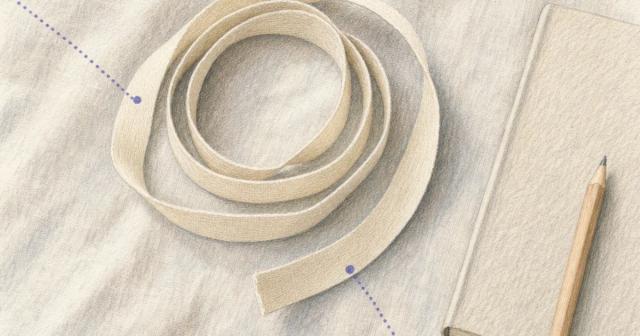
DEXA (dual-energy X-ray absorptiometry) scanning is the most reliable way to measure body composition, separating fat mass, lean mass, and bone density into distinct measurements. A scan before starting Zepbound and another several months later provides actual data rather than guesswork. According to a 2025 systematic review published in PMC, lean body mass loss accounted for approximately 25-39% of total weight loss with tirzepatide—a range wide enough that two people losing the same amount of weight could experience different body composition changes. DEXA makes that difference visible.
Most people never get a DEXA scan. The next-best way to track progress is by measuring strength performance consistently over time. If you were squatting a certain weight in January and struggle to hit half that by March, something meaningful has shifted. Strength is a functional indicator of lean tissue and responds to real changes in muscle mass in ways a bathroom scale never will.
Why your bathroom scale misleads you on muscle
Bioimpedance scales send a small electrical current through your body to estimate body fat and muscle mass, but they're sensitive to hydration levels. Drink less water before a reading, and the number changes. Eat a high-sodium meal the night before, and it changes again. A single reading showing "muscle loss" might reflect a 2% drop in hydration, not actual loss of lean tissue. Track trends across weeks for meaningful data, not individual readings.
Why is protein the first casualty when appetite drops?
Most people track weight daily and protein never, creating a blind spot. When tirzepatide significantly reduces appetite, total food intake drops, and protein is often the first casualty because it requires the most intentional effort to meet. The evidence-based target for preserving lean mass during active weight loss is 1.2 to 1.5 grams of protein per kilogram of body weight per day—roughly 109 to 136 grams for a 200-pound person, a number that is difficult to reach when appetite is suppressed. Our GLP-1 app pairs protein tracking with dose history and weight trends so users can see whether their nutrition is keeping pace with weight loss.
Your Zepbound muscle-loss risk checklist
Use this list to evaluate your current pattern honestly. Check any that apply:
Which physical warning signs should you look for?
- You're losing more than 1 to 2 pounds per week consistently
- You feel noticeably weaker lifting household items or during workouts
- Push-ups, squats, or carrying groceries feel significantly harder than they did a month ago
- You can see a visible reduction in muscle size in your arms, legs, or core
- You're experiencing persistent muscle soreness that doesn't resolve with rest
- You're not consistently hitting 1.2 to 1.5 grams of protein per kilogram of body weight daily
- Your energy is low even after adequate sleep
- You've reduced or stopped resistance training sessions since starting Zepbound
- You notice new balance issues or occasional stumbling
- Routine activities like climbing stairs or rising from a chair now feel effortful
Three or more checks is a meaningful pattern, not a diagnosis, but a clear signal to bring to your prescribing provider. The concerning combination is not just weight loss. It's rapid loss of muscle mass paired with declining strength, inadequate protein intake, and no resistance training, all occurring together. Each factor on its own is manageable. All four together point to a body that has little reason to hold onto lean tissue. Knowing the risk pattern is one thing. Knowing what to actually do about it, without sacrificing the progress Zepbound is delivering, is where the real work begins.
Related Reading
- How Long Do Zepbound Side Effects Last
- Where to Inject Zepbound for Best Results
- Does Zepbound Make You Pee More
- How Long Does It Take For Zepbound To Work
- How Long Does It Take For Zepbound To Suppress Appetite
- Zepbound Nausea Relief
- Zepbound Constipation Relief
7 Zepbound Muscle Loss Strategies to Protect Lean Muscle Without Slowing Your Weight Loss
Protecting lean muscle during Zepbound treatment means giving your body a clear, deliberate reason to hold onto muscle tissue while it releases fat — and that reason doesn't happen by accident.
"The body will always sacrifice muscle before fat unless you give it a compelling reason not to — through resistance training, adequate protein, and strategic recovery." — Sports Medicine & Nutrition Research
Muscle Loss Risk Factor | Why It Matters | Protective Strategy |
|---|---|---|
Caloric deficit | Body breaks down muscle for energy | Protein-forward diet |
Rapid weight loss | Accelerates lean tissue breakdown | Resistance training 3x/week |
Low protein intake | Removes building blocks for muscle repair | 1.2–1.6g protein per kg of bodyweight |
Sedentary lifestyle | Signals body that muscle is unnecessary | Daily movement + strength work |
Poor sleep | Disrupts muscle protein synthesis | 7–9 hours of quality sleep |
1. Optimize protein intake
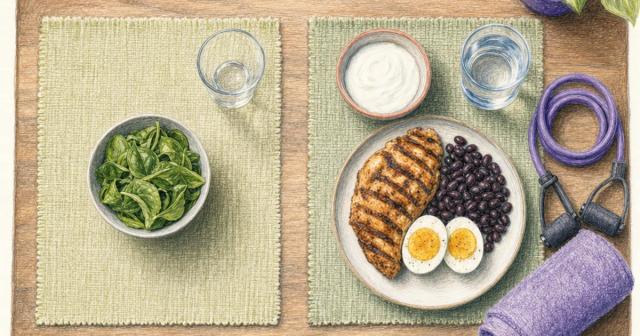
When eating much less food, every bite becomes more important. Protein provides amino acids that help build and maintain muscle, particularly when eating fewer calories. According to a 2024 PMC review on incretin-mimetic drug strategies, you should consume at least 1.2 grams of protein per kilogram of body weight daily to preserve muscle mass while using GLP-1 therapy.
How much protein do you actually need each day?
If that calculation feels like homework, use height as your guide instead.
Height | Daily Protein Target |
|---|---|
Under 5'0" | 50g |
5'0" to 5'4" | 60g |
5'4" to 5'8" | 70g |
5'8" to 6'0" | 80g |
Over 6'0" | 90g |
Try to get 20 to 25 grams of protein per meal. Whole food sources—chicken, eggs, Greek yogurt, cottage cheese, fish—are better choices. If Zepbound has reduced your appetite to the point that you're eating only two meals a day, a protein shake or bar offers a practical solution.
What happens when appetite suppression makes protein targets hard to hit?
The challenge most people face is that Zepbound suppresses appetite so effectively that meeting protein targets becomes physically difficult. When large meals feel uncomfortable, shift to smaller, more frequent protein-forward eating windows. A 4-ounce portion of salmon with Greek yogurt provides 35 grams of protein without requiring a full plate. Prioritize protein first at every meal.
2. Add resistance training
Cardio burns calories. Resistance training sends a signal. These are two different things, and conflating them is one of the most common mistakes people make during weight loss.
Why does resistance training preserve muscle during weight loss?
Walking and cycling improve heart and blood vessel health and help balance calories, but they don't create the mechanical tension that signals muscle fibers to stay. Resistance training—free weights, resistance bands, or bodyweight movements like squats and push-ups—creates that stimulus. According to Fella Health's research on Zepbound and muscle loss, resistance training can preserve up to 100% of lean muscle mass during caloric restriction and weight loss.
How much resistance training do you actually need?
Two to three sessions per week, each covering the major muscle groups (legs, back, chest, shoulders), consistently send the preservation signal. Start with movements you can do without pain and progress by adding small amounts of resistance every two to three weeks. The goal is to give your body a biological reason to protect the muscle it already has.
3. Moderate your calorie deficit
Aggressive calorie restriction accelerates lean mass loss alongside fat loss, as the body uses muscle for fuel when energy is severely limited. A moderate deficit of 300 to 500 calories per day is better for body composition than crash-level restriction. You lose fat while preserving functional muscle that maintains metabolism and strength. Since Zepbound already naturally reduces calorie intake through appetite suppression, adding an extreme deficit risks significant lean mass loss.
4. Address GI side effects before they derail your nutrition
Ongoing nausea, vomiting, or severe loss of appetite prevents you from meeting your protein goals, increasing the risk of muscle loss. If stomach and digestive side effects keep you from eating enough regularly, discuss them with your doctor rather than attributing them to willpower. Talk to the doctor who prescribed your medication; do not change your dose, skip doses, or stop taking it on your own. Your provider can help you adjust when you take the medication, where you inject it, and what you eat with it. These changes can help keep the medication working while ensuring you eat enough to protect your muscle.
5. Incorporate daily movement beyond structured workouts
Resistance training signals your body to preserve muscle. Daily movement addresses everything else. Research shows that regular physical activity—such as brisk walking, cycling, or swimming—helps you retain muscle while losing weight by improving blood flow, insulin sensitivity, and recovery between training sessions. You don't need a second formal workout. A 20-minute walk after dinner, taking the stairs, or standing during phone calls all add up to more movement. Think of structured resistance training as the anchor and daily movement as the current that keeps everything flowing.
6. Prioritize sleep and hydration
Most people who track protein and training frequency overlook sleep and fluid intake, two things that directly affect muscle repair. Muscle protein synthesis peaks during seven to eight hours of sleep per night. Even one night of poor sleep measurably reduces the body's ability to repair and rebuild muscle tissue after training. Dehydration worsens the problem. Muscle tissue is roughly 75% water, and even mild dehydration impairs both muscle function and recovery. Target two to three liters of fluid daily, more on training days. These aren't bonus habits: they're the conditions under which everything else you're doing works.
7. Track what's actually happening
Most people managing Zepbound nutrition rely on memory and rough estimates, making decisions with incomplete information. Belief isn't data.
What should you actually be tracking?
Tracking weight trends over time (not single daily weigh-ins), logging actual protein intake against your target, recording training sessions, and noting strength performance across weeks gives you a clear picture of what's happening. For a more precise read on body composition, an InBody scan or skinfold caliper assessment with a qualified professional can distinguish between fat loss and lean mass loss. Progress photos every four to six weeks add a visual layer that numbers alone miss.
Why does scattered tracking make patterns invisible?
Most people track things by remembering them or writing notes in scattered places. When your information is spread out or only in your head, patterns remain hidden. Our GLP-1 app consolidates your shots, food, protein goals, weight, and progress photos in one place, so you can see how your data connects rather than guessing.
How do you engineer a good outcome rather than hope for one?
The goal is to consistently shift the ratio so that more of what you lose is fat and more of what you keep is functional muscle. Stack protein, resistance training, moderate deficit, and consistent tracking together, and you engineer a good outcome rather than hope for one. The hardest part isn't knowing that protein, strength training, hydration, and consistency matter. It's remembering to do all of them when your appetite, energy, and routine are changing simultaneously.
Protect Your Muscle Without Losing Your Zepbound Weight Loss Progress
Losing weight on Zepbound means losing excess fat while preserving lean muscle that supports strength, mobility, and long-term health. However, a bathroom scale cannot distinguish between fat loss and lean tissue loss. That's where MeAgain earns its place.
Protect Your Lean Muscle With Data, Not Guesswork
The number on your scale can't distinguish between fat and lean muscle loss. The difference comes from habits you control: protein intake, strength training, recovery, and the speed of weight loss.
Download MeAgain, and in less than five minutes you'll have:
- a personalized daily protein target
- strength and workout tracking
- weight trend monitoring
- progress photos in one timeline
- reminders that help you stay consistent while using Zepbound
Instead of wondering whether your weight loss protects muscle, you'll have one place to track the habits that influence the outcome.