

Nausea is one of the most common side effects of Zepbound, and for many people, it becomes the biggest obstacle to staying on track. That unsettled feeling after an injection does not have to mean stopping treatment. With the right strategies, most people can manage Zepbound nausea and continue making progress toward their weight loss goals.
Small adjustments to timing, food choices, and daily habits can make a meaningful difference in how the body tolerates each dose. Tracking symptoms and patterns over time also helps identify what works best for each individual. For personalized guidance on managing side effects and staying consistent with treatment, the GLP-1 app from MeAgain offers tools built specifically for this journey.
Table of Contents
- Why Does Zepbound Cause Nausea? It’s Not Just “A Side Effect”
- How Long Does Zepbound Nausea Last and When Should You Worry?
- How to Get Zepbound Nausea Relief Without Derailing Your Progress
- Track Your Zepbound Symptoms and Build Habits That Reduce Nausea
Summary
- Nausea is one of the most common reasons people consider stopping Zepbound early, but the discomfort follows a predictable biological pattern rather than appearing at random. Tirzepatide activates both GIP and GLP-1 receptors simultaneously, thereby slowing gastric emptying as part of its weight-loss mechanism. Up to 44% of participants in the SURMOUNT clinical trials reported nausea, with symptoms most pronounced during dose increases.
- The sensation of nausea on Zepbound is not always coming from an overloaded stomach. GLP-1 receptors exist in the brain as well as the gut, meaning the central nervous system can generate nausea signals independent of what or how much someone has eaten. This explains why careful eaters still experience queasiness, and why food adjustments alone do not always resolve symptoms completely.
- Nausea typically peaks within the first one to two weeks after starting or increasing a dose, then gradually eases as the body adapts to slower gastric motility. Most patients see significant improvement within four to eight weeks at a stable dose. Each dose increase resets this adjustment window in a smaller way, producing a few days of renewed discomfort before the body recalibrates again.
- Certain behaviors reliably intensify nausea by compounding the medication's effect on digestion. Eating large portions, choosing high-fat or processed foods, drinking fluids during meals, and lying down after eating all add pressure to a stomach already working at reduced speed. Spreading intake across five or six smaller meals, prioritizing protein, and sipping fluids between rather than during meals addresses several of these triggers at once.
- Nausea that worsens after two or more weeks at a stable dose, or that prevents adequate fluid intake, moves beyond normal adjustment and warrants direct contact with a prescriber. Red flags including repeated vomiting, dizziness, dark urine, or significant abdominal pain require same-day medical attention. Stopping or reducing a dose independently without prescriber guidance is not a safe workaround and often makes symptoms harder to manage over time.
- Most people track nausea as an isolated event without connecting it to dose timing, meal composition, or hydration patterns from the days before. This is where MeAgain's GLP-1 app fits in, logging dose timing, food intake, hydration, and side effects together so patterns across the adjustment phases become visible rather than staying buried in daily experience.
Why Does Zepbound Cause Nausea? It’s Not Just “A Side Effect”
Most people assume Zepbound nausea is something you must tolerate until your body adjusts. But nausea on tirzepatide has a specific mechanism, and understanding it reveals which relief strategies work.
"Nausea on tirzepatide is not random discomfort. It is a direct, predictable response to how the drug interacts with your gut and brain signaling pathways." — PMC, 2021
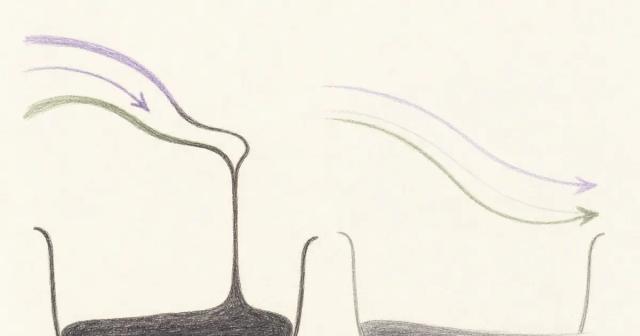
How tirzepatide changes the way your stomach works
Tirzepatide activates two incretin hormone pathways simultaneously. GLP-1 slows gastric emptying and increases satiety, while GIP enhances the incretin effect, a mechanism described in a 2021 review. This drives weight loss but causes discomfort in early weeks.
What happens when both hormone pathways engage at once?
Both GLP-1 receptor agonists and tirzepatide slow gastric emptying and small intestine motility, according to a review in the Journal of Clinical Endocrinology & Metabolism. When both pathways work together, your stomach empties more slowly, your brain receives stronger satiety signals, and a meal that felt normal last month suddenly feels excessive. Your body's response to food has changed, not your stomach's size.
Why is the nausea predictable rather than random?
The nausea is a predictable result of slower gastric transit meeting a digestive system that hasn't adjusted. Eating the same portion sizes as before Zepbound overfills a system processing food at a different rate. The discomfort signals overload, not weakness or intolerance.
What makes nausea worse than it needs to be
Several behaviors worsen tirzepatide-induced nausea. High-fat meals slow gastric emptying; spreading fat across meals is more effective than consuming it all at once, per Baylor Scott & White Health. Eating too quickly overwhelms a stomach that needs more time to process each bite; UVA Health recommends eating slowly in smaller portions. Drinking too much water at once can overfill an already slow-moving stomach, per a GLP-1 nausea guide. Large gaps between meals trigger nausea reliably—many patients notice it's worst in the morning after skipping breakfast, per clinical guidance on managing GLP-1 nausea. The problem usually isn't the medication itself, but the clash between old eating habits and a fundamentally different digestive environment.
How does dose escalation make the mismatch worse?
Taking higher doses worsens this problem. Zepbound's FDA-approved information shows stomach and digestive problems in 56% of patients across all three maintenance doses, compared to 30% on placebo. Lilly's clinical trial data show nausea rates of 25% at 5 mg, 29% at 10 mg, 28% at 15 mg, and 8% on placebo. The increase is not linear with dose. Higher doses affect gut and brain receptors more strongly; if eating habits haven't adjusted to the lower dose, additional medication amplifies the mismatch. The FDA label shows that 4.8%, 6.3%, and 6.7% of patients on 5 mg, 10 mg, and 15 mg, respectively, discontinued treatment due to adverse reactions, versus 3.4% on placebo, mostly in the first few months. A 2024 study found tirzepatide increases the risk of GERD and its short-term complications.
Why does tracking your symptoms reveal patterns memory misses?
Most people mentally track what they ate, when they took their dose, and how they felt afterward. Memory is unreliable, and patterns remain hidden without a consistent record. When nausea, food intake, hydration, and dose timing are tracked together on a single timeline, seemingly random triggers reveal themselves. Tools like our MeAgain GLP-1 app connect side-effect logs to dose history, food and water intake, so users can see the patterns driving their symptoms rather than guessing. The goal is to reduce the specific triggers interacting with tirzepatide's effects on digestion, which requires identifying which triggers affect you.
Related Reading
- Zepbound Long Term Side Effects
- Does Zepbound Make You Sleepy
- Zepbound Not Working
- Do You Have To Take Zepbound Forever
- Why Am I Still Hungry On Zepbound
- How Many Calories Should I Eat On Zepbound
- What to Expect After First Dose of Zepbound
- Does Zepbound Give You Energy
- Does Zepbound Cause Hair Loss
How Long Does Zepbound Nausea Last and When Should You Worry?
Nausea from Zepbound follows a predictable pattern. According to MEDvidi's clinical overview, nausea typically peaks within the first one to two weeks after starting or increasing your dose, then gradually improves as your body adjusts to the slower gastric emptying the medication causes.
"Nausea typically peaks within the first one to two weeks after starting or increasing your dose, then gradually improves as your body adjusts." — MEDvidi Clinical Overview
Timeframe | What to Expect | Action Needed? |
|---|---|---|
Week 1–2 | Nausea peaks after dose start or increase | Monitor; use management strategies |
Week 3–4 | Symptoms gradually improve | Continue medication as prescribed |
Beyond 4 weeks | Nausea should be significantly reduced | Consult provider if still severe |
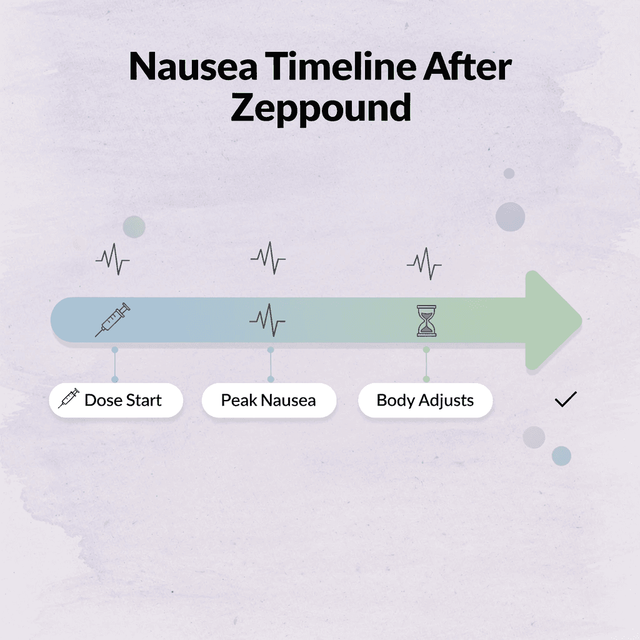
What the adjustment timeline actually looks like
The initiation phase, roughly weeks one through four, is where most people feel the sharpest discomfort. Symptoms usually surface one to three days after the first injection and then settle into a pattern tied to your dosing schedule. When titration begins and doses increase, expect a brief return of nausea, sometimes with a feeling of starting over. This isn't a sign something is wrong—it's your digestive system adjusting to a new set point. MEDvidi reports that for most patients, Zepbound-related nausea resolves within four to eight weeks as the body adjusts, meaning the discomfort at week two differs from what you should expect at week six.
What happens to nausea after the twelve-week mark?
After twelve weeks, many people find that nausea improves or resolves when they stay on the same dose. Each dose increase restarts the adjustment period in a smaller way, causing a few days of renewed queasiness before the body adapts. Understanding this pattern helps ease concerns about whether the medicine is working or simply causing side effects.
How does tracking patterns across adjustment phases reduce fear?
Most people track nausea in isolation, noting they felt sick on Tuesday without connecting it to the dose taken Sunday, the fatty meal eaten Monday, or forgotten water. A GLP-1 app like MeAgain logs dose timing, food choices, hydration, and side effects in one place, making patterns visible across adjustment phases. When you see that nausea spikes two days after injection and resolves by day four, you stop fearing the pattern and start anticipating it.
When does nausea stop being part of adjustment and start being a signal?
You can expect nausea to improve over a few days and remain manageable. It shouldn't prevent you from drinking fluids or eating small amounts. If nausea worsens after two weeks at a stable dose or returns with greater intensity, something may be wrong. Risk factors include a history of IBS, gastroparesis, or acid reflux; concurrent medications like metformin that affect digestion; and inadequate water intake.
What red flags require prompt attention?
Red flags requiring immediate attention include: inability to keep fluids down for more than twelve hours, multiple episodes of vomiting rather than nausea, signs of dehydration (dizziness, dark urine, rapid heartbeat), or severe worsening stomach pain. Persistent vomiting and inadequate fluid intake create a cycle of deterioration: dehydration disrupts your electrolyte balance, making fatigue and weakness worse, which impairs eating and compounds the problem. Do not stop or reduce your Zepbound dose without medical guidance. Contact your prescriber to discuss whether your titration schedule requires adjustment. Knowing when nausea is expected is only half the battle; managing it day to day proves more complicated than most people anticipate.
Related Reading
- How Long Do Zepbound Side Effects Last
- Where to Inject Zepbound for Best Results
- Does Zepbound Make You Pee More
- How Long Does It Take For Zepbound To Work
- How Long Does It Take For Zepbound To Suppress Appetite
- Zepbound Constipation Relief
How to Get Zepbound Nausea Relief Without Derailing Your Progress
Nausea on Zepbound is manageable when you treat each trigger as a specific problem with a specific fix. The strategies below connect directly to the gastric-emptying and appetite-signaling mechanisms already established, so you understand the "why" behind every recommendation.
According to Ivím Health's 2025 analysis of GLP-1 side effects, GLP-1 medications slow gastric emptying by up to 30%, which means food stays in your stomach significantly longer than your body is used to. That single fact explains nearly every dietary adjustment worth making. Large meals feel heavier because they sit longer. Fatty foods make the problem worse because they already take more time to digest. Drinking fluids during meals adds volume to a stomach already working in slow motion. The fix is not willpower — it is architecture: restructuring how, when, and what you eat around a stomach operating on a different timeline.
"GLP-1 medications slow gastric emptying by up to 30%, meaning food stays in your stomach far longer than your body expects — and every dietary adjustment worth making flows from that single fact." — Ivím Health, 2025
Trigger | Why It Causes Nausea | The Fix |
|---|---|---|
Large meals | Sit longer in a slowed stomach | Eat smaller, more frequent portions |
Fatty foods | Already slow to digest — compounded by GLP-1 | Choose lower-fat options during treatment |
Fluids with meals | Adds volume to an already-full stomach | Separate fluids from meals by 30 minutes |
If Large Meals or Heavy Foods Are Triggering Your Nausea
1. Eat Smaller, More Frequent Meals
Try eating six smaller meals throughout the day instead of three standard ones. Smaller portions reduce the total amount of food in your slower-moving stomach, which directly lowers the risk of nausea. Adjust portion sizes as needed. The FDA's prescribing information for Zepbound acknowledges that gastrointestinal side effects are dose-dependent, supporting the rationale for eating less per sitting.
2. Avoid Trigger Foods and Drinks
Fatty foods like cheese, butter, and fatty cuts of meat slow gastric emptying, worsening nausea. The same applies to spicy foods, heavily processed snacks, alcohol, carbonated drinks, and caffeine. When nauseous, eat bland foods instead: plain toast, rice, boiled potatoes, chicken, fish, apples, and ginger-based drinks or chews. Research published through Healthline shows that Zepbound can cause average weight loss of up to 22.5% of body weight in clinical trials, so continue taking your medication as prescribed.
3. Avoid Lying Down or Intense Activity After Meals
Lying down after eating increases acid reflux and worsens nausea when your stomach empties slowly. Hard exercise immediately after a meal diverts blood flow from digestion when your stomach needs it most. A gentle walk or sitting upright for 30 to 60 minutes after eating supports better digestion. Avoid eating close to bedtime for the same reason.
If Timing and Hydration Are Part of the Problem
4. Avoid Drinks During Meals.
Drinking 30 to 60 minutes before or after meals reduces stomach volume at peak digestion. Skip straws and carbonated drinks, which introduce air and worsen bloating and nausea. Stay hydrated throughout the day, especially if vomiting or diarrhea occurs, as dehydration can compound fatigue.
5. Only Eat When Hungry.
Tirzepatide significantly reduces appetite, so eating out of habit adds unnecessary volume to an already stressed stomach. Pay attention to physical hunger cues: a rumbling stomach, mild discomfort, or a sense of emptiness. Emotional hunger manifests as cravings for specific foods rather than openness to anything available. Eating only when physically hungry and stopping when comfortably full is one of the most straightforward changes you can make.
6. Stay Hydrated Strategically.
Drink fluids in small amounts throughout the day rather than in large quantities at once. Large fluid intake puts pressure on your stomach as much as large meals do. Herbal teas, particularly peppermint and chamomile, reduce nausea while contributing to your daily fluid intake. If you vomit, drink fluids immediately, as dehydration weakens you.
If Your Nausea Clusters Around Dose Changes
7. Follow Your Dose Escalation Plan
Tirzepatide is introduced at a low starting dose and increased every four weeks to allow your body to adapt to progressively slower gastric emptying. Nausea is often worst in the first week after a dose increase, then improves as the week progresses. Skipping doses or adjusting your own schedule disrupts adaptation and can intensify side effects with the next dose.
8. Track Injection Timing and Symptom Patterns
Write down your injection day, food intake, hydration, and nausea severity using a consistent scale. Look for whether symptoms worsen reliably in the 24 to 48 hours after injection and improve by mid-week. A GLP-1 app like MeAgain logs these details together so patterns become visible. When you can show your prescriber a clear picture of when symptoms spike and what preceded them, the conversation shifts from vague reporting to actionable adjustment, removing guesswork from decisions made weeks after symptoms occurred.
When Adjustments Are Not Enough
9. Try Anti-Nausea Medications
Over-the-counter options like bismuth subsalicylate (Pepto Bismol) and dimenhydrinate (Dramamine) work within 30 to 60 minutes. For ongoing nausea, prescription options like ondansetron (Zofran) are available from your doctor. Anti-nausea medications aren't a long-term replacement for dietary changes, but they help during the adjustment period. They're especially effective around dose increases when symptoms peak.
10. Try Acupressure and Protein-Rich Snacks
Pressing the P6 (Neiguan) point on the inner wrist with an acupressure wristband offers a non-drug option. A 2025 study found that acupressure wristbands relieved nausea within 20 minutes for all 31 participants. Pairing this with protein-rich snacks like hard-boiled eggs, cottage cheese, roasted chickpeas, or chia pudding stabilizes blood sugar between meals, reducing nausea from prolonged gaps without eating. Protein also preserves muscle mass during weight loss.
When to act and when to wait
Most people dealing with mild nausea that is improving can manage it through dietary changes. Allow each adjustment several days to take effect before assessing its usefulness.
When should you contact your prescriber about nausea?
When nausea lasts longer than a week or two after a dose change, interferes with work or sleep, or prevents adequate eating and drinking, call your prescriber. Bring specific information: your current dose, injection day, symptom severity on a scale, whether you've vomited, your intake of food and fluids, and symptom duration in days. This gives your provider the information needed to make an informed decision.
Which symptoms mean you need same-day medical attention?
Get medical help right away if you have severe vomiting, signs of dehydration (dizziness, dark urine, rapid heart rate), or serious stomach pain. These are not typical Zepbound side effects and require same-day attention. Most people manage nausea by trying things and hoping something works. Those who get ahead of it act deliberately—and it changes how fast they recover.
Track Your Zepbound Symptoms and Build Habits That Reduce Nausea
Nausea on Zepbound is unpredictable until you connect your symptoms to dose timing, meal composition, hydration, and daily habits. Most people track this information across multiple apps and notes, making patterns hard to spot.
"Nausea on Zepbound is unpredictable until you connect your symptoms to dose timing, meal composition, hydration, and daily habits. Patterns only emerge when you track them in one place."

A tool like MeAgain brings tracking together in one place. Instead of guessing why Wednesday felt worse than Monday, you log your Zepbound dose, nausea levels, protein, fiber, and water intake — and patterns show up automatically.
What You Track | Why It Matters |
|---|---|
Zepbound dose timing | Connects injection schedule to symptom spikes |
Nausea levels | Reveals severity trends over time |
Protein intake | Identifies meals that reduce or worsen symptoms |
Fiber intake | Flags digestive triggers linked to nausea |
Water intake | Tracks hydration's role in symptom relief |
Within a week, you're not just managing symptoms — you're understanding them.