

GLP-1 medications have become one of the most talked-about options in weight management, and for good reason. Understanding the pros and cons of GLP-1 for weight loss helps people move past the hype and make decisions grounded in their own health goals and circumstances. These drugs work differently from traditional approaches, which means the benefits and trade-offs are worth examining closely before committing to a plan.
Having reliable support alongside any weight loss treatment makes a meaningful difference in long-term results. MeAgain is designed to help users track progress, stay consistent, and understand how GLP-1 therapy is working for them day-to-day. For anyone exploring or already using GLP-1 treatment, the GLP-1 app offers a practical way to connect daily habits with bigger health goals.
Table of Contents
- 10 Biggest Benefits of GLP-1 for Weight Loss
- 10 Downsides of GLP-1 for Weight Loss
- Do the Pros Outweigh the Cons of GLP-1 for Weight Loss?
- How Can You Maximize the Benefits and Minimize the Side Effects of GLP-1?
- Build Your Personalized GLP-1 Success Plan Today
Summary
- GLP-1 receptor agonists produce weight-loss outcomes that rival those of surgical interventions in some patients. Semaglutide reduces body weight by up to 20 to 22% in clinical trials, and tirzepatide at its highest dose produced average weight reductions exceeding 20% of total body weight over 72 weeks in the SURMOUNT-1 trial. These figures represent a meaningful shift in what pharmaceutical weight management can realistically achieve.
- The benefits of GLP-1 medications extend well beyond the scale. The SELECT trial confirmed a 20% reduction in serious cardiovascular events over approximately 34 months in people with pre-existing cardiovascular disease, and separate research documents measurable reductions in inflammatory markers, triglycerides, and blood pressure independent of weight loss alone. For patients managing obesity alongside metabolic or cardiovascular conditions, the medication is doing compounding work across multiple systems simultaneously.
- The side effect profile is real and frequently underrepresented in consumer-facing coverage. Nausea affects up to 44% of patients initiating GLP-1 therapy, and more than 30% of total weight lost can come from lean muscle mass rather than fat. Gastrointestinal effects, injection-site reactions, a modest increase in resting heart rate, and elevated risk of pancreatitis are all documented in the clinical literature and warrant a direct conversation with a prescribing physician before treatment begins.
- Cost and long-term commitment are two of the most significant practical barriers to GLP-1 therapy. Brand-name medications typically cost $800 to $1,200 per month out of pocket, and data from the STEP and SURMOUNT extension trials show that the majority of patients who discontinue treatment regain a substantial portion of the weight they lost within 12 months. What many people enter as a short-term intervention frequently becomes an open-ended pharmaceutical commitment, and that reality shapes the financial and psychological calculus of starting treatment.
- Real-world discontinuation rates tell a story that clinical trial populations do not capture fully. Some observational studies show dropout rates exceeding 50% within the first year, driven by GI side effects during dose titration, cost burden, injection fatigue, and the psychological weight of indefinite use. Adherence is a structural challenge that requires consistent symptom tracking and a support system designed specifically for GLP-1 realities, not adapted from generic dieting frameworks built on a completely different appetite and biology.
- MeAgain's GLP-1 app addresses this directly by consolidating dose tracking, nutrition logging, symptom monitoring, and weight progress into one place, reducing the fragmented data problem that causes people to lose sight of the patterns that most affect their results.
10 Biggest Benefits of GLP-1 for Weight Loss
GLP-1 medications change underlying biology rather than just behavior — a difference that matters enormously when you're deciding if this treatment is right for you.
"GLP-1 medications target the underlying biology of weight regulation, not merely willpower or habit — representing a fundamental shift in how modern medicine approaches obesity treatment."
Approach | Targets | Mechanism |
|---|---|---|
Traditional Dieting | Behavior only | Calorie restriction |
Exercise Programs | Behavior only | Energy expenditure |
GLP-1 Medications | Underlying biology | Hormonal & metabolic regulation |

1. Clinically Proven, Meaningful Weight Loss
GLP-1 receptor agonists slow gastric emptying, keeping food in your stomach longer and signaling fullness to your brain before overeating occurs. This reduces calorie intake without requiring significant willpower. According to the study "The expanding benefits of GLP-1 medicines," published in Cell Reports Medicine, semaglutide reduces body weight by 20-22% in clinical trials, matching bariatric surgery outcomes in some patients. In the SURMOUNT-1 randomized controlled trial, tirzepatide at its highest dose produced average weight reductions exceeding 20% of total body weight over 72 weeks, redefining pharmaceutical weight management.
2. Better Blood Sugar Control and Metabolic Health
GLP-1 agonists mimic a gut hormone that triggers insulin release when blood sugar rises, ensuring insulin responds proportionally to glucose levels. Simultaneously, they reduce glucagon, the hormone that prompts the liver to release glucose. This dual action lowers HbA1c, reduces insulin resistance, and improves cholesterol and blood pressure levels. For people managing type 2 diabetes with obesity, this represents the primary therapeutic benefit.
3. Appetite Regulation That Changes Your Relationship With Food
The failure point in most diets is not knowledge but the constant pull of hunger and craving that outlasts motivation. GLP-1 medications work on receptors in both the gut and the brain, particularly in regions that govern reward and appetite signaling. This is why many people on semaglutide or tirzepatide report that food no longer feels urgent. Meals become smaller and more satisfying because the neurological drive to eat more has been reduced.
4. Reduced "Food Noise"
"Food noise" refers to the constant mental chatter about what to eat next, cravings that interrupt work, and repeated trips to the kitchen even when not hungry. GLP-1 agonists quiet that loop. People on these medications often describe it as the first time in their adult lives that food stopped consuming so much mental space, freeing up cognitive bandwidth for everything else.
How does tracking food noise reveal when your medication is working?
Tracking this shift systematically alongside dose timing, meal patterns, and weight trends shows when the medication is working and when adjustments are needed. Our GLP-1 app at MeAgain lets you log food noise, appetite changes, and side effects alongside your dose schedule so patterns become visible, not just felt.
5. Cardiovascular Benefits With Real Clinical Weight
GLP-1 receptor agonists reduce inflammation in blood vessel walls, improve vascular function, and lower blood pressure independent of weight loss. According to Cell Reports Medicine's 2025 analysis of the expanding benefits of GLP-1 medicines, these medications reduce the risk of major adverse cardiovascular events in high-risk patients with obesity or type 2 diabetes. The SELECT trial confirmed a 20% reduction in serious cardiovascular events over approximately 34 months in people with pre-existing cardiovascular disease without diabetes.
6. Improved Blood Fat Levels
GLP-1 agonists lower triglycerides and modestly improve LDL cholesterol, while some studies show increases in HDL. This occurs through reduced caloric intake, lower insulin resistance, and decreased liver fat buildup. For someone managing both obesity and dyslipidemia, the medication addresses both conditions simultaneously.
7. Reduced Inflammation That Protects Blood Vessels
Long-lasting, low-level inflammation causes heart disease, metabolic dysfunction, and organ damage. GLP-1 receptor agonists lower C-reactive protein and other inflammatory markers even without weight loss, meaning patients gain cardiovascular protection with modest weight reduction: benefits the scale cannot show.
8. Lower Risk of Disordered Eating Patterns
The same appetite-controlling and food-noise-reducing effects that help with weight loss also seem to reduce binge-eating behaviors. Early research and clinical observation suggest GLP-1 medications decrease the compulsive, reward-driven eating patterns connected with binge eating disorder and bulimia. By dampening the dopamine-driven urgency around food, these medications may offer a pharmacological complement to behavioral therapy for people whose relationship with eating has caused significant distress.
9. Improvements in Sleep Apnea Severity
Weight loss from GLP-1 medications reduces fat deposits around the upper airway that contribute to obstructive sleep apnea. The SURMOUNT-OSA trial showed reductions in the apnea-hypopnea index of up to 62.8% over 52 weeks, meaning participants needed their CPAP machines less and experienced improvements in sleep quality, daytime energy, and cognitive function.
10. Better Quality of Life Across Multiple Dimensions
Studies with random assignment consistently show meaningful weight loss, reduced pain in weight-bearing joints, improved mobility, better mood, and higher quality-of-life scores. In the STEP 1 trial, semaglutide 2.4 mg produced 14.9% average weight reduction alongside significant improvements in physical functioning and mental health-related quality of life over 68 weeks. These outcomes matter because they address why people pursue treatment in the first place, and the evidence confirms that GLP-1 medications deliver on these outcomes.
The benefits are real, well-documented, and transformative. But knowing what these medications can do is only part of the picture.
Related Reading
- GLP-1 Plateau
- How Does GLP-1 Help You Lose Weight
- How Much Protein On GLP-1
- How Much Water To Drink on GLP-1
- Why Am I Not Losing Weight On GLP-1
- Can GLP-1 Cause Gastroparesis
- Can GLP-1 Cause Kidney Stones
- Which GLP-1 Has The Least Side Effects
- Does GLP-1 Cause Acid Reflux
- Why Am I Not Losing Weight on Zepbound
10 Downsides of GLP-1 for Weight Loss
GLP-1 medications can change lives. But social media omits side effects, the work gets hard, and monthly costs add up. The full picture is far more complicated than before-and-after photos suggest.
"Transformation content gets shared; nausea logs do not — and that gap shapes everything people believe about GLP-1 therapy."

Many people think the prescription handles everything. Transformation content gets shared; nausea logs do not. This creates a critical blind spot around the real trade-offs of GLP-1 therapy, with real consequences for anyone going in unprepared.
What Gets Shared | What Gets Left Out |
|---|---|
Before-and-after photos | Nausea and GI side effects |
Rapid weight loss wins | Monthly cost burden |
Transformation stories | Long-term lifestyle requirements |
Prescription access | Medication dependency concerns |
1. Cosmetic Changes: Hair Loss, Loose Skin, and "Ozempic Face"
Fast weight loss triggers telogen effluvium, a temporary form of hair shedding caused by calorie restriction. It typically begins two to four months after significant weight loss starts and can last several months.
Loose or sagging skin is another consequence rarely mentioned in promotional content. When fat volume decreases quickly, skin does not always shrink at the same pace. Facial volume loss, sometimes called "Ozempic face," produces more pronounced wrinkles and a hollowed appearance, particularly in patients over 40. These are predictable outcomes of fast, significant weight reduction, not rare edge cases.
2. Increased Heart Rate
GLP-1 and dual-agonist drugs show small, steady increases in resting heart rate. Clinical trials for semaglutide documented mean increases of approximately one to four beats per minute. For most patients, this is not clinically significant, though those with pre-existing arrhythmias or cardiovascular sensitivities should discuss this with their prescribing physician before starting treatment.
3. Injection Site Reactions
Redness, itching, bumps, and localized irritation at the injection site affect a meaningful share of GLP-1 users, particularly during the early weeks of treatment. These reactions are rarely dangerous but uncomfortable and frequently underreported in consumer-facing coverage. Rotating injection sites and following proper technique reduce the incidence, though they don't eliminate it entirely.
4. Kidney Damage from Dehydration
When someone takes GLP-1 drugs, vomiting and diarrhea from dose increases can cause serious dehydration, stressing the kidneys. According to a WashU Medicine and Veterans Affairs St. Louis Health Care System study, people using GLP-1 drugs have a higher risk of kidney problems. Patients experiencing prolonged gastrointestinal symptoms should ensure adequate fluid intake.
5. Gastroparesis: When Slowed Digestion Becomes a Problem
The appetite-suppressing mechanism that slows gastric emptying can progress beyond the intended effect in some patients. Gastroparesis—where the stomach empties too slowly or incompletely—causes nausea, bloating, early fullness, and in severe cases, vomiting of undigested food. While mild gastric slowing is manageable for most users, a smaller group experiences persistent, disruptive symptoms that may not fully resolve after stopping the medication.
6. Pancreatitis
A 2025 study from WashU Medicine and the Veterans Affairs St. Louis Health Care System found that GLP-1 medications were linked to an increased risk of pancreatitis, a risk noted in the FDA prescribing information for this drug class. While overall risk remains low for most patients, those with a personal or family history of pancreatitis, gallbladder disease, or heavy alcohol use face meaningfully higher baseline risk and should consult their provider before starting treatment.
7. Muscle Loss: The Hidden Weight of Weight Loss
More than 30% of the total weight lost on GLP-1 medications comes from lean muscle mass, not fat. This differs from other calorie-restriction approaches: when patients stop taking the medication and regain weight, it returns as fat rather than muscle. This creates a cumulative deficit in lean mass that worsens metabolic health over time. Resistance training and adequate protein intake are the primary clinical interventions, though they are rarely discussed when the medication is prescribed.
How can tracking tools help you catch muscle loss signals early?
Most people managing this end up tracking protein in one app, weight in another, and symptoms scattered across notes. Our GLP-1 companion app, MeAgain, consolidates protein intake, weight trends, and side-effect logs in one place, making it easier to spot signs of muscle loss before they worsen. This visibility matters more on GLP-1s than generic diet plans because the stakes of missing the pattern are higher.
What do GLP-1 medications actually cost out of pocket?
If you pay out of pocket for brand-name GLP-1 medications, expect to spend $800 to $1,200 per month. Insurance coverage for weight-loss uses varies inconsistently. Manufacturer direct-to-consumer programs can lower costs to around $500 per month. Compounded versions of semaglutide and tirzepatide are heavily promoted online at lower prices, but they are not FDA-approved formulations and carry risks, including unverified purity, incorrect dosing, and immunogenicity issues.
How does long-term GLP-1 cost compare to bariatric surgery?
At $6,000 to $14,400 per year, using GLP-1 drugs long-term becomes cost-competitive with bariatric surgery within two to three years. Bariatric surgery typically delivers 20% to 30% weight loss with frequent diabetes remission and a one-time cost of $18,000 to $23,000, a comparison rarely surfaced in mainstream coverage.
9. Weight Regain After Discontinuation
STEP and SURMOUNT extension trial data show that most patients regain substantial weight within 12 months of stopping GLP-1 medications. Dietary changes and exercise slow but do not prevent rebound for most people. This transforms what many patients enter as finite treatment into an effectively indefinite pharmaceutical commitment. Patients deserve to know this before starting.
The psychological weight of that reality is significant. Anxiety about stopping, fear of regression, and the emotional burden of an open-ended treatment timeline are recurring themes among people who feel they were not told the full story up front.
10. Adherence Challenges
More than half of people stop using GLP-1 therapy within the first year. Stomach and digestive side effects during dose increases are the most common reason for early discontinuation, though cost, injection fatigue, and the mental burden of lifelong medication accumulate over time. Staying on medication requires active symptom management and a support system tailored to this specific journey, not borrowed from standard diet plans.
The side effects, costs, and long-term commitments described here are not reasons to avoid GLP-1 medications. There are reasons to start with clear eyes, realistic expectations, and the right support system.
Do the Pros Outweigh the Cons of GLP-1 for Weight Loss?
For most people managing obesity or type 2 diabetes, GLP-1 receptor agonists deliver measurable, meaningful results that few other treatments can match at scale. But the exceptions matter — and they're more significant than averages suggest.
"GLP-1 receptor agonists deliver results that few other treatments can match at scale — but the exceptions are more significant than averages suggest."
Factor | Favorable Outcome | Exception to Watch |
|---|---|---|
Weight Loss | Significant reduction in most patients | Minimal response in some individuals |
Blood Sugar Control | Improved glycemic markers | Variable efficacy across patient profiles |
Side Effect Profile | Manageable for the majority | Severe GI issues in a subset of users |
Long-Term Sustainability | Promising clinical data | Regain common after discontinuation |
Best choice if...
The strongest candidates for GLP-1 therapy have a BMI at or above 30, at least one obesity-related condition such as high blood pressure or insulin resistance, and limited results from behavioral interventions alone. According to a 2025 review published in Weight Loss That Lasts: Reviewing the Long-Term Impact of GLP-1 Receptor Agonists, tirzepatide showed 22.5% mean body weight reduction over 72 weeks in the SURMOUNT-1 trial. For patients with cardiovascular risk alongside obesity, GLP-1 receptor agonists reduced major adverse cardiovascular events by approximately 20% in high-risk patients.
Think twice if...
The picture changes when cost, access, or medical history complicate treatment. Patients with a personal or family history of medullary thyroid carcinoma or multiple endocrine neoplasia syndrome type 2 cannot use GLP-1s, regardless of weight. These medications cost $900 to $1,300 per month without insurance, and coverage varies across plans and employers. As University of Chicago health economist David Kim has noted, the assumption that patients must stay on GLP-1s indefinitely drives much of the concern about affordability and warrants scrutiny rather than acceptance.
When does switching to a lower-cost approach make sense?
When cost creates a barrier to medication adherence, research from the University of Chicago suggests that a step-by-step approach—using GLP-1 medications for initial weight loss, then switching to lower-cost behavioral programs or other medications for maintenance—yields modest improvements in clinical outcomes while substantially reducing lifetime healthcare spending. Partial access is often worse than a well-designed alternative plan. A patient who starts GLP-1 therapy, loses 15% of body weight, then stops suddenly without a maintenance strategy, is no better positioned than one who never started. The transition plan is part of the treatment, not an afterthought.
How does consolidating your tracking produce better insight?
Most people tracking their GLP-1 journey manage this in pieces: a notes app for symptoms, a food diary for protein, a calendar reminder for injection day. Fragmented tracking produces fragmented insight. The patterns that matter most—how dose timing affects nausea, how protein intake relates to energy, how weight trends over weeks—only emerge when data lives in one place. Our GLP-1 app brings together dose tracking, meal logging, side effect monitoring, and progress visualization into a single daily tool built specifically for GLP-1 realities, not borrowed from generic calorie-counting frameworks.
Questions to ask your doctor
Ask which specific medication and starting dose fits your health profile, not just your weight. Ask what the exit plan looks like: under what conditions would you reduce, switch, or stop, and what happens to weight and metabolic markers when you do. Ask whether your cardiovascular risk profile should influence the choice between semaglutide and tirzepatide, since they work differently across outcome categories. Ask directly: what does success look like at 12 weeks, 6 months, and 2 years? A physician who can answer that last question with specifics is treating your trajectory, not your BMI alone.
What you do in the weeks after—how you eat, track, adjust, and respond to what your body tells you—matters far more than most people expect.
Related Reading
- Why Do Some People Not Lose Weight on Ozempic
- Slow Weight Loss On Wegovy
- Why Am I Not Losing Weight On Zepbound
- Can You Stop Glp-1 After Losing Weight
- How Many Weeks Is Considered A Weight Loss Plateau
- Can Glp-1 Cause Low Blood Sugar
- Glp-1 And Exercise
- Can Glp-1 Cause Headaches
- Can Glp-1 Cause Low Blood Pressure
How Can You Maximize the Benefits and Minimize the Side Effects of GLP-1?
The first 12 weeks of GLP-1 therapy determine the next two years. The medication changes your biology — what you do next changes your outcome.
"The first 12 weeks of GLP-1 therapy determine the next two years — the decisions you make early define your long-term results." — GLP-1 Clinical Insight
Factor | Medication Handles | You Must Handle |
|---|---|---|
Appetite suppression | ✅ Yes | — |
Blood sugar regulation | ✅ Yes | — |
Nutrition quality | — | ✅ Essential |
Physical activity | — | ✅ Critical |
Long-term habit formation | — | ✅ Non-negotiable |

Prevent muscle loss before it starts
When you lose weight too quickly, your body loses both fat and muscle. This slows your metabolism and makes it harder to maintain weight over the long term. To prevent this, consume 1.2 to 1.6 grams of protein per kilogram of body weight daily and do resistance training at least twice weekly. Progressive overload (gradually increasing weight or reps) signals your body to preserve muscle during a caloric deficit. Research published in the American Journal of Clinical Nutrition confirms that higher protein intake while restricting calories significantly improves muscle retention compared to standard protein targets.
Why nausea doesn't have to derail you
Nausea is the most commonly reported side effect, affecting up to 44% of patients who start GLP-1 receptor agonist therapy, according to a 2025 clinical review published in PMC.
What causes nausea on GLP-1 medications?
GLP-1 medications slow gastric emptying, causing food to remain in your stomach longer than normal. Eating smaller amounts, chewing slowly, and avoiding high-fat or heavily processed meals when receiving your injection can reduce severity. The same review recommends a slow dose escalation over 16 to 20 weeks as the primary clinical strategy to reduce stomach and digestive side effects. Early discomfort is often a matter of timing and dose adjustment, not a sign that the medication is wrong for you.
Does what you eat matter as much as how much you eat?
Most people deal with nausea by eating less, but what and when you eat matter as much as how much you eat.
The constipation problem nobody warns you about
When you eat less food, and your stomach empties more slowly, constipation can result. The main culprit is insufficient fiber intake: appetite suppression typically reduces both fiber consumption and overall food intake. To counteract this, aim for 25 to 35 grams of fiber daily from whole food sources, drink at least 2 liters of water, and engage in light daily movement even when appetite and energy are low. Gastroenterology research consistently links GLP-1-related constipation to inadequate water and fiber intake, not the medication itself. This is solvable, but only if you track what you're consuming.
Why does tracking break down when appetite is suppressed?
Most people on GLP-1 therapy eat so little that they don't know whether they're hitting protein, fiber, or hydration targets. The mental load of tracking multiple variables across a suppressed appetite is significant, and it's where good intentions break down. A GLP-1 app like MeAgain brings together dose timing, nutrition logging, symptom tracking, and weight progress into one place, reducing the mental effort that prevents people from maintaining attention to the details that drive results.
Keeping weight off after the medication does its job
The hardest truth about GLP-1 therapy is that the medication's appetite suppression is the scaffolding, not the building. Data from the STEP extension trials show that patients who stopped taking semaglutide gained back about two-thirds of their lost weight within a year. Removing the drug removes the appetite suppression, and without a behavioral infrastructure to replace it, old patterns return. Long-term success requires building habits during the active medication phase: consistent resistance training, protein prioritization, and habit tracking that makes behavior feel automatic rather than effortful. The SURMOUNT extension data for tirzepatide reinforces that medication creates the window, but behavior change determines what you build inside it.
Knowing what to do and consistently doing it are two entirely different problems, and that gap is where most people lose ground.
Build Your Personalized GLP-1 Success Plan Today
GLP-1 therapy works better when combined with daily protein, fiber, hydration, and movement habits that protect muscle mass, reduce side effects, and extend results. Building these habits requires a tool designed specifically for this journey: not a generic wellness app, but one built from the ground up for GLP-1 success.

MeAgain was built for exactly this situation. Instead of adapting a regular wellness app to work for a GLP-1 journey, our app starts there — giving you daily targets that match your reduced appetite, tracking your dose timing, symptoms, and progress all in one place.
"GLP-1 therapy delivers the best long-term results when paired with consistent daily habits — the right app makes those habits automatic, not accidental."
In about 2 minutes, download MeAgain and create your personalized GLP-1 Success Plan.
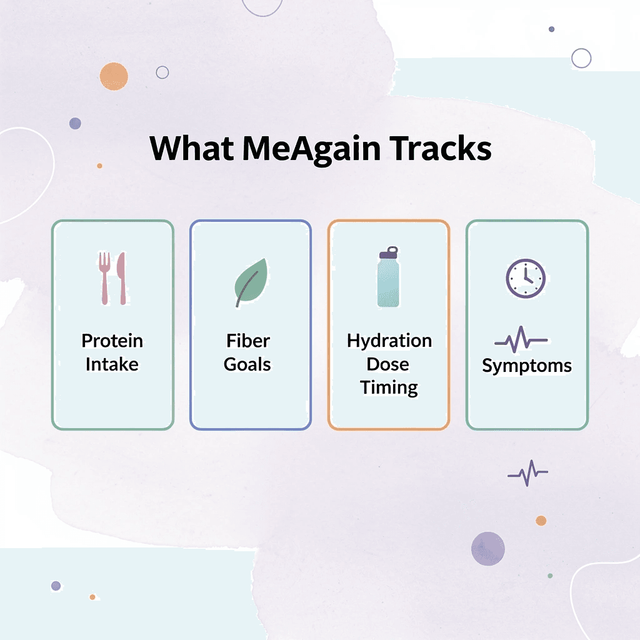
Habit Category | What MeAgain Tracks | Why It Matters |
|---|---|---|
🥩 Protein | Daily intake goals | Protects muscle mass during weight loss |
🌿 Fiber | Daily fiber targets | Supports digestion and fullness |
💧 Hydration | Water intake reminders | Reduces nausea and fatigue side effects |
🏃 Movement | Activity & steps | Boosts metabolism and energy |
💪 Strength | Exercise logging | Prevents muscle loss over time |
MeAgain gives you daily goals for every pillar of your success — protein, fiber, hydration, movement, and strength-building exercise. Instead of relying on willpower alone, you'll care for your virtual capybara by completing healthy habits — making consistency feel more like a game than a chore.
You'll also unlock your Journey Card, where you can document your progress and celebrate each milestone as your body changes over time. Every step forward deserves recognition, and MeAgain makes sure you never miss a win.
GLP-1 medications work exceptionally well for weight loss, but the best results come from pairing them with the right nutrition, hydration, and exercise habits. Our MeAgain app helps you use those evidence-based strategies every single day — turning good intentions into real, lasting change.
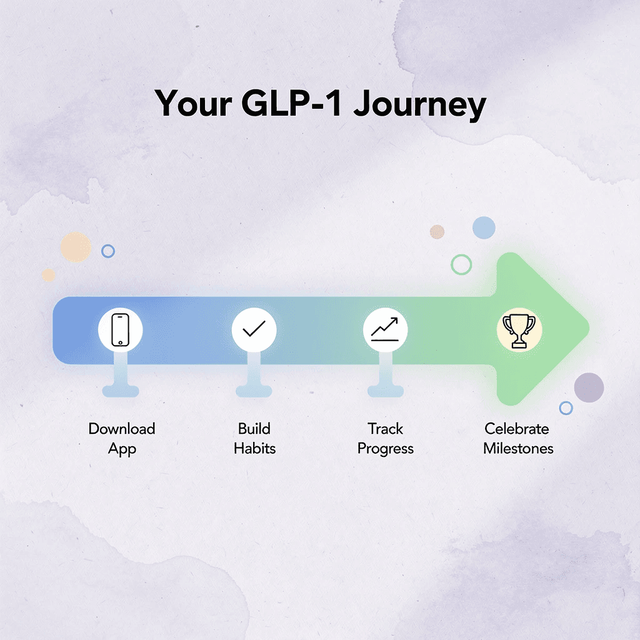
Download MeAgain today and start building the habits that maximize the benefits of GLP-1 while reducing side effects that can make treatment harder to stick with. Your best results are waiting — and they start with the right daily habits.