
The rising demand for semaglutide has created a new challenge: finding affordable, accessible treatment options when brand-name medications remain out of reach for many. Compounded semaglutide offers an alternative that can fit different budgets and health goals. Licensed pharmacies and telehealth providers now offer various pathways to access this treatment safely. Understanding the practical steps and requirements helps patients make informed decisions about their treatment options.
Finding the right provider doesn't have to feel overwhelming. Vetted telehealth services and compounding pharmacies that meet quality standards can guide patients through prescription requirements, cost comparisons, and safety considerations. Clear information about available options helps individuals choose treatments that align with their specific needs and circumstances. MeAgain's GLP-1 app simplifies this process by connecting patients with trusted providers and essential treatment information.
Table of Contents
- Why Getting Compounded Semaglutide Is Not as Simple as It Used to Be
- Do You Need a Prescription to Get Compounded Semaglutide?
- How to Actually Get Compounded Semaglutide Today
- Turn Compounded Semaglutide Access Into Safe, Structured Results From Day One
Summary
- Semaglutide's removal from the FDA drug shortage list in April 2025 eliminated the primary legal justification for large-scale 503B compounding facilities to produce it. This regulatory shift fragmented the market, with some pharmacies transitioning to alternative frameworks, others stopping production entirely, and a portion operating in legal gray zones. Patients now face a confusing landscape in which access depends on which pharmacy their provider uses and on the authority under which that pharmacy operates.
- Compounding pharmacies operate under different regulatory frameworks that directly affect product quality and patient safety. Section 503A state-regulated pharmacies compound for individual prescriptions under traditional law, while 503B outsourcing facilities follow stricter federal manufacturing standards but face post-shortage legal uncertainty. FDA adverse event reports document patients receiving compounded semaglutide with confusing measurement guidance, leading some to self-administer five to 20 times their intended dose due to unit confusion between milligrams, milliliters, and syringe units.
- IQVIA's market analysis found that 83% of the compounded GLP-1 market represents patients seeking anti-obesity medications, reflecting how access pathways shifted as brand-name supply constraints persisted for weight management indications. This demand created a telehealth-driven market in which two patients with identical BMI and health profiles might receive different recommendations depending on which provider they consult, because prescriber discretion adds another layer beyond pharmacy availability.
- Provider evaluation requirements remain non-negotiable despite streamlined access to telehealth. Legitimate prescribers assess BMI thresholds, existing metabolic conditions, medication history, and contraindications like personal or family history of medullary thyroid carcinoma before authorizing treatment. The clinical gatekeeping reflects real risks, including severe nausea, pancreatitis, and gallstones, making the prescription process a necessary safety mechanism rather than administrative overhead.
- Managing compounded semaglutide requires navigating multiple fragmented systems for prescriptions, pharmacy communication, dose tracking, and symptom monitoring. This separation creates gaps where dosing errors and side effect patterns go unnoticed until they escalate, particularly when patients skip meals due to suppressed appetite and inadvertently create protein deficiency, dehydration, and constipation patterns that compound treatment side effects.
- MeAgain's GLP-1 app addresses this by connecting prescription access through vetted providers and compounding pharmacies with integrated tracking for dose timing, meals, side effects, and progress metrics in one system.
Why Getting Compounded Semaglutide Is Not as Simple as It Used to Be
Many people assume compounded semaglutide is easy to get whenever they want. That assumption was true in 2023 and early 2024, when drug shortages gave compounding pharmacies a legal way to make semaglutide in large amounts. But the rules changed in 2025: what used to be an easy workaround became a regulated exception subject to conditions most patients don't know about.
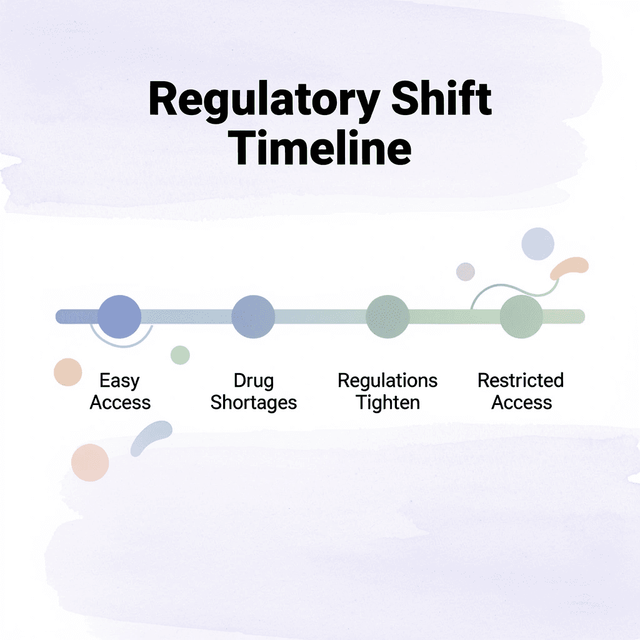
"What used to be an easy workaround became a regulated exception with conditions that most patients don't know about." — Current regulatory reality, 2025

What factors currently control access to compounded semaglutide?
Whether you can get this medication now depends on three factors that can shift independently: FDA shortage declarations, pharmacy compounding authority, and individual prescriber decisions. Access has shifted from "find a telehealth platform and order" to "confirm your provider's legal pathway and pharmacy classification." The stakes are tangible: the gap between placing an order and discovering weeks later that your pharmacy cannot fill it.
What happened when the FDA removed semaglutide from the shortage list?
In April 2025, the FDA removed semaglutide from its drug shortage list as supply stabilized, with immediate legal consequences for compounding pharmacies. According to Healthline's analysis of FDA guidance, compounded semaglutide is not FDA-approved. The shortage designation had been the primary legal basis allowing 503B outsourcing facilities to produce it in large quantities.
How did this change affect the compounding market?
When the shortage ended, so did that exemption. Large-scale 503B compounding of semaglutide lost its legal foundation. Some facilities switched to other legal options, others moved to brand-name access programs, and some continued operating in a grey zone. The result: whether patients can access compounded semaglutide now depends on which pharmacy their provider uses and on the authority under which it operates.
What are the different types of compounding pharmacies?
Not all compounding pharmacies follow the same rules. Section 503A pharmacies are controlled at the state level and can compound semaglutide for individual patients under traditional compounding law, based on a doctor's prescription. Section 503B outsourcing facilities are registered with the FDA and must follow stricter standards. They supplied telehealth platforms in large quantities during the shortage, but now face legal uncertainty regarding large-scale semaglutide production without an active shortage designation or a qualifying exemption.
How has the regulatory shift affected telehealth providers?
Some telehealth providers switched from 503B to 503A suppliers, resulting in longer wait times and different quality oversight. Others stopped offering compounded semaglutide entirely. When choosing a provider, ask directly: Is your pharmacy 503A or 503B? What is the current legal reason for compounding semaglutide? If they cannot provide a clear answer, that's a warning sign.
How does provider discretion affect compounded medication access?
Even when a pharmacy has the legal right to compound, individual prescribers decide whether to write those prescriptions. Some providers stopped using compounded semaglutide after the shortage ended, citing concerns about liability or a preference for FDA-approved formulations. Others continue prescribing compounded versions for patients who meet specific clinical criteria, such as documented intolerance to brand-name excipients or dose requirements unavailable commercially.
Why do similar patients receive different treatment recommendations?
Two patients with the same BMI and health profiles might receive different recommendations depending on their provider. Access requires finding a provider whose prescribing philosophy aligns with compounded options and whose pharmacy partner operates under clear legal authority. For patients managing a GLP-1 journey, this fragmentation creates friction. You're tracking doses and symptoms while navigating shifting pharmacy partnerships, legal grey areas, and provider policies that change without notice.
Our MeAgain GLP-1 app connects users with vetted telehealth services and compounding pharmacies that meet quality standards, while providing tracking tools to monitor how dose timing, meals, and symptoms interact. Fragmented systems create gaps; integration reveals the full picture without managing multiple platforms. But even with the right provider and pharmacy, there's another question most people don't consider until it's too late.
Related Reading
Do You Need a Prescription to Get Compounded Semaglutide?
Yes. Compounded semaglutide requires a valid prescription from a licensed healthcare provider who has evaluated your medical history, current health status, and treatment goals. The prescription requirement exists because semaglutide carries risks, from dosing errors that lead to severe nausea and vomiting to complications like pancreatitis or gallstones. No legitimate pharmacy will dispense it without documented authorization from a provider.

"Semaglutide carries real risks, from dosing errors that lead to severe nausea and vomiting to more serious complications like pancreatitis or gallstones." — Medical Safety Guidelines

What clinical criteria must you meet for a prescription?
Getting that prescription requires meeting specific clinical criteria. Providers assess BMI thresholds, existing metabolic conditions such as prediabetes or cardiovascular risk factors, and prior weight management attempts. Some require documented weight-related health complications before prescribing. Others evaluate medication history to rule out contraindications such as personal or family history of medullary thyroid carcinoma or multiple endocrine neoplasia syndrome type 2. Medical justification must extend beyond weight loss alone.
How do telehealth platforms handle medical evaluations?
Telehealth platforms moved consultations online, but didn't eliminate clinical gatekeeping. You still complete health questionnaires, provide weight and medical history, and often submit photos or measurements. A provider reviews that information and decides whether compounded semaglutide is appropriate for your profile. If your BMI falls below their threshold or your health history raises red flags, they decline the prescription. GLP-1 medications work differently across patient populations, and prescribing outside appropriate clinical boundaries increases risk without proportional benefit.
How do pharmacy sourcing standards affect medication quality?
Where a prescription gets filled determines product consistency, sterility standards, and dosing accuracy. According to FDA guidance on compounded semaglutide standards, 503(a) compounding standards apply to state-regulated pharmacies preparing medications for individual patients, while 503B outsourcing facilities operate under stricter federal oversight. If your pharmacy sources medications from facilities with inconsistent sterility practices or unclear concentration labeling, you inherit that risk with every dose drawn.
Why does medication management fragmentation create problems?
Most patients managing compounded semaglutide juggle multiple systems: prescription platforms, pharmacy communication, dose-tracking apps, and spreadsheets for meal timing and weight trends. This fragmentation creates gaps where dosing errors hide. Our GLP-1 app connects prescription access through vetted providers and 503(a) compounding pharmacies with integrated tracking for dose timing, meals, side effects, and progress metrics. When your medication source and symptom patterns are in one system, you catch inconsistencies faster and adjust with context rather than guesswork.
What dosing errors occur with compounded semaglutide?
The prescription process should include clear dosing instructions, but reality often falls short. FDA adverse event reports describe patients receiving vials of compounded semaglutide with confusing measurement guidance, leading some to self-administer five to 20 times their intended dose.
The problem stems from confusion about units: milligrams versus milliliters versus syringe "units" that vary by concentration. One patient was told to draw 5 units using a U-100 insulin syringe but mistakenly drew 50 units instead, causing severe vomiting and dehydration requiring hospitalization. Another provider prescribed 25 units when they meant 0.25 milligrams, affecting multiple patients who experienced acute pancreatitis and gallstones after receiving doses far exceeding the safe therapeutic range.
How can you prevent measurement mistakes?
These gaps reveal systemic failures in the communication of compounded semaglutide from prescriber to patient. Pre-filled pens eliminate this confusion by delivering preset doses, whereas compounded vials require accurate measurement each time. If your provider hands you a syringe that is significantly larger than your prescribed volume without detailed instructions, the risk of error increases. The clarity of dosing guidance and the appropriateness of the tools you're given determine whether you use the medication safely or become another adverse event statistic. But getting the prescription and understanding the dose is only half the access equation.
How to Actually Get Compounded Semaglutide Today
Getting compounded semaglutide requires doctor approval and access to a pharmacy that stocks it—it's not universally available. It differs from Wegovy or Ozempic because availability is harder to secure (regulations fluctuate), formulations vary between pharmacies (different compounding facilities produce different products), and less government oversight creates uncertainty that most patients don't anticipate.

"Compounded medications may vary in potency, quality, and formulation from one pharmacy to another, creating potential inconsistencies in treatment outcomes." — FDA Guidelines on Compounding

Initial Assessment and Medical Review
You complete medical intake forms online, sharing your health history, weight management goals, current medications, and any conditions that may affect treatment safety. Some providers request recent lab work to check metabolic markers or rule out contraindications such as thyroid disorders or a history of pancreatitis. This assessment determines whether you qualify based on clinical criteria and prevents providers from prescribing to patients outside safe parameters.
Virtual Consultation and Prescription
A licensed provider reviews your intake information through a video consultation and assesses whether compounded semaglutide suits you based on BMI thresholds, existing health conditions, and previous weight management attempts. If medically cleared, they write a prescription and send it to a compounding pharmacy; otherwise, they decline or suggest alternatives. According to IQVIA's analysis of the compounded GLP-1 market, 83% of the compounded GLP-1 market represents patients seeking anti-obesity medications, reflecting how access pathways have shifted as brand-name supply constraints persist for weight management indications.
Verify Pharmacy Source and Receive Medication
Before your prescription gets filled, verify the pharmacy operates under clear legal authority. Ask whether they're a 503A state-regulated facility or a 503B outsourcing facility, and confirm they're licensed in your state. You can check pharmacy credentials using the FDA's BeSafeRx tool, which lists verified facilities and flags operations with enforcement actions. Medical News Today's guidance on compounded semaglutide explains that 503B compounding pharmacies operate under federal oversight with stricter manufacturing standards, though post-shortage regulatory uncertainty affects their continued production of semaglutide at scale. Once verified, the pharmacy prepares your medication—sometimes with added B6 or B12—and ships it directly to your home in discreet packaging within one to two weeks.
Ongoing Support and Medication Management
After your first shipment arrives, the provider's team monitors your response and adjusts your dose if side effects emerge or progress slows. GLP-1 response varies by patient: some tolerate dose increases smoothly, while others require slower increases or strategies to manage nausea or fatigue. Managing compounded semaglutide typically requires multiple systems to track doses, meals, symptoms, and provider communication, increasing the risk of dosing errors or missed symptom patterns. Our MeAgain GLP-1 app consolidates these elements by connecting prescription access through trusted providers and compounding pharmacies with tracking tools for dose timing, meals, side effects, and progress metrics. When your medication source and symptom information are centralized, you identify issues faster and adjust with full visibility rather than managing information across separate platforms.
What pricing red flags should you watch for?
Watch for pricing under $80 per month without a clear cost justification, as it suggests supply chain shortcuts or lower-quality sourcing. If a provider cannot name the dispensing pharmacy or provide licensing details, walk away.
What consultation and safety warnings indicate poor quality?
Stay away from services that skip talking to a prescriber and only use intake forms. Claims that compounded drugs work the same as brand-name drugs are warning signs: compounded products are not reviewed by the FDA, and such claims lack evidence.
What ingredient and safety documentation should you verify?
Be careful about semaglutide acetate as the active ingredient, which differs from the semaglutide base used in FDA-approved formulations. Any injectable product should come with sterility documentation; if the pharmacy cannot provide it, the risk of contamination or dosing error increases significantly. Getting the medication and understanding how to dose it safely is only the beginning.
Turn Compounded Semaglutide Access Into Safe, Structured Results From Day One
Getting compounded semaglutide is only half the challenge. The real issue is what happens after: fragmented systems, unclear dosing routines, and missing support, leading to avoidable side effects and inconsistent results.

"The real challenge with GLP-1 medications isn't access—it's creating a structured support system that prevents side effects and maximizes results from the very first dose."
Download the MeAgain GLP-1 app and complete setup in under 5 minutes. You'll set your protein, fiber, water, and movement targets based on your current treatment stage, so your daily routine aligns with your medication rather than relying on guesswork.
Feature | Benefit |
|---|---|
Capybara Guide | Maintains daily consistency with targets |
Journey Card | Tracks body response changes over time |
Integrated System | Eliminates fragmented management |
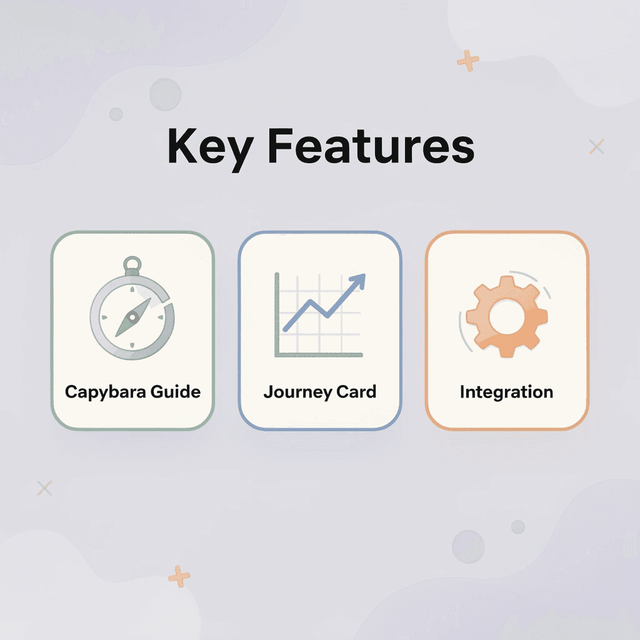
Your capybara guide helps you stay consistent with those targets, while your Journey Card tracks changes so you can see how your body responds to treatment over time.