
Zepbound diarrhea is loose, watery, or frequent stools that occur as a side effect of Zepbound (tirzepatide), a once-weekly injectable for chronic weight management. It affects 19–23% of adults at higher doses in clinical trials, peaking during dose-escalation weeks, and runs roughly 2–3 times higher than placebo across every dose group. Most individual episodes resolve within 1–3 days, and around 75% of users see symptoms fully clear within about 4 weeks as the body adapts. You can usually manage it with electrolyte hydration, low-fat meals, and dose-aware meal timing — without stopping treatment. Wegovy (semaglutide) actually has a higher reported rate (≈31.5%) than Zepbound; Ozempic typically lower (13–17%). Severe, bloody, or week-long GI symptoms are a red flag and warrant a same-day call to your clinician.
Last updated April 2026 · Sources verified against the Zepbound FDA prescribing information, NEJM SURMOUNT-1 (Jastreboff et al., 2022), and Lilly’s Zepbound consumer page.
Does Zepbound Cause Diarrhea?
Yes. Zepbound and diarrhea are well-documented in clinical trials, and the answer to "can Zepbound cause diarrhea" is unambiguous: it is one of the most commonly reported side effects of Zepbound (tirzepatide), a dual GIP and GLP-1 receptor agonist approved for chronic weight management and obstructive sleep apnea. The rate shows a clear dose-response pattern: in the SURMOUNT-1 trial published in the New England Journal of Medicine (N=2,539 adults followed for 72 weeks), reported rates climbed from roughly 12% at the 2.5 mg starting dose to 23% at the 15 mg top dose, compared to about 8% on placebo. Across the full SURMOUNT clinical program (SURMOUNT-1 through -4), GI side effects of any kind affected 27.8% to 72.8% of tirzepatide participants depending on dose and indication, with discontinuation due to GI symptoms running 1–10.5%. Most cases are mild to moderate and resolve as the body adapts.
Weekly dose | Reported diarrhea | Reported nausea |
|---|---|---|
2.5 mg (starting) | ≈12% | ≈18% |
5 mg | ≈19% | ≈25% |
10 mg | ≈21% | ≈27% |
15 mg (top) | ≈23% | ≈29% |
Placebo | ≈8% | ≈10% |
Real-world surveillance data published in PubMed Central (PMC10614464) puts the population-level rate at roughly 16% of tirzepatide users across doses, slightly lower than peak trial figures because not everyone titrates to 15 mg. A separate review in PMC9915969 found that up to 49% of people taking tirzepatide experience some form of GI side effect (nausea, vomiting, or loose stools) — this side effect is just one of the three.

Why Does Zepbound Cause Diarrhea? Three Mechanisms
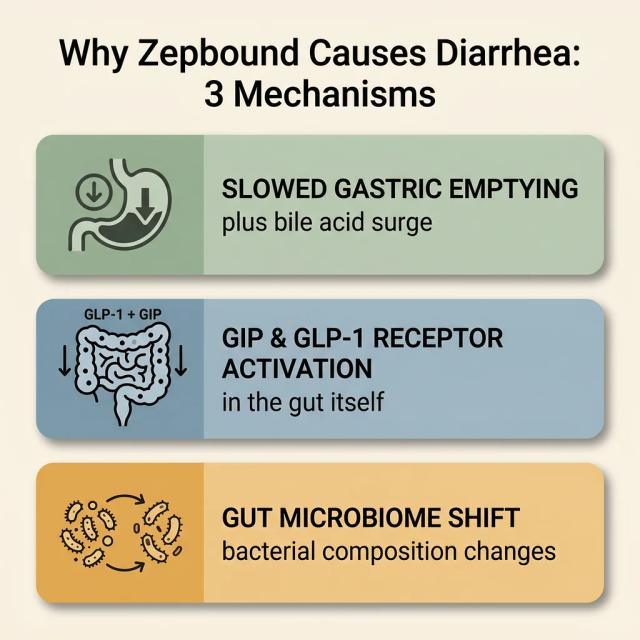
Bottom line: Zepbound and diarrhea share three biological mechanisms. Zepbound activates two gut hormone receptors — GIP and GLP-1 — that simultaneously slow stomach emptying, surge bile acids into the colon, and shift gut microbiome composition. The same hormonal signaling that suppresses appetite and drives weight loss also accelerates colonic transit and increases water secretion in the lower bowel, especially during the first few weeks of treatment and after each dose increase. The three mechanisms are: (1) slowed gastric emptying paired with a bile acid surge, (2) direct GIP/GLP-1 receptor activation in the intestine itself, and (3) a rebalancing gut microbiome. Each is dose-dependent, which is why higher Zepbound doses produce higher rates of GI symptoms in clinical trials.
1. Slowed Gastric Emptying and a Bile Acid Surge
Zepbound dramatically slows the rate at which the stomach empties food into the small intestine — gastric emptying time can extend from a normal 2–3 hours to 4–6 hours during peak drug action. When food and bile salts pool and then release in larger boluses, the colon receives more bile acids than usual. Bile acids are mild laxatives — they pull water into the gut and speed up bowel motility. The result is looser, more frequent stools, often within 24–72 hours of an injection or dose increase. The first 48 hours after a shot is when bile acid levels in the colon are typically highest.
2. GIP and GLP-1 Receptor Activation in the Gut Itself
GIP and GLP-1 receptors aren't just in the brain and pancreas — they're scattered through the small and large intestine, where they directly influence gut motility and fluid secretion. Activating both receptors at once (which is what tirzepatide does, unlike single-pathway drugs like Wegovy or Ozempic) intensifies the motility shift and increases secretory activity in the lower bowel. The same effect shows up with Mounjaro, which uses the identical active ingredient at the same doses — Zepbound and Mounjaro share tirzepatide; only their FDA-approved indications differ. Counterintuitively, dual GIP/GLP-1 agonism may produce slightly less diarrhea than GLP-1 alone (see comparison section below).
3. Gut Microbiome Shift
Emerging research suggests GLP-1 medications change the composition of gut bacteria within weeks of starting therapy. Beneficial bacteria like Akkermansia muciniphila and Bifidobacterium populations shift, while bile-tolerant species temporarily expand. As the microbiome rebalances — and as you eat smaller meals with different macronutrient ratios — short-chain fatty acid production and water absorption in the colon both shift. The transition period commonly produces a few weeks of unpredictable bowel patterns before things stabilize, typically by week 4–6.
How Long Does Zepbound Diarrhea Last?
Bottom line: Most individual Zepbound diarrhea episodes resolve within 1–3 days of an injection, and roughly 75% of users see loose stools fully clear within about 4 weeks as the body adapts to the medication. The dose-cycle window — the seven days between weekly injections — typically shows the worst symptoms in the first 24–72 hours after a shot, then easing toward day 5–7 before the next injection resets the cycle. GI flare-ups are most likely during three predictable windows: the first week of starting Zepbound, the week immediately after every dose increase, and around week three of any new dose level when symptoms sometimes peak before tapering. By weeks 4–8 at a stable dose, the majority of users adapt and symptoms either disappear or become consistently mild.
- Week 1 of starting Zepbound (initial 2.5 mg dose) — your gut is meeting tirzepatide for the first time.
- The week after every dose increase (2.5 → 5 → 7.5 → 10 → 12.5 → 15 mg) — each step-up triggers a fresh adaptation.
- Week 3 of any new dose level — GI side effects sometimes peak 14–21 days into a new dose before tapering.
FDA prescribing information for Zepbound (tirzepatide) notes that 4–7% of trial participants stopped tirzepatide because of GI side effects overall. Loose stools contribute to that group, but the majority of users push through and find symptoms ease over weeks 4–8.

Zepbound vs Wegovy vs Ozempic vs Mounjaro: Which GLP-1 Causes the Most Diarrhea?
Bottom line: Wegovy (semaglutide 2.4 mg) has the highest reported diarrhea rate among the major GLP-1 weight-loss drugs — about 31.5% of users in the STEP-1 trial — even though it activates only one hormone receptor. Zepbound (tirzepatide) and Mounjaro (also tirzepatide) come in second at 19–23% at the top dose. Ozempic (semaglutide 1 mg, the lower-dose diabetes formulation) tends to land lowest at 13–17%. Doses, indications, and trial designs differ, but the headline pattern is consistent across multiple peer-reviewed analyses: higher GLP-1 dose drives higher GI rates, and adding GIP receptor activity (as tirzepatide does) appears to modestly buffer the diarrhea-specific signal compared to high-dose semaglutide alone.
Drug | Active ingredient | Top dose / indication | Reported diarrhea | Source |
|---|---|---|---|---|
Wegovy | Semaglutide 2.4 mg | Weight management | ≈31.5% | STEP-1, NEJM 2021 |
Zepbound | Tirzepatide 15 mg | Weight management | ≈23% | SURMOUNT-1, NEJM 2022 |
Mounjaro | Tirzepatide 15 mg | Type 2 diabetes | ≈19–23% | SURPASS program, FDA label |
Ozempic | Semaglutide 1 mg | Type 2 diabetes | ≈13–17% | SUSTAIN program, FDA label |
Placebo (avg) | — | — | ≈8% | Pooled across trials |
Tirzepatide diarrhea rates are essentially identical between Zepbound and Mounjaro because the two brands share the same active ingredient at the same doses. Wegovy diarrhea rates run highest of any major GLP-1 weight-loss drug. Mounjaro diarrhea and Zepbound diarrhea respond to the same management approaches. Ozempic diarrhea rates land lowest, reflecting its lower weekly dose for type-2-diabetes management.
The Wegovy-vs-Zepbound gap is consistent with mechanism: Wegovy activates only the GLP-1 receptor at a high obesity-management dose, while tirzepatide adds GIP receptor activity that may modestly buffer some GI effects. A 2025 meta-analysis in Diabetes, Obesity and Metabolism confirmed that across SURMOUNT-1 to -4, GI adverse events with tirzepatide ranged from 27.8% to 72.8% (any GI event) versus 12.2% to 32.5% on placebo, with discontinuation due to GI symptoms running 1.0% to 10.5%.
If you're switching between GLP-1s and trying to predict GI tolerance, the practical takeaway is: moving from Wegovy to Zepbound usually feels easier on the gut, while moving from Ozempic up to Wegovy often gets worse before it gets better.
Zepbound Diarrhea Treatment: 8 Steps That Actually Work
Bottom line: Zepbound diarrhea treatment starts with three changes that resolve the majority of cases — electrolyte hydration, low-fat meals for 48–72 hours after each injection, and dose-aware meal timing — without any medication or dose change. How to stop Zepbound diarrhea reliably comes down to applying these consistently after every shot. The eight steps below are ordered by leverage: try them in sequence, and reach for medication or a dose pause only after the first five have failed. These strategies are drawn from Eli Lilly's prescribing information, peer-reviewed GI literature, and pharmacist-reviewed drug references.
- Hydrate with electrolytes, not just water. Loose stools pull sodium, potassium, and chloride out fast. Plain water alone can make things feel worse. Aim for 80–100 oz of fluid per day during a flare, with at least 16–24 oz from an oral rehydration solution, electrolyte drink, broth, or coconut water. Mayo Clinic recommends sipping continuously through the day rather than chugging.
Our complete hydration guide for GLP-1 users breaks down exactly how much water to drink based on body weight and dose.
- Switch to low-fat meals for 48–72 hours after each injection. Fat slows gastric emptying further on top of what Zepbound is already doing — the combination triggers loose stools in many users. Aim for ≤15 g of fat per meal in the 2–3 days after an injection. Lean protein, white rice, oatmeal, eggs, and well-cooked vegetables work reliably. Save fattier meals for later in the week.
- Time your meals around your shot. Many users find a Sunday-evening or Monday-morning injection routine works best, with the gentlest meals scheduled Monday and Tuesday. Track which day of your dose cycle GI symptoms hit hardest so you can plan around it.
- Pause caffeine and alcohol for 72 hours post-injection. Both stimulate gut motility and can amplify loose stools. Most users tolerate them later in the week, but the 72-hour window after a shot is the high-sensitivity zone.
- Track symptoms in a daily log. GI side effects on Zepbound are rarely random. They correlate with dose week, meal composition, hydration, sleep, and alcohol. A 60-second daily log makes the pattern obvious within 2–3 weeks — and gives your clinician concrete data to work with. The four data points that matter most:
- Severity (1–10) of any GI symptom that day
- Day of dose cycle (day 1 = injection day)
- What you ate and at what time (especially fat content)
- Hydration, alcohol, caffeine, and sleep hours
- Consider an OTC option (with a clinician check first). Loperamide (Imodium) is sometimes appropriate for short-term symptom control, but should only be used after talking to your clinician — it can mask warning signs of more serious GI issues. Don't reach for it as a first-line fix.
- Slow your dose escalation. If symptoms are bad enough to disrupt daily life, ask your clinician about staying at a lower dose for an extra 4 weeks before stepping up. The 2.5 mg → 5 mg jump is a common pause point. Tirzepatide still drives weight loss at lower doses.
- Know the red flags (next section). Most cases are uncomfortable but not dangerous. A small percentage need urgent medical care — and knowing the difference is more important than any other tip in this list.
If you're also dealing with muscle aches or joint pain on Zepbound, those symptoms cluster with the same dose-escalation windows and respond to similar timing strategies.
Foods to Eat (and Avoid) When Zepbound Diarrhea Hits
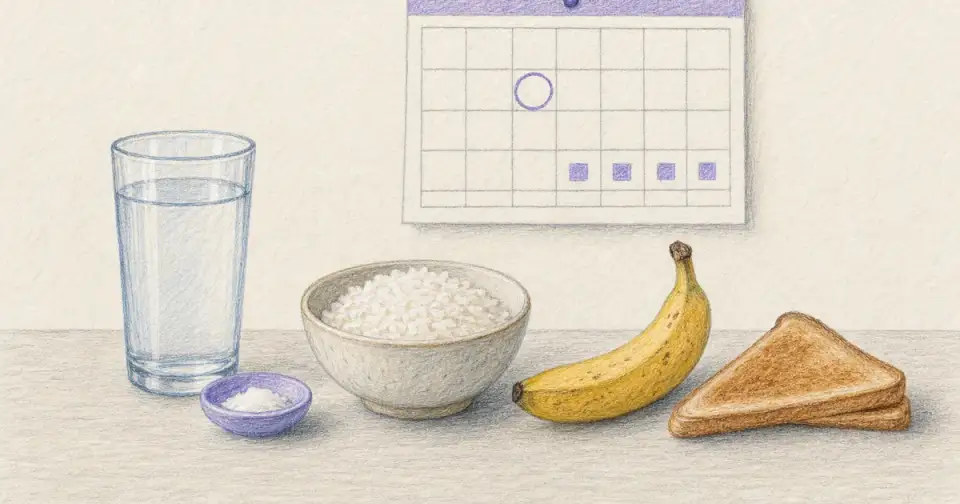
Bottom line: Diet changes are the second-highest-leverage lever after hydration. The classical BRAT diet (bananas, rice, applesauce, toast) is the standard first-line approach for Zepbound diarrhea and any acute GI flare. During an episode, eat BRAT-diet foods plus lean protein, and avoid high-fat meals, dairy, high-FODMAP foods, sugar alcohols, spicy foods, alcohol, and raw cruciferous vegetables for 48–72 hours after each injection. Once symptoms settle, you can broaden back to a normal diet by day 4–5 of the dose cycle. Repeat the low-fat / low-FODMAP window after every dose increase.
Love this APP!! Keeps track of ur journey. Very easy to use. I love that if u forget where u did ur shot this keeps track so u know. Tracking my food intake is great too because if I get any medication side effects I can just check here to see what I ate & if that exasperated the symptoms. Everyone on GLP1 should use that APP!!
Foods to eat (BRAT diet, low-FODMAP-friendly)
- Bananas (potassium replacement, gentle fiber)
- White rice (easily digested, binds stool)
- Applesauce (unsweetened) (soluble pectin fiber)
- Toast or crackers (white flour, low fat)
- Plain oatmeal (soluble fiber, gentle on the gut)
- Boiled or baked chicken / fish (lean protein, ≤5 g fat per serving)
- Eggs (poached or scrambled, no butter) (easy protein)
- Well-cooked carrots, zucchini, green beans (fiber + electrolytes)
- Bone broth or low-sodium chicken broth (hydration + sodium)
Foods to avoid for 48–72 hours post-injection
- High-fat meals (fried foods, pizza, cream sauces, fatty cuts of meat) — slows gastric emptying further
- Dairy (lactose-containing) — transit time often makes lactose harder to digest during flares
- High-FODMAP foods — onions, garlic, beans, lentils, wheat-based pastas, apples, pears, watermelon, honey
- Sugar alcohols — sorbitol, xylitol, mannitol (sugar-free gum, protein bars)
- Spicy foods — capsaicin can speed colonic transit further
- Coffee, alcohol, carbonated drinks — gut motility stimulants
- Raw cruciferous vegetables — broccoli, cauliflower, cabbage (gas + fiber load)
Sample 3-day post-injection meal plan
Day 1 (injection day): Oatmeal with banana for breakfast; chicken-and-rice bowl with carrots for lunch; baked white fish with rice and zucchini for dinner. Clear electrolyte drink between meals.
Day 2: Scrambled eggs with toast for breakfast; turkey sandwich on white bread (no mayo) for lunch; chicken-and-vegetable broth soup with rice for dinner. Continue electrolyte drinks.
Day 3: Greek yogurt (if tolerated) with banana for breakfast; grilled chicken salad (light dressing) for lunch; baked salmon with sweet potato and green beans for dinner. Reintroduce variety as symptoms ease.
By day 4–5, most users return to their normal eating pattern. Repeat the low-fat / low-FODMAP window after each dose increase.
When to Worry: Red Flags That Need a Doctor
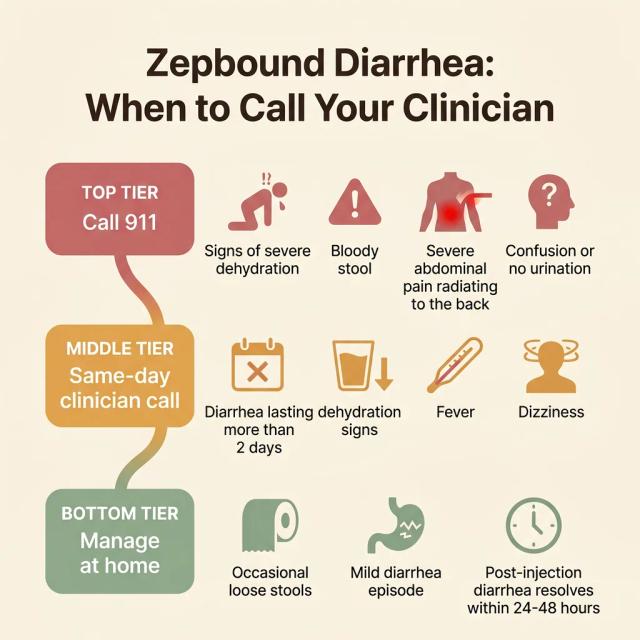
Bottom line: Call your clinician the same day, or go to urgent care, if you experience blood in the stool, fever above 101°F, signs of dehydration (dizziness, dark urine, dry mouth), severe abdominal pain, vomiting that prevents fluids for more than 12 hours, GI symptoms lasting more than 7 days without improvement, or sudden weight loss greater than 5% in a week. The FDA's Zepbound prescribing information specifically warns about acute kidney injury secondary to dehydration from prolonged GI side effects — most cases are uncomfortable but not dangerous, but a small percentage need urgent medical care, and knowing the difference matters more than any single management tip.
- Blood in the stool or black, tarry stools
- Fever above 101°F (38.3°C) or chills
- Signs of dehydration — dizziness, dark urine, very little urination, dry mouth, confusion, racing heart
- Severe abdominal pain or pain that radiates to your back (potential pancreatitis warning)
- Vomiting that prevents you from keeping fluids down for more than 12 hours
- Loose stools lasting more than 7 days without improvement
- Sudden, unintended weight loss greater than 5% of your body weight in a week
Severity decoder: watery, liquid, explosive — what each means
Stool consistency on Zepbound varies widely. The Bristol Stool Scale is the clinical tool, but in plain English:
- Soft / formed (Bristol 5): common in week 1 of any new dose. Not a problem on its own.
- Mushy / loose stools (Bristol 6): the most common Zepbound presentation. Usually responds to low-fat meals and hydration within 1–2 days.
- Watery / liquid (Bristol 7): more disruptive. Watch hydration carefully, consider OTC after clinician check, monitor for 48 hours. This is what most users mean by zepbound watery diarrhea or zepbound liquid diarrhea.
- Explosive (urgency + watery, multiple times per day): raises dehydration risk fast. If it persists more than 24 hours, or pairs with vomiting, fever, or weakness, call your clinician the same day.
Watery Zepbound diarrhea (Bristol 7) is the most common dehydration risk and shows up most in the 48 hours after injection. Liquid Zepbound diarrhea — fluid output with no formed stool — needs same-day attention if it lasts beyond a single bowel movement. Explosive Zepbound diarrhea, especially when paired with vomiting, fever, or weakness, is the strongest red flag in the severity decoder. Zepbound severe diarrhea lasting longer than 24–48 hours warrants a clinician call.
Track It So You Can Solve It
Loose stools on Zepbound rarely show up out of nowhere. They correlate with the day of your dose cycle, what you ate, how much water you drank, alcohol, and sleep. Most users can identify their personal pattern within 2–3 weeks of consistent tracking — and once you see the pattern, the fix is usually obvious. MeAgain lets you log shots, meals, water, and a customizable side-effect severity slider in under 60 seconds a day, then surfaces the correlation back to you (and to your clinician, if you choose to share it).
Real users describe the experience candidly. A Drugs.com Zepbound reviewer wrote: "Suddenly, explosive diarrhea, sulfur burps, nausea, and fatigue began… After going to 7.5, that's when my horror stories started." Another said: "The diarrhea is terrible. It has never stopped. I get it on day 2, and it is uncontrollable." Pattern visibility is the difference between guessing and knowing.
The app has everything! Versatile and easy to use food searching, a dashboard with protien, water and fiber progress, activity tracker and shot reminders that also let you know where your last shot was so you rotate areas. Also lets you easily track side effects. I feel so supported.
Open the MeAgain Zepbound tracker →
Frequently Asked Questions
How long does Zepbound diarrhea last?
Individual episodes typically resolve within 1–3 days of an injection. At the population level, around 75% of users see symptoms fully resolve within 4 weeks as the body adapts. GI flare-ups usually return briefly after each dose increase and then settle again over the following 2–3 weeks.
Why does Zepbound cause diarrhea at night?
Zepbound diarrhea at night is often more disruptive because lying down slows gastric emptying further and shifts blood flow toward the gut, which can intensify the urgency many people feel from Zepbound's effect on bile acids and gut motility. Eating a low-fat dinner at least 3 hours before bed, limiting fluids in the last hour before sleep, and avoiding alcohol in the evening all help.
What's the connection between Zepbound, sulfur burps, and diarrhea?
Zepbound sulfur burps and diarrhea often happen together because both stem from the same delayed-digestion mechanism. Slowed gastric emptying lets food sit longer in the stomach where bacteria produce hydrogen sulfide gas, while undigested fats and bile move into the colon and trigger looser stools. Lower-fat meals usually reduce both symptoms at the same time. Our complete sulfur-burps guide has a step-by-step checklist for that specific symptom.
Why do I get diarrhea on Zepbound right after eating?
Zepbound diarrhea after eating happens because Zepbound amplifies the gastrocolic reflex — the normal nerve signal that tells your colon to make room when new food arrives. Combined with bile acid surges and slowed upper-GI emptying, the result is faster colonic transit and looser stools shortly after meals. Smaller, more frequent meals reduce the intensity of the reflex.
Does Zepbound cause vomiting and diarrhea at the same time?
Zepbound vomiting and diarrhea together are uncommon but happen most often during dose-escalation weeks or after a high-fat meal close to an injection. The combination raises dehydration risk fast — you can lose fluids from both ends in a matter of hours. If both symptoms persist beyond 12 hours, you can't keep fluids down, or you notice dizziness or dark urine, call your clinician the same day or head to urgent care. Imodium is not appropriate when both are present without medical guidance. If nausea is the dominant symptom, see our nausea-relief tips — most apply to Zepbound as well.
Does Zepbound cause gas, bloating, and stomach cramps along with diarrhea?
Yes — Zepbound gas and diarrhea, along with Zepbound stomach cramps and diarrhea and bloating, cluster together because they share the same mechanism. Slowed gastric emptying lets food ferment longer in the stomach (gas), shifts pressure on the colon (cramping), and increases bile acid delivery to the lower gut (loose stools). The fix for one usually helps the others: low-fat meals 48–72 hours after each injection, smaller portions, and avoiding high-FODMAP foods like onions, garlic, and beans during the high-sensitivity window. Symptoms typically ease as the body adapts over 2–4 weeks.
Does Zepbound diarrhea get worse at higher doses (7.5 mg, 10 mg, 15 mg)?
Yes — there is a clear dose-response pattern. Diarrhea on Zepbound 5mg runs roughly 19% in trials, diarrhea on Zepbound 7.5mg sits between dose tiers, diarrhea on Zepbound 10mg climbs to 21%, and reported rates at 15 mg reach 23%, compared to about 8% on placebo. Each step-up in dose typically triggers 1–3 weeks of fresh GI symptoms before the body adapts again. If 15 mg is unmanageable, talk to your clinician about staying at a maintenance dose of 10 mg or 12.5 mg — many users get the majority of the peak weight-loss benefit at lower doses without the worst of the side effects.
Can diet alone fix Zepbound diarrhea?
Often, yes — diet plus hydration is the first-line fix and resolves the majority of cases. Low-fat meals (≤15 g of fat) for 48–72 hours after each injection, electrolyte-rich fluids, and avoidance of high-FODMAP and sugar-alcohol foods address the three biggest mechanical drivers (delayed gastric emptying, bile acid surge, fermentable-carb load). Most users who follow a structured BRAT diet during dose-escalation weeks see symptoms ease within 24–72 hours without needing medication.
Is Zepbound diarrhea different from Mounjaro diarrhea?
No — Zepbound diarrhea and Mounjaro diarrhea are essentially the same because both brands contain tirzepatide as the active ingredient at identical doses (2.5–15 mg weekly). Tirzepatide diarrhea rates, mechanisms, timing, and management are essentially the same across both brands. The two brands differ in FDA-approved indication only: Zepbound is approved for chronic weight management and sleep apnea in obesity, while Mounjaro is approved for type 2 diabetes. If you switch between them at the same dose, your GI experience should be unchanged.
Can I take Imodium for Zepbound diarrhea?
Zepbound diarrhea and Imodium — the short answer is sometimes, but only after checking with your clinician. Loperamide (Imodium) is appropriate for short-term symptom control in many cases, but it can mask warning signs of more serious GI complications and is not recommended if you have blood in your stool, a fever, or severe abdominal pain. Hydration, low-fat meals, and dose timing should be your first three tools.
Is severe or explosive diarrhea on Zepbound dangerous?
It can be. Zepbound severe diarrhea — including watery diarrhea, liquid diarrhea, or explosive episodes — increases the risk of dehydration and, rarely, acute kidney injury, a complication explicitly noted in the FDA Zepbound prescribing information. Severe symptoms lasting more than 24–48 hours, or any blood, fever, or signs of dehydration, warrant a same-day clinician call or urgent care visit.
Does alcohol make Zepbound diarrhea worse?
Yes — Zepbound alcohol diarrhea is most common in the 72-hour window after an injection. Alcohol stimulates gut motility, irritates the GI lining, and can worsen dehydration that is already underway. Most users tolerate moderate alcohol later in their dose cycle, but the days immediately following a shot are the high-sensitivity window.
Will Zepbound diarrhea ever go away completely?
For most people, yes. Roughly 75% of users see symptoms fully resolve within 4 weeks of either starting Zepbound or reaching a stable dose. A smaller subset (about 4–7% of trial participants) experience GI side effects severe enough to discontinue treatment. If symptoms have not improved after 8 weeks at a stable dose, talk to your clinician about adjusting your dose schedule. For the bigger picture, tirzepatide's long-term side-effect profile is well-characterized and most issues are concentrated in the first few months.
This app is a game changer. It helps tremendously to track your proteins your fiber the day you give yourself a shot your nutrition highly recommended
Sources
SURMOUNT-1 trial (Jastreboff et al., New England Journal of Medicine, 2022) — primary clinical trial reporting GI side-effect rates by dose for tirzepatide.
STEP-1 trial (Wilding et al., New England Journal of Medicine, 2021) — primary clinical trial for semaglutide 2.4 mg (Wegovy), source for the cross-drug diarrhea-rate comparison.
FDA Zepbound (tirzepatide) prescribing information, 2025 update — official label, GI side-effect rates, discontinuation data, AKI warning.
Rubino et al., Diabetes, Obesity and Metabolism 2025 — meta-analysis of GI tolerability across SURMOUNT-1 to -4.
PMC10614464 — real-world tirzepatide GI incidence.
PMC9915969 — review of GI adverse events on dual GIP/GLP-1 receptor agonists.
Singlecare: Why does Zepbound cause diarrhea? — consumer-facing aggregator with citations to clinical trial data.
Drugs.com: Zepbound side effects (Hannemann, PharmD) — pharmacist-reviewed rate and management overview.
Drugs.com: How long do Zepbound side effects typically last? — duration data for GI side effects.
Mayo Clinic: Water and your health — hydration guidance.
Eli Lilly: Managing Possible Side Effects of Zepbound — manufacturer's own management tips.
Last reviewed: April 28, 2026. This article is for educational purposes only and is not medical advice. Talk to your clinician before changing your dose or treatment plan.