
Starting Zepbound and suddenly struggling to sleep is more common than most people expect. Many users of tirzepatide report restless nights, frequent waking, and difficulty falling asleep, leaving them wondering whether their medication is to blame. The connection between Zepbound and insomnia is worth examining closely because the answer is rarely straightforward.
Several factors can disrupt sleep during GLP-1 treatment, from appetite changes and gastrointestinal discomfort to shifts in metabolism and eating schedules. Understanding what is actually driving the problem makes it far easier to address. For personalized, evidence-based guidance on managing side effects like poor sleep while staying on track with weight loss, the GLP-1 app from MeAgain offers practical support built specifically for people on medications like Zepbound.
Table of Contents
- Does Zepbound Actually Cause Insomnia?
- Why Sleep Problems Can Happen While Taking Zepbound
- What to Do If You're Having Trouble Sleeping on Zepbound
- Build the Daily Habits That Support Better Sleep on Zepbound
Summary
- Insomnia is not listed among the common side effects of Zepbound in the FDA prescribing information, and clinical trial data support that finding. Across the SURMOUNT trials, which tracked thousands of participants over multiple phases, sleep disturbance was not frequently reported. According to Healthline, insomnia was reported in less than 1% of clinical trial participants taking Zepbound, placing it outside the category of expected adverse events.
- The more common drivers of sleep disruption on Zepbound are indirect and physiological rather than neurological. Nausea, bloating, and acid reflux tend to intensify when lying down because gravity is no longer helping manage gastric contents. Clinical trial data cited by Medical News Today showed that Zepbound led to up to a 20.9% reduction in body weight and that this rate of physical change can alter sleep architecture in ways that compound existing GI discomfort during the adjustment period.
- Calorie restriction introduces its own sleep interference through hormonal mechanisms. When total daily intake drops significantly, ghrelin (the hunger-signaling hormone) stays elevated longer than expected, creating biological pressure that can fragment sleep in the early morning hours. Distributing protein across waking meals, rather than concentrating it at dinner, reduces the overnight hunger signal that drives this pattern.
- The clinical evidence on tirzepatide and sleep actually leans in a positive direction for many users. According to Ro, tirzepatide reduced the severity of obstructive sleep apnea by up to 62.8 events per hour in a clinical trial, a result significant enough for the FDA to approve Zepbound as a treatment for OSA. Approximately 30% of adults with obesity also have obstructive sleep apnea, meaning sleep quality for this group may improve over time as weight loss progresses, even if early weeks feel disorienting.
- Behavioral interventions remain among the most evidence-supported tools for addressing sleep disruption associated with GLP-1 medications. According to Healthline, cognitive behavioral therapy for insomnia (CBT-I) is effective in approximately 70 to 80% of people with chronic insomnia, making it a strong option when anxiety or heightened body awareness is the primary driver. Consistent sleep and wake times, a cool and dark sleep environment, and removing screens from the bedroom are the foundational practices recommended by the American Academy of Sleep Medicine.
- Pattern recognition is one of the most underused tools in managing GLP-1 side effects. Most people track symptoms in isolation, making it difficult to connect sleep disruption to injection timing, low-calorie days, or specific foods eaten close to bedtime. Fragmented recall makes it nearly impossible to bring useful data to a clinical appointment, which is where structured self-tracking changes the quality of the conversation.
- The MeAgain GLP-1 app addresses this directly by letting users log sleep disruption, dose timing, protein intake, and other side effects on the same timeline, so patterns that felt invisible start to surface.
Does Zepbound Actually Cause Insomnia?
Many people assume that if they can't sleep after starting Zepbound, the medication must be causing it. According to clinical evidence, this assumption is mostly wrong.
"The assumption that Zepbound directly causes insomnia is mostly wrong — clinical evidence tells a more nuanced story." — Clinical Evidence Review

What does the clinical evidence say about Zepbound and insomnia?
Insomnia is not listed as a common side effect in Zepbound's FDA prescribing information. The most frequent adverse events are gastrointestinal: nausea, diarrhea, vomiting, constipation, abdominal pain, indigestion, and heartburn. A 2025 Cochrane review of tirzepatide for adults with obesity and a large analysis of more than 7,000 participants both concluded that insomnia is not a common adverse event. According to the Zepbound FDA Prescribing Information and SURMOUNT trial data, insomnia was reported in approximately 6% of patients taking tirzepatide, placing it outside the category of frequent or expected side effects.
Why doesn't something happening after a medication mean it caused it?
Because something happens after you start taking a medication, it doesn't mean the medication caused it. If you begin Zepbound and reduce your calories, manage new anxiety, experience acid reflux, or change your eating schedule, any of those changes can disrupt your sleep. Blaming the sleep problem on tirzepatide alone ignores everything else changing in your body and daily routine. Doctors often find that people reporting sleep trouble on Zepbound are dealing with stomach discomfort waking them at night, not a direct effect of the drug on the brain's sleep centers.
How can tracking patterns help you tell what is really disrupting your sleep?
Most people track GLP-1 symptoms through scattered notes and quick searches when something feels off. This fragmented approach makes it nearly impossible to see whether sleep disruption correlates with injection days, specific foods, or dose increases. Our MeAgain GLP-1 app lets you log side effects with severity ratings alongside your dose days, so you bring data to your clinician, not guesses.
When should you suspect something other than Zepbound?
The clearest signal that Zepbound is not the main cause is timing. If your sleep was already poor before starting treatment, the medication did not create that problem. If wakefulness tracks with nights of heavy or acidic food late in the day, that is a dietary and GERD issue, not a medication one. Severe calorie restriction, blood sugar fluctuations, heightened anxiety about weight loss, and other medications all contribute. Zepbound may be one of several factors.
What does the clinical evidence say about Zepbound and sleep?
Two randomized controlled trials found that tirzepatide improved sleep quality for people with obstructive sleep apnea, and Zepbound now has FDA approval for OSA treatment. If your sleep problems preceded Zepbound or correlate with reflux symptoms, calorie reduction, or another medication, investigate those causes first. Zepbound is more likely to support better sleep over time than to impair it.
According to Ro, tirzepatide reduced obstructive sleep apnea severity by up to 62.8 events per hour in a clinical trial. This improvement was significant enough for the FDA to approve Zepbound for OSA treatment. The medication's ability to control blood sugar and reduce weight appears to improve sleep architecture for many users, particularly those whose sleep was disrupted by metabolic or respiratory factors.
Why does the gap between data and lived experience still matter?
But living inside a body that is not sleeping well, while managing nausea, adjusting to new eating patterns, and staying consistent with treatment, is something else entirely. That gap between what the data says and how your nights feel is where the real story gets complicated.
Related Reading
- Zepbound Long Term Side Effects
- Does Zepbound Make You Sleepy
- Zepbound Not Working
- Do You Have To Take Zepbound Forever
- Why Am I Still Hungry On Zepbound
- How Many Calories Should I Eat On Zepbound
- What to Expect After First Dose of Zepbound
- Does Zepbound Cause Insomnia
- Zepbound Long-Term Side Effects
Why Sleep Problems Can Happen While Taking Zepbound
Tirzepatide may not directly disrupt sleep, but the physiological changes it sets in motion can absolutely get in the way of a good night's rest. The ways this happens are indirect, but they are not mysterious.
"The connection between GLP-1 medications and sleep is rarely direct — but the downstream physiological effects are real, documented, and worth understanding."
Factor | How It Affects Sleep |
|---|---|
Appetite suppression | May cause late-night hunger or discomfort |
GI side effects | Nausea and bloating can interrupt rest |
Metabolic changes | Shifts in energy regulation affect sleep cycles |
Hormonal fluctuations | Can disrupt melatonin and cortisol balance |

How do gastrointestinal side effects interfere with sleep?
Nausea, bloating, reflux, constipation, and diarrhea are the most commonly reported Zepbound side effects and often persist at night. In clinical trials, up to 29% of people taking Zepbound reported nausea, up to 23% reported diarrhea, and up to 13% reported vomiting. These symptoms worsen during dose increases and improve as your body adjusts, but while they occur, falling asleep with an upset stomach or waking to acid reflux is normal. This isn't clinical insomnia—it's discomfort disrupting rest, and managing the gastrointestinal side effect addresses the problem, not the sleep itself.
What is the difference between Zepbound fatigue and insomnia?
Fatigue is an officially listed Zepbound side effect, reported by roughly 5-7% of participants in clinical trials, depending on dose. Fatigue means your body feels tired and drained despite adequate sleep, while insomnia means you cannot fall asleep or stay asleep. Waking exhausted after seven hours differs from lying awake at midnight. Fatigue from Zepbound typically improves as your body adjusts and you lose weight, so monitor how you feel rather than taking sleep aids.
Can nighttime blood sugar changes disrupt your sleep on Zepbound?
According to the Zepbound prescribing information (via sip2sleep.com), patients taking Zepbound with a sulfonylurea had a low blood sugar rate of 10.3%, compared with 2.1% without a sulfonylurea. Nocturnal hypoglycemia may present subtly: sudden waking, shakiness, sweating, vivid dreams, or unexplained heart racing. If you have type 2 diabetes and take Zepbound with insulin or a sulfonylurea, inform your doctor before attributing sleep problems to other causes. They may need to adjust your other medications to prevent overnight drops in blood sugar.
How do hormonal shifts and appetite rhythm affect sleep quality?
Hormones that control hunger, like ghrelin and leptin, are closely connected to your body's daily rhythm. Ghrelin peaks during the day to trigger hunger; leptin peaks at night to signal fullness and promote sleep. When meal timing changes significantly, such as eating smaller portions or stopping late-night eating, these hormone rhythms require time to adjust. This can result in lighter sleep, frequent waking, or diminished sleep quality.
A GLP-1 app like MeAgain lets you log side effects with severity ratings, along with dose timing, food intake, and sleep notes, on a single timeline, so you can bring organized data to your doctor rather than a vague impression.
Can anxiety about Zepbound itself cause sleep problems?
Sleep anxiety is a recognized contributor to difficulty sleeping and doesn't require a dramatic trigger. Reading about "Zepbound insomnia" online, then lying awake waiting to feel it, is enough to create the problem you feared. Being overly alert at bedtime, scanning for symptoms, replaying side effect lists—all of it raises arousal at exactly the wrong moment. Recognizing this pattern points toward a different kind of intervention than anything related to the stomach or how your body processes food.
Identifying the actual source of your sleep disruption changes everything about how you address it.
What to Do If You're Having Trouble Sleeping on Zepbound
Solving sleep disruption on Zepbound requires matching the right solution to the right cause, since nausea and anxiety produce identical symptoms at 2am but need completely different responses.
"Sleep disruption on Zepbound isn't one problem — it's multiple distinct causes wearing the same mask at night, and treating the wrong one can make things worse." — Key Clinical Insight
Symptom Source | Common Signs | Recommended Response |
|---|---|---|
Nausea | Stomach discomfort, queasiness | Adjust meal timing, eat lighter before bed |
Anxiety | Racing thoughts, restlessness | Breathing exercises, wind-down routine |
Both Combined | Overlapping discomfort at night | Address nausea first, then calm the nervous system |

Barrier to Solution Matching the Cause
Nausea that persists into the evening often stems from what you eat. Eating too close to bedtime gives your slowed-down digestive system insufficient time to process food before you lie down. Eat your largest meal earlier in the day and keep evening portions small. If nausea continues for multiple weeks, talk to your prescriber about adjusting your dose titration schedule or recommending short-term support.
How does reflux at night respond to simple adjustments?
Reflux responds to different changes. Lying flat after eating accelerates gastric acid movement into the esophagus, and GLP-1 medications slow gastric emptying, worsening this effect. Avoid food for at least two to three hours before bed and slightly raise the head of your bed to reduce nighttime reflux. These changes align with standard clinical recommendations for managing GLP-1-related stomach and digestive side effects and don't require changing your Zepbound dose—an important distinction, since stopping the medication without medical guidance for a temporary, fixable side effect is a decision most clinicians want to oversee.
What happens when low caloric intake or anxiety disrupts sleep?
Low calorie intake deserves separate attention. When total daily calories drop significantly, the body responds with hormonal signals that disrupt sleep, particularly in early morning hours. Spread protein across meals during waking hours to reduce hunger-related wakefulness.
If anxiety about the medication change is the main driver, sleep hygiene practices recommended by the American Academy of Sleep Medicine—consistent sleep and wake times, a cool and dark sleep environment, and removing screens from the bedroom—become core interventions. According to Healthline, cognitive behavioral therapy for insomnia (CBT-I) is effective in approximately 70 to 80 percent of people with chronic insomnia, making it one of the most evidence-supported tools for anxiety-driven sleep disruption.
How does tracking patterns give you something useful to act on?
Most people manage their Zepbound journey by keeping rough mental notes of whether last Tuesday's rough night came before or after their injection. A GLP-1 app like MeAgain changes this by logging the severity of sleep disruption alongside dose days, meals, protein intake, and other side effects, revealing patterns that felt random. Structured self-tracking doesn't replace a clinician's judgment, but it provides something far more useful than a vague recollection when you walk into that appointment.
When to Call Your Prescriber
Talk to your healthcare provider if insomnia is severe, disrupting daytime function, or accompanied by other significant side effects suggesting more than an expected adjustment period. Also, escalate if sleep problems persist for several weeks despite addressing common triggers. Do not stop Zepbound unilaterally because of sleep disruption alone. The FDA's prescribing guidance directs patients to report adverse reactions to their provider rather than discontinue treatment on their own; most sleep issues associated with GLP-1 medications are manageable without discontinuing treatment.
Does sleep disruption on Zepbound have to be permanent?
Most people who experience sleep problems while taking Zepbound face issues that can be resolved rather than persist indefinitely. These problems typically improve with behavioral and dietary changes. Identifying the underlying cause helps determine whether the issue will be short-term or long-term.
The habits you build around sleep determine whether this stays temporary or becomes harder to resolve.
Build the Daily Habits That Support Better Sleep on Zepbound
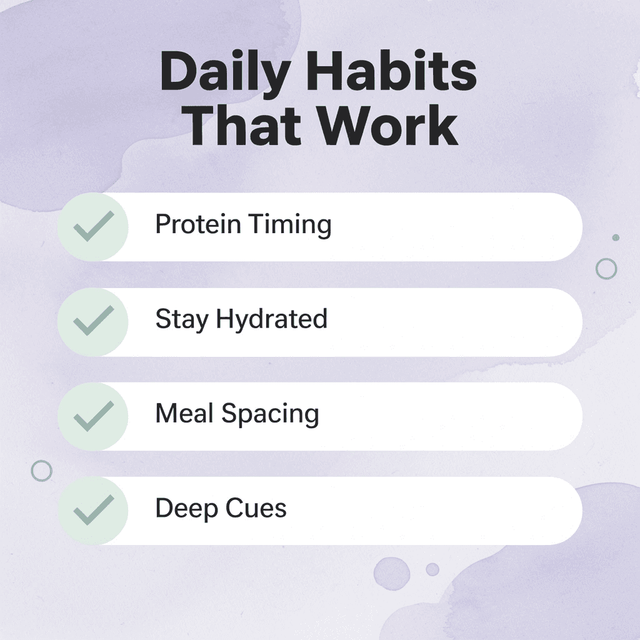
The habits you build around your daily routine on Zepbound matter more than most people expect. Protein timing, hydration, meal spacing, and consistent sleep cues determine whether your body adapts smoothly — or fights back at 2 a.m.
Habit | Why It Matters for Sleep |
|---|---|
Protein timing | Stabilizes blood sugar overnight, reducing wake episodes |
Hydration | Prevents nighttime cramping and restlessness |
Meal spacing | Reduces GI discomfort that disrupts deep sleep |
Consistent sleep cues | Trains your circadian rhythm for faster, deeper rest |
Most people manage this by memory, making mental notes about what they ate or when they injected, then wondering why the pattern keeps repeating. On a GLP-1 journey with shifting doses, appetite changes, and new side effects appearing week to week, those gaps in recall become costly. Our MeAgain app lets you log sleep disruptions alongside dose timing, protein intake, and hydration in one place, so the pattern becomes visible instead of invisible. That visibility makes your next conversation with your clinician more useful.
"On a GLP-1 journey with shifting doses and new side effects appearing week to week, gaps in recall get expensive — visibility is what turns data into answers."
The goal is consistency with enough data behind it to know what is working and what needs to change.