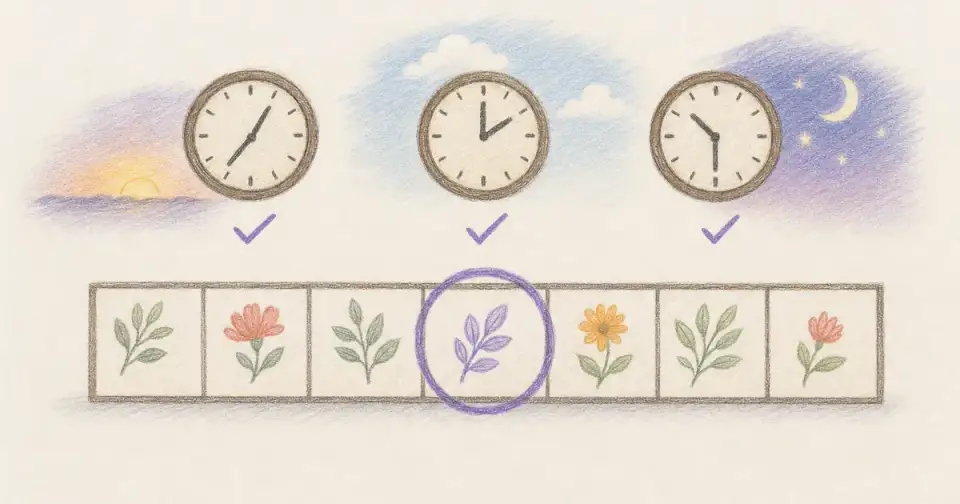

Key takeaways
- Per the FDA label, Mounjaro can be injected at any time of day, with or without food, and no clock hour makes it work better or cause fewer side effects.
- The rule that does matter is weekly: take it the same day each week, and if you change days, keep at least 3 days (72 hours) between doses.
- If you miss a dose, take it within 4 days (96 hours); after that, skip it and resume on your regular day.
- Choose a morning shot to manage any queasiness while you're awake, or an evening shot to sleep through the first hours after your injection.
- The best time is the one you'll never forget, so anchor it to an existing weekly habit and rotate your injection site each week.
Table of contents
- So, What's the Best Time of Day to Take Mounjaro?
- What the Label Actually Locks In: Same Day, Every Week
- Morning vs. Evening Shots: How to Decide
- Managing Side Effects Around Your Shot Day
- Building a Mounjaro Routine That Sticks
So, What's the Best Time of Day to Take Mounjaro?
There is no single best time of day to take Mounjaro. Per the FDA label, you inject it once a week at any time of day, with or without meals. Morning, lunchtime, late evening — none works better or worse for your blood sugar or your weight. The only clock that matters is your own: the time you'll actually remember, week after week.
So why does almost everyone ask about timing? We're trained by pills. Some blood-pressure and thyroid tablets really are morning-only, so it's natural to assume Mounjaro has a magic hour too. There isn't one. Medical News Today puts it plainly: there are no reports that taking it in the morning or at night changes how well it works or raises your odds of side effects. The label sets a weekly rhythm, not an hourly one.
That reframes the real question. 'Best time' isn't about pharmacology — it's about adherence and how your body handles the shot. Healthline notes that using Mounjaro around the same time each week, on a consistent schedule, helps keep a steady level of the drug in your body so it can work the way it's meant to. Steadiness comes from the weekly pattern you can keep, not from a particular hour on the clock. Pick the slot you won't skip.
It's worth sitting with the evidence, because it's freeing. Nothing in the reporting ties effectiveness or side-effect risk to a time of day. Morning and evening come out the same. Medical News Today found no reports that a morning or nighttime shot affects how well Mounjaro works or how likely side effects are. So if you've been agonizing over 8 a.m. versus 8 p.m., you can let that go and choose on practical grounds instead.

- A reminder you can't miss — a repeating weekly alarm labeled "shot day"
- Your side-effect pattern — when queasiness or fatigue tends to show up for you
- A low-stakes next morning, in case the shot leaves you off
- An existing weekly ritual you can hang the shot on
- Whether you'd rather feel any side effects awake or sleep through them
No meal to plan around, either. Some medications have to be taken on an empty stomach or with food — one more thing to time. Mounjaro isn't one of them. The FDA label clears it for use with or without meals, and Healthline agrees it doesn't matter whether you eat around the time you inject. That's one less variable between you and a shot you'll remember to take.
Here's the whole thing in one line: the best time to take Mounjaro is the time you will never forget. A dose you take reliably at a slightly awkward hour beats a "perfect" one you keep pushing to tomorrow. Consistency is the active ingredient in your routine. Whatever slot survives real life — busy weeks, travel, the days you're wiped out — that's your best time. Everything else is just preference.
The label does fix one piece of timing, and it's not the hour. It's the week. Mounjaro is a once-weekly shot, and the steadiness Healthline describes comes from keeping to the same day, not the same minute. That weekly rhythm is where the real rules live — how far apart doses have to be, and what to do when you miss one. Those aren't preferences.
So take the pressure off the clock. There's no wrong hour to inject Mounjaro, only a more forgettable one. The rest of this guide is about the choices that carry rules and the ones that are simply yours to make. Start by locking in the part the label insists on: same day, every week.
What the Label Actually Locks In: Same Day, Every Week
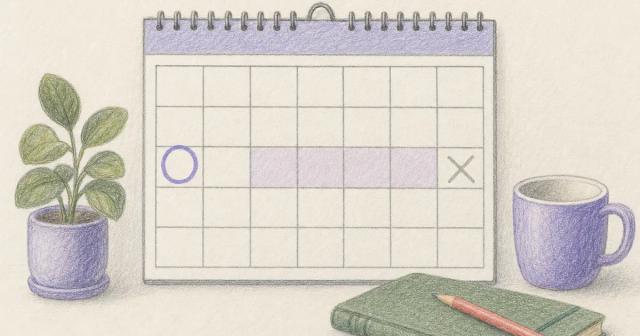
Take Mounjaro once a week, on the same day each week, at any time of that day. That's the rule the FDA label actually locks in. Everything flexible about timing lives inside this one fixed frame: your chosen day, seven days apart. The hour can move. The weekly cadence is what keeps the medication working steadily, so this is the part worth building a small system around.
Can you change your Mounjaro injection day?
Yes — you can move your shot day when life needs you to. The FDA label says you may change the day of the week you use Mounjaro as long as there are at least 3 days (72 hours) between the two doses. So if your Monday shot needs to become a Thursday shot, you can shift it, as long as you don't crowd the doses closer than that three-day floor. Make the change once, then settle onto the new day.
You can move the day — you just can't move it closer than 3 days (72 hours) from your last dose.
What if you miss a Mounjaro dose?
Missed your usual day? You have a window. Per the prescribing information, if you miss a dose, take it as soon as possible within 4 days (96 hours) of the missed dose. If more than 4 days have passed, skip that dose entirely and take your next one on your regular scheduled day, then carry on as usual. Don't double up to make up for it, and if you're unsure where you land, ask your care team.
Situation | What the label says |
|---|---|
Changing your shot day | Keep at least 3 days (72 hours) between the two doses |
Missed a dose, within 4 days | Take it as soon as possible, then resume your regular day |
Missed a dose, more than 4 days late | Skip it; take the next dose on your scheduled day |
Two doses too close | Never take 2 doses within 3 days of each other |
Why the weekly rhythm matters more than the hour
The weekly pace isn't arbitrary — it's how your body eases in. Mounjaro starts at a low 2.5 mg dose and steps up only after at least four weeks at each level. The FDA label spells out that this gradual escalation exists to reduce the risk of gastrointestinal side effects — the nausea and stomach upset that come on hardest when the body meets a bigger dose too soon. A steady, same-day-each-week rhythm is what that slow ramp is built on.
- A repeating weekly phone reminder labeled with your shot day
- A logged shot each week so the pattern is visible
- A travel backup plan — a cooler bag and a noted next-dose date
- The 3-day gap rule saved somewhere you'll actually find it

A quick word on other medications and timing
One timing note that isn't about the clock: Mounjaro slows how fast your stomach empties, which means it has the potential to affect how some swallowed medications are absorbed. The FDA label flags caution with oral drugs that have a narrow margin, like the blood thinner warfarin, and advises anyone on oral birth control to add a backup method for four weeks after starting and after each dose increase. None of this changes your shot time — it's a conversation to have with your care team.
Where the label stops giving exact numbers, it hands the decision to a person, not a clock. Missed-dose judgment calls, medication interactions, whether to shift your day — those go to your care team, who knows your full picture. With the fixed rules settled, the fun part is what's left to you: choosing a time of day that genuinely fits your life.
Morning vs. Evening Shots: How to Decide
Neither a morning nor an evening shot is medically better. Mounjaro works the same whichever hour you pick, so the real question is simpler: when would you rather feel any side effects? Some people want them during the day, where they can eat, drink, and keep moving. Others would rather be asleep for it. Both are fine. You're choosing for comfort and routine, not for how well the medication works.
Here's the reassuring part. In the SURPASS-1 trial, the stomach side effects were mostly mild to moderate and transient, with nausea reported in about 12-18% of people on tirzepatide versus 6% on placebo. The SURPASS-3 trial saw the same shape: gut side effects that eased over time rather than building. For many people, any queasiness tends to surface in the first day or two after a shot, then fade. That short, early window is exactly what you're timing around.
The case for a morning shot
A morning shot puts any side effects in your waking hours. If nausea shows up, you're up and able to sip water, eat something plain, and slow your day down instead of lying awake with it. Mornings also make an easy anchor. Tie the shot to your first coffee or a Sunday breakfast and it stops depending on memory. For a lot of women, the appeal is control: you can see how you feel and shape your day around it.

The case for an evening shot
An evening shot lets you sleep through the earliest hours after your injection. If your queasiness tends to peak that first evening or overnight, going to bed can be the easiest way to ride it out. Pick a wind-down anchor, the same show or the same cup of tea, so the shot travels along with a habit you already keep. The trade-off is that if something does wake you, you're managing it at 2 a.m. For many people, sleeping through it still wins.
Morning shot | Evening shot | |
|---|---|---|
When side effects land | During your waking hours | Mostly while you sleep |
Routine fit | Anchor to coffee or breakfast | Anchor to a wind-down habit |
Day-to-day impact | Manage queasiness as you go | Skip the daytime dip |
Best for | People who like a morning anchor | People whose queasiness peaks at night |
Choosing which day of the week
Your shot day matters more than most people expect. Since any side effects cluster right after the shot, pick a day whose next morning is low-stakes. A Friday or Saturday shot means the quieter part lands on a weekend for a lot of schedules, not before a big presentation or an early flight. Look at your actual week and find the morning you'd least mind feeling a little off. That one choice does more for your comfort than the clock ever will.
- When do side effects usually hit you?
- Which next morning is your lightest?
- Weekend or weekday for the quiet stretch?
- Any recurring commitments to protect?
- Does a partner help, and when are they around?
Most people settle within a few weeks. Side effects tend to shrink as your body adjusts, so you don't have to get this perfect on day one. Pick a reasonable slot, give it a fair run, and adjust once if it's clearly not working. Then leave it alone. Next, let's talk about what to actually do when a side effect does show up on shot day.
Related reading
- Where you inject your shot
- The best time to take semaglutide
- Ease Mounjaro stomach pain
- Tracking your results
- Foods that tend to sit well
- Gentle foods to reach for
Managing Side Effects Around Your Shot Day
Most shot-day side effects can be handled at home. Fluids, gentle food, and a slower pace cover the majority of what comes up: some nausea, a loose stomach, a dip in appetite, a little fatigue. None of that means something is wrong. It usually means your body is adjusting. The goal on shot day is to keep yourself comfortable and stay ahead of dehydration, not to power through it.
Handling nausea on shot day
When nausea hits, keep meals small and plain. Think a few bites rather than a full plate, and reach for bland over rich. Sip fluids slowly through the day instead of gulping a big glass at once. Heavy, greasy, or very sweet food right after your shot is the usual trigger to skip. If nothing sounds good, that's normal on shot day, and a little something bland usually sits better than an empty stomach. Let your appetite come back on its own.

Side effect | A safe self-care step |
|---|---|
Nausea | Small, bland meals; sip fluids slowly |
Diarrhea | Keep fluids going to replace what you lose |
Low appetite | Gentle, protein-first bites when you can |
Tiredness | Lighter plans the day after your shot |
Injection technique that keeps problems down
Good technique quietly prevents a lot of problems. The Mounjaro label says to inject under the skin of your abdomen, thigh, or the back of your upper arm, and to rotate your site with each weekly shot so you're not using the same spot over and over. Use a new needle every single time, and never share a pen with anyone, even with a fresh needle. If you want more on where you inject your shot, a sibling guide covers site choice in depth.
- Inspect the medication before use; it should look clear
- Rotate to a fresh injection site each week
- Use a new needle every single time
- Never share a pen, even with a new needle
Staying hydrated and steady
Fluids are the one thing worth staying ahead of. The FDA label notes that diarrhea, nausea, and vomiting can cause a loss of fluids and dehydration, so keep water going through the day rather than catching up later. If you take Mounjaro alongside certain diabetes medicines, watch for low blood sugar too; the Cleveland Clinic suggests keeping a quick source of sugar on hand just in case. Steady sipping, a little salt with food, and not skipping meals entirely all help you stay level.

- When side effects start relative to your shot
- Foods that didn't sit well
- How much water you actually drank
- Your energy, day by day
- Blood sugar if your care team asks you to
A side effect you can eat, drink, and rest your way through is one to manage at home. Pain that won't let up is one to call about.
If the same side effect hits every single shot, that's worth a conversation. Log it first: which side effect, when it starts, how long it lasts, and what you'd already tried. The Cleveland Clinic advises telling your care team if symptoms don't start to improve or if they get worse. Bring the pattern to them and let them decide on any change. Don't adjust your own dose or skip a shot to dodge it; that's a call for your care team, not a fix to try solo.
Some symptoms mean call, not cope. The label says to stop and call your care team right away for severe stomach-area pain that won't go away, with or without nausea or vomiting, since it can signal inflammation of the pancreas. Also reach out if nausea, vomiting, or diarrhea just won't quit, because that's when dehydration sets in. Everything gentler, you can manage at home. With side effects handled, the last piece is building a routine that actually sticks.
Building a Mounjaro Routine That Sticks
The routine you'll actually keep beats the 'perfect' hour every time. No clock time makes Mounjaro work better, so the real lever is consistency: taking it on the same day each week, week after week, for as long as you're on it. Results build over months, not from one well-timed shot. The best time is whichever slot fits your life so smoothly you stop having to think about it.
Anchor your shot to something you already do
Tie your shot to a ritual you never skip. Mounjaro is taken on the same day each week, at any time of day, with or without food, which frees you to attach it to something already fixed in your week. Sunday morning coffee. The night you set out the recycling. A standing weekly call with your mom. When the shot rides on a habit that's already automatic, it stops depending on memory, and a forgotten week gets a lot less likely.
- A recurring calendar block on the same day and time each week
- A habit you never miss, like Sunday coffee or laundry night
- A quick check-in with a partner who helps you remember
- A phone reminder linked to that day, not a random alert
- A visible spot at home that cues you it's shot day
- A logged shot each week so you can watch the streak build

The wins come from months of steady weeks, not from the hour on the clock.
See your own pattern in your data
This is where tracking earns its place. Set a weekly shot reminder for your chosen day and log each shot as you take it, and the same-day rhythm mostly runs itself. Over a few weeks, your log starts showing you something useful: how your energy and any queasiness line up with your shot timing. If the evenings after your shot feel rough, you'll see it in the pattern instead of half-remembering it. That's the difference between guessing and letting your own data tell you what works.
Mounjaro is ongoing therapy, and the results hold as long as the routine does. In SURMOUNT-2, adults on the 15 mg dose lost about 14.7% of their body weight over 72 weeks, and the pooled SURPASS trials showed tirzepatide held steady weight and blood-sugar control at 40 to 52 weeks. The flip side matters too: when treatment stops, weight tends to come back. For semaglutide, about two-thirds of the lost weight returns within a year of stopping, and long-term data for tirzepatide after stopping is still limited. A durable routine is what protects the progress you're building.
Adjust once, then leave it alone
Give a new time a few weeks before you judge it. Side effects and energy usually settle after the first stretch, so a slot that feels rough at first often smooths out. If you need to move your shot day, small tweaks are fine as long as you keep enough space between doses. Pick a reasonable day, ride it out, and resist the urge to keep tinkering.
The best time to take Mounjaro is the one you'll keep — same day, every week, anchored to a life you're already living. Pick the slot that fits your side effects and your schedule, log it, and let consistency do the quiet work. That's the version of 'best' that actually shows up over time.
Related reading
- Which GLP-1 has the fewest side effects
- The side effects women notice most
- Headaches on a GLP-1
- Low blood sugar
- How much water to drink
- Getting enough protein
- Fitting in exercise
- Acid reflux
- Long-term side effects
- Weight gain after stopping
Frequently Asked Questions
Does it really not matter what time of day you take Mounjaro?
Right. The medication is used on the same day each week, at any time of the day, with or without meals, and no clock hour makes it work better or cause fewer side effects. The one thing that matters is a steady weekly rhythm. So pick the time you're most likely to remember and that fits your side-effect pattern, then keep it consistent.
Is it better to take Mounjaro at night or in the morning?
Neither is medically better, because the clock doesn't change how the medication works. The choice is about when you'd rather feel any side effects: a morning shot puts any queasiness in your waking hours where you can eat and hydrate, while an evening shot lets you sleep through the first hours after your injection. The morning-versus-evening section walks through both.
Does where you inject Mounjaro change its side effects?
Where you inject is a separate question from when. Rotating the injection site each week is standard technique, not a way to speed up or slow down results, and the clock time you choose is independent of the site. The section on managing side effects covers the how of rotating sites and needle technique.
Are there foods you should avoid right after your Mounjaro shot?
There's no forbidden list, but heavy, greasy, or very large meals tend to sit worse in the first day or two after your shot, when any stomach side effects are most likely. Many people do better with smaller, gentler meals and steady fluids right after. The side-effects section covers foods that tend to sit well.
This article is for informational purposes only and is not medical advice. Always talk to your doctor or care team about your medication, symptoms, or treatment plan.