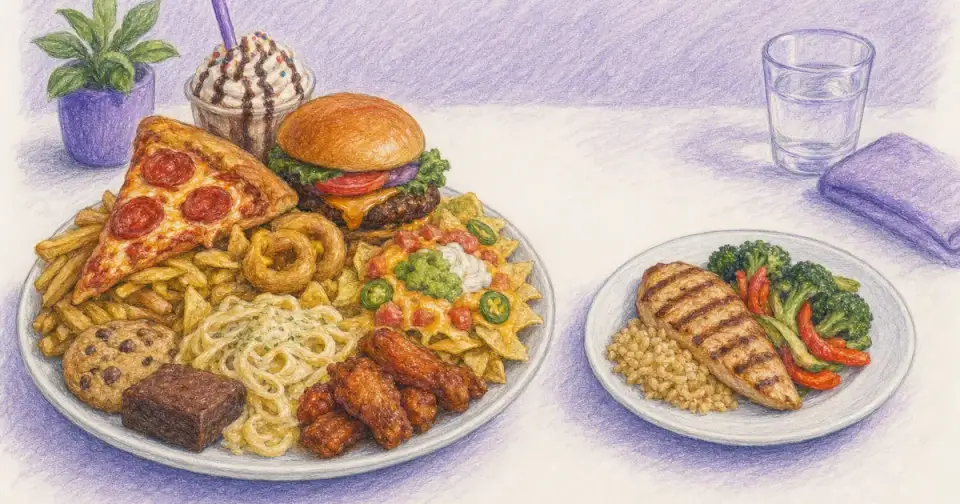

Key takeaways
- There is no official Mounjaro diet; the label doesn't prescribe one, so the goal is eating patterns that make the medication's smaller-appetite window work better.
- Protein comes first at every meal because a reduced appetite means fewer bites, and those bites need to protect muscle while you lose fat.
- Eat in order: protein first, vegetables and fiber next, refined carbs last, since a slowed stomach fills before you reach the starch.
- Large fatty meals, carbonated drinks, and eating past your first fullness signal are the most common triggers of nausea and bloating.
- Smaller meals spaced through the day beat three big ones, and eating too little stalls energy and muscle rather than speeding results.
Table of contents
- Is There Really a Mounjaro Diet?
- Why Protein Comes First
- Building the Plate: What to Eat and in What Order
- What Tends to Backfire (and Eating Through Nausea)
- Your Day, Structured: Timing, Shot Days, and Eating Enough
Is There Really a Mounjaro Diet?
There's no official Mounjaro diet plan. The prescribing information doesn't come with a menu, a calorie target, or a list of forbidden foods. What it points you toward instead is the meal plan your care team gives you. So treat this as a framework, not a rulebook: a way of eating that makes the medication's smaller-appetite window work harder for you. The calorie side is its own question, and how many calories to eat on Mounjaro covers that.
Mounjaro doesn't hand you a food list. What and when you eat is what decides how the smaller appetite actually feels.
Mounjaro changes how eating feels before it changes what's on your plate. Per Cleveland Clinic, it also helps with weight loss by reducing appetite and slowing digestion. In plain terms, you feel hungry less often, and the food you do eat leaves your stomach more slowly. That combination is why a plate that felt normal a month ago can suddenly feel like too much halfway through.
What changes at the table when digestion slows?
When digestion slows, food sits in your stomach longer before it moves on. Cleveland Clinic notes the medication slows down your digestion, which is exactly why timing and quality start to matter more than they used to. A heavy, greasy meal that would have passed quickly before can now linger and turn into bloating. And because weight management is a long-term project rather than a quick fix, the food habits you build now are the ones that carry you.
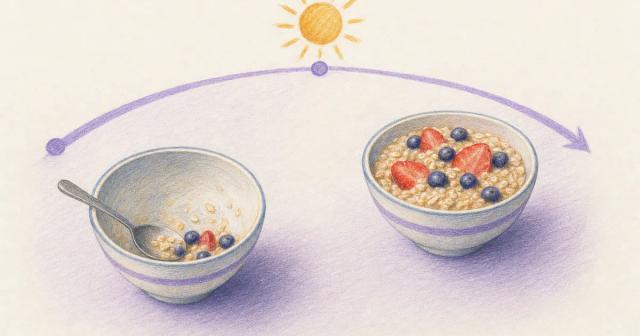
- Smaller portions fill you up faster than they used to
- Food noise quiets down, so snacks nag at you less
- Rich, greasy meals sit heavy and linger longer
- Thirst cues go quiet, so you drink less without noticing
- Mornings can feel a little off or queasy
- Old favorites can suddenly taste like too much
Is it a craving or real hunger?
Not every urge to eat is real hunger. With your appetite muted, the loud, specific pull toward something sweet or salty is usually head-hunger, the old habit talking. Real body-hunger is quieter now and easier to miss. A quick check: if you're picturing one exact food, it's probably a craving; if most foods sound fine, it's probably your body. If you're still hungry on Mounjaro in a genuinely physical way, that's worth noting rather than ignoring.
This framework works alongside your prescription, not instead of it. Mayo Clinic notes the medication is used together with diet and exercise, and that pairing is the point. The shot opens a smaller-appetite window, and what you put in it decides how much muscle you keep and how good you feel. Because weight management is a long game, the habits you practice now are what hold once the easy part fades.
If one food earns its place before everything else on that smaller plate, it's protein. Here's why it comes first, and how to get enough of it without forcing down more food than you want.
Why Protein Comes First
Protein is the anchor of eating on Mounjaro. When your appetite shrinks, you take in fewer bites overall, so each one has to earn its place. The job of those bites isn't just to fill you. It's to protect the muscle you'd otherwise lose while the fat comes off. Get protein right and the rest of the plate gets easier. Get it wrong and the scale can move for the wrong reasons.
The stakes show up in the numbers. In SURMOUNT-1, published in the New England Journal of Medicine, average body weight fell about 15.0% on the 5 mg dose, 19.5% on 10 mg, and 20.9% on 15 mg over 72 weeks. That's real change. But Mayo Clinic points out that rapid weight loss of any kind will lead to some muscle mass loss, and muscle isn't what you're trying to shed. Protein is how you steer the loss toward fat and away from the muscle that keeps you strong.
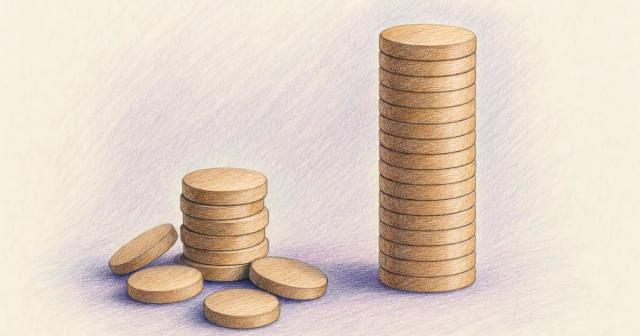
Why protein and not just fewer calories?
Protein does two things at once here. It keeps you fuller for longer, which matters when you're eating less anyway, and it helps preserve lean muscle when it's paired with resistance training. A tirzepatide weight-loss program reported in Diabetes, Obesity and Metabolism built its coaching around exactly that combination: a focus on protein intake and resistance training. Fewer calories alone won't protect muscle. Protein plus strength work is what does.
- Greek yogurt on its own or stirred into a smoothie
- Cottage cheese as a dip for raw vegetables
- A scoop of protein powder blended into a morning smoothie
- Beans stirred into a favorite soup
- A protein shake when nothing solid sounds good
Everyday food | Add protein without the volume |
|---|---|
Morning smoothie | Blend in protein powder or Greek yogurt |
Raw veggie snack | Dip it in cottage cheese |
Favorite soup | Stir in a scoop of beans |
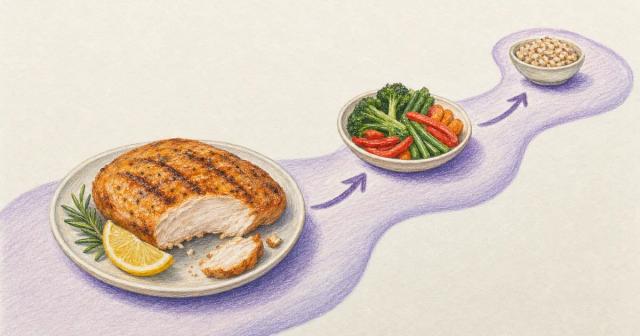
Eat the protein first. Mayo Clinic suggests making protein the first item in the meal so it doesn't get left on the plate once you fill up. On a slowed stomach, you often reach full before you're done, so whatever you eat first is what actually counts. Start with the yogurt, the beans, the fish, then move on to the rest.
How much protein do you actually need?
There's no single protein number that fits everyone. The food-first move is to divide your protein across the day rather than saving it all for dinner, so your body has a steady supply. Mayo Clinic frames it as spreading sources of protein through the day. For your personal target, the honest answer is to ask your care team or a dietitian, who can set it against your weight, your labs, and how much you're actually eating.
Protein builds muscle only if you give it something to build. That's where movement comes in: pairing your protein with resistance training is what tells your body to hold onto muscle instead of burning it for fuel. If you're mapping out combining GLP-1 and exercise, simple strength work a few times a week does more for muscle than any single meal. The food and the workout are a team.
Too little protein has a look. Energy goes flat, workouts feel harder, and the weight you lose starts including muscle you wanted to keep. If meals keep shrinking and protein keeps slipping, that's the signal to adjust before it costs you strength. Once protein is handled, the rest of the plate falls into place, starting with what fills the space around it.
Building the Plate: What to Eat and in What Order
Eat in one order: protein first, then vegetables and fiber, then refined carbs last. A slowed stomach fills before you get to the end of the plate, so whatever you eat first is what your body actually gets. Put the food that protects muscle and keeps you full at the front, and let bread, rice, and sweets take the last and smallest share.
The pattern underneath this is simple: nutrient-dense, minimally processed food. A Mediterranean-style plate of vegetables, legumes, whole grains, lean protein, nuts, and olive oil fits it almost exactly. In one Frontiers in Endocrinology study of people starting tirzepatide, everyone got a personalized Mediterranean plan alongside the medication. Think of it as a pattern to lean toward, not a rigid rulebook.
The Plate at a Glance
Priority | Foods | Role |
|---|---|---|
✅ Eat first | Lean protein: chicken, fish, eggs, Greek yogurt, beans | Protects muscle, fills you up |
✅ Eat next | Vegetables, fruit, legumes, whole grains | Fiber, vitamins, steady energy |
⚠️ Eat last | Refined grains, sugary drinks, fried and fast food | Crowd out better food when you fill early |
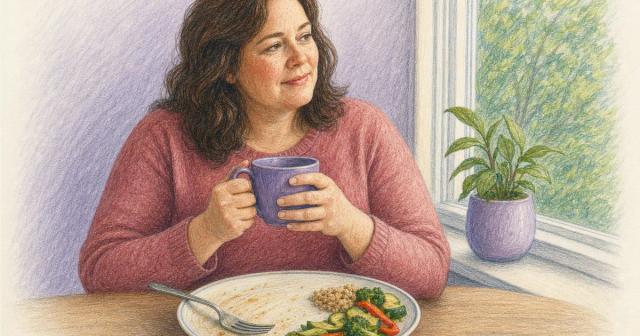
Refined carbs go last for a practical reason. When your stomach fills after just a few bites, the first foods win. Fill up on white bread, chips, or a sugary drink and there's no room left for the protein and produce your body needs while you're eating less. Refined grains, sugary drinks, and most fast food and ultra-processed snacks are the ones to keep at the edge of the plate, not the center.
A Produce-and-Fiber Backbone
- Leafy greens and mixed vegetables
- Berries and other whole fruit
- Beans, lentils, and chickpeas
- Whole grains like oats and brown rice
- Nuts and seeds for healthy fats
- Plain Greek yogurt to pair protein with produce
Add fiber slowly. More vegetables, beans, and whole grains help keep you regular, but a sudden jump can backfire into gas and bloating, especially early on when the medication has already slowed digestion. Build up over a couple of weeks and drink water alongside it, so the fiber does its job instead of sitting stuck. In fact, easing off very high-fiber foods in the first few days can settle things while your body adjusts.
Order the plate, not just the portions: when a smaller stomach fills first, whatever you eat first is what your body actually keeps.
When Solid Food Feels Like Too Much
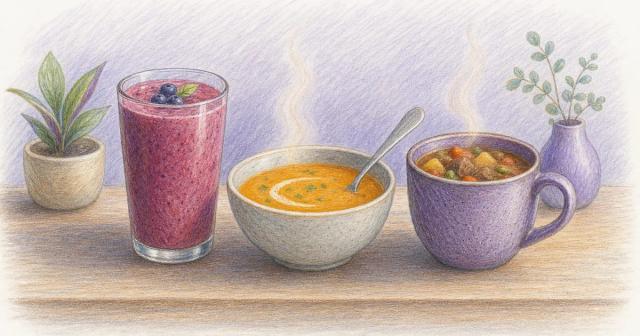
Some days a full plate is just too much. On those days, smoothies, soups, and stews still get protein and nutrients in without a big meal to battle through. Mayo Clinic's GLP-1 meal guidance leans on exactly these — lower-volume meals you can sip or spoon — because they deliver what you need without asking you to eat a full plate when nothing sounds good.
What the Mediterranean Evidence Shows
Here's what the evidence actually shows. In that Frontiers in Endocrinology study, people who leaned harder into a Mediterranean plate saw their adherence score climb by about 3.2 points on the PREDIMED scale (from 6.30 to 9.52), alongside better metabolic markers like lower fasting insulin and triglycerides. It's a supportive pattern, not a cure: the goal is a plate that complements your medication, not one that replaces it.
Consistency beats perfection. You don't need a flawless plate at every meal; you need a pattern you can keep for months, because the food habits are what carry results over the long haul. Aim for protein first and produce next most of the time, and let the occasional off-plate meal be just that. Next, the flip side: the foods and habits that tend to backfire.
Related reading
- What to eat on Mounjaro
- How many calories to eat on Mounjaro
- Still hungry on Mounjaro
- How long Mounjaro takes to curb appetite
- Mounjaro heartburn
- Diarrhea on Mounjaro
What Tends to Backfire (and Eating Through Nausea)
The usual triggers are big fatty or greasy meals, carbonated drinks, and eating past your first fullness signal. Because your medication keeps food in your stomach longer, a heavy meal doesn't clear the way it used to. It sits, and that's when bloating, gas, and nausea show up. None of these are hard rules; they're the patterns most people notice, and small swaps head off most of the discomfort.
Foods and Habits That Sit Heavy
- Fried and high-fat meals that sit heavy
- Strong-smelling or rich foods when you're queasy
- Oversized portions in one sitting
- Fizzy, carbonated drinks
- Eating fast, without pausing to notice fullness
- Lying down right after a meal
Tends to backfire | Gentler swap |
|---|---|
Fried or greasy plate | Baked, grilled, or broiled version |
One large meal | Smaller portion, second half later |
Fizzy drink | Still water or ginger tea between meals |
Strong-smelling hot food | Cool, bland food like crackers or toast |
Eating fast to the last bite | Slow down, stop at first fullness |
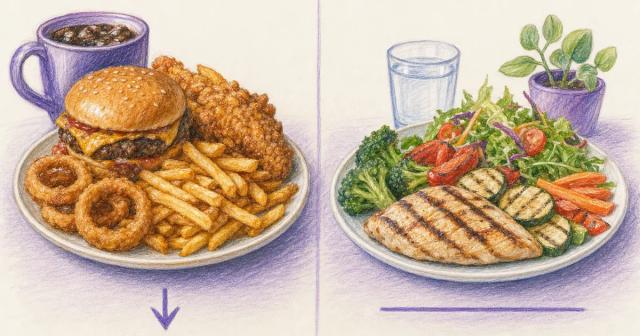
Fatty meals hurt most because they linger longest. Fat is slow to digest even normally, and on a stomach that's already emptying slowly, a greasy plate can sit for hours and turn into bloating, nausea, and reflux. Avoiding large or high-fat meals is one of the most reliable ways to cut both nausea and loose stools. If it's already flared into Mounjaro heartburn, diarrhea on Mounjaro, or you're hunting for stomach pain relief, the fix usually starts at the plate.
Eating Through Nausea
When nausea hits, the instinct to stop eating usually makes it worse. An empty stomach can deepen the queasiness, so the move is small, frequent meals rather than none. Reach for cool, bland foods like crackers, toast, or pretzels, and sip water or ginger tea between meals. Skipping meals to escape nausea often backfires into a not-eating cycle, where less food means more nausea means even less food.
Short-lived queasiness that eases as your body adjusts is expected; nausea that won't let you keep fluids or food down is a call to your care team.
Most of this is mild and temporary. In SURMOUNT-2, the tirzepatide trial in adults with obesity and type 2 diabetes, the most frequent side effects were stomach-related — nausea, diarrhea, and vomiting — and they were mostly mild to moderate, with fewer than 5% of people stopping treatment because of them. They also tend to cluster around dose increases, then settle. For a fuller sense of what's common, the side effects women notice run along these same lines.
Hydration Without Feeling Full
Hydration is its own job, and it gets harder when thirst cues go quiet. Sip water steadily between meals rather than during them, so liquid isn't taking up the little stomach room you have for food. Mayo Clinic's guidance is to drink water or ginger herbal tea through the day between meals. Falling behind on fluids can feed headaches on a GLP-1 and fatigue on Mounjaro, so those are worth heading off early.
Carbonated Drinks
Carbonated drinks deserve their own mention. The gas they add on top of a stomach that's already slow to empty means more pressure, more bloating, and a lot more burping. Flat water, herbal tea, or water with a squeeze of citrus give you the hydration without the fizz. If burping is the thing driving you up the wall, that's the main reason Mounjaro causes burping.
The through-line is gentleness: smaller, slower, and away from the foods that sit heavy. Get those basics right and most meals feel manageable, and remember that eating enough still matters as much as eating well. The next piece is rhythm — how you space meals across the day, how to plan around shot day, and why under-eating is a stall, not a shortcut.
Your Day, Structured: Timing, Shot Days, and Eating Enough
Smaller meals, spaced through the day, beat three big ones on Mounjaro. When your stomach empties slowly, a large plate sits heavy while a light one goes down easy. So the structure that works is simple: plan the queasier day around your shot, and let the rest of the week settle into a steady rhythm you can actually keep.
A daily rhythm that works with a smaller appetite
- A small, protein-forward breakfast, even if you're not hungry
- A protein snack every three to four hours
- Lunch and dinner built around protein first
- An early dinner, about two hours before bed
- Water sipped between meals, not during them
- A lighter, blander plate on shot day
Small, frequent meals tend to work best when your appetite is low and nothing sounds good. A full plate can feel like too much when food sits longer, so three modest meals with a snack or two usually go down easier than the old three-square-meals pattern. This isn't about grazing all day. It's about giving yourself regular, manageable chances to get protein and nutrients in before the day gets away from you.

Working with your weekly shot
Some people feel queasier in the day or two after their shot, and that's the window to plan around. Keep shot day lighter and blander, think smoothies, yogurt, soup, or plain toast, and save richer meals for when you're feeling steady. If nausea is a regular pattern for you, the eating-through-nausea moves above still apply. Not everyone notices this. If your shot day feels no different, eat as you normally would.
Your shot is flexible, which makes the rhythm easier to hold. Per the Mounjaro prescribing information, you take it once a week at any time of day, and it can be taken with or without food, so you don't have to build meals around it. You can also move your shot day if you need to, as long as your doses stay at least three days (72 hours) apart. Your care team shows you the technique before your first dose.
Where you inject matters less than rotating where you do it. The FDA label lists three areas, the abdomen, the thigh, and the back of the upper arm, and says to rotate the site with each weekly dose rather than reusing the same spot. If you're new to this, where to inject GLP-1 walks through the options, and your care team trains you on the how before you start.
Eating enough and building habits that last
Eating too little is a real failure mode, not a shortcut. When the appetite window is wide open, it's easy to go a whole day on a few bites, but under-eating tends to flatten your energy and cost you muscle, the opposite of what you're after. If your intake drops low, don't force big meals. Raise the nutrient density of small ones instead: Greek yogurt, a smoothie with protein powder, a hearty soup or stew. Small and rich beats large and skipped.
This is where your own data does the work. When you log a meal in MeAgain, note how full you felt and whether anything didn't sit right afterward. After a couple of weeks, patterns show up that no general framework can predict: the breakfast that carries you to lunch, the dinner that always feels heavy, the foods that get easier as the days pass since your shot. Your log turns this generic structure into your structure.
The medication is a tool; the habits are what you keep. Mounjaro opens the appetite window, but the food patterns you build are what carry weight over the long haul. In the SURMOUNT-MAINTAIN trial, 8% of people who stayed on their dose regained enough weight to need rescue therapy, versus 67% who switched to placebo. The New England Journal of Medicine reported substantial, sustained loss across three years of tirzepatide in SURMOUNT-1. If you're planning ahead, weight gain after stopping GLP-1 and stopping GLP-1 after losing weight cover the rest.
A dietitian earns their keep when the framework stops fitting you. Bring one in if nausea won't settle, if you can't get near enough protein no matter how you try, or if your appetite disappears for days at a stretch. A registered dietitian can set targets for your body and your goals, the kind of individual number this post deliberately doesn't guess at. Your care team can refer you.
Related reading
- Stomach pain relief
- Why Mounjaro causes burping
- Fatigue on Mounjaro
- Feeling sleepy on Mounjaro
- Brain fog
- Headaches on a GLP-1
- Combining GLP-1 and exercise
- Where to inject GLP-1
- Weight gain after stopping GLP-1
- Stopping GLP-1 after losing weight
Frequently Asked Questions
Is it normal to have almost no appetite on Mounjaro?
Yes. A quieter appetite is one of the most common changes, and for many people it's strongest in the first days after a dose. That's expected, not a problem on its own. What's worth watching is the other side of it: going whole days on almost nothing. If that becomes a pattern, lean on small, nutrient-dense meals and mention it to your care team. Folding those habits into a steady Mounjaro diet plan makes the low-appetite stretch easier to work with.
Can I drink coffee or fizzy drinks on Mounjaro?
Coffee is generally fine in moderation, though caffeine on an empty, slow-moving stomach can add to queasiness for some people. Carbonated drinks are the ones that tend to backfire. The gas plus a stomach that's already full can leave you bloated and burping. If fizzy drinks are your habit, still or flavored water is an easier swap while your body adjusts.
Do I need to take Mounjaro with food?
No. Per the prescribing information, Mounjaro can be taken with or without food, at any time of day, once a week. That flexibility helps when your appetite is unpredictable, since you don't have to line up a meal with your shot. You can also move your shot day if you need to, as long as your doses stay at least three days apart.
Should I take a multivitamin while I'm eating less on Mounjaro?
It's worth asking your care team. When you're eating noticeably less, it's easier to fall short on vitamins and minerals, and a daily multivitamin is a common, low-risk way some people cover the gaps. It doesn't replace food, and it won't fix under-eating. Your care team or a dietitian can tell you whether you actually need one based on your labs and your diet.
When should I see a dietitian about how I'm eating on Mounjaro?
Reach out when the basics stop working: nausea that won't settle, protein you can't hit no matter what you try, or an appetite that's gone for days at a time. Rapid loss with low intake is another good reason, since a dietitian can protect your muscle and nutrition while you lose. You don't need a crisis to book one. Many people see a dietitian early to set up their plan.
This article is for informational purposes only and is not medical advice. Always talk to your doctor or care team about your medication, symptoms, or treatment plan.