
Key takeaways
- Mounjaro's FDA label sets no outright ban on alcohol, but low blood sugar, harder stomach side effects, and pancreatitis risk each deserve real caution.
- Alcohol raises the chance of low blood sugar on Mounjaro, and the risk climbs sharply if you also take insulin or a sulfonylurea, so check with your care team first.
- Because Mounjaro slows digestion, alcohol tends to irritate an already-sensitive stomach, and many people find a drink or two hits harder than it used to.
- In studies, many people on tirzepatide report drinking less, but Mounjaro is not an approved treatment for alcohol use.
- Severe stomach pain that spreads to your back is a pancreatitis warning sign that means stopping alcohol and getting medical care right away.
Table of contents
- Can You Drink Alcohol While Taking Mounjaro?
- Can Drinking Alcohol Cause Low Blood Sugar on Mounjaro?
- Why Does Alcohol Make Mounjaro's Stomach Side Effects Worse?
- Does Mounjaro Change How Much You Want to Drink?
- How Do You Drink Safely on Mounjaro, and When Should You Call Your Care Team?
Can You Drink Alcohol While Taking Mounjaro?
Can you drink alcohol on Mounjaro? There's no outright ban on it in Mounjaro's prescribing information, so a glass of wine with dinner isn't off the table for most people. But "no ban" isn't "no caution." Three real issues shape how to drink smart on tirzepatide: alcohol can push your blood sugar low, it tends to make stomach side effects worse, and heavy drinking sits alongside a pancreatitis warning. The honest answer is moderation, plus a quick check with your care team.
What the FDA label does spell out is that Mounjaro slows how fast your stomach empties, which can change how other oral medications get absorbed. It also carries cautions for low blood sugar and for pancreatitis. None of that says "never drink," but it does explain why alcohol lands differently now than it might have before you started. The next sections walk each caution in turn.
- Low blood sugar: alcohol can drop it further, especially with insulin or a sulfonylurea.
- Stomach side effects: a slowed stomach plus alcohol can mean more nausea and reflux.
- Pancreatitis: heavy drinking is a known risk factor, covered in the safety section below.
- Check first if: you take insulin or a sulfonylurea, or you've had pancreatitis.
- Bottom line: no ban, real cautions, and your care team is the tiebreaker.
What does Mounjaro's label actually say about alcohol?
There's no alcohol listed as a specific drug interaction, but that doesn't mean it's irrelevant. Cleveland Clinic advises telling your care team if you drink, right alongside the reminder that the interaction list may not be complete. So the label's silence isn't a green light to drink however you want. It's a nudge to have the conversation, because what's safe for you depends on your other medications and your history.
Think of it as a moderation frame, not a rulebook. Most people on Mounjaro can have a drink or two without a problem. The trouble tends to show up with heavier or faster drinking, or when alcohol stacks on top of a stomach that's already sensitive. Knowing where your line is matters more than any single yes-or-no answer.
Should you check with your care team before drinking?
For a lot of people, a casual drink doesn't need a phone call. The answer changes, though, if you also take insulin or a sulfonylurea alongside Mounjaro, or if you've had pancreatitis. Both of those raise the stakes for exactly the reasons the next sections cover. If either applies to you, it's worth a quick message to your care team before you decide how you want to handle drinking at all.
And "care team" counts even if you got your prescription through telehealth. The company or clinician who prescribed your medication is who to ask — you don't need a traditional in-person doctor for this to apply. Your current dose and anything else you take can shift the answer, so the person who knows your full picture is the right one to check with.
From here, this post walks the three cautions one at a time, then lands on the practical habits for the nights you do decide to drink.
The first caution is the one people underestimate most, because it can sneak up mid-glass: low blood sugar.
Can Drinking Alcohol Cause Low Blood Sugar on Mounjaro?
On its own, Mounjaro rarely causes low blood sugar for people who aren't also on other diabetes medications. Alcohol changes that math. Mayo Clinic is direct about it: drinking can cause severe low blood sugar, and it's something to talk through with your care team. So the risk here isn't really about the shot alone. It's about what happens when a drink lands on top of it.
The mechanism is straightforward. Your liver normally releases stored glucose to keep your blood sugar steady, but alcohol blunts that release while your body is busy processing it. Layer that onto a medication that already lowers blood sugar and a smaller appetite that means you've eaten less, and the floor can drop out. Per Mayo Clinic, drinking alcohol may cause severe low blood sugar — worth taking at face value.
Who is most at risk?
The people who need to be most careful are those taking insulin or a sulfonylurea along with Mounjaro. The FDA label is explicit that combining Mounjaro with insulin or an insulin secretagogue like a sulfonylurea can raise the risk of hypoglycemia, including severe hypoglycemia. Add alcohol to that combination and you're stacking three things that each pull blood sugar in the same direction.
So here's the hard route: if you take insulin or a sulfonylurea, talk to your care team before you decide how to drink at all. The label notes the risk can be lowered by adjusting those medications and that patients should be taught the signs of a low. That's a conversation to have first, not a call to make on your own at happy hour.
What low-blood-sugar signs should you know?
- Shakiness or trembling hands
- Sweating that doesn't match the room
- Confusion or trouble focusing
- Dizziness or lightheadedness
- Sudden hunger that hits hard
- A fast or pounding heartbeat
A low can feel almost exactly like being tipsy — shaky, sweaty, a little confused — which is precisely why it slips past you after a drink.
That overlap is the real danger while you're drinking. The signs of a low and the feeling of being buzzed blur together, so a genuine low can get waved off as "I've just had a couple." Because Mayo Clinic flags that alcohol may cause severe low blood sugar, the safer assumption is that anything shaky or foggy after drinking deserves a blood sugar check, not a shrug.
How do you manage blood sugar if you drink?
The core move is simple: know your numbers around drinking. Mayo Clinic's guidance is to check your blood sugar often, especially before and after meals and at bedtime, to lower the chance of a very low reading. Applied to a night out, that means checking before you drink and again before bed, and eating some carbohydrate alongside the alcohol rather than drinking on its own.
One rule holds no matter what: never drink on an empty stomach. Following the meal plan your care team set up isn't busywork — it's what slows the drop. As Mayo Clinic puts it, carefully following your meal plan is the most important part of keeping things steady, and that's doubly true on a night that includes a drink.
It also helps to plan for the worst case. Keep fast-acting carbs within reach — glucose tablets, juice, or regular soda — so you can treat a low quickly if one hits. And tell whoever you're with what your low-blood-sugar signs look like. A friend who knows to ask "did you check?" when you go quiet or clammy is a real safety net, especially when the symptoms are easy to mistake for the drinks.
Low blood sugar is one way alcohol amplifies what Mounjaro is already doing. The next is one you'll feel in your gut: your stomach.
Why Does Alcohol Make Mounjaro's Stomach Side Effects Worse?
Mounjaro already slows your stomach down, so when you add alcohol, it lands on a gut that's working differently than it used to. Alcohol can irritate the stomach lining, and your medication is holding food and drink there longer. That combination is why nausea, heartburn, and next-day stomach misery can hit harder than they did before you started your shot.
The reason comes down to timing. Mounjaro delays how fast your stomach empties, which is part of how it curbs appetite. One possible way GLP-1 medications work is through this slower gastric emptying, and alcohol has to move through your stomach and upper intestine to take effect. When everything moves more slowly, a drink lingers longer before it clears, and so can the queasy feeling that comes with it.
Which side effects get amplified?
Symptom | Why alcohol worsens it | What can help |
|---|---|---|
Nausea | Slower stomach plus irritation stack up | Eat first, sip slowly |
Reflux | Acid lingers in a slowed stomach | Smaller amounts, stay upright |
Alcohol speeds the lower gut | Hydrate, skip sugary mixers | |
Dehydration | Vomiting or diarrhea plus alcohol | Water between drinks |
According to the FDA label, the most common reactions with Mounjaro are nausea, diarrhea, decreased appetite, vomiting, constipation, indigestion, and stomach pain. Alcohol doesn't invent new side effects here. It leans on the ones your medication can already cause, which is why a night of drinking can feel like a stronger version of a rough shot week.
Does Mounjaro change your alcohol tolerance?
For a lot of people, a drink hits differently now. The research is still early, but it points somewhere interesting. In a case report published in Annals of Case Reports, a patient taking tirzepatide had no detectable alcohol in his blood seven hours after drinking 350 mL of a 5% beverage. That's a single person, so it proves nothing on its own, but it lines up with what many people describe.
In a study reported in Scientific Reports, people taking tirzepatide said alcohol's stimulating and sedating effects felt weaker than before. In plain terms, both the buzz and the drowsiness seemed to soften. It's part of a growing set of findings that GLP-1 medications may change not just how much people drink, but how alcohol feels when they do.
Here's the honest caveat. This is small, early evidence, a single case report and studies with modest numbers of people. It can't tell you how alcohol will affect you on any given night. Some people feel less from a drink, others notice no change, and a slowed stomach can make timing unpredictable. Treating your first few drinks after starting or increasing your dose as a test, rather than a guarantee, is the safer read.
How do you drink without triggering GI misery?
- Eat a real meal before your first drink, not after
- Sip slowly and match each drink with water
- Skip carbonated and sugary mixers that stir up the gut
- Keep the total small, especially early in your dose steps
- Go easy the day of your shot, when side effects can peak
- Ask your care team or pharmacist what's reasonable for you
A slowed stomach can push acid the wrong way. When food sits longer, stomach acid has more chance to travel back up, and alcohol relaxes the valve that's supposed to keep it down. That's why some people notice acid reflux or a burning feeling after drinking that they didn't get before. If heartburn is your main issue, the same slowed digestion is usually behind it.
How do you know if alcohol is the problem?
This is where your own log does the work. If you're tracking your shots and how you feel in MeAgain, add a quick note on the nights you drink. After a few weeks, the pattern shows up on its own: maybe two glasses of wine now means a queasy next morning, when it never used to. Seeing your drinks and your symptoms side by side turns a vague hunch into something you can actually act on, and something concrete to bring to your care team.
Changed tolerance is one side of the story. The other is that a lot of people simply want to drink less once they're on Mounjaro, and the research there is worth a closer look.
Related reading
- Drinking on tirzepatide
- Low blood sugar
- Why tirzepatide causes nausea
- Diarrhea
- Acid reflux
- Slowed digestion
Does Mounjaro Change How Much You Want to Drink?
Many people do find they want alcohol less on Mounjaro. It's one of the most talked-about surprises of GLP-1 medication: the drink you used to look forward to just loses some of its pull. The research here is genuinely promising, though it's still early, and it's best described as an observed effect, not a proven use.
In one study published in Scientific Reports, people with obesity taking tirzepatide had significantly fewer drinks and lower odds of binge drinking than people not on the medication. The same team analyzed roughly 68,250 Reddit posts about GLP-1 medications, and among the alcohol-related ones, most described reduced craving or a decreased desire to drink. It was the first published report of lower alcohol use specifically with tirzepatide.
What does the research actually show?
Zoom out to a bigger group and the pattern holds. In a telehealth weight-loss program of 14,053 people, mostly women in their early 40s, which mirrors who's usually on these medications, nearly a quarter cut back on alcohol after starting an anti-obesity medication. Among those who drank at the start, 45.3% dropped to a lower level of drinking, while about half reported no change.
Study or source | What it found | What it means |
|---|---|---|
Telehealth cohort, 14,053 | 45.3% of drinkers cut back | Real-world, many medications |
Tirzepatide vs. DPP4i | Lower new-AUD risk, HR 0.47 | Diabetes patients, not a trial |
GLP-1 vs. AUD medications | Lower 1-year relapse, IRR 0.55 | Beat some approved drugs |
GLP-1 agonists | Fewer alcohol hospitalizations | 8-year real-world follow-up |
Why would a diabetes medication touch drinking at all? The leading idea is reward. GLP-1 medications may dull alcohol's pull the same way they quiet food noise, by turning down the reward signal that makes you want more. The slowed-stomach effects covered earlier may add to it. The full picture isn't settled, but the pattern keeps showing up.
Wanting a drink less is an effect people notice, not a treatment anyone prescribes.
Is Mounjaro a treatment for drinking?
No, and this part matters. Mounjaro is FDA-approved for type 2 diabetes. It is not approved to treat alcohol use disorder, and the authors writing in Diabetes, Obesity and Metabolism said plainly that controlled trials are still needed before these drugs are used that way. If drinking feels hard to control, that's a conversation for your care team, not a job for your shot.
How does drinking work against weight loss?
Alcohol works against you in two quiet ways. First, it's dense calories with almost nothing your body needs, and a couple of drinks can match a small meal. Second, it lowers your restraint, so the appetite control your medication gives you slips right when the late-night snacks show up. Weight programs often suggest limiting alcohol for exactly these reasons: its calories and its loosening effect on willpower.
- Beer, especially the second and third round
- Wine that's easy to keep topping up
- Cocktails built on syrups and juice
- Sugary mixers that add calories fast
- The late-night eating that drinking invites
Should you cut back to protect your results?
You don't have to quit to see a difference. Even trimming a few drinks a week frees up calories and steadies the appetite control that's doing most of the work. If your fat loss has stalled, alcohol is one of the easier levers to test, and if you've hit a weight loss plateau, cutting back for a few weeks is a low-cost experiment. Nobody's asking for perfection, just honesty about where the drinks add up.
Wanting less and drinking smarter go together. The last piece is doing it safely: the habits that keep a night out easy on your body, and the few symptoms that mean it's time to call.
How Do You Drink Safely on Mounjaro, and When Should You Call Your Care Team?
There is no alcohol ban on Mounjaro, and most people can have a drink modestly if they build a few habits around it. The habits are simple: eat first, go slow, and stay hydrated. But two things mean stop and call your care team, not push through: severe stomach pain that spreads to your back, and repeated vomiting you can't stay ahead of. Everything below is about drinking in a way that respects a slower stomach.
What are the safe-drinking habits?
- Eat before and while you drink, never on an empty stomach
- Go slow, one drink at a time, with water in between
- Hydrate steadily so a rough stomach doesn't tip into dehydration
- Learn your low blood sugar signs so you can catch them early
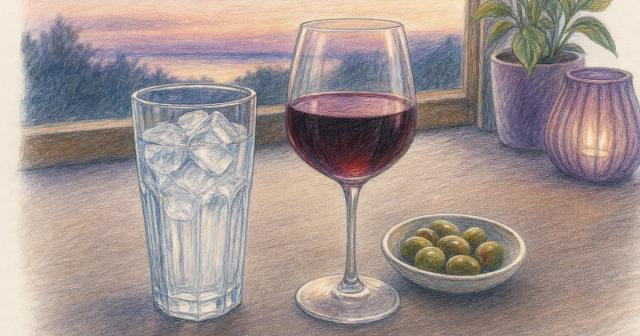
Alcohol on a rough GI day adds up to dehydration. If drinking brings on vomiting or diarrhea, you lose fluids fast, and a slowed stomach can make it hard to replace them. Sipping water between drinks and through the next morning is the fix the Mounjaro Medication Guide points at when it lists steps to help reduce your chance of dehydration. If you already deal with headaches and dehydration on shot weeks, the same water-first rule applies to drinking nights.
Can you time your shot around drinking?
You have room to plan. Per the FDA label, Mounjaro is taken once a week, at any time of day, with or without food, and you can move your shot day as long as your two doses stay at least 3 days (72 hours) apart. So if a big night is coming, some people shift shot day to keep a fresh dose and heavy drinking from landing together. That's a drinking on tirzepatide logistics choice to run past your care team, not a fixed rule.
The injection basics don't change on drinking weeks. The label's Instructions for Use say to inject under the skin of the abdomen, thigh, or the back of the upper arm, and to rotate your site with each dose. A night out doesn't alter any of that. Take your weekly shot on its normal schedule and rotate as usual.
What are the pancreatitis warning signs?
This is the caution that outranks the rest. GLP-1 medications are a known risk factor for acute pancreatitis, and heavy drinking is hard on the pancreas too, so pairing the two isn't a good combination. The sign to know: the FDA label says to call right away if you have severe pain in your stomach area that will not go away, with or without nausea or vomiting, and notes you may feel that pain travel from your abdomen to your back. Moderate drinkers don't need to panic here; this is about not stacking heavy drinking onto a medication that already carries the warning.
A hangover fades by noon. Pain that drills into your back does not, and that's the line between a routine reaction and an emergency.
Red flag | What it may mean | What to do |
|---|---|---|
Severe stomach pain spreading to your back | Possible pancreatitis | 🚨 Emergency room right away |
Repeated vomiting after drinking | Dehydration, dose-timing issue | ⚠️ Call your care team |
Confusion or a low that won't lift | Possible low blood sugar | ⚠️ Fast-acting carbs, then get help |
The one that can't wait is pancreatitis. Severe stomach pain that spreads to your back, with or without vomiting, is the sign to head to the emergency department, not to sleep it off and reassess in the morning. The medical guidance for tirzepatide is direct about going to your local emergency department for severe abdominal pain. If you're confused or can't drive safely, call 911.
When should you call your care team instead of 911?
- Repeated vomiting after drinking that leaves you unable to keep fluids down
- Frequent low blood sugar dips on the days you drink
- Drinking that starts to feel out of your control
Related reading
- Gas and bloating
- Headaches and dehydration
- Dry mouth
- Appetite changes
- Fat loss
- Track your progress
- Weight loss plateau
- Talk to your care team about weight loss medication
- Trouble sleeping
- Brain fog
Frequently Asked Questions
Can you drink the same day you take your Mounjaro shot?
There's no rule tying alcohol to your shot. The FDA label says Mounjaro is taken once a week, at any time of day, with or without food, so a drink and your dose landing on the same day isn't a conflict on paper. The thing to watch is your stomach: a fresh dose plus alcohol can pile onto nausea for some people. If shot day tends to be a queasy one for you, that's reason enough to keep drinks light or move them to another night.
Does drinking alcohol stop Mounjaro from working for weight loss?
A drink won't switch off your medication. The quieter issue is that alcohol is dense, empty calories, and it tends to loosen the restraint your smaller appetite is giving you, so the after-drinks snack does more damage than the drink itself. Occasional, modest drinking and steady progress can coexist. If your results have stalled and drinking has crept up, cutting back is one of the easier levers to pull.
Why does it take less alcohol to feel drunk on Mounjaro?
Some people say a drink hits harder or sooner than it used to. A slower-emptying stomach can change how alcohol moves through you, and eating less means there's less food in your stomach to buffer it. The honest caveat is that this evidence is still early and mixed. Some people feel less from a drink, others feel it faster. Either way, plan for the version of you that gets there on less, and go slow the first time you drink after starting.
What should you do if you get sick after drinking on Mounjaro?
For a single wave of nausea, stop drinking, sip water or an electrolyte drink, and rest. If vomiting keeps coming and you can't keep fluids down, that's a dehydration risk worth a call to your care team, especially with a dose still on board. The line that changes everything is severe stomach pain that spreads to your back, with or without vomiting. That points toward pancreatitis and means the emergency department, not the couch.
Can you have wine or beer on Mounjaro, or are some drinks worse than others?
No specific drink is off-limits, but a slowed stomach tends to tolerate some better than others. Sugary cocktails, carbonated drinks, and heavy pours are usually the roughest, since bubbles and sugar add to bloating and nausea. Smaller amounts of wine or a single beer with food sit easier for many people. Keep portions modest, eat alongside them, and pay attention to how your own stomach answers rather than following a fixed list.
This article is for informational purposes only and is not medical advice. Always talk to your doctor or care team about your medication, symptoms, or treatment plan.