

Key takeaways
- About a quarter of the weight you lose on Mounjaro is lean mass and roughly three-quarters is fat, the same split seen with diet-only weight loss.
- Trial data show tirzepatide's muscle loss matches what any comparable weight loss causes, and it actually lowers the fat stored inside muscle, though long-term strength was not measured.
- Eating enough protein (around 60-75 grams a day, more if your care team advises) and resistance training at least twice a week are the two strongest ways to keep muscle while losing fat.
- Losing weight at a steady pace and not under-eating protects muscle; crash-losing on a very low intake is what accelerates lean loss.
- Call your care team if new weakness starts interfering with daily life or you feel rapidly and unexplainably weak.
Table of contents
- How much muscle do you actually lose on Mounjaro?
- Is Mounjaro uniquely bad for muscle, or is this just what weight loss does?
- Why does your body burn muscle instead of just fat?
- How do you protect your muscle on Mounjaro?
- Who should worry most, and when should you call your care team?
How much muscle do you actually lose on Mounjaro?
Mounjaro muscle loss is real: some of what you lose is lean mass, not just fat — and that's true whether you lose weight on Mounjaro or any other way. Across dietary weight-loss studies, about three-quarters of the weight lost comes from fat and roughly a quarter from lean tissue. Mounjaro isn't a special muscle toxin; it produces the same broad split that comes with losing weight in general.
In the SURMOUNT-1 DXA substudy — 160 adults, most of them women — tirzepatide led to about a 21.3% mean drop in body weight over 72 weeks. Roughly 75% of that loss was fat and 25% was lean mass. Those scans measure body composition directly, which is why this substudy tells you more than a bathroom scale ever could. So a real share is lean tissue, but fat is doing most of the leaving.
Mean body-weight change at 72 weeks | |
|---|---|
Tirzepatide 5 mg | −16.0% |
Tirzepatide 10 mg | −21.4% |
Tirzepatide 15 mg | −22.5% |
Placebo | −2.4% |
What counts as lean mass?
Lean mass isn't just your biceps. It's all your fat-free tissue — skeletal muscle, yes, but also organ tissue and body water, measured as total fat-free mass minus bone mineral. On a DXA scan that number is sometimes called lean soft tissue mass. A drop in it mostly reflects skeletal muscle, which is the part that matters for strength, metabolism, and staying steady on your feet.
- Legs and glutes, where much of your everyday strength lives
- Your face, which can start to look thinner or more drawn
- Arms and shoulders, the muscle you use to lift and carry
- Strength for stairs, groceries, and getting up off the floor
- Resting metabolism, since muscle burns energy even at rest
- Day-to-day stamina and lower injury risk when muscle is preserved
The exact number depends on how you measure. SURMOUNT-1 landed near a quarter, but a broader Current Cardiology Reports review puts the range wider, at 25 to 40% of incretin-driven weight loss coming from lean mass. DXA, MRI, and different study groups each read body composition a little differently, so no single figure is the whole story. Treat a quarter as a reasonable anchor, not a fixed law.
Does the split change with age, sex, or how much weight you lose?
The split didn't skew much by who you are. In SURMOUNT-1, that roughly 75-to-25 fat-to-lean proportion held steady across groups split by age, sex, and how much weight came off. Older adults — often the most worried about muscle — didn't lose a disproportionate share of lean tissue. That consistency is part of why researchers read the pattern as a feature of weight loss itself, not a quirk of one group.
Here's the honest limit. These trials counted how much muscle people had, not how well it worked. As the Current Cardiology Reports review puts it, muscle function and strength after these medications remain underexplored. So the reassuring body-composition numbers come with a real caveat — we know the size of the change better than its long-term effect on how strong you actually feel.
So the real question isn't whether you lose lean mass — it's how much, and what you can do about it. You'll lose some, the same as with any weight loss. What's left to settle is whether Mounjaro takes more than plain dieting would, and how to hold onto your strength while the fat comes off. The next section takes the comparison head-on.
Is Mounjaro uniquely bad for muscle, or is this just what weight loss does?
No — Mounjaro doesn't uniquely burn muscle. The lean mass you lose tracks how much weight you lose, not a special muscle-wasting effect of the drug. Lose the same amount through diet alone and a similar share would come from lean tissue. That's the reassuring headline. The details below add real nuance, including one way tirzepatide may differ from semaglutide.
What did the muscle scans actually show?
The clearest test came from the SURPASS-3 MRI substudy, which used detailed scans rather than a scale to measure muscle. Muscle volume did drop on tirzepatide. But compared against United Kingdom Biobank population estimates for the same amount of weight loss, the reduction was essentially the same — no larger than you'd expect from losing that weight by any route. In other words, the scans caught ordinary weight-loss muscle change, not accelerated wasting.
Then came the part researchers didn't expect. The fat stored inside the muscle — what scientists call muscle fat infiltration — actually decreased significantly on tirzepatide compared with population estimates. Less fat marbled through muscle suggests better muscle quality, not just less of it. So the same SURPASS-3 scans that showed a modest volume drop also showed the remaining muscle looking metabolically healthier.

The muscle you lose on Mounjaro is the price of the weight loss itself, not an extra toll the medication adds on top.
Is tirzepatide worse for muscle than semaglutide?
This is where the honest answer gets more textured. In a real-world comparison of nearly 8,000 people with before-and-after body scans, tirzepatide was linked to modestly more lean-mass loss than semaglutide at every checkpoint through a year. Tirzepatide also drives more total weight loss, so part of that difference is simply more weight coming off. The gap is real, but small.
Time on treatment | Extra lean-mass loss on tirzepatide vs semaglutide |
|---|---|
3 months | 1.1% |
6 months | 1.5% |
9 months | 1.3% |
12 months | 2% |
What made lean-mass loss worse in real life?
Three things tracked with losing more muscle in that real-world data: a higher dose, a longer stretch on the medication, and being less mobile at the start. People who began with musculoskeletal pain or low exercise tolerance lost proportionally more lean tissue — a sign the people least able to move were the most vulnerable. It's a reminder that how you lose weight, not just what you take, shapes what you keep.
- Measured: muscle mass and volume, using DXA and MRI scans
- Measured: muscle fat infiltration, a marker of muscle quality
- Measured: lean-mass differences between tirzepatide and semaglutide
- Not measured: long-term muscle strength or physical function
- Not measured: how these changes play out over many years
What do the studies actually agree on?
Pull the studies together and they mostly line up. The available evidence points to significant fat loss with lean mass relatively preserved, and markers of muscle quality staying stable or even improving. That's a genuinely reassuring bottom line: the weight coming off is mostly the fat you're trying to lose, not the muscle you want to keep.
One gap stays open. No study has yet followed people long enough, or tested them directly enough, to settle what these body-composition changes mean for real-world strength and everyday function years from now. The honest note running through this research is that more work is needed to understand its functional significance over time. Optimistic, but not the last word.
So if the drug isn't the villain, what is? The lean mass has to come from somewhere, and the answer is the deficit itself — eating far less than your body is used to, without the signals that tell it to hold onto muscle. Understanding why your body reaches for muscle in a fast, deep deficit is what makes the protection steps ahead click into place.
Why does your body burn muscle instead of just fat?
Your body doesn't target muscle on purpose. When weight comes off fast and the signals that normally protect muscle go quiet, your body starts pulling fuel from lean tissue along with fat. Eat far less, skip protein, stop loading your muscles, and nothing is telling your body to hold onto them. The deficit does the work. The muscle loss is a side effect of how quickly the weight leaves, not of the medication reaching in and dissolving tissue.
This is worth saying plainly, because it flips the fear. Muscle loss isn't caused by how Mounjaro works itself, as the Cleveland Clinic puts it. The medication quiets appetite and food noise, you eat less, and the weight drops. Any tool that produced the same rapid loss the same way would cost you some lean mass too. That is why the fix lives in what you eat and how you move, not in avoiding the medication.
The risk climbs when weight drops fast and nothing else changes. The Cleveland Clinic notes that rapid, significant weight loss can lead to sarcopenia, a loss of muscle mass, strength and function, especially when you aren't focused on diet and exercise. You might notice it first in your legs, face, or glutes. The takeaway isn't to lose slower for its own sake. It is that fast loss with no protein and no training is the exact recipe that costs you strength.
The appetite drop is the real driver
Here is the quiet part. The reason weight leaves quickly is that food stops calling. Nothing sounds good, portions shrink, and whole meals get skipped without you deciding to diet. Protein is usually the first thing to slip, because it is the most filling and the least appealing when your appetite is flat. So you end up in a large deficit with the one nutrient that protects muscle running short. That combination, not the drug's chemistry, is what pulls fuel from lean tissue.
- Losing weight very fast, so the deficit outruns what food can replace
- Skimping on protein, the one nutrient that tells your body to keep muscle
- No resistance load, so muscles get no reason to stick around
- Chronically under-eating, which turns a helpful deficit into an aggressive one
- Being older, when age-related muscle decline already has a head start
The keep-or-burn switch
Muscle is signal-dependent, and the newest research shows it. In the EMBRAZE study, published in Nature Medicine, adults on tirzepatide got either a placebo or apitegromab, an investigational antibody that blocks myostatin, a protein that limits muscle growth. Total weight loss was similar in both groups. But the muscle-preservation arm kept far more lean mass. That is the clearest sign yet that how much muscle you lose depends on the signals your body gets, not on tirzepatide having some special appetite for muscle.
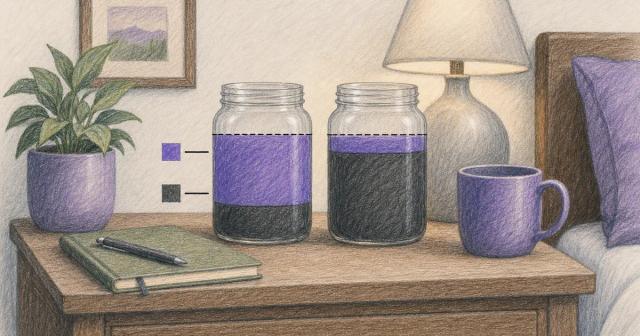
The numbers are striking. With tirzepatide plus placebo, lean mass made up 30.2% of the total weight lost. With tirzepatide plus the muscle-preserving antibody, that dropped to 14.6%, a 54.9% retention of lean mass, even though both groups lost about the same total weight. Shift the signal, and the same weight loss comes far more from fat and far less from muscle.
What this means for you right now
Here is the catch. That antibody isn't available. It is still in trials, so you can't ask for the muscle-preserving version of your prescription. What the EMBRAZE result does is confirm the lever exists, and that you already hold the everyday versions of it. Protein and resistance training send your body the same keep-your-muscle message the experimental drug did, just through food and movement instead of an injection. That is not a consolation prize. It is the same biology.
So the plan writes itself. If muscle loss comes from a fast deficit with weak protein and movement signals, then protecting muscle means feeding it, loading it, and not rushing the weight off. None of it requires a prescription you don't have. Here is exactly how to do it while the fat keeps coming off.
Related reading
- What to eat on Mounjaro
- Combining GLP-1 and exercise
- Muscle loss around menopause
- Better GLP-1 results during menopause
- Side effects women face most
- Regaining weight after stopping
How do you protect your muscle on Mounjaro?
Four moves protect your muscle, and all four are worth clearing with your care team first. Eat enough protein. Do resistance training at least twice a week. Pace the dose instead of racing to the top. And don't under-eat. None of these fight the medication. They give your body the keep-your-muscle signals a fast deficit tends to drown out. Do them together and the weight that leaves comes much more from fat than from strength.
Lever | What to do | Why it counts more now |
|---|---|---|
Protein | Anchor every meal with a protein source | A smaller appetite makes it the first thing to slip |
Resistance training | Load your muscles 2+ times a week | It is the strongest signal to keep muscle |
Pacing | Move up the dose no faster than the label allows | A slower deficit is easier to feed and train through |
Eating enough | Don't drop your intake to the floor | Chronic under-eating speeds muscle loss |
Protein: the daily anchor
Protein counts double when you're barely hungry. It is the nutrient that gives your body the raw material to hold onto fat-free tissue while weight comes off fast, and it is the first thing to slip when nothing sounds good. Careful tracking of protein intake is a frontline way to protect that tissue during rapid loss. There is no single number that fits everyone, so the Cleveland Clinic suggests working with a registered dietitian or nutritionist to figure out what is right for you, protein included. It is the same thinking behind knowing what to eat on Mounjaro.
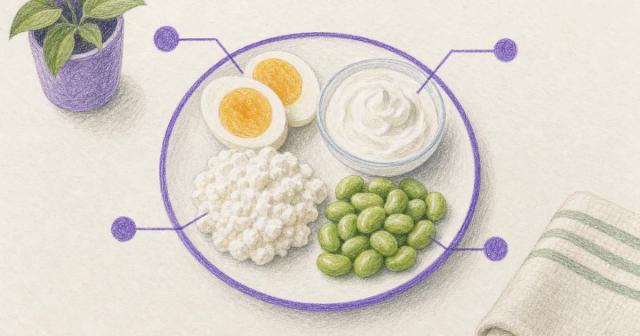
- Greek yogurt or cottage cheese for an easy cold option
- Eggs, which go down even when nothing sounds good
- A scoop of protein powder stirred into water or milk
- Shredded chicken or canned tuna you don't have to cook
- Edamame or roasted chickpeas to snack on
- Milk or a high-protein shake when a full meal feels like too much
Walking is great for your health, but lifting is the move that actually keeps your muscle.
Resistance training: the strongest signal
If you do one thing, do this. A Diabetes Care review found that supervised resistance training programs lasting more than 10 weeks can add roughly 3 kg of lean mass and about 25% more strength in men and women. For context, the same review notes that incretin medicines like tirzepatide cause a rapid loss of lean mass of around 10%, or about 6 kg, comparable to a decade or more of aging. Loading your muscles two or more times a week is the single clearest way to push back, and it is the heart of combining GLP-1 and exercise.

Pacing: the escalation isn't a race
Slower dosing gives your muscle a fighting chance. Per the Mounjaro prescribing information, tirzepatide starts at 2.5 mg once weekly, moves to 5 mg after 4 weeks, then rises in 2.5 mg steps no sooner than every 4 weeks, up to a maximum of 15 mg once weekly for adults. That schedule exists for tolerability, and it has a side benefit. Climbing at the built-in pace keeps your appetite from crashing faster than you can adjust your protein and training. There is no prize for reaching the top dose early.
Eating enough: under-eating backfires
Eating less than you need doesn't speed things up, it costs you muscle. A helpful deficit and an aggressive one are different things, and dropping intake to the floor sends your body an even stronger break-down signal. The encouraging flip side: in one case series, some people held their lean mass or even gained it when they kept up resistance training and enough protein alongside tirzepatide or semaglutide. The point isn't to eat as little as possible. It is to lose fat while giving muscle a reason, and the material, to stay.
Getting your shots right keeps extra stress off your body while it is already working hard. Mounjaro is meant to go into the fat just under your skin, not into muscle. The prescribing information says to inject subcutaneously in the abdomen, thigh, or, if someone else is injecting, the back of the upper arm, and to rotate sites with each dose. Your care team should show you how before your first shot. This won't build muscle, but sloppy technique and irritated skin are one more avoidable stress, which is why knowing where to inject your GLP-1 matters.
- Approved areas are the abdomen, the thigh, or the back of the upper arm
- Rotate to a different spot with each weekly dose
- You can use the same body region as insulin, just not right next to it
- Learn the technique from your care team before your first shot
This is where your own data earns its keep. Muscle loss is invisible on a scale. The number drops whether you are losing fat or lean tissue, which is exactly why it scares people. In MeAgain, logging your protein and your strength sessions next to your weight trend turns that guesswork into a picture. Weight sliding down while your protein holds and your training stays consistent is the pattern that says the loss is coming from fat, not muscle.
Who should worry most, and when should you call your care team?
Most people lose muscle on Mounjaro and never feel it in daily life, because the basics protect the strength that matters: steady weight loss, enough protein, a little resistance work. Two groups should pay closer attention: women moving through menopause, and anyone dropping weight very fast on very little food. And a few clear signs mean it's time to call your care team. Mayo Clinic notes the medication is meant to be used together with diet and exercise, not instead of them.
Should post-menopausal women worry more about muscle loss?
If you're near or past menopause, stack the odds in your favor early. Muscle naturally slips with age, and that slow decline can add to the lean loss a calorie deficit already drives. The two aren't caused by the same thing, but they land on the same body at the same time. Leaning harder into protein and resistance training from week one is the practical answer, and muscle loss around menopause goes deeper on the details. Better GLP-1 results during menopause often start with protecting strength, not just watching the scale.
Watch for these early signs that muscle loss is going further than it should:
- New weakness in tasks that used to feel easy
- Struggling to climb stairs or rise from a chair
- Slow recovery and lingering soreness after normal activity
- Unusual, persistent fatigue that rest doesn't fix
- Visibly softer or shrinking arms, legs, or glutes
- Grip or lifting strength dropping in everyday chores
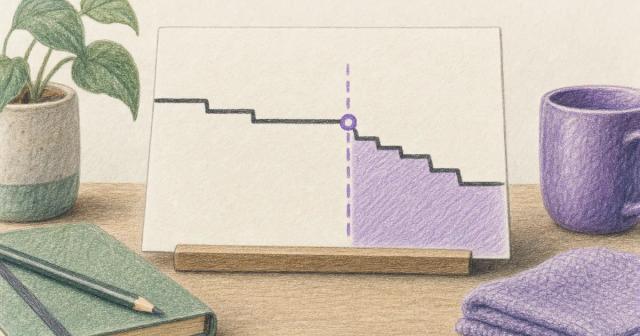
Softer is expected, but strength that starts to shrink your day is the signal to pick up the phone.
How do you tell healthy loss from dangerous weakness?
Track how you function, not just how you look. Some softening as fat and a little lean come off together is normal, and you'll still handle stairs, groceries, and workouts about as well as before. The line to watch is capability. If everyday movements like standing up, carrying, and climbing get harder week over week rather than staying steady, that's not routine change. Pair that check against your protein and training habits, and you'll usually know which direction things are heading.
Is muscle loss on Mounjaro reversible?
Yes, muscle you lose can be rebuilt. Lean tissue responds to the same signals whenever you send them: resistance training and enough protein, which the protection section above covers in detail. Strength tends to come back with consistent work, even if it takes a few months, so a dip now isn't a permanent verdict. The real goal is to lose less of it in the first place, then rebuild what you want back on your own timeline.

When should you call your care team?
Call if things aren't improving, or are getting worse. Cleveland Clinic's guidance is plain: tell your care team if your symptoms don't start to get better or if they get worse. New weakness that interferes with daily life, or fast unexplained weakness, belongs in that same conversation. Cleveland Clinic also recommends regular check-ins so someone is watching your progress with you. You don't need to wait for a scheduled visit if something feels off. That's what the phone is for.
Sized honestly, this is a manageable trade-off. As the opening section covered, only a portion of the loss is lean, and the levers that protect it are ordinary: protein, a couple of strength sessions, a steady pace. Most women never feel it. The two groups above just have more reason to be deliberate, and everyone has clear signs to watch and a number to call. That's not a reason to fear the medication.
Related reading
- Mounjaro fatigue
- Feeling sleepy on Mounjaro
- Still hungry on Mounjaro
- Where to inject your GLP-1
- Whether tirzepatide is the same as Mounjaro
- How the GLP-1 medications compare
- Wegovy vs Mounjaro side effects
- Long-term side effects of GLP-1s
- Stopping GLP-1 after losing weight
- Pros and cons of GLP-1s
Frequently Asked Questions
Does creatine help preserve muscle while taking Mounjaro?
The evidence here doesn't test creatine on Mounjaro, so treat any strong claim with caution. Creatine is often used as a training aid, but whether it changes lean-mass loss during rapid weight loss on a GLP-1 isn't established in this evidence. If you're considering it, ask your care team or pharmacist first, especially alongside other supplements. The proven levers remain enough protein and resistance training. Those stay your best defense against Mounjaro muscle loss.
Will I lose muscle in my face on Mounjaro?
Faces change with big weight loss because they hold both fat and a thin layer of supporting tissue, so some softening is normal and mostly reflects fat coming off. You can't spot-protect the face, but keeping overall lean mass up with protein and resistance training helps your whole body, face included. If the change feels dramatic or fast, that's worth mentioning at your next care-team check-in.
Can I build muscle while losing weight on Mounjaro?
It's possible for some people, though it's harder in a calorie deficit. Building muscle while losing fat, often called recomposition, is most realistic if you're newer to lifting or getting back into it, and it depends on enough protein plus progressive resistance training. For many, the honest goal is to hold onto the muscle you have while fat comes off, and that alone is a win. Your care team can help set a realistic target.
How should I change my workouts if I feel exhausted on shot days?
Work with the fatigue instead of pushing through it. Keep the resistance stimulus but scale it down: fewer sets, lighter loads, shorter sessions still send the keep-your-muscle signal. Many women shift their harder workout to a day that tends to feel better and keep shot days lighter. Protein and fluids help, and if the tiredness is heavy or lasting, our piece on Mounjaro fatigue and a note to your care team are the next steps.
Does it matter if I accidentally inject Mounjaro into muscle instead of under the skin?
Yes, it's designed to go just under the skin, not into muscle. The FDA label says to inject under the skin of the abdomen, thigh, or the back of the upper arm, and specifically not into a muscle or vein. If you think a shot went into muscle, or it keeps happening, ask your care team or pharmacist, and see where to inject your GLP-1 for technique.
This article is for informational purposes only and is not medical advice. Always talk to your doctor or care team about your medication, symptoms, or treatment plan.