

Key takeaways
- Mounjaro is not a stimulant, so there's no high, buzz, or jittery edge; most people mainly notice the constant pull toward food quieting down.
- In the first weeks, stomach side effects like nausea, softer stools, and mild tiredness are common as your body adjusts, and they mostly ease as each dose settles.
- Every step up in dose can briefly bring the adjustment feelings back, which is expected rather than a sign something is wrong.
- By the settled months, many people say food simply takes up less mental space, though how much you feel varies widely from person to person.
- Severe stomach pain that won't go away, signs of an allergic reaction, or mood changes that worry you are all reasons to contact your care team.
Table of contents
- What does being on Mounjaro actually feel like?
- How does Mounjaro make you feel in the first few weeks?
- Does the way Mounjaro feels change as your dose goes up?
- How does Mounjaro feel after the first few months?
- How can you manage how you feel, and when should you call your care team?
What does being on Mounjaro actually feel like?
How does Mounjaro make you feel? For most people, mostly like themselves, just with the constant pull toward food turned way down. There's no high, no buzz, no drug-like rush. It isn't a stimulant, so you won't get a jittery lift or a mood swing when you take your shot. What shifts for most people is quieter than that: you're full sooner, food takes up less headspace, and the tug to snack loosens its grip.
Here's why there's no buzz. Mayo Clinic describes tirzepatide, the medicine in Mounjaro, as a GIP and GLP-1 receptor agonist, which in plain terms means it works like the gut hormones your body already uses to signal fullness. The Cleveland Clinic notes it lowers blood sugar and helps with weight loss by reducing appetite and slowing digestion. That's a different category from caffeine or any stimulant. It works quietly on appetite and digestion instead of revving up your nervous system.
What a quieter appetite feels like day to day
Full sooner, and satisfied with less. Day to day, a quieter appetite feels less like willpower and more like the volume got turned down. Meals that used to feel small now fill you up, and half a plate can be plenty. The mental chatter about what's next to eat, what a lot of people call food noise, tends to fade into the background. You might notice you forgot to snack, or that leftovers suddenly feel like too much.
- Feeling full faster, even with smaller portions
- Less interest in the foods you used to reach for
- Food noise fading, less mental chatter about eating
- Smaller meals that actually satisfy
- Occasional mild queasiness, especially early on
- No jittery energy or stimulant-style edge

How much you feel varies a lot from person to person. Some people barely notice anything for the first stretch. Others feel each change clearly, from the first drop in appetite to a wave of queasiness. Both are normal. And here's the part worth holding onto: how much you feel does not predict how much you'll lose. A gentle experience isn't a sign the medicine isn't working, and a rough one isn't a sign it's working harder.

Does the Mounjaro shot hurt?
The needle is small, and many people can't feel it. If the shot itself is your worry, the Cleveland Clinic points out the needles are fairly small and a lot of patients can't even feel it. It's also once weekly, given every seven days, not a daily ritual. If you're still in the deciding stage, that once-a-week rhythm is worth raising when you're asking about weight-loss injections and figuring out how to qualify for a GLP-1.
The medicine quiets appetite, but what you eat still shapes how you feel. On the Cleveland Clinic's GLP-1 podcast, the emphasis is on nutrient-dense foods: really going toward proteins, veggies, and complex carbs rather than empty, hyper-processed carbs. With smaller portions, every bite carries more weight, so leaning toward protein helps you feel steadier and hold onto muscle. It's worth reading up on how much protein to eat on a GLP-1 as you get started.
What Mounjaro does not feel like
Naming the quiet fear directly: Mounjaro doesn't hand you euphoria, and it doesn't flip a willpower switch you can feel. There's no energy surge and no personality change. Because it works on gut-hormone signaling rather than your nervous system, the experience is more absence than presence, mainly the absence of that constant tug toward the next snack. If you were bracing for a drug-like feeling, most people simply don't get one.
Feeling almost nothing at first is normal too. Mounjaro isn't a switch that flips on shot day. Appetite changes tend to build over the first weeks rather than the first hours, so a quiet start doesn't mean it isn't working. If you're wondering about the timeline, it's covered in how long tirzepatide takes to work. Give it a few weeks, keep an eye on your usual hunger cues, and let the pattern show itself before you judge it.
The one thing many people do feel early is their stomach adjusting. For a real share of people, the first weeks bring some queasiness, softer stools, or a dip in energy as the body gets used to the medicine. It's usually mild and temporary, but it helps to know the shape of it before it happens. Here's what those first few weeks tend to feel like.
How does Mounjaro make you feel in the first few weeks?
The first few weeks are usually an adjustment period. A real share of people get mild stomach side effects, and some feel a little more tired than usual, as the body gets used to the medicine. For most, it's manageable and it settles. The FDA label for Mounjaro notes that reports of nausea, vomiting, and diarrhea mostly show up during dose changes and ease over time.
What are the most common early Mounjaro side effects?
Most early reactions are stomach-related. Per the Mounjaro prescribing information, the reactions reported in at least 5% of patients are nausea, diarrhea, decreased appetite, vomiting, constipation, dyspepsia (that's indigestion), and abdominal pain. In plain terms: a queasy or off-food feeling, looser or more frequent stools, less interest in eating, and some upper-belly discomfort or cramping. None of it is pleasant, but most of it is the mild-to-moderate kind.
Reaction | What it tends to feel like | Typical early pattern |
|---|---|---|
Nausea | Queasy, off-food feeling | Most common early, eases over time |
Diarrhea | Looser, more frequent stools | Often early, tends to settle |
Decreased appetite | Less interest in eating | Expected, part of how it works |
Vomiting | Throwing up, less common | Mostly during dose changes |
Constipation | Harder, less frequent stools | Comes and goes early on |
Dyspepsia | Indigestion, upper-belly discomfort | More common early on |
Abdominal pain | Belly aches or cramping | Usually mild, eases with time |

The reassuring part is how few people this stops. In Mounjaro's placebo-controlled trials, even at the highest dose only about 6.6% of patients stopped the medicine because of stomach side effects, compared with 0.4% on placebo. That means the large majority who felt nausea or looser stools early on kept going. For most, these reactions are the cost of the first stretch, not a permanent state.
Most stomach reactions show up when your dose changes and quiet down as your body settles into the medicine.
Why do the first weeks feel like an adjustment?
Because the medicine slows digestion and quiets appetite, covered above, your gut is adapting to a new rhythm, and that's why the early queasiness is common. The American Diabetes Association notes that nausea and vomiting are the most common side effect with these medicines, and are more common when you're starting or increasing the dose. If you want the mechanism, why GLP-1s cause nausea walks through it.
- Eat smaller meals more often, not big plates
- Reach for bland, cool foods when you're queasy
- Sip water through the day to stay ahead of it
- Ease off rich, fried, and greasy foods
- Lead with protein at each meal
- Don't lie down right after eating
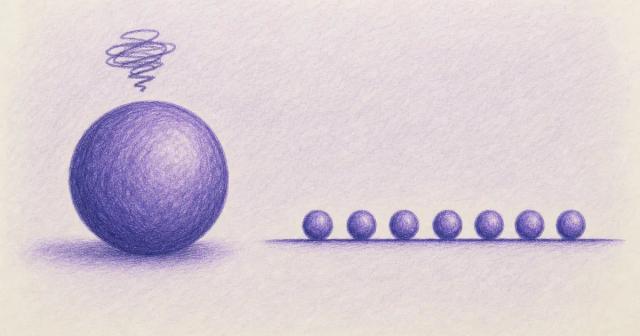
Why does Mounjaro make you tired at first?
A little extra tiredness early on is common. As your appetite drops and you're eating less, your body is running on fewer calories while it adjusts, and that can leave you feeling low on energy for a bit. It usually eases as things settle, and steady meals and fluids help. If fatigue is your main question, combining a GLP-1 with exercise and the GLP-1 side effects women notice most both go deeper.
None of this is fixed, though. Just as the first weeks are an adjustment, each step up in your dose can nudge these same feelings back for a few days before they settle again. That pattern, and why the dose climbs slowly on purpose, is what the next stretch is about.
Does the way Mounjaro feels change as your dose goes up?
Yes, each step up can bring a wave of the early feelings back before things settle again. A dose increase often means a few days of a quieter appetite and, for some people, a return of mild queasiness or looser stools. It usually fades the same way week one did. According to the FDA label for Mounjaro, most reports of nausea, vomiting, and diarrhea showed up during dose changes and eased over time.
Why Mounjaro starts low and steps up
Mounjaro is meant to be started at a low dose and increased slowly, not begun at a full dose on day one. Per the Mounjaro prescribing information, the dose moves up to 5 mg once weekly after 4 weeks, and any further steps come in 5 mg increments after at least 4 weeks on the current dose. That gradual climb isn't caution for its own sake. Stepping the dose gives your stomach time to adjust to each new level, which is exactly why the early stomach reactions tend to stay mild.
Dose | Earliest typical timing | Stomach reactions reported |
|---|---|---|
Placebo (comparison) | — | 20.4% |
5 mg | Week 5 at the earliest | 37.1% |
10 mg | Week 9 at the earliest | 39.6% |
15 mg | Week 13 at the earliest | 43.6% |
Read those numbers the friendly way. In the pooled trials behind the label, about 44% of people at the top 15 mg dose reported some stomach reaction, compared with 37% at 5 mg and about 20% on placebo. So higher doses do nudge the odds up, but even at the top it stays under half, and the label notes these reports mostly happened during dose changes and decreased over time.
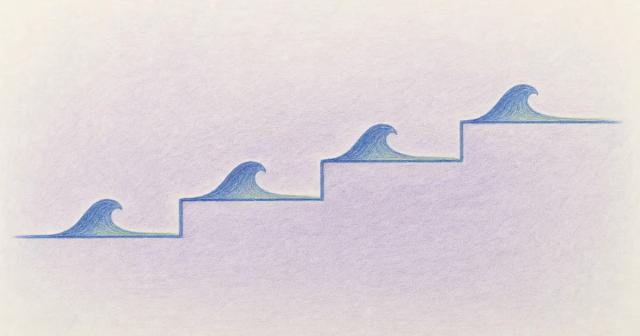
What each increase can feel like
Picture a smaller replay of your first week. The day or two after a step up, appetite often gets noticeably quieter again, and some people feel a little queasy or off. For most, it's milder than the very first shot, because the jump between doses is smaller than going from nothing to something. The Mounjaro label frames these reactions as concentrated around dose changes rather than constant, which matches what a lot of people describe: a brief bump, then back to baseline.
This is the stretch where eating rhythm matters more than willpower. A Nature Communications umbrella review noted that the stomach side effects of these medicines can generally be managed through low-dose initiation, gradual up-titration, and regular monitoring. On your side, steady meals rather than skipping, and getting enough protein, tend to help a step land more gently. If you're not sure where to start, our guide on how much protein to eat on a GLP-1 breaks it down.
How long until it settles after a step?
For most people, the wave after a dose increase eases within a few days as your body adjusts to the new level. The gradual step-up schedule is itself the tool that manages this, which is part of why the label spaces increases at least four weeks apart. If you want the fuller timeline of when the medication ramps up and effects build, see how long tirzepatide takes to work. The short version: a rough couple of days after a step is common and usually passes on its own.
It's also worth saying plainly: some people feel every step, and some feel almost none. A smoother ride doesn't mean the medication isn't working, and a bumpy step doesn't mean it's too strong or failing you. How much you feel a dose change is its own thing, separate from how your results are going. Neither one predicts the other.
- Mild queasiness or looser stools that ease within a few days: expected.
- A quieter appetite for a day or two after a step: expected.
- Stomach pain that's severe or won't let up: message your care team.
- Vomiting or diarrhea so steady you can't keep fluids down: reach out.
- Symptoms that keep building instead of settling, like ongoing acid reflux on a GLP-1: worth a call.
Once you reach a dose that fits you, the feeling tends to stop swinging with every change and settle into something steadier. That settled phase, months in, feels different from these first climbs, and it's what the next section is about.
Related reading
- How GLP-1 medications help you lose weight
- How long GLP-1s have been around
- How to qualify for a GLP-1
- Asking about weight-loss injections
- How much protein to eat on a GLP-1
- How long tirzepatide takes to work
How does Mounjaro feel after the first few months?
By the settled months, the loudest change for many people is quiet. Food takes up less mental space, and eating tends to feel more automatic than it used to. As Cleveland Clinic puts it, Mounjaro changes how your body reacts to food, so you feel fuller faster. The white-knuckle relationship with the next meal often loosens on its own, without the daily negotiation.
What less food noise looks like months in
For a lot of people, this is where the food noise gets quieter. Cravings stop running the whole day, smaller portions start to feel normal instead of like deprivation, and mealtimes take up less headspace. Cleveland Clinic describes the core effect as feeling fuller faster, which is the felt version of what's happening. The honest caveat: this varies. Some people notice a dramatic drop in food chatter, others a gentle one, and a few feel it only a little.
The change that lands hardest months in is rarely dramatic. It's that food stops running the show.

The weight-loss picture, with scope
Here's the settled-phase result with its context. In a study of more than 2,500 adults with obesity, people taking 5 milligrams of Mounjaro for 72 weeks lost 15% of their body weight on average, per Cleveland Clinic's summary, with higher doses associated with more. Read that as a trial average, not a personal promise. It tells you the direction and rough scale, not what your own number will be, since individual results sit above and below that line.
Phase | What many feel | What the data shows |
|---|---|---|
First weeks | Appetite quiets, some GI adjustment | Reactions cluster at dose changes |
Early months | Steady loss, less food noise | Loss builds fastest, then eases |
Settled months | Calmer, more automatic eating | Reductions held with continued use |
Zoom out further and the picture holds. In SURMOUNT-1, reported in the New England Journal of Medicine, adults with obesity and prediabetes saw average weight changes of −12.3%, −18.7%, and −19.7% at the 5, 10, and 15 mg doses over about three years, versus −1.3% on placebo. The reductions held with continued treatment rather than fading. For a broader look at what people actually see, our page on real GLP-1 weight-loss results collects more.
A plateau is normal, not a failure. Weight loss on these medicines tends to be strongest around 24 to 30 weeks, then levels off into a plateau. Steadier isn't the same as stalling. Once you've reached a lower, stable weight, the scale slowing down is often the body settling rather than the medication quitting. If your loss flattens and you're wondering whether it counts, what a GLP-1 plateau is walks through the difference.
Do the side effects fade for good?
For most people, by the settled months the early stomach reactions have largely eased. In SURMOUNT-1, the New England Journal of Medicine reported that the most common side effects were gastrointestinal, mostly mild to moderate, and occurred primarily during the dose-escalation period in the first 20 weeks. That's the reassuring shape of it: the queasy stretch is front-loaded around the climbing doses, and it tends to quiet down once you're steady on a dose that fits.
There's a feeling-better piece that isn't on the scale, too. Across the SURPASS trials, greater weight loss on tirzepatide was linked to bigger improvements in day-to-day quality of life. That tracks with what many people describe: more ease, less friction around food and energy. Tracking your progress beyond the scale can make those shifts visible, and if you're in a life stage where results feel harder to read, GLP-1 results during menopause covers that.

Does the effect wear off?
The settled, quieter relationship with food tends to depend on staying on treatment. In the SURMOUNT-MAINTAIN trial, published in The Lancet, continuing tirzepatide maintained the weight reduction and its related benefits. In plain terms, the medication keeps doing the work while you take it rather than resetting your body permanently. That's why what happens after stopping is its own question, one that weight regain after stopping a GLP-1 gets into, and a conversation for you and your care team.
However you feel at each phase, from the first climbs to the settled months, the last piece is knowing when a feeling is just routine and when it's a signal worth acting on. That's what the final section covers.
How can you manage how you feel, and when should you call your care team?
Most of how Mounjaro makes you feel is manageable at home. Small changes to what you eat, how much you drink, and when you eat smooth out most of the everyday feelings, and a short list of symptoms is worth a call to your care team. Per Mayo Clinic, most side effects are mild and tend to ease as your body adjusts.
Everyday ways to feel better
Cool, bland food is the simplest place to start. Mayo Clinic suggests reaching for plain options like crackers, toast, or pretzels when your stomach feels off, and easing off high-fat, fried, or strong-smelling meals that sit heavy. Steady sips of water or ginger herbal tea through the day help more than one big glass at a meal.
- Eat smaller meals more often instead of a few large ones
- Reach for bland, cool foods like crackers, toast, or pretzels
- Ease off high-fat, fried, and strong-smelling foods
- Sip water or ginger tea between meals, not only at mealtimes
- Lead with protein so smaller portions still hold you
- Stay upright for a while after eating instead of lying down

Hydration is the quiet essential here. According to the Mounjaro Medication Guide, diarrhea, nausea, and vomiting can pull enough fluid out of you to cause dehydration, which can affect your kidneys, so staying ahead of fluids protects both how you feel and your health. If you want a target, see how much water to drink on a GLP-1, and if kidney worries are on your mind, GLP-1s and kidney stones covers the details.
Injecting comfortably
You can inject in a few different spots. The Mounjaro Medication Guide lists the stomach area, the thigh, or the back of the upper arm, taken once a week at any time of day, with or without food. You can even shift your shot day, as long as your doses stay at least three days apart.
- Rotate your injection site with each weekly shot
- Use a new needle and syringe every single time
- Inject under the skin, never into muscle or a vein
- Shift your shot day only if doses stay at least 3 days apart
- Never share your pen or needles, even with a new needle
- Follow the Instructions for Use your care team walks you through

Good technique changes how the shot feels week to week. Rotating where you inject and using a fresh needle each time, both spelled out on the label, cut down on the sore, irritated spots that come from hitting the same place twice.
When should you call your care team?
A few feelings are worth a call rather than a wait. The Mounjaro Medication Guide says to stop and reach your care team right away for severe stomach pain that will not go away, which can signal inflammation of the pancreas, and to call if nausea, vomiting, or diarrhea keeps you from holding down fluids. Signs of a serious allergic reaction are an emergency, not a wait-and-see.
You don't have to tough it out. Any side effect that bothers you or won't go away is worth a message, even when you're not sure it counts as serious.
Mood counts too. If you feel anxious, low, or just off in a way that worries you, that belongs in a conversation with your care team the same as any physical symptom, without waiting to see whether it passes on its own.
This is where daily notes earn their keep. "How do I feel?" is hard to answer from memory, but easy to see when you jot a quick line each day on your appetite, your energy, and any side effects. Over a few weeks those notes turn into an arc you can actually read, and a clear picture to share at your next appointment. In MeAgain, logging as you go is how you track your side effects and spot patterns early, and pairing it with tracking food to maximize results shows how the two move together.
Related reading
- Why GLP-1s cause nausea
- GLP-1 side effects women notice most
- Combining a GLP-1 with exercise
- Acid reflux on a GLP-1
- Real GLP-1 weight-loss results
- What a GLP-1 plateau is
- Weight regain after stopping a GLP-1
- GLP-1 results during menopause
- Tracking your progress beyond the scale
- How much water to drink on a GLP-1
Frequently Asked Questions
Can Mounjaro make you feel anxious or depressed?
Mood changes aren't a headline effect for most people, but everyone reacts differently. If you notice new anxiety, low mood, or a sense of being off that worries you, treat it like any other symptom and tell your care team. The Mounjaro Medication Guide is clear that any side effect that bothers you or won't go away is worth a conversation. How does Mounjaro make you feel emotionally can vary from person to person, so keeping your care team in the loop is the surest way to sort out what's normal for you.
Does Mounjaro give you energy, or make you tired?
It isn't a stimulant, so there's no caffeine-like lift and no jittery edge. If anything, some people feel a little more tired in the early weeks as their appetite drops and they eat less, and that usually settles as the body adjusts. The early-weeks section above covers the tiredness pattern in more detail.
How long do the side effects last after a dose increase?
For most people a dose step feels like a smaller replay of the first week: a few days of quieter appetite and maybe some queasiness, then it settles as your body catches up to the new dose. The dose-change section above walks through why the slow step-up exists. If it stays severe or won't ease, call your care team.
Will you feel the injection itself?
It's a once-weekly shot given just under the skin in your stomach area, thigh, or the back of your upper arm. Rotating the spot each week and using a fresh needle every time, both from the label, keep it as comfortable as possible. Your care team will show you exactly how before your first one.
This article is for informational purposes only and is not medical advice. Always talk to your doctor or care team about your medication, symptoms, or treatment plan.