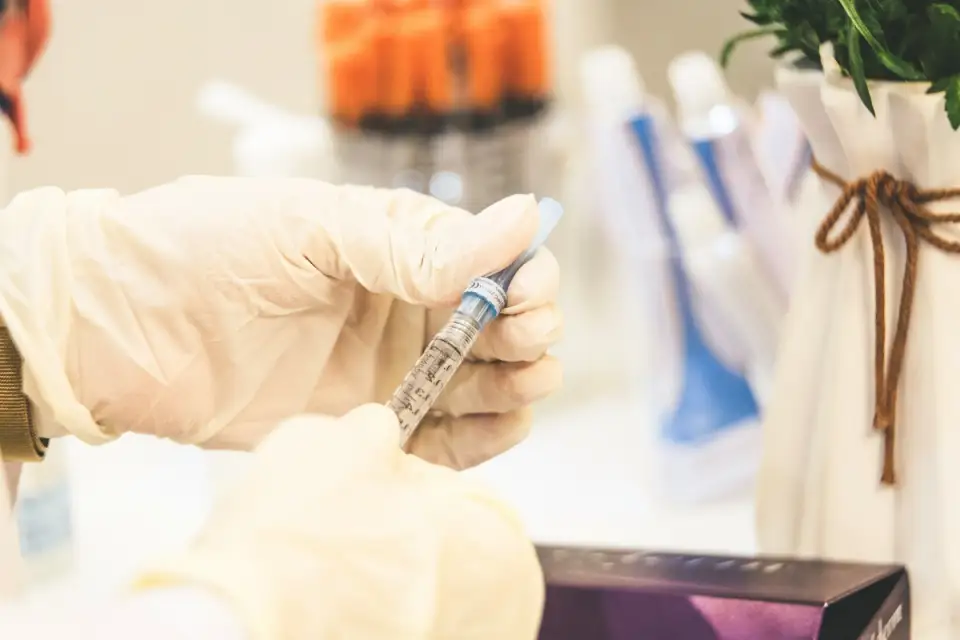

GLP-1 medications have gained massive attention recently, but these drugs have actually been in development for decades. The first GLP-1 receptor agonist received FDA approval in 2005, though the underlying science dates back to research from the 1980s. Understanding this timeline helps explain why these medications have suddenly become household names and whether they might fit into your health journey.
The evolution from early diabetes treatments to today's weight management solutions represents years of clinical research and refinement. These medications didn't appear overnight despite what social media suggests, and their proven track record spans nearly two decades of real-world use. For those exploring their options, MeAgain's GLP-1 app provides personalized tracking and evidence-based insights to help navigate these treatment decisions.
Table of Contents
- Are GLP-1 Drugs Really New or Have They Been Around for Years?
- How Long Have GLP-1 Drugs Actually Been Around?
- What Changed That Made GLP-1 Drugs Suddenly So Popular
- Make Your GLP-1 Journey Work the Way It’s Supposed To
Summary
- GLP-1 medications have been FDA-approved since 2005, nearly two decades before becoming cultural phenomena. The first GLP-1 drug entered the market for the treatment of Type 2 diabetes, with Ozempic following in 2017 and Mounjaro in 2022. Despite this long clinical history, widespread public awareness only emerged recently due to expanded weight-loss applications and celebrity discussions, creating the illusion that these are brand-new treatments rather than established medications with proven track records.
- Use of GLP-1 receptor agonists by individuals with obesity in the United States surged by around 700% between 2019 and 2023. This explosion wasn't driven by scientific discovery but by the recognition of dramatic weight-loss results, prompting pharmaceutical companies to develop weight-specific formulations like Wegovy and Zepbound. Patient and insurer spending on GLP-1s jumped from $13.7 billion in 2018 to $71.7 billion in 2023, a financial surge that generated headlines implying innovation rather than the scaling of proven science.
- The original GLP-1 research began in 1984 with the Gila monster, a venomous lizard whose venom contained a peptide that could regulate metabolism and blood sugar. Researchers isolated exendin-4 from the lizard's venom, which triggered insulin production and lasted in the body for hours rather than minutes, unlike human GLP-1. This discovery from a desert reptile set the foundation for every GLP-1 drug used today, demonstrating how unconventional research pathways can lead to transformative medical treatments.
- Newer GLP-1 formulations delivered weight-loss numbers rivaling those of bariatric surgery, with more than half of semaglutide trial participants losing at least 15% of their body weight over 68 weeks. Weight loss drugs now account for 7% of all U.S. prescriptions, a staggering jump reflecting how clinical results, not just marketing, drove adoption. Between 2020 and 2022, prescriptions quadrupled to roughly 9 million, and by 2023, both Ozempic and Wegovy appeared on the FDA's drug shortage list due to demand outpacing supply.
- The SELECT trial demonstrated a 20% lower rate of fatal and non-fatal cardiovascular events among people who were overweight or obese with a history of cardiovascular disease but not diabetes. This finding expanded prescribing justification beyond weight management to include heart protection, giving cardiologists a new reason to recommend GLP-1s. The medications now target multiple organ systems, including the pancreas, stomach, brain, heart, kidneys, immune system, skeletal muscle, adipose tissue, and liver, addressing multiple chronic conditions simultaneously rather than just treating obesity.
- Higher doses of GLP-1 medications can produce stronger efficacy but also induce more severe side effects, particularly gastrointestinal issues like nausea and vomiting. Managing these medications effectively requires tracking protein intake, hydration, injection timing, and side effect patterns, variables that most people struggle to monitor consistently without structured support. GLP-1 app addresses this by centralizing daily protein goals, hydration tracking, injection schedules, and side-effect monitoring in a single interface that shows how your body responds over time.
Are GLP-1 Drugs Really New or Have They Been Around for Years?
GLP-1 drugs are not new. According to the National Academy of Medicine, the first GLP-1 drug was approved by the FDA in 2005, with Ozempic following in 2017 and Mounjaro in 2022. These medications treated Type 2 diabetes for nearly two decades before becoming household names.

"The first GLP-1 drug was approved by the FDA in 2005, with Ozempic following in 2017 and Mounjaro in 2022." — National Academy of Medicine

How did GLP-1s become so popular so quickly?
Ozempic is now a household brand name, sitting alongside Aleve, Advil, and Nyquil in cultural consciousness. Between 2019 and 2023, use of GLP-1 receptor agonists among U.S. adults with obesity jumped 700%. With 18% of U.S. adults reporting prior use and 12% currently using them, according to the KFF Health Tracking Poll, the drugs feel ubiquitous. Yet widespread use doesn't mean they were invented recently.
Why do GLP-1s feel brand new when they're not?
The explosion wasn't about discovery—it was about recognition. Media attention shifted when these diabetes medications demonstrated dramatic weight-loss results, prompting pharmaceutical companies to develop weight-specific formulations such as Wegovy and Zepbound. Celebrity discussions and Super Bowl commercials featuring Serena Williams, Kenan Thompson, and DJ Khaled followed. The noise made people assume the science was new when the application had simply expanded.
Why do people think GLP-1s are brand new?
Most people mistake marketing buildup for a medical breakthrough. Ozempic was approved in 2017, Mounjaro in 2022, but the underlying drug class has existed since 2005.
When patient and insurer spending on GLP-1s jumped from $13.7 billion in 2018 to $71.7 billion in 2023, the financial surge drew headlines that framed the increase in consumption as innovation rather than as expanded access to an existing treatment.
How does understanding this timeline change your approach?
Endocrinologist Timothy Garvey at the University of Alabama at Birmingham calls this era "on par with the discovery of insulin, the discovery of penicillin, the polio vaccine." That comparison boosts GLP-1s to landmark status in public consciousness.
We are living through something unprecedented, not because the drugs are new, but because proven science now meets mass accessibility and cultural momentum.
Understanding this timeline matters because it shapes realistic expectations. When you know GLP-1s have two decades of clinical use behind them, the conversation shifts from "is this safe?" to "how do I use this effectively?"
Tools like MeAgain bridge that gap by providing comprehensive tracking for protein goals, hydration, injection timing, and side effects. Managing your complete journey requires clarity about what you're eating, when you're dosing, and how your body responds day to day.
But here's what that two-decade timeline doesn't tell you: how these drugs actually work and why that mechanism matters more than the approval date.
Related Reading
- GLP-1 Oral Medications
- Glp-1 Vs Semaglutide
- Oral Wegovy Vs Injection
- Wegovy Pill Vs Injection
- Orforglipron Phase 3
How Long Have GLP-1 Drugs Actually Been Around?
The story starts in 1984 with a poisonous lizard. Researchers from the U.S. National Institutes of Health studied the Gila monster, a black-and-orange reptile that inhabits southwestern deserts. They discovered it could control metabolism and blood sugar after months without food. They isolated a peptide from its venom, called exendin-4, which triggered insulin production and persisted in the body for hours rather than minutes, unlike the human hormone GLP-1. This discovery established the foundation for every GLP-1 drug used today.

"This discovery laid the foundation for every GLP-1 drug used today, starting with a poisonous lizard studied in 1984."

How did exendin-4 become the first GLP-1 medication?
Exendin-4 became exenatide, sold as Byetta, and received FDA approval in 2005 for the treatment of Type 2 diabetes. Despite the requirement for two daily injections, patients accepted the treatment because it worked. By 2006, manufacturer Amylin earned around $430 million, with sales jumping nearly 50% the following year. Patients also experienced unexpected weight loss.
What improvements did Novo Nordisk make to GLP-1 therapy?
While exenatide gained traction, Danish pharmaceutical company Novo Nordisk approached the challenge differently. Researcher Lotte Bjerre Knudsen and her team recognised that GLP-1's short half-life was a weakness and focused on extending its activity in the bloodstream. They attached a fatty acid to GLP-1, which prolonged its action and produced greater weight loss than exenatide. This modification led to liraglutide, marketed as Saxenda and Victoza, a daily injection that represented a clear improvement in both convenience and outcomes.
How did Novo Nordisk develop weekly dosing?
Novo Nordisk created semaglutide by extending the structure of liraglutide to enable once-weekly dosing, eliminating daily routines and improving adherence. The PIONEER-1 study (2019) demonstrated significant improvements in blood glucose in patients with Type 2 diabetes, with mild-to-moderate gastrointestinal side effects and dramatic weight loss at higher doses.
What led to semaglutide's obesity trials?
Semaglutide launched as Ozempic in 2017 for Type 2 diabetes, but observed weight loss prompted a phase II obesity trial in 2015. Endocrinologist John Wilding noted: "It was exciting, because all of a sudden we were in a league where we knew it would be much more impactful in terms of the effects on health." A year-long study (2018) of nearly 900 people with obesity found that between one-third and half taking semaglutide lost at least 15% of body weight, with at least three-quarters losing more than 5%.
How effective was semaglutide in major trials?
STEP 1 (2021) found that over 68 weeks, more than half of participants given weekly semaglutide achieved at least 15% weight loss, compared with around 5% in the control group. The FDA approved semaglutide as Wegovy for weight loss in overweight or obese individuals.
Later trials showed STEP 9 improved knee osteoarthritis pain, another reduced kidney disease complications in people with diabetes, and SELECT demonstrated a 20% lower rate of fatal and non-fatal cardiovascular events among overweight or obese people with a cardiovascular disease history but not diabetes.
What mechanisms behind weight loss remain unclear?
The exact mechanisms by which semaglutide causes weight loss remain incompletely understood. Molecular pharmacologist Sebastian Furness at the University of Queensland explains that it acts on the arcuate nucleus, the brain's appetite control centre.
Patients commonly report that Ozempic "stops that little voice in the back of my head saying you're hungry, go and eat." GLP-1 also appears in the brain's reward pathways, possibly reducing dopaminergic signalling that normally drives food reward. Furness admits, "We don't know; it's a lucky outcome." The medication works, but the complete picture of how it reshapes appetite and metabolism is still emerging.
How can tracking tools help manage treatment?
Managing a GLP-1 journey requires daily attention beyond the prescription itself. Tracking protein intake, hydration, injection timing, and side effects demands a structure that most people don't naturally maintain. Our MeAgain app consolidates these variables in one place, giving users clarity about what they're eating, when they're dosing, and how their body responds.
What turned these medications from a diabetes treatment into a cultural phenomenon wasn't another scientific breakthrough.
Related Reading
What Changed That Made GLP-1 Drugs Suddenly So Popular
Newer GLP-1 formulations delivered weight-loss results that matched those of bariatric surgery. Weight loss drugs now account for 7% of all U.S. prescriptions, demonstrating that clinical results are directly driving adoption. Prescriptions quadrupled from 2020 to 2022, reaching roughly 9 million, and by 2023, both Ozempic and Wegovy appeared on the FDA's drug shortage list due to demand exceeding supply.
"Prescriptions quadrupled between 2020 and 2022 to roughly 9 million, demonstrating unprecedented demand growth." — HealthJoy Research

How did stronger formulations change medical outcomes?
Earlier GLP-1 drugs, such as exenatide and liraglutide, produced modest weight loss of 5–10% of body weight. When semaglutide trials showed that more than half of participants lost at least 15% of their body weight over 68 weeks, the medical community took notice. Susan Yanovski, a physician and nutrition specialist at the National Institute of Diabetes and Digestive and Kidney Diseases, noted: "It's the first time doctors have had obesity drugs that work so well, approaching weight-loss levels previously seen only with bariatric surgery."
For decades, bariatric surgery was the only treatment that consistently produced double-digit weight loss percentages. Now, a weekly injection could deliver similar results without surgery.
What makes tirzepatide even more effective?
Tirzepatide, sold as Mounjaro and Zepbound, combines GLP-1 with a second hormone called GIP. This dual mechanism produces superior weight loss compared to semaglutide, establishing a new standard.
As of February 2024, 15 GLP-1 medications had received FDA approval for blood sugar and weight control, with more in development. The pipeline demonstrated sustained pharmaceutical demand for these drugs.
How did regulatory approval expand GLP-1 access?
GLP-1s were prescribed almost exclusively for Type 2 diabetes until the FDA approved Wegovy for obesity in 2021. This regulatory change allowed doctors to prescribe the medication to patients without diabetes who met obesity criteria, dramatically expanding the eligible population.
More than one billion people worldwide live with obesity, which increases risk for Type 2 diabetes, high blood pressure, heart disease, stroke, metabolic syndrome, fatty liver diseases, some cancers, kidney disease, breathing problems, and sleep apnea. Weight loss and blood sugar control are major factors in improving overall health across these interrelated conditions.
What evidence supports broader GLP-1 prescribing?
The SELECT trial strengthened this expansion by showing a 20% lower rate of fatal and non-fatal cardiovascular events among overweight or obese people with a history of heart disease but no diabetes, giving cardiologists reason to prescribe GLP-1s for heart protection beyond weight management.
Dr. Gaetano Morelli, Chief Medical Officer at Altasciences, noted: "As we learn more about GLP-1 RAs, we realize that they target many organ systems, including the pancreas, stomach, brain, heart, kidneys, immune system (due to reduced inflammation), skeletal muscle, and control of white and brown adipose tissue metabolism, with positive effects in fatty liver disease." Because these drugs address multiple chronic conditions simultaneously, they warrant broader clinical use.
How did media coverage transform clinical drugs into cultural phenomena?
Celebrity gossip, national shortages, and clinical trials made Ozempic, Wegovy, and Mounjaro household names. This spring, WeightWatchers acquired a virtual clinic offering prescriptions for these drugs, signalling that legacy weight-loss companies recognised the shift.
More prescriptions generated media coverage, which drove patient requests, creating a feedback loop. A study by Eric Polley, a data science and public health expert at UChicago, showed that GLP-1RA drugs controlled blood glucose while reducing the risk of major heart-related events and death. This data reached mainstream outlets, fuelling public interest and normalising these drugs as legitimate medical interventions.
What concerns arise from widespread GLP-1 drug adoption?
Chun-Su Yuan, the Cyrus Tang Professor of Anesthesia and Critical Care at the University of Chicago, warned: "The current excitement about GLP-1RAs in financial markets and among the general public, particularly for weight loss, will probably lead to overuse. This should be a warning sign."
Off-label use promoted by celebrities and social media is becoming a growing problem. Even when doctors prescribe these drugs appropriately, careful management is essential: dosages, costs, side effects, and drug comparisons all matter. Higher doses improve efficacy but increase side effects, particularly gastrointestinal issues like nausea and vomiting.
Apps like MeAgain help users track protein goals, hydration, injection schedules, and side effect patterns in real time, enabling them to see how their body responds and adjust accordingly. Managing this process requires organisation that most people struggle to maintain.
Knowing these drugs work doesn't mean knowing how to use them well without losing muscle mass, managing side effects, or maintaining results over time.
Make Your GLP-1 Journey Work the Way It’s Supposed To
The medication works. The real question is whether you're set up to work with it. GLP-1s cause rapid metabolic changes that require consistent habits most people don't naturally track. Without deliberate structure around protein, hydration, movement, and timing, the same drug that produces dramatic results can trigger muscle loss, fatigue, or side effects that halt progress.
"Without deliberate structure around protein, hydration, movement, and timing, the same drug that produces dramatic results can also trigger muscle loss, fatigue, or side effects that stop progress." — Clinical observation on GLP-1 success factors
Your prescription doesn't come with a daily checklist. It doesn't remind you to hit 100 grams of protein or drink enough water to offset nausea. It doesn't show you patterns between injection timing and energy crashes. Most people struggle not from a lack of discipline, but from trying to hold too many variables in their heads at once.
That's the problem MeAgain solves. Instead of tracking everything manually across apps, notes, and memory, our app transforms essential habits that support GLP-1 success into a simple, rewarding system. Your capybara companion guides you through daily goals for protein, fiber, hydration, and movement. Since your body changes quickly on these medications, the Journey Card captures every milestone, providing a visual record of progress when the scale alone doesn't tell the full story.
Essential GLP-1 Habits | Daily Target | Why It Matters |
|---|---|---|
Protein Intake | 100+ grams | Prevents muscle loss during rapid weight loss |
Hydration | 8-10 glasses | Reduces nausea and supports metabolism |
Movement | 30 minutes | Maintains energy and muscle mass |
Timing Tracking | Consistent schedule | Optimizes medication effectiveness |
If you're starting or already using a GLP-1, build the structure that makes the medication work as intended. Download MeAgain, the all-in-one GLP-1 companion app that turns your weight loss journey into your favorite game.