

Key takeaways
- The simplest Zepbound tracking system connects everything to one date: log every shot on the same weekday, then hang your side effects, meals, water, and weight trend off that timeline.
- Track side effects by dose with a quick 0-10 severity note, because GLP-1 stomach symptoms are dose-linked and usually ease as your body adjusts.
- Log which injection site you use and rotate every dose; the label lists the abdomen, thigh, and back of the upper arm.
- Judge progress by the weight trend over weeks, not any single weigh-in; consistent weekly tracking is one of the strongest predictors of sticking with treatment and losing more weight.
- Bring your log to appointments, because a real history beats memory and dose decisions belong to your care team.
Table of contents
- How do you turn scattered Zepbound notes into one system?
- 1. Log every dose the same day you take it
- 2. Track side effects by dose with a 0-10 severity note
- 3. Log your injection site and rotate every dose
- 4. Note any reaction at the injection site
- 5. Log meals, protein, fiber, and water in seconds
- 6. Weigh consistently and judge the trend, not one number
- 7. Add shot-day context so queasy days make sense
- 8. Set reminders for shot day and check-ins
- 9. Do a five-minute weekly review
- 10. Bring your log to appointments
How do you turn scattered Zepbound notes into one system?
The easiest way to track Zepbound results is to hang everything off a single date — shot day — so doses, meals, water, symptoms, and your weight trend live on one timeline. Right now your tracking probably lives in three places at once — shot day in one app, weigh-ins in another, and how you actually felt somewhere in your memory. The effort is there. What's missing is that nothing lines up, so the patterns you want stay hidden.
Pick one place and make shot day the anchor. Whatever you already open — an app, a notes page, a paper planner — choose the one you'll actually keep using, then record every shot on the same weekday. Once that date is fixed, everything else clips onto it: the meal that didn't sit right, the queasy Sunday, the weight trend two weeks later. You're not building a spreadsheet. You're building a timeline.
Tip | The problem it fixes | Takes |
|---|---|---|
Log every dose the same day | Half-remembered shot dates | 10 sec |
Track side effects by dose (0-10) | "Was it worse this time?" guessing | 15 sec |
Log your site and rotate | Losing track of where you injected | 5 sec |
Note any reaction at the site | Redness you can't place later | 10 sec |
Log meals, protein, fiber, water | A foggy sense of what you ate | 20 sec |
Weigh and watch the trend | One bad number ruining your week | 10 sec |
Add shot-day context | Queasy days that feel random | 10 sec |
Set reminders | A missed shot on a busy week | once |
Five-minute weekly review | Patterns you never connect | 5 min/wk |
Bring your log to appointments | Blanking in the exam room | grab & go |

A system you'll actually keep beats a perfect one. The best tracker is the one still open in month four, not the elaborate one you abandon by week three. Tracking also works alongside your medication and the food, movement, and sleep changes around it — the 2025 CMAJ obesity guideline update frames medication as something to use in conjunction with behavior change, not instead of it. Your log is how you watch all of it working together.
So here's how the rest reads: ten tips, each a small habit you can add one at a time, then a short FAQ at the end. Start with tip one and stack from there. If the scale isn't moving the way you expected, a good log is also the fastest way to figure out why you're not losing weight on Zepbound.
1. Log every dose the same day you take it
Log every dose the same day you take it, and write down the amount in milligrams. Do it right after your shot, while you're still holding the thought — not that night, not tomorrow. A dose you meant to record and didn't is a hole in the timeline, and one missing week can throw off every pattern you're trying to read later. Ten seconds now saves you guessing in a month.
- The date and the weekday you injected
- The dose in milligrams (for example 5 or 7.5)
- Which pen or vial you used
- Any delay, if the shot ran late
Zepbound is a once-a-week medication, so a fixed weekday is what makes the whole timeline readable. It starts at 2.5 mg once weekly and steps up by 2.5 mg no sooner than every four weeks, toward a maximum of 15 mg. When each shot lands on the same day, a symptom three days out or a stall two weeks later has something steady to line up against. Move the day around and the pattern blurs.
What if you miss or take a late shot?
The label builds in a four-day cushion. A missed dose can be taken within four days — 96 hours — of the scheduled day; past that window, that dose is skipped and the regular once-weekly schedule picks back up. Either way, log it: note the late shot or the skipped one, because a gap you can see is far more useful than one you have to reconstruct. Any question about your own timing belongs with your care team.

Here's why the same-day habit pays off. Say you take your shot every Friday and log it on time. When Sunday rolls around and the hunger comes back, that note sits two clean days after your dose — and after a few weeks you can see whether it happens every cycle or was a one-off. Logged late, that link disappears.
2. Track side effects by dose with a 0-10 severity note
Log each side effect next to the dose you're on, and give it a quick 0 to 10 number for how strong it felt. A number turns a vague memory into something you can actually compare. Nausea at a 6 the week you moved up, then a 3 two weeks later, tells a clear story on its own. Do it in seconds on shot day and the days after, not in paragraphs. The point is a trend you can see, not a diary.
Symptom | What to note | When to log |
|---|---|---|
Nausea | 0-10 strength, any trigger foods | Shot day and 2-3 days after |
Diarrhea | 0-10 strength, how many days | When it starts, until it clears |
Constipation | 0-10 strength, fiber and water that day | Through the week |
Fatigue | 0-10 strength, time of day | Shot day and the day after |
Injection site reactions | Redness, itch, or a small bump | Right after your shot |
Noticed or not | A monthly check-in |
Why tie symptoms to the dose? Stomach side effects on tirzepatide tend to show up at the start and each time you step up, then ease as your body adjusts. They're usually mild to moderate and temporary, and they often fade over the following weeks, likely tied to the way the medication slows how fast the stomach empties. So the week after a dose increase is exactly when to watch closest. A severity number across those weeks beats trying to remember later whether last month really felt worse.
Which symptoms are worth a tap?
- Digestive stuff — nausea, Zepbound diarrhea, or constipation, each with its own 0-10 number
- Energy and comfort — fatigue, plus any muscle pain worth noting after a dose step
- Slower changes — hair loss, which shows up over months, not days
When should you log?

Log on shot day and the two or three days after. That short window is where most stomach symptoms land, so it's where a repeating pattern shows up first. Do it for a few weeks and you'll see whether your queasy day is always the Saturday after a Thursday shot, or whether it's fading dose by dose. That timeline is also what lets you and your care team compare notes, or work out which GLP-1 has the fewest side effects for you.
Related reading
- Not losing weight on Zepbound
- Zepbound diarrhea
- Hair loss
- Muscle pain
- Which GLP-1 has the fewest side effects
- Where to inject for best results
3. Log your injection site and rotate every dose
Write down which spot you used, then move to a new one next week. Rotating sites is a standard part of how Zepbound is meant to be given, and a quick log is what keeps the rotation honest. It's easy to drift back to the same comfortable spot without noticing. One line per shot, the site and the date, is all it takes, and it sits right next to the dose you already logged.
- The abdomen
- The thigh
- The back of the upper arm, when another person injects for you
Week | Site | Notes |
|---|---|---|
Week 1 | Left abdomen | Mild redness, gone by morning |
Week 2 | Right thigh | No reaction |
Week 3 | Right abdomen | Small bump, itchy one day |
Week 4 | Left thigh | No reaction |
What technique is worth noting?
A few label basics are worth logging the first few weeks, until they're automatic. For vials, the instructions say to use a new syringe and needle for every injection, and to rotate sites with each dose. Never share a KwikPen with anyone, even with a fresh needle, because the label warns it can pass along blood-borne infections. If your care team taught you a specific method, note the step you tend to forget so it becomes routine.

Why does logging the site matter?
A written history turns rotation from a good intention into something you can see. Skim a month of entries and it's obvious if you've been favoring one side. It also surfaces a spot that keeps getting red or lumpy, which is easy to miss shot to shot but clear once it's on a list. That pattern is worth showing your care team, and it makes questions about where to inject for best results easier to answer with your own data.
4. Note any reaction at the injection site
Log any redness, itch, or bump right where you injected, and note the day it showed up. Injection site reactions are among the most common things people on Zepbound report, per the FDA label, so a quick dated note turns a vague "my skin felt weird" into a pattern your care team can actually read. Write down what you saw, which site, and how long it lasted. Most of these are minor and settle on their own.
- Mild redness that fades within a day or two
- A small, firm bump right at the spot
- Brief itching that settles on its own
Site reaction, or something bigger?
A local reaction stays put — a little redness, a bump, an itch confined to the spot you injected. What's different is a reaction that spreads: a rash beyond the site, hives, or swelling of the face, lips, or throat. The FDA label lists hypersensitivity reactions such as anaphylaxis and angioedema among the more serious things to watch for, and it tells patients to seek medical attention promptly if one occurs. If a reaction moves past the injection spot, that's a care-team call, not a logging entry.
Redness that stays at the spot is routine; a rash, hives, or swelling that spreads is a reason to seek medical attention promptly.
The rare reaction worth the note
Serious reactions are uncommon. In a pool of two Zepbound weight-loss studies, 0.1% of people had a severe hypersensitivity reaction, versus none on placebo, per the FDA label. Rare, but real. If it ever happens to you, a dated site log showing when a spot started reacting hands your care team a real timeline instead of a guess. For how a rash and injection-site reactions differ, a dedicated guide walks through it.
5. Log meals, protein, fiber, and water in seconds
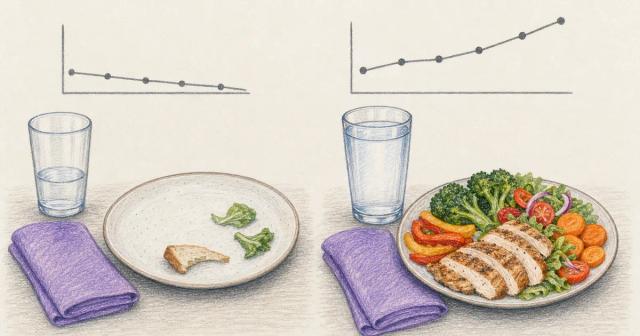
Log meals, protein, fiber, and water in seconds, not paragraphs. The goal isn't a food diary you'll abandon by week three. It's a few taps that capture the things that actually move your energy and digestion. On Zepbound, when nothing sounds good, it's easy to under-eat protein and under-drink water without noticing. A quick daily tap makes that visible before it turns into a tired, foggy stretch you can't explain.
- Protein — a rough gram count, or just "hit it / missed it"
- Fiber — the veggies, fruit, and whole grains that keep things moving
- Water — cups or bottles, however you like to count
- Fullness — how satisfied you felt after meals
- Anything off — constipation, nausea, no appetite
Why just these four?
These are the levers you can feel. Protein helps you stay full and hold your energy when appetite drops. In Mayo Clinic's Zepbound community, one member put it plainly: "When I don't eat enough protein I tire very easily." Water does quiet work too — constipation is a common complaint, and another member noted drinking lots of water to help with it. Fiber rounds it out. You don't need macros to the decimal, just enough signal to catch a rough week while you can still fix it.
Fluids, energy, and when to check in
Dehydration sneaks up when you're barely hungry. If you're logging low water alongside headaches, dizziness, or deep fatigue, that's worth a note and a message to your care team, especially in a week with a lot of nausea or diarrhea. Read and follow the patient instructions that come with your prescription, and when something feels off, ask. Tracking how much protein you need and how much water to drink over time turns "I feel off" into something specific you can act on.
A flat, tired week usually leaves a footprint in the log. Scroll back and you'll often find it: water cups trailing off, protein missed three days running, meals that were mostly crackers because nothing sounded good. None of that is a moral failing, it's just data. Pairing exercise with your medication works better in the weeks the basics are covered, and the log is what tells you which weeks those were.
6. Weigh consistently and judge the trend, not one number
Weigh under the same conditions and read the trend line, not any single number. One weigh-in is a snapshot full of noise. The pattern over several weeks is the real signal. Pick a rhythm you can keep, step on the scale the same way each time, and let the line, not the dot, tell you how things are going.
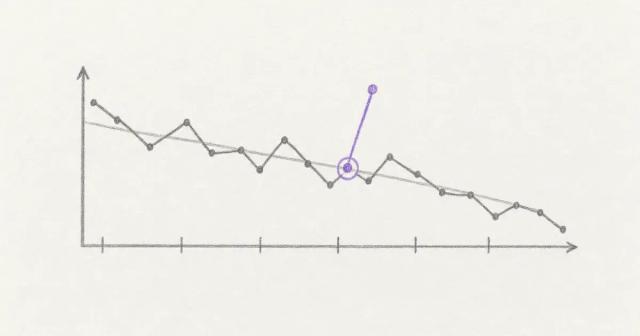
In an analysis published in the journal Healthcare of nearly 19,700 tirzepatide patients, consistent weekly weight tracking was the single strongest predictor of both sticking with treatment and losing more weight. Only 27% stayed with the program for a full year, and those who did lost about 22.6% of their weight versus 13.62% across the whole group. The habit that set them apart was steady weekly logging, not intensity.
How do you make the trend readable?
- Weigh the same day each week, first thing after you wake up
- Keep conditions steady: same scale, before eating or drinking
- Watch the line across weeks, not any one morning's number
Why weekly beats daily weigh-ins
More weighing is not better weighing. In the same Healthcare analysis, intensive daily tracking early on was an inverse predictor of staying with treatment at a year. Weekly wins. If the number stalls for a stretch, that's worth reading as a GLP-1 plateau rather than a reason to weigh five times a day. Knowing how many weeks count as a plateau keeps a normal flat patch from feeling like failure.
Day to day, your weight bounces for reasons that have nothing to do with fat. Water, a salty dinner, where you are in your cycle, even a big meal the night before can move the scale a pound or two. That's why the trend answers questions a single reading can't. If the line is flat for weeks, start with why you're not losing weight on Zepbound, not with today's number.
7. Add shot-day context so queasy days make sense
Log two quick things about every shot: what time you took it, and whether it was before or after food. Ten seconds, and it turns a mystery day into a readable one. A queasier stretch that feels random often lines up with an evening shot on an empty stomach, or a step-up week. The context is what lets you see the pattern later.

Stomach side effects are mostly tied to your dose, not to bad luck or anything you did wrong. They cluster when you start and when you step up a dose, and they usually ease as your body adjusts. So the day and dose you record around a rough patch aren't just notes, they're the context that explains it. A queasy Tuesday after a Monday step-up reads very differently than one out of nowhere.
Your dose, not your willpower, is what most stomach side effects track, and they usually settle as your body catches up.
What context is worth a tap?
- The time of day you took your shot
- Whether you injected before or after a meal
- Sleep and stress that week, which color how you feel
Will the dose steps hit you hard?
For most people, moving up the dose steps goes fine. About 60 to 70% titrate to the full dose with little to no stomach trouble, while the remaining 30 to 40% may hit nausea, vomiting, or hard-to-tolerate days during the step-ups. Your notes show which group you're in, and if the rough days pile up, that history is exactly what your care team needs. It also makes a Zepbound vs Wegovy side effects comparison more grounded in your own data.
8. Set reminders for shot day and check-ins
Reminders are what keep a tracking system alive when the week gets loud. Set three: one for shot day, one for your dose-step check-ins, and one for the weekly review. The point isn't more alerts. It's making the log happen without you having to remember to open the app. A system you actually follow beats a perfect one you forget by week three.
- Shot-day alert — same weekday, same time, so the anchor date never slips
- Dose-step check-in — a nudge around the four-week mark, when a dose change may be due
- Weekly review — a recurring five-minute reminder to scan the whole week at once
Zepbound moves on a four-week rhythm. Per the Zepbound label, each dose step holds for at least four weeks before the next possible increase, so those checkpoints are already built into your treatment. Leaning your reminders on that cadence means your check-ins land on the moments that actually matter: the week a new dose might start, the days side effects tend to shift. You're not inventing a schedule. You're borrowing the one your dose ladder already runs on.
Reminders fight the drop-off
Sticking with any weight medication gets harder over time — that's the pattern, not a personal failing. Persistence tends to slide across the first year: for semaglutide, a related GLP-1 medication, from about 63% at three months to 40% at twelve. The tracking habit usually fades on the same curve. Reminders are the cheapest defense against it, carrying the routine through the weeks when motivation dips and the calendar fills, so one missed check-in doesn't quietly turn into a missed month.
Picture a week that gets away from you: back-to-back meetings, a sick kid, no spare minutes. Without a reminder, shot day gets logged "later," which means never, and the timeline grows a hole right where you'll later want the data. With the alert, you tap the dose in ten seconds between two things and move on. The habit survives because the phone remembered, not because you did.
9. Do a five-minute weekly review
Once a week, spend five minutes looking at everything together — your dose, the side effects you logged, meals and water, and the weight trend, all on one screen. Not to grade yourself. To find what repeats. A weekly scan is where scattered taps turn into a pattern you can act on, and it's short enough that you'll keep doing it. In MeAgain, that weekly review is one screen: shot day, symptoms, meals, water, and the weight trend already lined up.

Look for what lines up with shot day. Most patterns hide in timing: queasiness that shows up two days after every dose, a hungry stretch that always lands late in the week, energy that dips and recovers on the same schedule. In a single week, none of that is obvious. Stacked four weeks deep, the rhythm jumps out. You're scanning for the repeat — the thing that happens after each injection — not the one-off bad afternoon that means nothing.
When a symptom keeps coming back
A side effect that returns after every dose, despite the usual fixes, is worth a flag. Don't stop logging it because it's familiar — keep the severity number and the timing, because the repetition itself is the signal. If nausea, diarrhea, or fatigue keeps landing in the same window and the food and timing tweaks aren't moving it, bring that history to your care team. A recurring pattern you can show beats "it's been kind of bad lately" from memory.
This is where one timeline pays off. When your doses, meals, symptoms, and weight trend all live in one place in MeAgain, you don't have to hunt for patterns — they surface on their own as the weeks stack up. And the long game is real: in the SURMOUNT-MAINTAIN trial, continuing tirzepatide maintained the weight reduction rather than letting it slip back. Staying in the habit of looking is how you catch what's working before a small drift becomes a stall, and how both the wins and the long-term side effects show up early enough to talk through.
Why weekly beats daily
Daily check-ins burn out; weekly ones last. The trials behind tirzepatide play out over the long haul — SURMOUNT-MAINTAIN followed people across 112 weeks — and their consistent finding is that long-term treatment is often what keeps the weight reduction in place. Maintenance is a marathon, so build your tracking habit for one. A weekly review is a pace you can hold for a year; a daily audit is one most people quit within weeks.
10. Bring your log to appointments
Bring your log to appointments. The few minutes you spend tracking all week turn into the most useful thing you can hand your care team. Memory blurs which week the nausea hit or when the scale actually moved, but a dated log doesn't. When time in the room is short, a clear history gets you to the real conversation faster than reconstructing three months from feeling.
- Dose history — every shot, the amount in mg, and any you delayed or missed
- Symptom severity and timing — the 0-10 notes and which days they landed
- Weight trend — the line over weeks, not this morning's number
Dose decisions belong to your care team, not to guesswork. Your job is to bring them the clearest picture.
What your log actually decides
One decision your log directly informs is whether to keep climbing the dose or hold steady. In SURMOUNT-1, tirzepatide was studied at 5, 10, and 15 mg over 72 weeks, so there's real room to adjust. The label guidance is specific: if less than 5% of your starting weight is gone after six months on the highest dose you tolerate, you and your care team decide whether to continue, weighing the benefits and risks. That call rests on real numbers, the trend you've been logging, not a hunch about how it's been going.

A real history beats memory when the visit is short. Instead of "I think the second month was rough," you can point to the week, the dose, and what the trend did next. It's part of why Zepbound before and after results vary so much person to person, because the story is in the timeline, and yours is the only one that decides your next step.
Related reading
- Rash and injection-site reactions
- How much protein you need
- How much water to drink
- Pairing exercise with your medication
- A GLP-1 plateau
- How many weeks count as a plateau
- Zepbound vs Wegovy side effects
- Long-term side effects
- Zepbound before and after results
- Stopping after you lose the weight
Frequently Asked Questions
How long does it take to see results on Zepbound, and how does tracking surface progress sooner?
Weight comes off gradually, not in the first few shots. In SURMOUNT-1, tirzepatide was studied over 72 weeks, so the meaningful changes play out over months. That's exactly why tracking helps. A single weigh-in bounces around with water and food, but a trend line over weeks shows movement you'd otherwise miss. Weighing the same way each week lets real progress show up before it's obvious in the mirror. The easiest way to track Zepbound results is one shared log — doses, meals, water, weight — so the trend surfaces weeks sooner than memory would.
How long does Zepbound diarrhea usually last, and what should I log while it's happening?
For most people, stomach side effects like diarrhea are mild to moderate and tend to be worst around starting out and each dose step. While it's happening, log how often, how bad on a 0-10 scale, whether it lines up with a recent dose increase, and your fluids that day. That context tells you and your care team whether it's the usual adjustment or something to look at. A dedicated Zepbound diarrhea guide covers how to settle it.
Is dry mouth on Zepbound something worth tracking?
Dry mouth isn't among the label's most common Zepbound reactions, but plenty of people notice it, often tied to not drinking enough. It's worth a quick note if it bothers you: track how often it shows up, whether it tracks with low-water days, and keep sipping fluids through the day. If it's constant or comes with other symptoms, mention it to your care team.
Rash or injection-site reaction: how do I tell the difference, and why does logging the site help?
A reaction that stays at the injection spot, some redness, a small bump, a little itch that fades, is usually a local injection-site reaction. A rash that spreads beyond the site, or hives and swelling elsewhere, is different and worth a prompt call to your care team. The label recognizes both injection-site reactions and broader hypersensitivity reactions. This is why logging the site each week helps: a dated record shows whether it's one spot reacting or something broader. A guide on rash and injection-site reactions covers the details.
This article is for informational purposes only and is not medical advice. Always talk to your doctor or care team about your medication, symptoms, or treatment plan.