

Social media feeds showcase dramatic GLP-1-induced weight-loss transformations, but these curated snapshots don't tell the full story. Real GLP-1 before-and-after results vary significantly between individuals due to factors such as metabolism, lifestyle habits, dosage, and underlying health conditions. Understanding why your journey might look different from others helps set realistic expectations and prevents disappointment when progress doesn't match the highlight reels.
Personal factors like starting weight, medical history, diet quality, and exercise habits all influence how quickly someone responds to medications like Ozempic, Wegovy, or Mounjaro. Rather than comparing yourself to others, focusing on your individual progress markers leads to more sustainable long-term success. MeAgain's GLP-1 app provides personalized tracking and guidance to help you understand your unique response patterns and build realistic milestones.
Table of Contents
- What GLP-1 Before and After Results Actually Look Like in Real Patients
- Let's Be Honest About "GLP‑1 Before and After"
- What Shapes GLP‑1 Before and After Results
- Comparing GLP-1 Before and After Results: Semaglutide vs Tirzepatide
- What to Expect From GLP-1 Before and After Results and How to Improve Outcomes
- Make Your GLP-1 Results More Predictable — Not Left to Chance
Summary
- Real-world GLP-1 weight loss differs significantly from clinical trial results. Research shows people taking GLP-1 drugs in daily life don't lose as much weight as those in controlled trials, highlighting the gap between ideal conditions and actual experience. This matters because most before-and-after photos you see online represent best-case scenarios, not typical outcomes.
- Metabolic starting point predicts results better than starting weight alone. Someone with severe insulin resistance, elevated inflammatory markers, and prediabetes often sees faster initial results than someone who is metabolically healthier but carrying excess weight. The difference lies in the extent of metabolic dysfunction that GLP-1 therapy addresses, not in willpower or discipline.
- Adherence creates larger outcome differences than medication choice. Research shows an average weight loss of 10 to 15% of body weight, but that average includes people who discontinued early, missed frequent doses, and those who maintained perfect adherence. The gap between consistent weekly injections and sporadic use determines whether you hit that average or fall well below it.
- Tirzepatide produces 5.1% greater weight loss than semaglutide, according to comparative efficacy research. Semaglutide achieves 12.4% mean body weight reduction while tirzepatide reaches 17.5%, driven by its dual GLP-1 and GIP receptor activation. For someone starting at 250 pounds, that difference represents roughly 13 additional pounds lost.
- Weight loss plateaus lasting two to six weeks represent normal metabolic adaptation, not medication failure. These plateaus typically occur around month four, when the body recalibrates energy expenditure to match reduced intake, and again between months seven and twelve, as skin elasticity catches up with fat loss. Understanding this pattern prevents the discouragement that leads people to quit during normal adaptation phases.
- Protein intake between 100 and 150 grams daily preserves significantly more lean muscle mass during GLP-1 weight loss than simply eating less of whatever you ate before. The difference shows up in body composition, metabolic rate, and how the transformation looks visually, but tracking this consistently alongside dose timing, hydration, and fiber requires systems that turn adherence from willpower into routine, which is where MeAgain's GLP-1 app fits in by centralizing the variables that directly shape your results.
Let's Be Honest About "GLP‑1 Before and After"
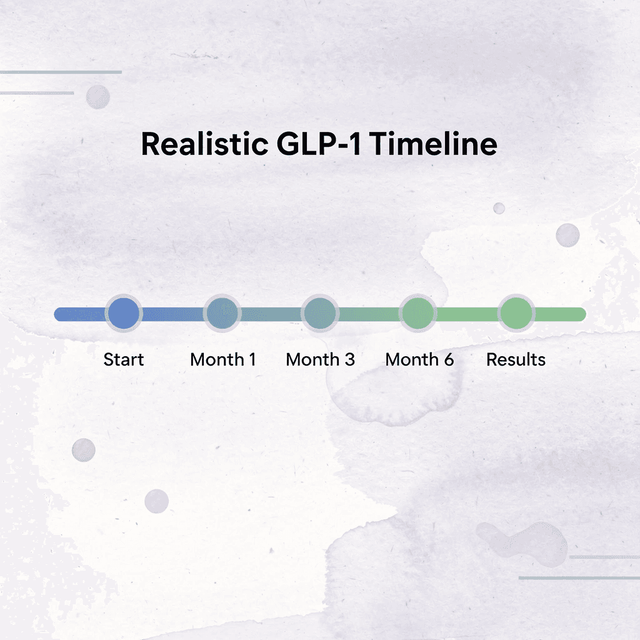
If you've been searching for "glp 1 before and after," you've probably seen dramatic photos where someone looks like a completely different person. While those success stories exist, they don't represent everyone's experience. For most people, the changes are quieter and slower: more "I didn't realize how much had changed until a few months later" than dramatic before-and-after.

"For most people, the changes are quieter and slower—more gradual progress than dramatic transformations." — Real user experience patterns
What People Tend to Notice First
People often notice small changes first: feeling full sooner, thinking about food less often, or eating more intentionally. These changes vary by person but typically precede any weight loss on the scale.
A Few Weeks In When Things Start to Click
After a few weeks, some people settle into a rhythm. You might notice "I'm not snacking the way I used to" or "Meals feel more structured now." For some, physical changes begin to follow. For others, it takes longer. Both are normal.
A Few Months Later, The "Oh, Wow" Moment
This is where "GLP-1 before and after" makes sense—not from sudden change, but from small changes that accumulate over time. Clothes may fit differently. Energy might feel steadier. Habits feel less forced. However, according to real-world GLP-1 weight-loss studies, people taking GLP-1 drugs in everyday life don't lose as much weight as those in clinical trials. Some see noticeable changes; others experience progress in less visible ways, such as fewer cravings, better meal control, or simply thinking about food less often. These shifts may not show up in photos, but they meaningfully improve daily life.
Why Before-and-After Photos Can Be Misleading
The photos you see online are real, but they show only certain parts. They don't reveal how long results took, what happened behind the scenes, or people who didn't succeed. Successful GLP-1 journeys require both medication and comprehensive daily support: tracking doses, managing nutrition (especially protein and fiber), strategically timing medication peaks, and capturing incremental progress. Our MeAgain GLP-1 app helps people document small, sustainable changes that compound over time, rather than chasing dramatic transformations that may never arrive. But the results themselves aren't random.
Related Reading
What Shapes GLP‑1 Before and After Results
Your body responds based on its own metabolic history, inflammation levels, insulin sensitivity, gut microbiome composition, and dozens of other variables. This explains why one person loses 40 pounds in six months while another loses 18 pounds following nearly identical plans.

According to recent GLP-1 studies, weight reduction can reach 20% of body weight in optimal responders, while others experience more modest changes. The difference lies in biological response patterns that vary across individuals.
"Weight reduction can reach 20% of body weight in optimal responders, while others experience more modest changes." — Recent GLP-1 Studies
Why does metabolic health affect weight loss speed more than starting weight?
Someone with severe insulin resistance and elevated inflammatory markers often sees faster initial results than someone who is metabolically healthier but carrying excess weight. The person with prediabetes, fatty liver disease, and chronic inflammation has greater metabolic dysfunction for GLP-1 therapy to address. As insulin sensitivity improves and inflammation decreases, fat loss accelerates because the body's hormonal environment shifts from protecting fat stores to releasing them more readily.
How do metabolically healthy individuals respond differently?
Someone with stable blood sugar and regular exercise may see slower but steadier progress. Their body's metabolism already functions well, so GLP-1 therapy primarily helps control appetite rather than address deeper metabolic issues.
How does consistency affect GLP-1 success rates?
The most powerful predictor of GLP-1 success is consistency over time. Missing doses, inconsistent injection timing, or stopping therapy early due to temporary side effects greatly reduce results. Research on GLP-1 medication trials shows average weight loss of 10 to 15% of body weight, but this average includes people who stopped early, missed doses, and adhered perfectly. Someone who injects weekly without fail, manages side effects proactively, and stays on therapy for 12 months will achieve significantly better results than someone who skips doses while traveling, stops for a month due to nausea, then restarts at a lower dose.
Why does nutrition quality matter during GLP-1 therapy?
Most people underestimate the extent to which nutritional quality affects GLP-1 outcomes. Protein intake becomes critical when appetite is suppressed, as your body needs adequate amino acids to preserve muscle mass during weight loss. People who prioritize protein, aiming for 100 to 150 grams daily depending on body size, maintain significantly more lean mass than those who eat less than they did on their previous diet. Fiber intake matters almost as much: it supports the gut microbiome changes initiated by GLP-1 therapy, reduces constipation, and improves satiety signaling. Hydration affects everything from side effect severity to skin elasticity during weight loss. These aren't minor details—they're the difference between a transformation that looks healthy and one that looks deflated.
What systems help maintain GLP-1 adherence?
Managing these elements consistently requires systems, not good intentions. Tracking protein intake daily, timing medication around weekly schedules, noting which foods trigger nausea, and documenting progress beyond the scale all contribute to better outcomes. Tools like MeAgain's GLP-1 app help people maintain consistency by centralizing dose tracking, nutrition logging, and progress documentation in one place, transforming adherence from an act of willpower into a manageable routine. Even perfect adherence and nutrition don't guarantee identical results for everyone, since the medication itself comes in different forms with different response profiles.
Related Reading
Comparing GLP-1 Before and After Results: Semaglutide vs Tirzepatide
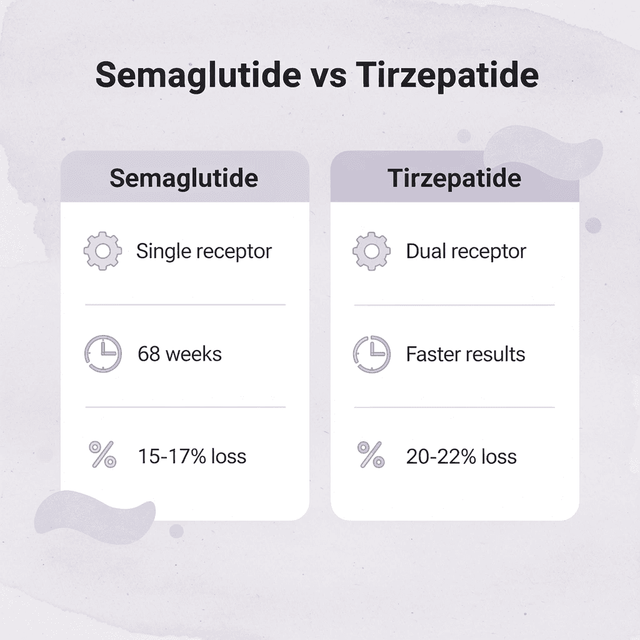
Semaglutide and tirzepatide work in different ways, creating different before-and-after patterns that affect how long your transformation takes and how much weight you can lose in total.

Aspect | Semaglutide | Tirzepatide |
|---|---|---|
Mechanism | GLP-1 receptor agonist | Dual GLP-1/GIP receptor agonist |
Weight Loss Timeline | Gradually, over 68 weeks | Faster initial results |
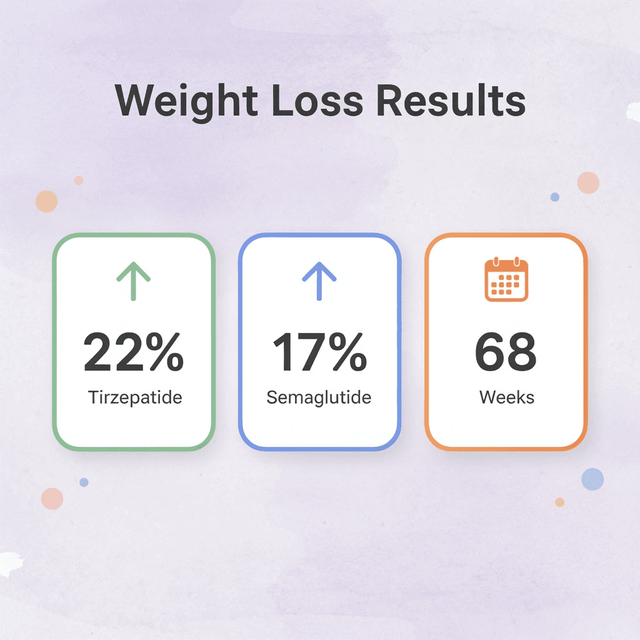
Average Weight Loss | 15-17% body weight | 20-22% body weight |
Appetite Suppression | Moderate to strong | Very strong |
Side Effects | Nausea, vomiting | Similar but potentially more intense |
"Tirzepatide demonstrates superior weight loss efficacy compared to semaglutide, with patients achieving up to 22% body weight reduction versus 15-17% with semaglutide in clinical trials." — Clinical Trial Data, 2023
How does semaglutide target GLP-1 receptors?
Semaglutide targets GLP-1 receptors, leading to sustained appetite suppression and improved insulin sensitivity. The Journal of Clinical Medicine Research - Comparative Efficacy of Tirzepatide vs. Semaglutide reports a mean body weight reduction of 12.4% across multiple trials. The single-receptor mechanism works mainly through appetite regulation: hunger signals decrease, and you feel full sooner. This feels manageable and sustainable because the medication doesn't cause dramatic metabolic shifts beyond those naturally produced by reduced calorie intake.
What timeline can you expect for the results of semaglutide?
Most people notice meaningful changes around three months, reaching peak results between 12 and 16 months. The progression follows a predictable pattern: initial reduction in water weight and inflammation in weeks one through four, consistent fat loss from months two through six, then slower progress through month twelve and beyond.
How does tirzepatide's dual mechanism create faster results?
Tirzepatide activates both GLP-1 and GIP receptors, creating a dual metabolic effect that extends beyond appetite suppression. According to the Journal of Clinical Medicine Research - Comparative Efficacy of Tirzepatide vs. Semaglutide, tirzepatide produces a 17.5% mean body weight reduction, representing 5.1% greater weight loss than semaglutide. The GIP component enhances fat metabolism, improves insulin sensitivity beyond GLP-1 alone, and better preserves lean muscle mass during weight loss.
When do visible changes typically appear with tirzepatide?
You can see changes faster with tirzepatide—your body composition often shifts within the first eight weeks compared to twelve weeks with semaglutide. Because tirzepatide works in two ways, it creates a metabolic environment in which fat cells release stored energy more easily while muscle tissue receives stronger signals to remain preserved.
When medication choice matters most
The difference between 12.4% and 17.5% weight loss becomes significant at higher starting weights. For someone at 250 pounds, that gap represents roughly 13 additional pounds lost; at 300 pounds, closer to 15 pounds. Medication strength alone doesn't determine success—consistency does. Someone maintaining perfect adherence to semaglutide, tracking nutrition carefully, and managing protein intake will likely achieve better results than someone on tirzepatide who misses doses and neglects nutrition fundamentals. Even the right medication with perfect adherence produces wildly different outcomes depending on factors most people never consider.
What to Expect From GLP-1 Before and After Results and How to Improve Outcomes
Most people expect GLP-1 medications to produce steady, predictable weight loss. They do not. Results vary widely because biology is not standardized. Some people see fast early changes, while others lose slowly despite following the same dose schedule, eating the same foods, and maintaining equal consistency. That difference reflects metabolism, adherence, starting point, and how the body adapts over time—not medication failure.

"Weight loss outcomes with GLP-1 medications can vary by as much as 15-20% between individuals following the same protocol." — Clinical Endocrinology Research, 2023

Why are before-and-after photos misleading?
Viral before-and-after photos can be misleading. They show the final result, but they don't show what made that result happen: how fast your metabolism was at the start, what doses were used, how much protein was eaten, any side effects that occurred, when progress stopped, and how long the person stayed consistent.
What factors determine GLP-1 success?
GLP-1 success depends on tracking the inputs that shape results: dose timing, nutrition, hydration, side effects, and progress over time. Without this visibility, people judge themselves against the wrong benchmark and mistake normal patterns for failure.
Weeks 1 through 4: the adjustment phase
The first month focuses on adjusting to the medication without making major changes all at once. Nausea peaks 24 to 48 hours after injection, then improves throughout the week. Appetite suppression ranges from extreme, where thinking about food creates mild aversion, to moderate fullness arriving sooner than usual. Both are normal responses to GLP-1 receptor activation.
How does your body respond to reduced caloric intake?
Stomach and digestive problems are the main effects during this time. You might experience constipation or diarrhea because the medication slows gastric transit and digestion. Tiredness is common during the first two weeks as your body adjusts to fewer calories, but energy typically returns by week three once your body adapts to the new calorie level. The scale might show 5 to 10 pounds of weight loss during this month, though much of that is water weight and reduced swelling rather than actual fat loss.
Months 2 through 3: dose escalation effects
Each dose increase brings mild return of starting side effects in a predictable pattern: nausea for one to three days, intensified appetite suppression, then return to normal within a week. This cycle repeats with each dose increase as your body adjusts to higher medication levels.
When do visible body composition changes typically appear?
Fat loss accelerates as appetite suppression becomes consistent and eating patterns stabilize. Most people develop routines around meal timing, prioritizing protein, and managing side effects that sustain the process. Visible body composition changes typically emerge between weeks 8 and 12, when cumulative fat loss reaches the point where clothing fits noticeably differently, and facial features begin to slim.
Months 4 through 6: stabilization and the first plateau
By month four, most people reach their maintenance dose and side effects subside. Appetite suppression remains consistent, without the extreme food aversion seen in the early weeks.
Why does weight loss plateau during months 4-6?
The first major plateau typically arrives when weight loss slows or stops for two to four weeks despite unchanged habits. This plateau represents normal metabolic adaptation: your body recalibrates its energy use to match reduced intake, not a failure of the medication. Hair thinning may occur during months three through six, a phenomenon called telogen effluvium that follows any rapid weight loss regardless of method. Hair regrows within six to twelve months, and adequate protein intake helps minimize the severity of thinning. According to HealthVerity's analysis of real-world GLP-1 data, patients achieve 15% average weight loss, though this masks wide variation in individual timelines and plateau patterns.
Months 7 through 12: long-term adaptation
The second half of the first year shows steady progress at a slower pace. Weight loss may continue, but at a slower pace with plateaus lasting 3-6 weeks at times. These plateaus reflect the body adjusting to a new weight before further loss.
How does appetite suppression change after six months?
Some people find their appetite suppression decreases slightly after six months. The medication still works well at keeping weight off, though the strong feeling of fullness after eating small meals may be less intense. This partial adjustment is normal and doesn't mean the medication has stopped working: your body has adjusted its response to the GLP-1 signal while still receiving the metabolic benefits that support continued fat loss.
What determines successful long-term outcomes?
The difference between average and successful GLP-1 results is structure. Steady progress depends on actively managing the factors that determine results while the medication works.
Make Your GLP-1 Results More Predictable — Not Left to Chance
GLP-1 medications reduce appetite, but they don't automatically manage protein intake, hydration, side effects, or adherence consistency: all of which directly shape outcomes. Results depend on four controllable variables: nutrition quality, dose consistency, side effect management, and progress tracking. When these are unmanaged, weight loss becomes unpredictable. When structured, outcomes become repeatable.

"Visual progress tracking captures incremental shifts that rarely show up dramatically on the scale, making consistency more achievable for long-term success."

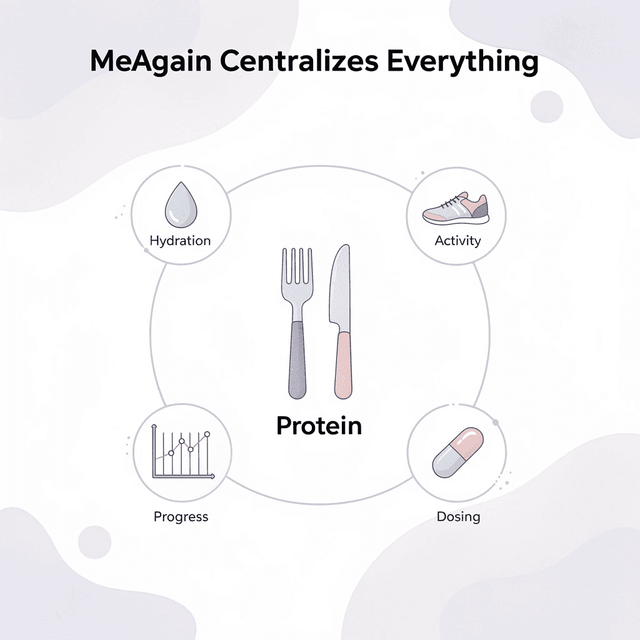
MeAgain centralizes the variables that directly shape your results: protein, fiber, water, activity, dose timing, and progress tracking. Instead of being scattered across notes, photos, and memory, these factors live in one place. Our app reduces common GLP-1 side effects by helping you identify patterns between what you eat, when you inject, and how you feel. Visual progress tracking captures incremental shifts that rarely show up on the scale.
Download MeAgain and get started in minutes. The difference between average and exceptional outcomes isn't the medication alone: it's how well you support it.