
Dramatic weight loss transformations tagged with semaglutide success stories flood social media feeds daily. Scrolling through endless before-and-after images leaves many wondering what's real, what's typical, and what timeline actually makes sense for their own journey. Understanding genuine semaglutide results over weeks and months requires cutting through the noise to see actual weight-loss progression and realistic expectations.
Tracking progress becomes much easier with the right support system and realistic benchmarks. Rather than comparing results to curated online transformations, personalized insights help keep expectations grounded while maintaining motivation throughout the process. MeAgain's GLP-1 app provides tools to monitor weight loss journeys with evidence-based guidance and meaningful progress tracking.
Table of Contents
- What Do Results Actually Look Like on Semaglutide (Week-by-Week Reality)
- Why Semaglutide Before and After Results Vary So Much
- How to Track Progress and Know If It’s Working (If the Scale Is Not Budging)
- Understand Your Semaglutide Before-and-After Results With Real Clarity—Not Guesswork.
Summary
- Semaglutide results don't follow a linear timeline, and the first two weeks rarely produce dramatic scale changes. Some people can lose about 2% of their body weight after the first month, which translates to roughly 4 pounds for someone starting at 200 pounds. The STEP 1 trial showed 14.9% body weight loss over 68 weeks, but that progress included multiple plateaus where the scale barely moved for weeks despite consistent medication and lifestyle habits.
- Two people on the same dose can experience wildly different outcomes because the medication amplifies existing lifestyle inputs rather than overriding them. Cleveland Clinic research tracking 8,000 patients showed significant variability in outcomes, not because semaglutide failed, but because lifestyle factors like protein intake, meal timing, and movement patterns varied dramatically across participants. The drug creates space for better choices, but you still have to make them.
- The scale measures the gravitational pull on total body mass at a single moment, so it misses metabolic shifts happening beneath the surface. Your waist circumference can shrink by an inch while your weight stays identical because muscle tissue is denser than fat. Non-scale metrics such as measurements, energy levels, and changes in appetite often reveal progress weeks before the scale catches up.
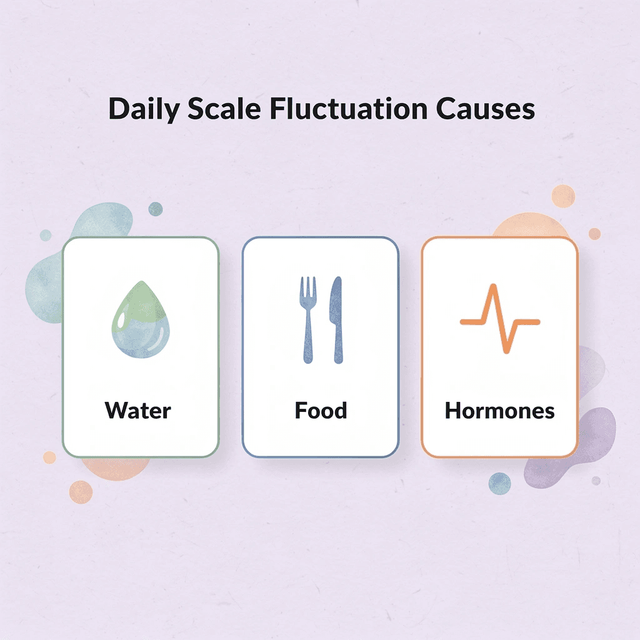
- Weighing yourself daily creates noise that obscures actual trends. Sodium intake, hydration status, hormonal fluctuations, and bowel movements can shift your weight by 2 to 4 pounds in a single day. A downward trend of even half a pound per week adds up to 6 to 12 pounds over three months, which represents meaningful fat loss that daily weigh-ins make harder to recognize.
- Appetite changes signal that semaglutide is working before any visible weight loss occurs. When you finish half your usual dinner portion and feel genuinely satisfied, or the mental loop pulling you toward the pantry at 9 PM simply stops running, those shifts prove the medication is engaging GLP-1 receptors in your brain and altering the neurological pathways that drive hunger.
- MeAgain's GLP-1 app centralizes injection schedules, meal logs, body measurements, and weekly weight trends in one place, showing how these inputs connect over time so you can identify patterns instead of guessing whether invisible metabolic shifts are actually happening.
What Do Results Actually Look Like on Semaglutide (Week-by-Week Reality)
Weight loss on semaglutide isn't steady or easy to predict. Results happen in waves: some weeks bring noticeable changes, others feel like nothing is happening. The timeline varies depending on your starting weight, dosage, and how your body responds to GLP-1 medication.

"Weight loss patterns on GLP-1 medications show significant individual variation, with some patients experiencing rapid initial results while others see gradual changes over 12-16 weeks."

Weeks 1-2 The Quiet Shift
The first two weeks rarely produce significant scale changes, but something important shifts. Your appetite quiets in a way that feels almost strange. That constant mental chatter about food, the urge to snack between meals, the pull toward the pantry after dinner—all soften or disappear. Some people lose 2-4 pounds during this phase, though much comes from water weight as your body adjusts to eating less. The real change is in your brain, not your body.
Weeks 3-4 Early Fat Loss Signals
By week four, your body burns stored fat as your calorie intake continues to drop. You might notice your face looks slimmer or rings fit looser. According to The Peptide Catalog's analysis of the STEP 1 clinical trial, participants lost about 2% of their body weight after the first month, roughly 4 pounds for someone starting at 200 pounds. This measurable progress occurs when people start to believe the medication is working.
Months 2-3 Visible Body Changes
This is where before-and-after comparisons make sense. Your waistline shrinks enough that pants feel looser, and shirts hang differently across your shoulders and chest. Friends might ask if you've lost weight. The scale shows steady progress, usually 1-2 pounds per week. One Reddit user went from 155 pounds in August to 130 by December, celebrating the return of clothes they thought they'd never wear again. That visible transformation builds momentum, both physically and emotionally.
Months 3-6: Plateau or Continued Decline
The STEP 1 trial showed 14.9% body weight loss over 68 weeks at the 2.4 mg dose, though progress isn't always steady. Many people hit plateaus around month four or five, where the scale barely moves despite consistent medication use and healthy habits. Your body adapts to the medication, resetting its metabolic baseline. Some people push through by adjusting their dosage or focusing on eating enough protein and staying active. Others keep their current weight stable, which is still a win compared to regaining it.
How can you maintain realistic expectations during plateaus?
Comparing yourself to edited transformations online creates unrealistic pressure. Our GLP-1 app monitors your journey with personalized benchmarks and realistic timelines, showing how your results align with typical patterns while celebrating changes that matter most to your health. Instead of chasing someone else's before and after photo, you'll have tools that keep your expectations grounded and motivation strong during plateaus.
What does real transformation actually look like?
Transformation photos flood social media, but they rarely show the middle: the messy weeks when nothing seems to happen. Real progress on semaglutide shows up in unexpected places—cheekbones that emerge after months of facial puffiness, thighs that no longer rub together when you walk, a watch band that needs adjusting three holes tighter.
One person celebrated losing belly fat so completely that they could see abdominal definition for the first time in their adult life. Another slept better and thought more clearly, calling those changes "beyond worth it" even before reaching their goal weight. These aren't the dramatic 50-pound drop photos that go viral, but they represent the daily reality of sustainable transformation.
Why do people on the same dose get different results?
But here's what those timelines don't tell you: why two people on the same dose can have completely different results.
Related Reading
- What is Foundayo
- How Is Foundayo Different From Zepbound?
- Which Is Better: Foundayo Or Oral Wegovy?
- Foundayo vs. Orforglipron: The Main Differences
Why Semaglutide Before and After Results Vary So Much
People assume semaglutide produces uniform results because it's the same molecule at the same dose. This assumption breaks down when you recognise that medication doesn't operate in isolation. It interacts with your metabolism, habits, sleep patterns, stress levels, and food choices. Two people taking 1 mg weekly can experience wildly different outcomes because the medication amplifies what you're already doing—it doesn't replace those inputs.

"Medication effectiveness varies significantly based on individual lifestyle factors, with the same dose producing different outcomes across patients."

The Medication Amplifies Your Lifestyle, It Doesn't Override It
Semaglutide slows gastric emptying and reduces appetite signals, but it can't force you to choose protein over processed carbs or movement over sitting. If you're eating balanced meals with adequate protein and fiber, the medication helps you feel satisfied on fewer calories. If you're reaching for high-sugar snacks or skipping meals, your body responds differently. Research from the Cleveland Clinic, tracking 8,000 patients, found significant differences in outcomes due to varying lifestyle choices across participants.
Metabolic Differences Shape How Your Body Responds
Your metabolic rate, insulin sensitivity, and hormonal baseline determine how efficiently your body burns stored fat once calorie intake drops. Someone with insulin resistance may see slower initial progress because their body struggles to access fat stores. Someone with a faster baseline metabolism might lose weight more quickly in the first few months. Younger patients often experience faster results because their metabolic flexibility hasn't declined. These aren't failures of the medication—they're expected variations in how human biology processes the same chemical signal.
Starting Weight and Body Composition Create Different Trajectories
A person starting at 250 pounds will see bigger changes on the scale in the first three months than someone starting at 180 pounds. The percentage of body weight lost often tells a more accurate story than the actual number of pounds. Real-world studies often show average weight loss in the ~5–10% range, with wide variability depending on dose, duration, and adherence. Someone with more muscle mass might lose weight more slowly because muscle tissue burns more calories at rest, making their body more resistant to calorie deficits.
Dosage Adherence and Titration Timing Matter More Than You'd Think
Missing injections or inconsistent timing disrupts the medication's steady presence in your system, weakening its appetite-suppressing effects and allowing old eating patterns to return. Some people increase their dose more quickly, while others remain on lower doses longer to manage side effects such as nausea or fatigue. Doctors adjust dosing based on tolerance and response, so two people might follow different schedules even if they started the same week. Variability is how personalized medicine works.
How can tracking help you understand your progress?
MeAgain's GLP-1 app helps you track injections, log meals, and monitor progress against realistic benchmarks tailored to your starting point, not someone else's transformation. You'll have data showing how your choices connect to the changes you're seeing, rather than guessing whether your habits support the medication. But knowing why results vary doesn't answer the harder question: how do you know if it's working when the scale refuses to move?
Related Reading
How to Track Progress and Know If It’s Working (If the Scale Is Not Budging)
A scale measures the pull of gravity on your total body weight at one moment in time. It does not measure fat loss, muscle retention, metabolism function, or water retention from salty food. When the number on the scale does not change for a week or two, nothing is happening is a false conclusion. You are measuring progress by the wrong signs.

What appetite changes indicate semaglutide is working?
Most people notice reduced hunger and increased fullness within two to four weeks, becoming satisfied with smaller portions and experiencing fewer food cravings. Some patients report thinking about food less often throughout the day, reflecting the effects of semaglutide on appetite regulation. This mental quiet around food—forgetting about lunch until mid-afternoon or realizing you haven't thought about snacks in hours—constitutes progress, even if invisible to the scale.
Do side effects mean semaglutide is working properly?
Mild stomach and digestive symptoms, such as nausea, reduced appetite, or changes in bowel habits, can indicate that the medication is working in its target areas. These effects occur because food moves through your stomach more slowly and are strongest during dose increases.
However, seek urgent care for severe abdominal pain (especially pain radiating to your back, which may indicate pancreatitis), persistent vomiting, inability to retain fluids, or upper right abdominal pain with fever or jaundice (possible gallbladder disease). The absence of early side effects does not indicate treatment failure; some patients achieve better results without major gastrointestinal symptoms, particularly when the dose is increased gradually.
How quickly does semaglutide improve blood sugar levels?
For patients with type 2 diabetes who check blood sugar at home, fasting and after-meal blood sugar readings often decline within one to two weeks, with fewer blood sugar fluctuations and high blood sugar episodes. These early improvements show semaglutide's direct effects on insulin release and glucagon suppression, occurring before significant weight loss. Patients with existing diabetic retinopathy should inform their doctor immediately of any vision changes, as rapid blood sugar improvement can worsen retinopathy.
How should you track weight-loss progress with semaglutide?
Weigh yourself at the same time of day, wearing similar clothing, using the same scale. Weekly measurements suffice, as daily fluctuations from hydration, sodium intake, and hormonal changes obscure true trends. Record weights in a journal or smartphone application to track progress and identify patterns. A weight loss of 1 to 2 pounds per week is considered safe and sustainable, though initial losses may be faster due to fluid shifts and reduced caloric intake. Clinical trials show that patients using semaglutide typically achieve a 10 to 15% reduction in body weight over 68 weeks, with most of the loss occurring in the first six months. Individual responses vary based on baseline weight, adherence, dietary habits, physical activity, and metabolic factors.
How do you monitor changes in blood sugar with semaglutide?
If you have diabetes, checking your blood sugar at home provides quick information about your control. Check your fasting glucose before breakfast (target: 80 to 130 mg/dL per American Diabetes Association) and again two hours after meals (target: less than 180 mg/dL). Record your readings along with the timing of your medicine, food intake, and exercise. This reveals patterns in your blood sugar. Your doctor will check your hemoglobin A1c every three months. This test shows your average blood sugar control over 8 to 12 weeks. Research shows semaglutide lowers A1c by approximately 1.0 to 1.5 percentage points in people with type 2 diabetes, with most people seeing significant improvements after 12 to 16 weeks at the full dose.
What are alternative ways to measure progress beyond the scale?
Working Against Gravity identifies five effective ways to measure progress beyond the scale: body measurements (waist, hips, chest), progress photos under consistent lighting and in the same clothing, how clothes fit, energy levels, and physical performance improvements. These markers often shift before the scale moves, providing evidence that your body is responding during apparent plateaus.
Set Realistic Goals and Celebrate Milestones to Stay Motivated
A clear plan keeps you focused throughout your semaglutide journey. Short-term goals, like improved energy or reduced appetite, make larger targets feel achievable and prevent frustration. These behavioral wins signal steady progress even when the scale doesn't move. Celebrating milestones strengthens motivation through simple rewards: new clothes, journaling progress, or other acknowledgments that reinforce positive habits and remind you how far you've come. Small achievements compound over time, building lasting confidence and sustaining the routine that supports both physical and emotional progress.
How does tracking work best with daily habits?
Tracking progress works best when paired with simple daily habits. Regular weigh-ins, food logs, and activity notes connect your choices to results and reveal patterns that guide your decisions. Diet changes make a significant difference: smaller portions, more vegetables, and lean proteins support the effects of semaglutide. A food journal helps you spot triggers for overeating and keeps your goals visible. Even short walks or light strength exercises a few times a week improve results.
What tools help centralize progress monitoring?
Tools like MeAgain's GLP-1 app combine injection tracking, AI meal logging, and progress monitoring in one place, helping users see how medication adherence, food choices, and body changes connect over weeks rather than fixating on daily scale movements. Recording workouts alongside weight or measurements shows how the body responds over time. Sleep and stress control matter too: poor rest or constant tension can slow progress, while regular sleep hours and calming activities help maintain balance. But knowing what to track is only half the equation; understanding what those numbers mean requires a different kind of clarity entirely.
Related Reading
Understand Your Semaglutide Before-and-After Results With Real Clarity—Not Guesswork.
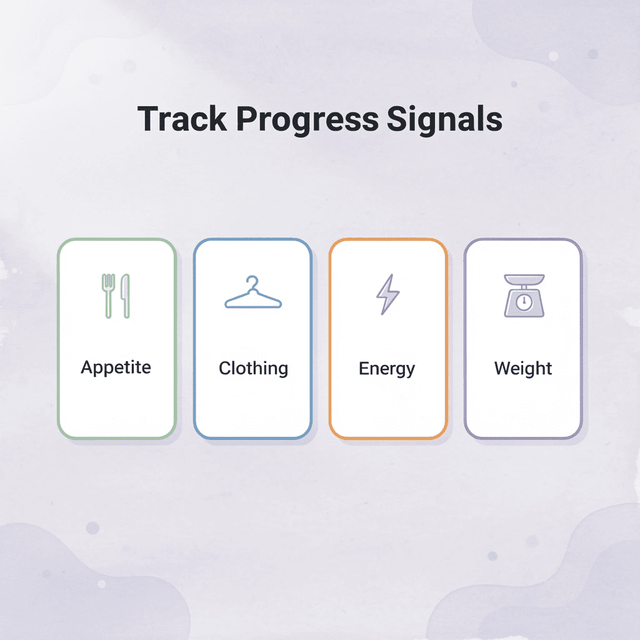
Your semaglutide journey is yours alone. Real progress shows up in shifts in appetite, clothing fit, energy patterns, and weekly weight trends—not in matching someone else's month-three photo. When you track the signals that matter to your body, you stop second-guessing whether the medication is working and start recognizing the transformation already underway.

With MeAgain, you map your semaglutide journey against realistic patterns by tracking weekly weight trends, visible transformation markers like face and waist changes, and appetite shifts that signal progress before the scale catches up. Our app shows how your injection schedule, meal choices, and body changes connect over time, giving you clarity on metabolic shifts happening beneath the surface—even during plateaus.
"Real semaglutide progress shows up in multiple markers working together—appetite control, energy levels, and body composition changes—not just the number on the scale."
Download MeAgain now and set up your semaglutide journey in under five minutes. Start tracking your real before-and-after progression against realistic timelines so you can trust the process that's already working.