

Dramatic before-and-after photos of semaglutide flood social media, showing people celebrating lost pounds and life-changing transformations. These snapshots don't reveal what really happens during treatment, why some people lose 50 pounds while others struggle to see results, or what risks might hide beneath those success stories. Understanding actual weight-loss outcomes requires looking beyond the highlight reel to examine the factors that influence individual results and to have an honest conversation about safety and expectations before starting treatment.
Having the right support makes all the difference in understanding what to expect from your weight loss journey. Instead of guessing whether your experience matches online before and after pictures, you need personalized insights that help you measure success on your own terms and make informed decisions throughout the process. MeAgain's GLP-1 app provides practical tools to track progress, manage side effects, and set realistic goals based on how your body responds to treatment.
Table of Contents
- What Compounded Semaglutide Before and After Results Actually Look Like
- Why Before and After Results Differ So Much Between Users
- Compounded vs FDA-Approved Semaglutide in Real-World Results
- Compounded semaglutide vs. Ozempic and Wegovy
- What You Do After Seeing the Before and After Results Matters More Than the Results Themselves
Summary
- Clinical trials show nearly 15% weight loss at higher therapeutic doses of semaglutide, but those outcomes reflect controlled conditions with pharmaceutical-grade medication, supervised dose escalation, and structured lifestyle support. Real-world compounded semaglutide results vary significantly because formulation quality, dose consistency, and behavioral adherence differ substantially from those in research settings, where every variable is monitored and standardized.
- Compounded semaglutide lacks FDA oversight, ensuring batch-to-batch consistency, which creates invisible outcome variability that affects your results before you even consider diet or exercise. Without standardized manufacturing processes, concentration accuracy varies between pharmacies and even between batches from the same source, leading to unpredictable appetite suppression and making it difficult to determine whether plateaus reflect medication quality, metabolic adaptation, or behavioral factors.
- Dose escalation in real-world use deviates significantly from clinical trial protocols due to insurance coverage disruptions, severe GI side effects, or attempts to accelerate results through aggressive titration. These deviations matter because GLP-1 effectiveness is dose-dependent: someone losing weight at insufficient doses faces stronger metabolic feedback loops with weaker pharmaceutical support, creating plateaus that appear to indicate drug tolerance when they actually reflect inadequate dosing to counter metabolic adaptation.
- Protein intake and resistance training influence body composition outcomes far more than medication source, yet most before-and-after comparisons ignore these behavioral variables entirely. Someone maintaining 90+ grams of daily protein and training regularly preserves muscle mass during weight loss, while another person at identical doses who lets protein drop loses disproportionate lean mass, creating visually different transformations that appear to reflect medication effectiveness when they actually reflect adherence to habits around the medication.
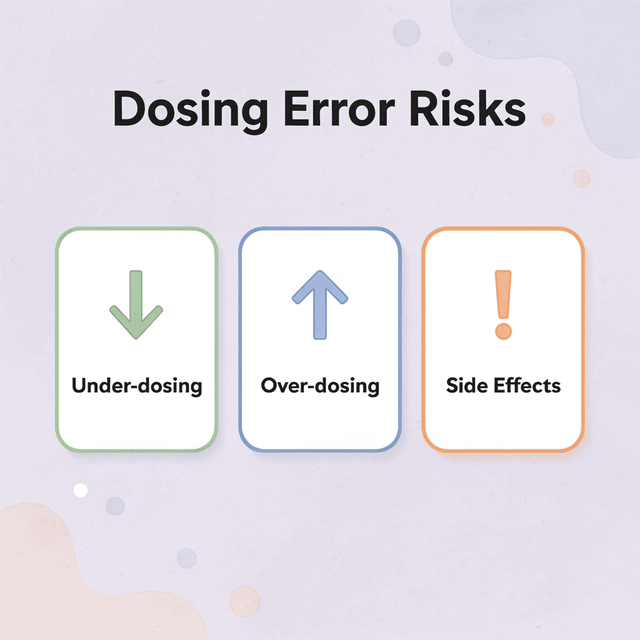
- FDA-approved semaglutide operates under manufacturing controls that eliminate batch variability and uses prefilled pens that remove dosing calculation errors, while compounded versions introduce structural risks, including temperature excursions during shipping, measurement errors requiring hospitalization, and fraudulent products from unlicensed sources. The FDA received multiple reports of serious adverse events from dosing errors and identified products labeled as compounded semaglutide from pharmacies that don't exist, making regulatory oversight gaps a documented safety concern rather than a theoretical risk.
- Fiber intake below 25 grams daily and inadequate hydration create side effects severe enough to disrupt medication adherence, turning minor inconveniences into specific failure points where people stop treatment because the experience becomes physically unsustainable. These aren't medication failures but predictable consequences of appetite suppression, making it difficult to consume enough vegetables and water and creating feedback loops where worsening symptoms lead to worse habits that further amplify symptoms.
- MeAgain's GLP-1 app addresses this by combining zero-markup access to quality-verified compounded semaglutide with dose tracking, AI meal logging, and progress monitoring that help you understand which specific factors (medication consistency, protein intake, hydration patterns) actually drive your individual outcomes rather than guessing whether results reflect drug performance or behavioral drift.
What Compounded Semaglutide Before and After Results Actually Look Like
When you search for compounded semaglutide before-and-after results, you want proof: what happens when someone starts treatment, how much weight they lose, and whether dramatic transformation photos reflect realistic expectations. Results vary based on dosage consistency, medication sourcing quality, and lifestyle adherence. What works for one person may produce modest outcomes for another, not because the medication failed, but because the conditions surrounding its use differ substantially.
"Results vary based on dosage consistency, medication sourcing quality, and lifestyle adherence—what works for one person may produce modest outcomes for another."

What do the before and after results actually measure in clinical trials?
Before-and-after comparisons typically track weight-loss results over 12, 24, or 68 weeks. According to clinical trials, people in studies lost nearly 15% of their weight at higher therapeutic doses. This figure reflects controlled conditions: pharmaceutical-grade medication, supervised dose increases, medical monitoring, and structured lifestyle support. These ideal circumstances may not translate to compounded semaglutide used outside clinical settings.
How does medication quality affect real-world outcomes?
The gap between clinical trial outcomes and real-world results widens when medication quality varies. Compounded semaglutide isn't FDA-approved, so its safety and effectiveness haven't been established through rigorous testing. You might receive injections, sublingual drops, oral tablets, or nasal sprays, each with different absorption rates and bioavailability profiles. Without standardized manufacturing processes, you cannot guarantee consistent concentration, which produces predictable outcomes in branded medications like Ozempic or Wegovy.
Why don't online transformations match your results?
Most people assume compounded semaglutide results will match branded GLP-1 outcomes seen online. Someone sharing "7kg in 2 months" likely has pharmaceutical-grade sourcing, perfect adherence, significant starting weight, and minimal side effects. Another person following an identical dosing schedule might experience slower progress due to differences in compounding quality, side effects that disrupt consistency, or metabolic factors affecting medication response.
How do lifestyle factors affect the effectiveness of semaglutide?
Lifestyle factors matter more than most transformation posts acknowledge. Staying hydrated, getting enough protein, sleeping well, managing stress, and moving your body all affect how well semaglutide works. Increasing doses too quickly causes serious nausea or tiredness that undermines medication adherence. The medication stops working, not because it's ineffective, but because side effects make it difficult to continue using it. Transformation comes from building sustainable habits, not from taking aggressive doses.
Why do compounded versions create regulatory uncertainty?
The FDA declared semaglutide shortages resolved as of February 2025, eliminating the original rationale for compounding. Pharmacies offering compounded semaglutide operate in a regulatory gray area driven by cost rather than medical necessity. Without FDA oversight of batch consistency, concentration accuracy, and sterility standards, you accept outcome variability absent from approved medications.
How do different dosage forms affect medication predictability?
Different dosage forms create unpredictability. Injectable semaglutide has established pharmacokinetics, absorption patterns, and dose-response relationships documented through clinical use. Sublingual drops, oral tablets, and nasal sprays lack comparable validation. The medication may reach your bloodstream at different rates, concentrations, or stability profiles, making it difficult to predict whether you'll experience the same degree of appetite suppression, metabolic effects, and weight-loss speed documented in pharmaceutical-grade injection studies.
How can technology platforms address compounding uncertainty?
Platforms like MeAgain's GLP-1 app solve this problem by ensuring transparency about medication sourcing and rigorous tracking. Rather than questioning whether compounded medication matches the name-brand quality, the app provides affordable access to quality-checked compounded semaglutide, along with dose tracking, AI meal logging, and progress monitoring. This app-first approach integrates medication into a comprehensive support system, delivering better outcomes than models where companies profit from medication markups while providing minimal tracking support.
How do individual factors affect your expected results?
Your starting weight, past diet history, metabolic health, and GLP-1 experience all affect what "good results" look like for you. Someone with significant weight to lose may see rapid initial changes, while someone closer to their goal weight experiences slower, steady progress. Neither indicates the medication isn't working. Both demonstrate how GLP-1 medications work: they reduce hunger and slow gastric emptying, but the resulting calorie deficit depends on your baseline intake, activity level, and how your body adapts.
Why do effects build gradually over time?
Effects build gradually over weeks as medication accumulates in your system and metabolic pathways adjust. Expecting immediate, dramatic changes invites disappointment and potentially dangerous dose increases. Patience and consistency produce better long-term results than aggressive approaches that trigger serious side effects, disrupting medication adherence. Sustainable change happens through small, compounding shifts rather than rapid, dramatic ones.
What causes different outcomes for the same dose?
Understanding what drives individual differences requires looking beyond simple before-and-after numbers to the factors that make identical doses produce vastly different outcomes for different people.
Related Reading
Why Before and After Results Differ So Much Between Users
Three factors create different results in compounded semaglutide before and after photos: pharmaceutical consistency, adherence to dose escalation protocols, and personal behavior choices. Someone achieving dramatic results likely received pharmaceutical-grade compounding, followed a standardized escalation protocol, maintained high protein intake, and experienced minimal side effects. Another person using the same dose may see slower results due to inconsistent pharmacy preparation standards, insurance disruptions that cause dose interruptions, or severe nausea that prevents sustained treatment.

"Pharmaceutical-grade compounding and consistent dosing protocols are the foundation of successful semaglutide treatment outcomes." — Clinical Research Standards, 2024

Success Factor | High Results | Lower Results |
|---|---|---|
Pharmacy Quality | Pharmaceutical-grade | Inconsistent preparation |
Dosing Protocol | Standardized escalation | Interrupted progression |
Side Effect Management | Minimal nausea | Severe symptoms |

Why does batch consistency matter for compounded semaglutide?
Compounded semaglutide lacks FDA oversight to ensure batch-to-batch consistency. Without standardized manufacturing, concentration accuracy varies between pharmacies and batches. A vial labeled "2.5mg" may contain more or less active ingredient than the previous month's supply, creating unpredictable appetite suppression and metabolic effects that obscure whether outcomes stem from your behavior or medication strength.
How do different dosage forms affect medication reliability?
Different formulations of the medicine create unpredictability. Injectable semaglutide has an established pharmacokinetic profile validated through clinical use. Sublingual drops, oral tablets, and nasal sprays lack equivalent testing, leaving absorption rates, efficacy, and stability uncertain. The medicine may reach your bloodstream in varying amounts or degrade faster than expected, producing inconsistent appetite control that appears as personal failure rather than a formulation difference.
Why do real-world dosing schedules differ from clinical trials?
In real life, people increase their doses differently than in clinical trials. When insurance stops covering a medication, people must stop taking it, breaking their dosing schedule and creating gaps that reset how their body processes the drug, requiring them to restart at lower doses. Serious stomach problems (diarrhea, nausea, sulfur burps) force people to progress more slowly with doses tailored to their tolerance. This extends the time needed to reach an effective dose. Some people increase doses too quickly, triggering side effects severe enough to abandon the medication entirely.
How do dosing deviations affect weight loss effectiveness?
The way GLP-1 works depends on the dose, so these differences matter significantly. Lower doses suppress appetite less effectively, which becomes problematic as weight loss triggers stronger metabolic feedback loops. Someone losing 20 pounds at a low dose experiences more intense hunger rebound than someone losing the same weight at higher doses, because the medication cannot adequately block the 100-calorie-per-day-per-kilogram-lost feedback mechanism. When they plateau, they often think "the drug stopped working" rather than recognizing they're fighting metabolic adaptation without adequate pharmaceutical support.
How do behavioral factors determine whether medication potential translates to actual results?
How much protein you eat and resistance training have a much bigger effect on preserving lean muscle than how quickly you change your dose. However, most before-and-after comparisons ignore these factors entirely. Someone who consumes 90 grams of protein daily and trains four times a week will have markedly different body composition results than someone taking the same dose who reduces protein intake and stops exercising.
Both people might lose the same total weight, but one keeps their muscle while the other loses significant lean mass. This creates visually different transformations that appear more successful when they simply reflect how well someone adhered to their habits.
How can tracking tools reveal which factors drive individual outcomes?
Platforms like MeAgain's GLP-1 app address this multi-variable reality by combining affordable access to compounded medication with comprehensive tracking tools that reveal which factors drive your individual outcomes. Rather than guessing whether plateaus reflect drug tolerance, metabolic adaptation, or behavioral drift, the app provides dose tracking, AI meal logging, and progress monitoring that expose patterns between medication consistency, protein intake, and results. The app-first model treats medication as a fairly priced service feature within a broader support system, enabling the behavioral factors that determine whether pharmaceutical potential translates into actual transformation.
Why do real-world results differ from controlled study conditions?
Before and after photos show pure drug performance only in controlled conditions: pharmaceutical-grade medication, supervised dose escalation, and structured lifestyle support. Real-world results depend on navigating insurance coverage, managing side effects without medical supervision, and maintaining behavioral consistency without the accountability structures of research settings. But knowing that outcomes depend on multiple variables leaves the fundamental question: Does the source of your medication matter when the active ingredient is the same?
Related Reading
Compounded vs FDA-Approved Semaglutide in Real-World Results
The active ingredient might be the same, but the experience isn't. FDA-approved semaglutideoperates under manufacturing controls that eliminate batch-to-batch variability, uses prefilled pens to eliminate dosing calculation errors, and undergoes cold-chain verification to prevent temperature-related degradation. Compounded versions lack these critical safeguards, creating outcome unpredictability independent of your adherence or metabolism.

"Manufacturing controls and cold chain verification eliminate the variability that can make or break treatment outcomes, regardless of patient compliance."

Aspect | FDA-Approved | Compounded |
|---|---|---|
Manufacturing Controls | ✅ Standardized processes | ❌ Variable quality |
Dosing Accuracy | ✅ Prefilled pens | ❌ Manual calculations |
Temperature Control | ✅ Cold chain verified | ❌ Limited tracking |
Batch Consistency | ✅ Guaranteed uniformity | ❌ Potential variability |
Outcome Predictability | ✅ Reliable results | ❌ Variable effectiveness |
Compounded semaglutide vs. Ozempic and Wegovy
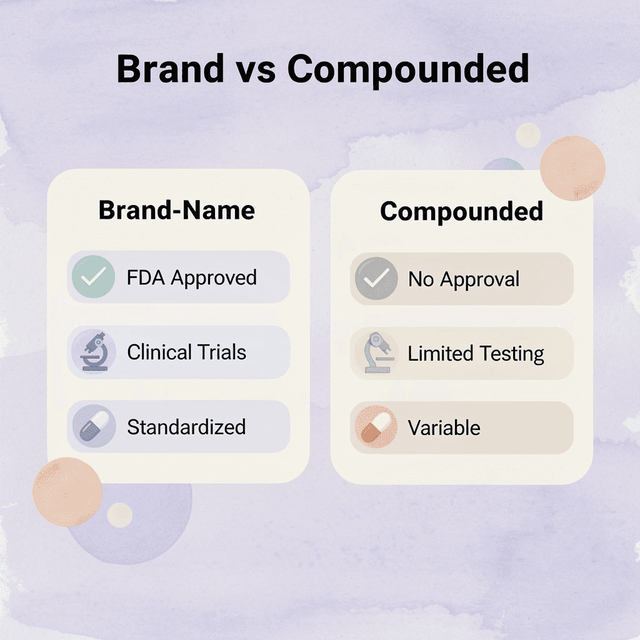
Compounded semaglutide differs from Ozempic, Wegovy, and Rybelsus in how it is tested and approved, its ingredients, and available forms. While these brand-name medications undergo FDA approval processes, compounded versions are prepared by pharmacies without the equivalent level of regulatory oversight.

Aspect | Brand-Name (Ozempic/Wegovy) | Compounded Semaglutide |
|---|---|---|
FDA Approval | ✅ Full FDA approval | ❌ No FDA approval required |
Testing | ✅ Extensive clinical trials | ❌ Limited testing |
Ingredients | ✅ Standardized formulation | ⚠️ Variable ingredients |
Forms Available | Pre-filled pens only | Multiple forms possible |
Quality Control | ✅ Strict manufacturing standards | ⚠️ Pharmacy-dependent |
Cost | Higher | Typically lower |
"Compounded medications are not subject to the same rigorous testing and quality assurance as FDA-approved drugs, which can lead to significant variability in effectiveness and safety." — FDA Safety Communication, 2023
Compounded semaglutide | Ozempic and Wegovy | |
|---|---|---|
FDA approved? | No | Yes |
Where they’re made | Compounding pharmacies regulated by state boards of pharmacy or FDA-registered outsourcing facilities | FDA-registered Novo Nordisk facilities |
Ingredients | Inactive ingredients can vary; some pharmacies may use semaglutide salts or add extra ingredients | Contains semaglutide base; consistent ingredients are used in each product |
Dosage forms |
|
|
Medication delivery (for injection) | Vials | Prefilled injection pens |
Dosage strengths | Varies |
|
How do formulation differences affect medication consistency?
FDA-approved medications contain semaglutide base, with standardized inactive ingredients that have been tested and proven safe over many years. Compounded versions may use semaglutide salts instead, with inactive ingredients that vary between pharmacies and batches. Inactive ingredients affect how the medication breaks down, remains stable in storage, and enters your bloodstream. When appetite suppression weakens after switching pharmacies, formulation inconsistency, not tolerance, is often the cause.
What manufacturing standards impact treatment outcomes?
FDA-registered Novo Nordisk facilities operate under current Good Manufacturing Practice rules that specify air quality standards, equipment calibration, and batch testing requirements. State-regulated compounding pharmacies follow different oversight frameworks that may not require equivalent environmental controls or potency verification. According to Advances in Therapy, real-world weight loss outcomes with semaglutide at the 2.4 mg injection dose show meaningful results when using pharmaceutical-grade products verified for concentration accuracy.
How do prefilled pens compare to compounded injections for dosing accuracy?
Prefilled injection pens deliver exactly the dialed dose with mechanical precision. Compounded semaglutide requires volume-to-dose conversions, manual syringe drawing, and careful injection technique. The FDA received multiple reports of dosing errors requiring hospitalization from incorrect measurements and miscalculated conversions. These predictable failures are eliminated by engineered delivery systems.
What happens when real-world dosing deviates from clinical protocols?
Clinical trials follow set schedules for dose increases: four weeks at each dose level, specific steps for dose increases, and defined maximum doses. Real-world compounded use differs, with some providers prescribing doses beyond FDA-approved limits through higher single doses, more frequent administration, or faster increases. Patients on these off-label protocols reported serious adverse events, including nausea, vomiting, diarrhea, and severe abdominal pain requiring medical attention. The dosing pathway lacked the clinical controls that ensure predictable outcomes.
How do temperature excursions compromise medication quality?
Temperature changes during shipping can destroy the efficacy of medication without any visible signs. Injectable GLP-1 drugs require cold storage, but compounded products have sometimes arrived warm or with insufficient ice packs, compromising drug quality before the first dose. FDA-approved products undergo monitored cold chain logistics with temperature tracking at every step. When you receive a compounded vial at room temperature, you face a difficult choice: use potentially compromised medication or discard it and interrupt treatment. Pharmaceutical products through controlled distribution channels eliminate this dilemma.
What makes fraudulent compounding so dangerous?
Fraudulent compounding is the biggest regulatory gap. The FDA found products labeled as compounded semaglutide from non-existent pharmacies or bearing the names of licensed pharmacies that never compounded those products. One patient experienced redness, swelling, pain, and lumps at the injection site after using fraudulent tirzepatide. The risk is real in markets where regulatory oversight depends on patient vigilance rather than pre-sale product verification. You're expected to check labels for spelling errors, verify pharmacy licenses, and confirm prescriber credentials because the system lacks built-in safeguards to trace FDA-approved products to specific manufacturing batches at registered facilities.
How do different medication pathways affect your experience?
Having the same active ingredient does not mean you will have the same experience. One pathway includes standardized manufacturing, verified potency, validated delivery systems, and controlled distribution; the other depends on pharmacy-level preparation quality, patient measurement accuracy, and unverified shipping conditions. Platforms like MeAgain's GLP-1 app address this uncertainty by providing zero-markup access to quality-verified compounded semaglutide with comprehensive tracking tools that help you understand how your medication and behaviors drive your individual outcomes. But knowing the structural differences between medication sources leaves the harder question: what do you do with the results you get?
What You Do After Seeing the Before and After Results Matters More Than the Results Themselves
Results depend less on the medicine itself than on managing the basics around it. Whether using compounded semaglutide or branded GLP-1s like Wegovy or Mounjaro, results depend on protein intake, fiber, hydration, and consistent movement. When these break down, results follow, regardless of initial success.

"Long-term weight management success requires consistent adherence to lifestyle modifications alongside medication therapy." — Obesity Medicine Association, 2023

The Habits That Determine Whether Results Hold Over Time
Protein intake matters more than most people realize because GLP-1 medications don't distinguish between fat loss and muscle loss. When appetite suppression makes eating feel like a chore, protein gets skipped first. Someone dropping from 180 to 160 pounds might lose 15 pounds of fat and 5 pounds of muscle without tracking macros, creating a softer physique than the scale suggests. Another person at the same doses who maintains 90+ grams of daily protein and trains with resistance preserves lean mass, resulting in visibly different body composition despite identical weight loss numbers.
Fiber and hydration prevent the side effects that derail consistency. Constipation becomes severe enough to disrupt adherence when fiber intake falls below 25 grams daily, yet appetite suppression makes it feel impossible to eat enough vegetables. Dehydration amplifies nausea and fatigue, creating a feedback loop where feeling worse leads to drinking less, which worsens symptoms. These are the specific failure points where people stop taking medication because the experience becomes unsustainable.
Movement patterns shift metabolic outcomes beyond what medication alone provides. Walking 8,000 steps daily preserves muscle during weight loss and improves insulin sensitivity in ways that compound over months. A sedentary person on semaglutide loses weight solely through caloric restriction, while someone maintaining activity loses weight while improving metabolic health markers, cardiovascular fitness, and the likelihood of long-term weight maintenance.
Making Consistency Easier to Maintain
MeAgain tracks the habits that determine whether your results remain consistent over time. Your capybara guides you through daily protein, fiber, water, and activity goals, while your Journey Card shows how your progress evolves beyond before-and-after photos into lasting change. Get started in less than 5 minutes. Download MeAgain, set your daily targets, and track your first day so your results last.