
Starting a weight loss program like Foundayo can feel overwhelming when you're not sure which habits actually move the needle. Many people wonder whether to focus on meal timing, exercise routines, hydration goals, or something else entirely. Understanding the most important lifestyle changes on Foundayo helps maximize weight loss results while maintaining consistency without frustration or setbacks.
Beyond foundational habits, personalized guidance can make the difference between short-term progress and lasting transformation. Smart tracking tools help create a sustainable path forward that fits real life instead of demanding unattainable perfection. For comprehensive support, including progress tracking, nutrition reminders, and community connections, consider exploring MeAgain's GLP-1 app.
Table of Contents
- Why Standard Lifestyle Advice Breaks Down on Foundayo
- 5 Most Important Lifestyle Changes on Foundayo (And Why They Work)
- How to Apply These Lifestyle Changes Consistently for Best Results
- Turn These Lifestyle Changes Into Real Results (Without Guesswork)
Summary
- Standard weight-loss advice assumes that hunger responds predictably to caloric restriction, but GLP-1 medications like those in Foundayo chemically alter how your brain processes satiety signals. According to a 2023 analysis in Obesity Reviews, up to 15% of patients on GLP-1 medications experience non-linear response patterns, in which weight loss plateaus or reverses temporarily despite adherence to standard protocols. This creates a mismatch between traditional tracking methods and the biological reality of the medication.
- Protein distribution matters more than total protein intake when appetite suppression compresses eating windows. Trying to consume 25-30 grams of protein per meal becomes physically uncomfortable when your stomach feels half its normal size, and you eat only once or twice daily instead of three or four times. Smaller amounts distributed across whatever eating pattern your appetite naturally creates works better because muscle preservation requires consistent amino acid availability throughout the day, not massive single servings.
- Calorie intake fluctuates unpredictably on Foundayo due to appetite cycles that don't follow daily patterns. Measuring success against rigid daily calorie targets creates unnecessary stress when your body no longer controls hunger signals the same way. Tracking weekly averages rather than daily perfection aligns with how GLP-1 medications regulate appetite through fluctuating satiety signals that respond to dosing schedules, stress levels, and metabolic adaptation.
- Energy levels on Foundayo vary significantly between weeks, especially after dosage increases, making rigid high-intensity workout schedules impossible to maintain. Flexible routines built around consistency rather than intensity preserve muscle mass and support metabolic health without requiring energy you might not have on any given day. A 20-minute daily walk beats a 60-minute HIIT session; you can only manage twice monthly when adherence matters more than effort during caloric deficit.
- Side effects like nausea and digestive discomfort affect millions of users in a country where 42% of Americans are obese, according to Forbes' coverage of Foundayo's FDA approval. Waiting until nausea hits to address it means losing days of normal eating, which compounds appetite suppression problems. Proactive adjustments to medication timing, food choices, and hydration prevent disruptions before they create feedback loops in which nausea reduces intake, lowers energy, makes movement harder, and slows metabolism.
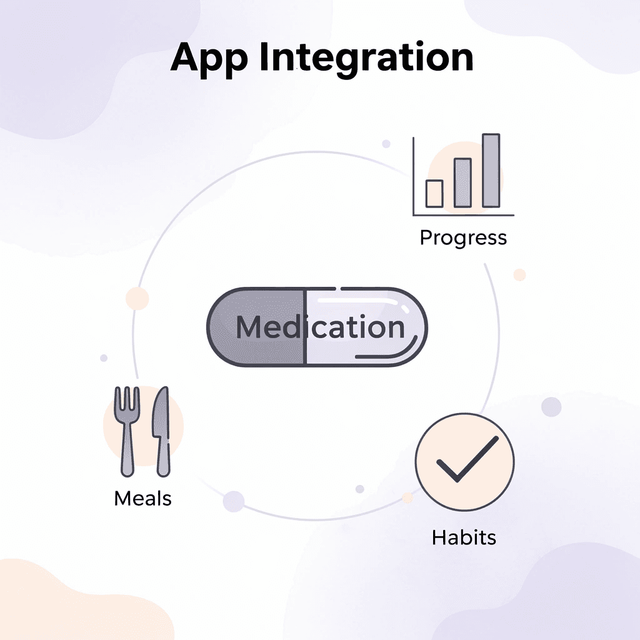
- MeAgain's GLP-1 app addresses this by integrating medication tracking, meal logging, and progress monitoring into a single interface that reveals patterns among dose timing, appetite fluctuations, and energy levels without manually cross-referencing multiple tools.
Why Standard Lifestyle Advice Breaks Down on Foundayo
You started Foundayo expecting the medication to work as a multiplier on your effort. Eat a little better, move a little more, and the weight would come off steadily. Instead, your appetite disappeared for three days, then returned strong. You lost four pounds one week, gained two the next, and the scale stopped making sense. The advice that once felt reliable—track your calories, eat more protein, stay consistent—suddenly feels like instructions for a different body.
"The medication fundamentally changes how your body responds to food and hunger cues, making standard calorie-tracking advice feel like instructions for a different person entirely."

Why does traditional weight loss advice fail with Foundayo?
Most people believe standard weight-loss advice suffices for Foundayo. The logic seems sound: the medication reduces appetite, so combining it with portion control and exercise should yield predictable results. But Foundayo does more than reduce hunger. It chemically alters how your brain receives and processes hunger signals, making traditional approaches unreliable in ways you won't notice until confusion sets in.
How does appetite suppression actually work on GLP-1 medications?
Appetite suppression on GLP-1 medications like Foundayo isn't consistent. Some days you'll forget to eat until 3 p.m. because food doesn't cross your mind. Other days, especially during dose adjustments or certain points in your cycle, hunger returns with surprising intensity. This reflects the medication interacting with fluctuating hormone levels, stress responses, and your body's adaptive mechanisms, not inconsistency in your discipline. Calorie tracking becomes less predictive as your energy expenditure and absorption rates shift during metabolism recalibration.
Why do energy levels fluctuate unpredictably during treatment?
Energy levels fluctuate with dosage changes in unpredictable ways. You might feel energized and clear-headed one week, then oddly tired the next, despite consuming the same calories. According to a 2023 analysis published in Obesity Reviews, up to 15% of patients on GLP-1 medications experience non-linear response patterns, where weight loss plateaus or reverses temporarily despite following standard protocols. Your body operates under new chemical instructions, and the traditional feedback loop between effort and outcome has been disrupted.
Why doesn't following standard advice work as expected?
You follow the advice. You eat protein at every meal, drink more water, and log your food carefully. Then the scale stops moving for two weeks, and you wonder what you're doing wrong. The truth is, you're not doing anything wrong. The system you're using was designed for hunger control that responds predictably to eating fewer calories. Foundayo changes this completely. Hunger signals are chemically altered, so eating "when you're hungry" might lead to unintentionally skipping meals, which can further slow your metabolism. Eating on a schedule might mean forcing food when your body doesn't want it, which can create confusion.
What creates the gap between expectations and results?
The gap between what you expect and what actually happens creates ongoing doubt. You blame yourself for lacking discipline, but discipline isn't the real issue. The problem is a mismatch between your tools and the biological reality that the medication has created. You don't know what to adjust because the feedback you're getting—hunger, energy, weight changes—doesn't align with the inputs you're controlling.
Related Reading
- What is Foundayo
- How Is Foundayo Different From Zepbound?
- Which Is Better: Foundayo Or Oral Wegovy?
- Foundayo vs. Orforglipron: The Main Differences
5 Most Important Lifestyle Changes on Foundayo (And Why They Work)
The lifestyle changes that work on Foundayo aren't about eating less or moving more. They're about adapting to how the medication fundamentally changes your body's feedback systems. When appetite signals become unreliable and energy levels fluctuate unpredictably, the old playbook stops working. What you need instead are adjustments that account for these chemical shifts rather than fight against them.

"When appetite signals become unreliable and energy levels fluctuate unpredictably, traditional lifestyle approaches often fail to deliver results."

1. Adjust How You Eat Protein (Not Just How Much)
The problem isn't that you're not eating enough protein—it's that appetite suppression shrinks your eating window so much that hitting regular protein targets becomes physically uncomfortable. You might eat once or twice a day instead of three or four times, requiring 25-30 grams of protein per meal when your stomach feels half its normal size. Standard advice fails because it assumes you eat meals at the same time each day. "Aim for 0.8 grams per pound of body weight" sounds reasonable until you're forcing down a chicken breast, only to have your body signal fullness after three bites.
How should you distribute protein throughout the day?
The fix isn't about eating more at once. Spread smaller amounts of protein across your natural eating pattern. If you eat twice a day, aim for 15-20 grams per meal and add a protein-rich snack when hunger appears between meals. This works because muscle preservation requires consistent amino acid availability throughout the day rather than large single servings. Smaller, distributed intake aligns with both the medication's appetite effects and your body's absorption capacity.
2. Stop Forcing Calorie Consistency
Your calorie intake will fluctuate, sometimes significantly, and that's not a sign of a lack of discipline. Some days you'll eat 1,200 calories effortlessly. Other days, especially during hormonal shifts or as your body adjusts to dosage changes, you might eat 1,800 calories and still feel hungry. The medication creates appetite cycles that don't follow a predictable daily pattern.
How should you track calories when daily targets don't work?
Standard calorie targets assume stable hunger signals. "Stay within 1,400-1,600 calories daily" works when your appetite responds predictably to restriction. On Foundayo, that advice creates unnecessary stress because you're measuring success against a metric your body no longer controls. Instead, track patterns across three to five days and look for weekly averages, not daily perfection. If your intake ranges from 1,100 to 1,700 but averages around 1,400, you're exactly where you need to be.
What makes accepting calorie variation more effective than forcing consistency?
This approach aligns with how GLP-1 medications control appetite: by altering fullness signals that respond to dose timing, stress levels, and metabolic adaptation. Maintaining strict daily consistency creates unnecessary mental effort. Accepting that things naturally change removes that friction completely.
3. Track Appetite, Not Just Food
The data you need isn't just what you ate—it's how hungry you felt before eating, how satisfied you felt after, and when cravings appeared. You might eat the same 400-calorie breakfast two days in a row, but on one day it keeps you full until 2 p.m., and on another day you're hungry again by 10 a.m. These personal experiences reveal how your body responds to the medication in ways calorie logs cannot capture.
Standard tracking fails because it only records what goes in, not the biological responses those inputs create. The fix is adding three data points to each meal: hunger level before eating (1-10 scale), satisfaction after eating, and any cravings between meals. Over two weeks, patterns emerge that help you understand what foods work with your changed appetite signals.
How does medication change your appetite signals?
This works because Foundayo changes how your brain interprets satiety hormones. What kept you full for four hours before medication might last only two hours now, or vice versa. Tracking appetite alongside food intake helps you decode these new signals and adjust meal timing and composition based on actual feedback. Platforms like MeAgain build tracking directly into their app, letting you log hunger levels and medication timing alongside meals. This integrated view makes it easier to spot patterns between dosing schedules and appetite fluctuations without juggling multiple tools.
4. Prioritize Routine Over Intensity
Energy levels on Foundayo change unpredictably. Some weeks you'll feel clear-headed and energized; other weeks, especially after dosage increases, you might feel subtly tired despite adequate calorie intake. Rigid workout plans demanding four high-intensity sessions per week become impossible to maintain.
How does standard fitness advice fail with medication?
Standard fitness advice fails because it assumes your energy remains constant. "Commit to your workout schedule no matter what" works when your body responds predictably to rest and nutrition. On this medication, that approach leads to skipped workouts and eventual abandonment of exercise. Build flexible routines around consistency, not intensity. A 20-minute daily walk beats a 60-minute HIIT session you can manage twice a month.
Why does adherence matter more than effort?
Sticking with your plan matters more than intensity when you're eating fewer calories than you burn. Your body is already under stress from losing weight, and adding tough, high-intensity workouts when your energy is unpredictable increases the likelihood you'll abandon your efforts entirely. Regular, low-intensity movement preserves muscle mass and supports metabolic health without depleting energy reserves you may lack.
5. Manage Side Effects Proactively
Nausea, digestive discomfort, and food aversions are common side effects. According to Forbes' coverage of Foundayo's FDA approval, these medications are being prescribed to address obesity in a country where 42% of Americans are obese, meaning millions will face these challenges. Waiting until nausea hits means you've already lost a day or two of normal eating, compounding the problem of appetite suppression.
Standard advice fails because it treats side effects as inevitable. Persistent nausea changes what you're willing to eat, when you eat, and how much you can handle. The fix is adjusting ahead of time: taking medication with a small amount of food if nausea appears, drinking enough water rather than catching up after you feel sick, and identifying trigger foods before they become problematic.
How do side effects create a feedback loop?
Side effects create a feedback loop: nausea reduces food intake, which lowers energy, which makes movement harder, which slows metabolism. Breaking that loop early keeps you on track without constant recovery periods. Small adjustments in timing, food choices, and hydration prevent disruptions before they compound. These changes work because they adapt to how Foundayo changes your body. You're not failing at standard approaches; you're succeeding at a different set of rules most advice hasn't addressed yet. But knowing what to change and doing it consistently are two different challenges.
Related Reading
- Will there be compounded orforglirpon (Foundayo)?
- Who Makes Foundayo?
- Foundayo Side Effects
- Is Foundayo a GLP-1
How to Apply These Lifestyle Changes Consistently for Best Results
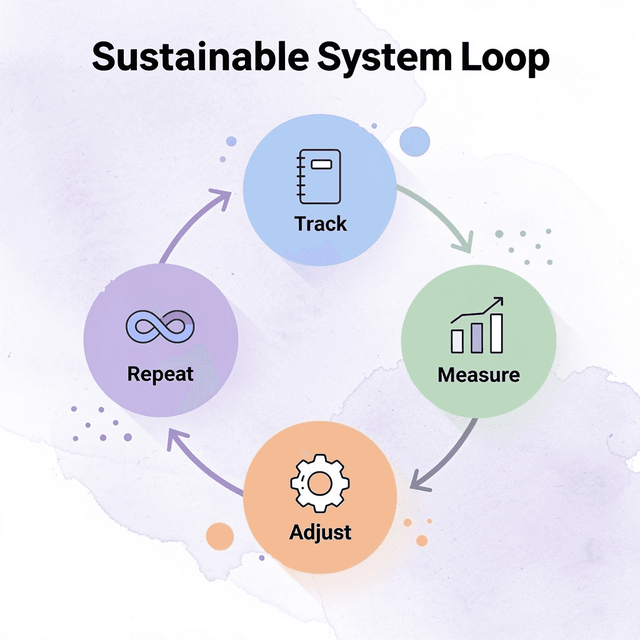
Knowing what to change and doing it consistently are two different challenges. The barrier is connecting your daily actions to how your body responds over time. Without that feedback loop, you're adjusting variables based on guesswork rather than patterns.

"The most successful lifestyle changes happen when people track their daily habits and measure weekly outcomes rather than expecting immediate results."

Why does fragmented data hide important patterns?
Most people track food in one app, medication timing in another, and weight on a bathroom scale that syncs nowhere. When progress stalls, they review their calorie log and see consistency, check their medication schedule and confirm adherence—but can't see the relationship between the two. Did the plateau start three days after increasing your dose? Did your energy drop when you skipped breakfast twice this week? The data exists in fragments, so patterns stay hidden.
How does measurement enable better adjustments?
According to Sutter Health, getting 150 minutes per week of moderate activity is a basic health goal, yet people taking GLP-1 medications often struggle to maintain simple movement routines when energy fluctuates unpredictably. The problem isn't motivation—it's that you can't change what you can't measure. If you don't know whether yesterday's tiredness stemmed from insufficient food intake, medication timing, or poor sleep, you can't make informed adjustments. Trying harder doesn't work when the underlying system has problems.
Why do you need unified tracking instead of separate apps?
The fix isn't more discipline. It's a unified view that links dose timing to shifts in appetite, food intake, and energy levels. When you log a meal, you should see how hungry you were beforehand and when you took your last dose. When you record your weight, you should see the previous week's protein average and movement patterns alongside it. That context transforms random data points into actionable insights.
How does integrated tracking turn guesswork into pattern recognition?
Platforms like MeAgain eliminate fragmentation by bringing together medication tracking, meal logging, and progress monitoring in one place. The app reveals whether appetite suppression strengthened after your dose increase, whether protein intake dropped during a plateau, and whether energy dips aligned with specific meal patterns. That visibility transforms execution from guesswork into pattern recognition.
Track behaviors, not just outcomes
Weight changes occur days or weeks after you change your behavior. Relying solely on the scale means you're reacting to outdated information. Instead, track your daily actions: eat protein at every meal, move your body for 20 minutes, manage nausea, and take your dose. These actions predict results before the scale reflects them.
How does behavior tracking create lasting change?
Logging behaviors creates a feedback loop that maintains consistency without requiring perfection. You see that you hit protein targets five out of seven days, moved six days, and managed side effects proactively. This reveals failure points before they worsen. If your appetite returns stronger on day four after your dose, adjust your meal timing or composition before it derails an entire week. But even with perfect tracking, one obstacle derails more people than anything else.
Related Reading
Turn These Lifestyle Changes Into Real Results (Without Guesswork)
You know the changes that matter: protein timing beats volume, appetite tracking reveals more than calorie logs, and flexible routines outlast rigid plans. The obstacle isn't knowledge—it's execution when your body keeps changing the rules.

"When you log your dose timing alongside appetite levels, patterns emerge: hunger drops on day three post-injection, returns stronger on day six."
That's where tracking becomes the system. When you log your dose timing alongside appetite levels, patterns emerge: hunger drops on day three post-injection, returns stronger on day six (especially if you skipped breakfast), and nausea appears consistently two hours post-injection on an empty stomach. These aren't random fluctuations—they're predictable responses to how the medication interacts with your eating patterns and stress levels. You only see them when the data lives in one place.
Feature | Benefit | Result |
|---|---|---|
Unified tracking | All data in one place | Pattern recognition |
Automatic connections | No manual cross-referencing | Clear insights |
Progress monitoring | Real-time adjustments | Optimized outcomes |
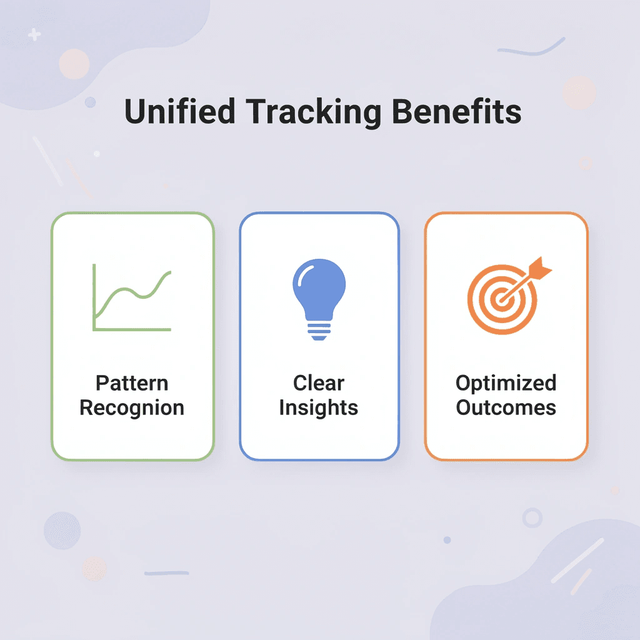
MeAgain builds that unified view by integrating medication tracking, meal logging, and progress monitoring in a single interface. Rather than manually cross-referencing your dose schedule against your food diary, the app displays connections automatically. You see that your protein intake dropped 15 grams daily during the plateau, that your movement decreased after the dose increase, and that nausea appeared consistently two hours post-injection when taken on an empty stomach. That pattern recognition reveals what to adjust next.