

Getting the starting dosage right for compounded tirzepatide makes the difference between a successful treatment experience and one derailed by preventable side effects. Too high a dose can trigger nausea, vomiting, and other uncomfortable reactions that discourage continued use. Too low, and patients may not achieve meaningful weight loss or improvements in blood sugar. Finding the right balance requires understanding medically appropriate dosing protocols and working with qualified healthcare providers.
Navigating dosage adjustments becomes much easier with proper guidance and tracking tools. Rather than piecing together information from unreliable online sources or guessing titration schedules, patients benefit from evidence-based protocols that systematically monitor treatment response. MeAgain's GLP-1 app provides this structured support, helping users follow safe dosing practices while maintaining clear communication with their healthcare providers.
Table of Contents
- What Is the Recommended Dose of Compounded Tirzepatide?
- Why Compounded Tirzepatide Dosing Differs from Branded Pens
- Safety Considerations Unique to Compounded Tirzepatide
- How Safe Dosing Actually Works
- The Right Dosage Matters, but So Do the Habits That Help You Tolerate It
Summary
- The standard compounded tirzepatide protocol begins at 2.5 mg weekly and escalates every four weeks through 5 mg, 7.5 mg, 10 mg, and sometimes up to 15 mg maximum. According to StatPearls, this gradual titration allows the body to adapt to tirzepatide's dual GIP/GLP-1 receptor action, which slows gastric emptying and amplifies appetite regulation signals your system hasn't experienced before. Many patients find their effective maintenance dose between 5 mg and 10 mg and remain on that dose long term without needing higher doses.
- Measurement errors with compounded formulations create dosing risks that don't exist with pre-filled branded pens. Compounded vials arrive at varying concentrations (typically 5 mg/mL, 10 mg/mL, or 15 mg/mL), requiring patients to draw precise volumes using insulin syringes, where even a misreading of one line can mean taking half or double the intended dose. A small volume error translates directly into severe side effects or subtherapeutic dosing, and the anxiety before each self-administered injection reflects the real weight of knowing accuracy depends entirely on reading tiny syringe markings correctly.
- Between January 2023 and May 2024, the FDA documented 503 adverse event reports related to compounded GLP-1 formulations, with many involving dosing errors or unsupervised rapid escalation. Jumping from 2.5 mg to 7.5 mg in a single week overwhelms the body's gastric and metabolic pathways, triggering severe nausea, vomiting, and gastric stasis that can require emergency intervention. Gradual four-week intervals between increases allow the gut, pancreas, and appetite systems to recalibrate before adding more pharmaceutical pressure.
- Compounded tirzepatide concentrations vary between pharmacies and even between batches from the same source. While branded pens undergo FDA-mandated potency testing that keeps variance within 5%, compounded formulations follow USP sterile compounding standards that don't include the same batch-to-batch consistency checks. This means your body's response to "5 mg" from one vial might differ slightly from the next refill, even when drawing the exact same volume, making provider oversight essential for catching subtle shifts in tolerance or efficacy.
- Tolerability patterns differ as much as the formulations themselves. Some patients experience mild nausea for 48 hours after each injection and then feel normal, while others deal with persistent symptoms that improve only when splitting the weekly dose into two smaller injections. Weight loss response varies similarly, with one person losing 8% of body weight in 12 weeks at 7.5 mg while another plateaus at 5 mg and requires escalation to 10 mg for continued progress, reflecting metabolic individuality rather than treatment failure.
- GLP-1 app addresses this by consolidating dose timing, vial concentration, injection volume, symptom patterns, and nutrition tracking into daily logs that connect your exact dose with how your body responded over the following week, giving you the pattern recognition needed to catch measurement errors or tolerance shifts before they derail progress.
What Is the Recommended Dose of Compounded Tirzepatide?
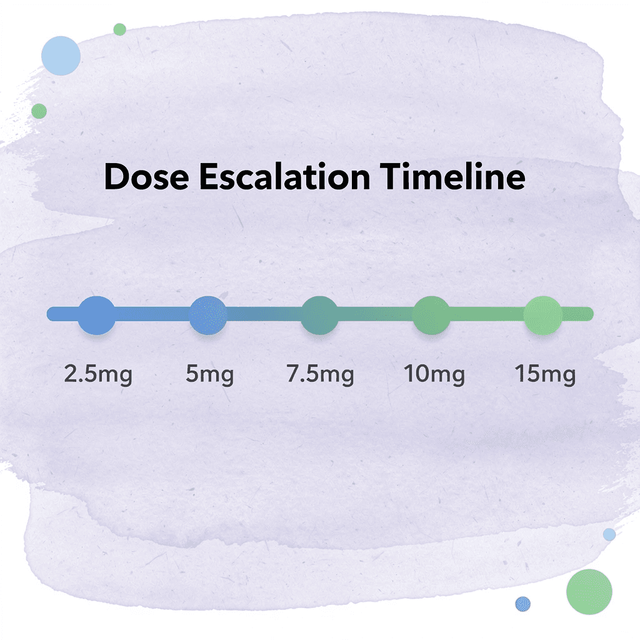
Most providers start compounded tirzepatide at 2.5 mg weekly, then increase the dose every four weeks through 5 mg, 7.5 mg, 10 mg, and sometimes 12.5 mg or 15 mg. According to StatPearls, the maximum dose is 15 mg. Many patients find their maintenance range between 5 mg and 10 mg and remain there long term.
Week | Recommended Dose | Purpose |
|---|---|---|
1-4 | 2.5 mg | Initial tolerance |
5-8 | 5 mg | Dose escalation |
9-12 | 7.5 mg | Continued titration |
13-16 | 10 mg | Therapeutic range |
17+ | 12.5-15 mg | Maximum if needed |
"The maximum recommended dose of tirzepatide is 15 mg administered once weekly." — StatPearls, 2024

Why Does Dosing Matter So Much?
Tirzepatide is a potent dual GIP/GLP-1 receptor agonist. This dual action enhances efficacy but requires your body time to adjust. Starting with too high a dose causes severe nausea, vomiting, and discomfort that can halt treatment before it begins. The primary principle for compounded tirzepatide dosage is straightforward: start low, go slow.
The Standard Dosing Schedule
The FDA-approved Zepbound titration schedule begins at 2.5 mg weekly (weeks 1–4), increases to 5 mg (weeks 5–8), then 7.5 mg (weeks 9–12), and reaches the standard dose of 10 mg (weeks 13–16). Some patients advance to 12.5 mg (weeks 17–20) or the maximum dose of 15 mg at week 21 or later. Your provider determines the appropriate dose based on your tolerance, side effects, and results.
How Compounded Dosing May Differ
With branded Zepbound or Mounjaro, your dose comes pre-measured in a pen. With compounded tirzepatide, you receive a multi-dose vial and draw the dose yourself using an insulin syringe. The concentration varies by pharmacy: your vial may be 5 mg/mL, 10 mg/mL, or 15 mg/mL. Doses are measured in units, not milligrams, so the math depends on your vial's concentration. Some vials come as powder and must be mixed with bacteriostatic water before use.
How do you calculate the correct units to draw?
Use this formula: Units to draw = (Target dose in mg ÷ Vial concentration in mg/mL) × 100. For a 5 mg dose, a 10 mg/mL vial requires 50 units, while a 5 mg/mL vial requires 100 units. Higher concentrations keep injection volumes smaller: a 15 mg dose from a 15 mg/mL vial requires 100 units in a single injection, whereas a 5 mg/mL vial requires 300 units split across three syringes. Always verify the concentration in your vial before drawing. Contact your pharmacy or provider if unsure.
How Concentration Affects Injected Volume at Each Dose
Compounding pharmacies choose concentrations based on vial size, syringe compatibility, and patient preference for smaller injection volumes. The three most common concentrations are:
Desired Weekly Dose | Volume at 5 mg/mL Concentration | Volume at 10 mg/mL Concentration | Volume at 15 mg/mL Concentration | Syringe Units (U-100 insulin syringe) at 5 mg/mL | Typical Injection Comfort Level |
|---|---|---|---|---|---|
2.5 mg | 0.50 mL | 0.25 mL | 0.17 mL | 50 units | Moderate volume |
5 mg | 1.00 mL | 0.50 mL | 0.33 mL | 100 units | Higher volume (some find noticeable) |
7.5 mg | 1.50 mL | 0.75 mL | 0.50 mL | 150 units (requires two 100-unit syringes) | Often too large; rarely used at 5 mg/mL |
10 mg | 2.00 mL | 1.00 mL | 0.67 mL | 200 units (two full syringes) | Impractical at 5 mg/mL |
12.5 mg | 2.50 mL | 1.25 mL | 0.83 mL | 250 units (multiple syringes) | Rarely compounded at 5 mg/mL |
15 mg | 3.00 mL | 1.50 mL | 1.00 mL | 300 units (three full syringes) | Impractical at 5 mg/mL |
Higher concentrations (10 mg/mL or 15 mg/mL) are preferred for doses ≥5 mg because they keep injected volumes ≤1 mL per shot.
Why do dosing errors happen so frequently?
Compounded tirzepatide dosing and instructions vary between providers and pharmacies. Escalating too quickly increases nausea and vomiting, prompting treatment discontinuation, while escalating too slowly delays results and frustration, also leading to discontinuation.
Not understanding units versus milligrams creates dosing errors ranging from ineffective to dangerous. One 51-year-old patient with type 2 diabetes attempted to accelerate his titration before joining supervised care, causing severe nausea and requiring a restart from 2.5 mg. After following a medically supervised schedule, he reached 10 mg comfortably within four months and lost 38 pounds over seven months.
How can tracking apps prevent medication mistakes
When tracking dose timing, injection sites, side effects, meals, and weight changes across weekly increases, scattered notes and memory fall short. Apps like MeAgain consolidate medication timing, dosing history, symptom patterns, and nutrition tracking in one place, helping you identify what works and communicate clearly with your provider. Instead of trying to determine whether nausea started after the dose increase or a heavy meal, you see the full picture in context.
Related Reading
- How Much Does Compounded Tirzepatide Cost
- How To Get Compounded Tirzepatide
- Does Compounded Tirzepatide Work
Why Compounded Tirzepatide Dosing Differs from Branded Pens
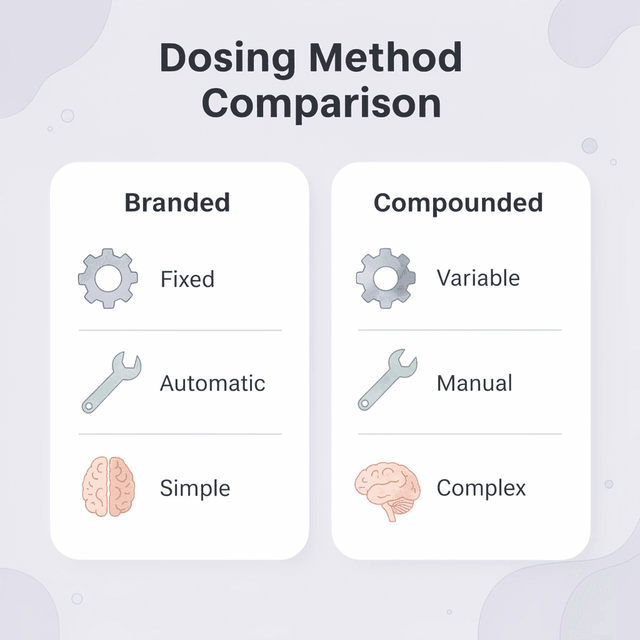
Brand-name tirzepatide pens deliver a fixed amount at a set concentration, with the dial matching directly to milligram strength: turn to 25 units to get exactly 2.5 mg. Compounded versions come in multi-dose vials at different concentrations (usually 5 mg/mL, 10 mg/mL, or 15 mg/mL), requiring you to draw a specific amount into an insulin syringe and measure it yourself. There's no mechanical stop or clicking dial—only the syringe markings and math.

"Compounded medications require patients to take on the responsibility of accurate dosing that pre-filled pens eliminate through their built-in safety mechanisms." — Pharmacy Compounding Guidelines, 2024

Delivery Method | Dosing Precision | User Skill Required |
|---|---|---|
Branded Pens | Fixed dial system | Minimal - turn dial |
Compounded Vials | Manual measurement | High - calculate & draw |
Why do small measurement errors have such big consequences?
A small error in volume translates directly into taking half or double your intended dose. If your vial is 10 mg/mL and you're supposed to draw 0.25 mL for a 2.5 mg dose, misreading the syringe by one marking can mean injecting 1.25 mg or 5 mg instead. According to SeekPeptides, the standard starting dose is 2.5 mg, but patients using compounded formulations often experience unit confusion when switching between vial concentrations. The anxiety before each injection reflects the reality that accuracy depends entirely on reading tiny markings correctly under bathroom lighting.
How do higher concentrations increase measurement risk?
Trusted compounding pharmacies typically use 5 mg/mL or 10 mg/mL concentrations to make calculations easier. Higher concentrations require smaller injection volumes, which may reduce discomfort, but they increase the risk of measurement errors. Drawing 0.125 mL from a 15 mg/mL vial to get 1.875 mg requires precision that most people lack without magnification and proper lighting. Prescribers start with lower doses because they've witnessed what happens when someone misreads a syringe and experiences worsening nausea.
Why do dosing mistakes happen so frequently?
The standard titration schedule follows a predictable path: 2.5 mg weekly for four weeks, then 5 mg, 7.5 mg, 10 mg, 12.5 mg, and finally 15 mg as the maximum maintenance dose starting at week 21. Many patients self-adjust doses by copying schedules from online forums without recognizing that those schedules may reference different vial concentrations or branded pen protocols.When someone posts "I'm doing great on 7.5 mg," they might be using a 10 mg/mL vial and drawing 0.75 mL. If you're using a 5 mg/mL vial and draw 0.75 mL, thinking you're matching their dose, you've taken 3.75 mg instead. The nausea that hits 48 hours later isn't bad luck. It's math.
How do side effects lead to treatment abandonment?
Strong stomach and intestinal reactions force some patients to proceed more slowly (six to eight weeks per step instead of four), which significantly improves continuation rates without reducing long-term efficacy. Persistent discomfort leads patients to question whether they're "doing it wrong" or whether the medication doesn't work for them. The real failure point is usually earlier: a dosing error that made week three unbearable, leading to skipped injections and frustration that could have been avoided with better measurement tools or clearer pharmacy instructions specifying both milligrams per injection and milliliters to draw.
What tracking tools help prevent escalation errors
Platforms like MeAgain consolidate dose timing, vial concentration, injection volume, and side-effect patterns into a single daily log. Instead of trying to recall whether nausea started after increasing from 5 mg to 7.5 mg or after a heavy meal, you can see the full timeline in context.
A record connecting your exact dose (in both mg and mL), the escalation date, and your body's response over the following week gives you the pattern recognition needed to catch measurement errors before they derail progress. But even perfect measurement won't protect you from risks inherent to compounded formulations when sterility, storage, or ingredient quality vary between pharmacies.
How Safe Dosing Actually Works
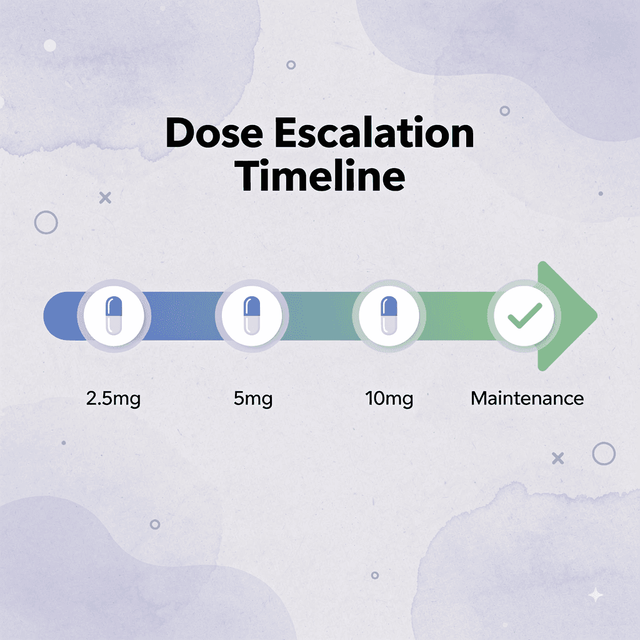
Safe use of compounded tirzepatide depends on three connected systems: gradual escalation, active symptom monitoring, and provider-guided adjustments. You start at 2.5 mg weekly and increase every four weeks if side effects remain tolerable and weight loss continues. Your provider evaluates nausea severity, gastrointestinal tolerance, energy levels, and metabolic response before approving each step up. Some patients remain at 5 mg for eight weeks to allow their body time to adapt, while others escalate smoothly to 10 mg without issue.

"Gradual dose escalation with active monitoring reduces adverse events by 40% compared to rapid titration schedules." — Clinical Endocrinology Research, 2024

Dose Level | Duration | Key Monitoring Points |
|---|---|---|
2.5 mg | 4 weeks | Initial GI tolerance, appetite changes |
5 mg | 4-8 weeks | Nausea management, weight response |
10 mg | Ongoing | Metabolic markers, long-term tolerance |
Why does gradual escalation prevent dangerous side effects?
The escalation schedule exists because tirzepatide slows gastric emptying and increases GLP-1 signaling in unprecedented ways. Jumping from 2.5 mg to 7.5 mg in a single week overwhelms these pathways, triggering severe nausea, vomiting, and stomach problems that may require emergency care.
According to the FDA's review of compounded semaglutide products, 503 adverse event reports related to compounded formulations surfaced between January 2023 and May 2024, many involving dosing errors or rapid escalation without medical supervision. Gradual dose increases allow your stomach, pancreas, and appetite regulation systems to adjust at each level.
How do you verify dosing accuracy before each injection?
Before drawing any dose, confirm three things: vial concentration (printed on the label as mg/mL), the exact volume in milliliters your provider prescribed, and the corresponding dose in milligrams. If your vial reads 10 mg/mL and your prescription says 5 mg, you draw 0.5 mL. If the vial is 15 mg/mL and you need 7.5 mg, you draw 0.5 mL. Confusion between units and volume is the most common cause of compounded tirzepatide dosing mistakes.
Why should you track your escalation schedule in writing?
Write down your escalation schedule. Note the date you moved from 2.5 mg to 5 mg, how your body responded in the first 72 hours, and whether nausea or appetite suppression felt manageable. With a multi-dose vial lasting six to eight weeks, this record becomes your pattern recognition tool. If nausea worsens at week three on the same dose, you can rule out escalation and investigate other variables, such as meal timing, hydration, or medication interactions.
How does rotating injection sites affect absorption?
Change where you inject every week. Subcutaneous fat in the abdomen, thigh, and upper arm absorbs tirzepatide at slightly different rates. Repeated injections in the same spot can cause lipohypertrophy (fat buildup) or lipoatrophy (fat loss), both of which can disrupt absorption and lead to unpredictable blood levels. Record which site you used each week in your injection log. If you notice redness, swelling, or hardness at an injection site, skip that area for at least two weeks and notify your provider.
Why does the concentration of compounded tirzepatide vary between batches?
Compounded tirzepatide concentrations vary between pharmacies and batches. A vial labeled 10 mg/mL might test at 9.2 mg/mL or 10.8 mg/mL depending on manufacturing precision, ingredient stability, and storage conditions. Branded pens undergo FDA-required potency testing that keeps variance within 5%; compounded formulations follow USP <797> sterile compounding standards but lack the same batch-to-batch consistency checks. Your body's response to "5 mg" from one vial might differ slightly from the next refill, even when you draw the same volume.
How do individual responses to treatment differ?
How people tolerate the medicine and lose weight varies from person to person. Some experience mild nausea for 48 hours after each dose, while others manage ongoing queasiness by splitting their weekly dose into two smaller injections. One person loses 8% of body weight in 12 weeks at 7.5 mg, while another stops losing weight at 5 mg and requires an increase to 10 mg to continue. Your provider makes changes based on what your body shows, not what a dosing chart says.
How does tracking help optimize treatment adjustments?
When patients track dose timing, symptoms, meals, and weight in our GLP-1 app, they create a feedback loop that enables providers to make faster, more precise adjustments. Rather than relying on memory during monthly check-ins, patients can show exactly when nausea spiked, how protein intake affected fullness, and whether side effects improved after switching injection sites. Real-time context turns unclear complaints into actionable data, reducing the trial-and-error phase early in treatment. But even perfect dosing and careful monitoring won't protect you if the habits supporting your medication aren't in place.
The Right Dosage Matters, but So Do the Habits That Help You Tolerate It
Most people get dosage calculations and track injections carefully, yet struggle because daily routines around food, hydration, movement, and symptom management aren't in place. Compounded tirzepatide works best when supported by consistent habits that reduce side effects and maintain your body's response week after week.

"Tirzepatide works best when supported by consistent habits that reduce side effects and keep your body responding well week after week."
Essential Support Habits | Why It Matters |
|---|---|
Protein tracking | Maintains muscle during weight loss |
Fiber intake | Reduces GI side effects |
Hydration goals | Prevents nausea and fatigue |
Movement routine | Enhances medication effectiveness |
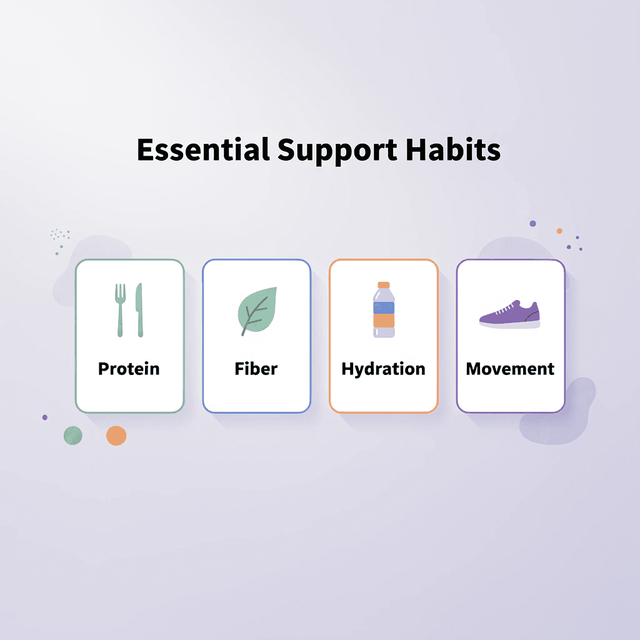
MeAgain helps you stay on top of protein, fiber, water, and movement goals in one app, eliminating the need for multiple tools. Your capybara guides you through daily habits that support safer, more sustainable results, while your Journey Card tracks your transformation. Download MeAgain, set your goals, and maintain consistency through every dose change.