
Tirzepatide has shown remarkable results for weight loss and diabetes management, but rising medication costs have pushed many people toward compounded alternatives. This raises an important question: Is compounded tirzepatide safe compared to FDA-approved Mounjaro? Understanding the differences in quality standards, regulatory oversight, and potential health risks becomes essential before committing to a treatment that could affect your body for months or years.
Compounded tirzepatide differs significantly from brand-name Mounjaro in manufacturing standards and safety protocols. The choice between these options involves weighing factors such as side-effect profiles, long-term health implications, and cost considerations. Tools like MeAgain's GLP-1 app can support your treatment journey by helping you track progress, manage side effects, and stay informed about your medication regimen.
Table of Contents
- Is Compounded Tirzepatide Safe to Use?
- 8 Key Things to Know About Tirzepatide Knock-Offs
- How to Get Compounded Tirzepatide Safely
- Stay Consistent and Support Your Results Safely
Summary
- Compounded tirzepatide can be safe when sourced from licensed, state-regulated pharmacies with proper oversight, but it fundamentally differs from FDA-approved medications because it bypasses the years of clinical trials, manufacturing inspections, and quality verification required for drugs like Mounjaro and Zepbound. The FDA has documented compounded products containing bacteria, high impurity levels, incorrect chemical structures, and, in one case, nothing more than sugar alcohol, representing documented failures rather than hypothetical risks.
- The FDA officially ended the tirzepatide shortage designation in October 2024 and upheld that decision after reevaluation in December 2024, which means compounding pharmacies lost their primary legal justification to routinely compound tirzepatide, except in narrow medical circumstances such as documented allergies to inactive ingredients. Any pharmacy still advertising routine compounded tirzepatide today operates in a regulatory gray zone at best, since cost alone doesn't qualify as a valid medical need for compounding when FDA-approved options are available.
- Eli Lilly publicly states it doesn't supply bulk tirzepatide to any facilities it doesn't own, yet compounding pharmacies continue producing the medication, raising unavoidable questions about supply chain transparency and quality control. The FDA established import controls through alert 66-80 to block low-quality active pharmaceutical ingredients, but enforcement gaps remain, and when you don't know the source of raw material, you can't be certain what you're injecting into your body.
- Legitimate sterile compounding requires specific certifications that not all pharmacies possess, with voluntary accreditation from organizations such as the Pharmacy Compounding Accreditation Board (PCAB), the National Association of Boards of Pharmacy (NABP), and The Joint Commission providing additional assurance beyond basic state licensing. State requirements vary dramatically, and some pharmacies that compound pills or creams lack the setup, training, or certification to safely compound sterile injectables, which could introduce bacteria or fungi and cause infections.
- The FDA has received multiple reports of adverse events requiring hospitalization due to patients measuring incorrect doses or healthcare providers miscalculating them, with some patients prescribed doses beyond FDA-approved recommendations and experiencing severe nausea, vomiting, diarrhea, abdominal pain, and constipation. When delivery systems aren't standardized and dosing instructions aren't clear, mistakes become significantly more likely regardless of the medication's source quality.
- GLP-1 app addresses this by centralizing medication timing, dosing, side effects, food intake, protein and fiber consumption, hydration, and weight changes in one daily interface, reducing the mental load of managing treatment across scattered notes or disconnected apps.
Is Compounded Tirzepatide Safe to Use?
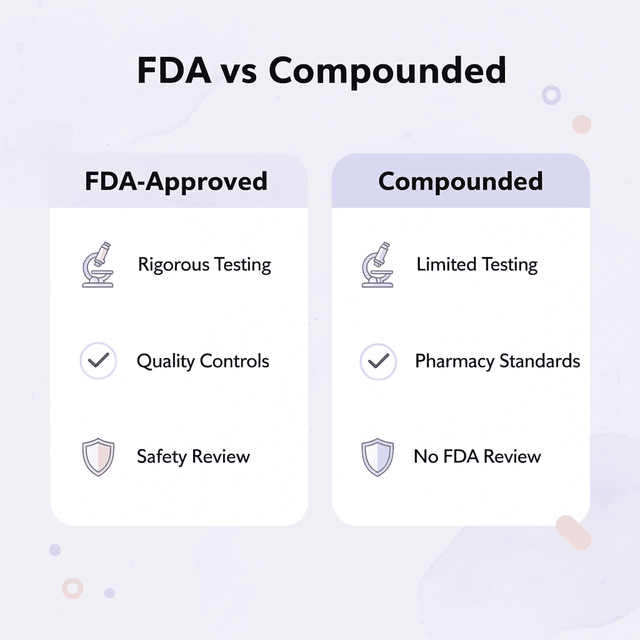
Compounded tirzepatide can be safe when obtained from a licensed, state-regulated pharmacy with a valid prescription from a qualified healthcare provider. However, it differs from FDA-approved Mounjaro or Zepbound. Compounded medications bypass FDA review for safety, effectiveness, and quality. Safety depends entirely on the pharmacy's credentials, manufacturing standards, prescriber qualifications, and dosing protocols.
"Compounded medications don't go through FDA review for safety, effectiveness, or quality before patients get them." — FDA Drug Development Guidelines
Where do compounding pharmacies source their tirzepatide?
Eli Lilly is the only legal supplier of FDA-approved tirzepatide medicines and does not provide the active ingredient to compounding pharmacies, med-spas, wellness centers, or online retailers. This raises an important question: where are compounders sourcing their tirzepatide?
The FDA has established import controls through alert 66-80 to prevent low-quality active pharmaceutical ingredients from entering the U.S. supply chain, but enforcement gaps remain. Without knowing the source of raw materials, you cannot be certain what you're injecting.
What quality issues have been documented with compounded tirzepatide?
The FDA has found compounded products containing bacteria, high levels of impurities, incorrect chemical structures, and, in one case, nothing but sugar alcohol. Some arrived warm or without proper refrigeration, compromising their sterility.
Others had fake labels listing pharmacies that either did not exist or never made the product. One adverse event report linked to fake compounded tirzepatide included redness, swelling, pain, and a lump at the injection site. These are documented failures, not hypothetical risks.
What dosing errors occur with compounded tirzepatide?
The FDA has received multiple adverse event reports requiring hospitalization. These reports concern compounded semaglutide and tirzepatide, with many cases stemming from dosing errors by patients measuring incorrect doses or healthcare professionals miscalculating prescriptions. This has resulted in serious symptoms, including nausea, vomiting, diarrhea, abdominal pain, and constipation, severe enough to require medical attention.
Compounded versions often come in vials that require manual measurement, unlike the pre-filled, dose-controlled pens used for FDA-approved medications. This introduces human error at a critical moment.
How do storage and shipping issues affect compounded tirzepatide?
Storage and shipping present another failure point. Injectable GLP-1 medications require refrigeration, yet the FDA has received complaints about compounded products arriving warm or with inadequate ice packs, which can damage the medication and reduce its effectiveness before patients administer the first dose.
If your medication arrives warm, you cannot verify whether it remains safe or effective. The FDA's guidance is clear: do not use any injectable GLP-1 drug that arrives without proper refrigeration.
What labeling fraud exists with compounded tirzepatide?
The FDA is aware of compounded semaglutide and tirzepatide products with false labeling, including products bearing the names of non-existent compounding pharmacies or licensed pharmacies that never manufactured those specific products. One adverse event report connected with fraudulent compounded tirzepatide included redness, site swelling, pain, and a red lump at the injection site.
When the product label is fraudulent, you're potentially introducing something without quality oversight.
When is compounding medically justified?
Compounding pharmacies serve a purpose when patients need customized dosage forms or when FDA-approved drugs are unavailable due to shortages. According to Novanex quality assurance standards, 503A-compliant pharmacies follow strict rules for sterility, testing, and documentation.
However, tirzepatide is no longer in shortage. The FDA's position is clear: compounded drugs should only be used when medical needs cannot be met by an FDA-approved option. If Mounjaro and Zepbound are available, the regulatory and clinical case for compounded tirzepatide weakens considerably.
What are the risks of choosing compounded versions for cost savings?
Many people turn to compounded versions because of cost, which makes sense when brand-name medications cost thousands of dollars. However, lower prices don't eliminate the risks of unverified sourcing, inconsistent potency, or dosing errors.
The FDA has received multiple reports of adverse events requiring hospitalization due to incorrect dose measurement or miscalculation by healthcare providers. Some patients were prescribed doses exceeding FDA-approved label recommendations, experiencing severe nausea, vomiting, diarrhea, abdominal pain, and constipation. Non-standardized delivery systems and unclear dosing instructions increase the likelihood of errors.
How can patients ensure safer compounding experiences?
Platforms like MeAgain's GLP-1 app help users track medication timing, dosing, side effects, and progress in one place. The app provides licensed provider oversight, clear pricing, and personalized support—accountability often missing from unlicensed sellers or wellness centers. For those considering compounded options, MeAgain's clinical care subscription delivers comprehensive care.
What verification steps should you take before using compounded tirzepatide?
Make sure your prescription comes from a licensed healthcare provider and the pharmacy is state-licensed and follows 503A or 503B compounding standards. Check the label for spelling errors, incorrect addresses, or other signs of fraud. Don't use injectable medication that arrives warm or without adequate refrigeration.
Ask your provider how they determined the appropriate dose and titration schedule, and confirm that it aligns with FDA-approved protocols. This lowers the chance of receiving a contaminated, mislabeled, or ineffective product.
How does compounded tirzepatide differ from the brand version?
But here's what most people don't realize until it's too late: even legitimate compounded tirzepatide differs from the Lilly-manufactured version.
Related Reading
- How Much Does Compounded Tirzepatide Cost
- How To Get Compounded Tirzepatide
- Does Compounded Tirzepatide Work
- Compounded Tirzepatide Dosage
8 Key Things to Know About Tirzepatide Knock-Offs
The differences between real compounded tirzepatide and dangerous fake versions are significant. Real versions are made under pharmacy oversight; fake versions may be mixed in unregulated facilities with no safety checks. Knowing the difference protects you from serious health risks.

"Fake medications represent one of the fastest-growing threats in healthcare, with counterfeit weight-loss drugs becoming increasingly common in unregulated markets." — FDA Safety Communications, 2024

1. The FDA determined that the Mounjaro and Zepbound shortages are over
In October 2024, the FDA officially ended the tirzepatide shortage designation that had allowed widespread compounding since December 2022. Compounding pharmacies lost their legal justification to routinely produce tirzepatide, except in narrow medical circumstances such as documented allergies to inactive ingredients in FDA-approved versions.
How did the FDA respond to pushback on their decision?
The decision faced immediate pushback from advocates who argued that patients still couldn't access the medication. The FDA reevaluated and, in December 2024, upheld its original determination. Grace periods for compounding pharmacies to wind down production have now expired.
What is the current legal status of compounded tirzepatide?
Any pharmacy still advertising routine compounded tirzepatide today operates in a regulatory grey zone at best, or outright violation at worst. Cost alone does not qualify as a valid medical need for compounding when Mounjaro and Zepbound are available.
2. Compounded tirzepatide is not the same as Mounjaro or Zepbound
FDA approval requires years of clinical trials, manufacturing inspections, and quality checks. Mounjaro and Zepbound underwent that process. Compounded tirzepatide did not—compounded medications bypass FDA approval entirely. They are custom-made products combining pharmaceutical-grade active ingredients with varying inactive ingredients, following recipes that differ between pharmacies.
How do the formulations and delivery methods compare?
Mounjaro and Zepbound list every ingredient with standard formulas, delivered in single-use pens with clear storage requirements. Compounded versions typically come as multi-dose vials with ingredient profiles that differ between pharmacies. Some compounders produce oral tablets or sublingual forms, despite the absence of clinical studies demonstrating the safety, effectiveness, or absorption of tirzepatide taken by any route other than injection.
Storage instructions vary by pharmacy depending on inactive ingredients used. When you switch from compounded to FDA-approved tirzepatide, you're changing the medication itself, its delivery method, storage requirements, and the certainty you have about its contents.
3. If someone is selling tirzepatide without a prescription, it's not legitimate
Tirzepatide is prescription-only. This includes Mounjaro, Zepbound, and any legitimately compounded version. A licensed healthcare professional must evaluate you, determine that the medication is appropriate, and send a prescription to a licensed pharmacy. No prescription means no legal tirzepatide.
What are the risks of research-grade tirzepatide?
Be careful about "research-grade" tirzepatide sold online without prescriptions. Sellers market these as a legal workaround, but the FDA neither approves nor regulates them. They're labeled "not for human use" because they're manufactured for laboratory research, not medical treatment. Purity, sterility, and actual tirzepatide content remain unknown.
Why do people choose unregulated tirzepatide despite the dangers?
The appeal is clear: lower prices, no doctor visits, and no insurance complications. The risk is consuming an unverified substance with no recourse if something goes wrong.
4. Pharmacies may be using unauthorized forms of tirzepatide
Compounding requires sourcing active ingredients from FDA-registered suppliers, which ensures the tirzepatide is authentic rather than a cheaper counterfeit or contaminated batch. Eli Lilly, which manufactures Mounjaro and Zepbound, has stated it does not supply bulk tirzepatide to any facilities it doesn't own.
The FDA lists several registered bulk suppliers on its website, though some pharmacies source tirzepatide from these suppliers while others do not.
Why is supply chain transparency important for compounded tirzepatide?
According to Sleep Review Magazine's analysis of compounded tirzepatide risks, the supply chain for compounded versions lacks transparency. When pharmacies source supplies from unregistered suppliers, quality control disappears: you cannot verify what you're receiving, nor can your prescriber.
Ask your pharmacy directly where their bulk tirzepatide comes from. If they can't or won't answer, that silence is telling.
5. Only certain pharmacies can compound injectable medications
Making injectable medications requires clean, sterile environments. Bacteria, fungi, or other contaminants introduced during mixing can cause infections ranging from painful injection site reactions to life-threatening systemic illness. Not every pharmacy that compounds pills or creams has the setup, training, or certification to safely compound sterile injectables.
How do regulations vary between states and facilities?
State Boards of Pharmacy control compounding, but rules vary significantly by state. Some states require special licenses or certifications for sterile compounding, while others have minimal oversight. Outsourcing facilities registered with the FDA are subject to stricter inspections and standards, but most compounding pharmacies follow only state rules.
What accreditations should you look for in compounding pharmacies?
Voluntary accreditation provides extra confidence. Organizations like the Pharmacy Compounding Accreditation Board (PCAB), the National Association of Boards of Pharmacy (NABP), and The Joint Commission certify pharmacies meeting strict sterile compounding standards. You can verify a pharmacy's accreditation through PCAB's searchable directory (filterable by location and sterile compounding accreditation), NABP's online verification form, or The Joint Commission's Medical Compounding Certification verification.
Ask your prescriber for recommendations on local compounding pharmacies that meet these standards. A pharmacy willing to share its accreditations and certifications demonstrates commitment to sterility.
6. Counterfeit tirzepatide is out there, and it poses safety risks
Fake medications differ fundamentally from compounded medications. Legitimate compounding pharmacies follow pharmacy regulations and employ trained pharmacists, though the FDA has not approved them. Counterfeiters operate without oversight, training, or accountability, selling fake products designed to appear authentic.
What dangers do counterfeit tirzepatide products pose?
The dangers are serious. Fake tirzepatide might contain excessive medicine, causing severe side effects, insufficient medicine, providing no benefit, or no active ingredient at all—just salt water or sugar. Some counterfeit products contain entirely different medicines, such as insulin, which causes dangerous drops in blood sugar.
Bacteria or fungi in injections can cause infections. Old medicines lose their effectiveness or produce harmful substances. Broken injection devices can cause physical injury.
How can you verify the authenticity of Mounjaro or Zepbound?
If using actual Mounjaro or Zepbound, verification tools exist. Scan the barcode with Lilly's online barcode-scanning tool to confirm authenticity. Check the box for brand name, concentration (in mg/mL), and National Drug Code (NDC) number.
Verify the NDC through the FDA's NDC directory. Labels on pens or vials should match, though the NDC may differ slightly between packaging and device. Mounjaro and Zepbound pens feature a purple injector button that doesn't extend and requires no dose dialing or needle attachment before use.
When doubt arises, call Lilly directly at 1-800-545-5979 to verify authenticity. That five-minute call is far better than injecting something unverified into your body.
7. Cheaper doesn't mean better
Compounded tirzepatide costs less than Mounjaro or Zepbound, sometimes significantly. Lower costs often reflect lower-quality inactive ingredients, less rigorous quality control, or shortcuts in sterile processing. The savings may come from suppliers whose registered facilities are avoided.
Price doesn't matter if the medication doesn't work, causes infections, or has the wrong dose. The FDA is clear: cost doesn't justify compounding when FDA-approved alternatives are available. Insurance companies and pharmacy benefit managers agree. If your insurance covers Mounjaro or Zepbound, they won't approve compounded tirzepatide simply because it's cheaper.
What lower-cost FDA-approved alternatives are available?
Lower-cost FDA-approved options exist. Manufacturer copay cards for Mounjaro and Zepbound can significantly reduce out-of-pocket costs for people with commercial insurance. LillyDirect offers single-dose Zepbound vials and pens at set monthly prices: $299 for 2.5 mg, $399 for 5 mg, and $449 for higher doses. GoodRx offers additional savings, with access to Zepbound KwikPen starting at $299 per month. Your prescriber can help identify which options fit your budget and medical needs.
Saving money by accepting unknown risks doesn't.
8. Tracking what actually happens matters more than the source
Whether you use FDA-approved or compounded tirzepatide, the medication is only part of the answer. GLP-1 medications work best when you track how your body responds: dose timing, side effects, food intake, protein and fiber consumption, hydration, weight changes, and energy patterns.
Most people spread this information across multiple apps and notes, making it nearly impossible to spot patterns or fix problems.
How can centralized tracking improve your results?
Platforms like MeAgain consolidate tracking into a single daily interface. For people making medication decisions, especially about compounded versus FDA-approved options, our clinical care subscription provides licensed oversight, transparent pricing, and personalized support.
Your medication timing, nutrition, symptoms, and progress belong together in one place, not split across disconnected systems. Consistent tracking of small changes reveals what's working and what needs adjustment, regardless of which tirzepatide formulation you use.
Related Reading
- Is Compounded Tirzepatide Going Away
- How Long Does Compounded Tirzepatide Last In Fridge
- Is Compounded Tirzepatide Fda Approved

Safety Component | What to Look For | Red Flags |
|---|---|---|
Provider Evaluation | Licensed physician, comprehensive health screening | No medical consultation required |
Compounding Pharmacy | FDA-registered, sterile facilities, quality testing | No pharmacy credentials listed |
Follow-up Care | Regular monitoring, side effect tracking | One-time prescription only |

Start with a Licensed Provider Who Actually Evaluates You
The first step isn't finding the lowest price online. It's working with a healthcare provider who treats this like medicine, not a transaction. That requires comprehensive lab work before your first prescription: metabolic panels, thyroid function tests, and sometimes lipid profiles, depending on your history. Providers who skip this step aren't protecting you; they're gambling with your endocrine system. Legitimate telehealth platforms connect you with board-certified physicians who review your full medical history, assess contraindications such as a family history of thyroid cancer or active gallbladder disease, and determine whether tirzepatide is appropriate for your situation.
Verify the Pharmacy's Credentials and Standards
Once you have a prescription, look for accreditation from the Pharmacy Compounding Accreditation Board, which enforces clean compounding standards that most state boards don't require. Verify the pharmacy's state license through your State Board of Pharmacy's public database, checking for disciplinary actions, contamination reports, and compliance violations. When your medication arrives, inspect the labeling: batch numbers should be present, the pharmacy address should match their license, and ingredient lists should specify tirzepatide without unclear terms like "peptide blend" or unrecognized salt forms like tirzepatide sodium. If the vial appears cloudy, contains particulates, or the label has spelling errors, don't inject it. Contact the pharmacy directly using a phone number you find independently, not one printed on the packaging.
Understand What Ongoing Monitoring Actually Looks Like
Prescription oversight doesn't end when your first vial ships. Safe use requires regular check-ins: tracking symptoms like nausea, vomiting, or abdominal pain that might signal pancreatitis, adjusting dosage based on tolerance and results, and obtaining lab work every few months to monitor kidney function and blood sugar levels.
Providers who disappear after the first meeting aren't offering care; they're offering access. The most effective clinical care model combines medication access with structured follow-up, ensuring you're not left guessing whether your side effects are normal or dangerous, whether your dose needs adjustment, or whether your nutrition supports your results.
How can centralized tracking help you understand patterns and progress?
When people manage medication timing, symptom patterns, nutrition goals, and progress tracking across multiple apps or paper logs, context gets lost. Platforms like MeAgain consolidate doses, food intake, protein and fiber targets, hydration, side effects, and weight changes into a single daily interface. This continuity matters when determining whether nausea connects to dose timing, meal composition, or something else entirely.
But tracking alone doesn't replace medical judgment. The real question is whether you're building habits that support long-term results or chasing short-term weight loss without the infrastructure to sustain it.
Stay Consistent and Support Your Results Safely
The medication only works if you use it as directed. Whether you're using compounded tirzepatide or an FDA-approved brand, muscle loss, dehydration, fatigue, and severe constipation stem from failing to meet your protein, fiber, hydration, and movement goals during rapid weight loss—not from the drug itself, but from neglecting your body's needs through the process.

"Proper adherence to protein, fiber, and hydration goals during GLP-1 therapy significantly reduces the risk of muscle loss and gastrointestinal side effects." — Clinical Weight Management Guidelines, 2024
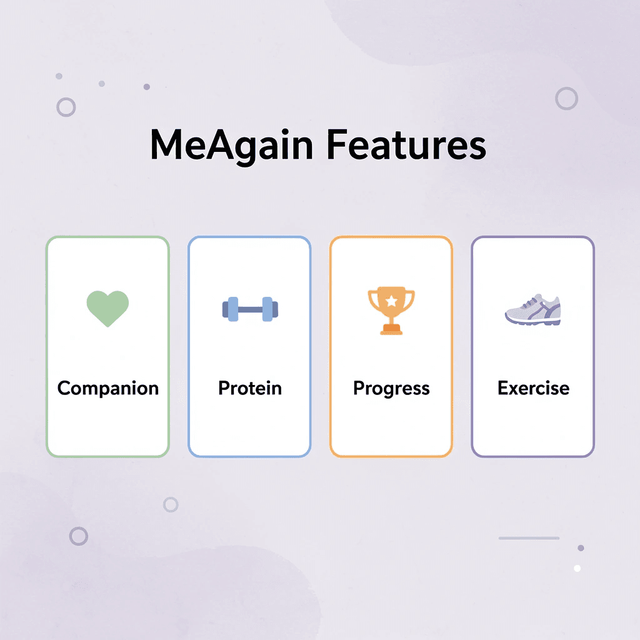
MeAgain turns the daily habits that support healthy GLP-1 weight loss into a game with an adorable capybara companion that tracks your protein, fiber, water, and exercise goals. You can document your transformation with Journey Cards to track progress and celebrate milestones.
Feature | Benefit |
|---|---|
Capybara Companion | Makes habit tracking engaging and fun |
Protein/Fiber Goals | Prevents muscle loss and constipation |
Journey Cards | Documents progress and milestones |
Exercise Tracking | Maintains muscle mass during weight loss |
Download MeAgain to stay consistent, reduce common GLP-1 side effect risks, and make healthy habits easier to maintain.