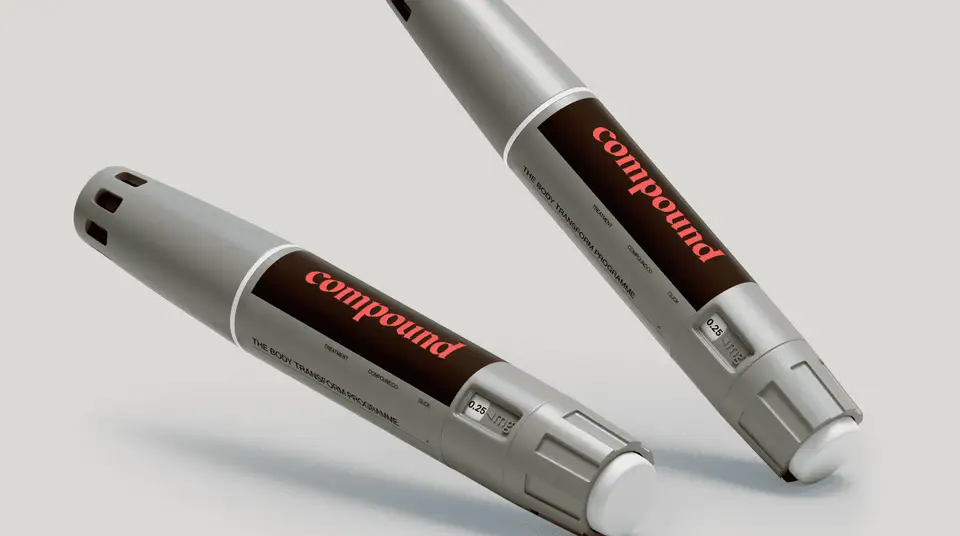

Tirzepatide appears in two distinct forms for weight loss: the FDA-approved brand name Mounjaro and versions from compounding pharmacies. The choice between compounded tirzepatide and Mounjaro involves more than price considerations. Quality standards, safety profiles, effectiveness, and potential health risks all factor into this decision. Understanding these differences helps determine whether cost savings justify any trade-offs in results or safety.
Clear information on dosing, side effects, and treatment outcomes enables better decision-making for weight-loss journeys. Tracking progress, comparing costs from verified sources, and understanding expected results based on medication choice provides valuable insight. Whether choosing brand-name medication or compounded alternatives, having the right tools makes a significant difference in effectively managing treatment with a GLP-1 app.
Table of Contents
- Is Compounded Tirzepatide as Effective as Mounjaro?
- Why Does Compounded Tirzepatide Exist in the First Place?
- Compounded Tirzepatide vs Mounjaro: Differences in Results, Safety, and When to Choose Each
- No Matter Which You Choose, This Is What Actually Determines Your Results
Summary
- Mounjaro's FDA approval rests on phase 3 trials with thousands of participants showing 15% average weight loss over 72 weeks with standardized dosing from 2.5 mg to 15 mg. Compounded tirzepatide lacks controlled clinical trials, which means no validated protocols confirm whether different pharmacy formulations produce consistent blood concentrations or weight loss velocity at the same labeled dose.
- Compounded tirzepatide emerged because demand for GLP-1 medications exceeded Eli Lilly's manufacturing capacity, triggering FDA drug shortage declarations that allowed compounding pharmacies to obtain legal authority to produce custom versions. Approximately 83% of the compounded GLP-1 market developed through non-traditional channels when patients couldn't access brand-name prescriptions, but once the shortage resolved, the FDA required compounders to stop tirzepatide production by March 31, 2025.
- Eli Lilly does not supply the tirzepatide active pharmaceutical ingredient to compounding pharmacies, forcing them to source from third-party international manufacturers operating outside direct FDA oversight. The FDA established import alert 66-80 to block GLP-1 APIs with quality concerns, but compounded products bypass the safety, efficacy, and batch consistency testing required for branded drugs, regardless of chemical similarity.
- Insurance denials for weight-loss prescriptions push brand-name Mounjaro costs above $1,000 monthly without coverage, while compounded tirzepatide typically costs $200 to $400 per month through cash-pay arrangements. The price gap drives selection based on affordability rather than clinical equivalence, making cost the deciding factor when patients meet criteria but lack coverage.
- The FDA received over 200 adverse event reports from compounded tirzepatide users as of November 2024, including severe abdominal pain, prolonged vomiting, and dehydration requiring medical intervention. Some cases involved dosing errors due to incorrect measurements or contamination when sterile preparation protocols weren't followed, risks that don't exist with Mounjaro's single-use prefilled pens.
- Formulation variability among compounding pharmacies leads to inconsistent patient experiences in nausea onset, appetite suppression intensity, and side-effect management, even at identical labeled doses. MeAgain's GLP-1 app addresses this by tracking doses, meals, symptoms, and weight changes in one place so users and clinicians can identify response patterns that suggest formulation differences requiring treatment adjustments.
Is Compounded Tirzepatide as Effective as Mounjaro?
Most people assume compounded tirzepatide and Mounjaro are identical if the active ingredient matches. This notion spread during the 2022–2024 GLP-1 shortage, when compounding pharmacies legally produced tirzepatide alternatives. Since compounded versions cost $200–$400 per month versus $1,000+ for Mounjaro, people viewed it as a "brand" versus "cheaper copy."

"During the 2022-2024 shortage period, compounded tirzepatide became a $200-400 alternative to $1,000+ brand-name options, but effectiveness depends on more than just the active ingredient." — Healthcare Cost Analysis, 2024

Why do clinical outcomes differ between versions?
But this assumption breaks down in real-world use. Clinical outcomes depend on dose accuracy, sterility standards, and manufacturing consistency, not the active ingredient alone. FDA-approved Mounjaro is produced under tightly controlled conditions using validated dosing systems, with large-scale clinical trial data showing an average weight loss of ~15% over 72 weeks.
What are the risks of compounded tirzepatide production?
Compounded tirzepatide works differently. It's made in smaller batches without standard clinical trials confirming it works the same as the approved version. Differences in ingredient sourcing, preparation, and dosing can alter how the body absorbs them, side effects, and weight-loss results. By late 2024, the FDA had received over 200 adverse event reports associated with compounded tirzepatide, including dosing errors and contamination.
How should you evaluate these treatment options?
What appears to be two versions of the same medication represents two different systems of production, regulation, and clinical validation. The real question isn't whether compounded tirzepatide works, but whether its tradeoffs in consistency, safety, and predictability are acceptable for long-term use.
How does FDA-approved Mounjaro compare in clinical trials?
Mounjaro's FDA approval is based on phase 3 trials involving thousands of participants. Research from TrimRx shows patients using FDA-approved tirzepatide lost an average of 15% of their weight over 72 weeks, with doses ranging from 2.5 mg to 15 mg administered weekly. These trials tracked heart health markers, blood sugar control, and side effects across dose levels, giving doctors confidence in what to expect at the 10 mg maintenance dose.
What research exists on the effectiveness of compounded tirzepatide?
Compounded tirzepatide works differently from this system. No controlled trials demonstrate efficacy across formulations or patients, and no standard rules ensure that a 5 mg dose from one pharmacy produces the same blood level as another's. Patients report different experiences with nausea onset, appetite suppression, and weight loss rate despite taking the same labeled dose, indicating a lack of manufacturing standards to ensure batch consistency.
Why "same ingredient" doesn't mean the same results
Having the same active ingredients doesn't guarantee the same results. According to Doctronic, both contain the same active ingredient and work identically, but manufacturing matters: inactive ingredients affect absorption speed, storage conditions impact molecular stability, and concentration accuracy determines whether you receive 7.5 mg or closer to 6.8 mg or 8.2 mg.
How do manufacturing differences affect dosing accuracy?
Mounjaro's pre-filled pens deliver the stated dose within a narrow margin of error through rigorous testing and manufacturing controls. Compounded versions are mixed in smaller batches where human measurement introduces variability: a pharmacy technician measuring powder on a scale may achieve 95% accuracy, meaning 5% variance in a medication affecting blood sugar and satiety hormones can lead to noticeable differences in how you feel and how your body responds.
What regulatory gaps create safety concerns?
The regulatory gap creates real consequences. FDA oversight includes unannounced facility inspections, contamination testing, and post-market surveillance tracking adverse events across millions of patients. State pharmacy boards regulate compounding facilities, but inspection frequency and standards vary by jurisdiction. Detection and correction systems for contamination or incorrect potency are therefore weaker.
How do practical differences impact daily use?
People switching between compounded tirzepatide and Mounjaro encounter practical differences: vial-based compounded versions require manual drawing instead of clicking a pen dial, storage instructions vary, and expiration timelines differ because compounded medications typically have shorter beyond-use dates. These factors directly affect whether the medication remains effective throughout your treatment cycle. The question isn't whether compounded tirzepatide can work, but whether you're getting predictable, validated results comparable to those documented in clinical trials. Without standardized evidence, you're navigating treatment based on anecdotal reports rather than controlled data, a meaningful uncertainty when making decisions about your health and budget.
Related Reading
- How Much Is Compounded Semaglutide
- How to Get Compounded Semaglutide
- Why is Semaglutide Compounded With B12
Why Does Compounded Tirzepatide Exist in the First Place?
Compounded tirzepatide exists because demand for GLP-1 medications like Mounjaro and Zepbound has outpaced Eli Lilly's manufacturing capacity. When the FDA places a drug on its national shortage list, compounding pharmacies gain legal permission under sections 503A and 503B of the FD&C Act to manufacture custom versions. This occurs due to shortages, insurance barriers, and high costs.

"When the FDA puts a drug on its national shortage list, compounding pharmacies get legal permission under sections 503A and 503B of the FD&C Act to make custom versions."

The Drug Shortage and Regulatory Loophole
The shortage continued through 2024 and into early 2025 as demand pushed production capacity to its limits. Compounding pharmacies filled prescriptions when regular pharmacies couldn't. According to IQVIA, about 83% of the compounded GLP-1 market came through non-traditional channels, with patients turning to telehealth platforms and cash-pay compounders when brand-name access disappeared. The regulatory loophole permitted licensed compounders to make "essentially a copy" of approved drugs during shortages, but that permission ended when the FDA declared the shortage over. NPR reported that compounding pharmacies had to stop manufacturing tirzepatide versions by 31 March 2025, closing the temporary access pathway that millions of patients relied on.
Cost and Insurance Barriers
Insurance companies often refuse to cover GLP-1 medications prescribed for weight loss, even when patients meet clinical criteria, leaving patients to cover the full cost. Brand-name Mounjaro or Zepbound can cost more than $1,000 per month without coverage. Compounded tirzepatide offered a cash-pay alternative, typically priced between $200 and $400 monthly depending on dose and pharmacy. Affordability became the deciding factor, not equivalence.
Where the API Comes From (and Why That Matters)
Eli Lilly is the only legal supplier of FDA-approved tirzepatide medications and does not provide the tirzepatide active pharmaceutical ingredient (API) to compounding pharmacies. Compounding pharmacies source their API from third-party suppliers, often international manufacturers operating outside FDA oversight. The FDA issued import alert 66-80 to block GLP-1 APIs with potential quality concerns from entering the U.S. supply chain, targeting suppliers that lack rigorous manufacturing standards. Compounded tirzepatide products bypass FDA approval and the safety, quality, and efficacy testing required for branded drugs. While the ingredient may be chemically identical to Mounjaro, formulation, storage, handling, and batch consistency fall outside the regulatory framework governing approved medications.
Why do people think the active ingredient makes them identical?
The confusion stems from reducing the comparison to "same active ingredient," which ignores what happens after the molecule arrives. Compounded medications are not required to meet the same manufacturing standards, undergo the same large-scale testing, or demonstrate the same batch-to-batch consistency as FDA-approved drugs.
A compounding pharmacy might produce tirzepatide in small batches without the controlled environment, stability testing, or contamination protocols that Eli Lilly's facilities maintain. Formulation control matters because how tirzepatide is mixed, preserved, and delivered affects absorption. Delivery consistency matters because dose variability between batches can alter patient response. Regulatory validation matters because, without it, you rely on a pharmacy's internal quality controls rather than externally verified standards.
What do patient tracking patterns reveal about differences?
When patients track their medication, meals, symptoms, and progress using tools like MeAgain, they often notice differences in how their bodies respond to compounded and branded tirzepatide that weight checks alone wouldn't reveal. Comprehensive tracking reveals patterns in nausea timing, consistency of appetite suppression, and changes in energy levels that suggest the different formulations work differently, despite containing the same active ingredient.
What tradeoffs matter for long-term health decisions?
Compounded tirzepatide addresses access problems created by supply shortages and insurance gaps, not to replicate the clinical reliability documented in controlled trials. It filled a need when no other option existed, but it doesn't deliver the same safety profile, dosing precision, or outcome predictability as Mounjaro. The real question is whether the tradeoffs in quality assurance and regulatory oversight matter when making long-term health decisions.
Related Reading
- How To Travel With Semaglutide Compound
- Does Insurance Cover Compounded Semaglutide
- What Color Is Compounded Semaglutide
Compounded Tirzepatide vs Mounjaro Differences in Results, Safety, and When to Choose Each
Comparing Results, Safety, and Consistency
Choosing between compounded tirzepatide and Mounjaro means understanding the tradeoffs between clinical certainty and access, then matching those to your specific situation. Both contain the same active ingredient and work through identical mechanisms, but they differ in their predictability, manufacturing consistency, and the safety data supporting them.
Results Standardized vs. Variable
Mounjaro's clinical performance stems from phase 3 trials with thousands of participants, standardized dosing protocols, and fixed-dose delivery systems that eliminate user error. Every pen delivers exactly 2.5 mg, 5 mg, 7.5 mg, 10 mg, 12.5 mg, or 15 mg—your clinician knows what outcomes to expect at each dose based on documented trial data. Compounded tirzepatide lacks this uniformity.
Formulations vary between pharmacies, batch consistency isn't guaranteed, and dosing accuracy depends on whether you're using prefilled syringes, multi-dose vials you draw from yourself, or oral forms that bypass injection entirely. One person might experience steady appetite suppression and gradual weight loss; another might experience unpredictable nausea or stalled progress due to differences in formulation quality or dosing precision.
Safety Validated Protocols vs. Reported Risks
Mounjaro underwent extensive safety testing before FDA approval. Common side effects—nausea, vomiting, diarrhea, and constipation—depend on dose and can be managed through titration. Rare but serious risks such as pancreatitis and gallbladder problems are tracked and disclosed in prescribing information.
Compounded tirzepatide lacks such validation. As of November 2024, the FDA received over 200 adverse event reports from compounded tirzepatide users, including severe abdominal pain, prolonged vomiting, and dehydration requiring medical intervention. Some cases involved dosing errors caused by incorrect measurements or by vials labeled "for research purposes" sold to patients. Contamination risks emerge when sterile preparation protocols aren't followed, and counterfeit products circulate through unlicensed online sellers who don't require prescriptions.
Consistency Fixed Supply vs. Variable Sourcing
When you fill a Mounjaro prescription, you receive four single-use pens in a standardized box, each temperature-controlled through the supply chain and labeled with clear expiration dates. Refills follow the same manufacturing process consistently. Compounded tirzepatide offers no such reliability. Dosage forms vary by compounding facility: orally disintegrating tablets, liquid drops, prefilled syringes, or multi-dose vials requiring you to draw your own weekly dose. Storage requirements may differ, cold chain integrity isn't guaranteed, and supply consistency depends on the pharmacy's sourcing practices. If your compounding pharmacy changes suppliers or shuts down, your treatment continuity breaks.
When to Choose Mounjaro
Choose Mounjaro when clinical predictability matters most. If you're managing type 2 diabetes with weight loss, need validated dosing protocols, or want the reassurance of FDA-approved manufacturing and extensive safety data, Mounjaro provides that certainty. It's also the right choice when insurance covers it, when you have access to structured medical supervision through an endocrinologist or primary care provider, and when you value consistent supply chains without sourcing concerns. The fixed-dose pens eliminate measurement errors, and documented trial outcomes give your clinician clear benchmarks for adjusting treatment if progress stalls or side effects emerge.
When Compounded Tirzepatide May Be Considered
Compounded tirzepatide becomes relevant when insurance denies coverage for weight-loss prescriptions, out-of-pocket costs exceed $1,000 monthly, or supply shortages limit Mounjaro availability. Success requires a prescription from a licensed clinician, sourcing from a verified compounding pharmacy following FDA guidelines, proper cold storage, and ongoing medical supervision to manage side effects and adjust dosing. Platforms like MeAgain address these requirements by offering compounded tirzepatide at $199 monthly with no dose-based price increases, paired with an all-in-one tracking app for doses, meals, symptoms, and progress, plus access to registered dietitian nutritionists and clinician oversight. This combination mitigates the primary risk of compounded medications: inconsistent monitoring and lack of context when complications arise.
When does compounded tirzepatide work effectively?
Compounded tirzepatide targets the same GLP-1 and GIP receptors as Mounjaro, triggering identical appetite suppression and metabolic effects. With verified sourcing, proper storage, and medical follow-up, it can produce meaningful weight loss and improved blood sugar control. It fails when sourcing is unverified, when you mix bacteriostatic water with tirzepatide powder at home, when sellers operate through social media without pharmacy credentials, or when you expect results matching FDA-approved trials without equivalent manufacturing standards. Compounded medications lack batch-to-batch consistency, standardized testing, and documented safety profiles, making it difficult for clinicians to confidently predict outcomes.
What tradeoffs should you consider between options?
Mounjaro offers clinical certainty, validated dosing, and predictable outcomes, but at a higher cost and with stricter insurance requirements. Compounded tirzepatide offers access and affordability but carries variable formulation quality, inconsistent sourcing, and a higher risk of dosing errors or contamination without proper oversight. The tradeoff depends on your medical context, financial situation, and access to legitimate supervision. But here's what almost no one discusses until months into treatment: the medication you choose matters far less than what you do with it.
Related Reading
No Matter Which You Choose, This Is What Actually Determines Your Results
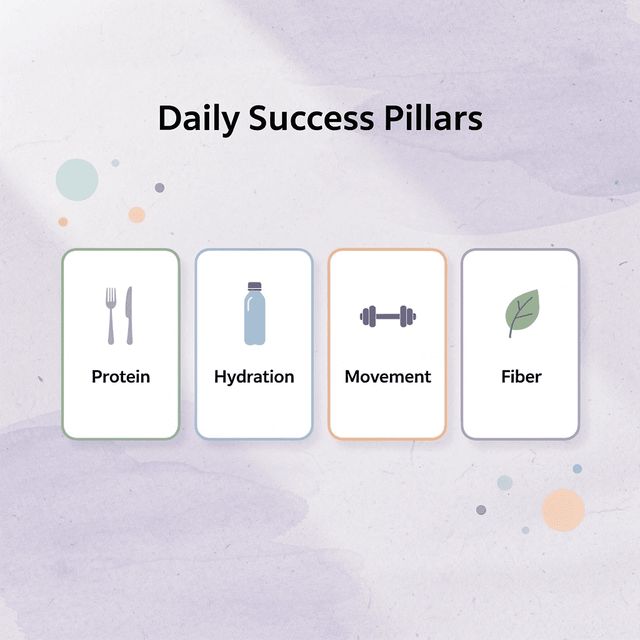
The medication you choose matters far less than how well you support your body while on it. Whether you're using Mounjaro or compounded tirzepatide, outcomes depend on what you do every day. Protein intake, fiber, hydration, and movement determine whether you lose fat or muscle, whether nausea becomes manageable, and whether constipation derails your progress.

Most people track their doses but ignore the basics. They assume the medication will do all the work, then wonder why they feel exhausted, lose muscle mass, or hit a plateau. GLP-1s change your appetite and metabolism faster than most people can adapt. Without deliberate structure around nutrition and movement, your body burns muscle alongside fat.
"Without deliberate structure around nutrition and movement, your body burns muscle alongside fat during GLP-1 treatment."
That's where most GLP-1 users struggle. They're managing doses in one app, logging meals in another, tracking symptoms in a notes app, and trying to remember their last weight check. This scattered approach makes it impossible to see patterns or adjust before problems worsen. You need everything in one place to respond to what your body is telling you.
Challenge | Impact | Solution |
|---|---|---|
Scattered tracking | Can't see patterns | Unified platform |
Ignoring basics | Muscle loss, fatigue | Daily targets |
No guidance | Poor adaptation | Guided system |

MeAgain solves that problem. Whether you choose Mounjaro or a compounded option, you need to hit your protein target, stay hydrated, and move consistently. Our MeAgain app transforms those basics into a guided system. Your capybara companion helps you meet daily targets, and your Journey Card tracks your transformation so you can see progress as it unfolds.

Download MeAgain, set your daily targets, and track your first day to achieve better results while avoiding the side effects that slow most people down.