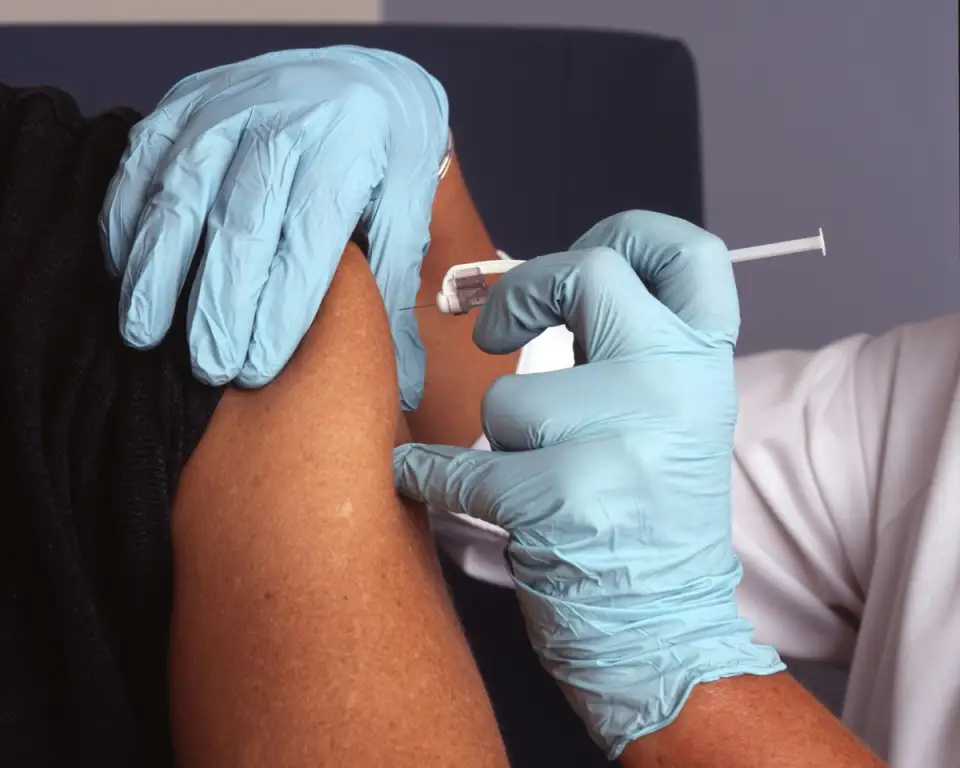

Compounded tirzepatide is not FDA-approved. While the FDA has approved brand-name tirzepatide (Mounjaro and Zepbound) for diabetes and weight management, compounded versions fall into a regulatory gray area with limited oversight. These pharmacy-mixed alternatives may offer lower costs, but they lack the rigorous testing and quality controls required for FDA approval.
The distinction between FDA-approved medications and compounded alternatives carries significant implications for safety, efficacy, and insurance coverage. Licensed healthcare providers can help navigate these options and ensure patients receive appropriate treatment that meets federal safety standards. MeAgain's GLP-1 app connects users with qualified physicians who prescribe only FDA-approved medications.
Table of Contents
- Is Compounded Tirzepatide FDA Approved?
- Can I Still Buy Compounded Tirzepatide?
- Regulatory and Compliance Considerations for Compounders
- Stay Consistent With Your GLP-1 Routine — Even When Access or Treatment Changes
Summary
- Compounded tirzepatide is not FDA-approved. The FDA approves manufactured drug products like Mounjaro and Zepbound through rigorous clinical trials and quality testing, while compounded medications are custom-prepared by pharmacies under a different regulatory pathway governed by pharmacy law rather than drug approval law. This means compounded tirzepatide can be legally prepared under specific conditions without carrying FDA approval.
- The FDA removed tirzepatide from its drug shortage list in October 2024 and upheld that decision in December 2024, which ended the legal basis for most compounding. Grace periods for 503A pharmacies and 503B outsourcing facilities have expired, meaning compounded tirzepatide availability has largely ended, except in narrow cases where patients have documented medical needs, such as allergies to inactive ingredients or require unavailable dosage strengths.
- Contamination events in compounded injectables are traced back to inadequate environmental controls in roughly 40% of FDA-inspected facilities, according to 2024 enforcement reports. Quality differences between compounding pharmacies directly affect whether patients receive sterile, properly dosed medication. 503B facilities, operating under stricter FDA oversight and closer to commercial drug manufacturing standards, are compared to 503A pharmacies operating under more variable state-level requirements.
- The FDA received more than 320 reports of adverse events related to compounded tirzepatide as of May 2024, according to Pharmacy Times, which cited FDA data. This reporting volume added regulatory pressure on both the FDA and compounding pharmacies to tighten compliance, contributing to manufacturers filing lawsuits alleging trademark infringement and patient safety concerns, and resulting in at least one federal judge ordering a compounding operation to cease production of tirzepatide entirely.
- Patients previously accessing compounded tirzepatide at $150 to $300 per month now face a gap when insurance doesn't cover Mounjaro or Zepbound, and manufacturer assistance programs don't apply. The regulatory framework prioritizes manufacturing oversight and standardized safety data over cost accessibility, leaving some patients without affordable options when compounded versions become unavailable and branded products remain financially out of reach.
- GLP-1 app addresses this by consolidating dose tracking, side-effect monitoring, and progress documentation on one platform, which becomes particularly useful when medication sources change unexpectedly or patients transition between compounded and FDA-approved tirzepatide formulations.
Is Compounded Tirzepatide FDA Approved?
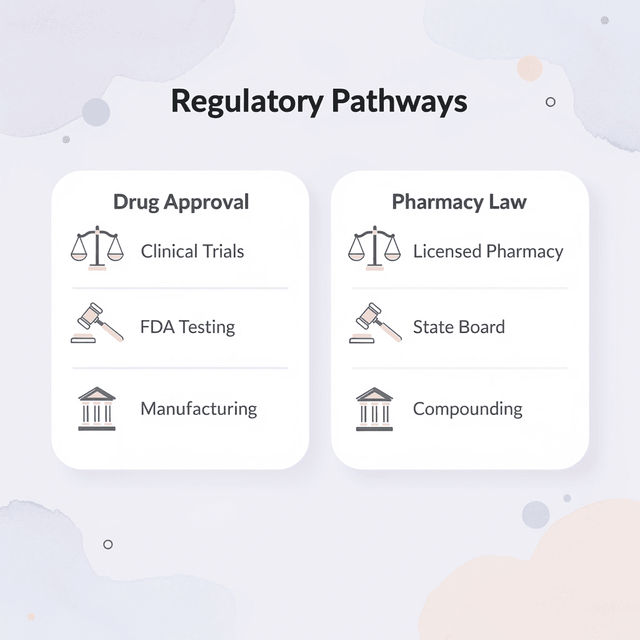
Compounded tirzepatide is not FDA-approved. The FDA approves manufactured products like Mounjaro and Zepbound, which contain tirzepatide and have undergone clinical trials and quality testing. Compounded medications are custom-made by pharmacies for individual patients and bypass the FDA's drug approval process.

Compounded tirzepatide exists in a regulatory space governed by pharmacy law, not drug approval law. The FDA regulates manufactured drugs and pharmacy compounding through separate pathways, allowing compounded tirzepatide to be legally prepared under specific conditions without being an FDA-approved product itself.

"The FDA regulates manufactured drugs through one pathway and pharmacy compounding through another, creating distinct regulatory frameworks for each." — FDA Guidance on Human Drug Compounding
Why do compounding pharmacies exist alongside approved medications?
Compounding pharmacies help patients whose medical needs can't be met by factory-manufactured drugs, whether because the required dose isn't available or they're allergic to inactive ingredients. According to www.giftfromwithin.org, the 503A exception allows state-licensed pharmacies to prepare customized medications for individual patients based on valid prescriptions, recognizing that mass manufacturing cannot address every clinical situation.
How did the FDA shortage designation affect the availability of compounded tirzepatide?
When the FDA listed tirzepatide on its drug shortage list, compounding pharmacies could legally prepare tirzepatide-based medications despite creating what would normally be an "essentially copy" of a commercially available drug. This shortage designation temporarily permitted compounding. Patients saw compounded tirzepatide through legitimate medical channels and reasonably assumed it had the same FDA approval as Mounjaro or Zepbound.
What regulatory changes occurred when the shortage ended?
The FDA removed tirzepatide from its drug shortage list in late 2024, fundamentally altering what compounding pharmacies could legally do. Without a shortage justification, preparing compounded versions of a commercially available drug in adequate supply puts pharmacies at risk of regulatory action.
The agency announced specific wind-down deadlines: February 18, 2025, for 503A compounding pharmacies and March 19, 2025, for 503B outsourcing facilities. These dates marked the end of enforcement discretion, the period during which the FDA chose not to take action against compounders while litigation with the Outsourcing Facilities Association remained unresolved.
How can patients track their medication during transitions?
MeAgain's GLP-1 app helps you track your doses, side effects, and progress, whether your tirzepatide comes from a name-brand company or was compounded during the shortage period. You can document patterns in how your body reacts, note changes when switching between medication sources, and maintain a complete record for informed conversations with your healthcare provider.
What legal challenges emerged for compounding operations?
Makers of branded tirzepatide products filed lawsuits against compounding entities, alleging trademark infringement and patient safety concerns. A federal judge ordered at least one compounding business to cease production of tirzepatide entirely. This demonstrates that legal risks extend beyond regulatory enforcement to include civil litigation.
The absence of FDA approval doesn't automatically make something illegal, but it does put it in a riskier legal position when commercial alternatives exist.
Related Reading
- How Much Does Compounded Tirzepatide Cost
- How To Get Compounded Tirzepatide
- Does Compounded Tirzepatide Work
- Compounded Tirzepatide Dosage
Can I Still Buy Compounded Tirzepatide?
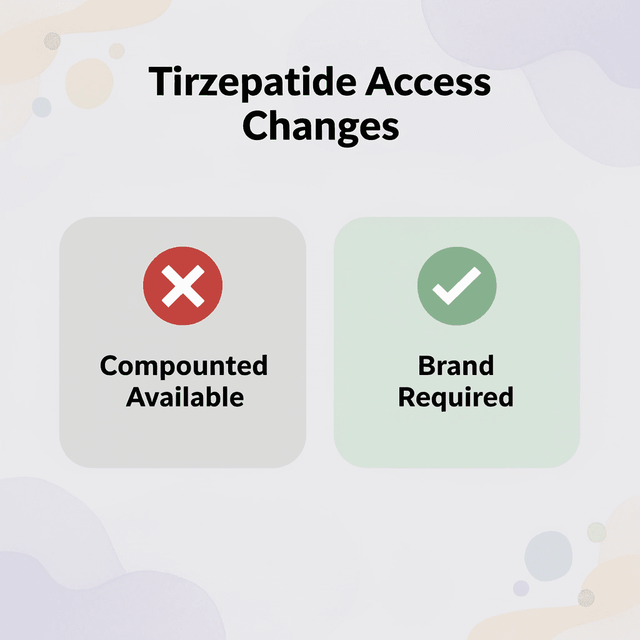
In most cases, no. The FDA removed tirzepatide from the shortage list in October 2024 and upheld that decision in December 2024, meaning compounding pharmacies can no longer legally prepare tirzepatide injections. Availability has ended except in limited cases based on specific medical need.

"The FDA removed tirzepatide from the shortage list in October 2024 and upheld that decision in December 2024, effectively ending most compounded tirzepatide availability." — FDA Drug Shortage Management, 2024
Why did availability change so quickly?
The shift wasn't about the medication becoming dangerous—it was about regulatory authority returning to its default state. When the FDA designates a drug shortage, it temporarily allows compounding pharmacies to produce copies under Section 503A of the Federal Food, Drug, and Cosmetic Act. Once supply stabilizes, the exception closes. Compounding pharmacies must stop producing copies unless they can demonstrate a patient-specific medical need, such as an allergy to an inactive ingredient or a dosage unavailable in the FDA-approved product. Most patients don't qualify.
What "limited exceptions" actually means
Compounded tirzepatide remains available under "limited exceptions" only when it is documented that the commercially available product won't work for a specific patient. Cost, convenience, or insurance avoidance don't qualify. Pharmacies compounding tirzepatide without meeting these criteria risk enforcement action. According to a Pharmacy Times report based on FDA data from May 2026, the FDA received more than 320 reports of adverse events related to compounded tirzepatide, prompting regulators and pharmacies to strengthen compliance.
How can you check if compounded tirzepatide is still available?
If you're currently using compounded tirzepatide, contact your prescriber and pharmacy to ask whether they're still compounding it and under what medical justification. If they've stopped, ask about switching to Mounjaro or Zepbound.
Check your insurance coverage for either medication and explore manufacturer copay cards or Zepbound vials through LillyDirect if needed. Pharmacies make independent decisions based on their own risk assessments: what was available last month may not be available today.
How can tracking tools help during medication transitions?
Tools like our GLP-1 app consolidate tracking information into one platform where you can monitor doses, meals, protein, fiber, water, side effects, weight, and progress. When medication access changes unexpectedly, a clear record of what's working makes conversations with your prescriber more productive and transitions smoother.
What happens if you can't access either option
Some patients fall into a gap: their insurance doesn't cover Mounjaro or Zepbound, manufacturer assistance programs don't apply to them, and compounded tirzepatide is no longer available. Your prescriber may discuss alternative GLP-1 medications, different dosing strategies, or non-medication approaches to weight management.
The regulatory framework doesn't accommodate individual financial hardship as a basis for compounding when FDA-approved versions exist. The system prioritizes manufacturing oversight and standardized safety data over cost accessibility, creating tension for patients who relied on compounded versions that cost $150 to $300 per month compared to significantly higher prices for branded products.
Understanding what's available is only part of the equation when pharmacies navigate their legal obligations.
Related Reading
- Is Compounded Tirzepatide Going Away
- How Long Does Compounded Tirzepatide Last In Fridge
- Is Compounded Tirzepatide Safe
Regulatory and Compliance Considerations for Compounders
Pharmacies must balance giving patients access to medicine against following manufacturing standards that directly affect whether someone receives sterile, properly dosed medication or something dangerous. When the FDA removed tirzepatide from the shortage list, compounding pharmacies lost their temporary safe harbor. Now every choice about sourcing materials, preparing batches, and shipping across state lines carries compliance weight. The difference between a pharmacy that follows the rules and a risky one lies in the systems that ensure your injection contains exactly what the label states, prepared under conditions that prevent contamination.

"The difference between a pharmacy that follows the rules and a risky one is the systems that make sure your injection contains exactly what the label says, prepared in conditions that won't introduce contamination." — FDA Compliance Guidelines, 2024
Compliance Area | Key Requirement | Risk Level |
|---|---|---|
Material Sourcing | FDA-approved suppliers only | High |
Batch Preparation | Sterile compounding protocols | Critical |
Interstate Shipping | Federal licensing compliance | High |
Quality Testing | Potency and purity verification | Critical |
Why do sterility failures pose serious patient risks?
Problems with sterility and dosage amounts don't surface until infections occur or side effects appear. According to the FDA's 2024 enforcement reports, contamination events in compounded injectables were traced back to inadequate environmental controls in roughly 40% of inspected facilities. Compounding pharmacies operating without strong quality assurance programs, regular potency testing, and documented environmental monitoring risk regulatory action and ship products that may not work as intended or could cause harm.
What's the difference between 503A and 503B oversight standards?
Not all compounders are subject to the same oversight. 503A pharmacies compound medications for individual patients based on specific prescriptions, working under state pharmacy boards with some FDA oversight. 503B outsourcing facilities manufacture larger batches under stricter FDA registration, inspection, and reporting requirements comparable to drug manufacturers.
A patient receiving compounded tirzepatide from a 503B facility gets a product manufactured under conditions closer to commercial drug production, while a 503A pharmacy operates with more flexibility but less standardized federal oversight. Quality from a 503A pharmacy depends heavily on that individual pharmacy's internal standards and state requirements.
What challenges do pharmacies face with ingredient sourcing requirements?
Bulk drug substances form the foundation of every compounded injection. The FDA requires compounders to source active pharmaceutical ingredients from suppliers meeting current good manufacturing practice standards. Pharmacies must verify that suppliers comply with FDA regulations, maintain certificates of analysis that prove ingredient purity and potency, and document the complete chain of custody.
When a supplier cuts corners or misrepresents testing results, the compounded product becomes non-compliant regardless of how carefully the pharmacy prepares it. A contaminated batch of bulk ingredient can affect hundreds of patient doses before it is discovered.
How extensive are the documentation requirements for compounding?
Documentation requirements extend beyond ingredient sourcing to every preparation step: monitoring the environment (temperature, humidity, air quality in clean rooms), logging equipment calibration and cleaning, worksheets for batch preparation, potency testing results, and adverse event reports.
When FDA inspectors arrive, or a patient has an unexpected reaction, these records demonstrate whether the pharmacy followed proper protocols or took shortcuts. Thorough documentation also enables the pharmacy to trace problems to their source, identify affected batches, and protect other patients from similar issues.
How does ongoing litigation create uncertainty for patients?
The ongoing OFA lawsuit creates a middle ground where compounders operate under temporary enforcement discretion while courts decide the FDA's authority to regulate compounding during shortage periods. A federal judge recently allowed the case to continue and permitted the manufacturer to intervene as a defendant to protect its market interests, signaling this won't resolve quickly.
Pharmacies understand that current access could shift dramatically based on court rulings that redefine when compounding is permissible, what patient-specific needs justify it, and how aggressively the FDA can enforce restrictions.
Why does regulatory uncertainty affect pricing and availability?
This uncertainty affects pricing, availability, and provider decisions. Compounding pharmacies that invest in quality systems, testing equipment, and compliance infrastructure need confidence that they can operate long enough to justify those costs.
Some pharmacies limit their compounding of tirzepatide or leave the market entirely to avoid enforcement risk if the legal landscape changes. Others continue but add compliance costs to pricing, widening the gap between what patients expected compounded versions to cost and what sustainable, compliant operations actually require.
Patients face practical access questions shaped by business decisions made under legal uncertainty. Understanding why compounded access changes matter only if you can maintain consistency in your own treatment journey when those changes occur.
Stay Consistent With Your GLP-1 Routine — Even When Access or Treatment Changes
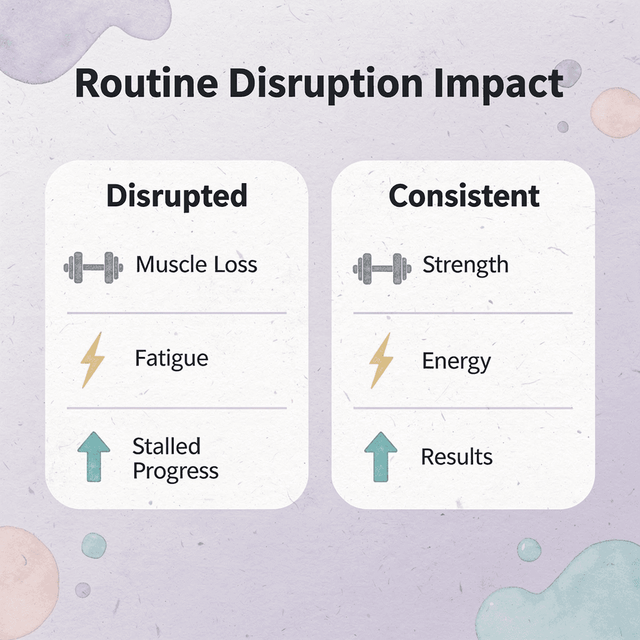
When supply shifts or your prescription changes, the routines that protect your results are at risk. Muscle loss, fatigue, and stalled progress during GLP-1 treatment often trace back to missed protein targets, low fiber intake, dehydration, and inconsistent movement—not the medication itself.

] Alt: Four icons representing muscle, hydration, nutrition, and movement tracking
MeAgain turns the unseen work of GLP-1 success (protein, fiber, hydration, and movement tracking) into a simple daily system powered by a gamified experience with a capybara companion that keeps you engaged through changes in routine, dosage, or provider. You can document your transformation using Journey Cards to track milestones, body changes, and progress over time across any medication pathway.
"Muscle loss, fatigue, and stalled progress during GLP-1 treatment often trace back to missed protein targets, low fiber intake, dehydration, and inconsistent movement—not the medication itself."