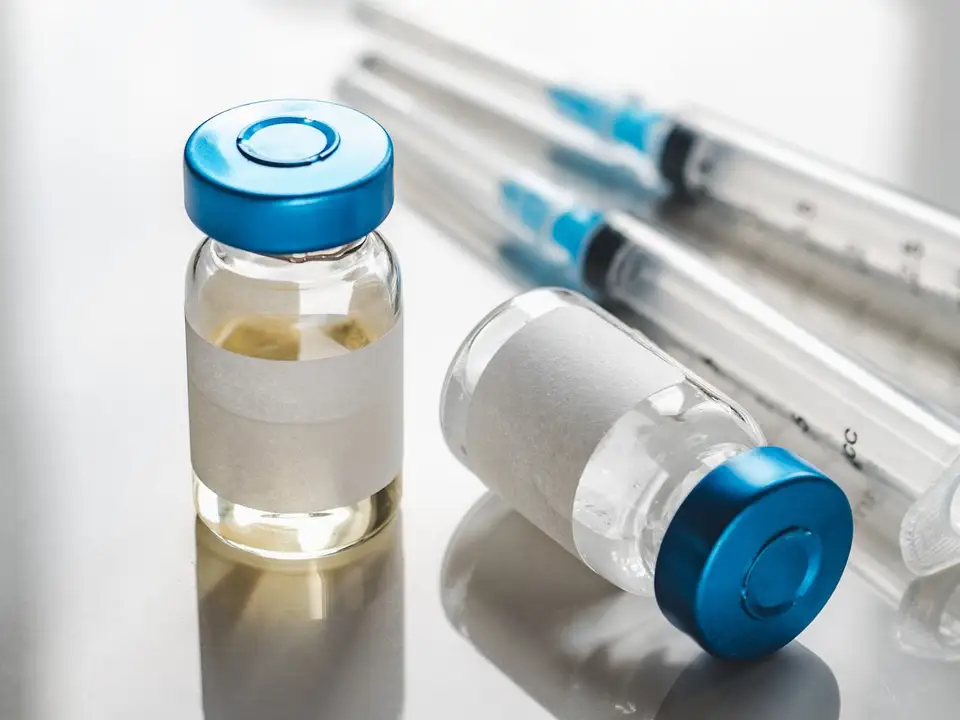

The rising cost of brand-name tirzepatide has left many people searching for more affordable options, and compounded versions have emerged as a potential solution. However, obtaining compounded tirzepatide safely requires navigating through questionable online pharmacies, unverified sellers, and products that may contain incorrect dosages or dangerous contaminants. Legitimate medical channels exist for accessing these medications, but distinguishing trustworthy providers from counterfeit operations can protect both health and finances.
Licensed healthcare providers offer the safest path to obtaining compounded tirzepatide through proper evaluation, legitimate prescriptions, and accredited pharmacies that follow strict safety standards. Working within established healthcare systems provides transparent pricing, medical oversight, and regulatory compliance rather than relying on unregulated sources. MeAgain's GLP-1 app connects patients directly with these licensed providers for secure access to properly compounded medications.
Table of Contents
- How to Get Compounded Tirzepatide Safely and Legally
- Why Getting Compounded Tirzepatide From the Wrong Provider Can Backfire
- What to Look for Before Choosing a Compounded Tirzepatide Provider
- Don’t Just Choose a Safe Provider—Manage Your GLP-1 Journey Safely Too
Summary
- The FDA's resolution of the tirzepatide shortage fundamentally changed the legal basis for compounding this medication. Outsourcing facilities (503B) can no longer compound tirzepatide because it doesn't appear on the approved bulk substances list and is no longer in active shortage. Traditional compounding pharmacies (503A) can still fill individual prescriptions, but only when providers document a meaningful clinical change, such as different concentrations or added ingredients, to meet specific patient needs.
- Contamination and counterfeit products represent the most serious risk in the compounded tirzepatide market. The FDA documented cases in which products labeled as tirzepatide contained bacteria, high impurity levels, or no active ingredient. Eli Lilly's testing found compounded drugs with completely different chemical structures than approved medicines, some arriving in different colors that signal fundamental quality control failures. One adverse event report described severe injection site reactions, including redness, swelling, and painful lumps, from fraudulent compounded medication.
- No legitimate generic tirzepatide exists anywhere because the drug remains under patent protection. Products claiming to be "generic tirzepatide" or "generic Mounjaro" are counterfeit, mislabeled, or produced illegally. The FDA has only approved tirzepatide for under-the-skin injection, which means online pharmacies advertising compounded pills or oral versions are selling products with zero regulatory oversight or safety evaluation.
- PCAB accreditation matters more than price when selecting a compounding pharmacy. PCAB-accredited sterile compounding pharmacies must meet USP chapter 797 standards for sterile preparation quality and consistency. Since tirzepatide is injectable, these sterile compounding standards directly affect your safety. Patients should verify pharmacy credentials independently by contacting the facility using information from state licensing databases, not just what appears on product labels.
- Dosing errors have led to hospitalizations, according to FDA adverse event reports. Safe providers follow FDA-approved titration schedules that increase doses gradually, monitor patient tolerance at each level, and never rush escalation to achieve faster results. Providers who suggest aggressive dose increases or can't explain their titration schedule in writing create the exact conditions that led to adverse events requiring medical attention.
- MeAgain's GLP-1 app addresses the daily tracking challenge by centralizing dose logging, side effect monitoring, and progress tracking in one place, reducing the cognitive burden of managing scattered health signals across multiple tools during treatment.
How to Get Compounded Tirzepatide Safely and Legally
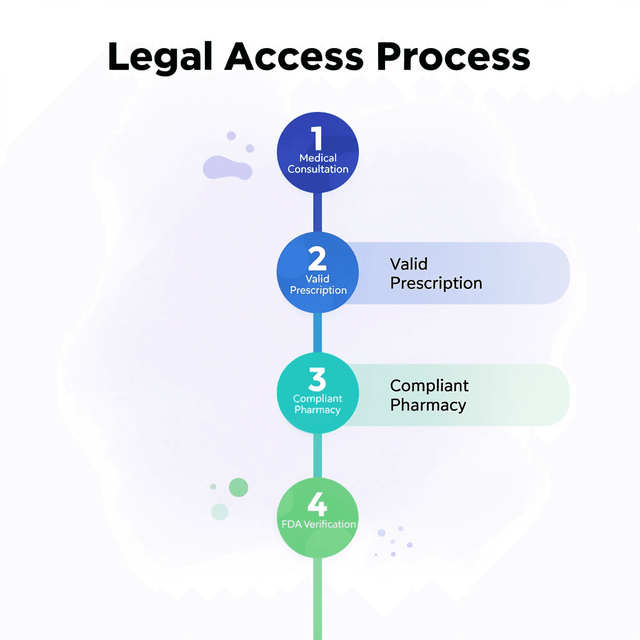
Getting compounded tirzepatide requires a medical consultation, a prescription from a licensed provider, and a compounding pharmacy. The process changed after the FDA resolved the tirzepatide shortage, which altered the legal basis for compounding. Here's what you should know about each step and what to watch for.

"The FDA shortage resolution fundamentally changed the regulatory framework for compounded tirzepatide, making it essential for patients to understand current legal requirements." — FDA Guidance, 2024

Step | Requirement | Key Considerations |
|---|---|---|
Medical Consultation | Licensed healthcare provider | Must assess medical necessity and current FDA compliance |
Prescription | Valid prescription | Provider must justify compounding need under new regulations |
Compounding Pharmacy | FDA-registered facility | Must operate within an updated legal framework |
What changes have occurred in tirzepatide regulation?
Compounding pharmacies made copies of tirzepatide because the brand-name versions (Mounjaro and Zepbound) were on the FDA's drug shortage list. As of April 2025, tirzepatide no longer appears on the FDA's drug shortage list or as an approved bulk drug substance for outsourcing facilities.
How do the new rules affect compounding pharmacies?
This changes the rules. Outsourcing facilities (section 503B) can only compound drugs from bulk ingredients if those ingredients are approved or the finished drug is in active shortage. Neither applies to tirzepatide now.
Traditional compounding pharmacies (section 503A) can still fill individual prescriptions, but shouldn't regularly produce what the FDA considers "essentially a copy" of a commercially available drug (same active ingredient, similar strength, same route of administration). One exception exists: a prescriber can document that a compounded version contains a meaningful change for a specific patient. Some providers prescribe tirzepatide in different concentrations, combined with B12, or in tailored formulations. Whether this exception survives FDA scrutiny long term remains uncertain, so compounded tirzepatide availability could change.
Who Qualifies for a Prescription
Tirzepatide is prescribed for weight management and type 2 diabetes. Standard eligibility requires a BMI of 30 or higher, or 27 or higher with a weight-related condition such as high blood pressure, high cholesterol, prediabetes, insulin resistance, type 2 diabetes, obstructive sleep apnea, PCOS, or heart disease. You must be 18 or older. Providers will review your medical and family history, as well as your prior weight-loss attempts. Tirzepatide is not prescribed to people who are pregnant or breastfeeding, or those with a personal or family history of medullary thyroid carcinoma or MEN 2, and a history of pancreatitis may also disqualify you.
Step 1: Get a Consultation
You can get a prescription through your primary care doctor or a telehealth weight management service. Telehealth has become the more common route for compounded tirzepatide because many platforms partner with compounding pharmacies, streamlining the process. During your consultation, your provider will review your weight, health history, and goals. If you qualify, they'll write a prescription and send it to a compounding pharmacy. Some platforms include the consultation fee with medication costs; others charge separately. Initial consultations typically cost $30–$150, depending on the platform.
Step 2: Choose a Compounding Pharmacy
Not all compounding pharmacies are equal. Compounded drugs are not FDA-approved and don't undergo the same testing as brand-name medications, so the pharmacy's quality controls serve as your primary protection. Look for PCAB accreditation (Pharmacy Compounding Accreditation Board, now run by ACHC). PCAB-accredited sterile compounding pharmacies must meet USP chapter 797 standards, which govern the quality and consistency of sterile preparations. Since tirzepatide is injectable, these standards are critical for your safety.
How do compliance standards ensure medication safety?
According to Novanex compounding pharmacy compliance standards, 503A-compliant facilities must follow strict sterile preparation protocols to ensure each batch meets safety and potency requirements. Pharmacies handling hazardous drugs must also meet additional safety requirements.
The FDA has raised concerns about compounders using salt forms of GLP-1 medications, such as semaglutide sodium or semaglutide acetate, instead of the base form used in approved drugs. The FDA lacks information on whether salt forms have the same properties as the active ingredient in approved drugs and knows of no lawful reason for using them in compounding. If a pharmacy is unclear about what form of tirzepatide they use, ask them directly: it's a warning sign if they can't provide a clear answer.
What tracking and support options are available?
MeAgain consolidates medication tracking, nutrition (protein, fiber, water), side effects, weight, and progress photos into one daily check-in, eliminating the need for spreadsheets or multiple apps. Clinical care costs $40 per month for those requiring a prescription. Medications start at $149 per month, with transparent pricing that doesn't increase with dose adjustments.
What It Costs
Brand-name tirzepatide costs about $1,080 (Mounjaro) to $1,086 (Zepbound) for a 28-day supply, though insurance coverage varies widely and many plans exclude weight management indications. Compounded tirzepatide typically costs $250 to $500 per month, depending on dose and pharmacy, with lower doses (2.5 mg and 5 mg) at the lower end. Most compounding pharmacies and telehealth platforms don't accept insurance for compounded medications, making this an out-of-pocket expense, though some offer subscription pricing or multi-month discounts. But the real test is what happens when the pharmacy you chose starts cutting corners you didn't know existed.
Related Reading
Why Getting Compounded Tirzepatide From the Wrong Provider Can Backfire
Choosing the wrong compounding provider means injecting substances with unknown contents, unpredictable side effects, and a potential need for emergency medical intervention. The FDA has documented cases where compounded "tirzepatide" contained bacteria, high impurity levels, or inert ingredients like sugar alcohol instead of active medication. One reported adverse event included severe redness, site swelling, pain, and a red lump at the injection site from fraudulent compounded tirzepatide.


The Patent Reality No One Wants to Hear
Tirzepatide is protected by a patent, so no generic version exists anywhere in the world. Any product labeled "generic tirzepatide" or "generic Mounjaro" is counterfeit, mislabelled, or illegally manufactured. When Eli Lilly published an open letter in 2024 about fake tirzepatide products, it addressed a serious safety concern. The National Association of Boards of Pharmacy confirmed that "illegal actors are taking advantage of high demand and short supply to sell substandard and falsified versions of these products to patients around the world," warning that "their unlawful actions put patients at risk."
What Testing Actually Found in Grey-Market Products
Lab testing of unregulated weight loss products found vials with no active ingredient, while others contained entirely different drugs than those labeled. Some samples showed dangerous bacterial contamination, high impurity levels, or color changes (pink instead of colorless) signaling formulation problems. In one documented case, what was sold as tirzepatide was sugar alcohol. The FDA reported adverse health events tied to counterfeit compounded tirzepatide, including severe injection site reactions: redness, swelling, pain, and hard lumps suggesting contamination or incorrect formulation.
Why Compounded Drugs Carry a Higher Risk
The FDA has stated clearly that "compounded drugs pose a higher risk to patients than FDA-approved drugs" and that "the unnecessary use of compounded drugs exposes patients to potentially serious health risks." Compounded medications skip the strict sterility testing, potency verification, contamination screening, and stability testing required of FDA-approved pharmaceuticals. While some compounding pharmacies follow strict standards for genuine medical needs, others prioritize speed and volume over safety, and patients cannot distinguish between them until harm occurs.
What quality controls do legitimate pharmaceuticals undergo?
Real medicines undergo sterility testing, potency verification, contamination screening, and stability testing before reaching patients. Compounded products from unregulated sources skip these safety checks entirely.
What did testing reveal about counterfeit products?
Lilly discovered compounded drugs advertised as tirzepatide with chemical structures differing from FDA-approved medicines, arriving in different colors (pink instead of colorless). Testing of grey-market weight loss products revealed products with no active ingredient, products containing unlabelled drugs, and inaccurate dosing that could cause serious harm. The National Association of Boards of Pharmacy confirms that illegal actors exploit high demand and short supply to sell substandard and falsified medications. Patients risk injecting substances containing the wrong medicines, incorrect dosages, or multiple medicines mixed together.
What makes compounded medications different from FDA-approved drugs?
Compounded medications are not FDA-approved, yet most people assume they're equivalent to FDA-approved drugs. The FDA does not review compounded drugs for safety, efficacy, or quality before they are sold. Not all pharmacies follow the same standards. Some compounding pharmacies listed on product labels don't exist, while fake products use the names of licensed pharmacies that never made them. This creates dangerous confusion about product origin and quality.
How do med-spas mislead consumers about their products?
Med-spas and wellness centers misleadingly market compounded products as Mounjaro or Zepbound, claiming they are equivalent to FDA-approved medications. They cite Lilly's clinical trial results in advertising, deceiving consumers into believing compounded drugs were included in those trials. Eli Lilly has filed multiple lawsuits alleging these entities falsely reference FDA approvals as if their compounded drugs were themselves FDA-approved, despite lacking any regulatory review.
What physical symptoms do patients experience from unsafe products?
Patients face severe nausea, unpredictable side effects, and halted weight loss when products contain no active ingredient or incorrect dosages. They continue injecting and paying for ineffective treatment while seeing no results, and the fear of not knowing what they've injected creates deep anxiety about every dose. When products arrive warm or with inadequate ice packs despite requiring refrigeration, the drug's quality deteriorates, affecting both safety and efficacy. The FDA has received multiple complaints about improper storage during shipping from certain compounding sources.
How do financial costs compound with health risks?
The "savings" from cheaper compounded versions disappear when injecting unknown substances. Wasted money combines with wasted time, physical discomfort, and the emotional burden of gambling with your health. Some patients require hospitalization for complications from contaminated or fraudulent products. Products sold without proper prescriptions provide no screening for contraindications, no monitoring for side effects, and no medical oversight if adverse events occur.
What is the truth about generic tirzepatide availability?
Tirzepatide is protected by a patent, meaning no generic versions are available anywhere in the world. Any product claiming to be "generic tirzepatide" or "generic Mounjaro" is counterfeit, mislabelled, or illegally manufactured.
Are oral tirzepatide formulations safe and approved?
Online pharmacies now advertise compounded pills or oral versions, but the FDA has only approved injection administration. No regulator has evaluated the safety or effectiveness of these formulations, leaving them without oversight.
How does the FDA protect against counterfeit imports?
The FDA created Import Alert 66-80 to prevent GLP-1 active pharmaceutical ingredients with quality problems from entering the U.S. supply chain. This targets foreign-made APIs manufactured without proper quality controls and recognizes that this problem occurs across multiple countries, necessitating border screening.
What to Look for Before Choosing a Compounded Tirzepatide Provider
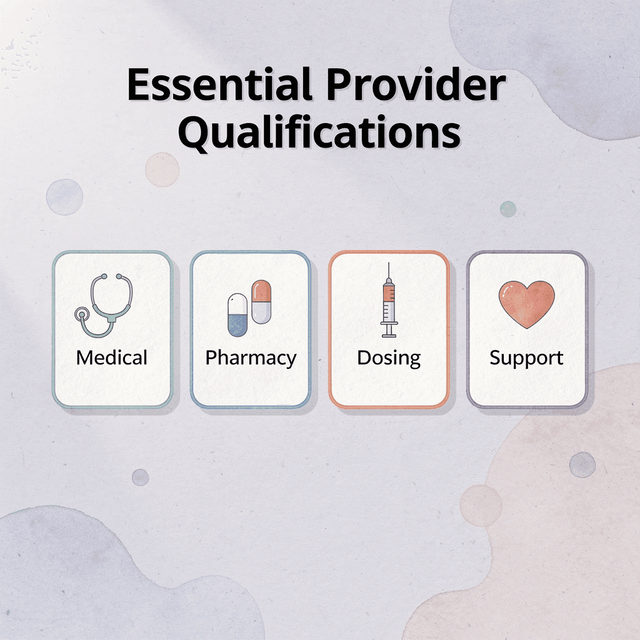
Protect yourself by checking that your provider has the right qualifications before your first dose. The FDA wants patients to be cautious about where their medicine comes from. Examine the medical supervision, pharmacy credentials, dosing protocols, and ongoing support: the greatest risks emerge from gaps in these areas.

"The FDA emphasizes that patients should verify pharmacy credentials and medical supervision before starting any compounded medication regimen." — FDA Safety Guidelines, 2024

Essential Qualification | What to Verify | Red Flags |
|---|---|---|
Medical Supervision | Licensed physician oversight | No doctor involvement |
Pharmacy Credentials | 503B facility certification | Unlicensed compounding |
Dosing Protocols | Standardized measurement systems | Vague dosing instructions |
Ongoing Support | 24/7 medical consultation access | No follow-up care |
Medical Oversight That Prevents Dosing Errors
Dosing errors due to incorrect measurement and miscalculations have led to hospitalizations. The safest approach requires board-certified clinicians who review your complete medical history and prescribe based on FDA-approved titration schedules. PlexusDx's tirzepatide injection pricing ranges from $229 to $309 per month, but cost alone doesn't indicate whether the provider explains correct measurement or monitors your response. Proper oversight means your provider walks you through injection administration, confirms you understand the measurement units on your syringe, and schedules follow-up visits to catch problems before they become emergencies.
Accredited Pharmacy Partnerships You Can Verify
The pharmacy that fills your prescription is as important as the doctor who writes it. Safe providers work only with 503A or 503B-regulated compounding pharmacies, not unverified facilities with spelling errors in labels or addresses that don't match state licensing databases. Before you take your first dose, contact the pharmacy directly using contact information you find independently (not what's printed on the label) and confirm they made your medication. Legitimate pharmacies expect these calls and can answer basic questions about their licensing or compounding process; fraudulent operations cannot.
Transparent Dosing That Matches FDA-Approved Protocols
Bad side effects like nausea, vomiting, and stomach pain have been linked to doses beyond FDA-approved labels and improper titration schedules. Your provider must explain their dosing plan in writing before you start. Ask directly: Does your titration schedule match the approved protocol for increasing doses slowly, or are you being moved to higher doses faster than standard guidelines recommend? Providers who cannot answer this clearly or who suggest aggressive dose escalation to "get results faster" are creating conditions that lead to adverse side effects requiring medical attention. The safest approach increases doses slowly, monitors your tolerance at each level, and never rushes past your body's adjustment period.
Ongoing Monitoring and Side Effect Management
Getting the prescription is just the starting point. Compounded tirzepatide requires tracking doses, meals, symptoms, hydration, and progress: scattered signals that are hard to manage across multiple tools. Our MeAgain app brings together dose tracking, side effect logging, and progress monitoring in one place, eliminating the mental burden of remembering what you ate, when symptoms appeared, or whether today's nausea is normal or concerning. Real safety comes from knowing someone is watching your patterns over time, not from giving you medication and hoping you figure it out alone.
The Access Versus Standardization Tradeoff
Compounded tirzepatide makes sense when cost or availability creates barriers to branded medications, but understand what you're accepting in exchange for that access. Branded alternatives like Mounjaro undergo FDA manufacturing oversight, guaranteed potency testing, and sterility verification that compounded versions don't require. When those barriers don't exist for you—when insurance covers branded options, or cost isn't a problem—standardized medications may be the safer choice because they eliminate pharmacy-level variability. But choosing a safe provider solves only half the equation.
Don’t Just Choose a Safe Provider—Manage Your GLP-1 Journey Safely Too
Getting compounded tirzepatide from a legitimate provider protects you from contamination and dosing inconsistencies, but it doesn't prepare your body for what happens next. Most people focus on finding the medication and assume treatment will take care of itself. Then side effects emerge: severe constipation from inadequate fiber intake, energy drops from unclear protein goals, and accelerated muscle loss during rapid weight loss because movement wasn't prioritized. The medication works, but daily habits that protect your body during treatment get overlooked until problems surface.

That's why we built MeAgain. If you're starting Ozempic, Wegovy, Mounjaro, or compounded tirzepatide, MeAgain helps you stay consistent with habits that matter most while your body adjusts to treatment. Your capybara guides you through daily protein, fiber, water, and movement goals to prevent severe constipation, low energy, dehydration, and muscle loss during rapid weight loss. Track your progress with your Journey Card to see changes over time and stay motivated.
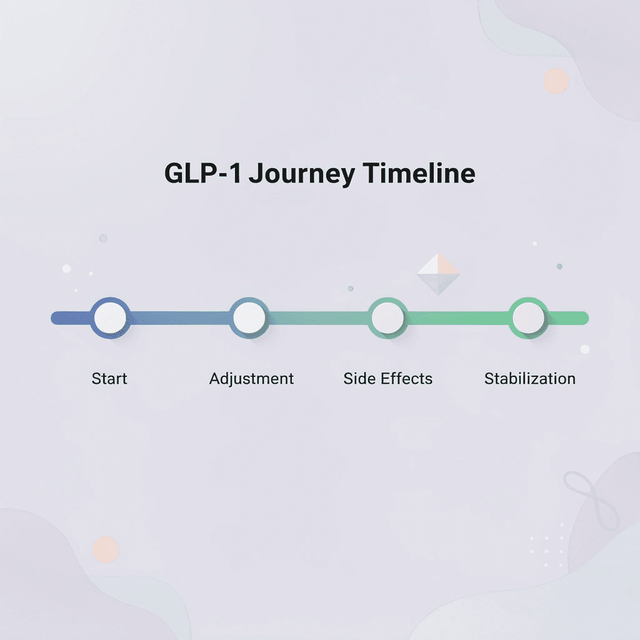
"Most GLP-1 patients experience their worst side effects during the first month of treatment when daily habits haven't been adjusted to support the medication's effects." — Clinical GLP-1 Research, 2024