
Compounded medications offer a customized alternative to standard prescriptions, created by specialized pharmacists who modify existing drugs to meet individual patient needs. These personalized formulations have gained attention in weight loss treatments, particularly with semaglutide, as patients seek more affordable or accessible options. Understanding the differences between compounded and FDA-approved medications helps patients make informed decisions about their healthcare.
The key lies in knowing how these custom formulations work, their safety considerations, and when they might be appropriate for your situation. MeAgain's GLP-1 app provides clear, reliable information on weight-loss medications and connects users with qualified healthcare providers for personalized guidance.
Table of Contents
- What Is Compounded Medication and How Does It Work?
- Why Compounded Medications Exist (And Why Most People Misunderstand Them)
- Are Compounded Medications Safe and Effective?
- When Compounded Medication Makes Sense (And When It Does Not)
- Understanding Your Medication Is Step One. Using It Correctly Is What Drives Results
Summary
- Pharmaceutical compounding serves specific medical needs that mass-manufactured medications cannot address, accounting for only 1-3% of all U.S. prescriptions according to Cedars-Sinai. These custom-prepared medications exist for situations like pediatric patients who need liquid versions of tablet-only drugs, patients with allergies to inactive ingredients in commercial formulations, or when manufacturers discontinue products that patients still depend on.
- The FDA estimates that 10 deaths and 100 hospitalizations may be linked to compounded GLP-1 receptor agonists, while poison control centers reported a nearly 1,500% increase in calls related to accidental overdosing on injected weight-loss drugs in 2023. Dosing errors occur most frequently when patients unfamiliar with syringes accidentally administer 5 to 20 times the intended dose because compounded versions arrive in multiple-dose vials requiring self-measurement, unlike prefilled pens that prevent overdosing.
- The Drug Quality and Security Act of 2013 created two legal pathways for compounding after contaminated products caused a deadly fungal meningitis outbreak. Section 503A governs traditional pharmacists who fill patient-specific prescriptions, while Section 503B covers outsourcing facilities that produce stock supplies under higher federal oversight and current good manufacturing practice standards. Any company producing drugs outside these frameworks without FDA approval violates federal law.
- Compounded medications bypass the premarket inspection and manufacturing quality verification that FDA-approved drugs undergo before reaching patients. State Boards of Pharmacy oversee traditional compounding pharmacies, while the FDA's authority over outsourcing facilities operates reactively rather than proactively, creating enforcement standards that vary by location and typically trigger action only after patients experience negative outcomes.
- Cost-driven substitution without medical justification represents the clearest misuse of compounding. When FDA-approved medications remain available, accessible through insurance or patient assistance programs, and clinically appropriate, choosing compounded versions solely for price introduces unnecessary risk by accepting lower regulatory oversight, inconsistent quality controls, and the absence of large-scale safety data in exchange for savings achievable through legitimate discount channels.
- GLP-1 app addresses this by connecting patients with vetted compounding pharmacies at zero markup, removing the profit incentive that sometimes drives inappropriate compounding recommendations when FDA-approved alternatives remain available.
What Is Compounded Medication and How Does It Work?
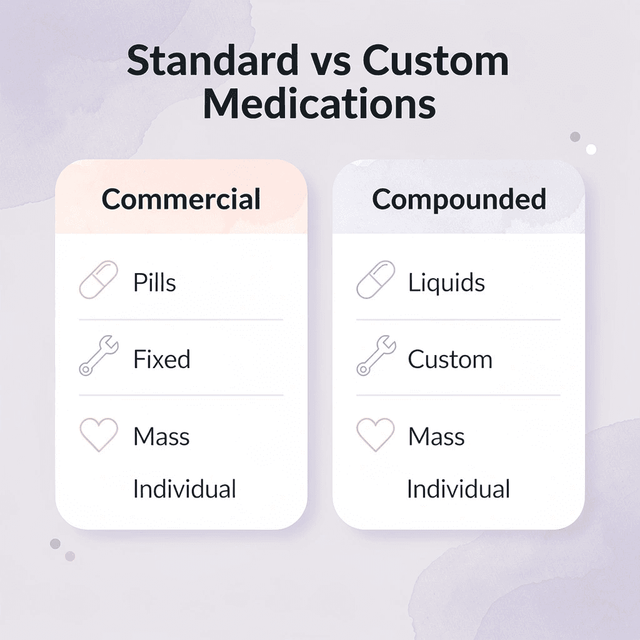
Pharmaceutical compounding is the preparation of medications for patients whose medical needs cannot be met by commercially available FDA-approved products. When a patient cannot swallow pills and needs a liquid version of a medicine available only in tablet form, or when someone needs a preservative-free formulation safe for a newborn, a licensed compounding pharmacy prepares that medication from scratch. Pharmacists and physicians customize drugs to specific medical situations that standard products cannot address.
"Compounding allows healthcare providers to work together to meet the unique needs of patients for whom manufactured products are not suitable." — FDA Guidelines on Compounding
What are the different types of compounding services?
Compounding serves two purposes: individual patient prescriptions handled by traditional community pharmacies and bulk supplies produced by outsourcing facilities for hospitals that need medications unavailable in their local markets. According to the R Street Institute, approximately 7,500 compounding pharmacies operate across the United States. These facilities create everything from epidural analgesics used during childbirth to liquid nutrition for patients unable to eat normally.
What legal framework governs medication compounding?
The Drug Quality and Security Act of 2013 established two legal pathways for compounding following a deadly fungal meningitis outbreak caused by contaminated products from inadequately regulated facilities.
Who qualifies as traditional compounding under Section 503A?
Section 503A governs traditional compounders: pharmacists in community and hospital settings, as well as physicians who create drugs for their own patients. These practitioners make patient-specific medications only after receiving a prescription or medical order and cannot produce drugs in bulk.
What are Section 503B outsourcing facilities?
Section 503B created a separate category for outsourcing facilities that manufacture stock supplies without prescriptions for specific patients. These operations must register with the FDA, comply with good manufacturing practices, adhere to specific labeling requirements, and report adverse events. Any company manufacturing drugs outside these two frameworks without FDA approval sells unapproved products in violation of federal law.
What makes compounded GLP-1RAs different?
Compounded GLP-1 receptor agonists are produced by outsourcing pharmacies unaffiliated with brand-name manufacturers such as Wegovy or Mounjaro. These medications copy original formulations but are not FDA-approved generics. Normally, copying patented medications is illegal; however, FDA-declared drug shortages create a legal exception. Semaglutide remains in shortage, allowing continued compounding. Tirzepatide's shortage officially ended, yet compounding continues because the FDA agreed not to prosecute facilities while a lawsuit filed by one pharmacy remains unresolved.
Compounded semaglutide vs. Ozempic and Wegovy
Compounded semaglutide, Ozempic, Wegovy, and Rybelsus differ in testing and approval status, ingredients, and dosage forms.
Compounded semaglutide | Ozempic and Wegovy | |
|---|---|---|
FDA approved? | No | Yes |
Where they’re made | Compounding pharmacies regulated by state boards of pharmacy or FDA-registered outsourcing facilities | FDA-registered Novo Nordisk facilities |
Ingredients | Inactive ingredients can vary; some pharmacies may use semaglutide salts or add extra ingredients | Contains semaglutide base; consistent ingredients are used in each product |
Dosage forms |
|
|
Medication delivery (for injection) | Vials | Prefilled injection pens |
Dosage strengths | Varies |
|
Many patients worry about government regulations affecting their medications, fearing sudden loss of access or changes in rules. The legal framework governing compounding during shortages remains poorly understood, and most patients don't know the difference between FDA-approved medications and compounded versions. Compounded versions serve as legitimate alternatives when regular medications are unavailable, not as lower-quality substitutes.
The real question isn't whether compounding is legal, but why these medications need to exist and what most people misunderstand about their role in healthcare.
Related Reading
Why Compounded Medications Exist (And Why Most People Misunderstand Them)
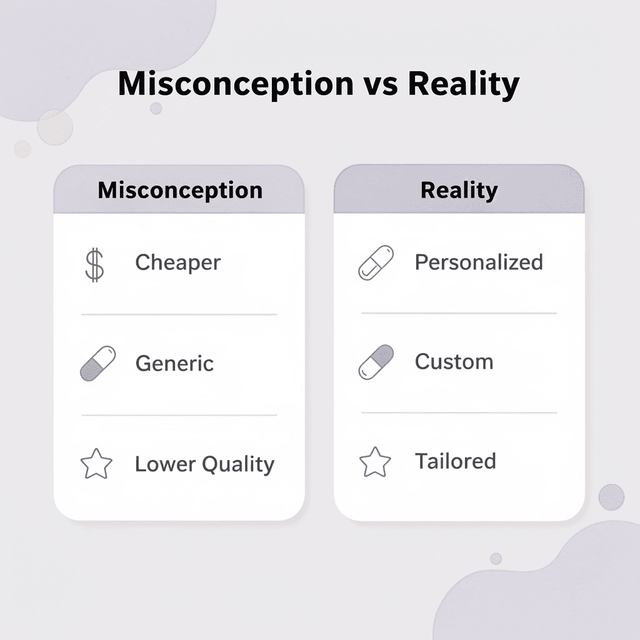
Most people think compounded medications are cheaper or generic versions of standard drugs. Compounded medications exist because the healthcare system cannot mass-produce solutions for every patient's specific need. When a child needs a liquid version of a drug that comes only in tablets, when someone is allergic to an inactive ingredient in the commercial formulation, or when a manufacturer stops making a medication patients depend on, compounding fills gaps that FDA-approved products leave open.

"Compounding fills critical gaps that FDA-approved products leave open in patient care."
Common Misconception | Reality |
|---|---|
Cheaper alternatives | Personalized solutions |
Generic versions | Custom formulations |
Lower quality | Tailored to specific needs |
How do compounded medications differ from FDA-approved drugs?
FDA-approved medications are produced in registered manufacturing facilities following standardized protocols, with rigorous batch testing and consistent quality controls across millions of doses. Compounded medications are prepared individually by pharmacists, mixing ingredients according to specific prescriptions. One system is designed for scale and uniformity; the other for customization and medical necessity. According to Cedars-Sinai, compounded prescriptions represent only 1-3% of all prescriptions filled because they serve situations where commercial manufacturing cannot.
Why drug shortages force compounding
When Ozempic and Wegovy became unavailable, patients had to stop treatment or find alternatives. Compounding pharmacies stepped in because FDA regulations permit compounding during declared shortages. The medications produced during those months kept patients on their treatment plans until regular supply resumed. This temporary permission demonstrated the system functioning as intended: using custom preparation to fill supply gaps that threatened patient care.
Why do some patients need custom medications?
Some patients need medicine forms that will never be sold in regular pharmacies because they're not profitable enough to manufacture. A patient allergic to sesame oil can't use the standard progesterone injection, which is made in sesame oil; a compounding pharmacy makes it in olive oil instead. A child who can't swallow pills needs liquid versions of medicines available only as tablets. An animal needs a dose strength that doesn't exist in commercial veterinary products. These are medical needs that standard manufacturing processes can't address profitably.
How do compounded medications differ from mass-manufactured drugs?
Most people interact only with mass-made medications. When you pick up a prescription at a retail pharmacy, you receive a product that underwent FDA approval, came from a registered facility, and matches thousands of identical doses in the same batch.
Compounded versions look similar, come in similar packaging, and contain the same active ingredient, leading to the assumption that they're interchangeable. However, preparation method, quality oversight, and regulatory framework create meaningful differences that aren't visible on the label.
Do custom-prepared medications deliver the same results as FDA-approved drugs?
Understanding why compounding exists doesn't answer whether these custom-prepared medications deliver the same results as their FDA-approved counterparts or whether differences in manufacturing actually matter for safety.
Related Reading
Are Compounded Medications Safe and Effective?
Compounded GLP-1RAs can help patients when FDA-approved medications are not available or when insurance companies deny coverage for brand-name options. However, they carry documented risks absent in commercially manufactured products. The FDA estimates 10 deaths and 100 hospitalizations may be linked to compounded GLP-1RAs. Poison control centers reported a nearly 1,500% increase in calls related to accidental overdosing on injected weight-loss drugs in 2023. These outcomes reflect real patients who received medications prepared outside the standard approval process.

"Poison control centers reported a nearly 1,500% increase in calls related to accidental overdosing on injected weight-loss drugs in 2023." — University of New Mexico Health Sciences Center

How do dosing errors create immediate danger?
Dosing inconsistency creates the most immediate danger. Patients unfamiliar with syringes have accidentally given themselves 5 to 20 times the intended dose because compounded versions come in multiple-dose vials or prefilled syringes with varying concentrations across different pharmacies.
Unlike Ozempic or Wegovy, which come in prefilled injection pens designed to prevent overdosing, compounded semaglutide requires patients to measure doses themselves. Confusion between milliliters, milligrams, and units can turn a simple injection into a dosing error that sends people to emergency rooms.
In a 2023 case series documented by Safety of Compounded Medications, three patients who received compounded semaglutide from an aesthetic spa developed severe gastrointestinal symptoms after self-administering more than 10 times the recommended dose. One required intravenous fluids.
What contamination risks exist with compounded products?
Contamination and adulteration are the second major risk category. Ongoing lawsuits against compounding manufacturers allege that facilities are dispensing contaminated medications or producing drugs in unsanitary conditions.
The FDA has received reports of fraudulent products containing excessive, insufficient, or no active semaglutide. These quality failures occur because compounded drugs bypass the premarket inspection and manufacturing verification required of FDA-approved medications.
How does FDA oversight currently work for compounding facilities?
The FDA's authority over compounding facilities operates reactively rather than proactively. According to the SAFE Drugs Act of 2025, 503B Outsourcing Facilities must register with the FDA and follow current good manufacturing practices, yet enforcement typically occurs only after patients experience adverse outcomes.
State Boards of Pharmacy oversee traditional 503A compounding pharmacies, creating a regulatory patchwork where enforcement standards vary by location.
What testing differences exist between compounded and FDA-approved medications?
Compounded medications don't undergo the large-scale clinical testing that FDA-approved products do. Every dose of Wegovy comes from batches tested for strength, sterility, and consistency before distribution.
Compounded semaglutide is prepared on a case-by-case basis without the pre-market review process that catches formulation problems in commercial manufacturing. While ingredients must meet pharmaceutical-grade standards, the final compounded product bypasses the verification required for commercial drugs.
How can patients navigate the cost-versus-quality trade-off?
Many people feel stuck between wanting affordable access and worrying about medication quality, especially when insurance denies coverage or shortages limit availability. The price difference between compounded and FDA-approved versions can be significant, but understanding what you're giving up for that lower cost matters.
Platforms like MeAgain address this by connecting patients with vetted compounding pharmacies at zero markup, removing the profit incentive that drives some telehealth providers to push compounded options over FDA-approved alternatives. Transparent pricing doesn't eliminate the inherent differences between compounded and approved medications, but it removes confusion about why costs vary so dramatically.
The question isn't whether compounded medications can work, but whether the specific circumstances justify accepting the additional risk that comes with medications prepared outside the standard approval framework.
When Compounded Medication Makes Sense (And When It Does Not)
Compounded medications solve access and customization problems, not standardized drug replacement. They address situations where FDA-approved products cannot meet a patient's needs: no commercial alternative exists, a required dosage form isn't mass-produced, or allergies to inactive ingredients make standard formulations unsafe. They are not designed to substitute for accessible, appropriate, approved drugs. This distinction determines whether compounding represents appropriate care or unnecessary risk.

"Compounded medications are intended to meet the unique medical needs of individual patients when FDA-approved drugs cannot adequately address those needs." — FDA Guidance, 2023
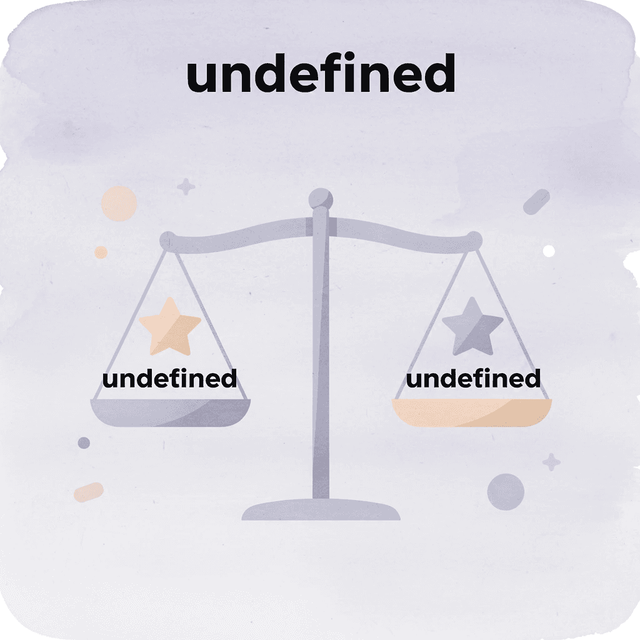
When Compounding Makes Sense | When It Does Not |
|---|---|
No commercial version available | An FDA-approved drug exists and works |
Allergy to inactive ingredients | Seeking a lower-cost alternative |
Unique dosage form needed | Convenience over standard options |
Specific strength not manufactured | Marketing claims about superiority |
What specific patient needs justify compounding?
A patient allergic to polyethylene glycol cannot use the standard form of a critical medication containing it as a stabilizer. A child unable to swallow tablets needs liquid versions of drugs made only in pill form. An animal requires a dose strength between two store-bought options because neither provides the correct therapeutic level. No FDA-approved product addresses these specific clinical needs.
According to Cedars-Sinai, between 1% and 3% of all prescriptions in the U.S. are compounded.
How does physician oversight ensure appropriate compounding?
A doctor-directed use creates the second legitimate category. When a doctor determines that a patient's treatment needs exceed what commercial products offer and documents the medical reason, compounding serves its intended purpose.
This includes FDA-declared drug shortages or off-label uses that require formulation adjustments not available in approved products. The critical element is clinical oversight: a licensed healthcare provider making an informed decision based on individual patient needs.
What constitutes inappropriate use of compounded medications?
Cutting costs without medical justification is the clearest misuse. When an FDA-approved medication is available through insurance or patient assistance programs and is clinically appropriate, choosing a compounded version solely for price introduces unnecessary risk.
The trade-off means accepting lower regulatory oversight, inconsistent quality controls, and the absence of large-scale safety data in exchange for savings available through legitimate channels, such as manufacturer copay cards or pharmacy discount programs.
Why does consistency matter for chronic conditions?
Consistency and predictability are most important when managing chronic diseases. Patients who take long-term medicines for diabetes, heart and blood vessel conditions, or autoimmune disorders need medications that deliver the same dose and absorption every month.
Compounded versions made in individual batches cannot guarantee the manufacturing consistency of FDA-approved products, which undergo standardized production and batch testing.
How can you determine when compounding is medically appropriate?
The substitution test clarifies decision-making: if an FDA-approved equivalent is available, compounding adds risk without medical benefit. If no commercial alternative addresses your specific clinical need or a documented shortage prevents access to approved products, compounding fills a legitimate gap.
Platforms like MeAgain address the cost barrier by connecting patients with vetted compounding pharmacies at zero markup, eliminating the profit incentive that can drive inappropriate compounding recommendations. Transparent pricing ensures decisions rest on medical appropriateness rather than hidden margins.
But knowing when compounding makes sense only matters if the medication is used correctly once it arrives.
Understanding Your Medication Is Step One. Using It Correctly Is What Drives Results
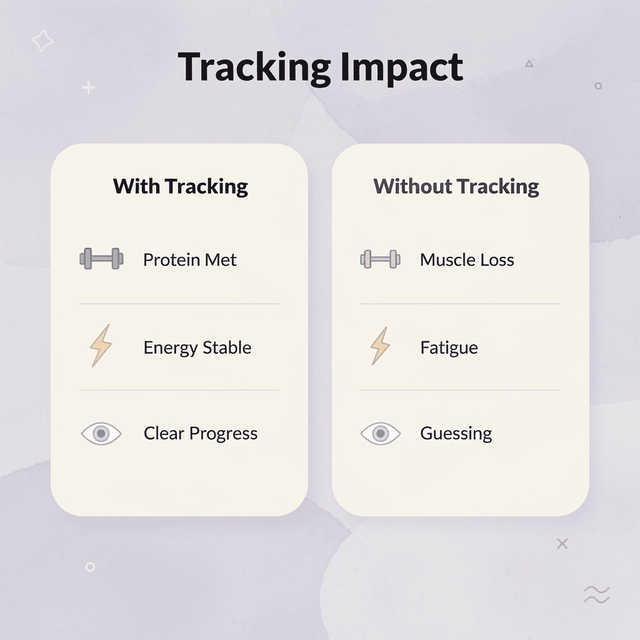
The medication only matters if you protect what it's helping you build. Whether you're using a compounded GLP-1 or an FDA-approved version like Wegovy or Mounjaro, the prescription is the starting point. Results depend entirely on daily habits maintained while the medication works. Muscle loss, persistent fatigue, and severe digestive issues don't happen because the drug failed—they happen because protein intake dropped too low, hydration became inconsistent, or movement stopped entirely while your body burns through stored energy.

Most people assume the medication handles everything, so tracking feels optional. That assumption costs them their results. Your body is changing faster than ever, which means the margin for error shrinks. Missing your protein target for a week accelerates muscle breakdown when your metabolism needs that tissue most. Skipping fiber while digestion slows from the medication turns manageable constipation into something that derails your entire routine.
"Results depend entirely on daily habits maintained while the medication works. The prescription is just the starting point." — Clinical observation from GLP-1 treatment protocols
Platforms like MeAgain turn daily requirements into something you can follow. Our app's capybara companion guides you to hit protein, fiber, water, and movement goals without turning every meal into a calculation. Our Journey Card captures your progress as it happens, so you see whether what you're doing is working instead of guessing. MeAgain doesn't replace medical oversight: it fills the gap between your prescription and the daily execution that determines whether treatment delivers sustainable results or temporary weight loss followed by regain.
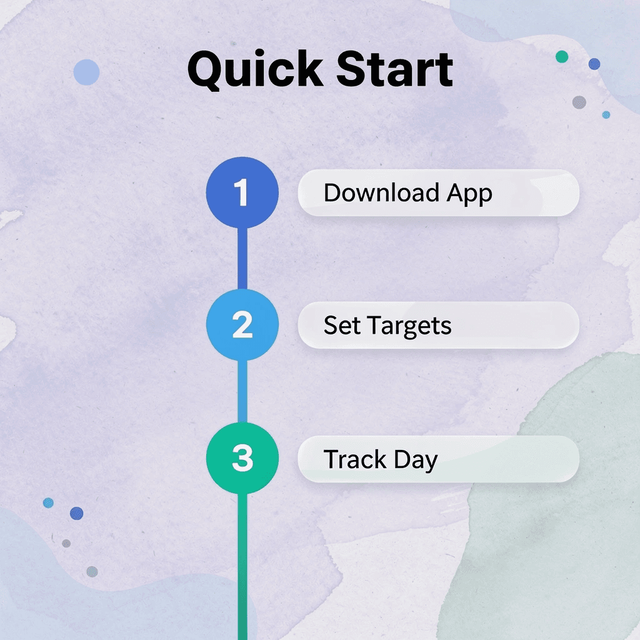
Getting started takes less than five minutes: download the app, set your daily targets based on your prescription and body composition, and track your first day. The difference between people who maintain results and those who regain comes down to whether they treated medication as the entire solution or as one part of a system requiring consistent daily action. The medication creates the opportunity. What you do with nutrition, hydration, and activity determines whether that opportunity becomes lasting change or another failed attempt.
Success Factor | With Tracking | Without Tracking |
|---|---|---|
Protein Intake | Consistent daily targets met | Gradual decline, muscle loss |
Hydration | Maintained energy levels | Fatigue, digestive issues |
Progress Visibility | Real-time feedback | Guessing until problems emerge |